Faith Must Be a Liberating Force: IARF Statement on the Berlin CSD Attack
Berliners gathered in mourning on Sunday, 26 July, following the previous evening’s attack near the city’s Christopher Street Day celebrations. One woman was killed and many others were injured. Germany’s federal prosecutor has taken over the investigation on suspicion of an Islamist motive; the full circumstances remain under investigation.
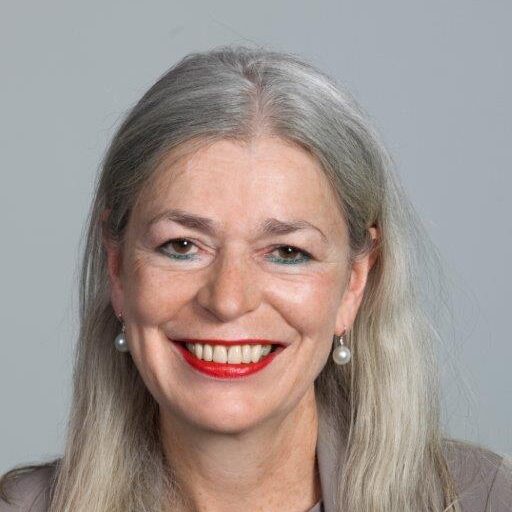
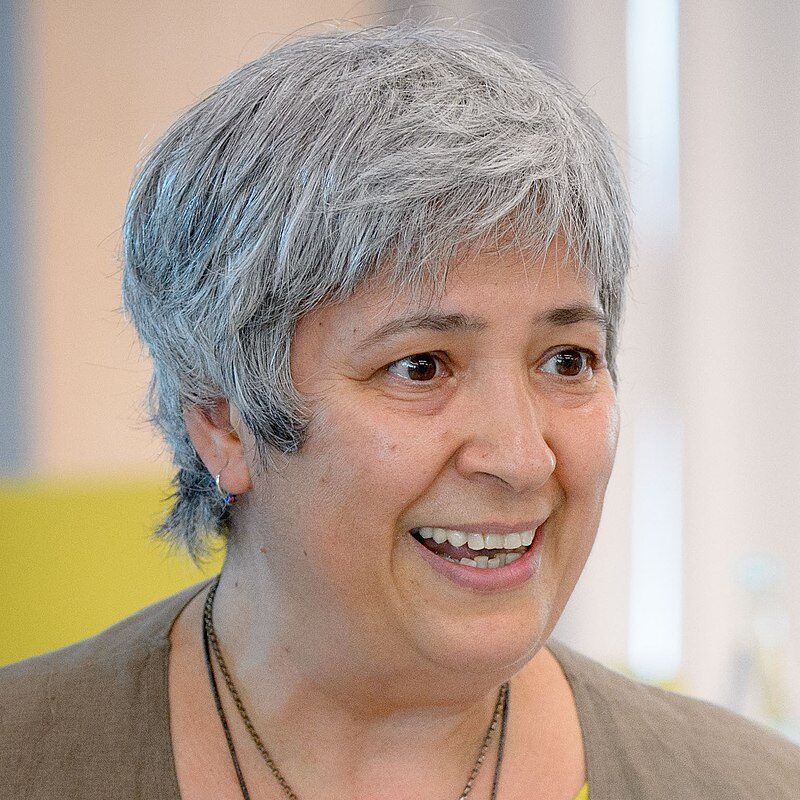
On Sunday, an interfaith memorial service was held at St Mary’s Church on Alexanderplatz, followed by a silent march to the Brandenburg Gate. Seyran Ateş and Tugay Saraç led the Islamic contribution on behalf of the Ibn Rushd-Goethe Mosque. In the mosque’s invitation, Ateş wrote:
As the Ibn Rushd-Goethe Mosque, we do not merely stand alongside the queer community — we are part of that community.
Seyran Ateş
Reflecting on Qur’an 5:32 — “Whoever kills a person, it is as though they had killed all humanity” — Ateş added:
God does not make a person’s worth dependent on their religion, origin, or sexual orientation. Every person is a creation of God. Every person possesses equal dignity. And every human life is sacred.
Seyran Ateş
IARF is deeply saddened by this tragedy, which took a human life, brought injury and suffering to many more, and deepened fear among people already vulnerable to hostility. We condemn this act of violence without reservation. We mourn the woman who was killed and stand with those who were injured, their loved ones, our members and friends in Berlin and across Germany, and all those who now feel threatened.
Difference should never be treated as a threat or become a cause of fear and hatred. Religious extremism must be named and confronted. But this attack must not be cynically used as a pretext to demonise an entire group, whether ethnic or religious. Collective guilt is both false and dangerous.
For more than 125 years, IARF has brought together people who affirm the intrinsic value of every human being and each person’s right to self-determination and unconstrained intellectual and spiritual growth, within a culture of mutual respect. Together with our members, partners and countless people of goodwill, we strive for a world in which individuals can live out their truth while according that same right to others.
Such a world can be achieved only through honest dialogue, real and effective measures to protect vulnerable groups, and actions that give expression to our experience of faith as a liberating and reconciling force — in our communities, across regions and countries, and globally, in every sphere of social life.
The mosque’s invitation concluded with words that also express the spirit in which IARF offers this statement:
Love is halal. Hatred is never permitted.
Ibn Rushd-Goethe Mosque
Unitarian Beginnings and Heritage in Poland: A Historical Pilgrimage
Dates: May 20–26, 2026 |
Location: Poland |
Organizer: Polish Unitarian Society & Partners
We are pleased to share a unique opportunity for IARF members—particularly those in Europe—to explore the deep roots of liberal religion. This historical study tour is hosted by leaders from the Polish Unitarian Society, a member group of the IARF, in collaboration with Unitarian Universalist ministers from the United States.
Discover the “Heartland” of Religious Dissent
Join a journey back to the 16th century, visiting the Unitarian “heartland” where the Polish Brethren (also known as Socinians) established congregations that openly challenged dogma, rejected infant baptism, and championed pacifism. These events occurred eight years before similar movements in Transylvania, making this a crucial site for the history of religious freedom.
The influence of the Polish Brethren was monumental for the development of liberal religious and political thought in Holland, England, and America. The tour will focus on Raków, the intellectual center where the famous Racovian Catechism was printed in 1605.
Itinerary Overview
This pilgrimage moves from the modern capital to the historic countryside, ending in the royal city of Kraków.
WarsawDay 1: May 20
Afternoon arrival in the capital. Orientation and welcome dinner with the group.
Warsaw → The CountrysideDays 2-3: May 21-22
Meeting with local Unitarians and historian Prof. Stanisław Obirek. Departure by chartered bus to the historic heartland.
Raków & SurroundingsDays 4-5: May 23-24
Based near Raków, we visit worship sites of the Polish Brethren—some restored, others in evocative ruins.
KrakówDays 6-7: May 25-26
Tour concludes in the royal city. Visit Wawel Castle, the Old Town, and WWII history sites. Closing dinner.
Departure is scheduled for the morning of May 27.
Cost & Logistics
The tour is led by Rev. Jay Atkinson, Rev. Roger Jones, and Rev. Kevin Tarsa, alongside local Polish lay leaders Justyna Borusińska and Jarosław Wajchert.
Cost: Approx. $1000 USD (double occupancy) / $1200 USD (single). Includes lodging, local transport, breakfasts, and some meals. (Airfare not included).
Financial Aid: Scholarship aid is being explored for seminarians and early-career ministers.
Registration & Contact
For questions, specific payment details, or to register for the tour, please contact the lead organizer, Jay Atkinson.
How Liberal Religion Spearheaded Protection of Belief: Anniversary of the 1981 UN Declaration
“Considering that religion or belief, for anyone who professes either, is one of the fundamental elements in his conception of life…”
— Preamble, 1981 UN Declaration
November 25 marks a pivotal, yet often overlooked, milestone in the history of human rights. On this day in 1981, after nearly two decades of geopolitical gridlock, the United Nations General Assembly adopted Resolution 36/55: the Declaration on the Elimination of All Forms of Intolerance and of Discrimination Based on Religion or Belief., the first international instru
ment dedicated solely to freedom of religion.
While the 1948 Universal Declaration of Human Rights laid the foundation, it was this 1981 document that finally codified the specific rights of conscience—freedom to worship, to teach, to publish, and to organize—into international norms. But this victory was not inevitable. It was achieved through the tenacious intervention of civil society when governments had all but given up.
The story of the 1981 Declaration is, in large part, a story of liberal religion. Through the leadership of the IARF and our member groups—particularly the Unitarian Universalist Association (UUA)—our representatives spearheaded the consensus that protects the rights of believers and non-believers alike.
Deep Roots: A Legacy of Visionary Activism
Long before the Declaration was drafted, the IARF recognized that religious freedom required a global political framework. As detailed in the IARF’s Centennial Reflections, this engagement began with Elvira Fradkin, a visionary American Unitarian from Montclair, New Jersey.
Present at the founding of the United Nations in San Francisco in 1945, Fradkin understood early on that the new world order needed the voice of liberal religion. It was her persistence that convinced the IARF to register with the UN Economic and Social Council (ECOSOC) in the 1950s—one of fewer than 300 NGOs to do so at the time. Her work laid the logistical and moral groundwork for the battles that would come decades later.
The Cold War Deadlock: Diplomacy Over Dogma
By 1972, the UN’s effort to create a binding treaty on religious freedom had stalled completely. The drafting process was paralyzed by the rigidity of the Cold War. The Soviet bloc refused to sign any document that did not explicitly protect atheism and shield the state from “religious interference.” Meanwhile, various Western and Islamic nations clashed over the definition of religious rights, particularly regarding the right to change one’s religion.
In this vacuum of political will, religious freedom was becoming a casualty of superpower posturing. This is where the IARF and the UUA played their most decisive role. Because liberal religion honors the inherent dignity of all paths—theistic, non-theistic, and atheistic—our representatives were uniquely positioned to bridge the ideological divide.
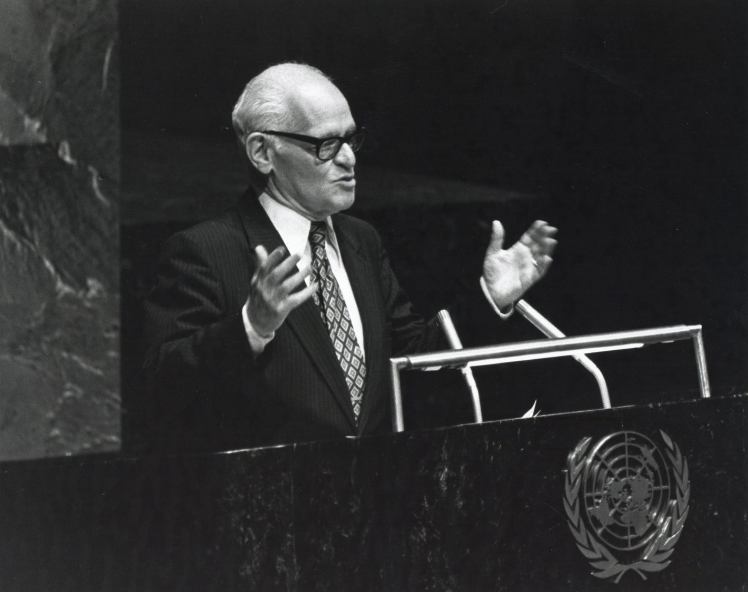
Dr. Homer A. Jack (1916–1993): A Unitarian Universalist minister and IARF luminary. As Secretary-General of the World Conference on Religion and Peace (WCRP), he masterminded the NGO strategy that rescued the Declaration from obscurity.
Two leaders from our community were central to breaking the impasse:
Prof. Auguste-Raynald Werner, the IARF Representative in Geneva. A distinguished Professor of International Law, Werner worked tirelessly within the UN Commission on Human Rights. He used his legal expertise to craft language capable of satisfying opposing political blocs, ensuring the text was robust enough to protect rights but flexible enough to pass.
Dr. Homer A. Jack, a Unitarian Universalist minister serving as Secretary-General of the WCRP. He spearheaded the “Gang of Four” NGOs that refused to let the issue die. When member states moved to shelve the draft, Jack mobilized the NGO community to pressure the General Assembly to prioritize a non-binding Declaration over a doomed Treaty—a strategic pivot that saved the project.
The “Religion or Belief” Compromise
One of the most significant contributions of the liberal religious lobby was the insistence on the phrasing “Religion or Belief.” This distinction was not merely semantic; it was the key to consensus. It ensured that the Declaration covered theistic faiths, non-theistic traditions, and atheistic views equally.
This inclusivity satisfied the Eastern bloc’s demand for the protection of non-religious convictions while aligning perfectly with the IARF’s principle of universal tolerance. It established a precedent that remains vital today: that freedom of conscience belongs to everyone, not just the religious.
Connecting the Dots: A Legacy of Action
The adoption of the Declaration was a victory, but as Dr. Jack noted in his memoirs, Homer’s Odyssey, a declaration without enforcement is just paper. The IARF’s leadership was central to building the machinery that enforces these rights today.
1972: The Pivot
A “Core Group” of NGOs, led largely by liberal religious actors including Homer Jack, petitions the UN General Assembly to abandon the stalled Treaty negotiations and prioritize a Declaration. This strategic shift breaks a decade-long deadlock.
1981: The Victory
The Declaration is adopted by the General Assembly. It explicitly codifies rights that were previously vague, such as the freedom to write and disseminate publications, teach religion, and solicit financial contributions.
1986: The Mechanism
Realizing the Declaration needed “teeth,” the IARF and its partners successfully lobby the UN to create the mandate for a Special Rapporteur (originally on “Religious Intolerance,” now “Freedom of Religion or Belief”). This created the “eyes and ears” of the UN to receive complaints from victims worldwide.
1991: The Watchdog
To ensure the Declaration wouldn’t collect dust, the NGO Committee on Freedom of Religion or Belief is formally established in New York, with IARF leadership at the helm.
Institutionalizing Freedom: The Role of Sue Nichols
The creation of the NGO Committee in New York—the primary body that coordinates civil society advocacy on this issue today—was inextricably linked to the IARF and the UUA.
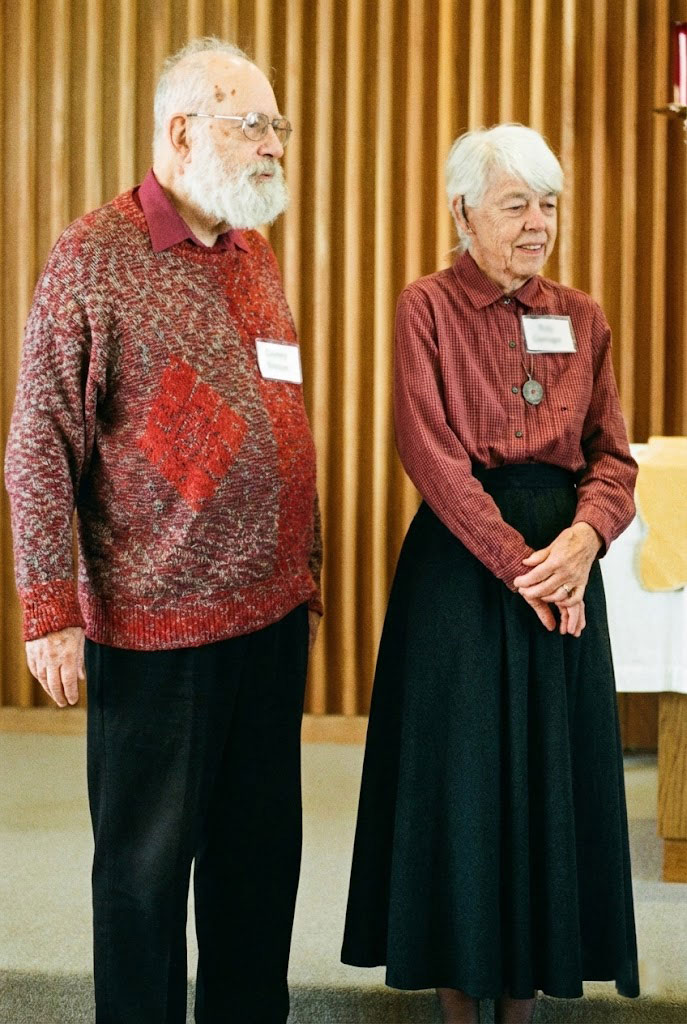
Architects of the Committee: Vernon and Sue Nichols, co-directors of the UU-UN Office. Sue Nichols (right) served as the founding President of the NGO Committee on Freedom of Religion or Belief in New York. (Photo courtesy of UUA Retired Ministers and Partners Association)
Sue Nichols, who co-directed the Unitarian Universalist UN Office with her husband Vernon, served as the IARF’s representative on the ground in New York during this critical period. Following the commissioning of the seminal “Salzberg Study” by Dr. Jack to explore implementation strategies, Nichols took the lead in formalizing the NGO coalition.
She became the founding President of the NGO Committee in New York. Under her leadership, the committee moved from an informal pressure group to a recognized powerhouse within the UN system. It established the tradition of the “Annual Day” to commemorate the 1981 Declaration and works directly with the Special Rapporteur to highlight violations globally.
A Continuing Responsibility
The 1981 Declaration remains the most important international instrument for religious freedom since the Universal Declaration of Human Rights. It serves as the basis for the mandate of the Special Rapporteur and laid the groundwork for modern diplomatic breakthroughs, such as Human Rights Council Resolution 16/18, which shifted the focus from protecting abstract religions to protecting living human beings from discrimination.
Today, the IARF continues this work as an active member of the NGO Committees on Freedom of Religion or Belief in both New York and Geneva. We honor the legacy of Fradkin, Werner, Jack, and Nichols not by looking backward, but by continuing to press for the rights of all people—regardless of their creed—to believe, or not believe, in freedom.
We Are Still Active Today
The IARF continues to honor this legacy. We remain an active member of the NGO Committees on Freedom of Religion or Belief in both New York and Geneva, working with the Special Rapporteur to ensure rights are respected.
Get Involved: IARF members are warmly invited to join our International Engagement Working Group to support our continued advocacy at the United Nations.
Dive Deeper into this History:
Read “Centennial Reflections”: The full chapter on the IARF at the United Nations by Ruth Neuendorffer and Sue Nichols is available in our library for detailed historical context.
Memoirs: For a personal account of the diplomatic struggle, see “Homer’s Odyssey” by Dr. Homer Jack.
Interfaith Statement Supporting Trans, Intersex and Nonbinary People
On the International Transgender Day of Remembrance, the International Association for Religious Freedom welcomes the statement on the rights of Trans, Intersex and Nonbinary People issued by the Unitarian Universalist Association, our member group, in coalition with several faith groups, including the United Church of Christ, the Episcopal Church and other Christian denominations, Union for Reform Judaism and other Jewish organisations, and others.
“…there is a disgraceful misconception that all people of faith do not affirm the full spectrum of gender – a great many of us do. Let it be known instead that our beloveds are created in the image of God – Holy and whole.”
Statement Supporting Trans, Intersex and Nonbinary People
As an organisation uniting free and liberal religious communities and individuals, we advocate religious freedom as first and foremost freedom within religion, a freedom to live one’s life creatively and without coercion in a shared experience of the divine and a shared pursuit of justice. We acknowledge the value of the prophetic voice of progressive religion and humanistic philosophy as many still suffer discrimination, alienation, vilification and ridicule, and, in many parts of the world, may lose their freedom or even their lives for failing to conform to social norms, even though they inflict no harm on others.
Regrettably, religion often plays a role in providing justification for condemning and persecuting them, and inflicts great spiritual suffering by proclaiming their identity, their experience and expression of humanity as sinful and abominable in the eyes of the divine. This makes voices like these, where people of faith come together to speak both to society at large and to those often excluded by religion, not mere statements, but acts that have the power to change lives. By offering a different perspective and testifying to the healing, transformative power of faith, we can make a difference, just as we strive to do so in the daily lives of our communities.
IARF Vision and Identity Statement
We are pleased to present the IARF Vision and Identity Statement, a foundational document recently adopted by our International Council. This statement is the result of thoughtful collaboration, inspired by discussions at our 2023 Congress and developed by a dedicated working group. It was formally adopted by the International Council at its March meeting this year.
This Vision and Identity Statement clarifies our shared purpose and direction as we move forward. It outlines our aspiration to be a vital global network, connecting liberal religious communities and individuals across diverse faiths and cultures. Crucially, it reaffirms our core mission: to advance free and liberal religion, protect religious minorities, and promote human rights.
As IARF marks its 125th anniversary, this vision serves as both a reflection on our rich legacy and a compass for our future work. It helps us articulate what “free and liberal religion” means in today’s complex world and how we intend to pursue our advocacy, education, and community-building efforts.
The full document is currently available in English, Japanese, and Hungarian, and we extend our sincere thanks to the members who dedicated their time and skill to these translations. We plan to make it available in more languages in the future.
We encourage all our members and friends to read the full Vision and Identity Statement. Your reflections and feedback are welcome as we continue to live into this shared understanding.
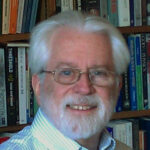
The Rev. Dr. Richard Boeke: A Life of Faith in Action Across Borders
The Rev. Dr. Richard “Dick” Boeke (March 2, 1931 – May 25, 2025), a tireless advocate for interfaith cooperation and religious freedom, passed away on May 25th. His legacy in the Unitarian Universalist tradition and the International Association for Religious Freedom (IARF) reflects a rare combination of theological depth, institutional leadership, and joyful service.
Born into a Southern Baptist family, Dick’s spiritual journey led him through study and reflection to the Unitarian faith while in seminary. He often remarked that study liberates—a theme that ran through his ministry and international engagement. As a minister in the UUA, he brought a passion for global understanding that extended far beyond his pulpit.
In the IARF, he found a spiritual home where his commitments to pluralism, dialogue, and peace could flourish. Inspired by the teachings of Shin’ichirō Imaoka, Dick became a leading voice for Free Religion—a vision of spirituality unbound by dogma, rooted instead in a reverence for truth, openness, and moral responsibility. He advocated for serious study of others’ religions as an act of mutual respect.
Among his many achievements was helping to establish the Albert Schweitzer Award within IARF, which honored figures who embodied service to humanity in the spirit of liberal religion. The first recipient was Founder Nikkyo Niwano of Rissho Koseikai, a model of Buddhist leadership for peace. Richard’s personal humility was evident in his constant lifting up of others whose lives inspired hope and courage.
Another example of his international bridge-building was his collaboration with Chief Priest Yukitaka Yamamoto to create Tsubaki America, the first Shinto shrine for interfaith worship in the continental U.S. His work helped translate Japanese spiritual values into a global context—offering Americans a way to engage with Shinto practice and nature-based reverence.
Richard’s writings and teachings emphasized faith not as rigid belief, but as trust—in others, in life, and in the transformative power of service. His generous spirit, like his enduring smile, touched lives around the world.
May his memory continue to be a light—illuminating paths of wisdom, compassion, and unshakable hope.
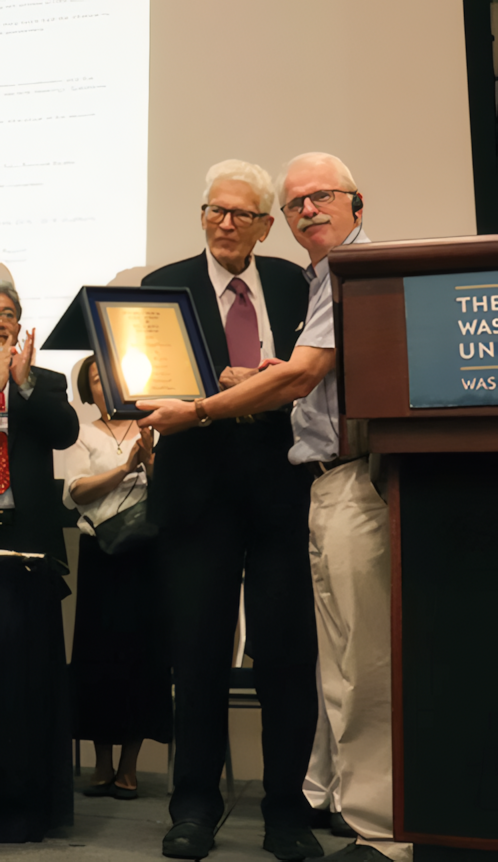
Rev. Boeke receiving the IARF Distinguished Leadership Award at the 2018 Congress from the then President of IARF, Robert Ince
The IARF is deeply grateful to the Boeke family for sharing Rev. Dr. Boeke’s wish that memorial contributions be made to our organisation. We thank all who may choose to honor his memory in this way.
Those wishing to make a gift may do so here. Your support will help continue the work that was so dear to him.
×
Buddhism and Free Religion: Continuing the Dialogue
The Free Religion Institute is pleased to announce another session in our ongoing series with Rev. Michinori Maruta exploring the connections between Buddhism and Free Religion (自由宗教 jiyū shūkyō).
These talks and discussions have thus far been offered as standalone sessions rather than a formal course for the Institute. We’re excited to share that we have plans to develop this into a structured course offering, with details of a new series to be announced soon.
All Institute materials are available to IARF members registered on our community platform. If you don’t have an account yet, you can set it up for free at iarf.net/register.
Buddhism and Free Religion (自由宗教 jiyū shūkyō)
Upcoming Session: The Middle Path and Free Religion
Join Rev. Michinori Maruta for an exploration of Buddhist perspectives on Free Religion
26 April 2025: What does jiyu (自由, freedom) mean to you?
Rev. Maruta shared perspectives on freedom from a Buddhist viewpoint and invited participants to share their ideas.
29 March 2025: Buddhism and Jiyū Shūkyō
Exploring connections between Buddhism and free religion.
22 February 2025: Buddhism and Liberation
Rev. Michinori Maruta explored Buddhist perspectives on liberation in this initial session of the series.
About the Instructor: Rev. Michinori Maruta
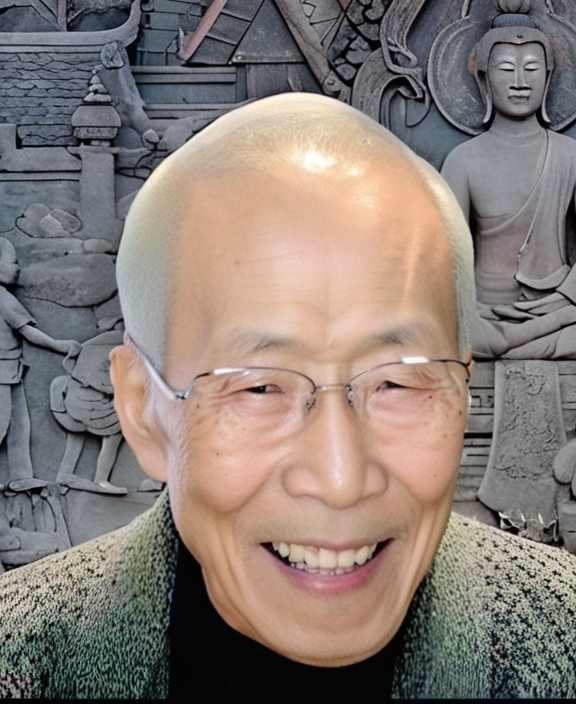
Rev. Michinori Maruta has dedicated his life to Buddhist practice and interfaith dialogue since joining Rissho Kosei-kai (RKK) in 1966. After studying applied chemistry at Tokyo University of Agriculture and Technology, he pursued Buddhist studies at RKK Seminary and later studied the New Testament at Ripon College, Cuddesdon, England. His diverse experience includes significant work in interfaith dialogue and cooperation at RKK headquarters, serving as minister at RKK centers in California and Hokkaido, and since 2001, leading the Institute of Mindful Life. Through lectures, seminars, and digital platforms, he continues to share Buddhist wisdom and promote mindful living, bringing together traditional teachings with contemporary understanding.
IALRW Conference 2025: Power of Dialogue and Partnership
The International Association of Liberal Religious Women (IALRW) will host its 2025 Conference from June 11-16 in Kuching, Sarawak, Malaysia. The conference will be held in a hybrid format, allowing both in-person and online participation. Under the theme “Power of Dialogue and Partnership,” participants will explore indigenous perspectives, interfaith dialogue, and women’s leadership in addressing global challenges.
Building on discussions from the 2023 gathering in Cluj-Napoca, Romania, this five-day program combines academic presentations, interactive workshops, cultural experiences, and networking opportunities. The conference will feature interfaith dialogues with Buddhist and indigenous perspectives, with special attention to their traditions of living in harmony with nature.
The venue, The Waterfront Hotel in Kuching, will also host the 19th Sakyadhita International Conference for Buddhist Women immediately following the IALRW event, creating opportunities for extended dialogue and connection.
Dates
June 11-16, 2025
Location
The Waterfront Hotel, Kuching, Sarawak, Malaysia
Participation
In-person: 930 MYR (~$210 USD) | Online: $10 USD
Program Highlights
Opening
115 Years of IARLW: Historical Foundations & Future Directions
Rev. Dr. Esther R. Suter, IALRW President & IARF Main Representative to the UN
An exploration of IALRW’s journey since its founding in 1910 as the Ladies Wing of the IARF and its vision for the future.
Keynote
Reactivating Humanity and Humanness through Religions
Prof. Dr. Kamar Oniah Kamaruzaman, Advisor & Former IALRW President
Exploring how religious traditions can guide humanity toward compassion and justice during challenging times.
Dialogue
Buddhist and Indigenous Perspectives on Climate Change
Dr. Thea Mohr & Ms. Celine Lim
A conversation exploring connections between Buddhist and indigenous approaches to environmental ethics and climate action.
Policy
Nuclear Disarmament and Japanese Women’s Advocacy
Prof. Dr. Kathy R. Matsui, Advisor & Former IALRW President
Insights from Japanese women’s advocacy work on abolishing nuclear weapons and promoting peace.
Featured Speakers
Rev. Dr. Esther R. Suter
President, IALRW & Main Representative to the UN for IARF
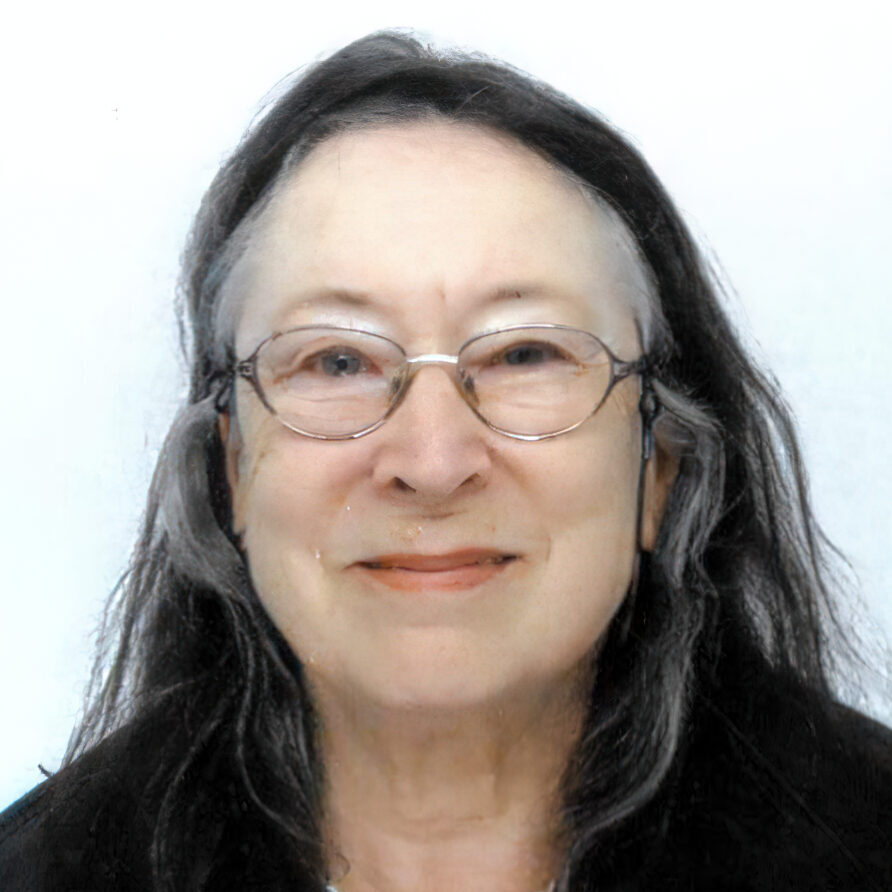
She is an ordained minister in the Swiss Evangelical Church and serves as the Permanent Main Representative to the United Nations for IARF. She has extensive experience in international ecumenical work and interfaith dialogue, and regularly participates in UN sessions and conferences representing IARF’s interests and mission.
Prof. Dr. Kamar Oniah Kamaruzaman
Advisor, IALRW & Former President (2014-2023)
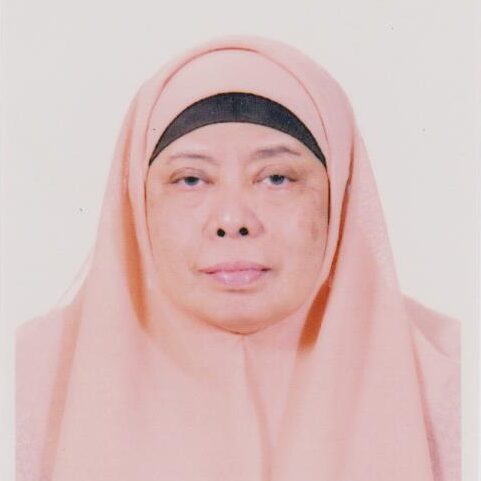
Prof. Dr. Kamar Oniah Kamaruzaman is a professor of Comparative Religion at the International Islamic University of Malaysia. She is an academic who is actively involved in social works and is especially active in interfaith engagements and initiatives, locally and internationally, and her publications on interfaith initiatives are references for such works.
Prof. Dr. Kathy R. Matsui
Advisor to IALRW & Former President (2006-2014)
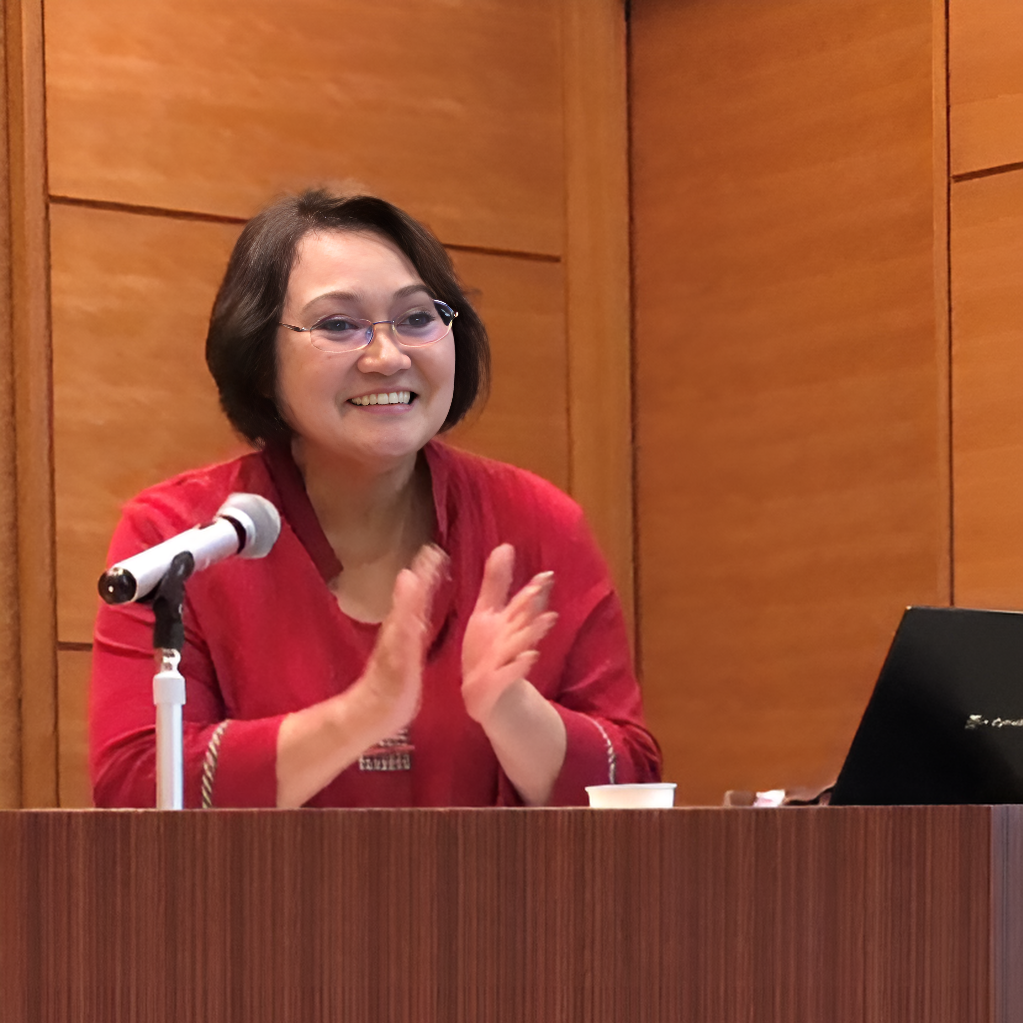
She is a peace educator facilitating conflict resolution and reconciliation workshops. She works with peace researchers and educators internationally in the International Institute on Peace Education, the Conflict Resolution and Peace Education Working Group of the Global Partnership for Prevention of Armed Conflict.
Dr. Thea Mohr
Council of Europe and IRICD Commission, Europe Buddhist Union
Dr. Thea Mohr is an internationally recognized expert in intercultural competence and cultural intelligence, with specialized focus on India, China, Japan, South Korea, Arab countries, and several European nations. A business economist and religious/cultural scientist by training, she holds certification as an intercultural trainer and coach.
Registration Information
The conference offers two participation options:
In-Person
930 MYR (approx. $210 USD)
Includes registration fee (220 MYR), conference package (710 MYR), all sessions, materials, specified meals, and cultural activities
Online
$10 USD
Includes access to all virtual sessions, digital conference materials, and interactive components
Registration is considered complete upon submission of the online form and receipt of payment. For complete details and to register, visit the IALRW Conference 2025 website.
We invite IARF members and friends to join this gathering to explore the power of dialogue across religious and cultural boundaries, and to support women’s leadership in addressing today’s challenges.
Free Religion Institute Presents: Imaoka’s Religious Practices (Session 3)
The Free Religion Institute continues its inaugural e-learning season with the third session of Rev. Andrew Brown’s exploration of Japanese free religion through the work of Imaoka Shin’ichirō. This course examines how Imaoka’s ideas have shaped liberal religious thought in Japan, with previous sessions now available as recordings for IARF members.
We’re excited to announce that several new courses are in development and will begin within the next three months, further expanding our educational offerings on free religion and related topics.
Rev. Andrew Brown’s course continues with an exciting third session exploring the practical dimensions of Imaoka’s free religious approach. Recordings and materials from previous sessions are available to registered members through our e-learning platform.
All Institute materials are available to IARF members registered in the IARF Network. If you don’t have an account yet, you can set it up for free.
Session 3: Imaoka Shin’ichirō’s explicit, implicit and hoped-for free-religious practices
Exploring Seiza Meditation, weekly gatherings, Principles of Living, educational pilgrimages, and more
Wednesday, June 11, 2025 at 8:00 AM UK time
San Francisco: 12:00 AM
Boston: 3:00 AM
London: 8:00 AM
Amsterdam: 9:00 AM
New Delhi: 1:30 PM
Tokyo: 5:00 PM
The session will delve into fascinating practices including:
Seiza Meditation (the Quiet Sitting method learned from Okada Torajiro)
Weekly talk and Q&A sessions at the Tokyo Kiitsu Kyōkai
The recitation of Imaoka’s eight “Principles of Living”
Educational journeys and pilgrimages
Walking in nature and aesthetic practices like calligraphy
Imaoka’s vision for free-religious ceremonies and music
About the Instructor: Rev. Andrew James Brown
A philosophically/theologically inclined writer with deep sympathies towards Imaoka Shin’ichirō’s understanding of creative, inquiring, free and liberative spirituality (jiyū shūkyō 自由宗教), Jōdo Shinshū Buddhism, Konkokyo, Christian non-theism, D. G. Leahy’s “thinking now occurring for the first time”, a Lucretian inspired religious naturalism, new materialism and Kyoto School philosophy. Beyond his academic pursuits, Rev. Brown is also a photographer, cyclist, walker and jazz bass player, serving as the minister of a small, liberal, free religious community in Cambridge (UK).
EME Conference 2025: Register now!
For the first time, this EME conference will be hybrid, allowing members and friends from around the world to join us either in person or online.
This year’s theme, “Limits of Religious Freedom and Tolerance,” promises thoughtful discussion and exploration. We’ll delve into how liberal religious perspectives engage with contemporary challenges to freedom of thought, conscience, and belief. Our hosts, the Frei-religiöse Gemeinde Offenbach and the Unitarische Freie Religionsgemeinde Frankfurt, are both celebrating their 180th anniversaries, adding a layer of historical depth to our meeting.
Keynote Speaker Spotlight
We are particularly pleased to welcome Seyran Ateş as our opening keynote speaker. A prominent author, women’s rights activist, and founder of the liberal Ibn-Rushd-Goethe Mosque, she will share insights on “Limits of Tolerance and Liberal Religion”.
Beyond the keynote, look forward to engaging sessions, including a panel discussion on Free Religion featuring Pascal Schilling and George Williams, parallel workshops exploring topics like Liberal Theology’s contribution to religious freedom (led by Dr. Kurt Bangert) and the historical evolution of these freedoms (with Rev. Norbert Rácz), plus valuable Circle Group discussions for deeper connection. Enjoy networking during dinners and coffee breaks, and experience a special Jazz and Blues Organ Concert by the acclaimed Barbara Dennerlein. The conference concludes with an Interfaith Service hosted by our Frankfurt congregation.
Interested in exploring the roots of the free religious movement? Consider arriving early for the optional Pre-Conference Tour (Sept 9-11), visiting historic congregations and significant sites in Ingelheim, Mainz, Mannheim, Ludwigshafen, and Frankfurt, including the Paulskirche and the Jewish Museum.
Head over to the official conference page for the full schedule, speaker bios, registration options (including online participation and the pre-tour), and travel advice. Sign up now to secure your place!
We’re looking forward to seeing you in Germany for what promises to be an insightful and connecting conference!
Your Privacy & Consent
We use cookies and local browser storage to keep you securely logged in and maintain your preferences. No third-party trackers or ad networks are used. Read our Privacy Policy.
Strictly NecessaryAlways Active
Keeps you logged in and protects forms from submission forgery. Necessary for account operation.
Usability & UI PreferencesOptional
Remembers details like chat widget coordinates and records if you have voted in a poll to prevent repeated popups.
JavaScript Core PlatformAlways Active
JavaScript is required to render the interactive app, direct messaging, offline caching, and calendars. No tracking libraries are loaded.
Why do we use JavaScript?
Our platform runs as a modern, interactive single-page application for logged-in members. We connect securely to socket.iarf.net via WebSockets for instant message delivery and online status indicators.
Where does my data go?
All data belongs exclusively to IARF and is stored on our secure VPS located in the EU. We do NOT run Google Analytics, Facebook Pixels, or other tracking code. External requests are only made to fetch FontAwesome icons and Google Fonts from public CDNs to display symbols and typography.
What happens offline?
We install a Service Worker to cache layout elements locally. No personal information is stored inside the local cache; it only speeds up navigation and enables basic offline views.