

Freedom Within Religion: IARF Contributes to UN Freedom of Expression Priorities
On 30 October 2026, the International Association for Religious Freedom (IARF) submitted a contribution to the UN Special Rapporteur on freedom of opinion and expression, responding to a consultation on the mandate’s strategic priorities for 2026–2029.
Entitled Freedom within religion: conscience, dissent and pluralism, the submission argues that freedom of expression must protect people who question religious authority and established interpretations, including those who wish to remain within their religious traditions.
For IARF, religious freedom is not only a matter of protecting communities from outside interference. It also concerns the freedom of individuals to inquire, disagree, reinterpret traditions and advocate change from within.
Protecting conscience and dissent
The submission highlights laws criminalising religious criticism, threats against inclusive and reforming religious communities, and online harassment that can expose dissenters to danger. Drawing on examples from Pakistan, Poland, Russia and Germany, it calls for particular attention to people whose voices can be overlooked when established religious leaders are treated as the sole representatives of their communities, including women and girls, young people and LGBT+ believers.
IARF also recognises the legitimate autonomy of religious communities over doctrine, worship and voluntary association. Protecting freedom within religion does not mean asking governments to decide theological questions. It means ensuring that religious authority cannot become a justification for coercion or state-enforced orthodoxy.
Recommendations for the UN mandate
IARF proposes closer cooperation between relevant UN human rights mandates, practical guidance on conflicts involving religious expression, sustained attention to individual cases and investigation of digital threats and censorship. It also encourages meaningful participation by independent and reforming communities in developing recommendations.
At the heart of the contribution is a principle central to IARF’s longstanding commitment to religious freedom: people should be free to follow their conscience, question inherited interpretations and seek change without fear of persecution or coercion.
Read the full submission
Freedom within religion: conscience, dissent and pluralism (PDF, October 2026, 7 pages).
Featured image: Flag avenue at the Palais des Nations, Geneva. Photograph by TomIsNotResponding, Wikimedia Commons, CC0 1.0. Cropped for display.

Protecting Ancestral Heritage: IARF Addresses the UN on Indigenous Burial Rights on Private Land
March 5, 2026 — During the ongoing session of the UN Human Rights Council, the International Association for Religious Freedom (IARF) took the floor to address a critical but often overlooked intersection of human rights: the right of Indigenous Peoples to access and care for their ancestral burial sites when those sites are located on privately owned land.
The statement was delivered during the Interactive Dialogue with Dr. Nazila Ghanea, the UN Special Rapporteur on Freedom of Religion or Belief, responding to her latest report on how freedom of religion or belief relates to death and honouring the deceased.
Watch the Oral Statement
The Regulatory Gap: Private Property vs. Sacred Duties
While many States have established protections for sacred and burial sites, these frameworks frequently suffer from a significant blind spot. Protections are often conditioned on government action or apply strictly to publicly managed lands.
When ancestral lands and burial sites fall into private hands or under private residential governance, Indigenous communities are frequently severed from their heritage. Without national frameworks extending to private property, communities are left without legal recourse to fulfill their religious and cultural duties to their ancestors.
Grounding the Issue: Kāneʻākī Heiau in Hawaiʻi
To illustrate the profound impact of this regulatory gap, IARF highlighted the situation at the Kāneʻākī Heiau site in Mākaha, Hawaiʻi. Here, Native Hawaiian practitioners face immense barriers—enforced by private residential governance—when seeking to access and care for their iwi kūpuna (ancestral remains).
This is not an isolated incident. The full scale of this problem remains largely undocumented globally, leaving many Indigenous communities silently cut off from their most sacred sites.
IARF’s Call to Action
In our statement to the Human Rights Council, the IARF urged States to take the following crucial steps:
- Conduct Systematic Assessments: States must actively document sacred and burial sites affected by private land governance.
- Develop Effective Frameworks: We need concrete legislative and policy solutions that balance private property rights with the fundamental human right to manifest religion and care for the deceased.
We look forward to continuing this vital conversation with the Special Rapporteur and UN Member States to ensure that honoring the deceased is a right guaranteed to all, regardless of modern property lines.
Full Transcript of the Oral Statement
Interactive Dialogue with the Special Rapporteur on Freedom of Religion or Belief 3 March 2026
“Mr. President,
The International Association for Religious Freedom welcomes Special Rapporteur Ghanea’s report on freedom of religion and honouring the deceased. We particularly appreciate paragraph four, which highlights the barriers Indigenous Peoples face in accessing burial lands to honour their ancestors.
In many States, protections for burial sites are conditioned on government action or apply only to publicly managed lands. This leaves a significant regulatory gap when such sites fall within privately owned or governed land. Without national frameworks extending to these contexts, private property mechanisms can effectively sever Indigenous communities from their ancestral heritage.
As an illustrative example, at the Kāneʻākī Heiau site in Hawaiʻi, Native Hawaiian practitioners face profound barriers—enforced by private residential governance—when seeking to access and care for their iwi kūpuna, their ancestral remains.
We note that the full scale of this problem remains largely undocumented, and we encourage States to undertake systematic assessments of sacred and burial sites affected by private land governance, as a necessary first step toward effective frameworks that balance property rights with the fundamental right to manifest religion and care for the deceased.
Special Rapporteur, what concrete legislative or policy best practices have proven effective in enabling States to reconcile private land governance with the protection of Indigenous Peoples’ rights to access and care for sacred and burial sites?
Thank you.”
Further Reading:
- Read the Special Rapporteur’s full report (A/HRC/61/50)
How Liberal Religion Spearheaded Protection of Belief: Anniversary of the 1981 UN Declaration
“Considering that religion or belief, for anyone who professes either, is one of the fundamental elements in his conception of life…”
November 25 marks a pivotal, yet often overlooked, milestone in the history of human rights. On this day in 1981, after nearly two decades of geopolitical gridlock, the United Nations General Assembly adopted Resolution 36/55: the Declaration on the Elimination of All Forms of Intolerance and of Discrimination Based on Religion or Belief., the first international instru ment dedicated solely to freedom of religion.
While the 1948 Universal Declaration of Human Rights laid the foundation, it was this 1981 document that finally codified the specific rights of conscience—freedom to worship, to teach, to publish, and to organize—into international norms. But this victory was not inevitable. It was achieved through the tenacious intervention of civil society when governments had all but given up.
The story of the 1981 Declaration is, in large part, a story of liberal religion. Through the leadership of the IARF and our member groups—particularly the Unitarian Universalist Association (UUA)—our representatives spearheaded the consensus that protects the rights of believers and non-believers alike.
Deep Roots: A Legacy of Visionary Activism
Long before the Declaration was drafted, the IARF recognized that religious freedom required a global political framework. As detailed in the IARF’s Centennial Reflections, this engagement began with Elvira Fradkin, a visionary American Unitarian from Montclair, New Jersey.
Present at the founding of the United Nations in San Francisco in 1945, Fradkin understood early on that the new world order needed the voice of liberal religion. It was her persistence that convinced the IARF to register with the UN Economic and Social Council (ECOSOC) in the 1950s—one of fewer than 300 NGOs to do so at the time. Her work laid the logistical and moral groundwork for the battles that would come decades later.
The Cold War Deadlock: Diplomacy Over Dogma
By 1972, the UN’s effort to create a binding treaty on religious freedom had stalled completely. The drafting process was paralyzed by the rigidity of the Cold War. The Soviet bloc refused to sign any document that did not explicitly protect atheism and shield the state from “religious interference.” Meanwhile, various Western and Islamic nations clashed over the definition of religious rights, particularly regarding the right to change one’s religion.
In this vacuum of political will, religious freedom was becoming a casualty of superpower posturing. This is where the IARF and the UUA played their most decisive role. Because liberal religion honors the inherent dignity of all paths—theistic, non-theistic, and atheistic—our representatives were uniquely positioned to bridge the ideological divide.
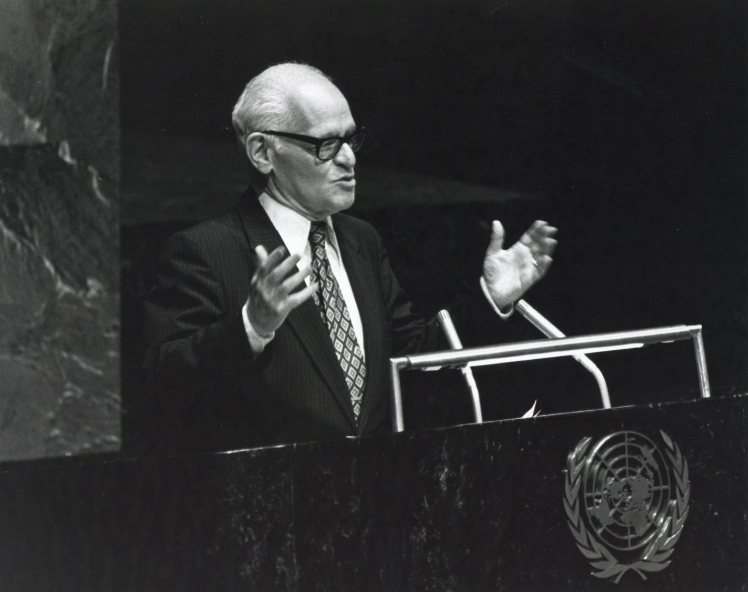
Two leaders from our community were central to breaking the impasse:
- Prof. Auguste-Raynald Werner, the IARF Representative in Geneva. A distinguished Professor of International Law, Werner worked tirelessly within the UN Commission on Human Rights. He used his legal expertise to craft language capable of satisfying opposing political blocs, ensuring the text was robust enough to protect rights but flexible enough to pass.
- Dr. Homer A. Jack, a Unitarian Universalist minister serving as Secretary-General of the WCRP. He spearheaded the “Gang of Four” NGOs that refused to let the issue die. When member states moved to shelve the draft, Jack mobilized the NGO community to pressure the General Assembly to prioritize a non-binding Declaration over a doomed Treaty—a strategic pivot that saved the project.
The “Religion or Belief” Compromise
One of the most significant contributions of the liberal religious lobby was the insistence on the phrasing “Religion or Belief.” This distinction was not merely semantic; it was the key to consensus. It ensured that the Declaration covered theistic faiths, non-theistic traditions, and atheistic views equally.
This inclusivity satisfied the Eastern bloc’s demand for the protection of non-religious convictions while aligning perfectly with the IARF’s principle of universal tolerance. It established a precedent that remains vital today: that freedom of conscience belongs to everyone, not just the religious.
Connecting the Dots: A Legacy of Action
The adoption of the Declaration was a victory, but as Dr. Jack noted in his memoirs, Homer’s Odyssey, a declaration without enforcement is just paper. The IARF’s leadership was central to building the machinery that enforces these rights today.
Institutionalizing Freedom: The Role of Sue Nichols
The creation of the NGO Committee in New York—the primary body that coordinates civil society advocacy on this issue today—was inextricably linked to the IARF and the UUA.
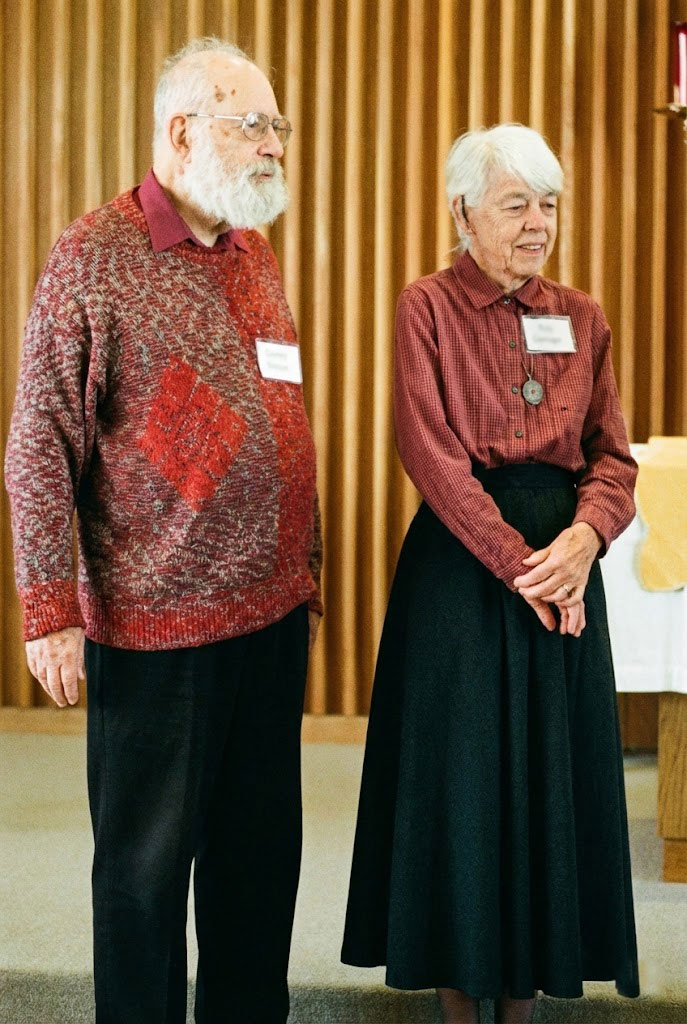
Sue Nichols, who co-directed the Unitarian Universalist UN Office with her husband Vernon, served as the IARF’s representative on the ground in New York during this critical period. Following the commissioning of the seminal “Salzberg Study” by Dr. Jack to explore implementation strategies, Nichols took the lead in formalizing the NGO coalition.
She became the founding President of the NGO Committee in New York. Under her leadership, the committee moved from an informal pressure group to a recognized powerhouse within the UN system. It established the tradition of the “Annual Day” to commemorate the 1981 Declaration and works directly with the Special Rapporteur to highlight violations globally.
A Continuing Responsibility
The 1981 Declaration remains the most important international instrument for religious freedom since the Universal Declaration of Human Rights. It serves as the basis for the mandate of the Special Rapporteur and laid the groundwork for modern diplomatic breakthroughs, such as Human Rights Council Resolution 16/18, which shifted the focus from protecting abstract religions to protecting living human beings from discrimination.
Today, the IARF continues this work as an active member of the NGO Committees on Freedom of Religion or Belief in both New York and Geneva. We honor the legacy of Fradkin, Werner, Jack, and Nichols not by looking backward, but by continuing to press for the rights of all people—regardless of their creed—to believe, or not believe, in freedom.
We Are Still Active Today
The IARF continues to honor this legacy. We remain an active member of the NGO Committees on Freedom of Religion or Belief in both New York and Geneva, working with the Special Rapporteur to ensure rights are respected.
Get Involved: IARF members are warmly invited to join our International Engagement Working Group to support our continued advocacy at the United Nations.
- Read “Centennial Reflections”: The full chapter on the IARF at the United Nations by Ruth Neuendorffer and Sue Nichols is available in our library for detailed historical context.
- Memoirs: For a personal account of the diplomatic struggle, see “Homer’s Odyssey” by Dr. Homer Jack.
- Primary Source: Read the full text of the 1981 Declaration.
Interfaith Statement Supporting Trans, Intersex and Nonbinary People
On the International Transgender Day of Remembrance, the International Association for Religious Freedom welcomes the statement on the rights of Trans, Intersex and Nonbinary People issued by the Unitarian Universalist Association, our member group, in coalition with several faith groups, including the United Church of Christ, the Episcopal Church and other Christian denominations, Union for Reform Judaism and other Jewish organisations, and others.
As an organisation uniting free and liberal religious communities and individuals, we advocate religious freedom as first and foremost freedom within religion, a freedom to live one’s life creatively and without coercion in a shared experience of the divine and a shared pursuit of justice. We acknowledge the value of the prophetic voice of progressive religion and humanistic philosophy as many still suffer discrimination, alienation, vilification and ridicule, and, in many parts of the world, may lose their freedom or even their lives for failing to conform to social norms, even though they inflict no harm on others.
Regrettably, religion often plays a role in providing justification for condemning and persecuting them, and inflicts great spiritual suffering by proclaiming their identity, their experience and expression of humanity as sinful and abominable in the eyes of the divine. This makes voices like these, where people of faith come together to speak both to society at large and to those often excluded by religion, not mere statements, but acts that have the power to change lives. By offering a different perspective and testifying to the healing, transformative power of faith, we can make a difference, just as we strive to do so in the daily lives of our communities.
IARF Vision and Identity Statement
We are pleased to present the IARF Vision and Identity Statement, a foundational document recently adopted by our International Council. This statement is the result of thoughtful collaboration, inspired by discussions at our 2023 Congress and developed by a dedicated working group. It was formally adopted by the International Council at its March meeting this year.
This Vision and Identity Statement clarifies our shared purpose and direction as we move forward. It outlines our aspiration to be a vital global network, connecting liberal religious communities and individuals across diverse faiths and cultures. Crucially, it reaffirms our core mission: to advance free and liberal religion, protect religious minorities, and promote human rights.
As IARF marks its 125th anniversary, this vision serves as both a reflection on our rich legacy and a compass for our future work. It helps us articulate what “free and liberal religion” means in today’s complex world and how we intend to pursue our advocacy, education, and community-building efforts.
The full document is currently available in English, Japanese, and Hungarian, and we extend our sincere thanks to the members who dedicated their time and skill to these translations. We plan to make it available in more languages in the future.
We encourage all our members and friends to read the full Vision and Identity Statement. Your reflections and feedback are welcome as we continue to live into this shared understanding.
Read the Full StatementThe Rev. Dr. Richard Boeke: A Life of Faith in Action Across Borders
The Rev. Dr. Richard “Dick” Boeke (March 2, 1931 – May 25, 2025), a tireless advocate for interfaith cooperation and religious freedom, passed away on May 25th. His legacy in the Unitarian Universalist tradition and the International Association for Religious Freedom (IARF) reflects a rare combination of theological depth, institutional leadership, and joyful service.
Born into a Southern Baptist family, Dick’s spiritual journey led him through study and reflection to the Unitarian faith while in seminary. He often remarked that study liberates—a theme that ran through his ministry and international engagement. As a minister in the UUA, he brought a passion for global understanding that extended far beyond his pulpit.
In the IARF, he found a spiritual home where his commitments to pluralism, dialogue, and peace could flourish. Inspired by the teachings of Shin’ichirō Imaoka, Dick became a leading voice for Free Religion—a vision of spirituality unbound by dogma, rooted instead in a reverence for truth, openness, and moral responsibility. He advocated for serious study of others’ religions as an act of mutual respect.
Among his many achievements was helping to establish the Albert Schweitzer Award within IARF, which honored figures who embodied service to humanity in the spirit of liberal religion. The first recipient was Founder Nikkyo Niwano of Rissho Koseikai, a model of Buddhist leadership for peace. Richard’s personal humility was evident in his constant lifting up of others whose lives inspired hope and courage.
Another example of his international bridge-building was his collaboration with Chief Priest Yukitaka Yamamoto to create Tsubaki America, the first Shinto shrine for interfaith worship in the continental U.S. His work helped translate Japanese spiritual values into a global context—offering Americans a way to engage with Shinto practice and nature-based reverence.
Richard’s writings and teachings emphasized faith not as rigid belief, but as trust—in others, in life, and in the transformative power of service. His generous spirit, like his enduring smile, touched lives around the world.
May his memory continue to be a light—illuminating paths of wisdom, compassion, and unshakable hope.
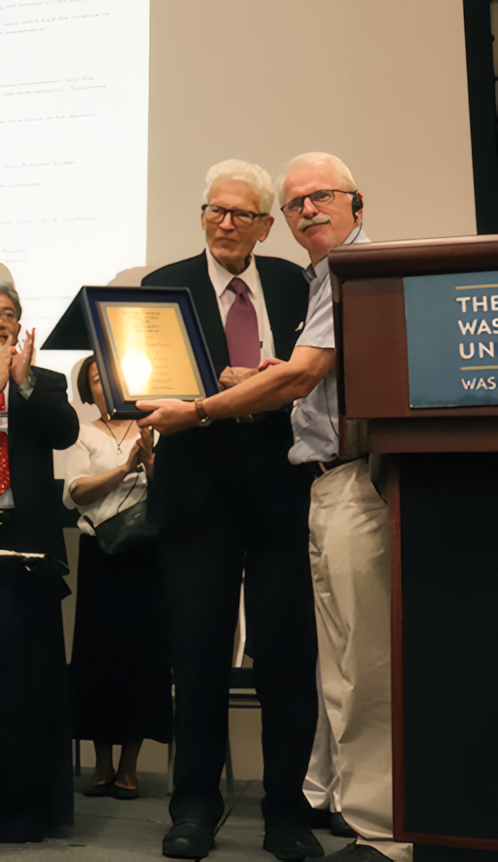
The IARF is deeply grateful to the Boeke family for sharing Rev. Dr. Boeke’s wish that memorial contributions be made to our organisation. We thank all who may choose to honor his memory in this way.
Those wishing to make a gift may do so here. Your support will help continue the work that was so dear to him.
Buddhism and Free Religion: Continuing the Dialogue
The Free Religion Institute is pleased to announce another session in our ongoing series with Rev. Michinori Maruta exploring the connections between Buddhism and Free Religion (自由宗教 jiyū shūkyō).
These talks and discussions have thus far been offered as standalone sessions rather than a formal course for the Institute. We’re excited to share that we have plans to develop this into a structured course offering, with details of a new series to be announced soon.
All Institute materials are available to IARF members registered on our community platform. If you don’t have an account yet, you can set it up for free at iarf.net/register.
Buddhism and Free Religion (自由宗教 jiyū shūkyō)
Upcoming Session: The Middle Path and Free Religion
Join Rev. Michinori Maruta for an exploration of Buddhist perspectives on Free Religion
Thursday, 8 May 2025
Previous Sessions in this Series
26 April 2025: What does jiyu (自由, freedom) mean to you?
Rev. Maruta shared perspectives on freedom from a Buddhist viewpoint and invited participants to share their ideas.
29 March 2025: Buddhism and Jiyū Shūkyō
Exploring connections between Buddhism and free religion.
22 February 2025: Buddhism and Liberation
Rev. Michinori Maruta explored Buddhist perspectives on liberation in this initial session of the series.
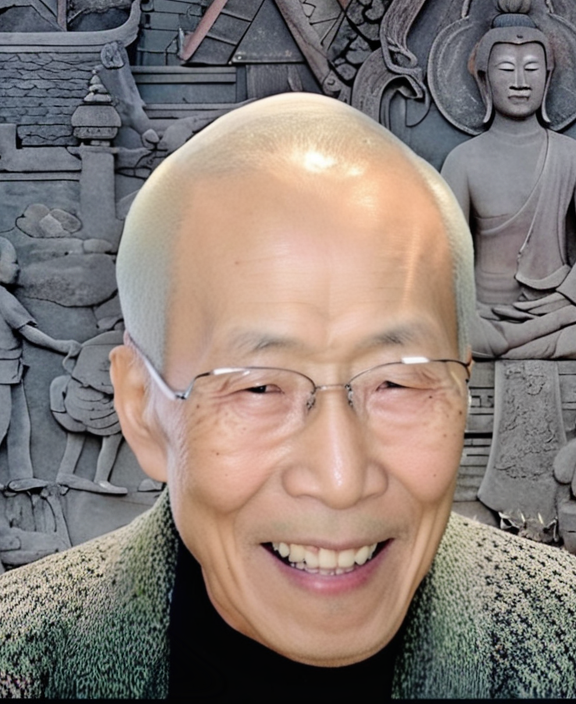
About the Instructor: Rev. Michinori Maruta
Rev. Michinori Maruta has dedicated his life to Buddhist practice and interfaith dialogue since joining Rissho Kosei-kai (RKK) in 1966. After studying applied chemistry at Tokyo University of Agriculture and Technology, he pursued Buddhist studies at RKK Seminary and later studied the New Testament at Ripon College, Cuddesdon, England. His diverse experience includes significant work in interfaith dialogue and cooperation at RKK headquarters, serving as minister at RKK centers in California and Hokkaido, and since 2001, leading the Institute of Mindful Life. Through lectures, seminars, and digital platforms, he continues to share Buddhist wisdom and promote mindful living, bringing together traditional teachings with contemporary understanding.
Free Religion Institute Presents: Imaoka’s Religious Practices (Session 3)
The Free Religion Institute continues its inaugural e-learning season with the third session of Rev. Andrew Brown’s exploration of Japanese free religion through the work of Imaoka Shin’ichirō. This course examines how Imaoka’s ideas have shaped liberal religious thought in Japan, with previous sessions now available as recordings for IARF members.
We’re excited to announce that several new courses are in development and will begin within the next three months, further expanding our educational offerings on free religion and related topics.
For more information about the Institute and its mission, please visit our Free Religion Institute page.
Imaoka Shin’ichirō and Free Religions
Rev. Andrew Brown’s course continues with an exciting third session exploring the practical dimensions of Imaoka’s free religious approach. Recordings and materials from previous sessions are available to registered members through our e-learning platform.
All Institute materials are available to IARF members registered in the IARF Network. If you don’t have an account yet, you can set it up for free.
Enroll in CourseSession 3: Imaoka Shin’ichirō’s explicit, implicit and hoped-for free-religious practices
Exploring Seiza Meditation, weekly gatherings, Principles of Living, educational pilgrimages, and more
Wednesday, June 11, 2025 at 8:00 AM UK time
The session will delve into fascinating practices including:
- Seiza Meditation (the Quiet Sitting method learned from Okada Torajiro)
- Weekly talk and Q&A sessions at the Tokyo Kiitsu Kyōkai
- The recitation of Imaoka’s eight “Principles of Living”
- Educational journeys and pilgrimages
- Walking in nature and aesthetic practices like calligraphy
- Imaoka’s vision for free-religious ceremonies and music

About the Instructor: Rev. Andrew James Brown
A philosophically/theologically inclined writer with deep sympathies towards Imaoka Shin’ichirō’s understanding of creative, inquiring, free and liberative spirituality (jiyū shūkyō 自由宗教), Jōdo Shinshū Buddhism, Konkokyo, Christian non-theism, D. G. Leahy’s “thinking now occurring for the first time”, a Lucretian inspired religious naturalism, new materialism and Kyoto School philosophy. Beyond his academic pursuits, Rev. Brown is also a photographer, cyclist, walker and jazz bass player, serving as the minister of a small, liberal, free religious community in Cambridge (UK).