This May, eleven IARF members from the US, UK, Netherlands, Switzerland and Germany undertook a spiritual and religious journey of two weeks to Japan. Kathy Matsui, member of IARF’s Japan Chapter and one of our UN representatives, accompanied us on the trip, supported for parts of it by Yayoi Kimura of Ittoen and Ritsuko Ushio of the Konko Church.
In Tokyo we were received on the first day by the Buddhist organisation Rissho Kosei-kai, in whose pilgrimage resort we stayed in Tokyo, the Japan Chapter and the Japanese section of the International Association of Liberal Religious Women (IALRW), with a tour of the premises, a tea ceremony, traditional garments, and several presentations.
In Hiroshima, local Chapter members had lunch with us following an impressive visit to the Peace memorial and memorial museum. We spent considerable time in Kyoto and Osaka, visiting amongst others our member organisations Ittoen and the Konko Church, the Aoi Matsuri procession, and having lunch with IARF’s Japan Liaison Committee, alongside visits to several Buddhist temples and shrines. Our thanks also go to our member organisations Mutsumi-kai and Shitenno-ji for their warm welcome and their kind hospitality.
The Ittoen community, due to its location in the hills and its philosophy of humility and servitude, made a lasting impression. Our day at Tsubaki Grand Shrine, in the mountains east of Osaka, taught us about the nature of Shintoism, explained to us in a prayer as adapting to the natural order of things and seeking harmony, and in a way complementary to Buddhism. Koyasan offered two days of meditation and contemplation, with many Buddhist temples, in a beautiful mountainous setting south of Kyoto, where women, until far in the twentieth century, were not supposed to disturb the monks. We stayed in a Buddhist monastery, with vegetarian meals, sober, but delicious.
All participants were united by their sincere interest in classic and modern Japan and their openness to its spiritual traditions, which showed not only during the various encounters with our hosts but also in the talks amongst ourselves. We extend our thanks to all in Japan who made this visit possible. It has shown that enabling personal growth through exchange and common celebration is one of the most valuable aspects of IARF, and that we should undertake more such exchanges.
Use arrows or swipe to navigate. Pinch, double-tap, scroll, or use the controls to zoom.
Unitarian Beginnings and Heritage in Poland: A Historical Pilgrimage
Dates: May 20–26, 2026 |
Location: Poland |
Organizer: Polish Unitarian Society & Partners
We are pleased to share a unique opportunity for IARF members—particularly those in Europe—to explore the deep roots of liberal religion. This historical study tour is hosted by leaders from the Polish Unitarian Society, a member group of the IARF, in collaboration with Unitarian Universalist ministers from the United States.
Discover the “Heartland” of Religious Dissent
Join a journey back to the 16th century, visiting the Unitarian “heartland” where the Polish Brethren (also known as Socinians) established congregations that openly challenged dogma, rejected infant baptism, and championed pacifism. These events occurred eight years before similar movements in Transylvania, making this a crucial site for the history of religious freedom.
The influence of the Polish Brethren was monumental for the development of liberal religious and political thought in Holland, England, and America. The tour will focus on Raków, the intellectual center where the famous Racovian Catechism was printed in 1605.
Itinerary Overview
This pilgrimage moves from the modern capital to the historic countryside, ending in the royal city of Kraków.
WarsawDay 1: May 20
Afternoon arrival in the capital. Orientation and welcome dinner with the group.
Warsaw → The CountrysideDays 2-3: May 21-22
Meeting with local Unitarians and historian Prof. Stanisław Obirek. Departure by chartered bus to the historic heartland.
Raków & SurroundingsDays 4-5: May 23-24
Based near Raków, we visit worship sites of the Polish Brethren—some restored, others in evocative ruins.
KrakówDays 6-7: May 25-26
Tour concludes in the royal city. Visit Wawel Castle, the Old Town, and WWII history sites. Closing dinner.
Departure is scheduled for the morning of May 27.
Cost & Logistics
The tour is led by Rev. Jay Atkinson, Rev. Roger Jones, and Rev. Kevin Tarsa, alongside local Polish lay leaders Justyna Borusińska and Jarosław Wajchert.
Cost: Approx. $1000 USD (double occupancy) / $1200 USD (single). Includes lodging, local transport, breakfasts, and some meals. (Airfare not included).
Financial Aid: Scholarship aid is being explored for seminarians and early-career ministers.
Registration & Contact
For questions, specific payment details, or to register for the tour, please contact the lead organizer, Jay Atkinson.
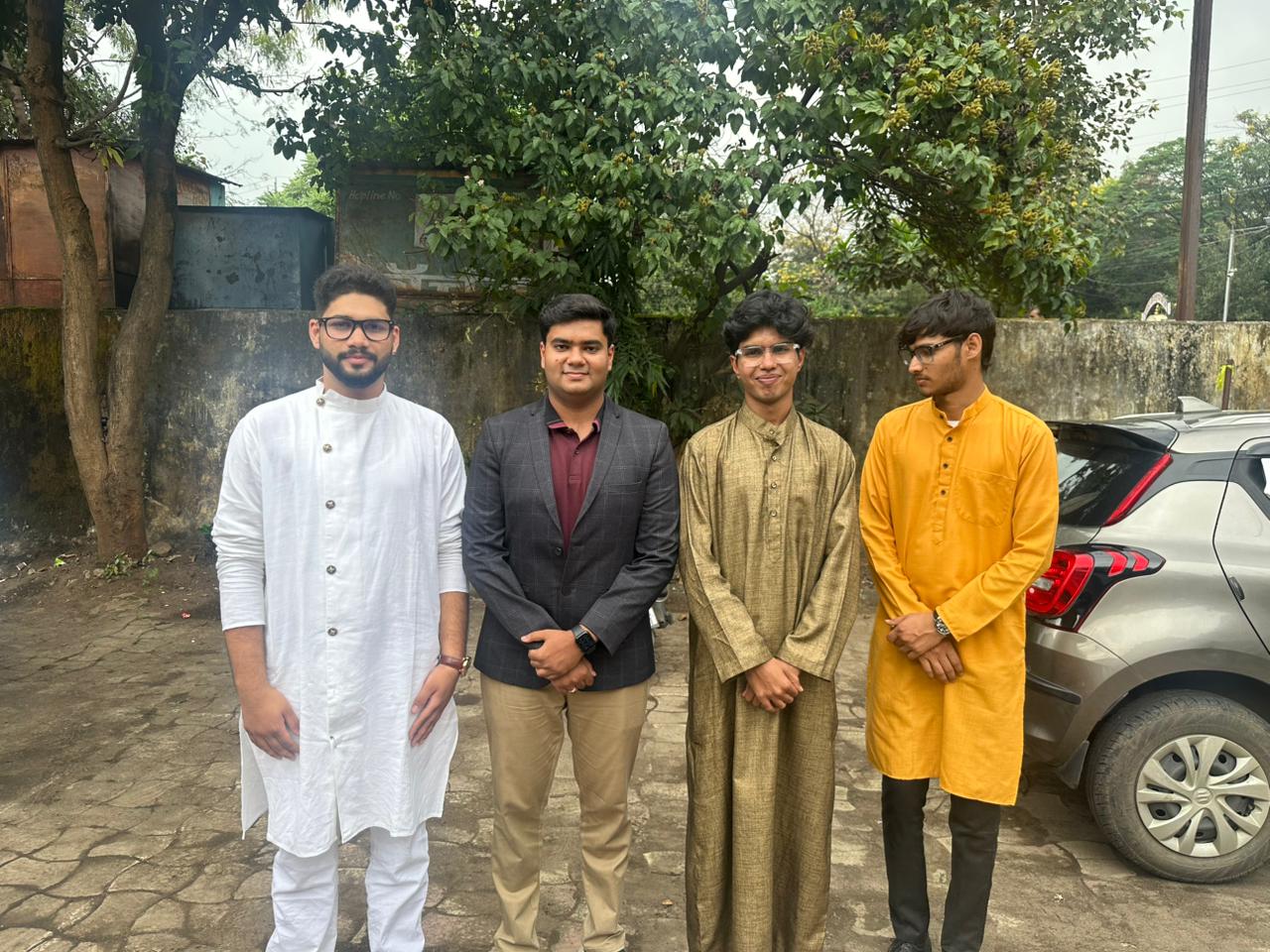
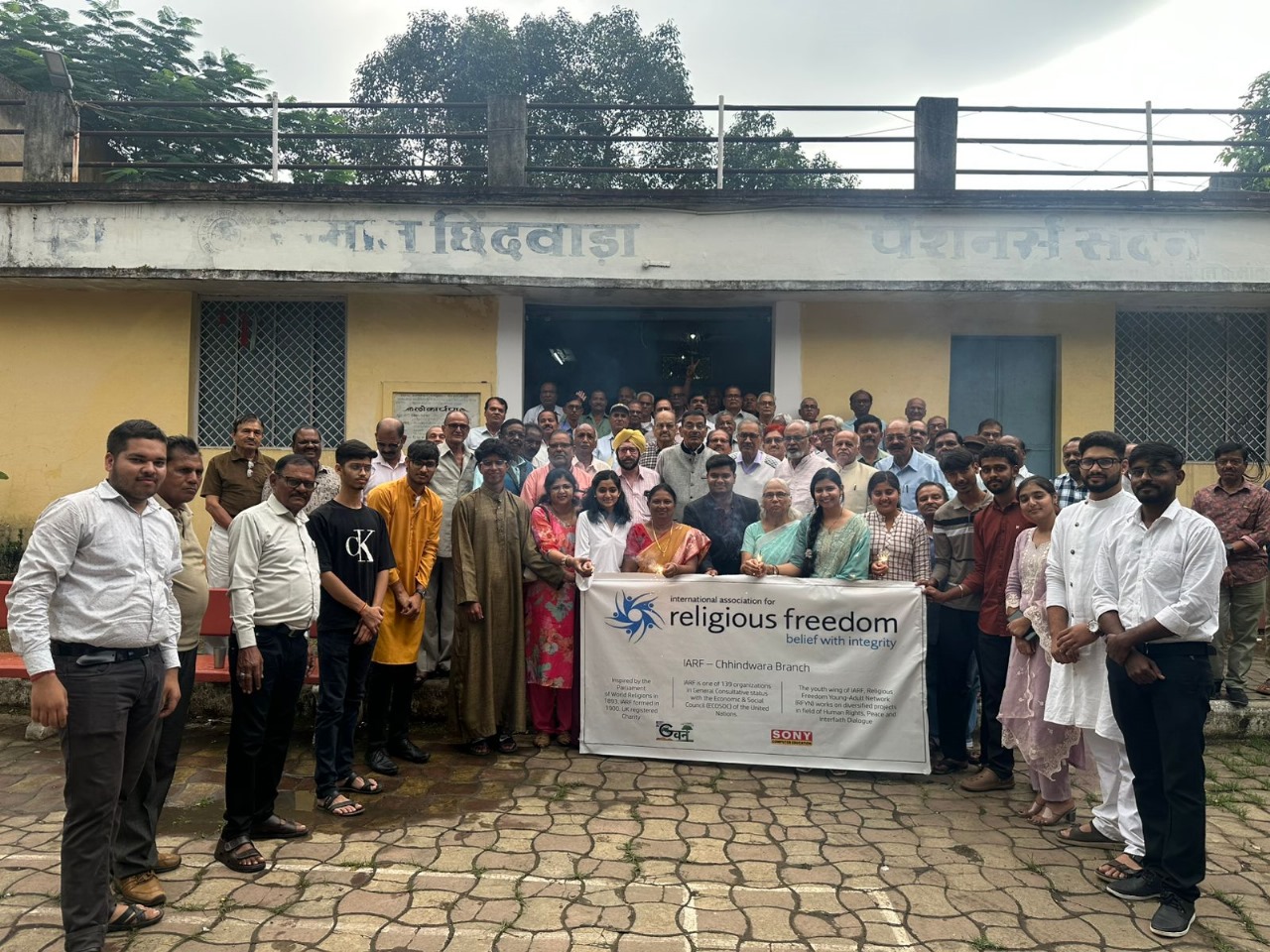
The Chhindwara Branch of the International Association for Religious Freedom (IARF) organized a दिवाली मिलन (Diwali Meetup) and Interfaith Harmony event at Pensioners Sadar, Chhindwara, bringing together senior community members, youth participants, and interfaith representatives in a shared celebration of peace, respect, and human dignity.
The program included prayer recitations by young students belonging to Christianity, Hindu, Jain, Muslim and Sikh traditions, demonstrating IARF’s long-standing commitment to interfaith understanding and freedom of belief. The active involvement of the youth highlighted the role of education and dialogue in strengthening a culture of mutual respect across generations.
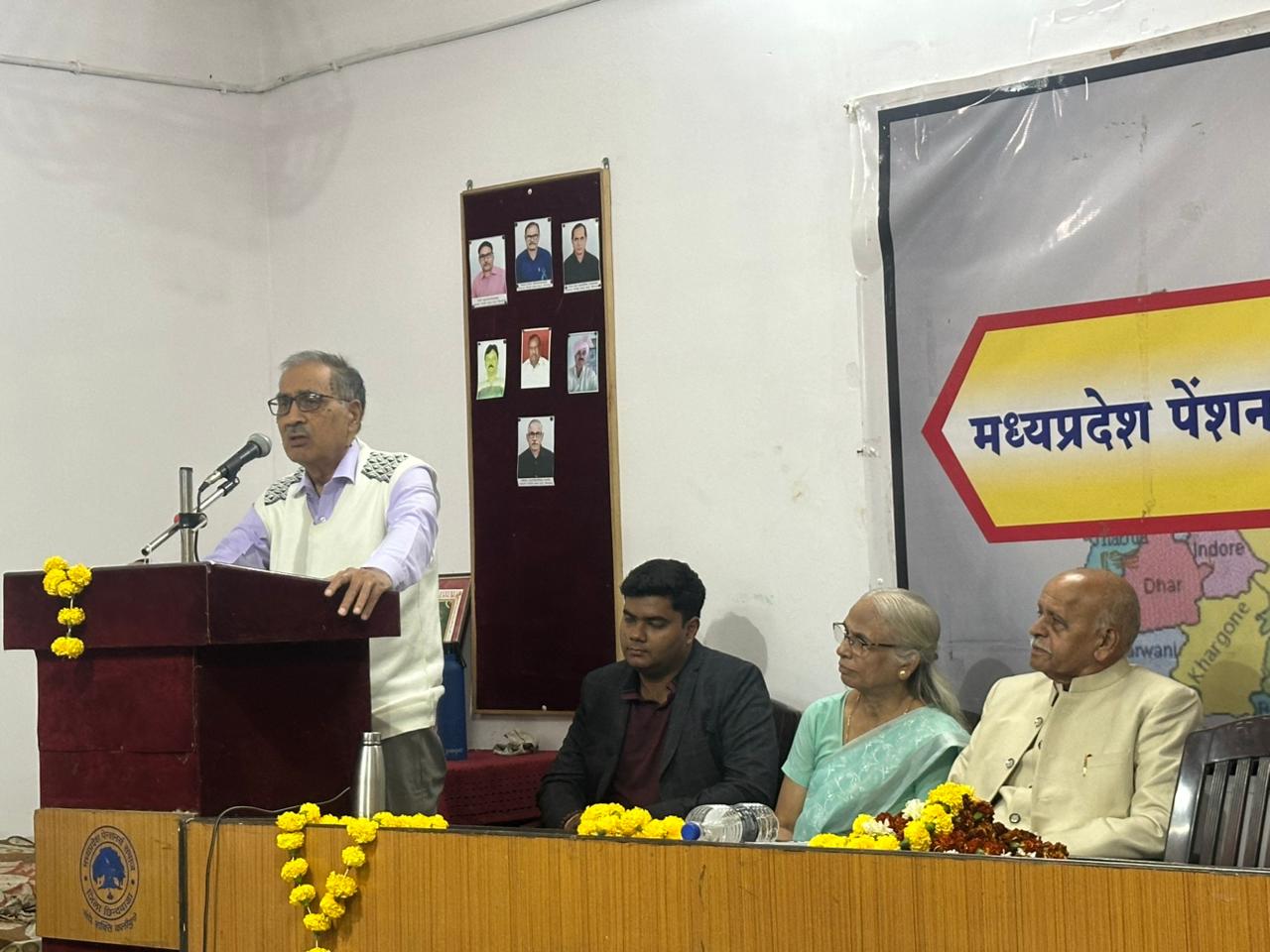
Mr. Aayush Soni, Vice President of IARF & RFYN representative, addressed the gathering and extended warm Diwali greetings to all present. He briefly updated the attendees on recent IARF activities at the national and international level, including developments from the EME Conference and initiatives of the Free Religion Institute, reinforcing the shared vision of continued interfaith cooperation and educational outreach.
Dr. K. K. Shrivastava, Founder and senior member of the IARF Chhindwara Branch, who served as the chief guest, emphasized the importance of peaceful coexistence, human rights, and the protection of religious freedom for every individual, which remain central to IARF’s mission worldwide.
The program was coordinated by Dr. Brown, former India Chapter Representative of IARF, who guided the flow of the event and shared his insights on the value of interfaith cooperation in contemporary society. He also underscored the growing need to expand interfaith efforts in the region and expressed support for the establishment of a North India Chapter of IARF to further strengthen grassroots engagement.
The gathering was attended by members of the Pensioners’ Association, representatives from local organizations, and students from Sony College, reflecting a meaningful blend of experience and youthful energy. The program reaffirmed the Chhindwara Branch’s dedication to building harmony through dialogue, compassion, and education.
The Limits of Tolerance and Religious Freedom: Report from the 2025 EME Conference
The following is a translation of the report scheduled to appear in the upcoming newsletter of the Free Religious Congregation in Offenbach. For more details on the conference programme and speakers, please visit the official conference page at iarf.net/eme-conference-2025.
The tension and excitement were immense: participants from around the world gathered in our community to discuss one of the greatest challenges of our time. Where must religious freedom end to protect more essential human rights? Where should the boundaries of our tolerance be drawn when we face extreme beliefs and worldviews?
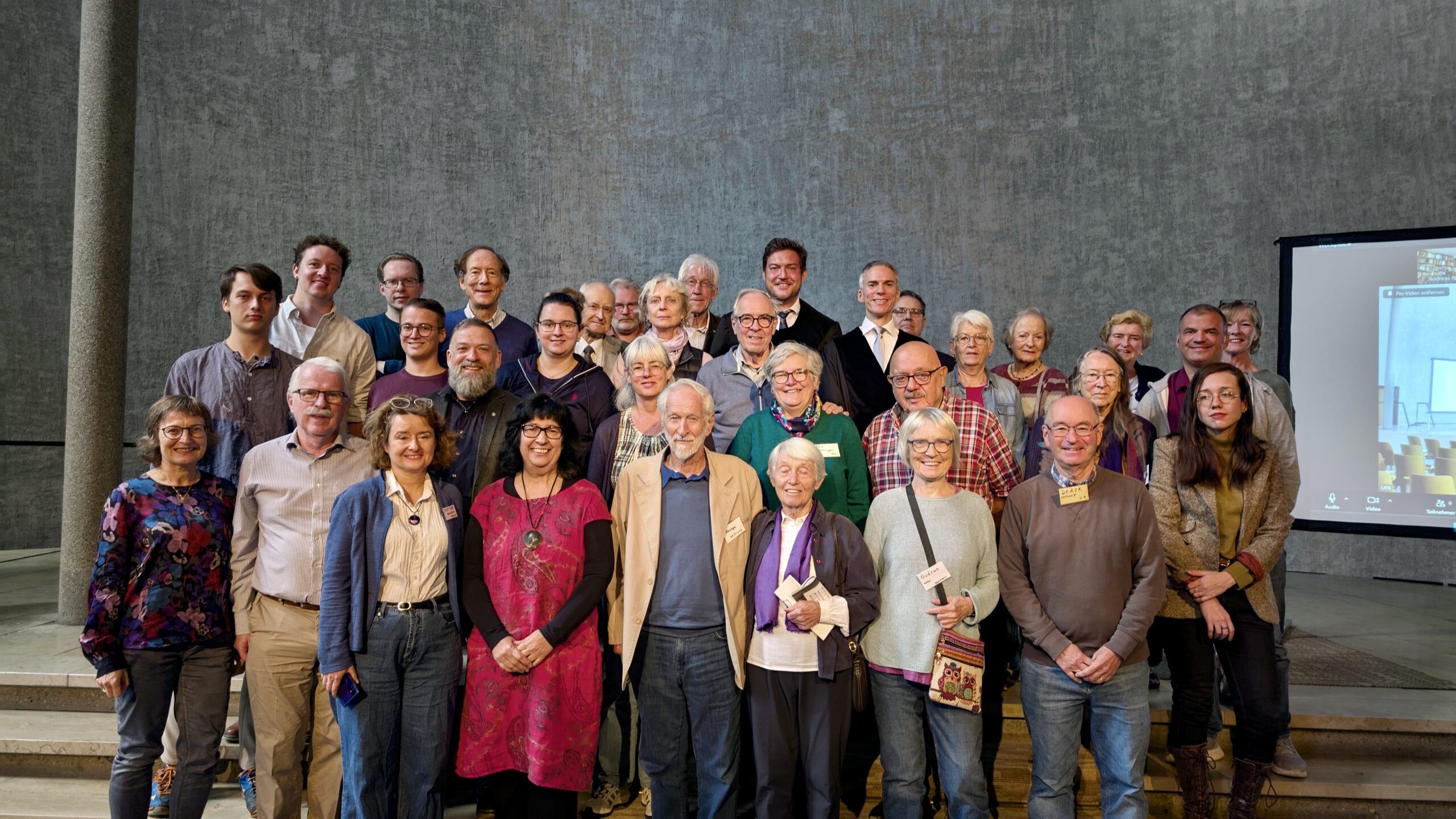
For four days, the participants tackled these and other questions. Unitarians, Unitarian Universalists, Remonstrants, Free Christians, liberal Muslims, Christian Unitarians, and other free-religious and freethinking movements from the USA, Brazil, Europe, and the Middle East showed how seriously they take this issue. Yet, coming together—the warm, open, and friendly encounters and exchanges—was always the top priority. New acquaintances and even friendships were formed. Old companions reunited, and complete strangers discovered how much they share!
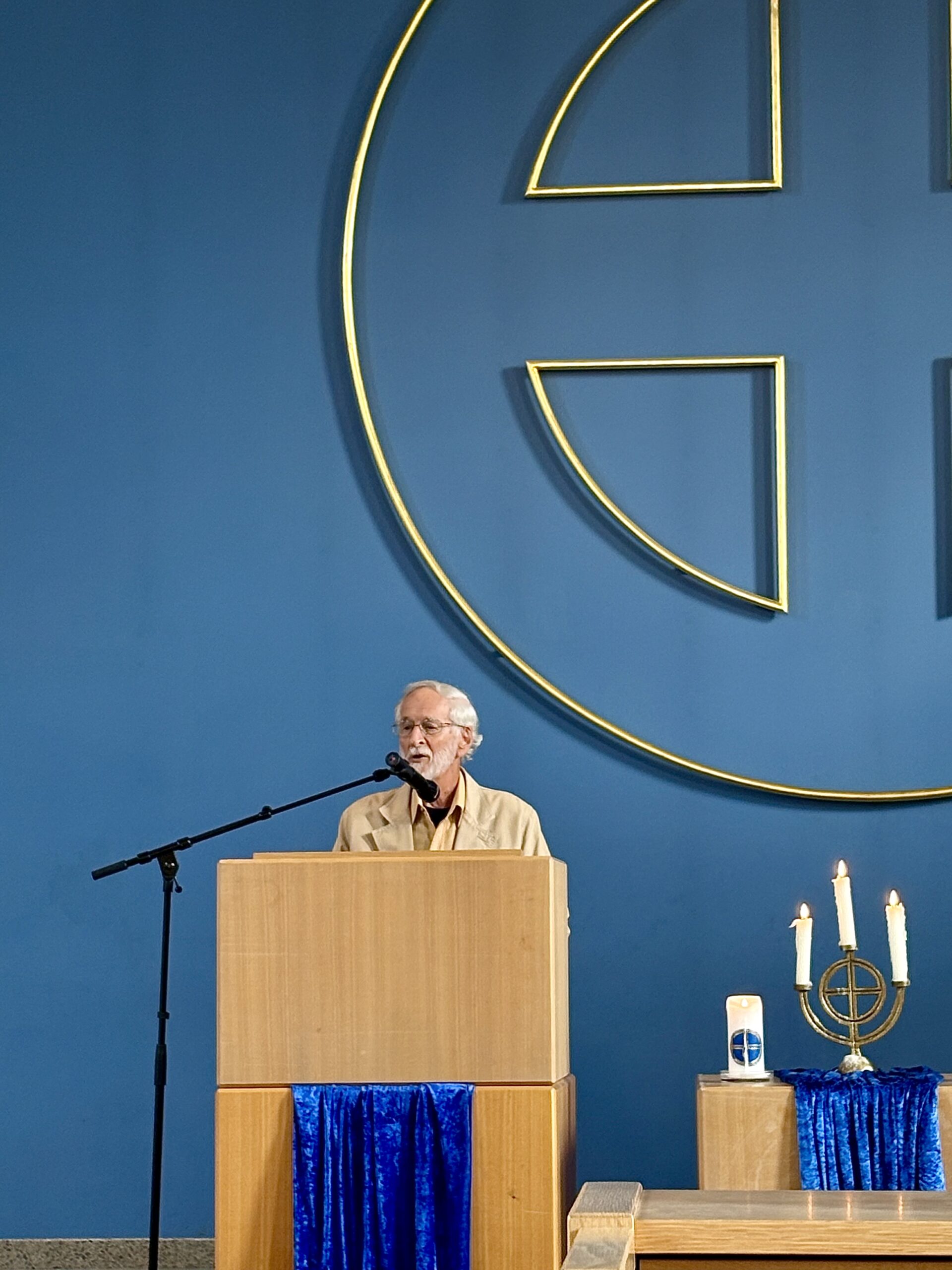
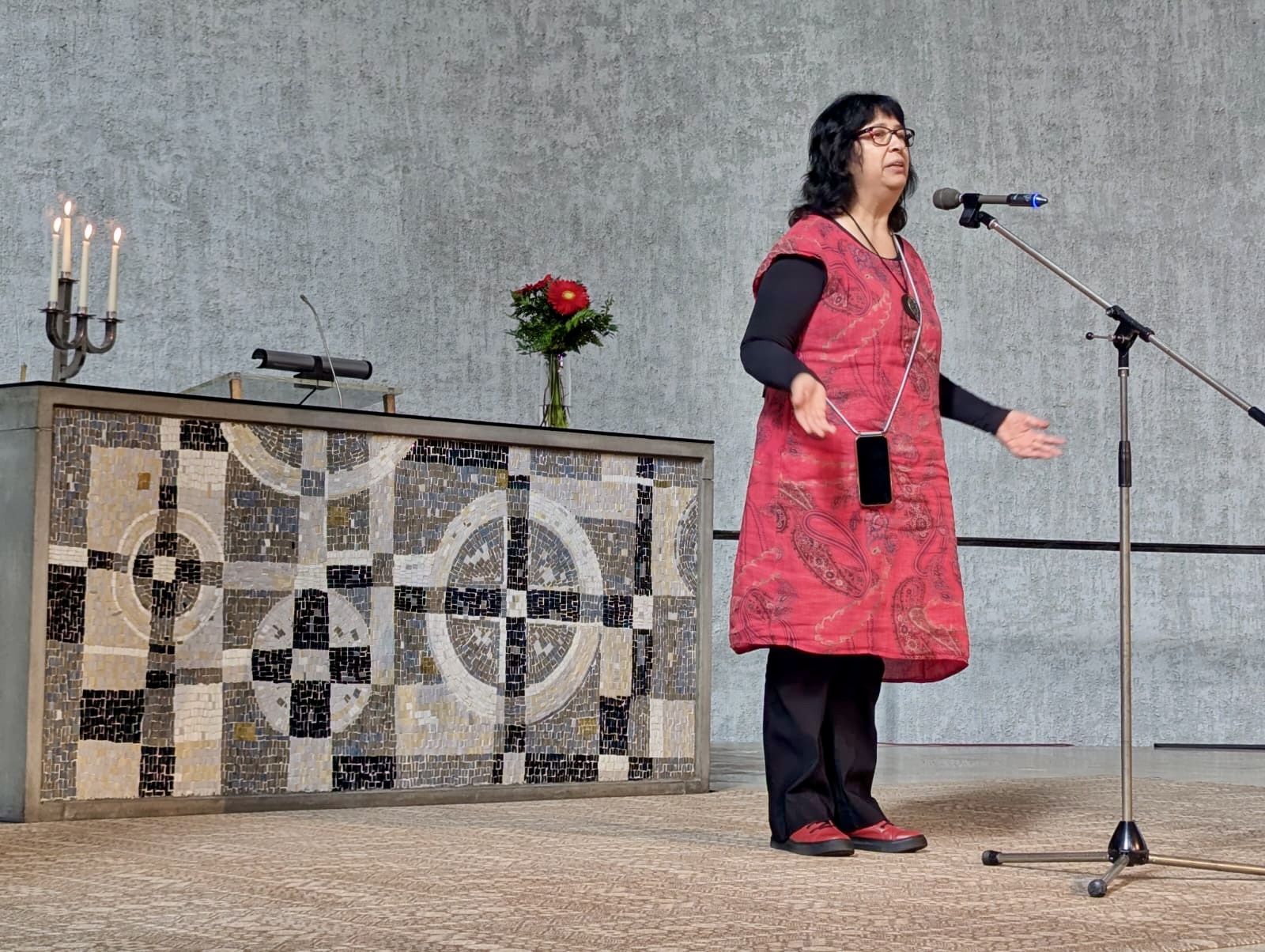
Absolute highlights of this conference were our guests of honor: Firstly, the President of the International Association for Religious Freedom (IARF), Professor George Williams, who traveled all the way from Hawaii. Secondly, women’s rights activist and Imam Seyran Ateş, founder of the Ibn Rushd-Goethe Mosque, delivered the keynote address for the conference, offering a deep insight into the world of dealing with extremism and intolerance—especially as she is constantly confronted with it herself. Moreover, she honored us by participating in the interfaith service with a contribution of her own.
In the following, we would like to give you a more detailed insight into the conference and the pre-tour! But first, the most important thing: An immeasurable “Thank You” goes to my team at Schillerplatz. Philippe Bender, Alexander Goy, Henry Rodriguez, and Kathrin Corso worked in the background to ensure the smooth care and support of our house guests. Additionally, Johannes Spindler from the Unitarians – Religious Community of Free Faith, was a great help from the very first minute in managing technical and organizational tasks on-site, and in him, I found a new friend and companion.
And last but not least, there are Gudrun Hahn from the Frankfurt community and chair of the German IARF member group, Matthias Pilger-Strohl, Dorothee Gehrmann, Angela and Alexandra Wegel from our community, as well as Pastor Alexander, Sonja Weisdorf, and Stefan Vardopoulos from the Frankfurt community, where the last day of the conference took place and who took care of all the challenges for a successful conclusion. A big thank you finally goes to Lukasz Liniewicz, who as the Secretary of IARF supported the live streams and organization! “Thank you” to all of you!
Below, you can find recordings of the main events from the conference, hosted in the new IARF Digital Library. Each video includes subtitles available in both English and German.
Conference Pre-Tour: Offenbach and Frankfurt in a Nutshell
Pre-Tour: Day 1, Tuesday, September 9, 2025
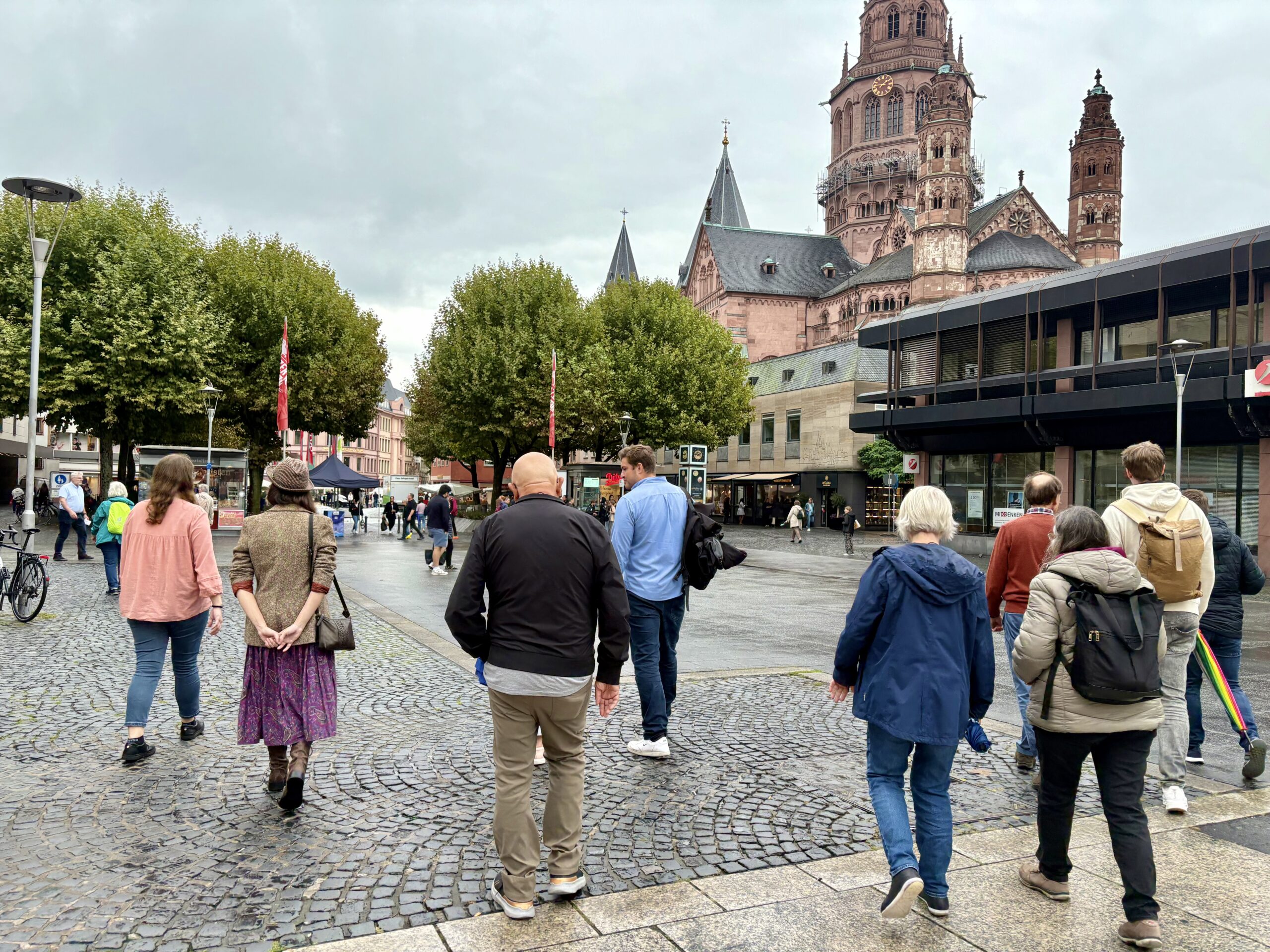
On the first day of our pre-tour, we had a lot planned as a grand bus tour was on the agenda. Together with the guests of the IARF EME Conference, we visited many friendly Free Religious communities near and far.
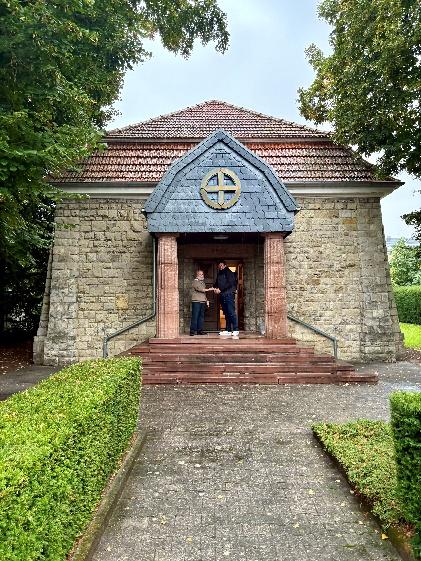
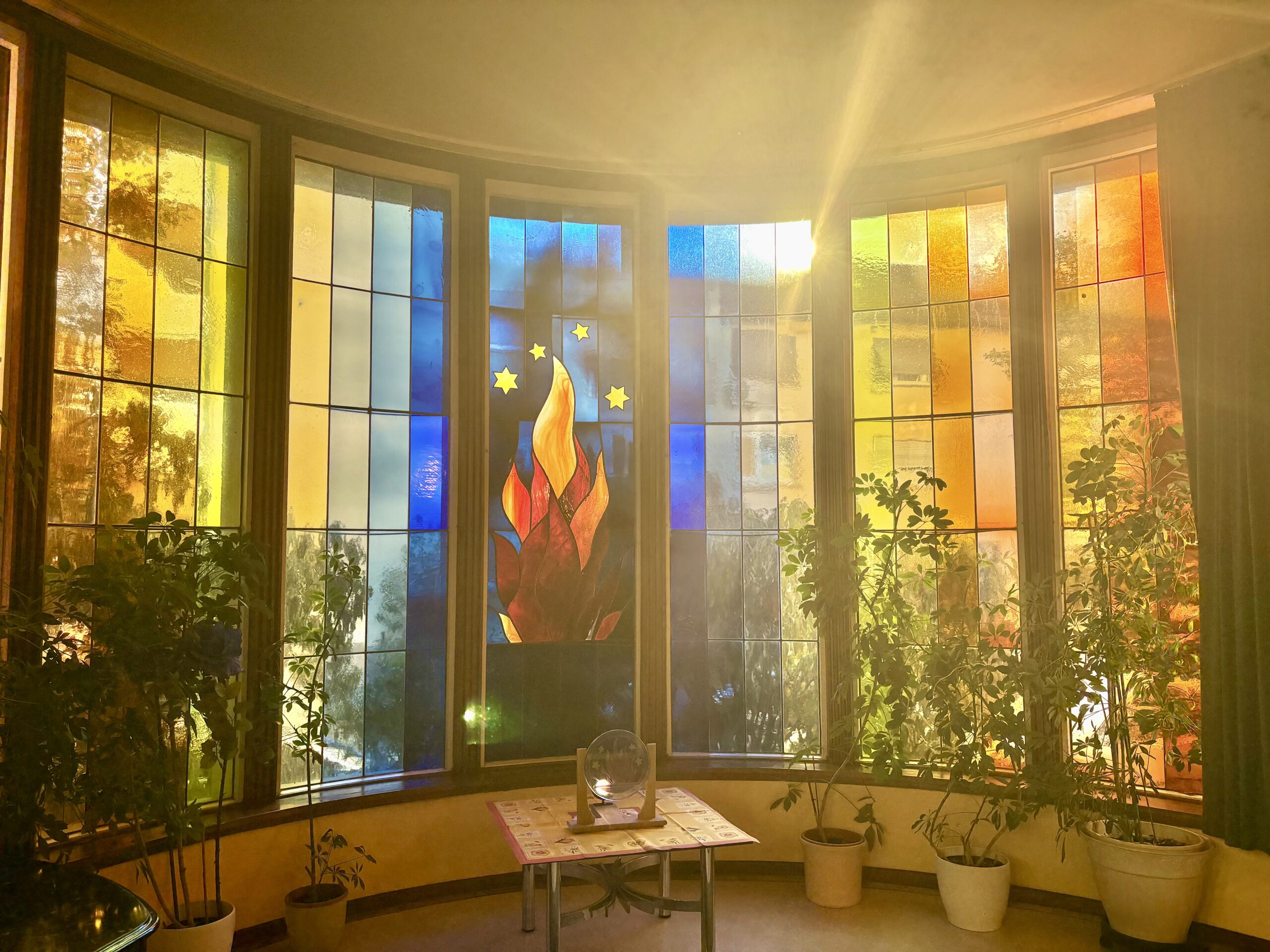
The tour started at the Free Religious Community in Ingelheim. Here we admired the oldest completely preserved consecration hall from 1910 and were introduced to the beginnings of the Free Religious movement.
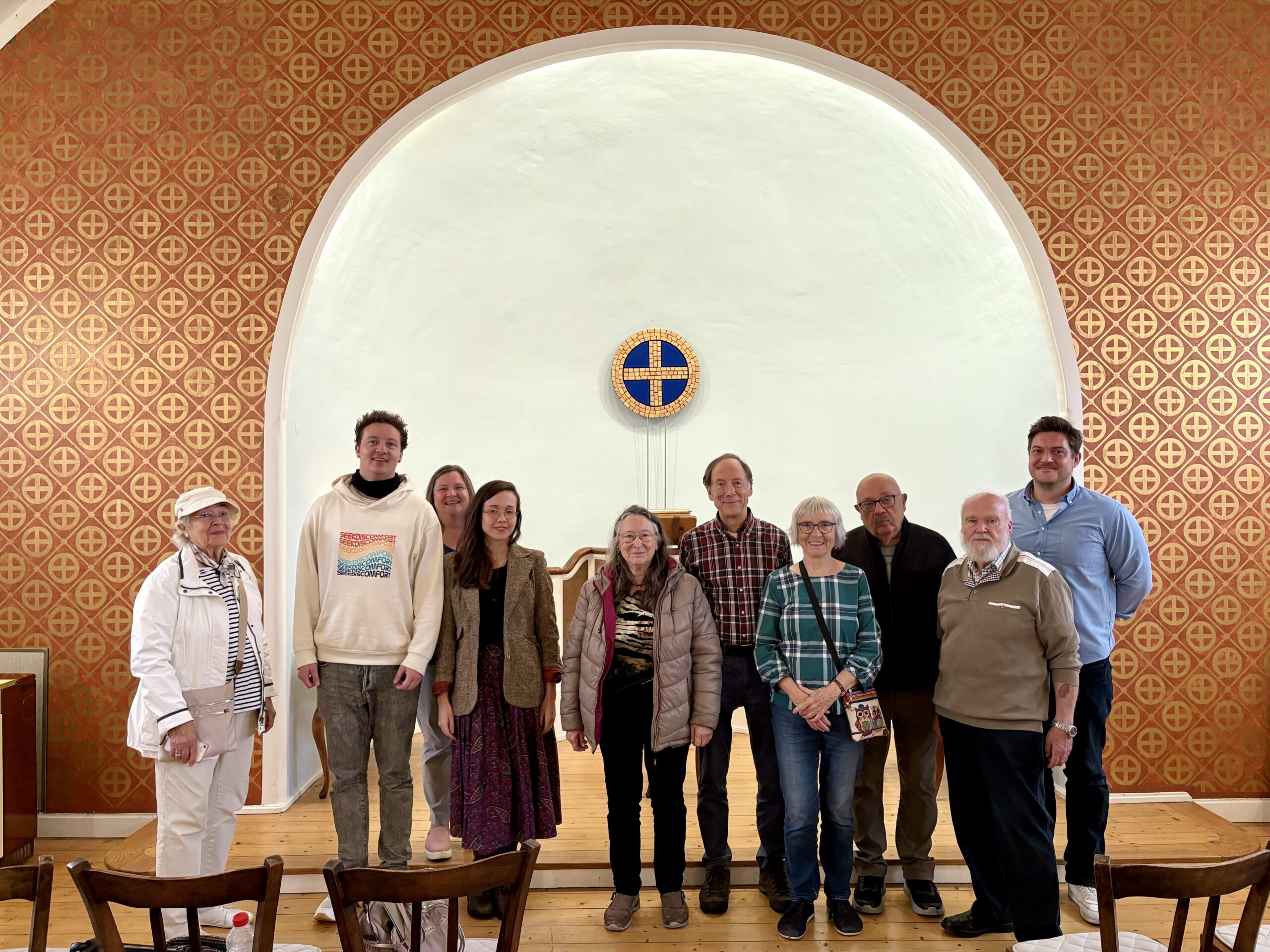
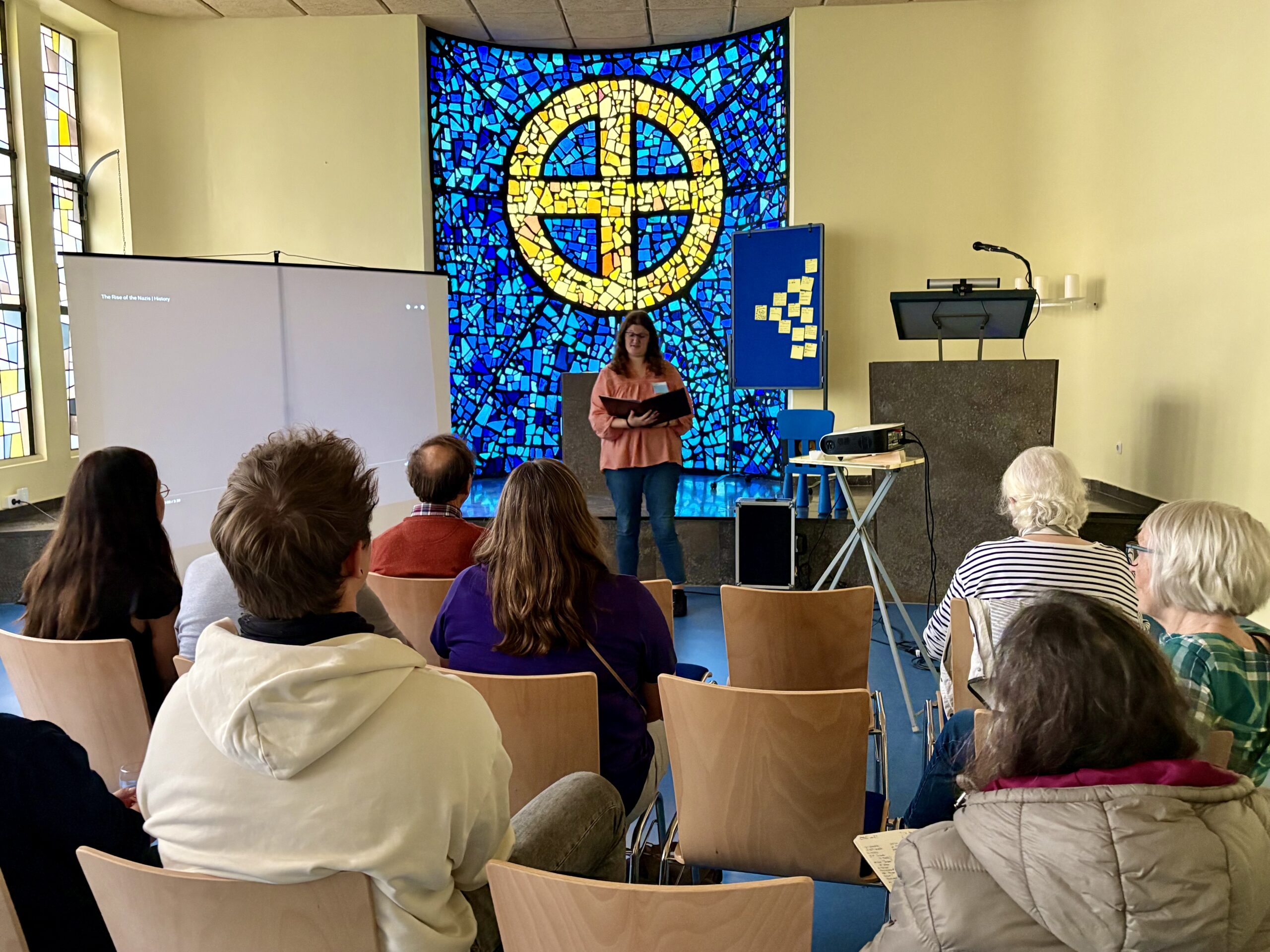
After a short drive, we reached the Free Religious Community in Mainz, in the heart of the Rhine city. There, we were once again warmly welcomed and had the opportunity to learn about the situation of the community and the movement during the Nazi regime in the Third Reich.
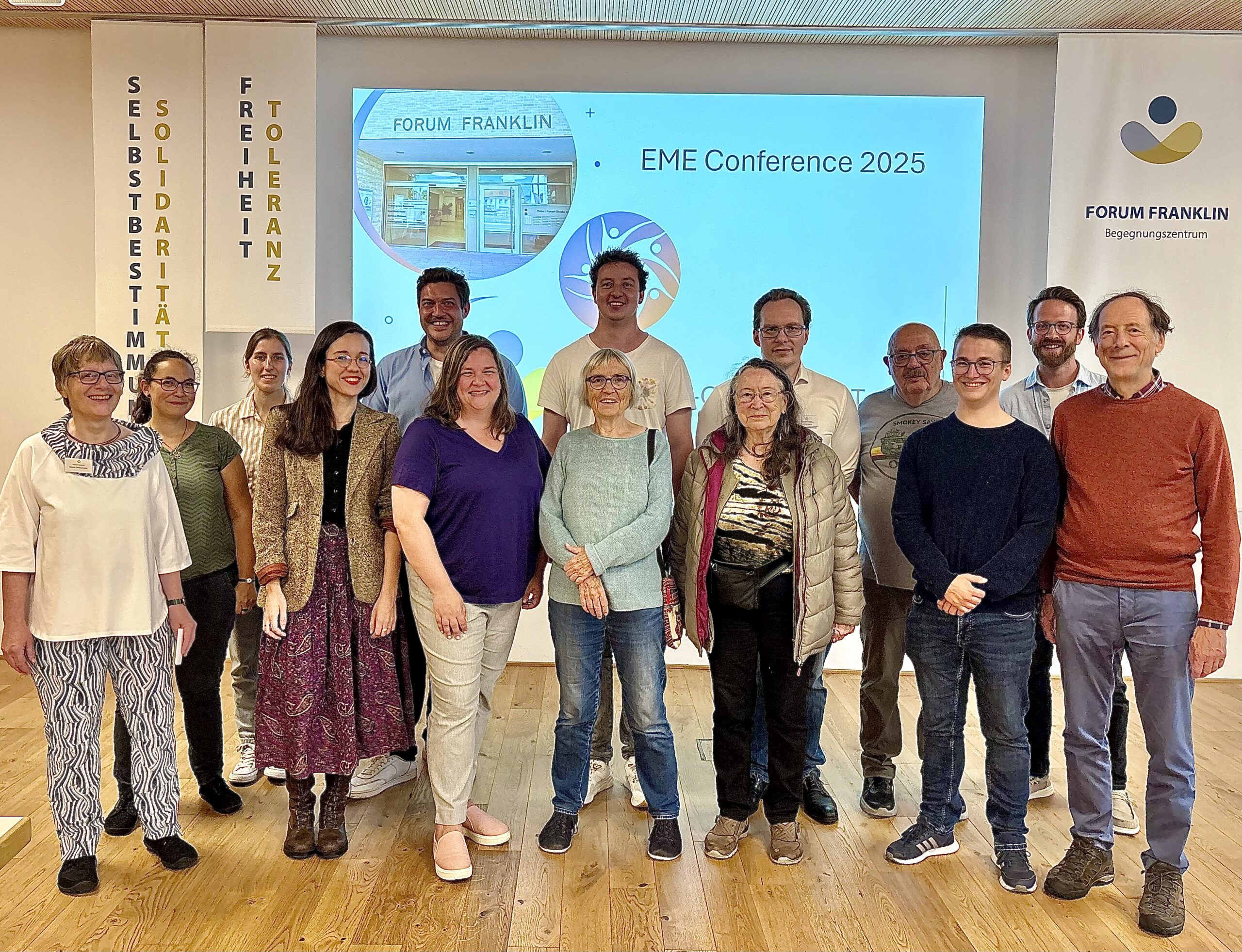
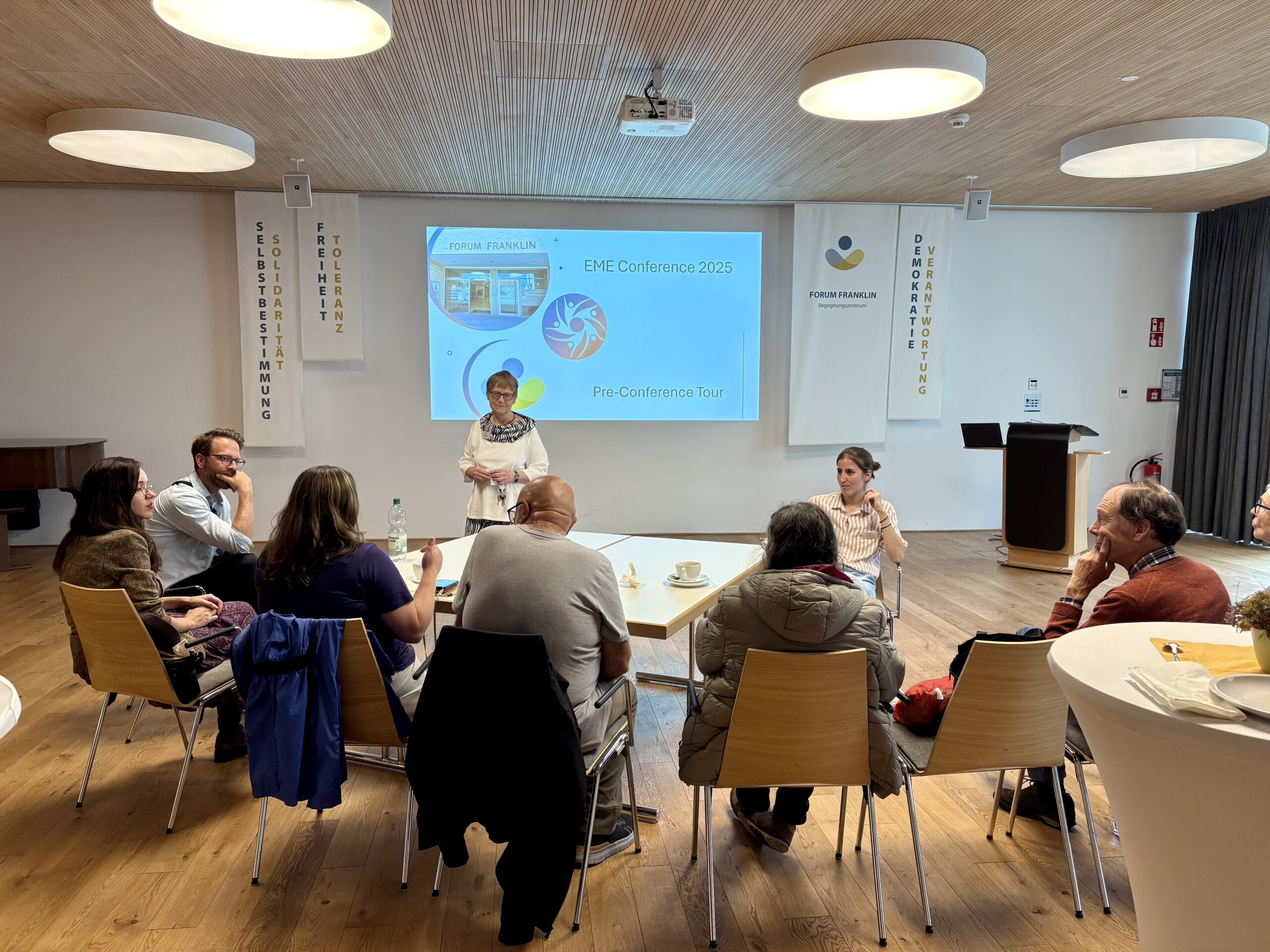
A leap into the present was taken at the Forum Franklin in Mannheim, the headquarters of the Free Religious State Community of Baden. Here, impressive ways of social and intergenerational encounters based on free-thinking and humanistic values were presented.
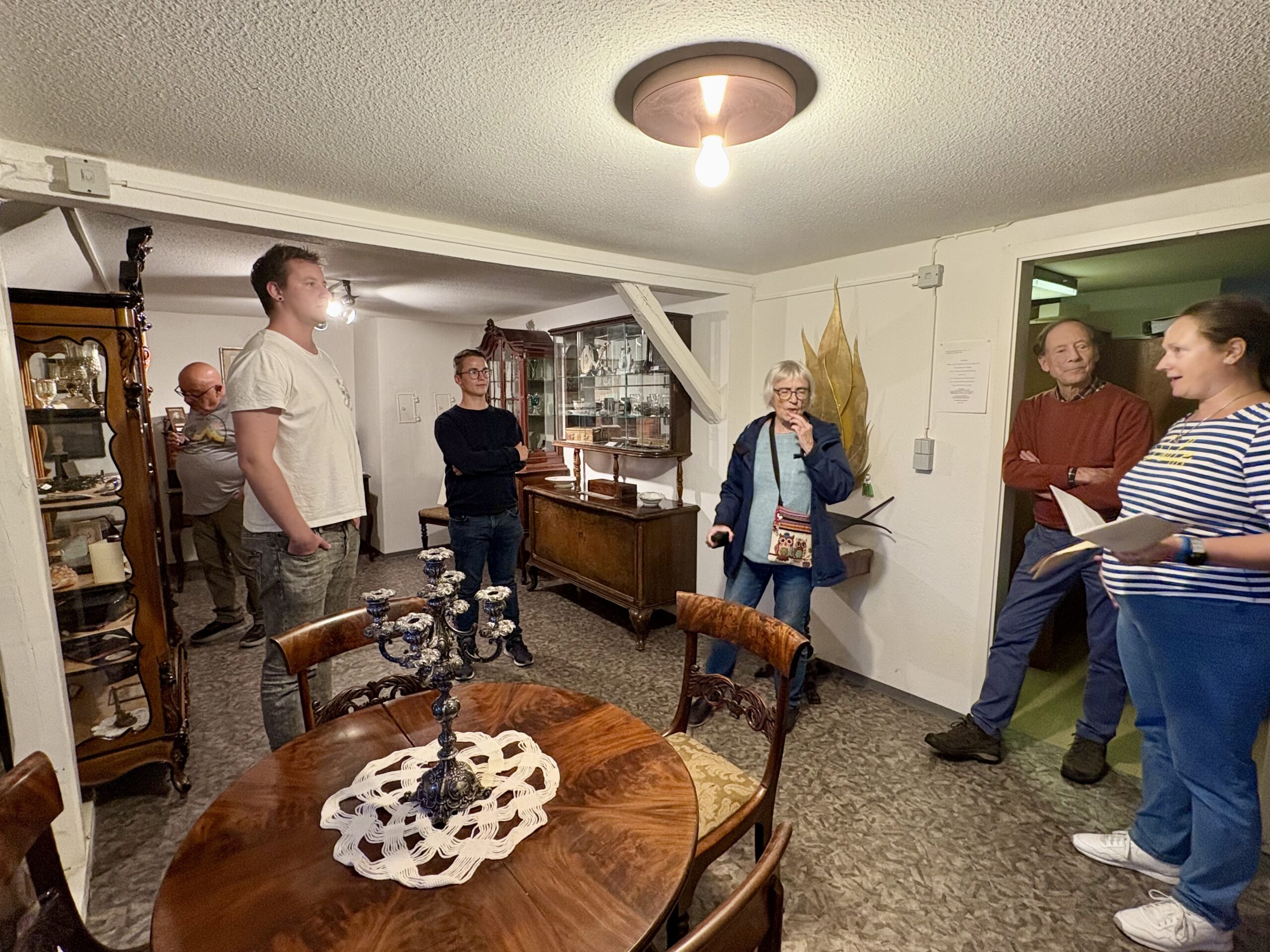
The joyous conclusion took place in Ludwigshafen at our friendly Free Religious State Community of Palatinate. We were warmly hosted, informed, and entertained with singing and good conversations. We also gained insights into the Ronge Museum, which contains the estate of the co-founder of the Free Religious movement, Johannes Ronge.
Pre-Tour: Day 2, Wednesday, September 10, 2025
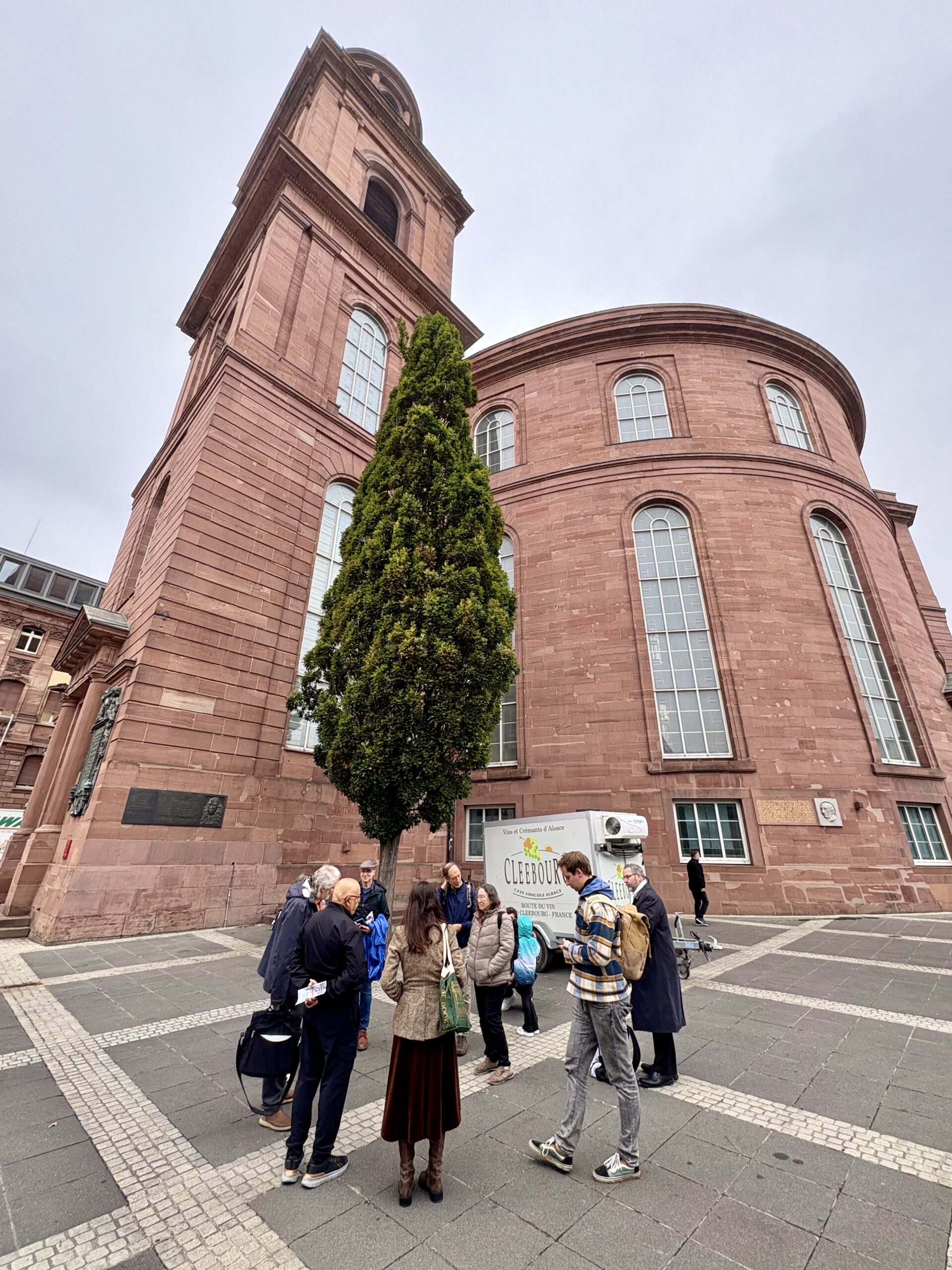
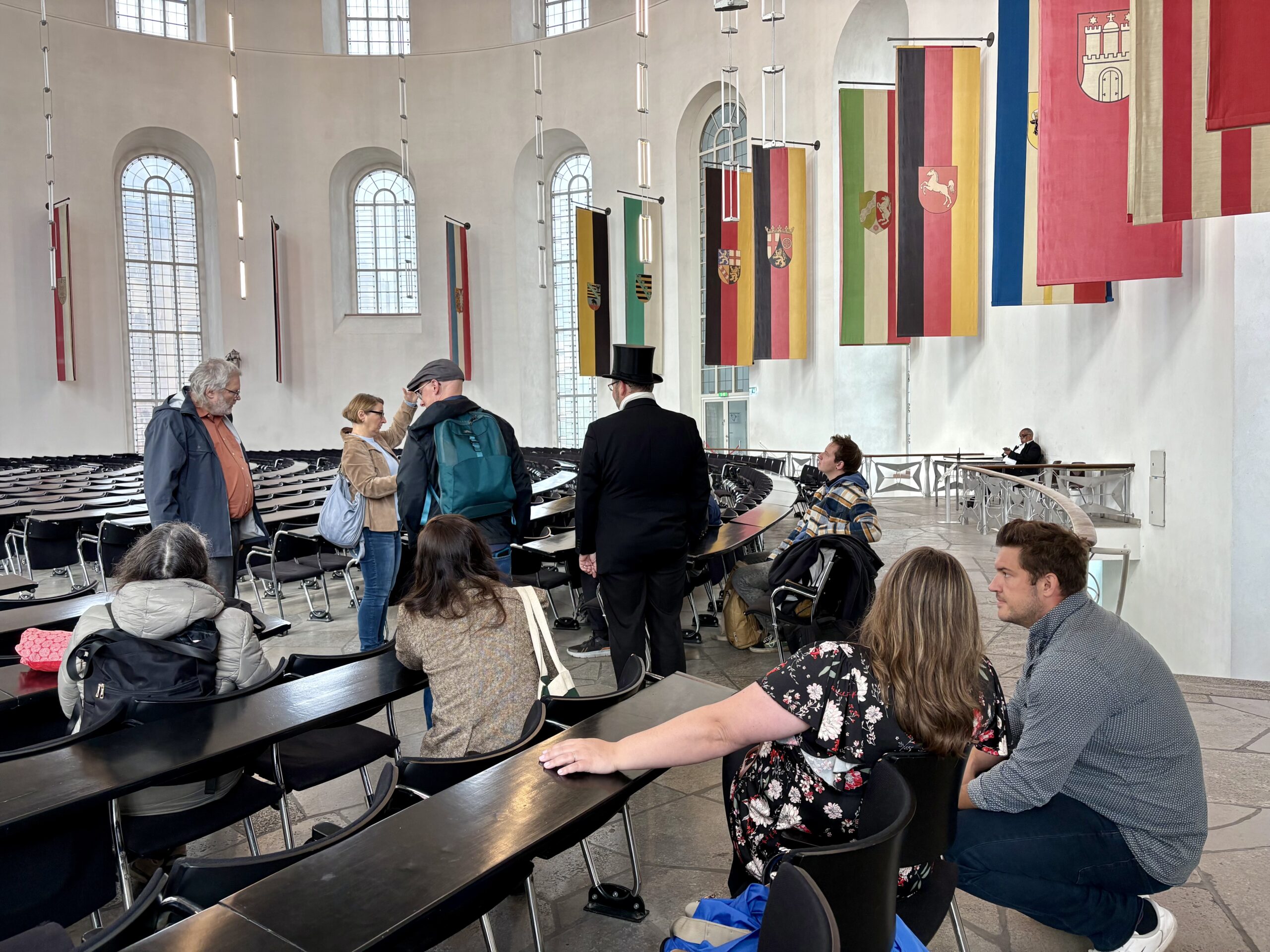
The focus of this day was the city of Frankfurt am Main, and what better place to start than where a part of the Free Religious movement began: in Frankfurt’s St. Paul’s Church (Paulskirche)!
Arriving at the historic building, a guided tour brought us closer to the connections between the German Revolution, the Frankfurt National Assembly, and the city of Frankfurt. Moreover, through a small journey through time, we were able to connect with contemporary witnesses of the Free Religious movement who were active in the Paulskirche parliament.
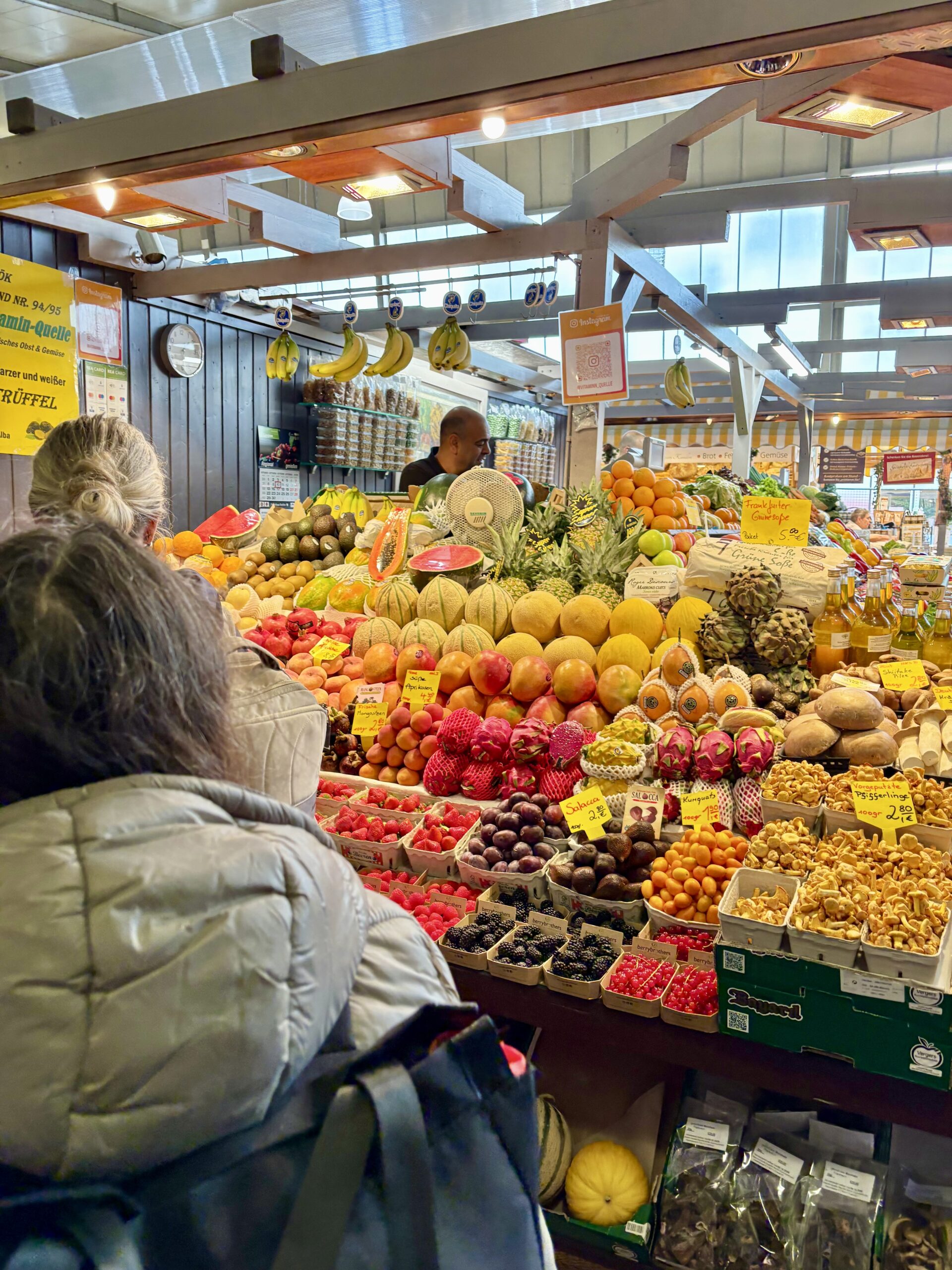
After the tour, we soaked up the Frankfurt lifestyle with a snack in the Kleinmarkthalle!
Strengthened, we then met with our sister community, the Unitarian Free Religious Community of Frankfurt, where we were warmly welcomed as usual, and the guests got an insight into our partnership.
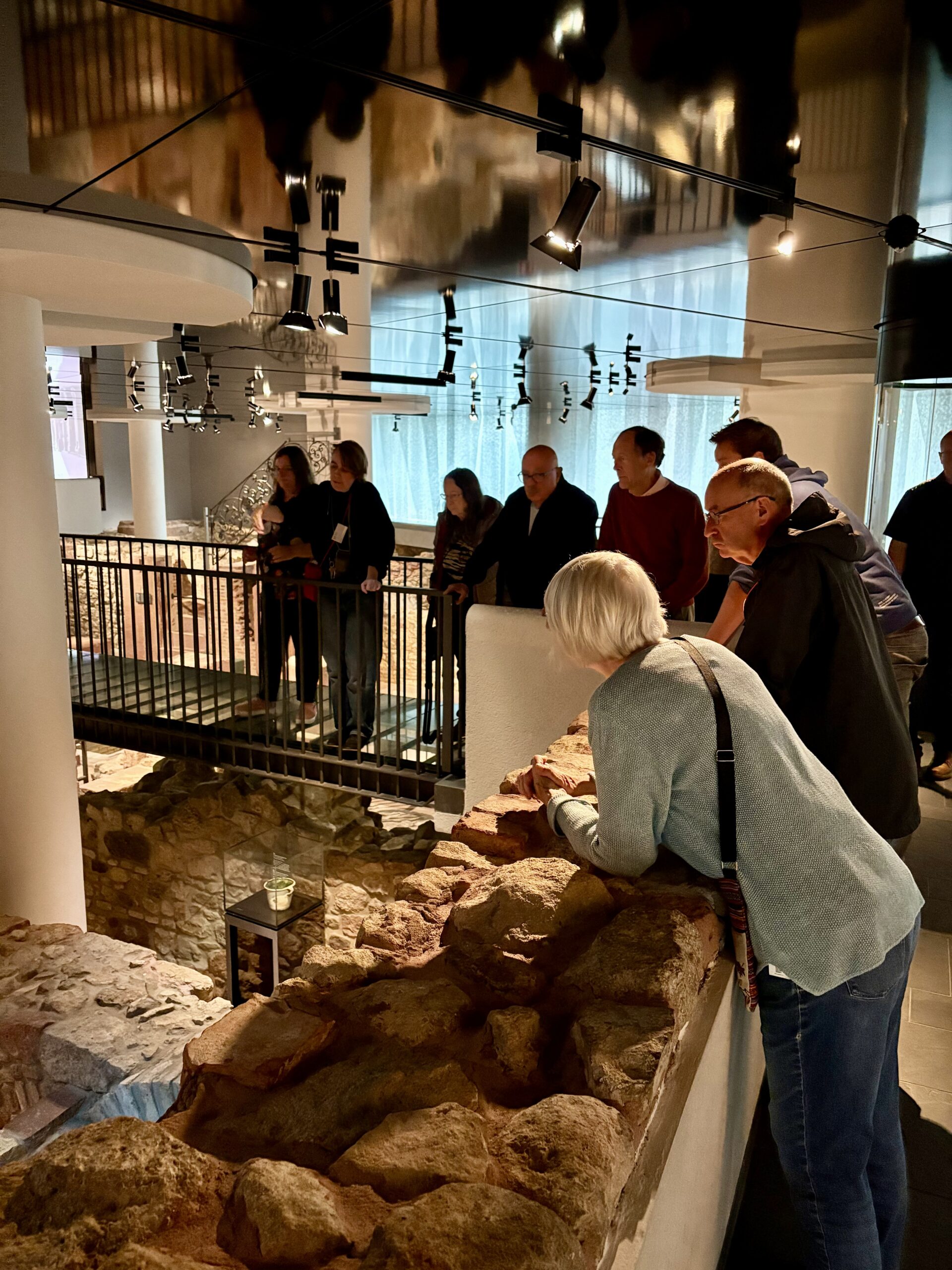
The Museum Judengasse was our next stop. In an impressive way, the guests were introduced to the historical life of the people in the Frankfurt Ghetto and shown how social protest for preservation and a culture of remembrance can lead to success.
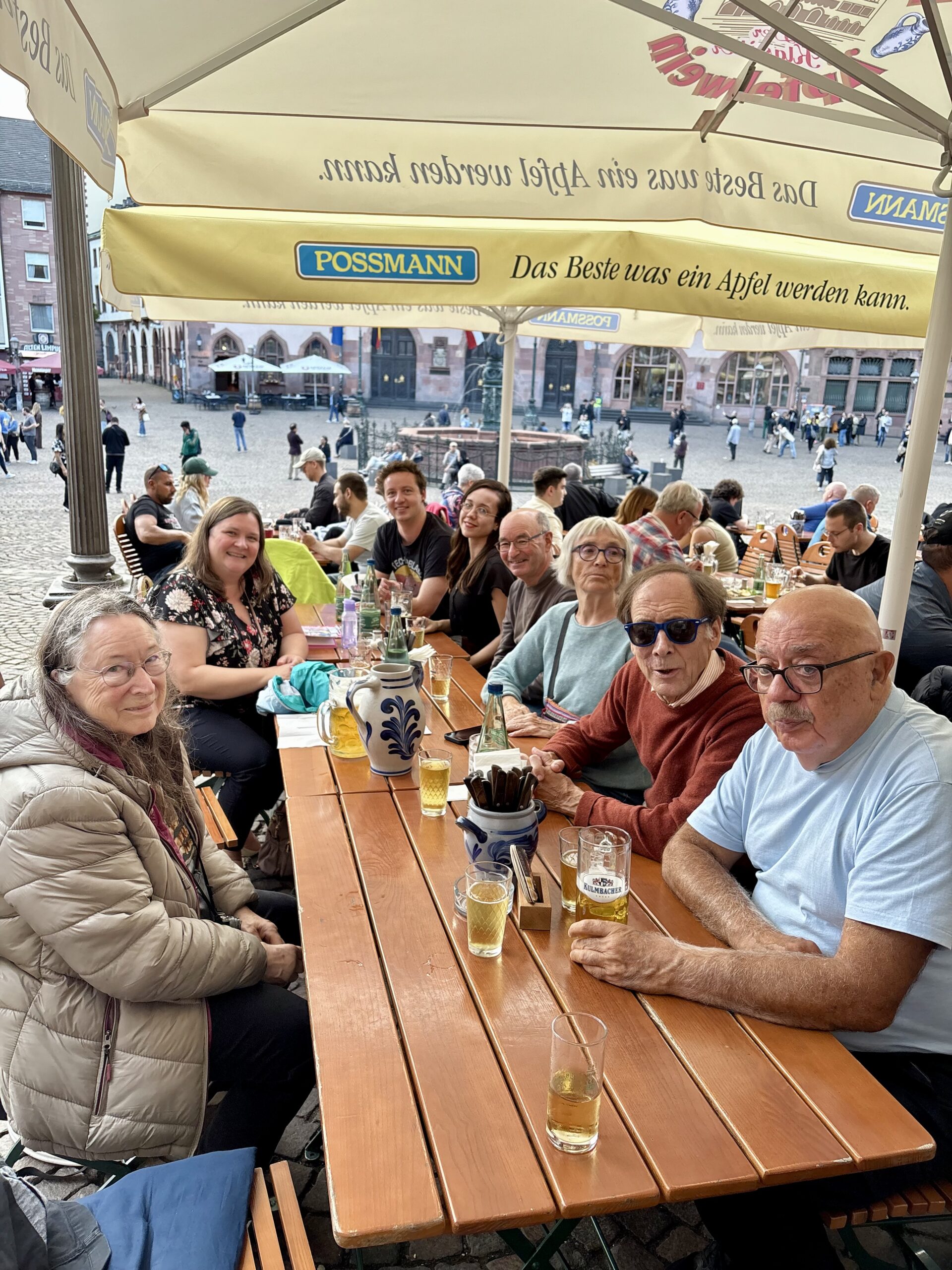
After these many impressions, we ended the day relaxing on Frankfurt’s Römer square with apple wine, excited for what the next day—the official opening day of the conference—would bring.
Pre-Tour: Day 3, Thursday, September 11, 2025
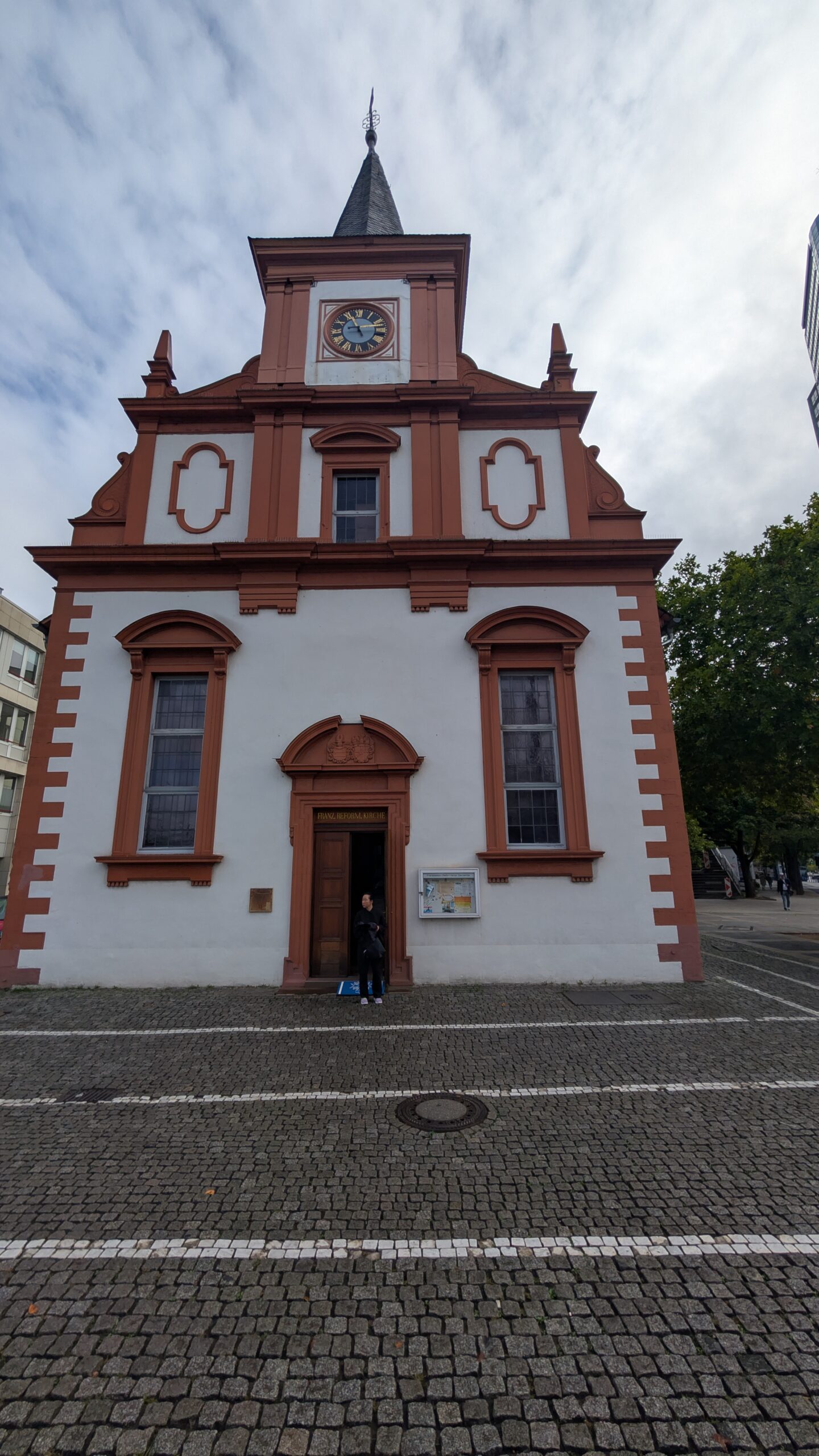
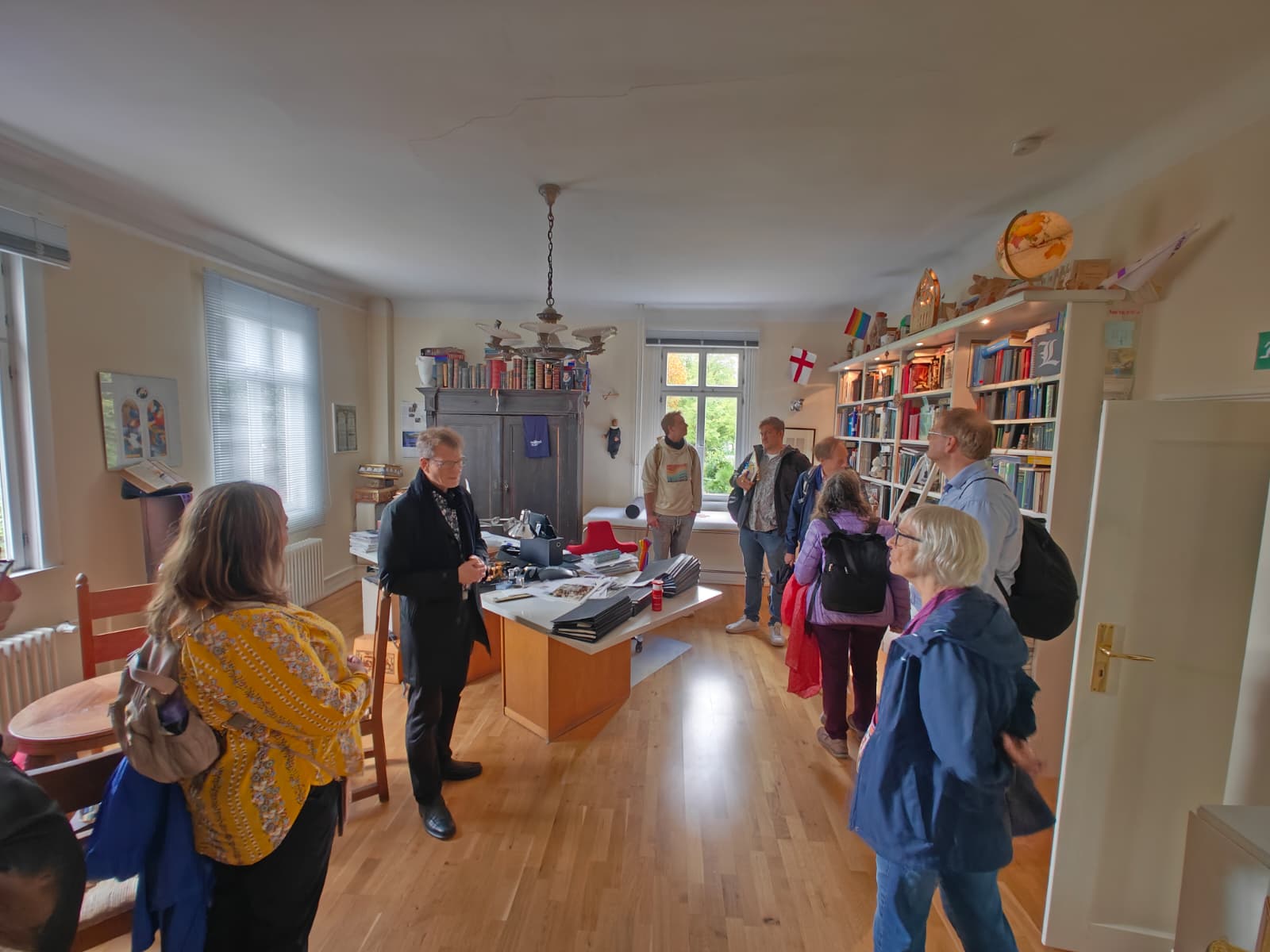
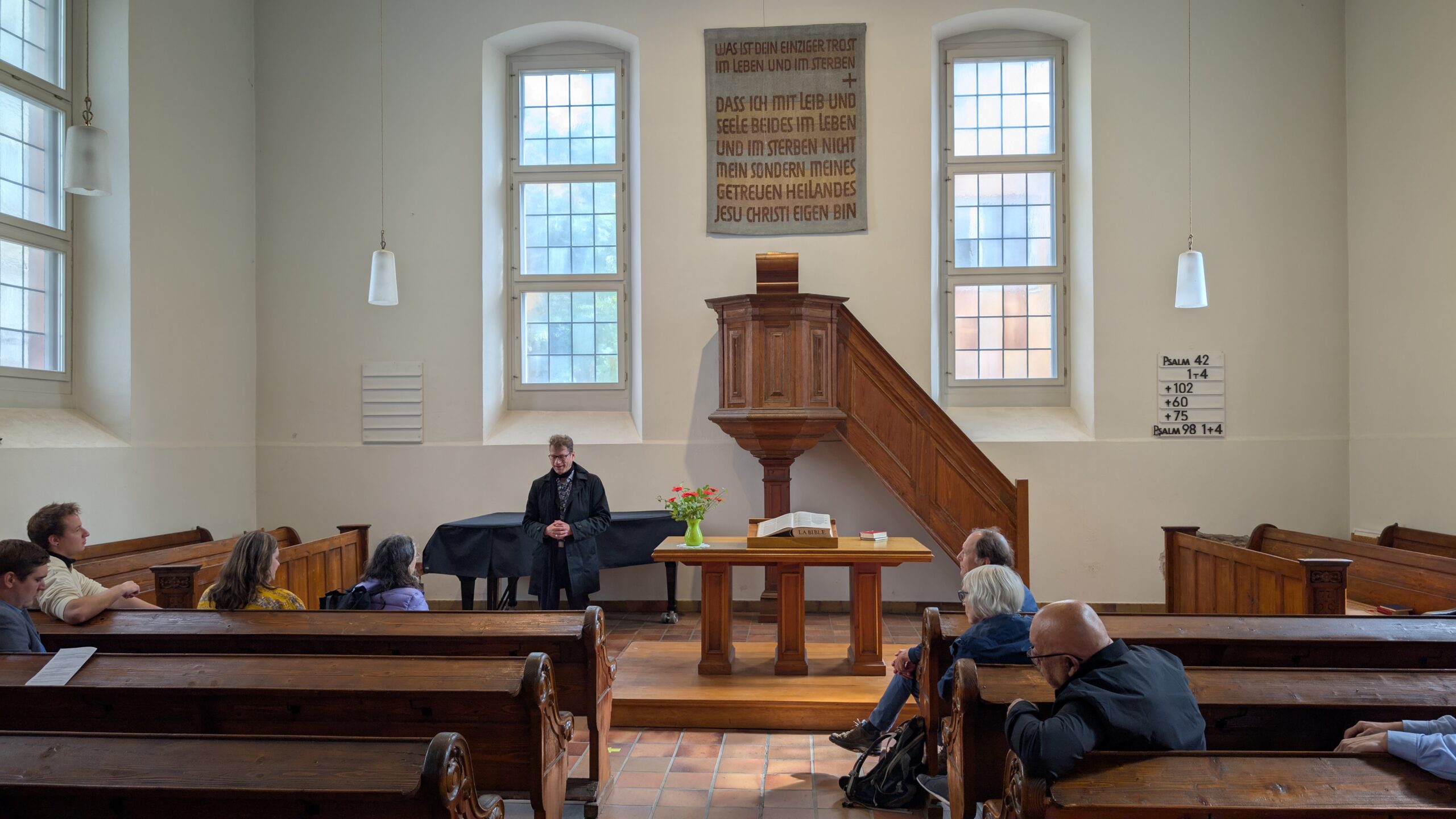
On the third day of the pre-tour, which was also set to transition into the conference opening in the evening, we visited the French-Reformed Church in Offenbach and were warmly welcomed by board member Sven Malsy and Pastor Schneider-Trotier. We were guided through the church and the parish house, learning about the important and interesting history of the Huguenots in Offenbach.
Afterwards, the group visited the Albert Schweitzer Center, which has found its new home in Offenbach. Unfortunately, there are no pictures of this visit.
Conference: Day 1, Thursday, September 11, 2025
After a two-and-a-half-day pre-tour, the festive opening of the IARF EME Conference ’25 had finally arrived, and to our great joy, we were able to welcome many guests from near and far from various liberal religious communities!
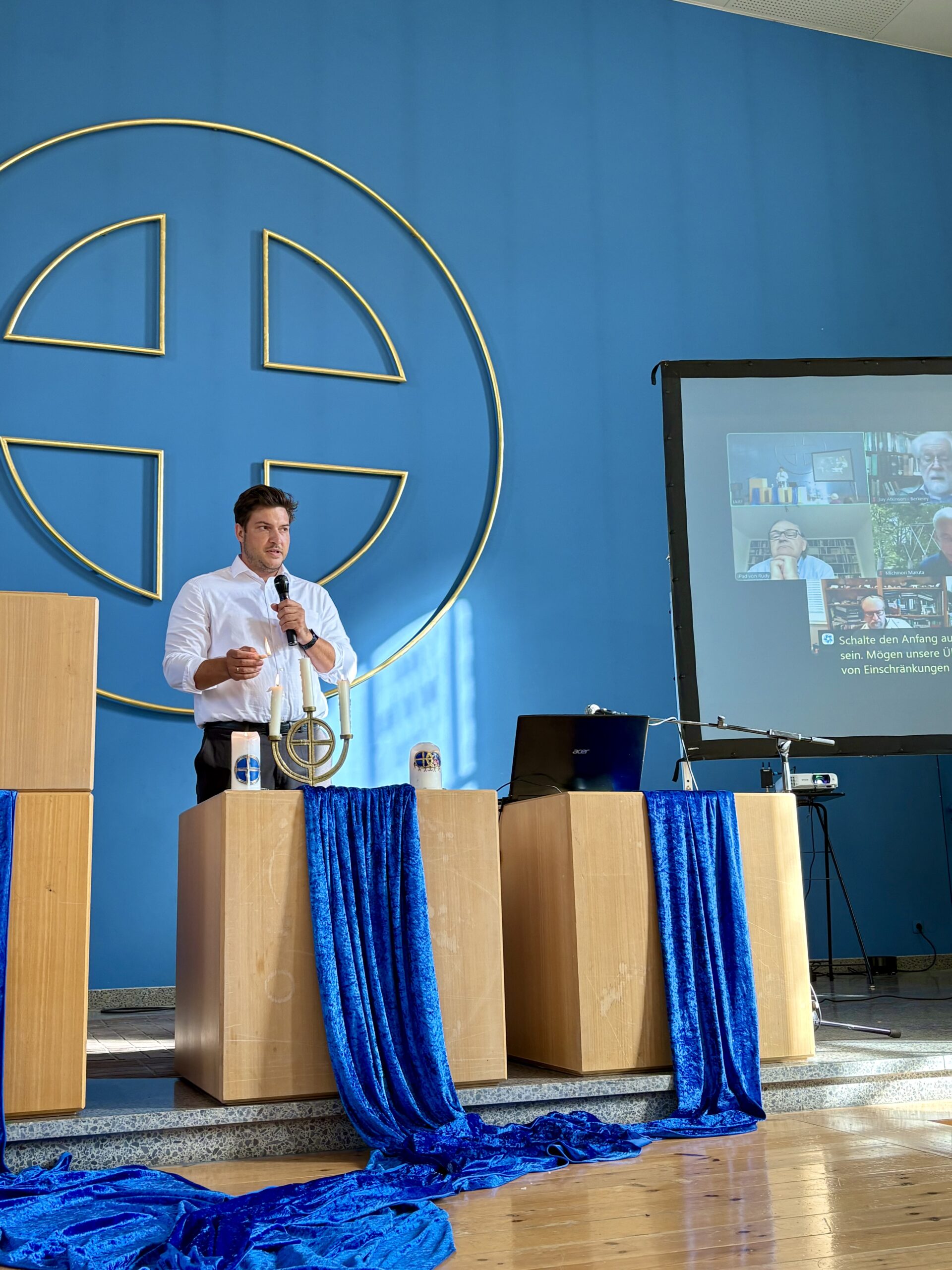
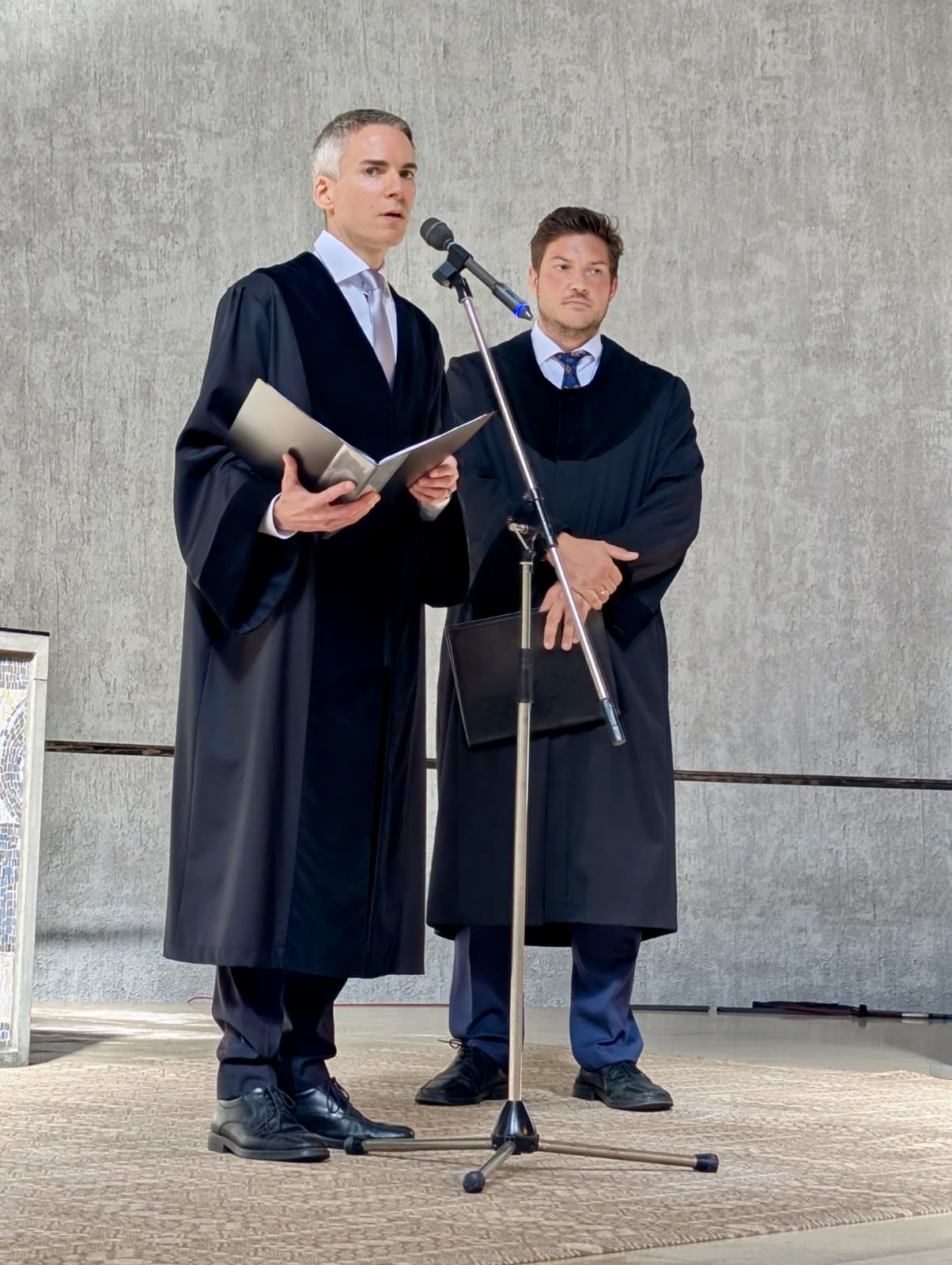
As pastor of our Free Religious community and chairman of the European group of the International Association for Religious Freedom, I opened the conference with a short reflection and a speech. Gudrun Hahn, chair of the German IARF group, and Prof. George M. Williams, President of the IARF, also took the opportunity to address the participants in the consecration hall or those connected online. The opening concluded with a presentation by Rev. Dr. Esther Suter, IARF representative to the United Nations.
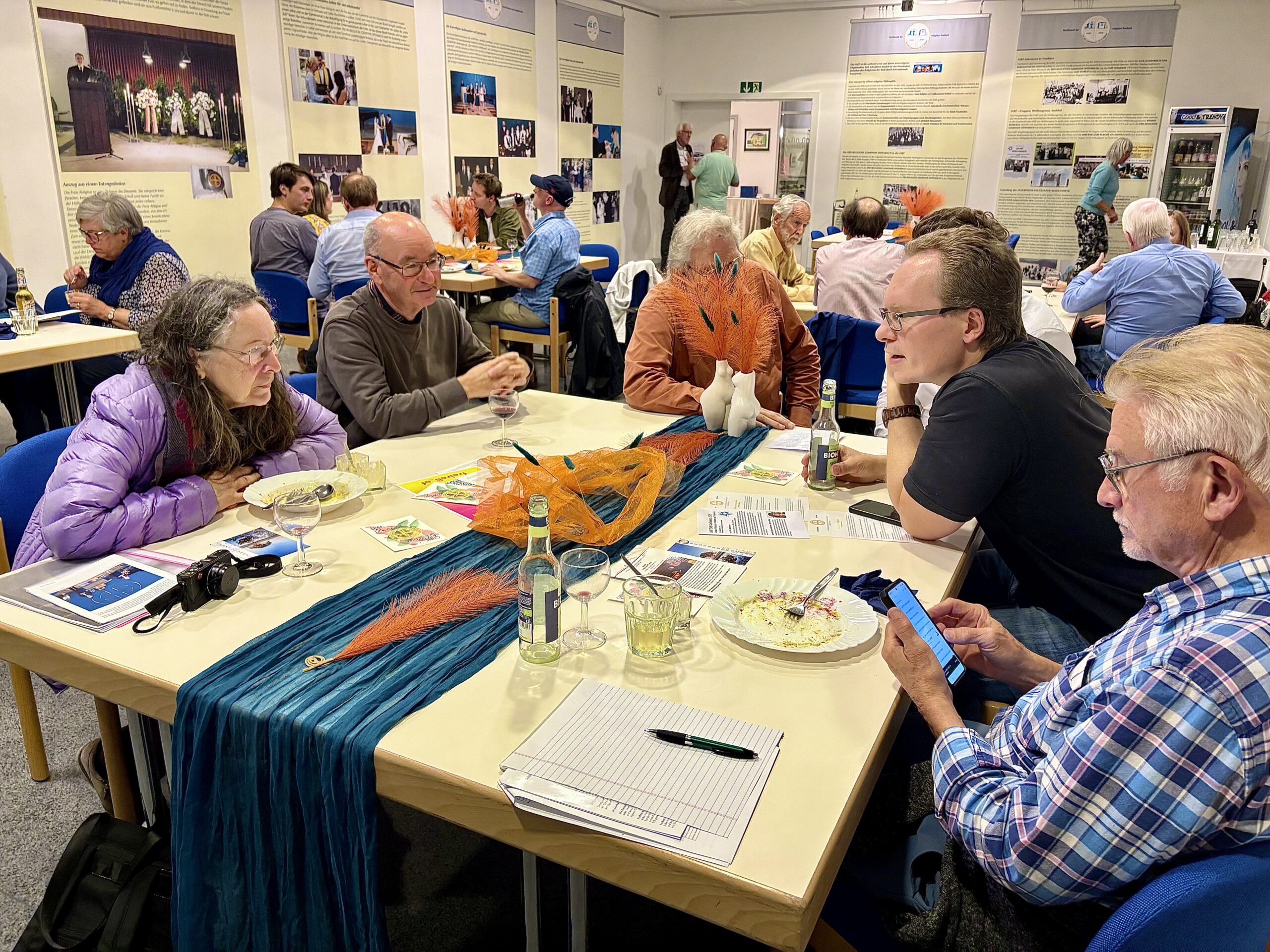
During dinner, all guests had the opportunity to network, maintain existing contacts, and exchange and deepen thoughts in a relaxed atmosphere.
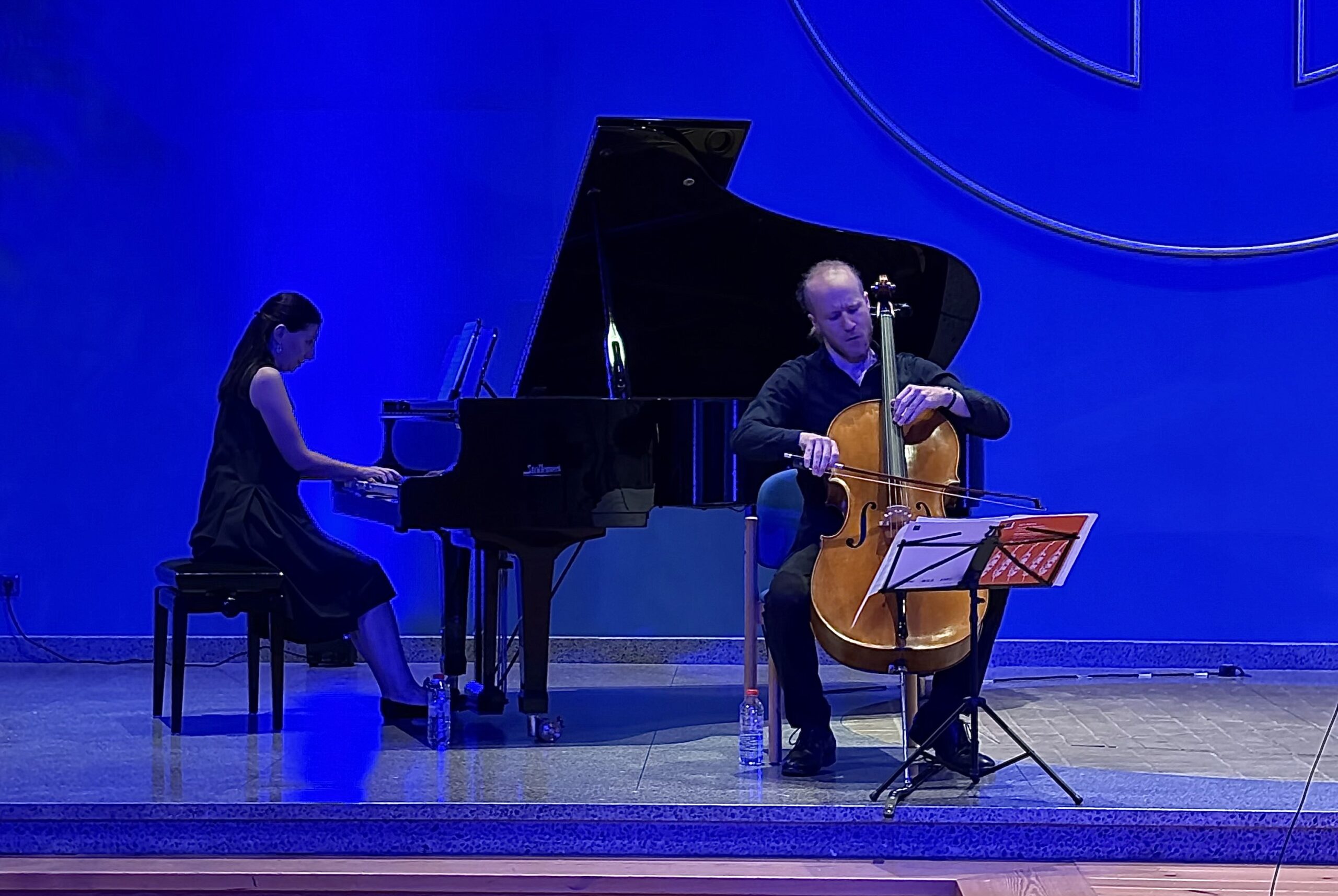
To conclude this memorable opening, a cultural highlight awaited the participants: Master cellist Christopher Herrmann and concert pianist Ekaterine Kintsurashvili thrilled the audience with a wonderful concert, where fans of both classical and modern music were fully catered for with creative arrangements.
Conference: Day 2, Friday, September 12, 2025
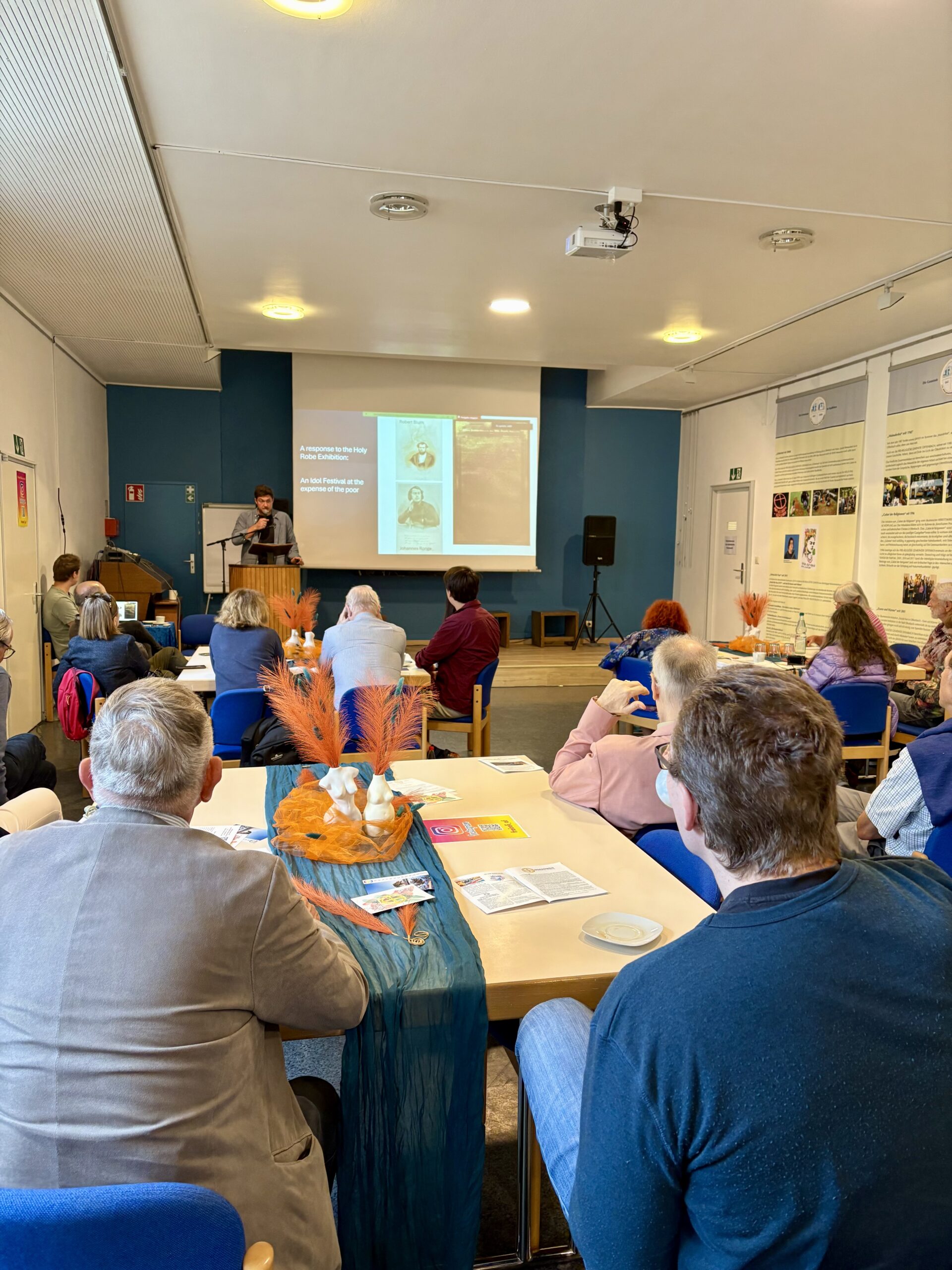
The morning began with my presentation, giving an insight into the rich history, vibrant present, and future-oriented goals of the Free Religious movement. I emphasized how this liberal religious community has always defended individual religious freedom and an open, tolerant society. A powerful reminder of the importance of questioning traditional dogmas, finding one’s own free path of faith, and staying in dialogue with one another.
In the afternoon, the full attention was on Kurt Bangert, representing the Federation of Free Christians, who spoke on liberal theology and religious freedom, and Norbert Rácz, who provided an insight into the “Evolution of Religious Freedom Through History.”
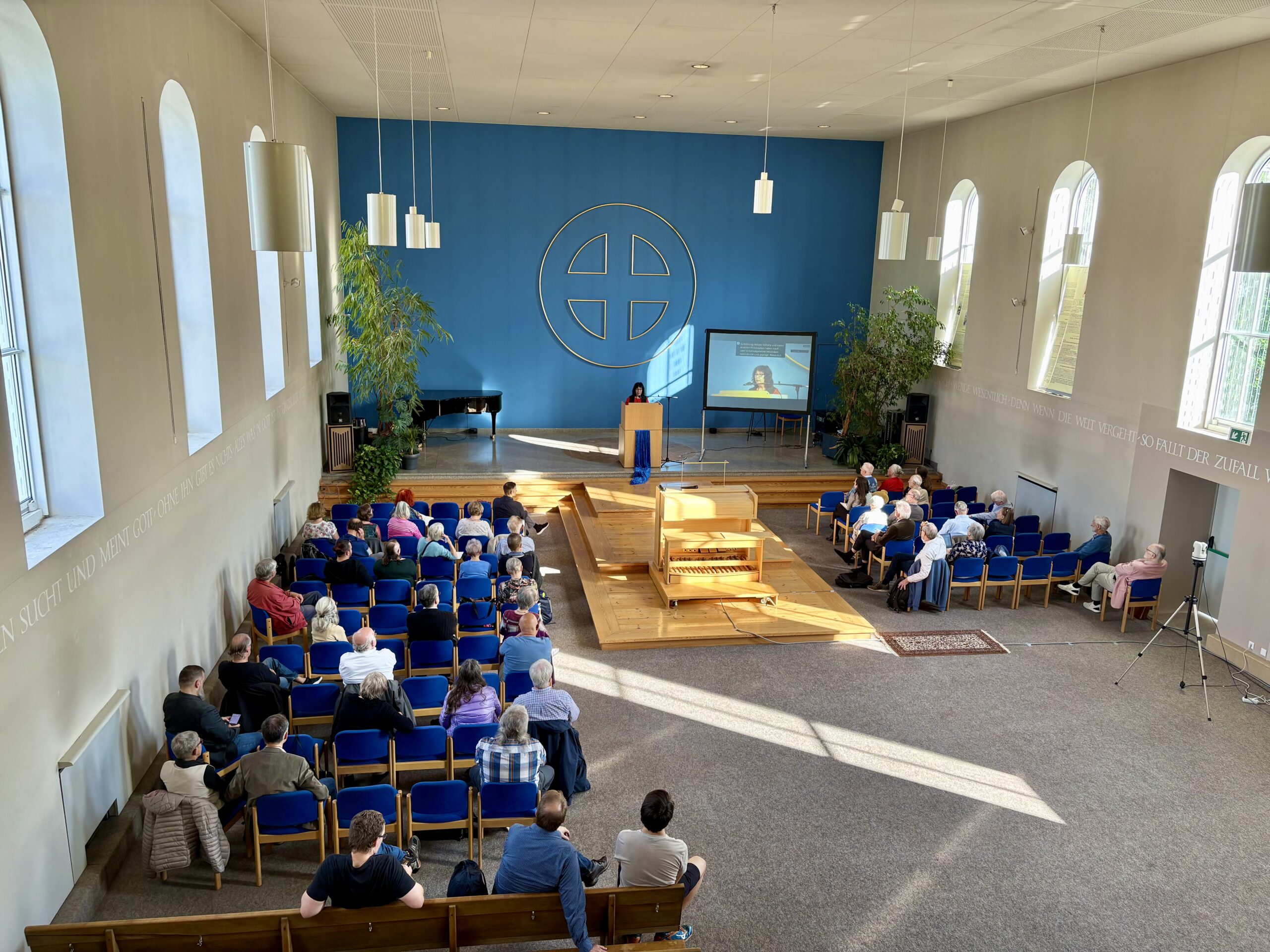
The highlight of the day was undoubtedly the keynote speech by Seyran Ateş. The distinguished lawyer, author, and founder of the liberal Ibn Rushd-Goethe Mosque delivered a speech titled “Limits of Tolerance and Liberal Religion” that touched us all. She spoke with remarkable clarity about the possibilities of a liberal Islam that sees itself as an integral part of a pluralistic, democratic society. At the same time, she urgently warned against the dangers of a political, conservative Islam that curtails freedom and human rights, pointing out that politics often shies away from confronting this issue. Her call to stand up for an enlightened and tolerant faith was an inspiring call to action for all of us.
Conference: Day 3, Saturday, September 13, 2025
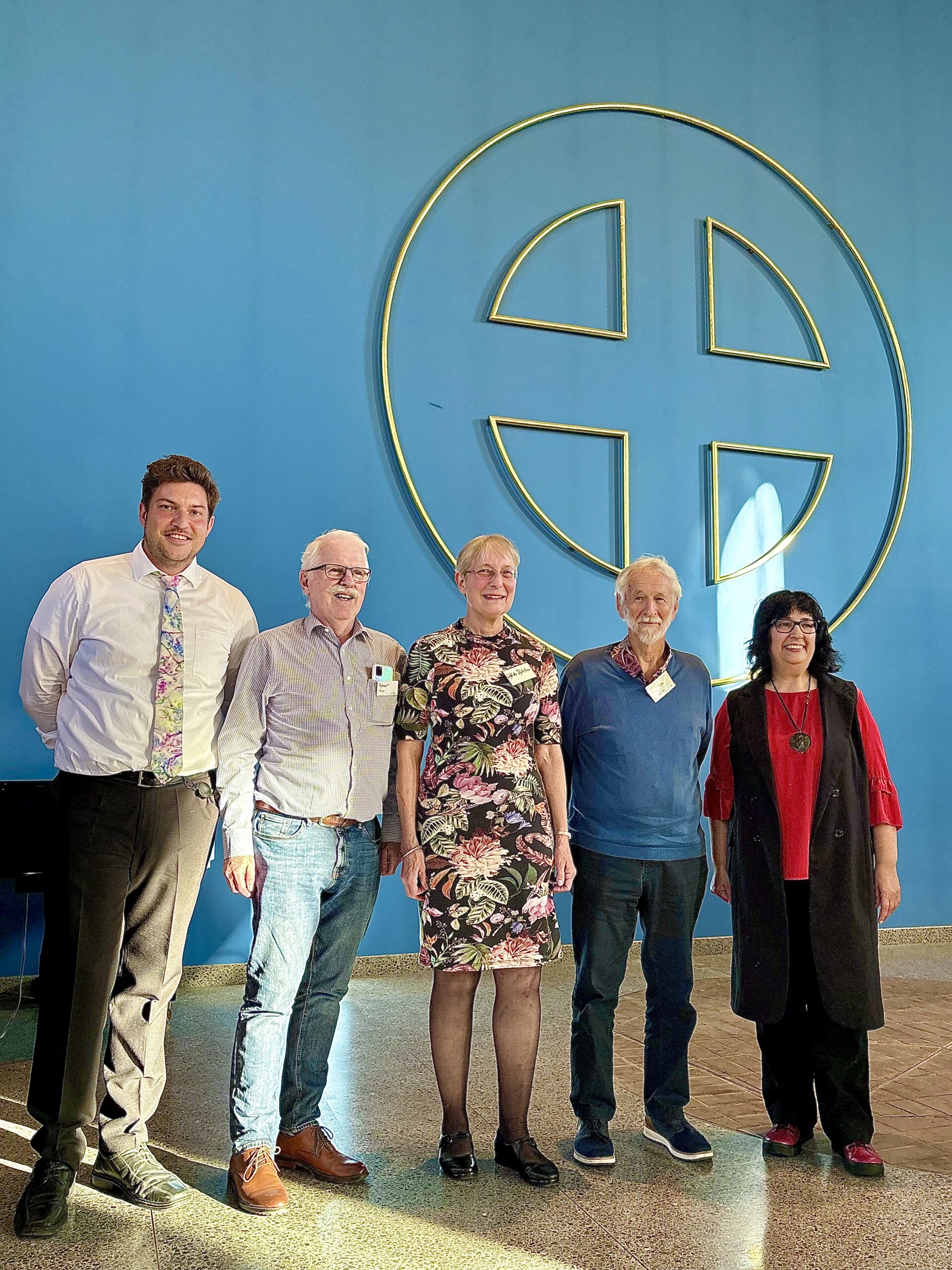
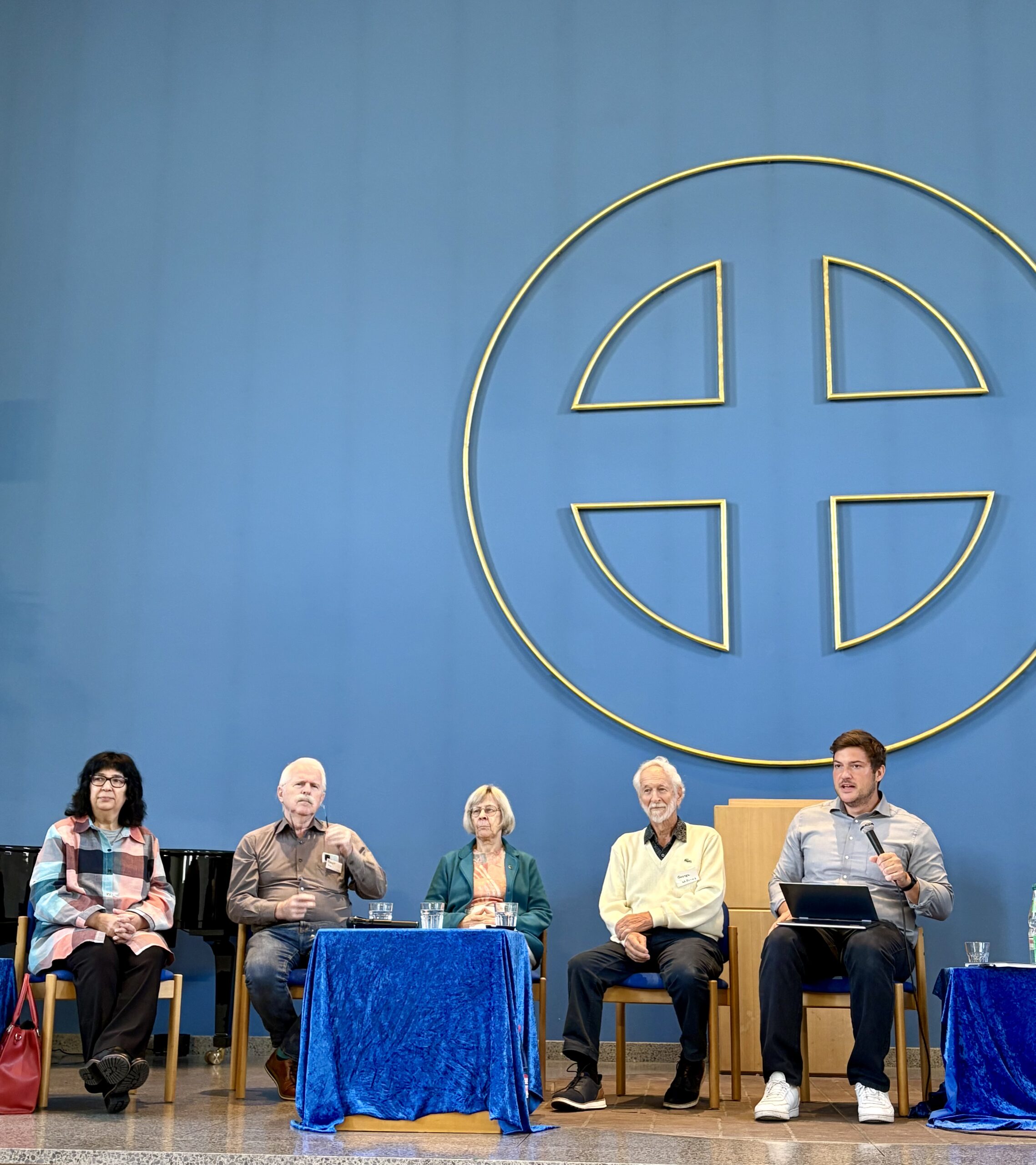
The morning started with a “Panel of Free Religion.” On the podium were women’s rights activist and Imam Seyran Ateş, IARF President Prof. George Williams, the President of the Federation of Free Religious Communities in Germany, Renate Bauer, and Robert Ince, former President of the IARF. Moderated by myself, the group discussed the meaning of religious freedom and the challenges facing liberal faith communities in today’s world. It was a fascinating discussion that showed how different and yet how similar the paths to a free and self-determined faith can be.
The highlight of the day was the presentation by Gabriela Frey. The coordinator of the European Buddhist Union and its representative at the Council of Europe spoke about “Interreligious & Interconvictional Dialogue on a European Level – The Council of Europe: Work, Potentials and Challenges.” She shared her many years of experience working for religious freedom in European institutions and highlighted the opportunities and hurdles that interreligious dialogue faces at the political level.
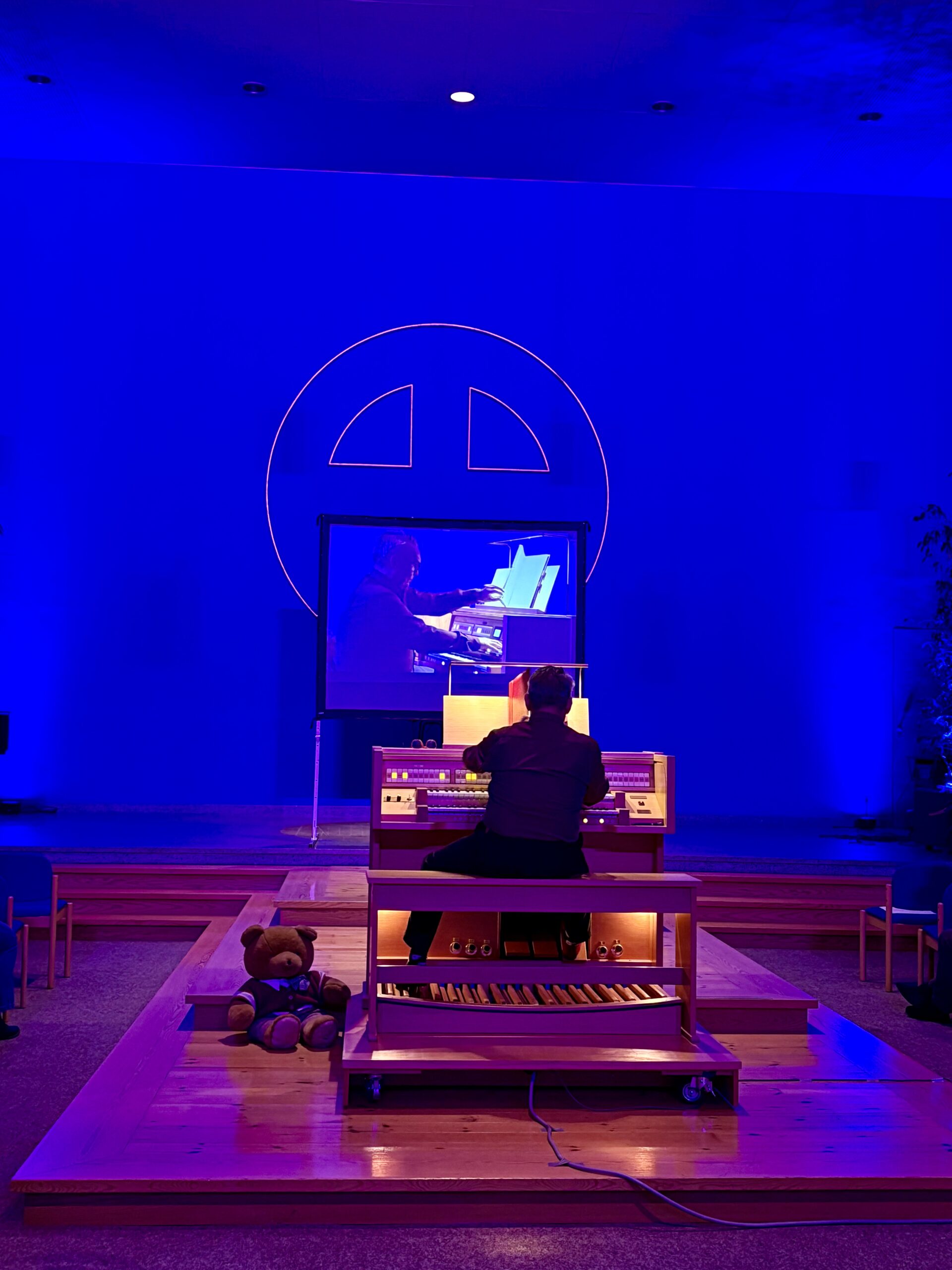
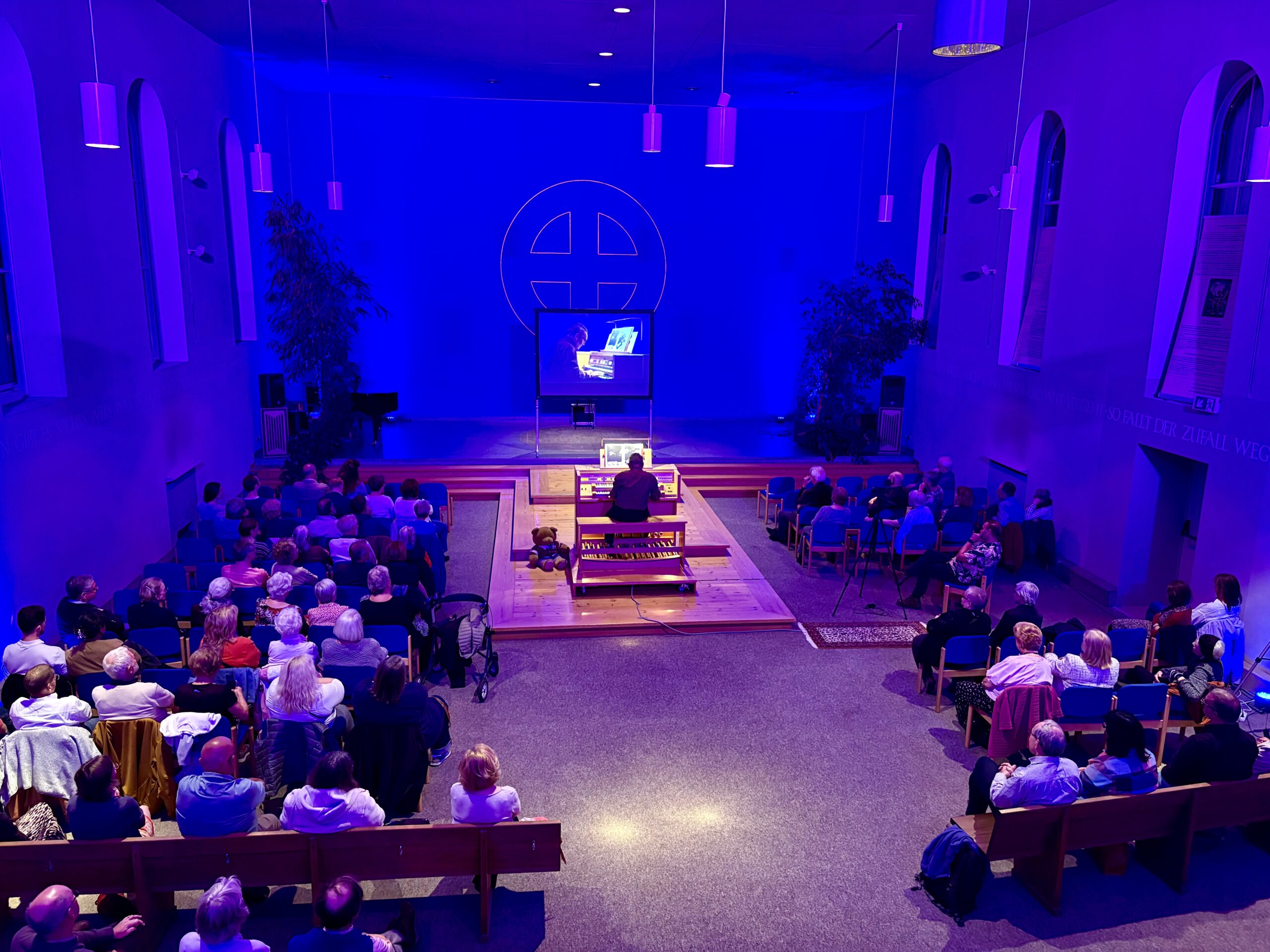
The day concluded with a true delight for the guests! Master organist Detlef Steffenhagen enchanted us with his captivating concert program “Organ goes cinema.” The sounds of the organ filled the consecration hall and created an unforgettable finale for this eventful day.
Conference: Day 4, Sunday, September 14, 2025
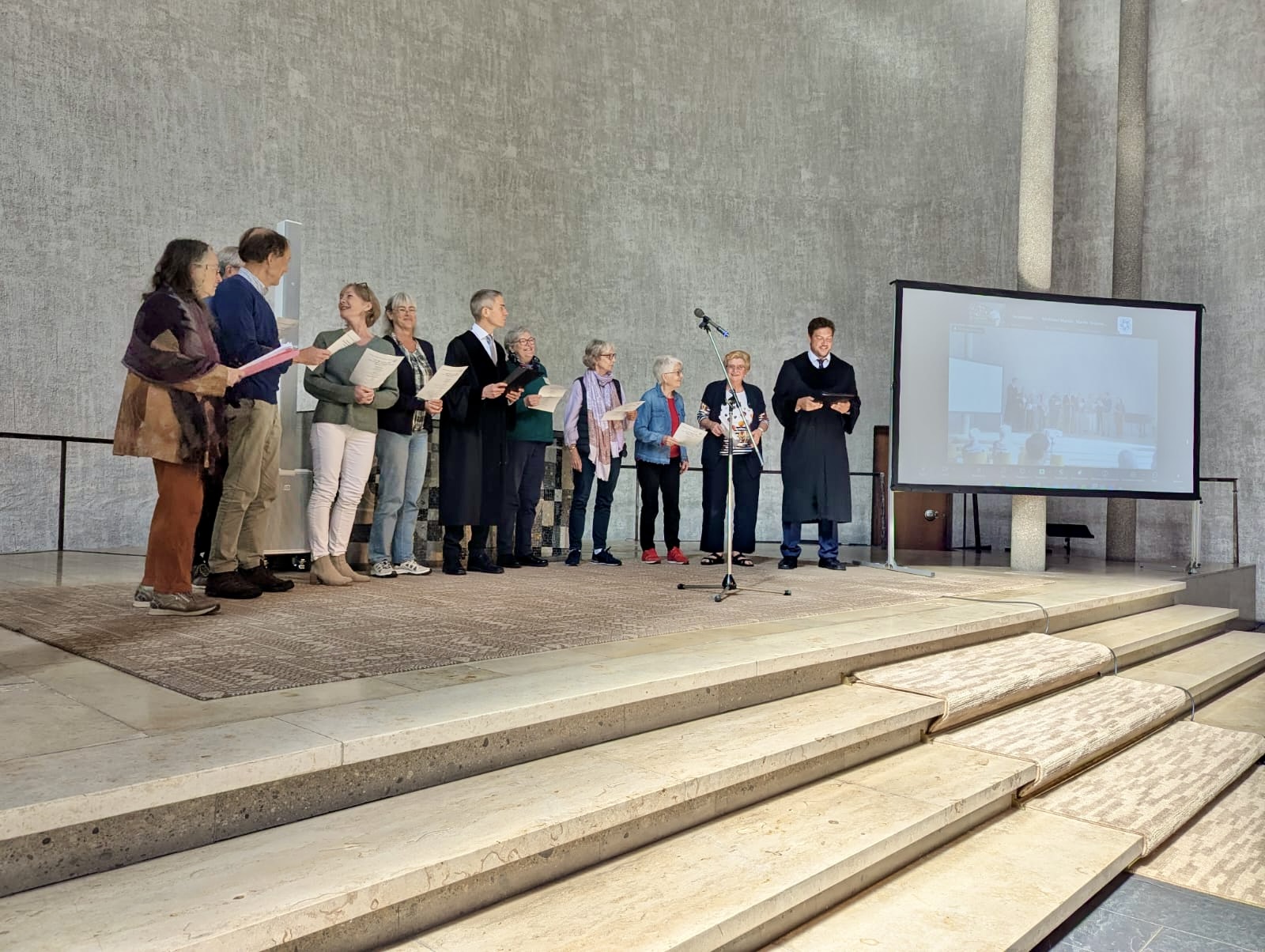
The fourth and final day at the Unitarian Free Religious Community in Frankfurt began with an Interfaith Service. Led by Pastors Alexander Schmahl and myself, this interreligious ceremony brought us together to share our common values of humanity, dialogue, individual freedom, and mutual respect. It was a moment of deep connection that reminded us how much we can achieve when we talk to each other, identify what unites us, and stand up for each other and for a liberal faith.
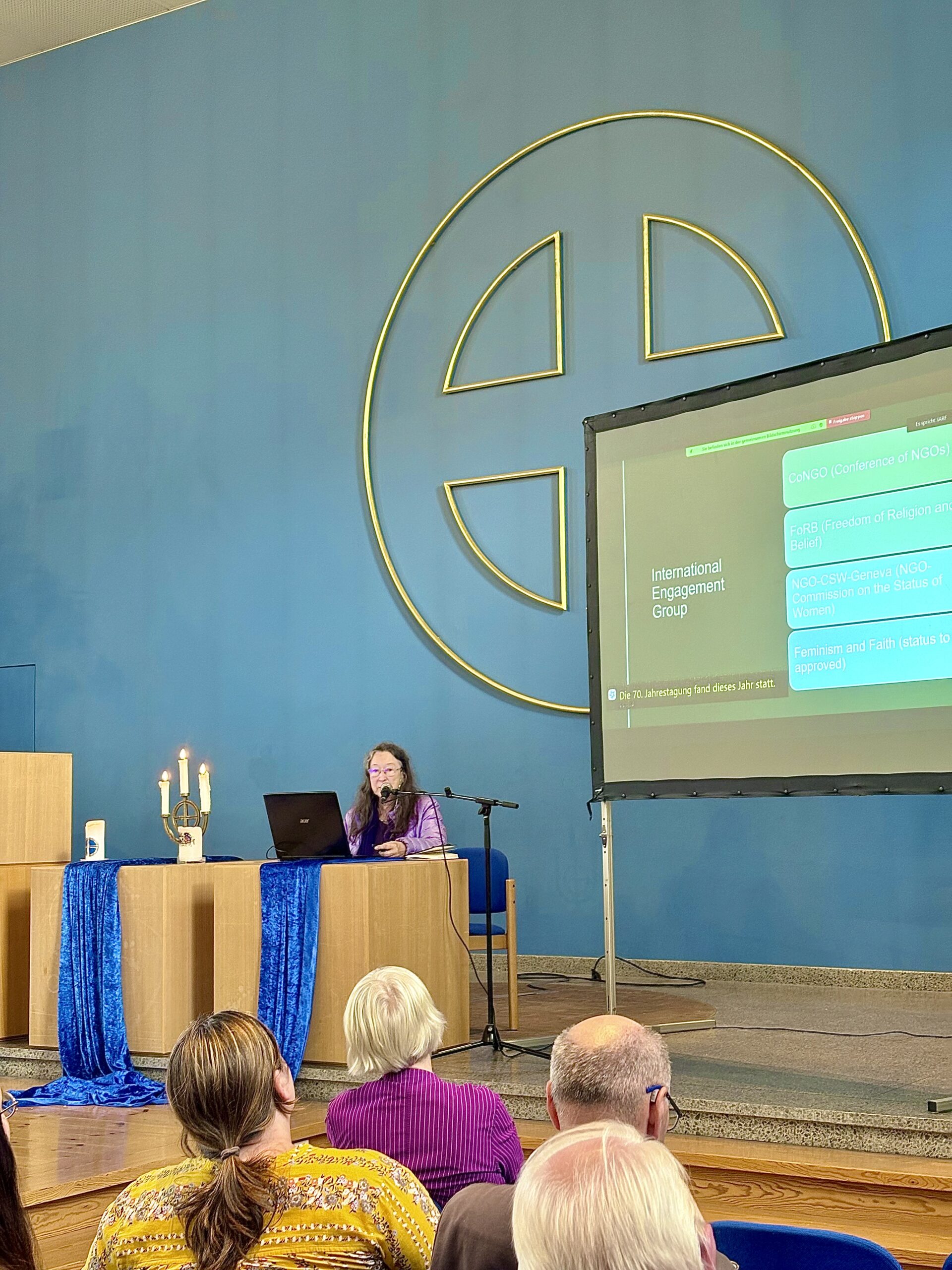
A special highlight was the presentation by Rev. Dr. Esther Suter. As the IARF’s representative to the United Nations, she gave us a fascinating insight into the work of the “International Association of Liberal Religious Women” and reported on their conference “Power of Dialogue and Partnership,” which had taken place just a few weeks earlier in Malaysia. Her presentation highlighted the crucial role of liberal religious women in promoting dialogue, peace, and justice worldwide.
After a final joint reflection on the past days, which summarized the diversity of ideas and the depth of the conversations, the conference came to a worthy conclusion. We are particularly grateful for the lively community we were privileged to experience over the days.
International Day of Peace 2025 – Report from BV Foundation
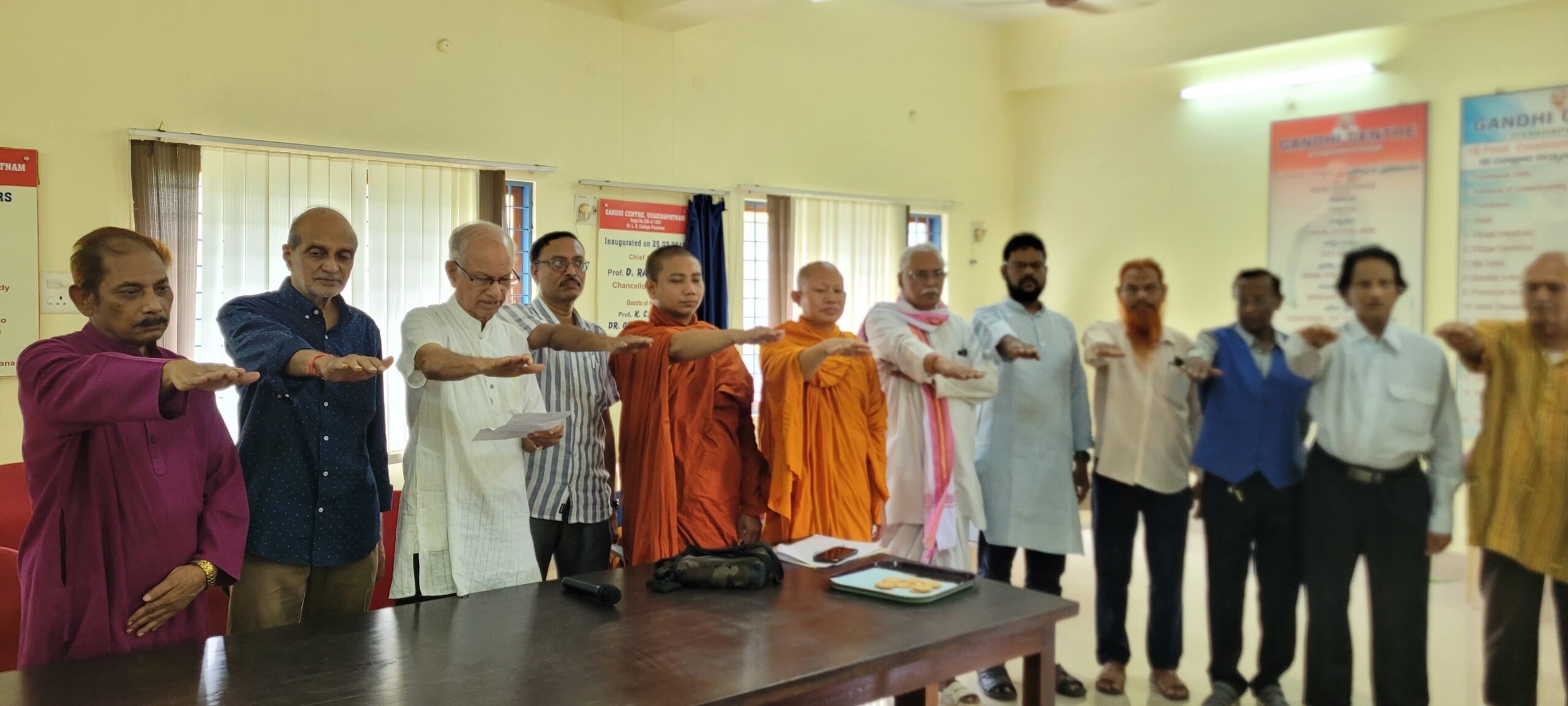
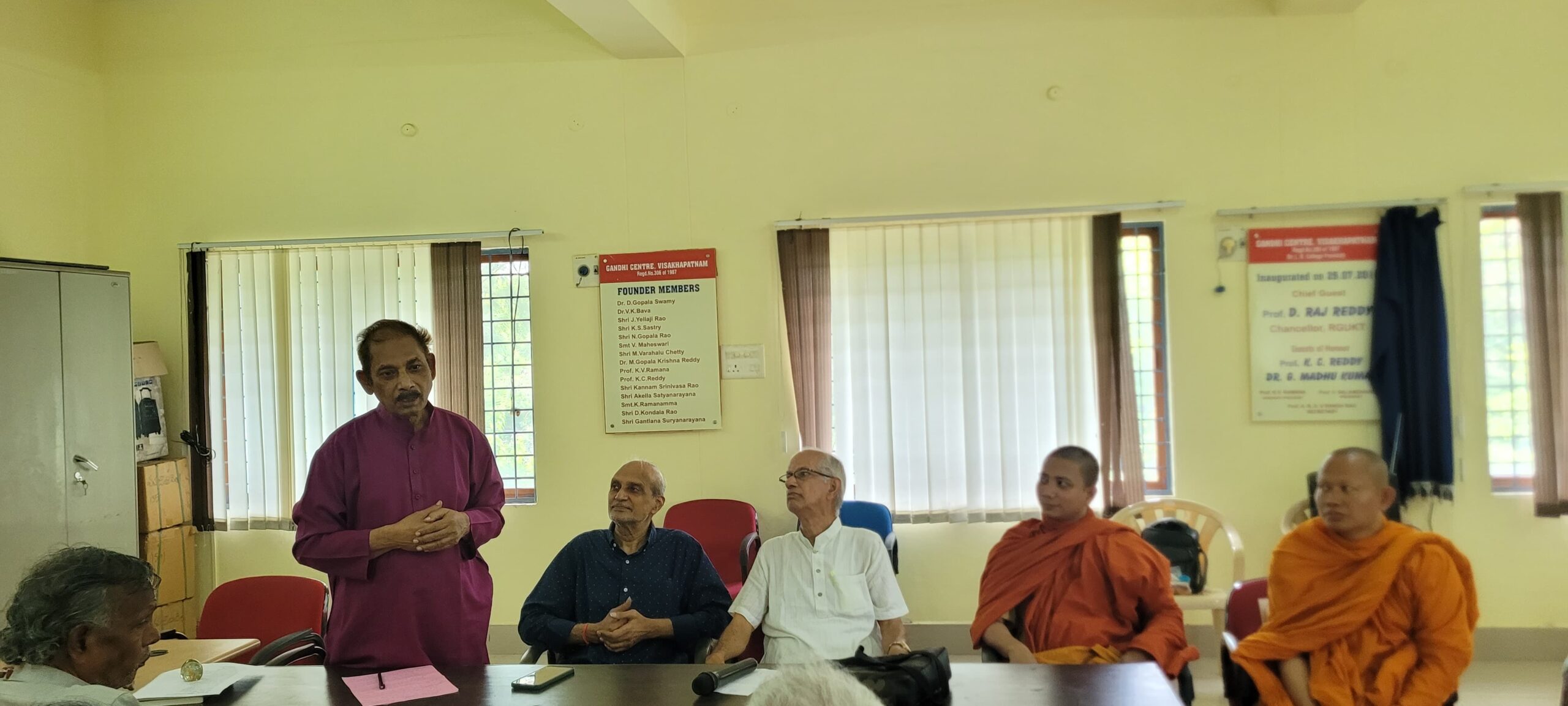
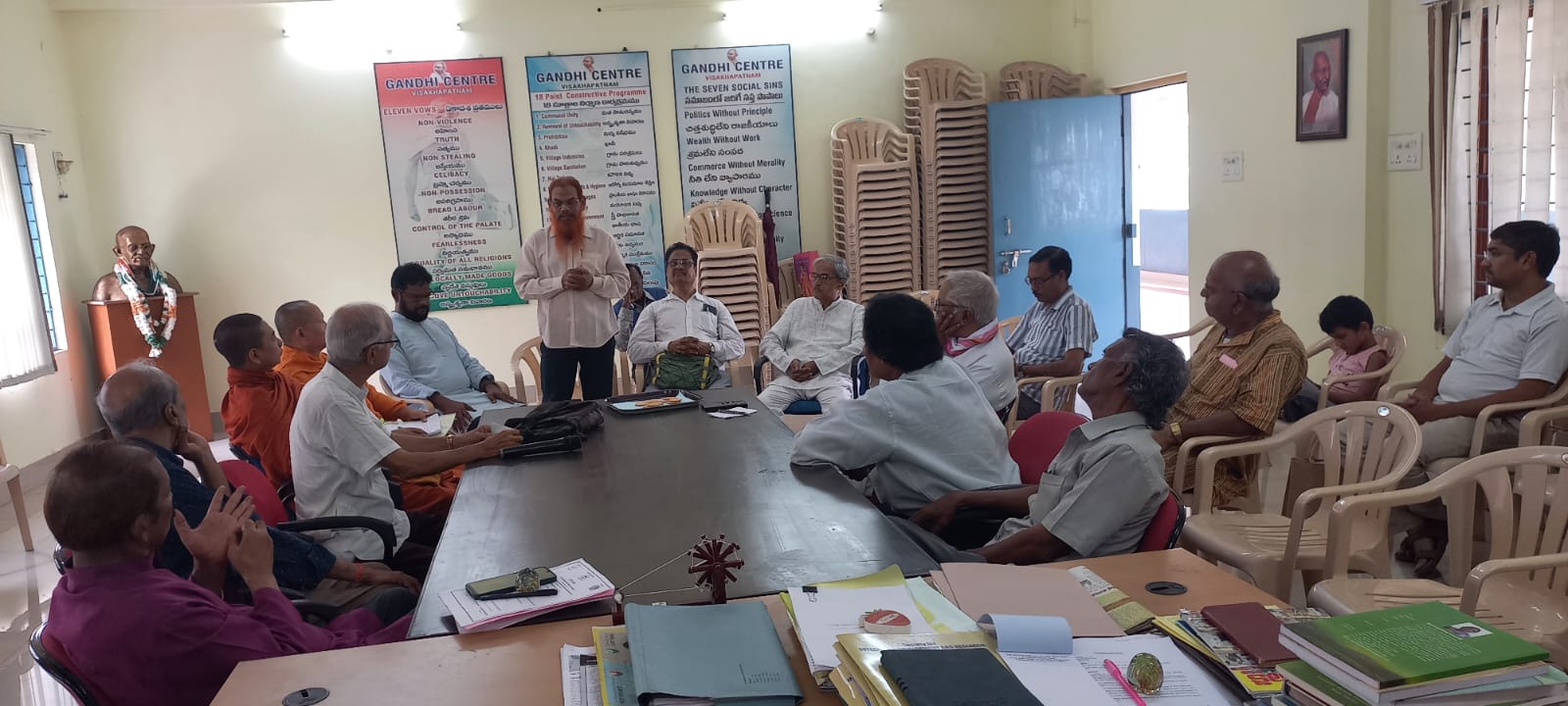
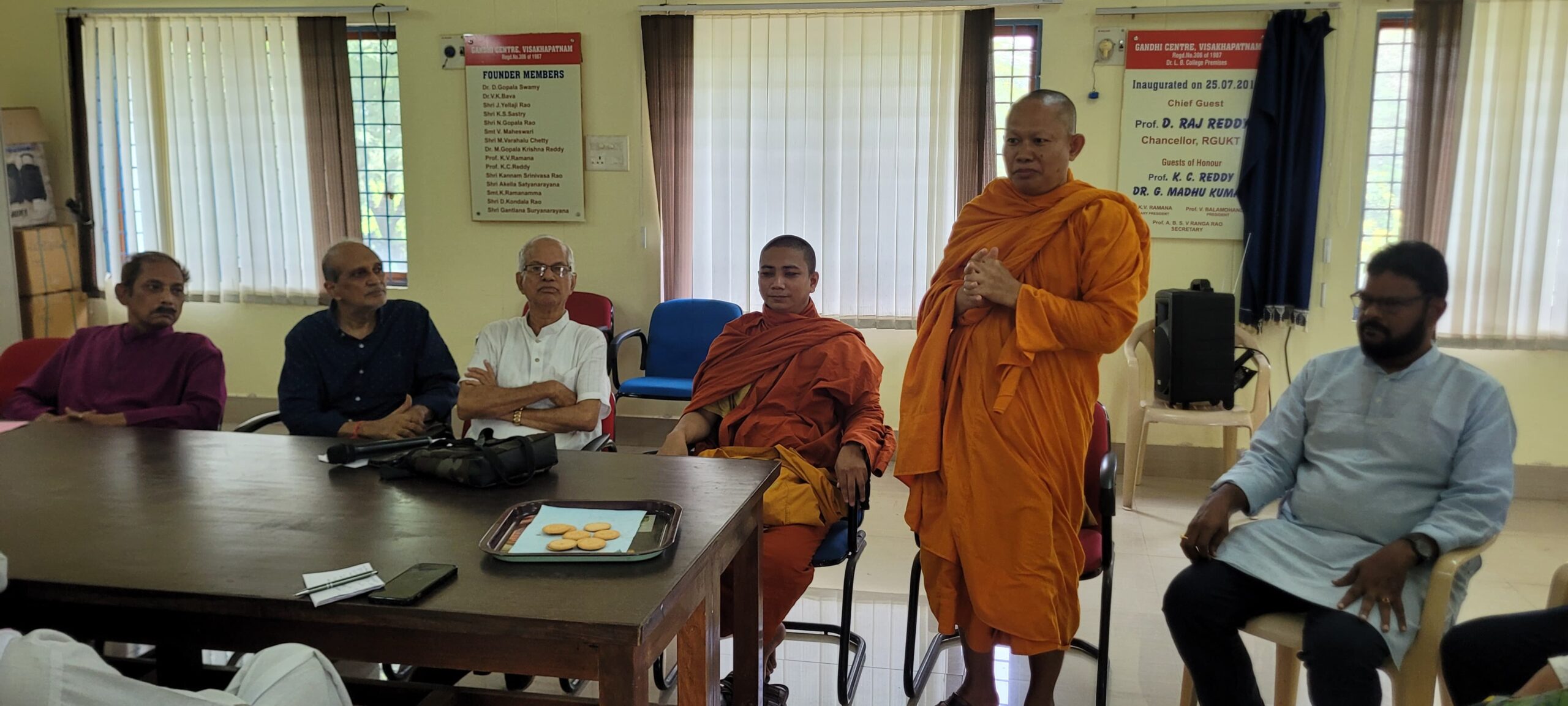
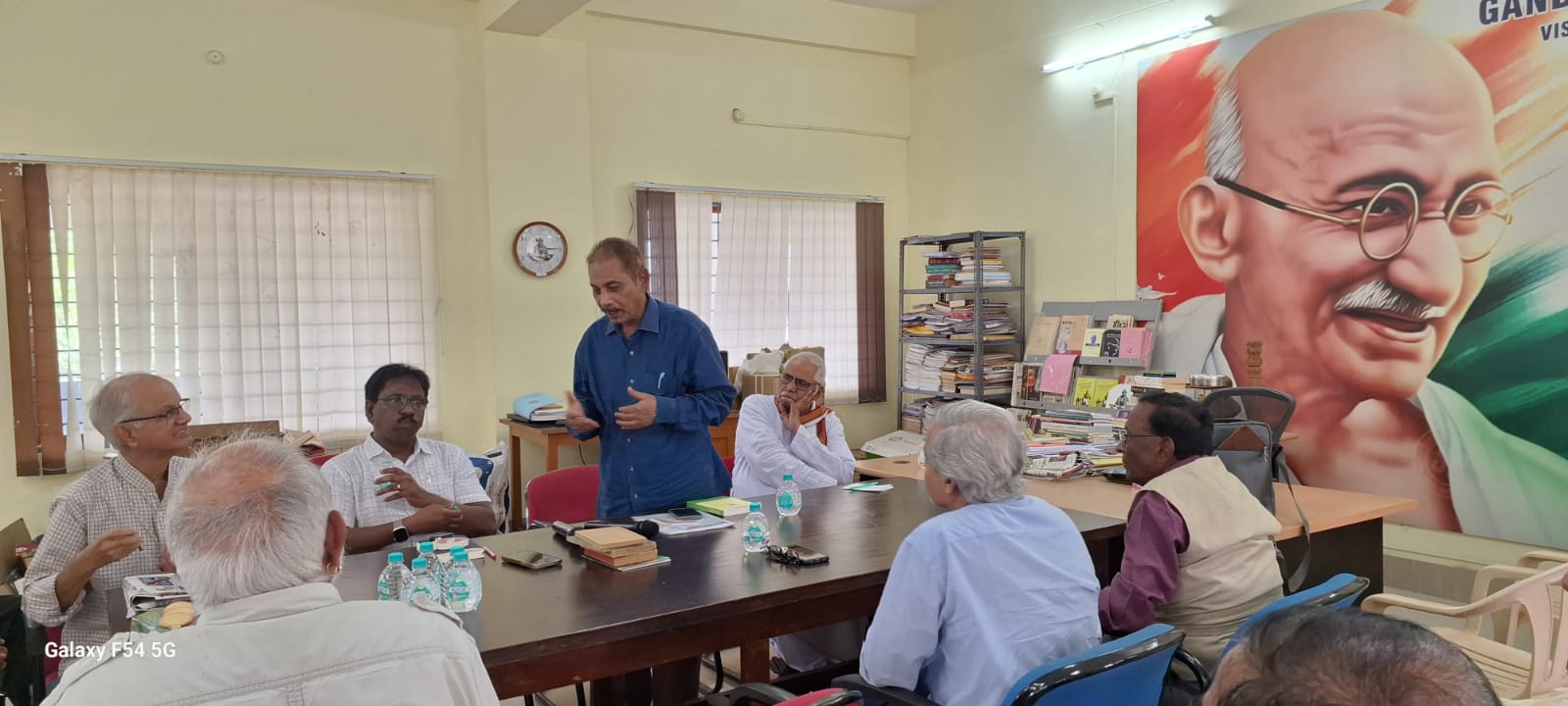
Under the auspices of the B.V. Foundation for Peace and Harmony, South India (a Member Group of the International Association for Religious Freedom – IARF) and the Gandhi Centre, Visakhapatnam, a grand meeting was held at the Seminar Hall of L.B. College to mark the International Day of Peace. The event was presided over by the noted social worker, Prof. Narava Prakash Rao.
The distinguished invitees and chief speakers of the occasion were Professor V. Balamohan Das (Former Vice-Chancellor, Nagarjuna University and President of Gandhi Centre) and Professor K. Ravi (Former Director, Academic Staff College, Andhra University).
The programme commenced with all members garlanding the statue of Mahatma Gandhi at the Peace Centre and paying their homage. In his presidential address, Prof. Narava Prakash Rao explained the purpose of holding such a meeting on this day. He spoke on the growing unrest in the world, highlighted the role of IARF in protecting human rights, and enlightened the gathering about its advisory contributions to the United Nations and the significance of such efforts.
The eminent speakers present emphasized that violence can never be justified and elaborated on the responsibilities of governments and citizens in building peace.
Professor K. Ravi reiterated that violence is never justifiable, reminding that history itself has been altered because of violence. He called upon scientists, technologists, citizens, and rulers to work for peace. He observed that peace today has been reduced to a mere ornamental word, while world leaders have grown increasingly war-hungry. As a result, unrest has spread everywhere, and nations are engaged in amassing power. He warned that artificial intelligence too is taking distorted forms, leading to further threats to world peace.
Buddhist monks Rajdham Bhikshu and Kanth Bhikshu remarked that before global peace can be realized, inner mental peace must first be cultivated.
Professor V. Balamohan Das, President of the Gandhi Centre, shared his grave concern about the rising hatred across the world and the unrest it is fostering. He expressed deep anguish, pointing out that as of today, 108 civil wars are raging across the globe. He praised the tireless efforts of many organizations striving to prevent a third world war, but confessed his own fear at the very thought of what might happen if such a war were to break out. He stressed the urgent responsibility of governments to initiate and implement programmes that can dismantle this culture of hatred and violence.
Dr. Kochchrlakota Venkata Satyanarayana Murty (Joint Secretary, Gandhi Centre) stated that wars are dangerous, and drew attention to the views expressed in the Vedas and Indian epics regarding such destructive culture. He expressed hope that better days would surely come, but emphasized that war is indeed a great obstacle to world peace. He urged that every individual and every family must develop an earnest yearning for peace.
Dr. L. Prajnan Kumar (URI Convener) and Abdul Munir Mushad (IARF Convener) also participated and shared their views.
At the conclusion of the meeting, all the participants took a solemn pledge to safeguard world peace.
Among those present were Sri Suresh (Commissioner of Police Office), Sri Jogarao, Sri Hussain, Sri Naidu, members of IARF, and several prominent citizens of Visakhapatnam.
Last Chance: EME Conference 2025 In-Person Registration Extended!
Great news for those of you who still wish to join us in person! We have extended the registration deadline for in-person attendance at the EME Conference 2025 to September 11th. This is your final opportunity to secure a spot and experience the event in Offenbach and Frankfurt am Main, Germany.
The conference, themed “Limits of Religious Freedom and Tolerance,” runs from September 11-14, 2025, and features a keynote address from the inspiring Seyran Ateş, a distinguished author and women’s rights activist.
Don’t miss out on engaging discussions, valuable workshops, and the chance to connect with fellow members. If you can’t make it in person, remember that online participation is also available.
Don’t Forget the Pre-Conference Tour!
Interested in exploring the roots of the free religious movement? Consider arriving early for the optional Pre-Conference Tour (Sept 9-11), visiting historic congregations and significant sites in Ingelheim, Mainz, Mannheim, Ludwigshafen, and Frankfurt, including the Paulskirche and the Jewish Museum.
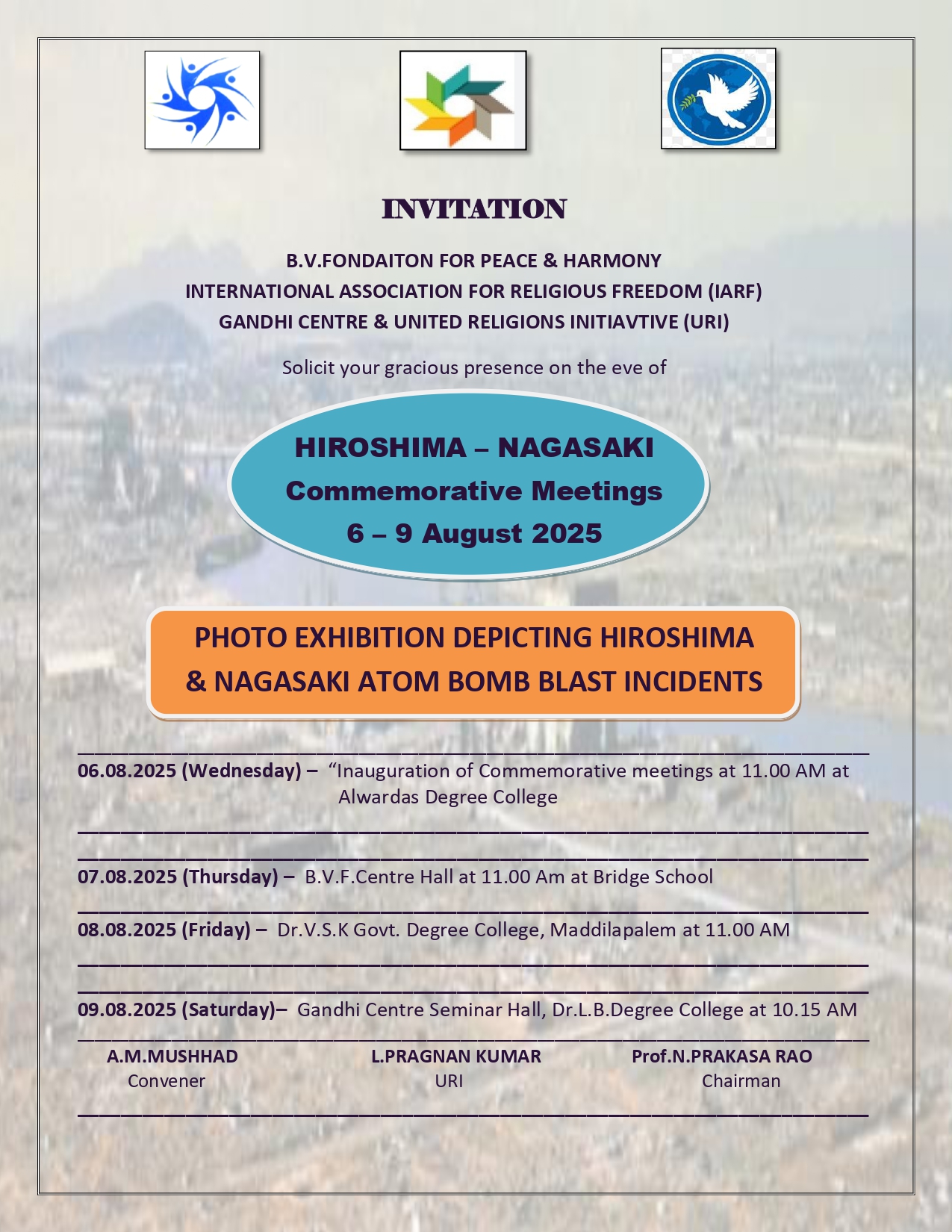
On behalf of the IARF India Chapter and the B.V. Foundation, I invite you to join us and our partners for a series of meetings from 6-9 August 2025, to remember the events of Hiroshima and Nagasaki.
We believe that remembering the human cost of conflict is essential to our shared work for peace and religious freedom. A photo exhibition will be on display at each location.
Please join us:
Aug 6, 11:00 AM: Alwardas Degree College
Aug 7, 11:00 AM: B.V.F. Centre Hall, Bridge School
Aug 8, 11:00 AM: Dr. V.S.K Govt. Degree College, Maddilapalem
Aug 9, 10:15 AM: Gandhi Centre Seminar Hall, Dr. L.B. Degree College
We hope you can join us for this important act of remembrance.
Spring 2026 IARF Study Tour to Japan
One valuable aspect of IARF is the opportunity for members from different countries, religions, and cultures to meet and inspire each other. IARF is now planning a tour to Japan for spring 2026 to study Japan’s religious and spiritual traditions, with a particular focus on those connected to our member organisations.
The programme will include meetings with various groups associated with our members and member organisations, as well as activities commemorating the end of World War II and the atomic bombings of Hiroshima and Nagasaki.
Courses from IARF’s online Free Religion Institute, such as the one announced in this newsletter, will be one way to prepare for the study tour. Plans are still in their early stages, but if you are interested, please send an email to [email protected]. This also applies if you have specific suggestions or wishes for the tour (for instance, a particular theme) or if you would like to be part of the preparatory committee. We will keep you informed through future newsletters.
2569th Buddha Birth Anniversary Celebration at Gandhi Centre, Visakhapatnam
On May 24, 2025, the B.V. Foundation for Peace & Harmony (a member group of IARF), in collaboration with United Religions Initiative and the Gandhi Centre, Visakhapatnam, hosted a lecture on “Buddhism in Promoting Peace and Harmony” to mark the 2569th Buddha Birth Anniversary.
Dr. Maturi Srinivas, a noted pulmonologist and Buddhist scholar, delivered a powerful keynote emphasizing Buddhism’s role in advancing human rights, non-violence, and ethical living. Highlighting principles such as Mudita (sympathetic joy), Maitri (friendship), and Karuna (compassion), he stressed the relevance of Buddhist teachings in fostering interfaith understanding, social harmony, and ecological balance. He also addressed how Buddhism encourages self-reflection and a mindful “let-go” approach to life, which means accepting life as it comes, while also acting with awareness, responsibility, and ethical clarity.
In his presidential address, Professor Narava Prakash Rao, BVF Chairman, called on attendees to promote harmony through religious understanding, lamenting Buddhism’s diminished presence in its homeland. He affirmed that religion should support human welfare, not dominate daily life.
Professor V. Balamohan Das (Former Chancellor of Nagarjuna University and President of the Gandhi Centre) shared personal reflections on Acharya Nagarjuna (known as “the Second Buddha) and his efforts to reintroduce Buddha Purnima celebrations in academia.
Professor Paddaiah, a professor of Human Genetics, described yoga and meditation from the viewpoint of genetics and society, in the context of following the principles of Buddhism.
The session concluded with a customary vote of thanks, reinforcing a shared commitment to interfaith peace and human dignity.
Buddhism and Free Religion: Continuing the Dialogue
The Free Religion Institute is pleased to announce another session in our ongoing series with Rev. Michinori Maruta exploring the connections between Buddhism and Free Religion (自由宗教 jiyū shūkyō).
These talks and discussions have thus far been offered as standalone sessions rather than a formal course for the Institute. We’re excited to share that we have plans to develop this into a structured course offering, with details of a new series to be announced soon.
All Institute materials are available to IARF members registered on our community platform. If you don’t have an account yet, you can set it up for free at iarf.net/register.
Buddhism and Free Religion (自由宗教 jiyū shūkyō)
Upcoming Session: The Middle Path and Free Religion
Join Rev. Michinori Maruta for an exploration of Buddhist perspectives on Free Religion
26 April 2025: What does jiyu (自由, freedom) mean to you?
Rev. Maruta shared perspectives on freedom from a Buddhist viewpoint and invited participants to share their ideas.
29 March 2025: Buddhism and Jiyū Shūkyō
Exploring connections between Buddhism and free religion.
22 February 2025: Buddhism and Liberation
Rev. Michinori Maruta explored Buddhist perspectives on liberation in this initial session of the series.
About the Instructor: Rev. Michinori Maruta
Rev. Michinori Maruta has dedicated his life to Buddhist practice and interfaith dialogue since joining Rissho Kosei-kai (RKK) in 1966. After studying applied chemistry at Tokyo University of Agriculture and Technology, he pursued Buddhist studies at RKK Seminary and later studied the New Testament at Ripon College, Cuddesdon, England. His diverse experience includes significant work in interfaith dialogue and cooperation at RKK headquarters, serving as minister at RKK centers in California and Hokkaido, and since 2001, leading the Institute of Mindful Life. Through lectures, seminars, and digital platforms, he continues to share Buddhist wisdom and promote mindful living, bringing together traditional teachings with contemporary understanding.
Your Privacy & Consent
We use cookies and local browser storage to keep you securely logged in and maintain your preferences. No third-party trackers or ad networks are used. Read our Privacy Policy.
Strictly NecessaryAlways Active
Keeps you logged in and protects forms from submission forgery. Necessary for account operation.
Usability & UI PreferencesOptional
Remembers details like chat widget coordinates and records if you have voted in a poll to prevent repeated popups.
JavaScript Core PlatformAlways Active
JavaScript is required to render the interactive app, direct messaging, offline caching, and calendars. No tracking libraries are loaded.
Why do we use JavaScript?
Our platform runs as a modern, interactive single-page application for logged-in members. We connect securely to socket.iarf.net via WebSockets for instant message delivery and online status indicators.
Where does my data go?
All data belongs exclusively to IARF and is stored on our secure VPS located in the EU. We do NOT run Google Analytics, Facebook Pixels, or other tracking code. External requests are only made to fetch FontAwesome icons and Google Fonts from public CDNs to display symbols and typography.
What happens offline?
We install a Service Worker to cache layout elements locally. No personal information is stored inside the local cache; it only speeds up navigation and enables basic offline views.
Translate »
×
Access Restricted
This resource is available only to registered users.