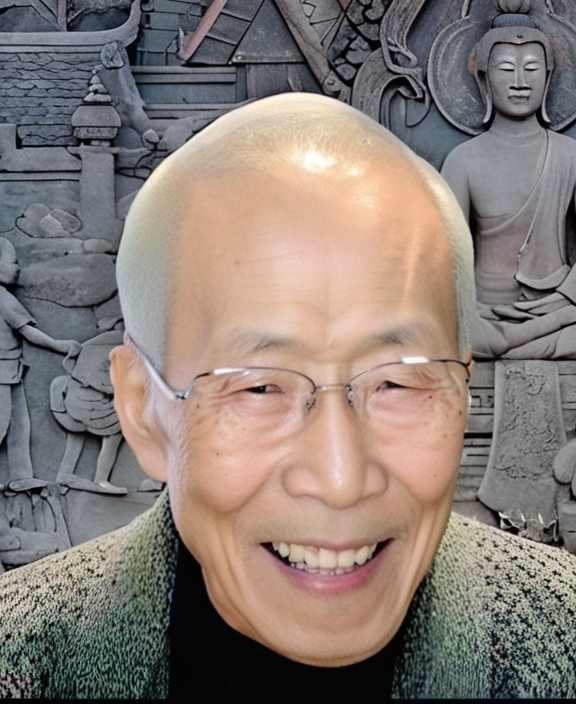
Please Sign the Petition for Yezidis in the Netherlands
In recent months, IARF has supported young Yezidis in the Netherlands in their efforts to oppose a recent change in Dutch asylum policy, under which it is now deemed safe for Yezidis and followers of some other minority religions to return to Iraq and resume their previous lives, whereas international organisations and experts say the opposite.
For members and readers resident in the Netherlands
Please read, sign and share the petition below, and show your moral support for the young Yezidis.
This May, eleven IARF members from the US, UK, Netherlands, Switzerland and Germany undertook a spiritual and religious journey of two weeks to Japan. Kathy Matsui, member of IARF’s Japan Chapter and one of our UN representatives, accompanied us on the trip, supported for parts of it by Yayoi Kimura of Ittoen and Ritsuko Ushio of the Konko Church.
In Tokyo we were received on the first day by the Buddhist organisation Rissho Kosei-kai, in whose pilgrimage resort we stayed in Tokyo, the Japan Chapter and the Japanese section of the International Association of Liberal Religious Women (IALRW), with a tour of the premises, a tea ceremony, traditional garments, and several presentations.
In Hiroshima, local Chapter members had lunch with us following an impressive visit to the Peace memorial and memorial museum. We spent considerable time in Kyoto and Osaka, visiting amongst others our member organisations Ittoen and the Konko Church, the Aoi Matsuri procession, and having lunch with IARF’s Japan Liaison Committee, alongside visits to several Buddhist temples and shrines. Our thanks also go to our member organisations Mutsumi-kai and Shitenno-ji for their warm welcome and their kind hospitality.
The Ittoen community, due to its location in the hills and its philosophy of humility and servitude, made a lasting impression. Our day at Tsubaki Grand Shrine, in the mountains east of Osaka, taught us about the nature of Shintoism, explained to us in a prayer as adapting to the natural order of things and seeking harmony, and in a way complementary to Buddhism. Koyasan offered two days of meditation and contemplation, with many Buddhist temples, in a beautiful mountainous setting south of Kyoto, where women, until far in the twentieth century, were not supposed to disturb the monks. We stayed in a Buddhist monastery, with vegetarian meals, sober, but delicious.
All participants were united by their sincere interest in classic and modern Japan and their openness to its spiritual traditions, which showed not only during the various encounters with our hosts but also in the talks amongst ourselves. We extend our thanks to all in Japan who made this visit possible. It has shown that enabling personal growth through exchange and common celebration is one of the most valuable aspects of IARF, and that we should undertake more such exchanges.
Use arrows or swipe to navigate. Pinch, double-tap, scroll, or use the controls to zoom.
Unitarian Beginnings and Heritage in Poland: A Historical Pilgrimage
Dates: May 20–26, 2026 |
Location: Poland |
Organizer: Polish Unitarian Society & Partners
We are pleased to share a unique opportunity for IARF members—particularly those in Europe—to explore the deep roots of liberal religion. This historical study tour is hosted by leaders from the Polish Unitarian Society, a member group of the IARF, in collaboration with Unitarian Universalist ministers from the United States.
Discover the “Heartland” of Religious Dissent
Join a journey back to the 16th century, visiting the Unitarian “heartland” where the Polish Brethren (also known as Socinians) established congregations that openly challenged dogma, rejected infant baptism, and championed pacifism. These events occurred eight years before similar movements in Transylvania, making this a crucial site for the history of religious freedom.
The influence of the Polish Brethren was monumental for the development of liberal religious and political thought in Holland, England, and America. The tour will focus on Raków, the intellectual center where the famous Racovian Catechism was printed in 1605.
Itinerary Overview
This pilgrimage moves from the modern capital to the historic countryside, ending in the royal city of Kraków.
WarsawDay 1: May 20
Afternoon arrival in the capital. Orientation and welcome dinner with the group.
Warsaw → The CountrysideDays 2-3: May 21-22
Meeting with local Unitarians and historian Prof. Stanisław Obirek. Departure by chartered bus to the historic heartland.
Raków & SurroundingsDays 4-5: May 23-24
Based near Raków, we visit worship sites of the Polish Brethren—some restored, others in evocative ruins.
KrakówDays 6-7: May 25-26
Tour concludes in the royal city. Visit Wawel Castle, the Old Town, and WWII history sites. Closing dinner.
Departure is scheduled for the morning of May 27.
Cost & Logistics
The tour is led by Rev. Jay Atkinson, Rev. Roger Jones, and Rev. Kevin Tarsa, alongside local Polish lay leaders Justyna Borusińska and Jarosław Wajchert.
Cost: Approx. $1000 USD (double occupancy) / $1200 USD (single). Includes lodging, local transport, breakfasts, and some meals. (Airfare not included).
Financial Aid: Scholarship aid is being explored for seminarians and early-career ministers.
Registration & Contact
For questions, specific payment details, or to register for the tour, please contact the lead organizer, Jay Atkinson.
We are pleased to present the IARF Vision and Identity Statement, a foundational document recently adopted by our International Council. This statement is the result of thoughtful collaboration, inspired by discussions at our 2023 Congress and developed by a dedicated working group. It was formally adopted by the International Council at its March meeting this year.
This Vision and Identity Statement clarifies our shared purpose and direction as we move forward. It outlines our aspiration to be a vital global network, connecting liberal religious communities and individuals across diverse faiths and cultures. Crucially, it reaffirms our core mission: to advance free and liberal religion, protect religious minorities, and promote human rights.
As IARF marks its 125th anniversary, this vision serves as both a reflection on our rich legacy and a compass for our future work. It helps us articulate what “free and liberal religion” means in today’s complex world and how we intend to pursue our advocacy, education, and community-building efforts.
The full document is currently available in English, Japanese, and Hungarian, and we extend our sincere thanks to the members who dedicated their time and skill to these translations. We plan to make it available in more languages in the future.
We encourage all our members and friends to read the full Vision and Identity Statement. Your reflections and feedback are welcome as we continue to live into this shared understanding.
The Rev. Dr. Richard Boeke: A Life of Faith in Action Across Borders
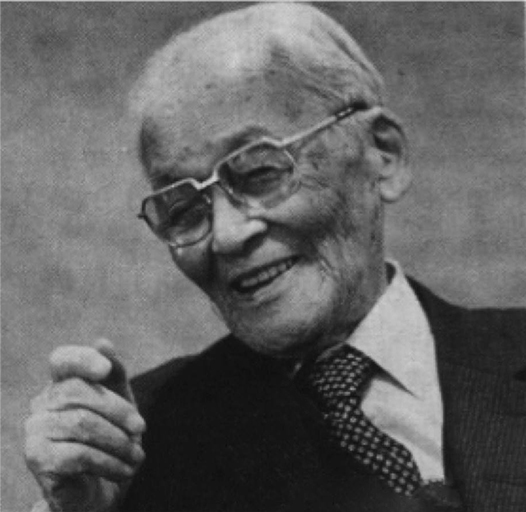
The Rev. Dr. Richard “Dick” Boeke (March 2, 1931 – May 25, 2025), a tireless advocate for interfaith cooperation and religious freedom, passed away on May 25th. His legacy in the Unitarian Universalist tradition and the International Association for Religious Freedom (IARF) reflects a rare combination of theological depth, institutional leadership, and joyful service.
Born into a Southern Baptist family, Dick’s spiritual journey led him through study and reflection to the Unitarian faith while in seminary. He often remarked that study liberates—a theme that ran through his ministry and international engagement. As a minister in the UUA, he brought a passion for global understanding that extended far beyond his pulpit.
In the IARF, he found a spiritual home where his commitments to pluralism, dialogue, and peace could flourish. Inspired by the teachings of Shin’ichirō Imaoka, Dick became a leading voice for Free Religion—a vision of spirituality unbound by dogma, rooted instead in a reverence for truth, openness, and moral responsibility. He advocated for serious study of others’ religions as an act of mutual respect.
Among his many achievements was helping to establish the Albert Schweitzer Award within IARF, which honored figures who embodied service to humanity in the spirit of liberal religion. The first recipient was Founder Nikkyo Niwano of Rissho Koseikai, a model of Buddhist leadership for peace. Richard’s personal humility was evident in his constant lifting up of others whose lives inspired hope and courage.
Another example of his international bridge-building was his collaboration with Chief Priest Yukitaka Yamamoto to create Tsubaki America, the first Shinto shrine for interfaith worship in the continental U.S. His work helped translate Japanese spiritual values into a global context—offering Americans a way to engage with Shinto practice and nature-based reverence.
Richard’s writings and teachings emphasized faith not as rigid belief, but as trust—in others, in life, and in the transformative power of service. His generous spirit, like his enduring smile, touched lives around the world.
May his memory continue to be a light—illuminating paths of wisdom, compassion, and unshakable hope.
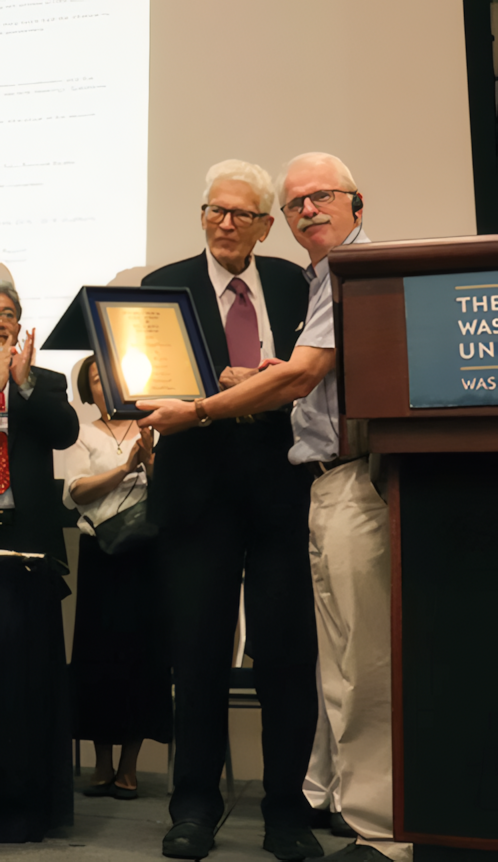
Rev. Boeke receiving the IARF Distinguished Leadership Award at the 2018 Congress from the then President of IARF, Robert Ince
The IARF is deeply grateful to the Boeke family for sharing Rev. Dr. Boeke’s wish that memorial contributions be made to our organisation. We thank all who may choose to honor his memory in this way.
Those wishing to make a gift may do so here. Your support will help continue the work that was so dear to him.
×
IARF Endorses Statements on Women’s Rights and Minority Religious Identity
The International Association for Religious Freedom recently affirmed its commitment to global human rights and interfaith collaboration by endorsing two significant international statements focusing on gender equality and the protection of religious minorities.
Supporting Gender Equality & Civil Society
IARF proudly joined over 100 NGOs in endorsing the International Women’s Day 2025 statement, initiated by Soroptimist International and the Conference of Non-Governmental Organizations in Consultative Relationship with the United Nations (CoNGO). This collective action highlights the power of collaboration in advancing women’s rights. This endorsement aligns with IARF’s ongoing commitment to advancing gender equality (SDG 5), demonstrated by our participation in the recent 69th session of the UN Commission on the Status of Women (CSW69) in New York, which focused on reviewing the implementation of the Beijing Declaration and Platform for Action. The statement is being shared with UN officials and member states to amplify its message.
Advocating for Minority Religious Identity at the UN
Aligning with our mandate, IARF also supported a joint statement delivered at the 58th Regular Session of the UN Human Rights Council on March 21, 2025. Presented during the dialogue with the Special Rapporteur on Minority Issues, the statement addresses the critical challenges minorities face when their religious identity is not properly acknowledged or respected in legal processes.
It highlights how forced declarations of incorrect faiths or prohibitions on changing religious affiliation restrict fundamental rights and calls on States to ensure religious identity serves as a basis for empowerment, not marginalization.
These endorsements reflect IARF’s core mission and our active engagement using our ECOSOC consultative status to advocate for religious freedom and human rights for all.
Celebrating 40 Years: A Report on the IARF JLC Anniversary Gathering
Date: Tuesday, 29 October, 2024Time: 3.00pm – 6.30pm (Part 1: 3.00–4.20pm, Part 2: 4.30–6.30pm)Location: Hotel Sanraku Kyoto YamashinaParticipants: 35
Objective
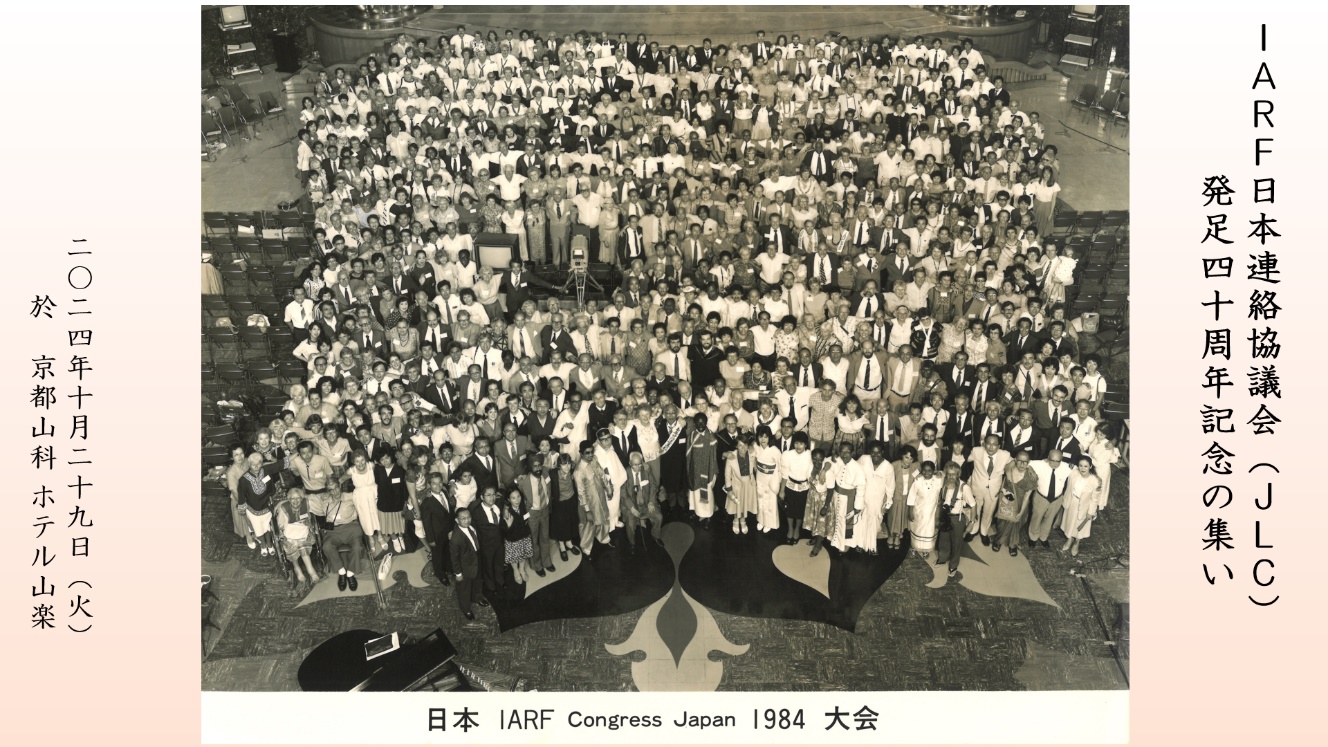
The year 2024, it has been 40 years since the IARF Japan Liaison Committee (JLC) was established on the occasion of the 25th IARF World Congress in Tokyo in 1984. To commemorate this, a gathering was held to celebrate the 40th anniversary of the JLC.
We looked back on the 40 years of the JLC, reflected on the passion of the original members, deepened the exchange between members and wished to continue developing IARF activities in Japan in the future.
Summary
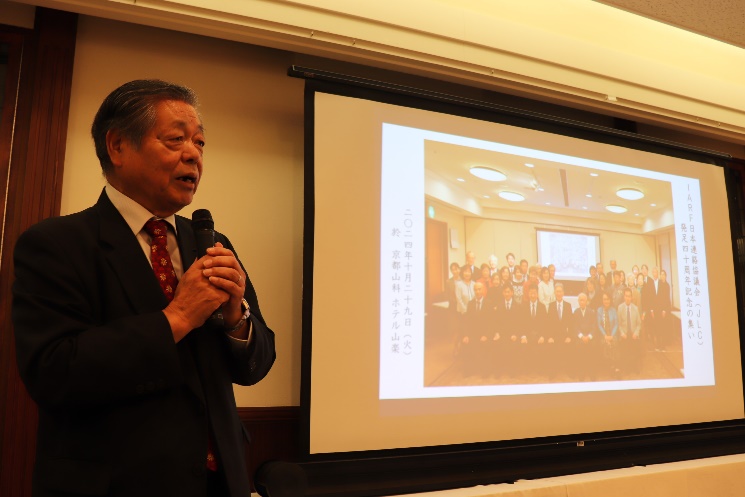
Part 1: Slideshow Session ‘JLC – 40 years of history through images’
After the MC, Rev. Torazo Tanino, declared the meeting open, Rev. Yukinobu Sahara gave the opening address.
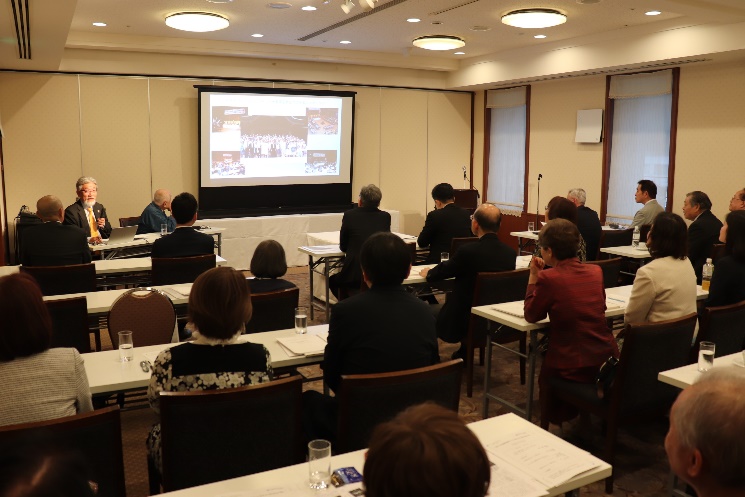
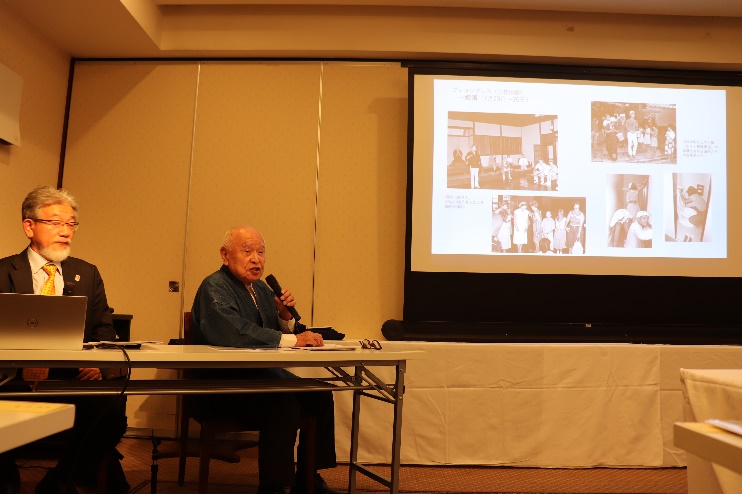
The moderator, Rev. Yoshinobu Miyake, and commentator, Rev. Takashi Nishida, were then introduced, and the history of the JLC was reviewed through a slide presentation entitled ‘JLC – 40 years of history through images’.
The history of the JLC was reviewed with detailed explanations by Rev. Miyake of the photos on each slide, as well as reminiscences told by Rev. Nishida and other participants.
While the Tokyo Congress is highly regarded for its overall programme management, it also made a strong impression on international participants in terms of human exchange.
Representatives of Rissho Kosei-kai, Konko Church of Izuo and Tsubaki Grand Shrine first participated in the 20th World Congress held in Boston, USA, in 1969, when the ‘International Congress of Free Christians and Other Religious Liberals.’ was renamed the ‘International Association for Religious Freedom’.
In 1981, Rev. Nikkyo Niwano of Rissho Kosei-kai was elected as the first Japanese president of the IARF. In 1984, Tokyo was chosen as the venue for the 25th World Congress of the IARF, the first time in Asia.
The Japanese member groups organised the JEC (Japan Congress Executive Committee) and meticulously prepared for the Tokyo Congress. Several options were prepared not only for the main congress programme but also for pre-congress tours and post-congress tours, including programmes to introduce and exchange Japanese culture in particular.
After the great success of the Tokyo Congress, the ‘Japan Congress Executive Committee’ was taken over by the ‘IARF Japan Liaison Committee (JLC)’, which later developed IARF’s activities in Japan.
Since then, several members of the JLC have served continuously on the IARF International Council, and have also made their significant international contributions, such as the election of Rev. Yukitaka Yamamoto of the Tsubaki Grand Shrine as International President in 1996 and Rev. Mitsuo Miyake of the Konko Church of Izuo in 2010. A number of JLC members have also willingly participated in IARF World Congresses held in various cities around the world.
In addition to these international activities, the JLC has held regular liaison meetings several times a year to share information on domestic and international activities, and has also organised fieldworks and study sessions in Japan.
After showing the slides, Rev Kosuke Shiba of the Japan Chapter gave a closing address and led the closing prayer to conclude the first part of the meeting.
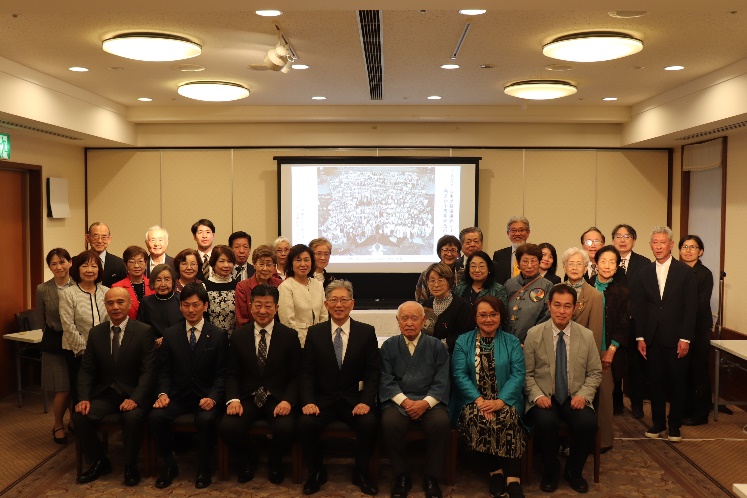
And then, all of a ll the participants took part in a group photo.
Rev. Yoshinobu Miyake gave detailed explanations on the JLC history slides.Rev. Takashi Nishida shared his good memories of the Tokyo Congress in 1984.Group photo of the day
Part 2: Social Gathering
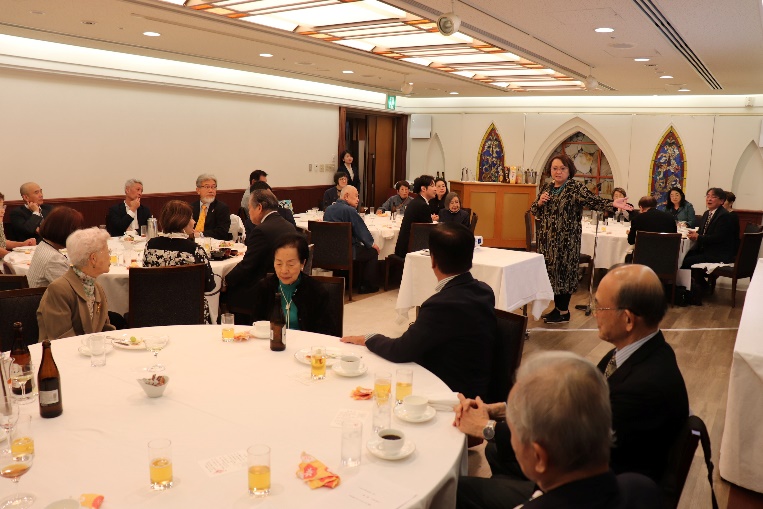
The second part of the meeting was a social gathering to celebrate the 40th anniversary and to deepen mutual exchange among members.
After an opening address and opening prayer by Rev. Kazuhiro Motoyama of Tamamitsu Shrine, congratulatory speeches were given by three people.
First, we received a congratulatory address from Rev. Nichiko Niwano, President of Rissho Kosei-kai, read on his behalf by Rev. Yukinobu Sahara, followed by a congratulatory address from Rev. Mitsuo Miyake of Konko Church of Izuo, who served as the 33rd President of IARF. Dr. George Williams, the current IARF President, also delivered a congratulatory message, which was read on his behalf by the MC, Mr. Souru Tanino.
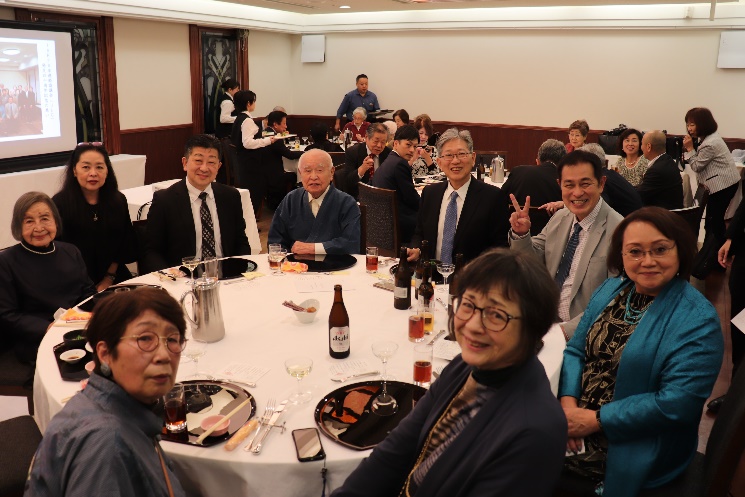
Following a toast led by Rev. Toshihide Yamamoto of the Mutsumikai, participants enjoyed a meal while socialising. Each of the Japan Chapter and IALRW members present was introduced. A short video created by President Williams to commemorate the Tokyo Congress was also shown, as well as photos that could not be included in Part 1 due to time constraints. Ms. Haruyo Masuda, a participant from the Japan Chapter, spoke about her experience of hosting participants at the 1984 Tokyo Congress, which included a programme of ‘home visits’. Rev Mitsuo Miyake expressed his gratitude and appreciation to the secretariat staff and others involved in the preparations for the day.
We also enjoyed a video recording of the 25th IARF Congress held in Tokyo in 1984. All of the participants shared cheerful moments.
With the closing speech and prayer led by Prof. Kathy Matsui, the whole programme of the gathering came to a joyful close.
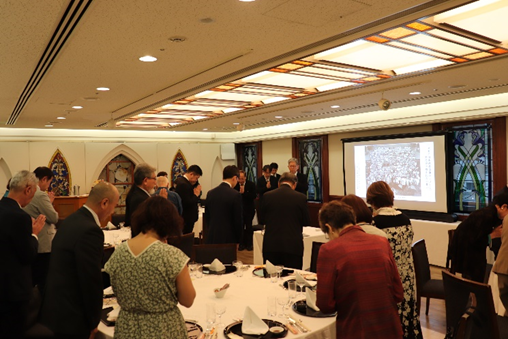
Prayer for PeaceEnjoying food and chattingMr. Ichikawa introduced the members of the Japan chapter.Prof. Kathy Matsui gave the closing speech
INVINCIBLE: Peace and Conflict Resolution for Young Adults
The youth wing of the International Association for Religious Freedom (IARF) brought its peace and conflict resolution program to Mumbai, targeting young leaders at Pramod Ram Ujagar Tiwari Saket Institute of Management (PRUTSIM). The December 14 event, called “INVINCIBLE,” engaged participants aged 18-25 in conversations about peace-building and understanding conflict.
Janhvi Gupte kicked off with an ice-breaker that got participants talking openly about tough issues. This approach worked especially well, creating an atmosphere where students felt comfortable discussing conflict and its resolution.
Aayush Soni followed with an overview of IARF and RFYN’s work worldwide, showing students how they could get involved in peace-building efforts.
The program took a serious turn as participants explored the consequences of conflict, examining the Hiroshima-Nagasaki bombing. Gupte’s presentation on history’s deadliest wars brought home the reality of conflict, while photos of Hiroshima created a lasting impact. The story of Sadako Sasaki, a survivor who became a symbol of peace, resonated deeply with participants.
Discussions then moved to practical applications, exploring how peace affects daily life. Participants examined personal, social, and environmental aspects of peace-building, looking at concrete ways to resolve conflicts in their own lives.
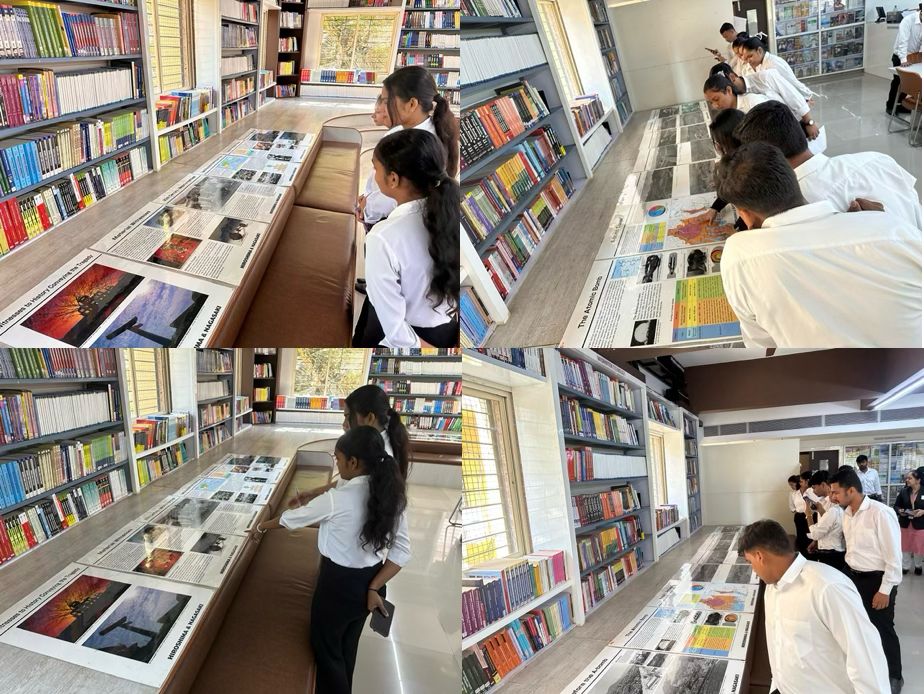
The program wrapped up in PRUTSIM’s library, where participants viewed posters from Japan showing the impact of nuclear weapons. This exhibition drove home the real consequences of war.
In a spontaneous show of commitment, participants took a peace pledge, promising never to support nuclear weapons. Their engagement and feedback showed the program hit its mark.
The event ended with Immanuel Manish Daniel encouraging participants to join RFYN’s peace efforts. PRUTSIM’s support, including presenting appreciation certificates to facilitators, demonstrated their commitment to peace education.
INVINCIBLE at PRUTSIM showed that young people engage enthusiastically with peace initiatives when presented in relevant, interactive ways. The participants’ response suggests a growing awareness of the importance of conflict resolution skills among future leaders.
Happy Thanksgiving!
In the United States, it is customary to wish everyone a Happy Thanksgiving on the last Thursday of November. Despite global challenges, there is still much to be grateful for—even as the world stands at a tipping point between hope and fear, light and darkness.
This year has been fraught with war, climate inaction, and growing inequities, yet the principles of religions and spiritualities calling us to beauty, truth, and justice are more necessary than ever. In the darkness, the candles of liberal faith can shine brightly.
The International Association for Religious Freedom is moving in a new direction. All International Council members are now expected to contribute either as workers or by appointing associates to represent their chapters or member groups. So far, this has proven effective in our committees for finance, UN representation, and developing the website for free communication.
Membership has grown, with Sony College in Chhindwara, India, and Pagan Federation International joining us. IARF’s strength lies in its openness to diverse perspectives—religious, spiritual, or secular—and its recognition of every faith’s unique contributions to our collective enrichment. No tradition has a monopoly on truth; through dialogue, we find new ways to serve a struggling world. (Several more groups are preparing their applications.)
Contributions from regions such as Europe and the U.S. have increased, and individual donations—some surpassing those of member groups—have been especially impactful.
Personally, I am deeply grateful for the positive reception of the Free Religion Institute. The concept of “free religion” – inspired by figures like Raja Rammohan Roy, Ralph Waldo Emerson, and Dr. Imaoka Shin’ichirô – explores liberating spiritualities across traditions. Translating this vision across languages remains challenging, as political and historical contexts often distort the meaning of freedom.
Andrew Brown suggests “free-religion” as a way to reconnect with the liberative essence of faith traditions. Today, we face enslavements in new forms. Free-religion invites us to confront these with liberating practices.
We need your support. Volunteer as an editor, librarian, teacher, or researcher, or help with technical tasks for the Institute and the website. If volunteering isn’t possible, please consider donating to sponsor an intern or a program.
Let us honor Guji Yukitaka Yamamoto’s plea: “Do not let IARF die.” Together, we can keep its mission alive.
George Williams IARF President
Free Religion Institute: Inaugural Sessions
We’re excited to introduce the Free Religion Institute, a new IARF initiative where people from free and liberal religious traditions can find inspiration in each other’s wisdom and experiences. The Institute creates spaces for learning, sharing ideas, and exploring religious thought together. We welcome both members of different faiths and individual seekers from our global community.
About the Institute
“In the university of human life there is no graduation.”
— Rev. Dr. Shinichiro Imaoka
The Free Religion Institute represents IARF’s commitment to fostering liberal religious thought and education. Taking inspiration from Rev. Dr. Imaoka’s wisdom, we recognize that learning is a lifelong journey – one that transcends formal education and embraces the continuous pursuit of understanding across religious traditions, cultures, and philosophies.
As we embark on this ambitious journey, we begin with humble steps but clear vision. Our mission is to create an accessible platform where IARF members and all those interested in liberal religion can explore, learn, and grow together. We don’t aim to replace formal education but rather to provide resources and opportunities for continuous learning and development throughout life’s journey.
Since last Congress in September 2023, over a year ago, Prof. George Williams, our team of volunteers from the Institute Working Group, as well as our first instructors, Rev. Andrew Brown and Rev. Michinori Maruta, have been working to create an ambitious educational platform that will serve the IARF community and beyond.
We envision the Institute as a vibrant hub of liberal religious education and inspiration, offering a diverse range of learning and sharing opportunities:
Live & Self-Paced Courses
Interactive sessions with expert instructors and self-guided learning modules on liberal religious thought
Digital Library
Growing collection of resources on liberal religion, including historical documents and contemporary scholarship
Global Collaboration
Partnerships with IARF member institutions, special events at IARF Congresses, and international meetups
With our e-learning platform now ready, we’re preparing to release our first courses in the coming weeks and months. These are being developed with scholars and practitioners from within and beyond the IARF community. Our first sessions, which will later be published as short courses on our platform, will be held on 30 October, 27 and 30 November on Zoom (see below for details). They are free and publicly accessible.
Going forward, we’ll be partnering with IARF member seminaries and educational institutions, organizing in-person events and summer schools, creating a curriculum that explores free and liberal religious thought, and building a library of resources for our community. We’re grateful to everyone who has helped make this possible.
San Francisco: 12:00 AM
Boston: 3:00 AM
London: 8:00 AM
Amsterdam: 9:00 AM
New Delhi: 1:30 PM
Tokyo: 5:00 PM
About the Instructor: Rev. Andrew James Brown
A philosophically/theologically inclined writer with deep sympathies towards Imaoka Shin’ichirō’s understanding of creative, inquiring, free and liberative spirituality (jiyū shūkyō 自由宗教), Jōdo Shinshū Buddhism, Konkokyo, Christian non-theism, D. G. Leahy’s “thinking now occurring for the first time”, a Lucretian inspired religious naturalism, new materialism and Kyoto School philosophy. Beyond his academic pursuits, Rev. Brown is also a photographer, cyclist, walker and jazz bass player, serving as the minister of a small, liberal, free religious community in Cambridge (UK).
Buddhism and Free Religion (自由宗教 jiyū shūkyō)
Session 1: Buddhism and Liberation
Rev. Michinori Maruta exploring Buddhist perspectives on liberation
San Francisco: 1:00 AM
Boston: 4:00 AM
London: 8:00 AM
Amsterdam: 9:00 AM
New Delhi: 1:30 PM
Tokyo: 5:00 PM
About the Instructor: Rev. Michinori Maruta
Rev. Michinori Maruta has dedicated his life to Buddhist practice and interfaith dialogue since joining Rissho Kosei-kai (RKK) in 1966. After studying applied chemistry at Tokyo University of Agriculture and Technology, he pursued Buddhist studies at RKK Seminary and later studied the New Testament at Ripon College, Cuddesdon, England. His diverse experience includes significant work in interfaith dialogue and cooperation at RKK headquarters, serving as minister at RKK centers in California and Hokkaido, and since 2001, leading the Institute of Mindful Life. Through lectures, seminars, and digital platforms, he continues to share Buddhist wisdom and promote mindful living, bringing together traditional teachings with contemporary understanding.
Your Privacy & Consent
We use cookies and local browser storage to keep you securely logged in and maintain your preferences. No third-party trackers or ad networks are used. Read our Privacy Policy.
Strictly NecessaryAlways Active
Keeps you logged in and protects forms from submission forgery. Necessary for account operation.
Usability & UI PreferencesOptional
Remembers details like chat widget coordinates and records if you have voted in a poll to prevent repeated popups.
JavaScript Core PlatformAlways Active
JavaScript is required to render the interactive app, direct messaging, offline caching, and calendars. No tracking libraries are loaded.
Why do we use JavaScript?
Our platform runs as a modern, interactive single-page application for logged-in members. We connect securely to socket.iarf.net via WebSockets for instant message delivery and online status indicators.
Where does my data go?
All data belongs exclusively to IARF and is stored on our secure VPS located in the EU. We do NOT run Google Analytics, Facebook Pixels, or other tracking code. External requests are only made to fetch FontAwesome icons and Google Fonts from public CDNs to display symbols and typography.
What happens offline?
We install a Service Worker to cache layout elements locally. No personal information is stored inside the local cache; it only speeds up navigation and enables basic offline views.