
Faith Must Be a Liberating Force: IARF Statement on the Berlin CSD Attack
Berliners gathered in mourning on Sunday, 26 July, following the previous evening’s attack near the city’s Christopher Street Day celebrations. One woman was killed and many others were injured. Germany’s federal prosecutor has taken over the investigation on suspicion of an Islamist motive; the full circumstances remain under investigation.
On Sunday, an interfaith memorial service was held at St Mary’s Church on Alexanderplatz, followed by a silent march to the Brandenburg Gate. Seyran Ateş and Tugay Saraç led the Islamic contribution on behalf of the Ibn Rushd-Goethe Mosque. In the mosque’s invitation, Ateş wrote:
As the Ibn Rushd-Goethe Mosque, we do not merely stand alongside the queer community — we are part of that community.
Seyran Ateş
Reflecting on Qur’an 5:32 — “Whoever kills a person, it is as though they had killed all humanity” — Ateş added:
God does not make a person’s worth dependent on their religion, origin, or sexual orientation. Every person is a creation of God. Every person possesses equal dignity. And every human life is sacred.
Seyran Ateş
IARF is deeply saddened by this tragedy, which took a human life, brought injury and suffering to many more, and deepened fear among people already vulnerable to hostility. We condemn this act of violence without reservation. We mourn the woman who was killed and stand with those who were injured, their loved ones, our members and friends in Berlin and across Germany, and all those who now feel threatened.
Difference should never be treated as a threat or become a cause of fear and hatred. Religious extremism must be named and confronted. But this attack must not be cynically used as a pretext to demonise an entire group, whether ethnic or religious. Collective guilt is both false and dangerous.
For more than 125 years, IARF has brought together people who affirm the intrinsic value of every human being and each person’s right to self-determination and unconstrained intellectual and spiritual growth, within a culture of mutual respect. Together with our members, partners and countless people of goodwill, we strive for a world in which individuals can live out their truth while according that same right to others.
Such a world can be achieved only through honest dialogue, real and effective measures to protect vulnerable groups, and actions that give expression to our experience of faith as a liberating and reconciling force — in our communities, across regions and countries, and globally, in every sphere of social life.
The mosque’s invitation concluded with words that also express the spirit in which IARF offers this statement:
Love is halal. Hatred is never permitted.
Ibn Rushd-Goethe Mosque
Please Sign the Petition for Yezidis in the Netherlands
In recent months, IARF has supported young Yezidis in the Netherlands in their efforts to oppose a recent change in Dutch asylum policy, under which it is now deemed safe for Yezidis and followers of some other minority religions to return to Iraq and resume their previous lives, whereas international organisations and experts say the opposite.
For members and readers resident in the Netherlands
Please read, sign and share the petition below, and show your moral support for the young Yezidis.
When Wealth Fences in the Sacred
On 5 March, the International Association for Religious Freedom (IARF) addressed the UN Human Rights Council to highlight a structural failure in many jurisdictions where private property and quiet enjoyment rights are not balanced against the rights of indigenous communities to practice their faith and honor their deceased.
The situation is starkly illustrated by the Kāneʻākī Heiau in Hawaiʻi—a 600-year-old Native Hawaiian temple currently enclosed within a private residential development. Among those affected is Prof. George Williams, a past President of the IARF who was adopted into the Kanenuiakea faith. We share his complete submission below.
When Wealth Fences in the Sacred
On a steep hillside on Oʻahu, overlooking the Waianae coast, a small but growing controversy is drawing international attention from advocates of religious freedom.
Within a gated luxury development lies an ancient Native Hawaiian healing Heiau—a temple site traditionally associated with medicine and spiritual restoration—along with ancestral burial grounds protected under state preservation laws.


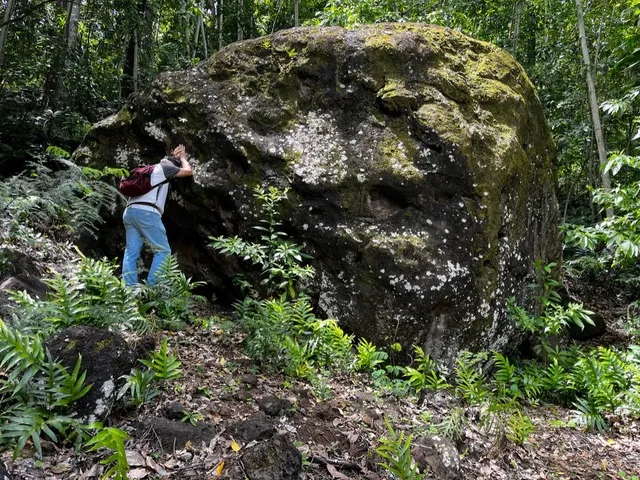


Community members and religious freedom advocates say access to the sacred site has been effectively restricted by the homeowners’ association (HOA) that now controls the surrounding land.
The dispute began years ago when the rocky hillside was developed into a high-end residential enclave. Legal agreements transferring community land to HOA control included provisions requiring maintenance of the Heiau and continued public access.
But as property values rose, the HOA tightened security. While Wai’anae is cited as having one of the lowest median household incomes in all of Hawai’i — and the highest Native Hawaiian population in the world, the gated neighborhood of 46 households enclosing Kaneʻaki Heiau, has the highest income in Hawai’i according to census data.
And after its gate was installed, visitors could be turned away. Some Native “practitioners” (a term used to avoid ridicule) say they were warned they could face arrest for trespassing if they attempted to reach the Heiau for prayer or ceremony.
For many Indigenous Hawaiians, sacred space is inseparable from the land itself. Unlike traditions centered inside religious buildings, Native Hawaiian spirituality takes place in natural settings—mountains, shorelines, burial grounds, and temple platforms built of stone.
“When access is blocked, worship is blocked,” said one advocate involved in the dispute. And at Kaneʻaki Heiau, even if access were to be allowed, it had to be supervised by the HOA!
The conflict has now drawn the attention of the International Association for Religious Freedom (IARF), one of the world’s oldest interfaith organizations. Leaders within the association have approved filing an Amicus Curiae brief stressing U.S. Constitutional and International guarantees of freedom to worship.
IARF has historically defended minority faith communities around the world. Supporters say this case reflects a pattern in American history in which Indigenous religions have been marginalized or dismissed.
Native spiritual practices were criminalized in parts of the United States until the late 19th and early 20th centuries. Although federal laws now recognize Indigenous religious rights, enforcement often depends on local conditions and legal interpretation.
“This isn’t only about one Hawaiian hillside,” said an interfaith leader familiar with the matter. “It’s about whether religious freedom includes traditions rooted in land and nature rather than inside of churches, mosques, or synagogues.”
Interestingly, the legal challenge has been propelled in part by a successful couple who purchased a home with the right of access through the HOA’s gate. But soon they faced harassment on what seems racial and social grounds. They refused to leave. Instead, they pressed for enforcement of the original access obligations. They were joined by Indigenous Hawaiians and those who were denied access to worship or visit their healing shrine or ancestors’ graves.
Observers say the case could set an important precedent for how homeowners’ associations interact with sacred and archaeological sites nationwide. At its heart, the dispute raises profound legal questions: Does ownership of surrounding land allow a private association or corporation to restrict access to a sacred site protected by law? Can communal burial grounds be effectively privatized by encirclement? Do property rights supersede the cultural and religious rights of Indigenous peoples whose sacred spaces do not resemble conventional religious buildings?
For interfaith groups, the answer carries broader implications. Religious freedom, they argue, must apply not only to majority traditions with visible institutions, but also to Indigenous communities whose sanctuaries are woven from the earth itself.
In Hawaiʻi, where land is more than property and history more than a footnote, this small hillside may become a symbol of something much larger—the effort to reconcile property and religious rights, ownership with reverence.
Please consider signing a petition in support of religious freedom.
Protecting Ancestral Heritage: IARF Addresses the UN on Indigenous Burial Rights on Private Land
March 5, 2026 — During the ongoing session of the UN Human Rights Council, the International Association for Religious Freedom (IARF) took the floor to address a critical but often overlooked intersection of human rights: the right of Indigenous Peoples to access and care for their ancestral burial sites when those sites are located on privately owned land.
The statement was delivered during the Interactive Dialogue with Dr. Nazila Ghanea, the UN Special Rapporteur on Freedom of Religion or Belief, responding to her latest report on how freedom of religion or belief relates to death and honouring the deceased.
Watch the Oral Statement
The Regulatory Gap: Private Property vs. Sacred Duties
While many States have established protections for sacred and burial sites, these frameworks frequently suffer from a significant blind spot. Protections are often conditioned on government action or apply strictly to publicly managed lands.
When ancestral lands and burial sites fall into private hands or under private residential governance, Indigenous communities are frequently severed from their heritage. Without national frameworks extending to private property, communities are left without legal recourse to fulfill their religious and cultural duties to their ancestors.
Grounding the Issue: Kāneʻākī Heiau in Hawaiʻi
To illustrate the profound impact of this regulatory gap, IARF highlighted the situation at the Kāneʻākī Heiau site in Mākaha, Hawaiʻi. Here, Native Hawaiian practitioners face immense barriers—enforced by private residential governance—when seeking to access and care for their iwi kūpuna (ancestral remains).
This is not an isolated incident. The full scale of this problem remains largely undocumented globally, leaving many Indigenous communities silently cut off from their most sacred sites.
IARF’s Call to Action
In our statement to the Human Rights Council, the IARF urged States to take the following crucial steps:
- Conduct Systematic Assessments: States must actively document sacred and burial sites affected by private land governance.
- Develop Effective Frameworks: We need concrete legislative and policy solutions that balance private property rights with the fundamental human right to manifest religion and care for the deceased.
We look forward to continuing this vital conversation with the Special Rapporteur and UN Member States to ensure that honoring the deceased is a right guaranteed to all, regardless of modern property lines.
Full Transcript of the Oral Statement
Interactive Dialogue with the Special Rapporteur on Freedom of Religion or Belief 3 March 2026
“Mr. President,
The International Association for Religious Freedom welcomes Special Rapporteur Ghanea’s report on freedom of religion and honouring the deceased. We particularly appreciate paragraph four, which highlights the barriers Indigenous Peoples face in accessing burial lands to honour their ancestors.
In many States, protections for burial sites are conditioned on government action or apply only to publicly managed lands. This leaves a significant regulatory gap when such sites fall within privately owned or governed land. Without national frameworks extending to these contexts, private property mechanisms can effectively sever Indigenous communities from their ancestral heritage.
As an illustrative example, at the Kāneʻākī Heiau site in Hawaiʻi, Native Hawaiian practitioners face profound barriers—enforced by private residential governance—when seeking to access and care for their iwi kūpuna, their ancestral remains.
We note that the full scale of this problem remains largely undocumented, and we encourage States to undertake systematic assessments of sacred and burial sites affected by private land governance, as a necessary first step toward effective frameworks that balance property rights with the fundamental right to manifest religion and care for the deceased.
Special Rapporteur, what concrete legislative or policy best practices have proven effective in enabling States to reconcile private land governance with the protection of Indigenous Peoples’ rights to access and care for sacred and burial sites?
Thank you.”
Further Reading:
- Read the Special Rapporteur’s full report (A/HRC/61/50)
Update from the US Chapter: Concerns Raised Over New “Religious Liberty Commission”
Our colleagues in the United States have shared a significant update regarding the current climate of religious freedom in their region. In a recent communication to members, the US Chapter raised serious concerns regarding the Administration’s establishment of a “Religious Liberty Commission” within the Department of Justice.
US Chapter President George Garland has alerted members to what the Board views as a troubling development, noting that the new commission appears to prioritize specific conservative religious interests in a way that conflicts with federal law. The Chapter stresses the importance of maintaining a clear separation of church and state to protect the rights of all faith communities.
In response, the IARF-US President and Board have formally endorsed a lawsuit filed by the Interfaith Alliance and a diverse coalition of partners, including Muslims For Progressive Values and Hindus For Human Rights. The legal challenge asserts that the commission was unlawfully constituted and seeks to ensure transparency regarding its recommendations.
The US Chapter is currently encouraging its members to contact their representatives in Congress to address the matter.
For the full statement from President Garland and further details on the coalition’s legal action, please visit the US Chapter website.
Read the full update at iarfus.org
Sit-in Demonstration by Yezidis in The Hague Because of Recent Dutch Policy Change
Young Yezidis are holding a sit-in demonstration this month in front of The Hague Central train station to express their concerns about a recent change in Dutch policy. Under this new policy, the government now considers it generally safe for Yezidis and other religious minority groups to return to Iraq—either to the city of Sinjar and its surroundings, or to camps in the Kurdish Autonomous Region. As a result of this change, many requests for asylum by Yezidis have been rejected in the past 1.5 years.
Yezidis believe that since the genocide of 2014, they cannot safely live in Iraq due to continuing discrimination, hate speech from other groups, a lack of law and order, and widespread impunity. Recent developments in Iraq and Syria have only increased these concerns.
In Germany, Yezidis face similar problems. Please support the Yezidis by writing to your Member of Parliament, donating to Yezidi organizations, or encouraging them by passing by their sit-in demonstration in The Hague. IARF supports the Yezidis in the Netherlands.
How Liberal Religion Spearheaded Protection of Belief: Anniversary of the 1981 UN Declaration
“Considering that religion or belief, for anyone who professes either, is one of the fundamental elements in his conception of life…”
November 25 marks a pivotal, yet often overlooked, milestone in the history of human rights. On this day in 1981, after nearly two decades of geopolitical gridlock, the United Nations General Assembly adopted Resolution 36/55: the Declaration on the Elimination of All Forms of Intolerance and of Discrimination Based on Religion or Belief., the first international instru ment dedicated solely to freedom of religion.
While the 1948 Universal Declaration of Human Rights laid the foundation, it was this 1981 document that finally codified the specific rights of conscience—freedom to worship, to teach, to publish, and to organize—into international norms. But this victory was not inevitable. It was achieved through the tenacious intervention of civil society when governments had all but given up.
The story of the 1981 Declaration is, in large part, a story of liberal religion. Through the leadership of the IARF and our member groups—particularly the Unitarian Universalist Association (UUA)—our representatives spearheaded the consensus that protects the rights of believers and non-believers alike.
Deep Roots: A Legacy of Visionary Activism
Long before the Declaration was drafted, the IARF recognized that religious freedom required a global political framework. As detailed in the IARF’s Centennial Reflections, this engagement began with Elvira Fradkin, a visionary American Unitarian from Montclair, New Jersey.
Present at the founding of the United Nations in San Francisco in 1945, Fradkin understood early on that the new world order needed the voice of liberal religion. It was her persistence that convinced the IARF to register with the UN Economic and Social Council (ECOSOC) in the 1950s—one of fewer than 300 NGOs to do so at the time. Her work laid the logistical and moral groundwork for the battles that would come decades later.
The Cold War Deadlock: Diplomacy Over Dogma
By 1972, the UN’s effort to create a binding treaty on religious freedom had stalled completely. The drafting process was paralyzed by the rigidity of the Cold War. The Soviet bloc refused to sign any document that did not explicitly protect atheism and shield the state from “religious interference.” Meanwhile, various Western and Islamic nations clashed over the definition of religious rights, particularly regarding the right to change one’s religion.
In this vacuum of political will, religious freedom was becoming a casualty of superpower posturing. This is where the IARF and the UUA played their most decisive role. Because liberal religion honors the inherent dignity of all paths—theistic, non-theistic, and atheistic—our representatives were uniquely positioned to bridge the ideological divide.
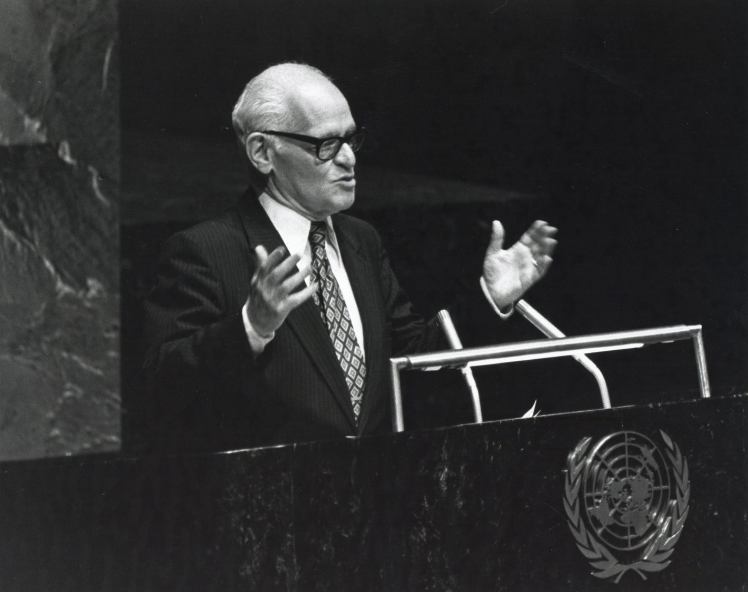
Two leaders from our community were central to breaking the impasse:
- Prof. Auguste-Raynald Werner, the IARF Representative in Geneva. A distinguished Professor of International Law, Werner worked tirelessly within the UN Commission on Human Rights. He used his legal expertise to craft language capable of satisfying opposing political blocs, ensuring the text was robust enough to protect rights but flexible enough to pass.
- Dr. Homer A. Jack, a Unitarian Universalist minister serving as Secretary-General of the WCRP. He spearheaded the “Gang of Four” NGOs that refused to let the issue die. When member states moved to shelve the draft, Jack mobilized the NGO community to pressure the General Assembly to prioritize a non-binding Declaration over a doomed Treaty—a strategic pivot that saved the project.
The “Religion or Belief” Compromise
One of the most significant contributions of the liberal religious lobby was the insistence on the phrasing “Religion or Belief.” This distinction was not merely semantic; it was the key to consensus. It ensured that the Declaration covered theistic faiths, non-theistic traditions, and atheistic views equally.
This inclusivity satisfied the Eastern bloc’s demand for the protection of non-religious convictions while aligning perfectly with the IARF’s principle of universal tolerance. It established a precedent that remains vital today: that freedom of conscience belongs to everyone, not just the religious.
Connecting the Dots: A Legacy of Action
The adoption of the Declaration was a victory, but as Dr. Jack noted in his memoirs, Homer’s Odyssey, a declaration without enforcement is just paper. The IARF’s leadership was central to building the machinery that enforces these rights today.
Institutionalizing Freedom: The Role of Sue Nichols
The creation of the NGO Committee in New York—the primary body that coordinates civil society advocacy on this issue today—was inextricably linked to the IARF and the UUA.
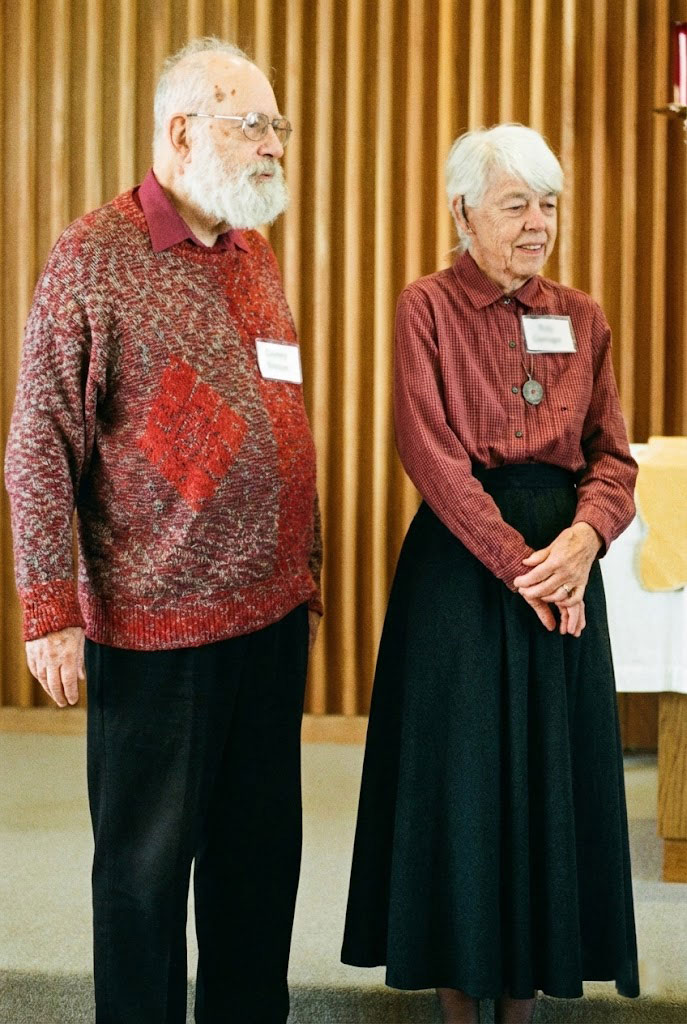
Sue Nichols, who co-directed the Unitarian Universalist UN Office with her husband Vernon, served as the IARF’s representative on the ground in New York during this critical period. Following the commissioning of the seminal “Salzberg Study” by Dr. Jack to explore implementation strategies, Nichols took the lead in formalizing the NGO coalition.
She became the founding President of the NGO Committee in New York. Under her leadership, the committee moved from an informal pressure group to a recognized powerhouse within the UN system. It established the tradition of the “Annual Day” to commemorate the 1981 Declaration and works directly with the Special Rapporteur to highlight violations globally.
A Continuing Responsibility
The 1981 Declaration remains the most important international instrument for religious freedom since the Universal Declaration of Human Rights. It serves as the basis for the mandate of the Special Rapporteur and laid the groundwork for modern diplomatic breakthroughs, such as Human Rights Council Resolution 16/18, which shifted the focus from protecting abstract religions to protecting living human beings from discrimination.
Today, the IARF continues this work as an active member of the NGO Committees on Freedom of Religion or Belief in both New York and Geneva. We honor the legacy of Fradkin, Werner, Jack, and Nichols not by looking backward, but by continuing to press for the rights of all people—regardless of their creed—to believe, or not believe, in freedom.
We Are Still Active Today
The IARF continues to honor this legacy. We remain an active member of the NGO Committees on Freedom of Religion or Belief in both New York and Geneva, working with the Special Rapporteur to ensure rights are respected.
Get Involved: IARF members are warmly invited to join our International Engagement Working Group to support our continued advocacy at the United Nations.
- Read “Centennial Reflections”: The full chapter on the IARF at the United Nations by Ruth Neuendorffer and Sue Nichols is available in our library for detailed historical context.
- Memoirs: For a personal account of the diplomatic struggle, see “Homer’s Odyssey” by Dr. Homer Jack.
- Primary Source: Read the full text of the 1981 Declaration.
The Limits of Tolerance and Religious Freedom: Report from the 2025 EME Conference
The tension and excitement were immense: participants from around the world gathered in our community to discuss one of the greatest challenges of our time. Where must religious freedom end to protect more essential human rights? Where should the boundaries of our tolerance be drawn when we face extreme beliefs and worldviews?
For four days, the participants tackled these and other questions. Unitarians, Unitarian Universalists, Remonstrants, Free Christians, liberal Muslims, Christian Unitarians, and other free-religious and freethinking movements from the USA, Brazil, Europe, and the Middle East showed how seriously they take this issue. Yet, coming together—the warm, open, and friendly encounters and exchanges—was always the top priority. New acquaintances and even friendships were formed. Old companions reunited, and complete strangers discovered how much they share!
Absolute highlights of this conference were our guests of honor: Firstly, the President of the International Association for Religious Freedom (IARF), Professor George Williams, who traveled all the way from Hawaii. Secondly, women’s rights activist and Imam Seyran Ateş, founder of the Ibn Rushd-Goethe Mosque, delivered the keynote address for the conference, offering a deep insight into the world of dealing with extremism and intolerance—especially as she is constantly confronted with it herself. Moreover, she honored us by participating in the interfaith service with a contribution of her own.
In the following, we would like to give you a more detailed insight into the conference and the pre-tour! But first, the most important thing: An immeasurable “Thank You” goes to my team at Schillerplatz. Philippe Bender, Alexander Goy, Henry Rodriguez, and Kathrin Corso worked in the background to ensure the smooth care and support of our house guests. Additionally, Johannes Spindler from the Unitarians – Religious Community of Free Faith, was a great help from the very first minute in managing technical and organizational tasks on-site, and in him, I found a new friend and companion.
And last but not least, there are Gudrun Hahn from the Frankfurt community and chair of the German IARF member group, Matthias Pilger-Strohl, Dorothee Gehrmann, Angela and Alexandra Wegel from our community, as well as Pastor Alexander, Sonja Weisdorf, and Stefan Vardopoulos from the Frankfurt community, where the last day of the conference took place and who took care of all the challenges for a successful conclusion. A big thank you finally goes to Lukasz Liniewicz, who as the Secretary of IARF supported the live streams and organization! “Thank you” to all of you!
Below, you can find recordings of the main events from the conference, hosted in the new IARF Digital Library. Each video includes subtitles available in both English and German.
Conference Pre-Tour: Offenbach and Frankfurt in a Nutshell
Pre-Tour: Day 1, Tuesday, September 9, 2025
On the first day of our pre-tour, we had a lot planned as a grand bus tour was on the agenda. Together with the guests of the IARF EME Conference, we visited many friendly Free Religious communities near and far.
The tour started at the Free Religious Community in Ingelheim. Here we admired the oldest completely preserved consecration hall from 1910 and were introduced to the beginnings of the Free Religious movement.
After a short drive, we reached the Free Religious Community in Mainz, in the heart of the Rhine city. There, we were once again warmly welcomed and had the opportunity to learn about the situation of the community and the movement during the Nazi regime in the Third Reich.
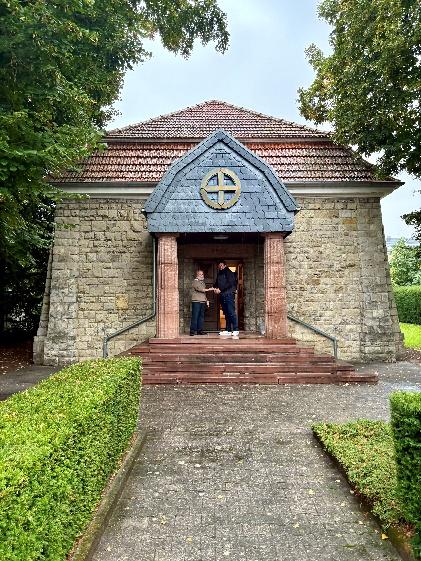
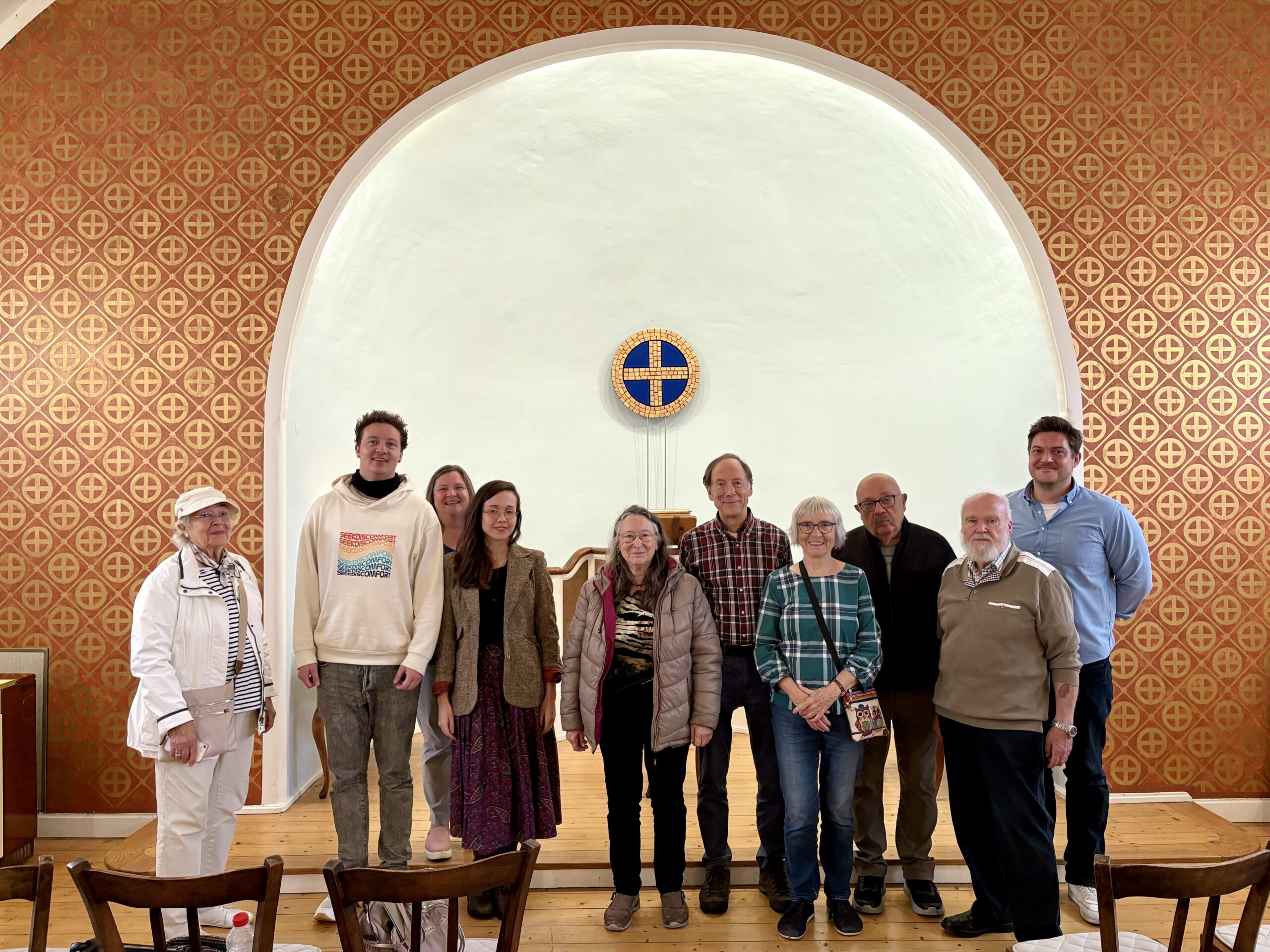
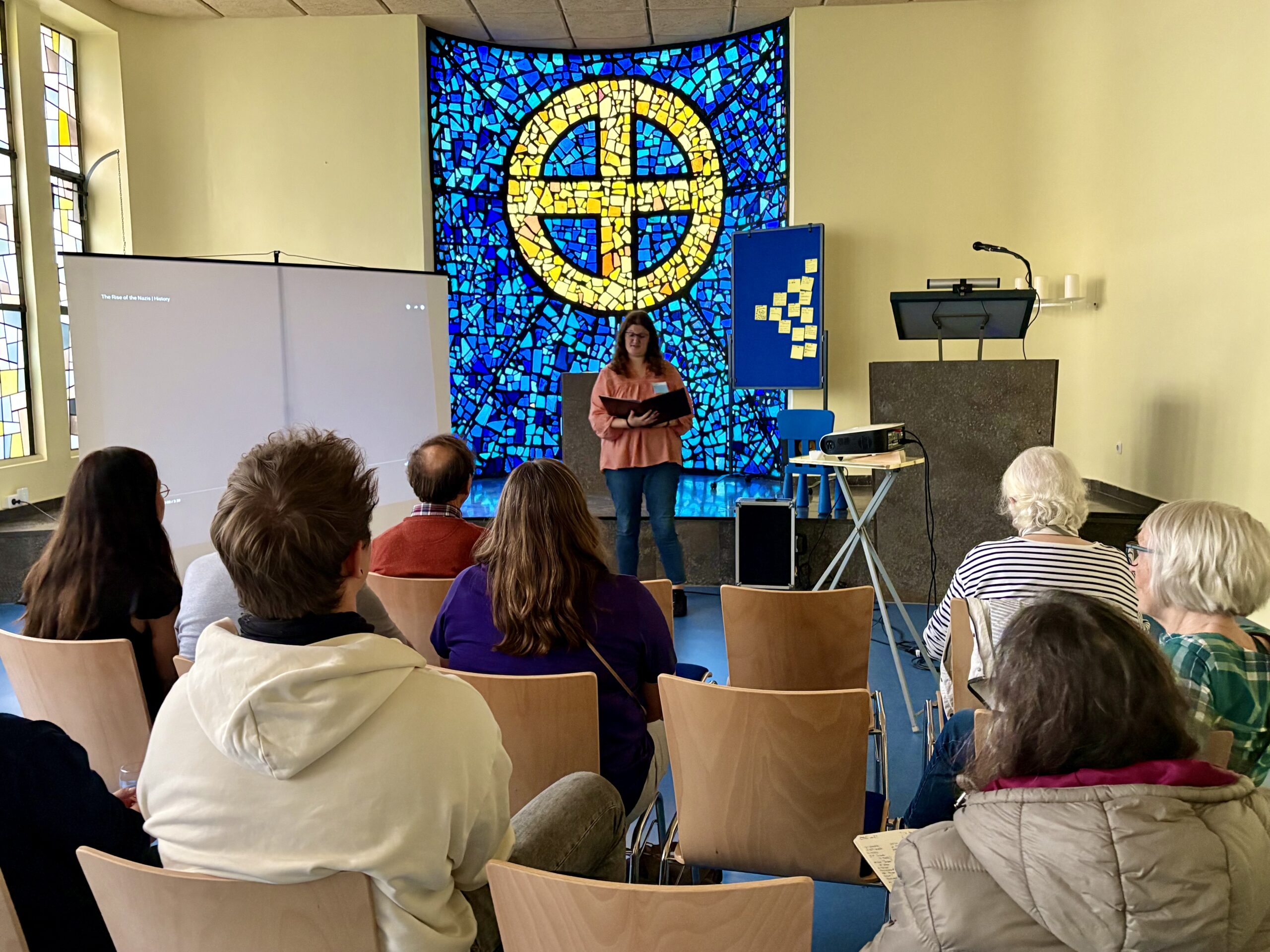
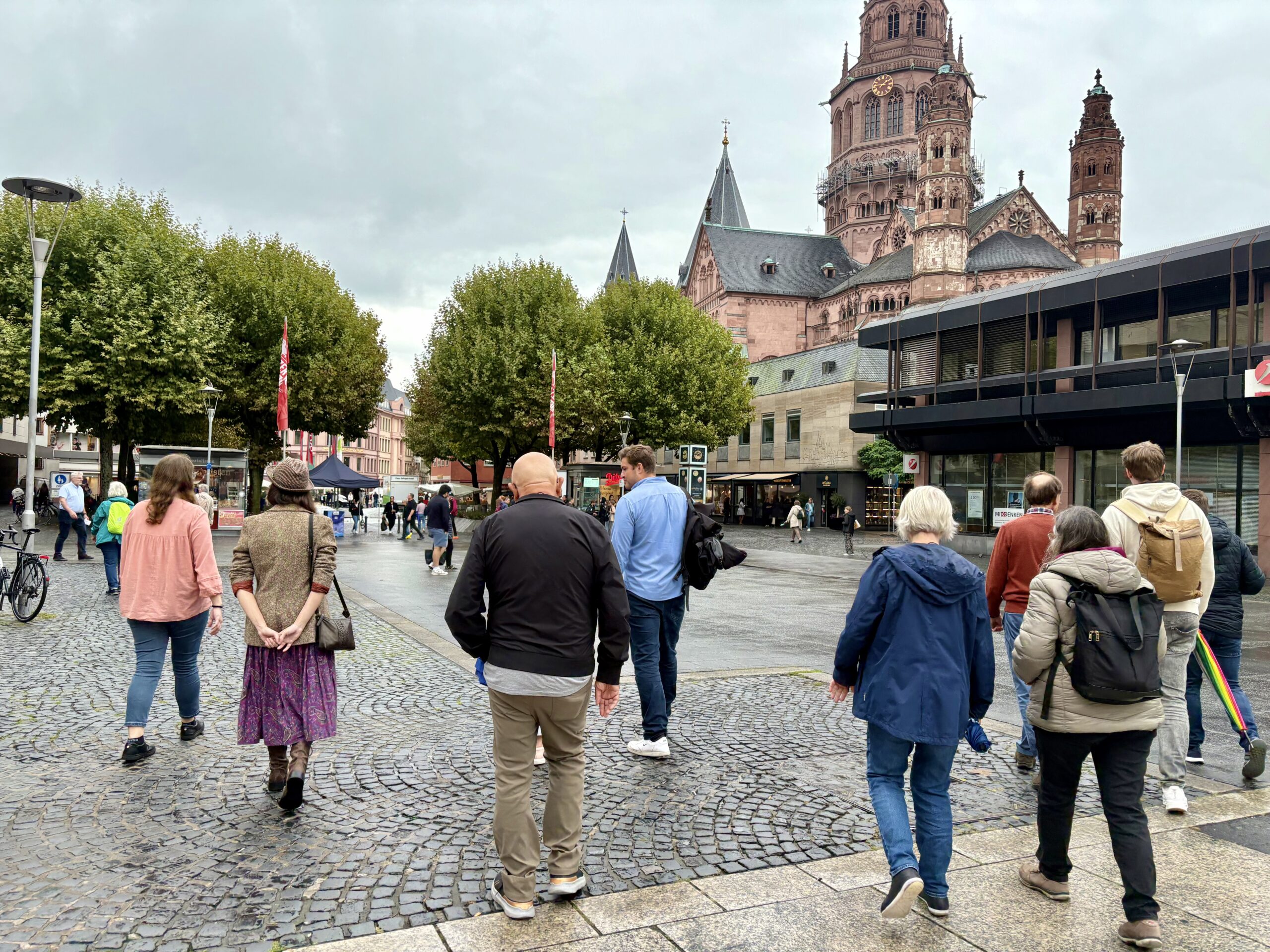
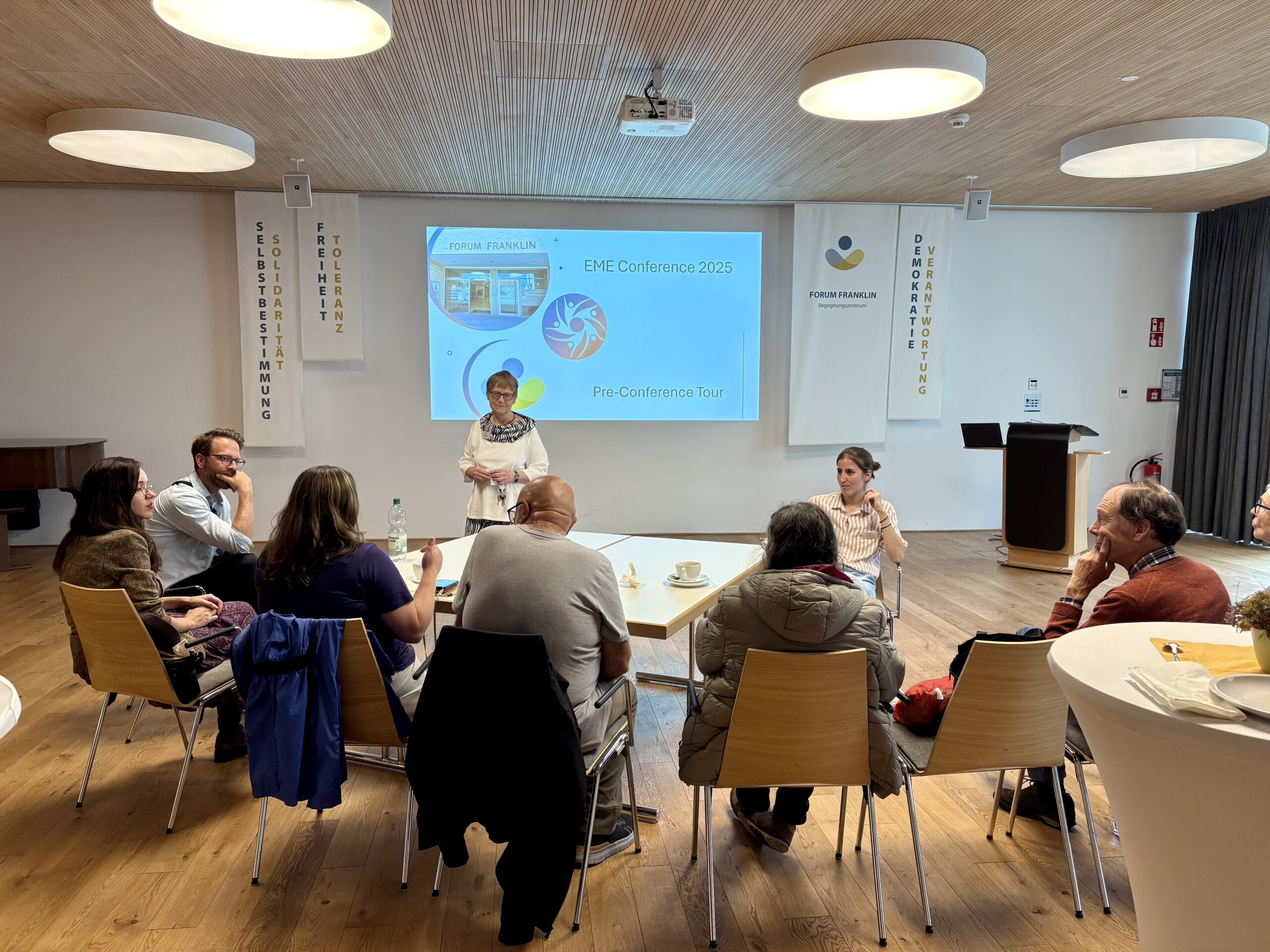
A leap into the present was taken at the Forum Franklin in Mannheim, the headquarters of the Free Religious State Community of Baden. Here, impressive ways of social and intergenerational encounters based on free-thinking and humanistic values were presented.
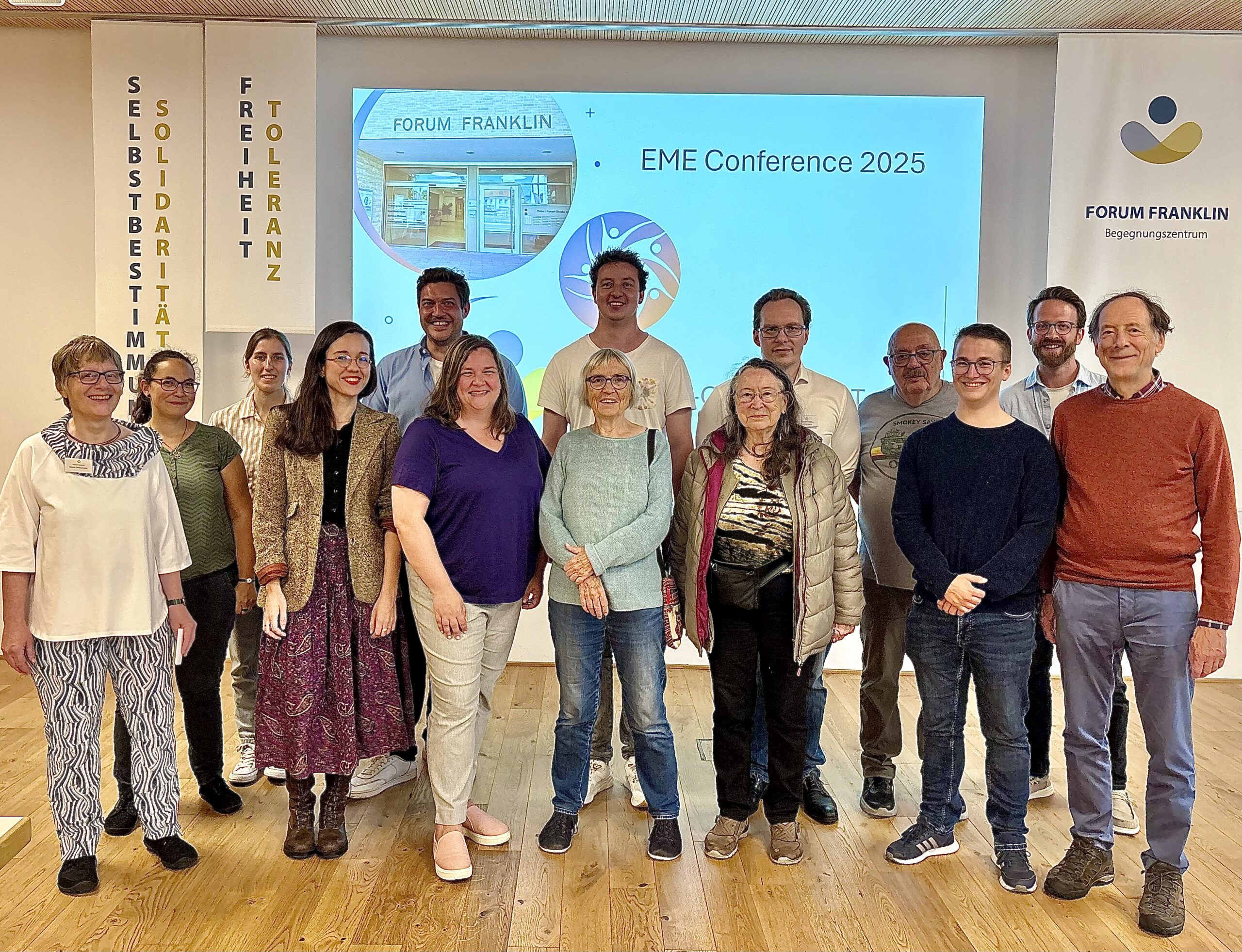
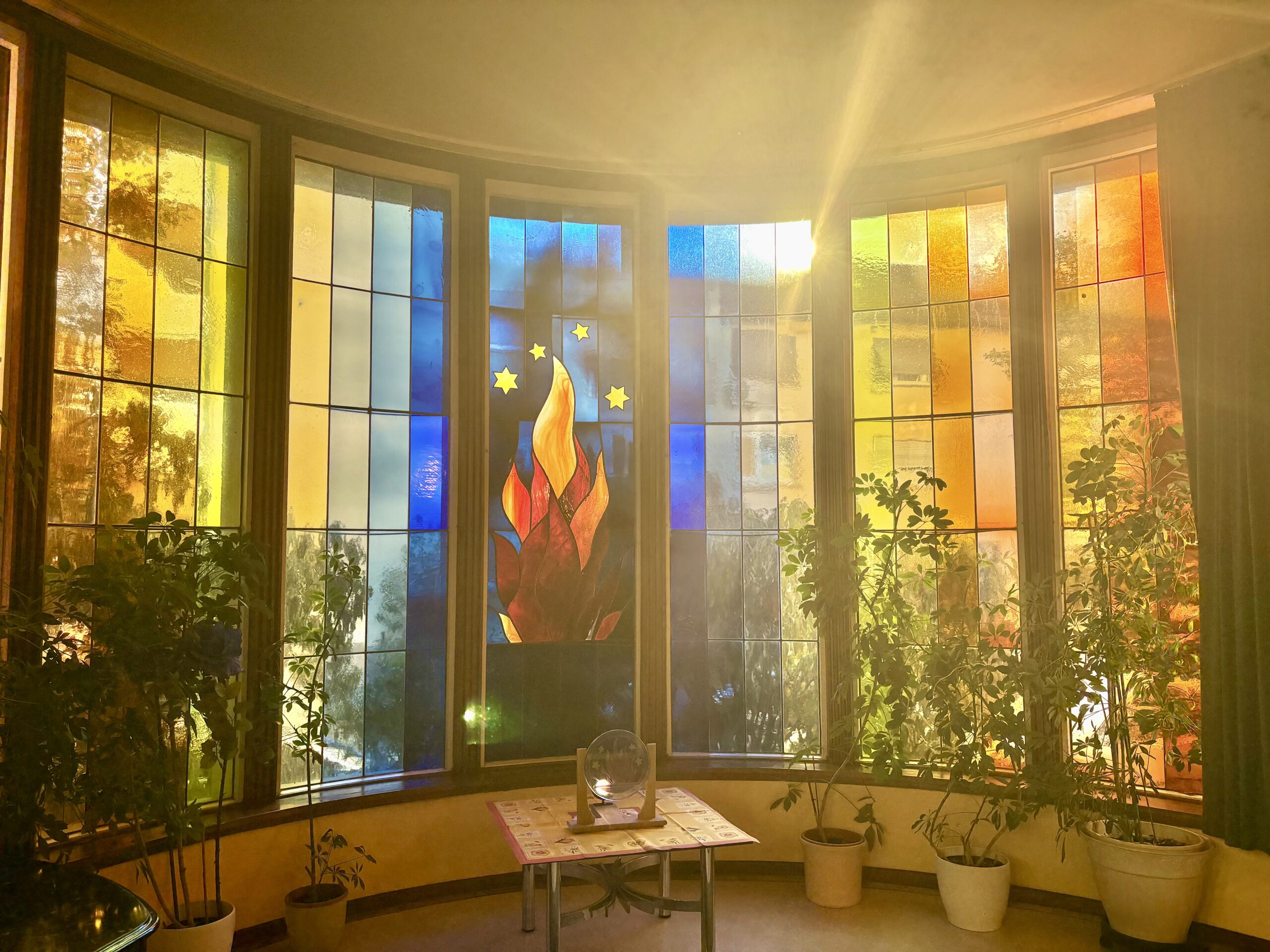
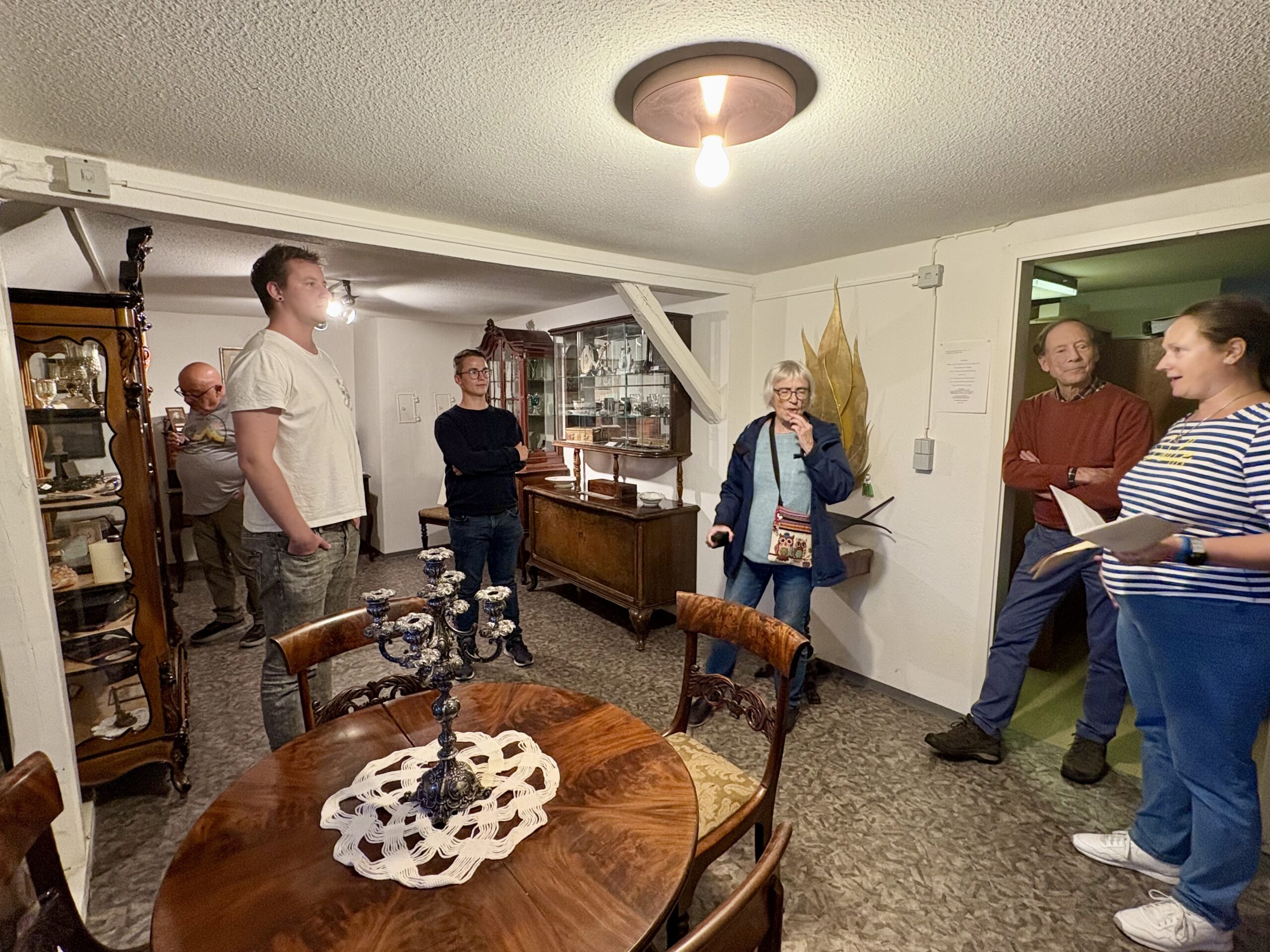
The joyous conclusion took place in Ludwigshafen at our friendly Free Religious State Community of Palatinate. We were warmly hosted, informed, and entertained with singing and good conversations. We also gained insights into the Ronge Museum, which contains the estate of the co-founder of the Free Religious movement, Johannes Ronge.
Pre-Tour: Day 2, Wednesday, September 10, 2025
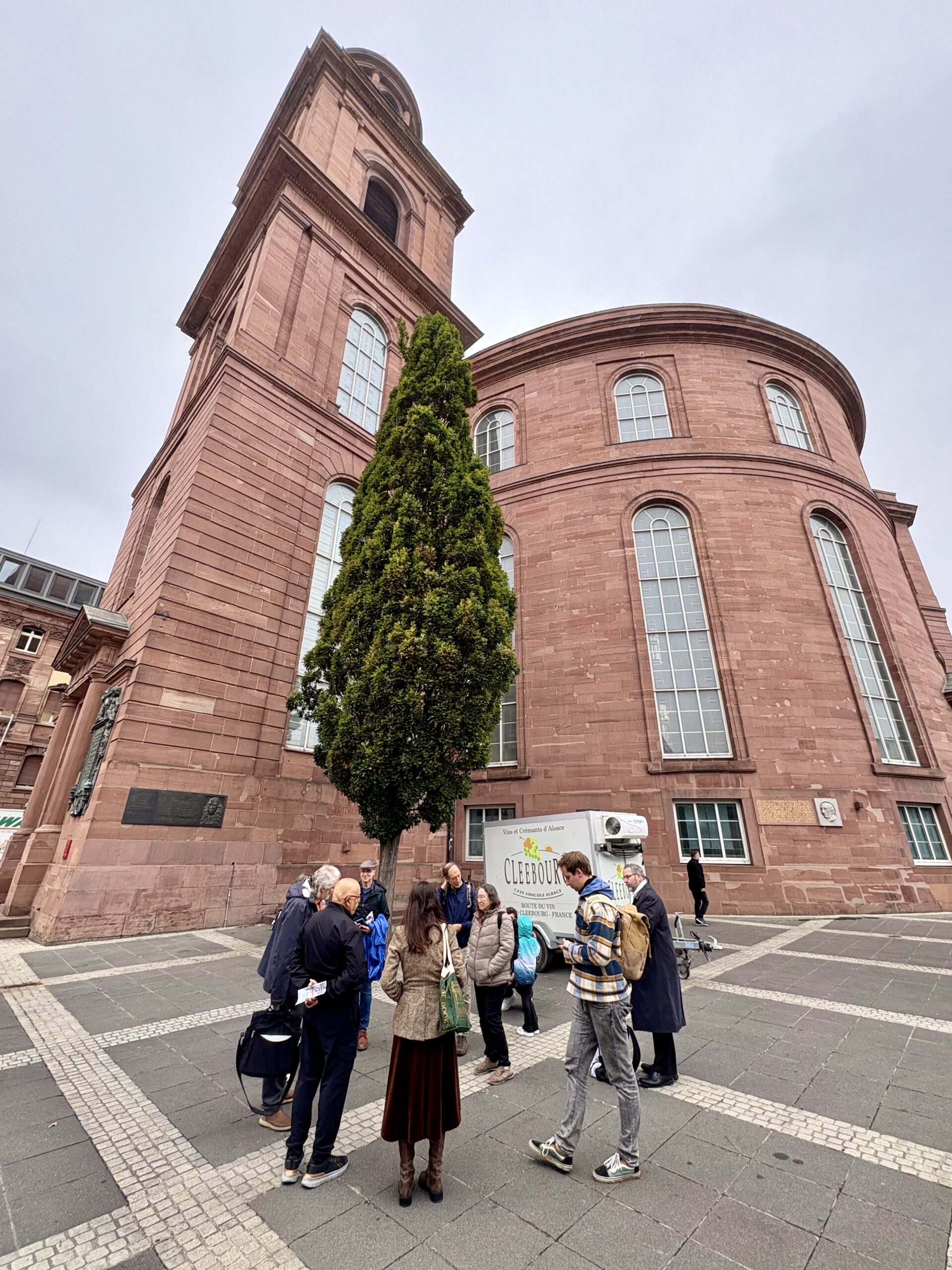
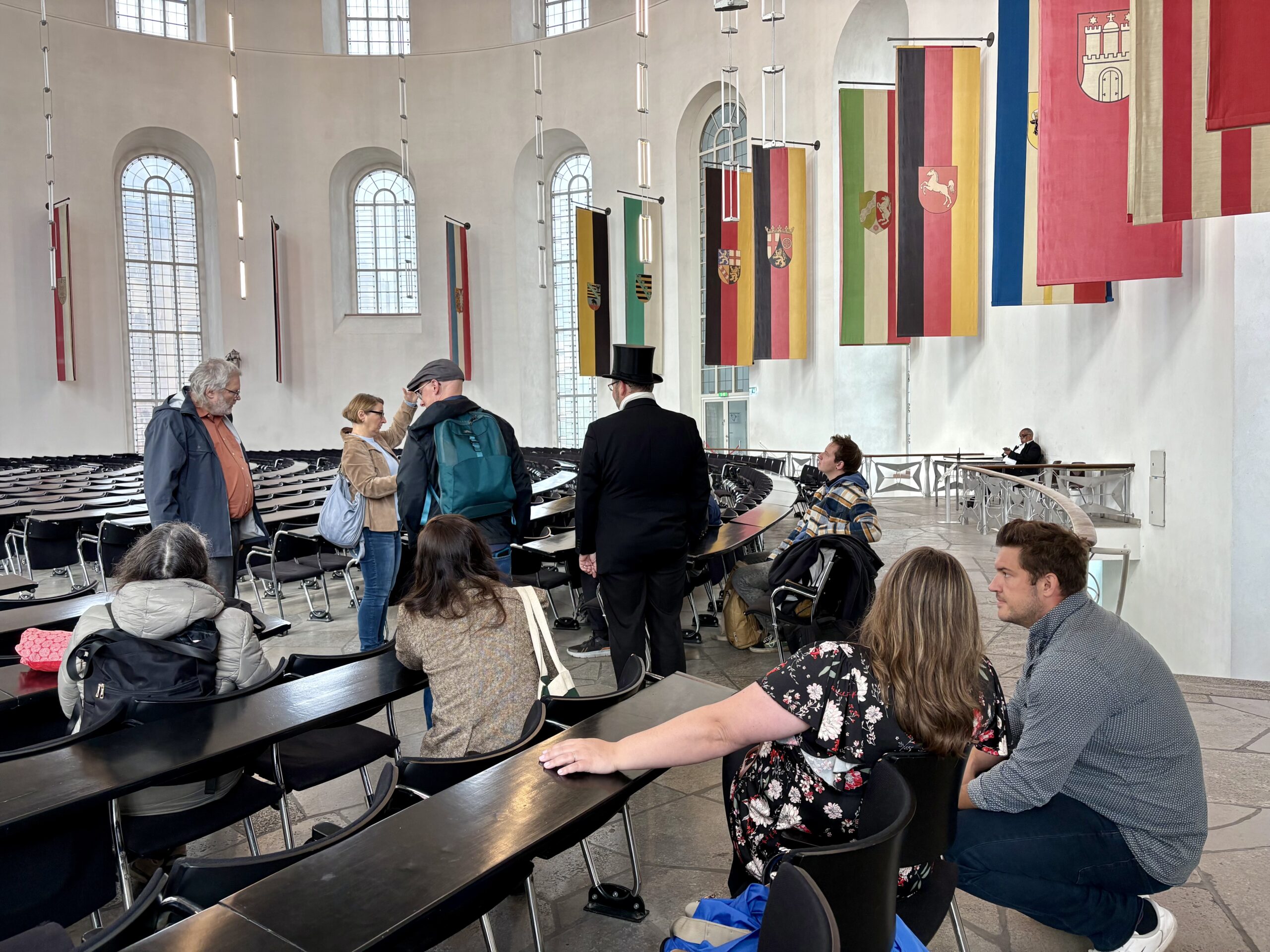
The focus of this day was the city of Frankfurt am Main, and what better place to start than where a part of the Free Religious movement began: in Frankfurt’s St. Paul’s Church (Paulskirche)!
Arriving at the historic building, a guided tour brought us closer to the connections between the German Revolution, the Frankfurt National Assembly, and the city of Frankfurt. Moreover, through a small journey through time, we were able to connect with contemporary witnesses of the Free Religious movement who were active in the Paulskirche parliament.
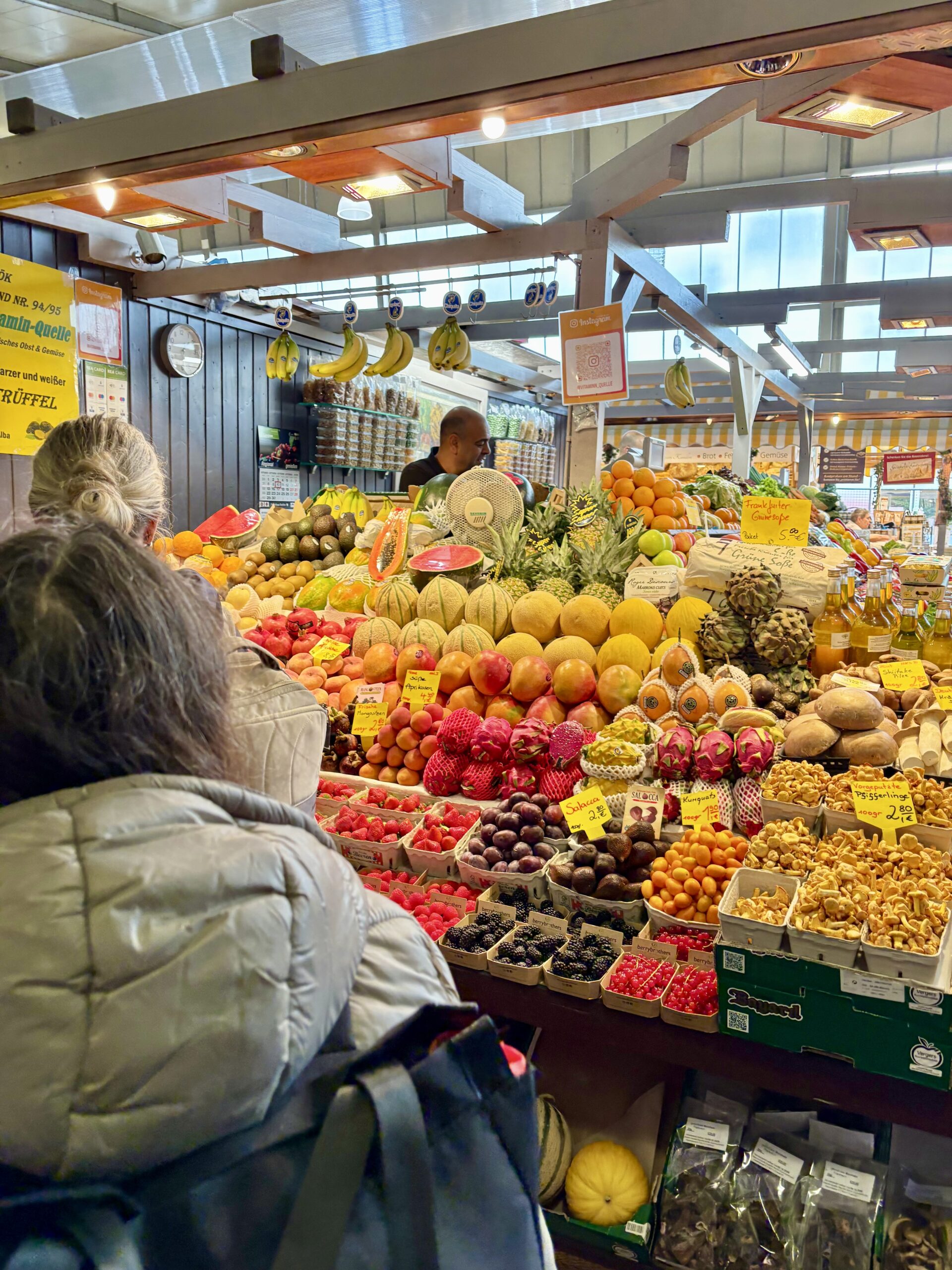
After the tour, we soaked up the Frankfurt lifestyle with a snack in the Kleinmarkthalle!
Strengthened, we then met with our sister community, the Unitarian Free Religious Community of Frankfurt, where we were warmly welcomed as usual, and the guests got an insight into our partnership.
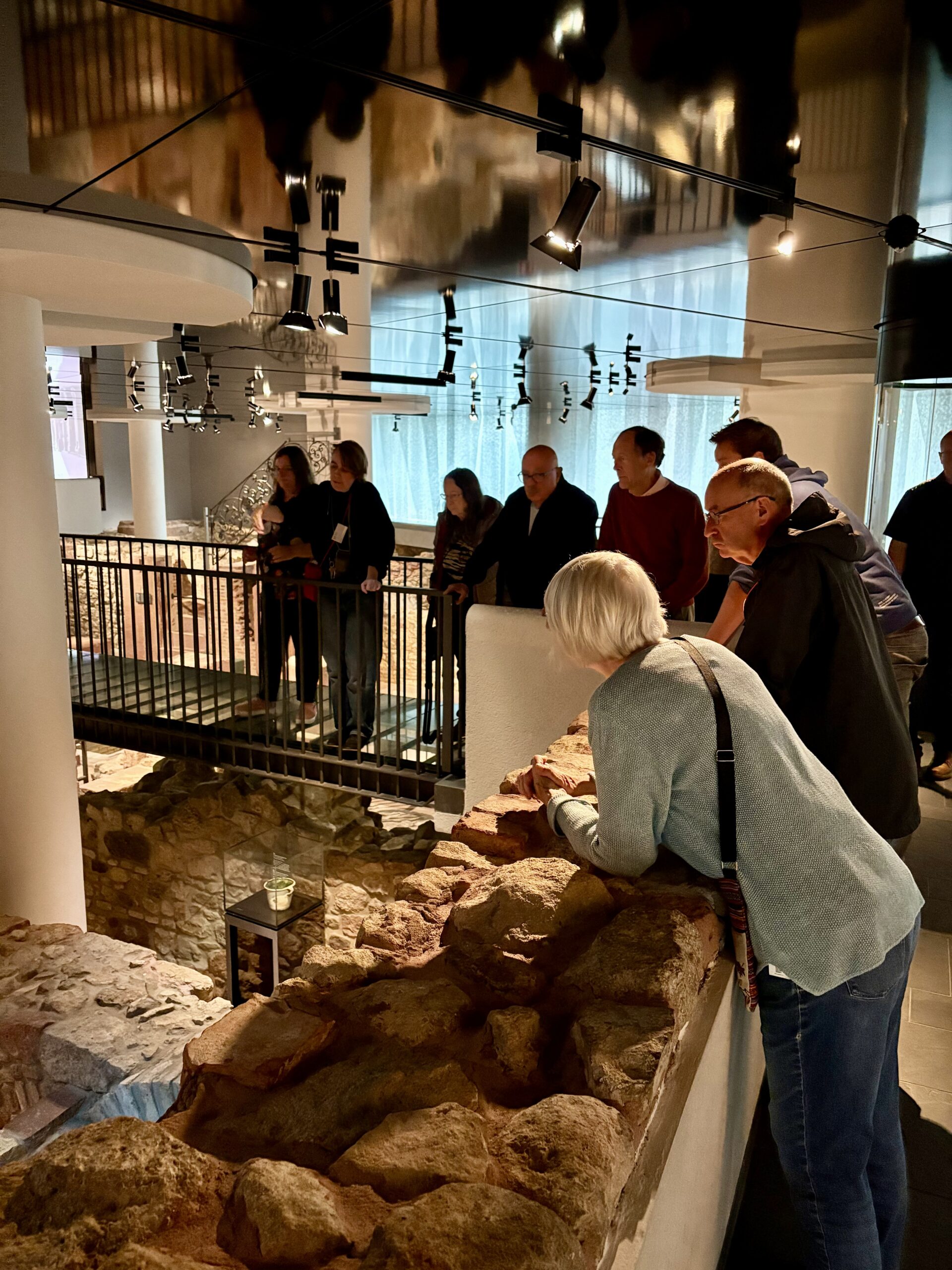
The Museum Judengasse was our next stop. In an impressive way, the guests were introduced to the historical life of the people in the Frankfurt Ghetto and shown how social protest for preservation and a culture of remembrance can lead to success.
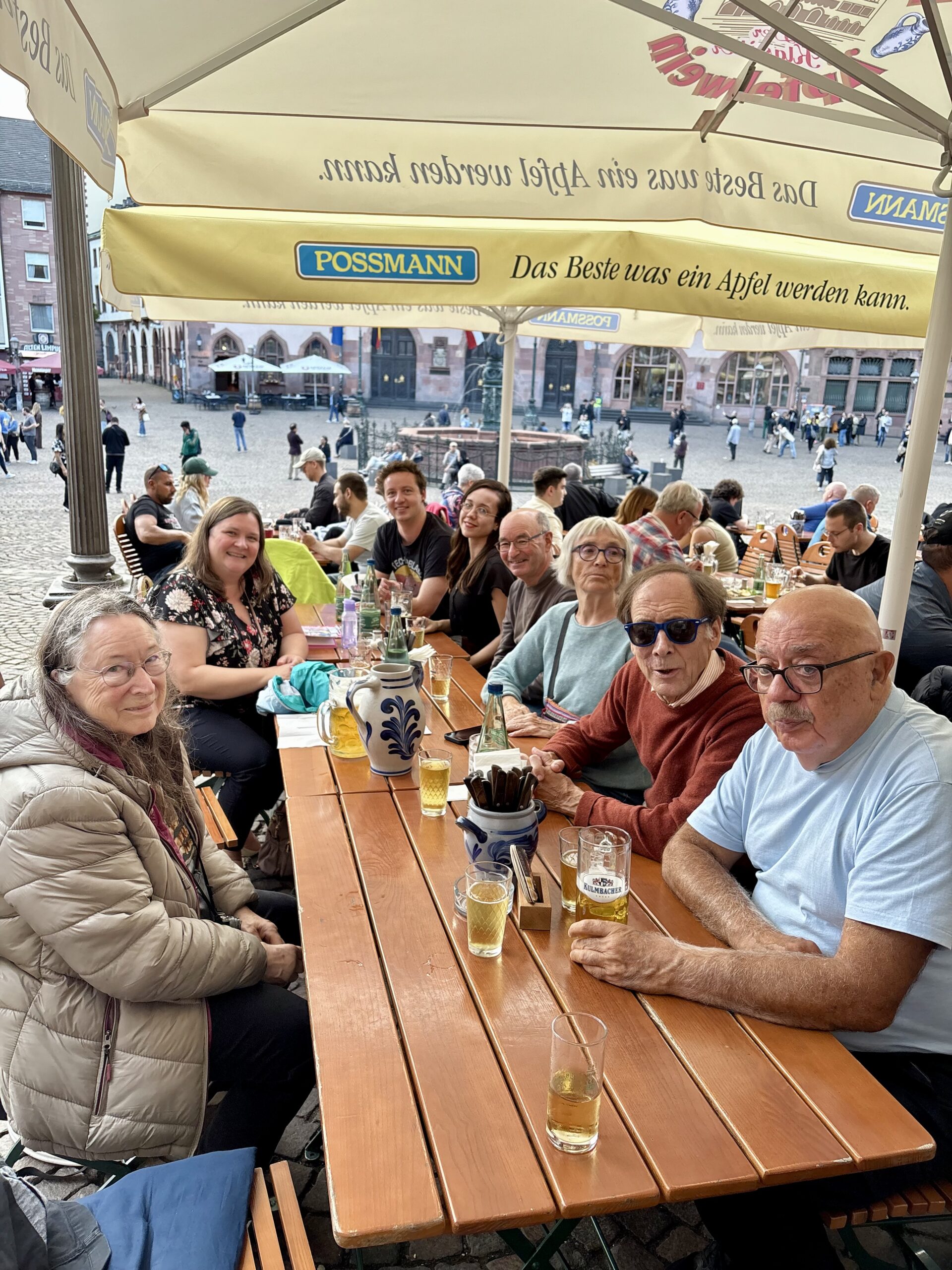
After these many impressions, we ended the day relaxing on Frankfurt’s Römer square with apple wine, excited for what the next day—the official opening day of the conference—would bring.
Pre-Tour: Day 3, Thursday, September 11, 2025
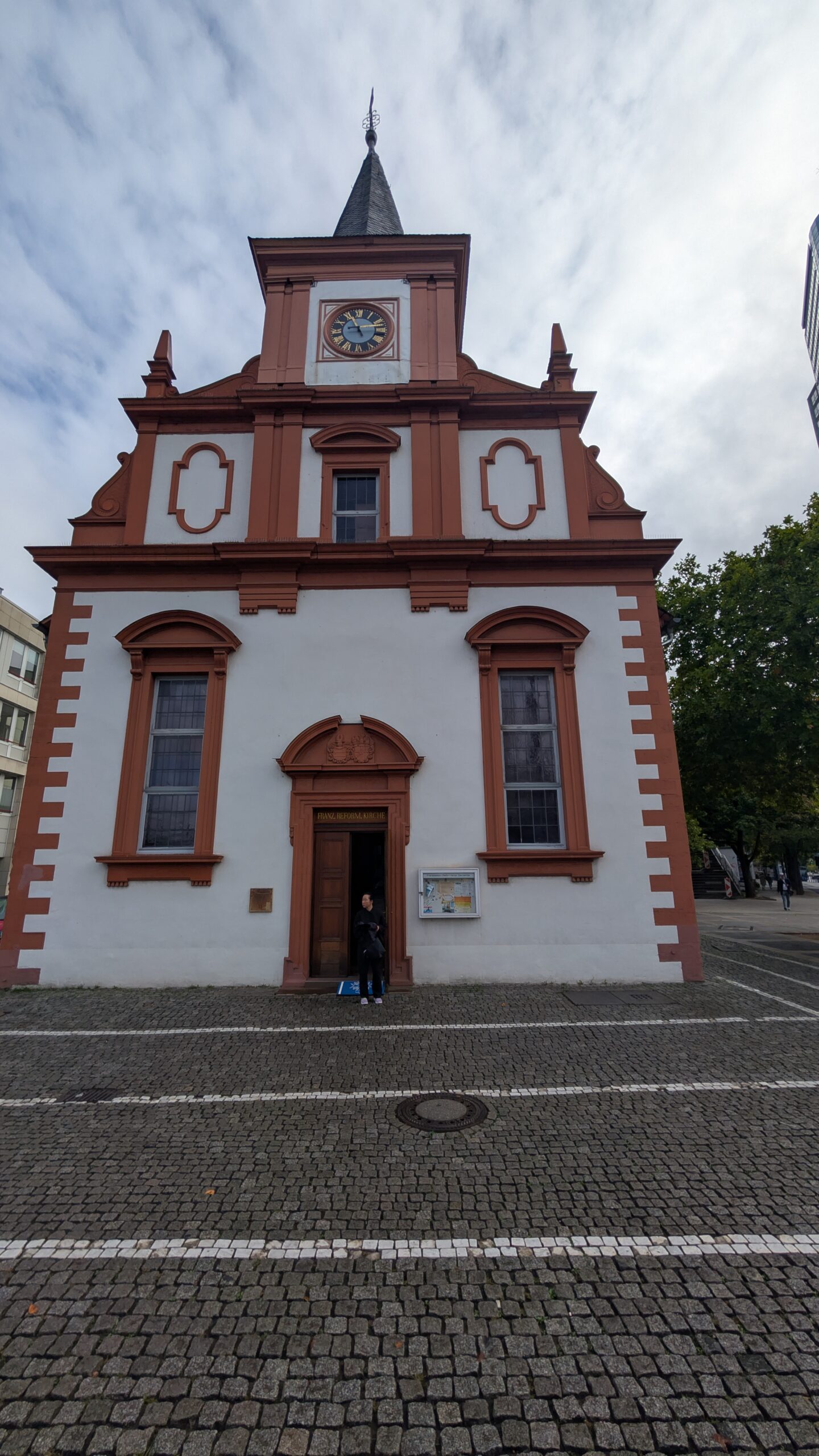
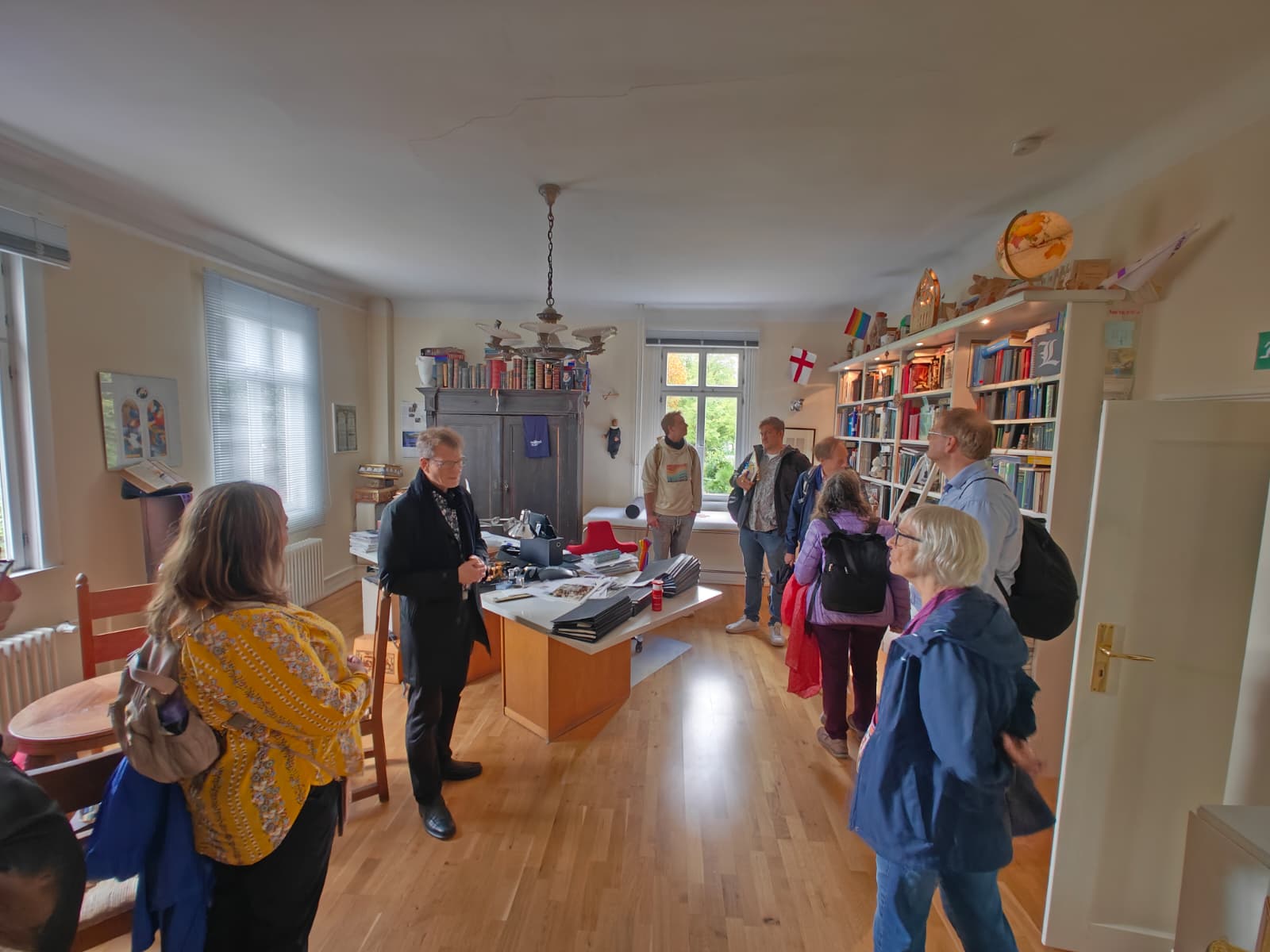
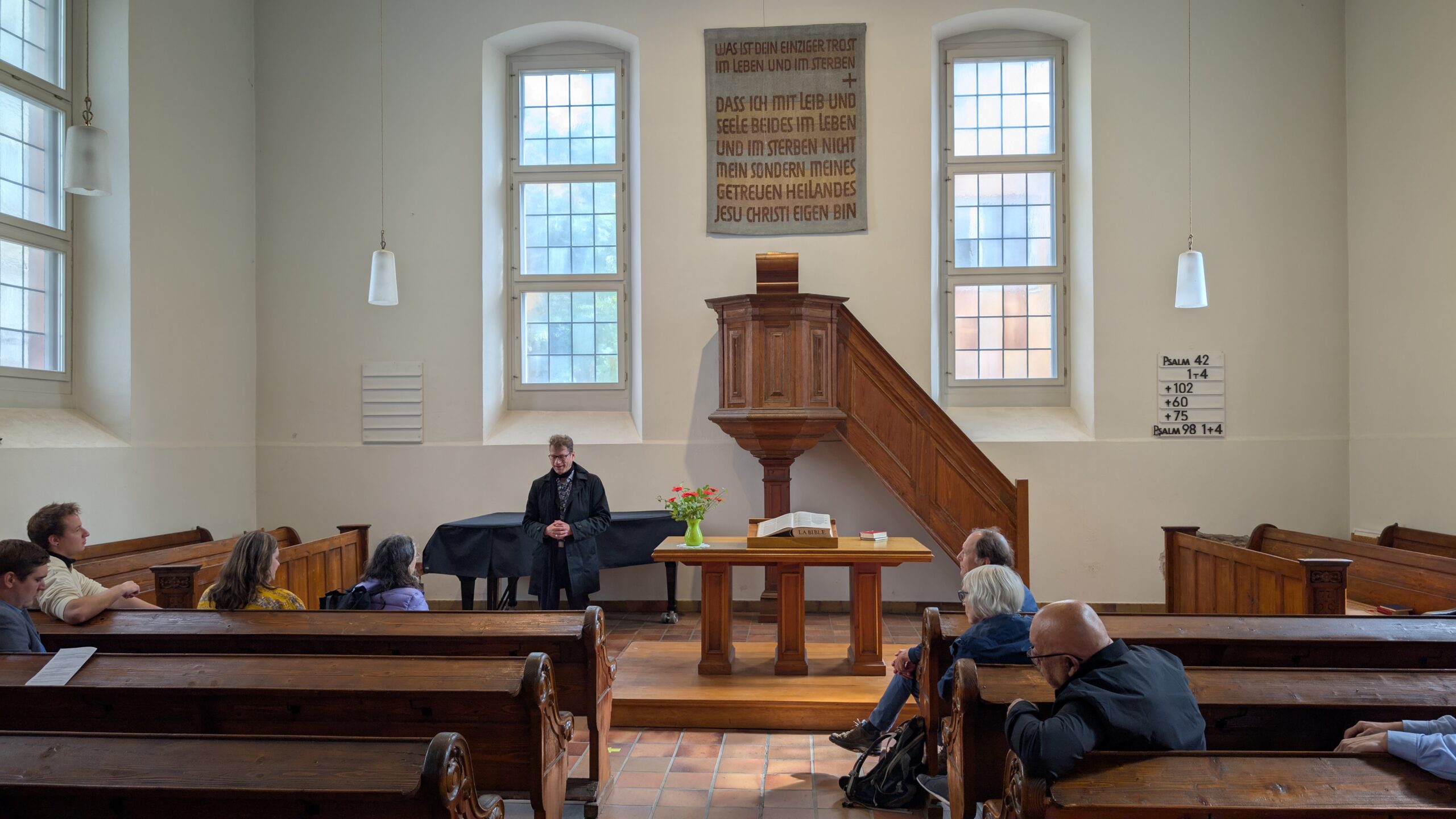
On the third day of the pre-tour, which was also set to transition into the conference opening in the evening, we visited the French-Reformed Church in Offenbach and were warmly welcomed by board member Sven Malsy and Pastor Schneider-Trotier. We were guided through the church and the parish house, learning about the important and interesting history of the Huguenots in Offenbach.
Afterwards, the group visited the Albert Schweitzer Center, which has found its new home in Offenbach. Unfortunately, there are no pictures of this visit.
Conference: Day 1, Thursday, September 11, 2025
After a two-and-a-half-day pre-tour, the festive opening of the IARF EME Conference ’25 had finally arrived, and to our great joy, we were able to welcome many guests from near and far from various liberal religious communities!
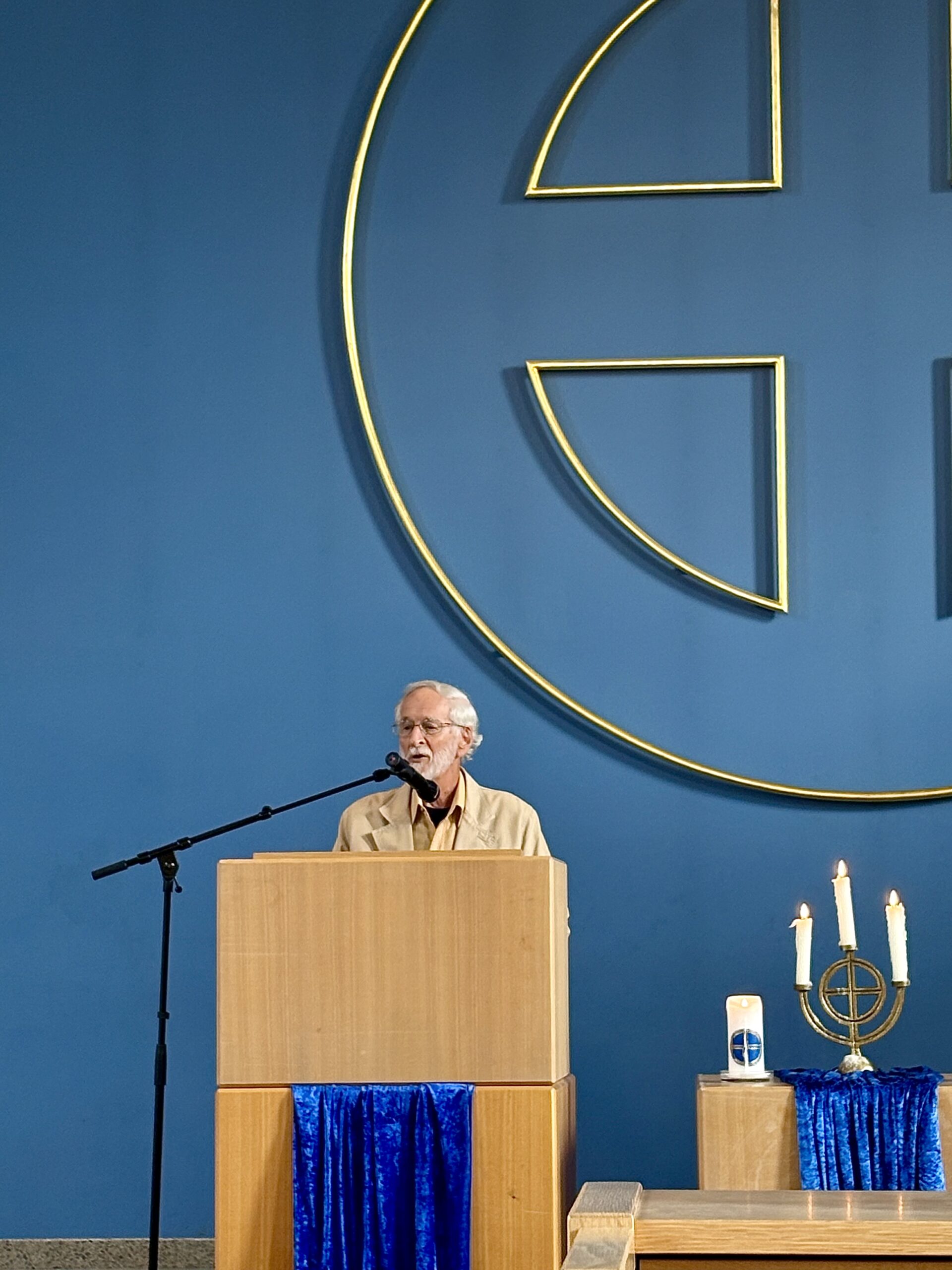
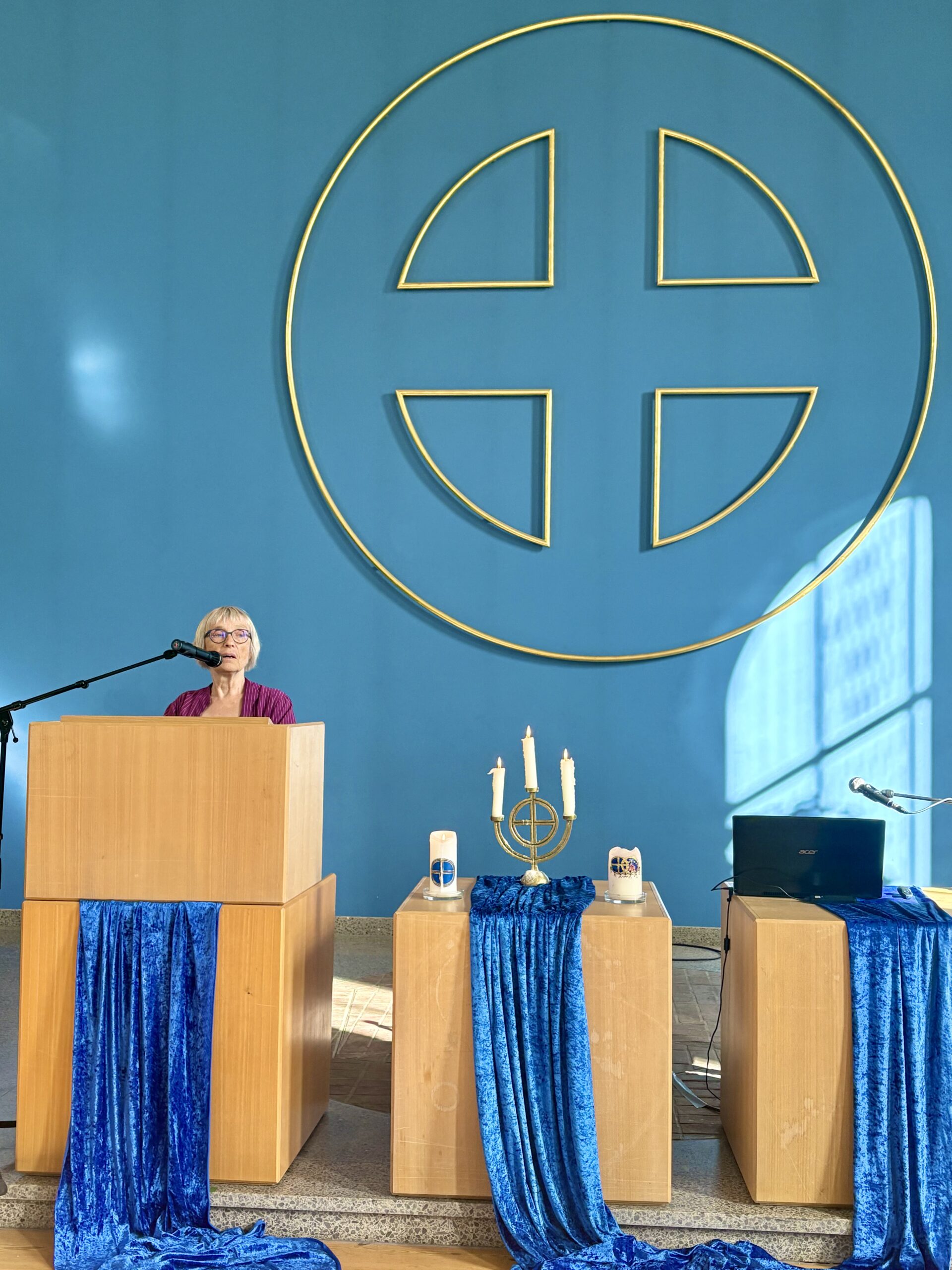
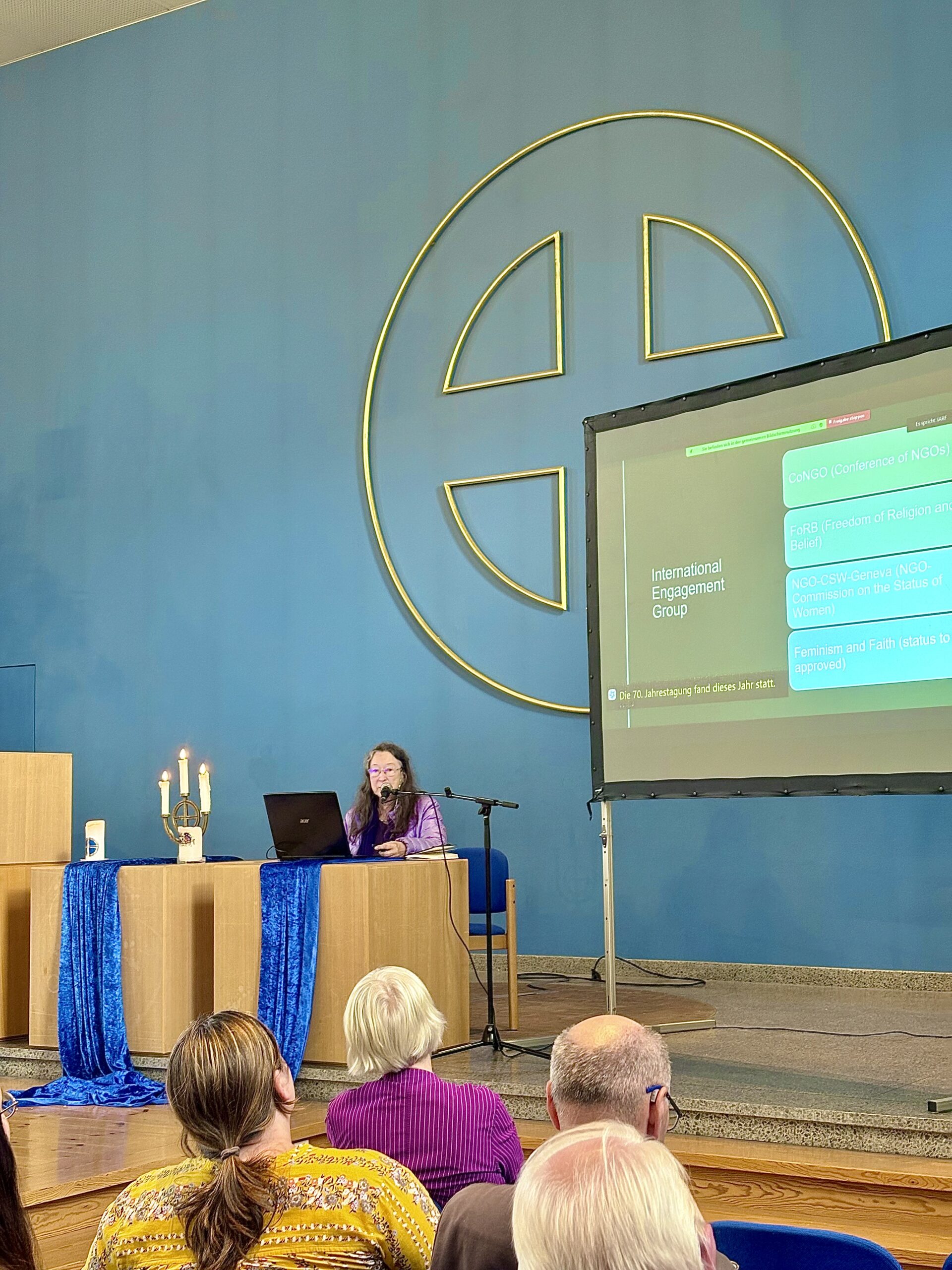
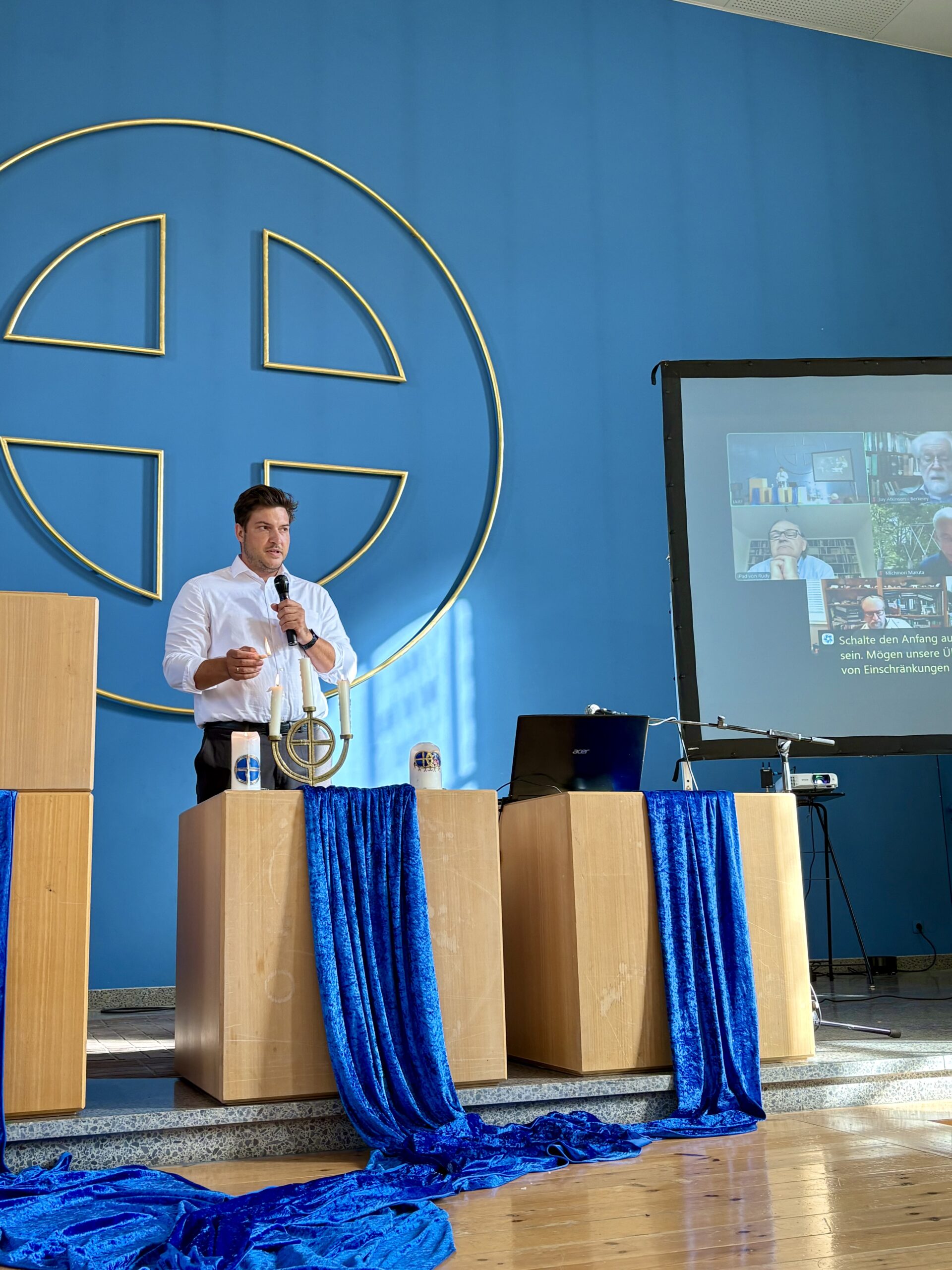
As pastor of our Free Religious community and chairman of the European group of the International Association for Religious Freedom, I opened the conference with a short reflection and a speech. Gudrun Hahn, chair of the German IARF group, and Prof. George M. Williams, President of the IARF, also took the opportunity to address the participants in the consecration hall or those connected online. The opening concluded with a presentation by Rev. Dr. Esther Suter, IARF representative to the United Nations.
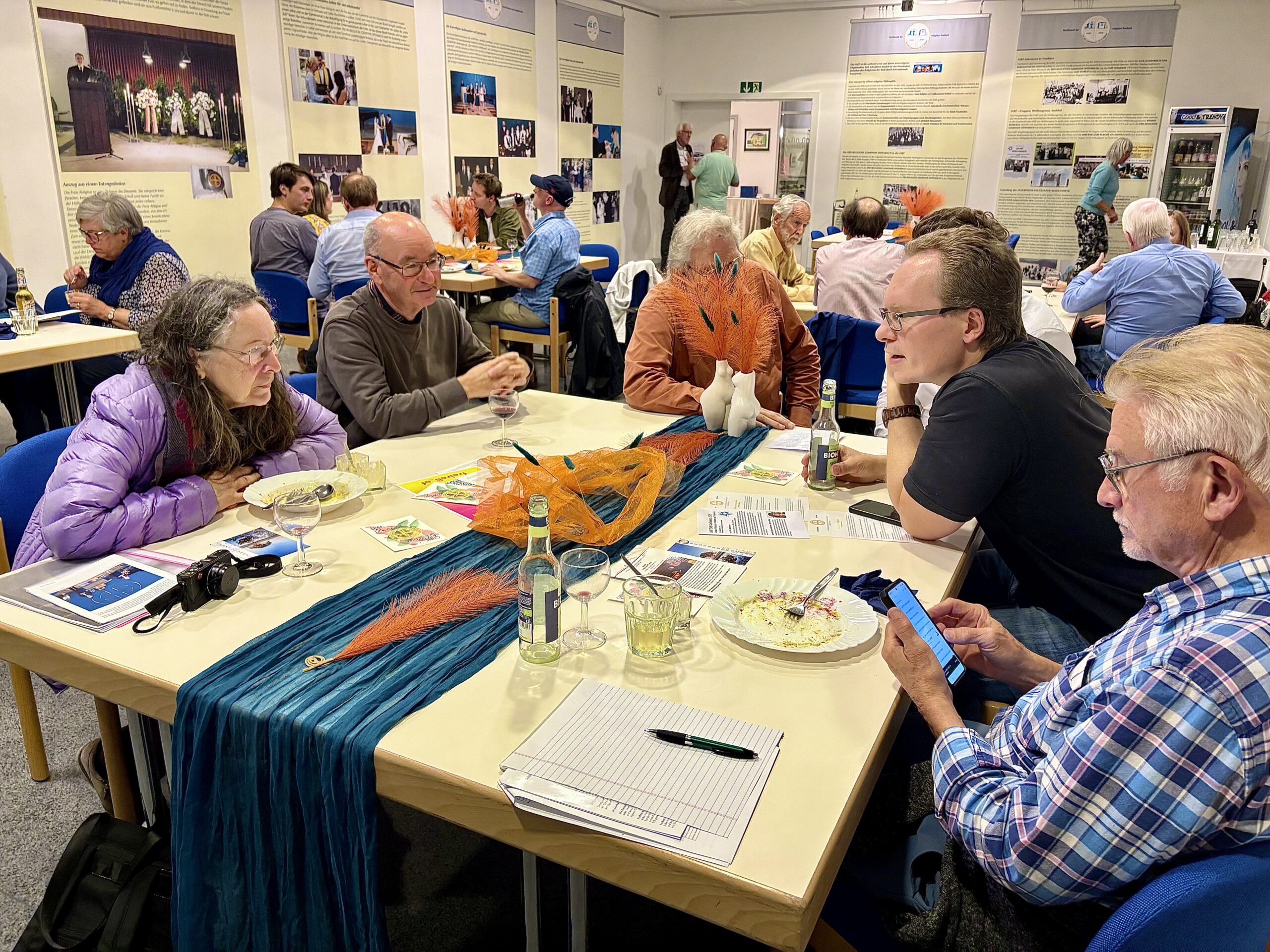
During dinner, all guests had the opportunity to network, maintain existing contacts, and exchange and deepen thoughts in a relaxed atmosphere.
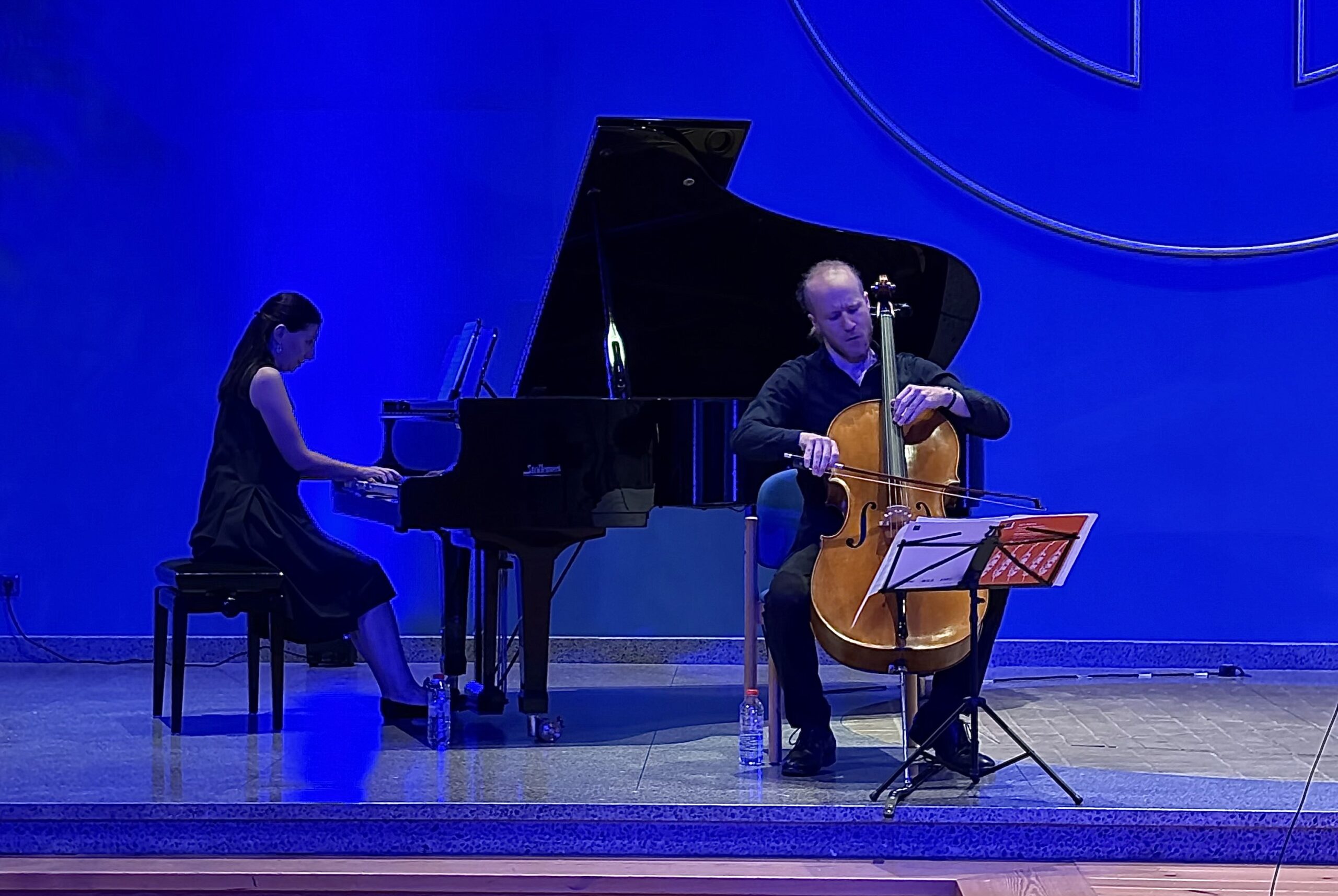
To conclude this memorable opening, a cultural highlight awaited the participants: Master cellist Christopher Herrmann and concert pianist Ekaterine Kintsurashvili thrilled the audience with a wonderful concert, where fans of both classical and modern music were fully catered for with creative arrangements.
Conference: Day 2, Friday, September 12, 2025
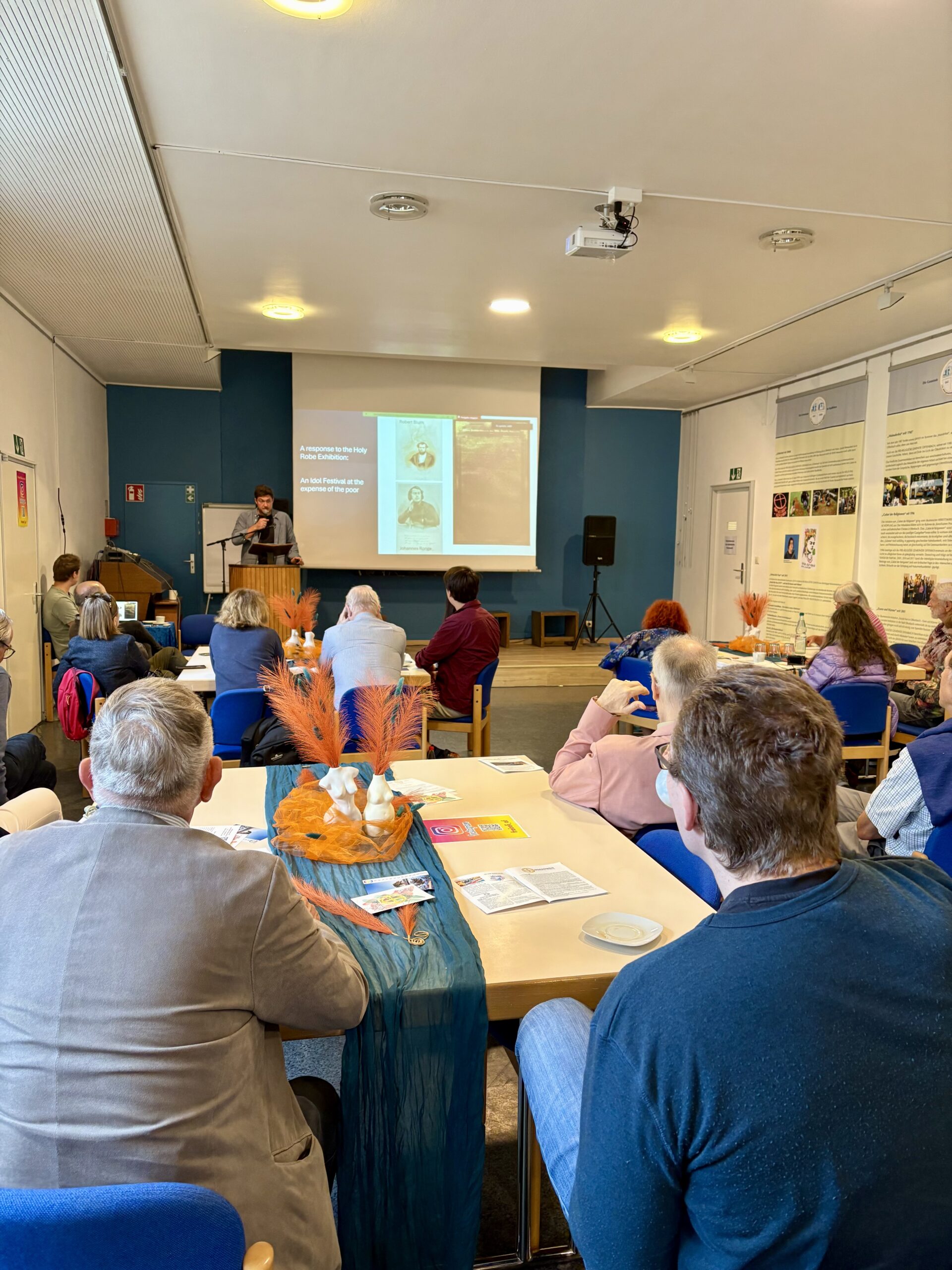
The morning began with my presentation, giving an insight into the rich history, vibrant present, and future-oriented goals of the Free Religious movement. I emphasized how this liberal religious community has always defended individual religious freedom and an open, tolerant society. A powerful reminder of the importance of questioning traditional dogmas, finding one’s own free path of faith, and staying in dialogue with one another.
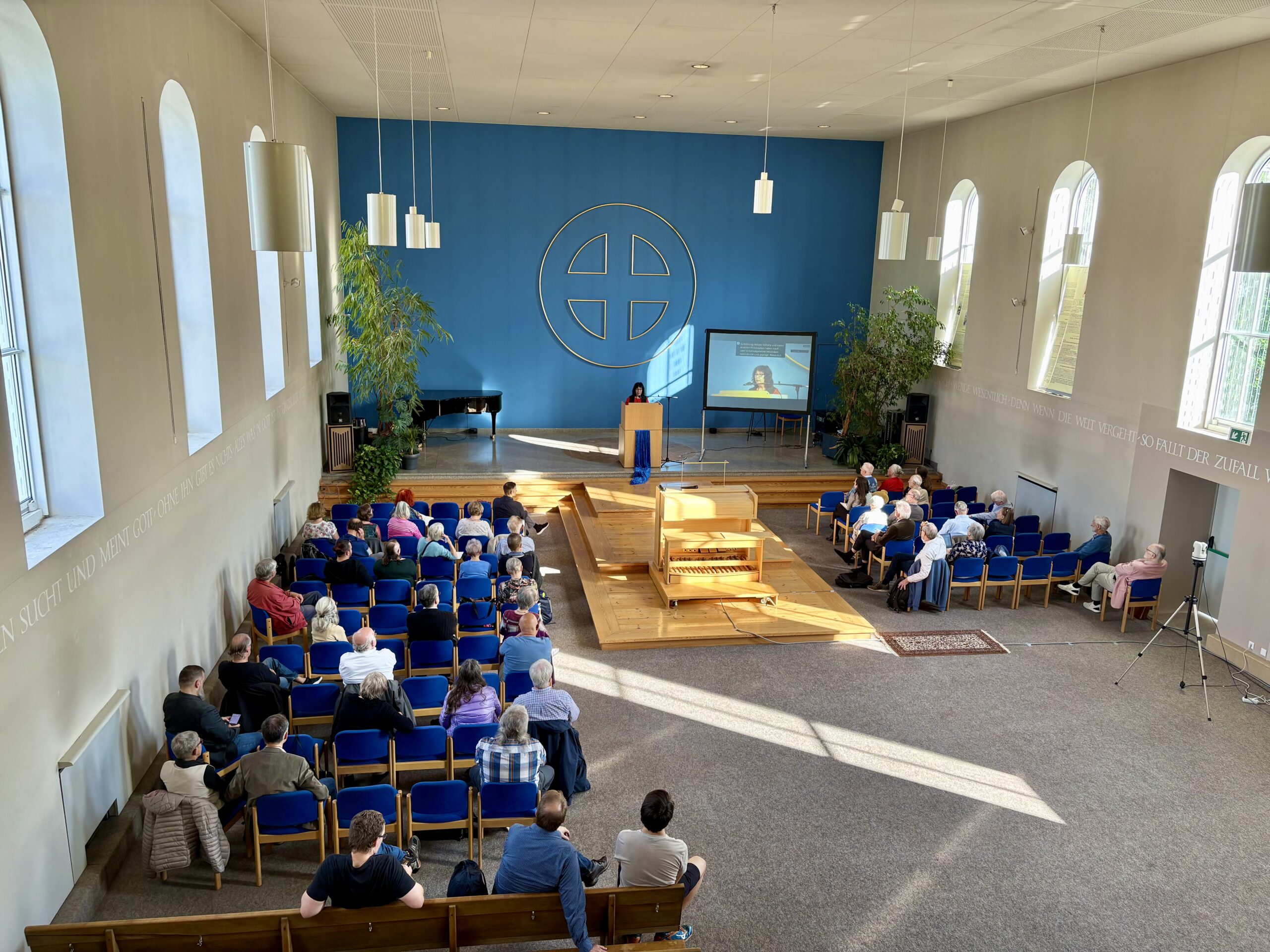
In the afternoon, the full attention was on Kurt Bangert, representing the Federation of Free Christians, who spoke on liberal theology and religious freedom, and Norbert Rácz, who provided an insight into the “Evolution of Religious Freedom Through History.”
The highlight of the day was undoubtedly the keynote speech by Seyran Ateş. The distinguished lawyer, author, and founder of the liberal Ibn Rushd-Goethe Mosque delivered a speech titled “Limits of Tolerance and Liberal Religion” that touched us all. She spoke with remarkable clarity about the possibilities of a liberal Islam that sees itself as an integral part of a pluralistic, democratic society. At the same time, she urgently warned against the dangers of a political, conservative Islam that curtails freedom and human rights, pointing out that politics often shies away from confronting this issue. Her call to stand up for an enlightened and tolerant faith was an inspiring call to action for all of us.
Conference: Day 3, Saturday, September 13, 2025
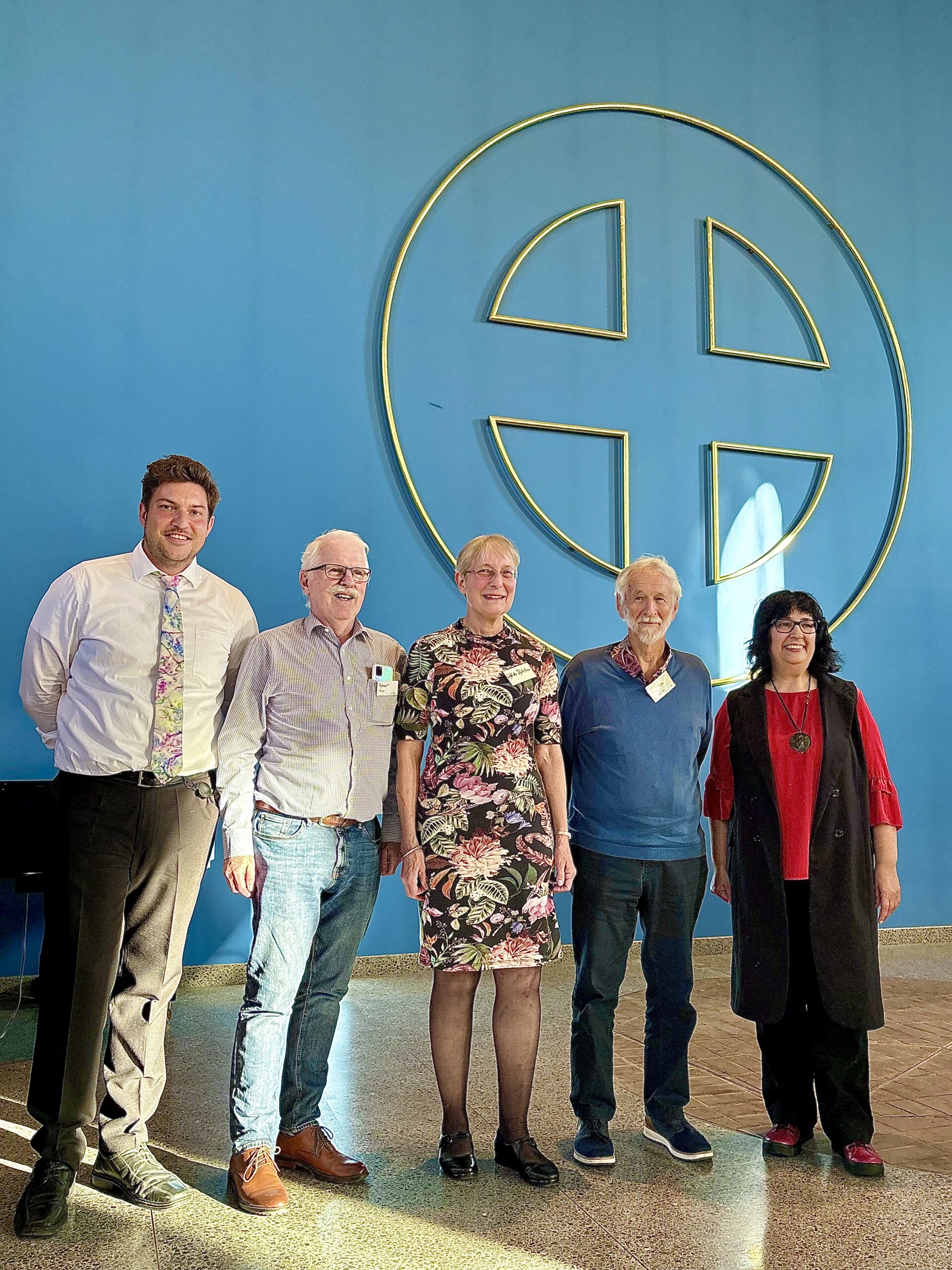
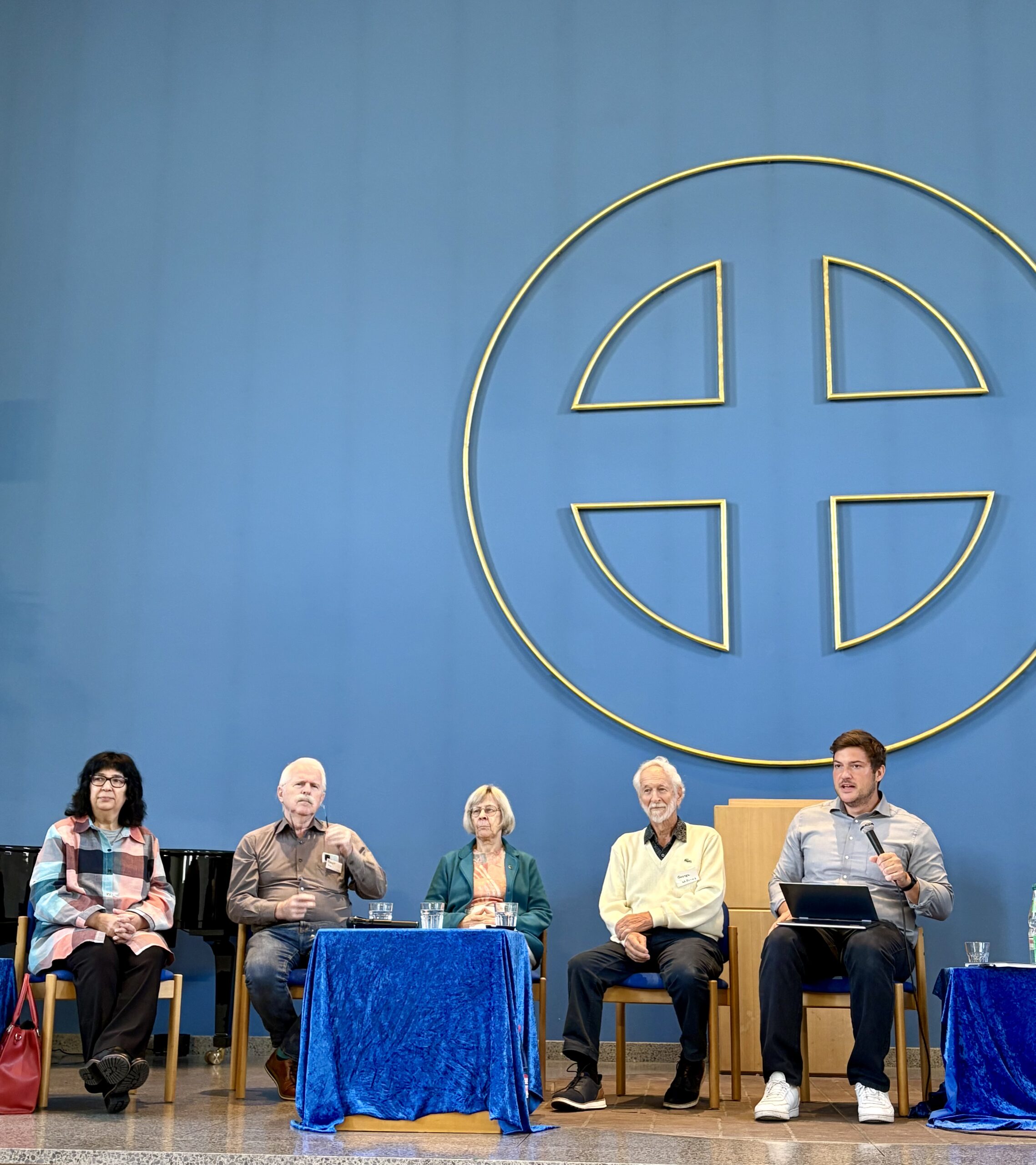
The morning started with a “Panel of Free Religion.” On the podium were women’s rights activist and Imam Seyran Ateş, IARF President Prof. George Williams, the President of the Federation of Free Religious Communities in Germany, Renate Bauer, and Robert Ince, former President of the IARF. Moderated by myself, the group discussed the meaning of religious freedom and the challenges facing liberal faith communities in today’s world. It was a fascinating discussion that showed how different and yet how similar the paths to a free and self-determined faith can be.
The highlight of the day was the presentation by Gabriela Frey. The coordinator of the European Buddhist Union and its representative at the Council of Europe spoke about “Interreligious & Interconvictional Dialogue on a European Level – The Council of Europe: Work, Potentials and Challenges.” She shared her many years of experience working for religious freedom in European institutions and highlighted the opportunities and hurdles that interreligious dialogue faces at the political level.
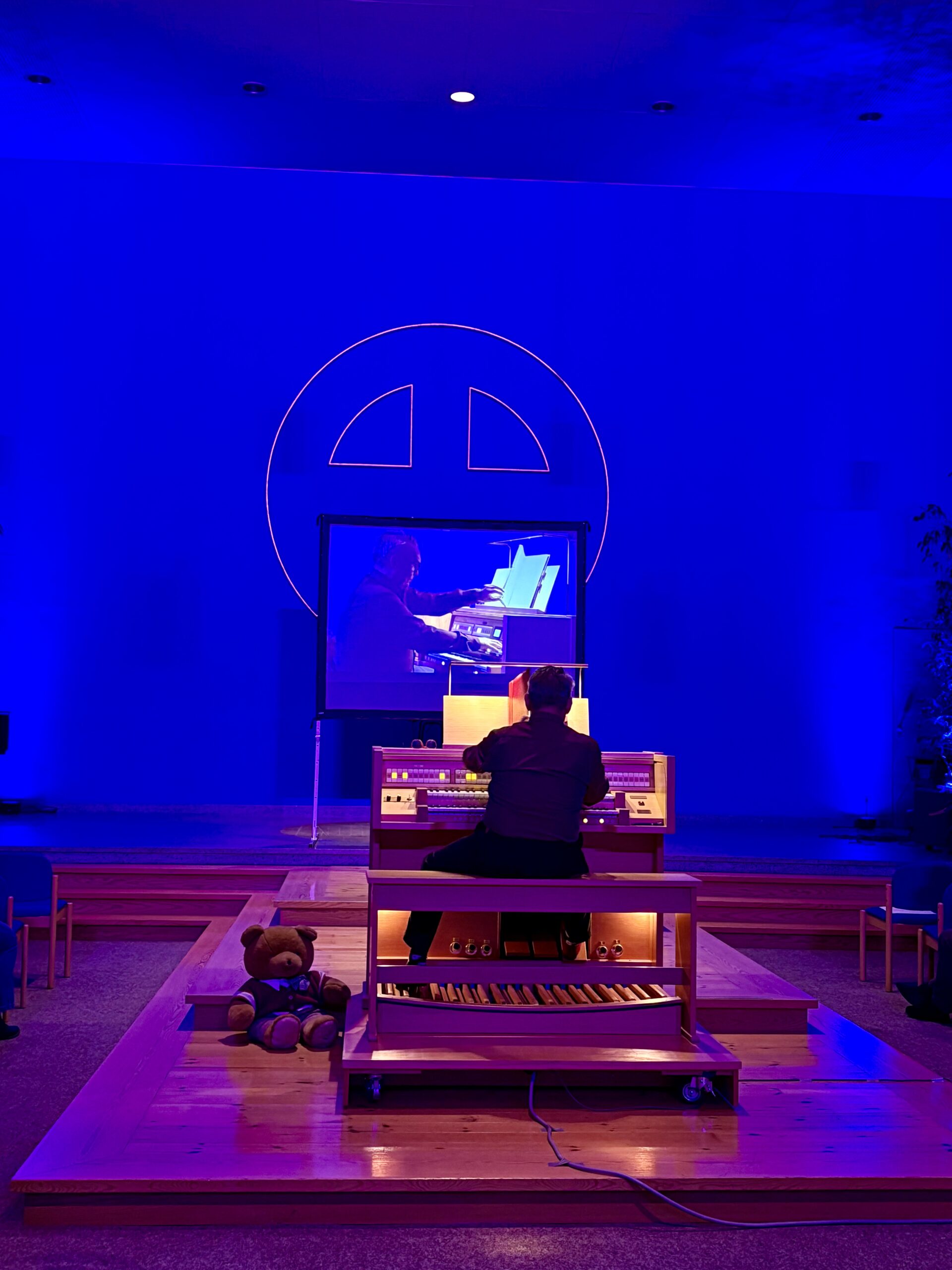
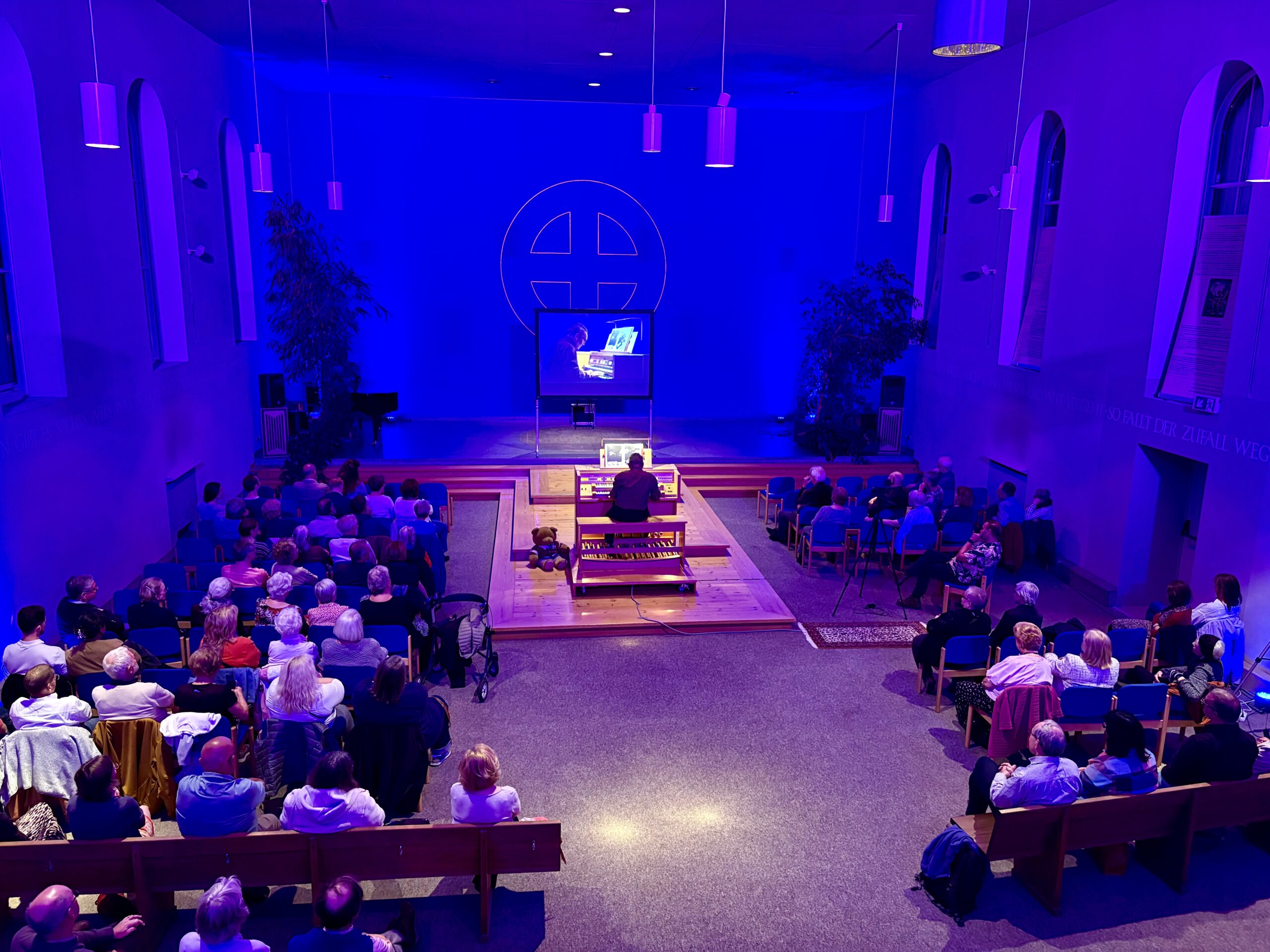
The day concluded with a true delight for the guests! Master organist Detlef Steffenhagen enchanted us with his captivating concert program “Organ goes cinema.” The sounds of the organ filled the consecration hall and created an unforgettable finale for this eventful day.
Conference: Day 4, Sunday, September 14, 2025
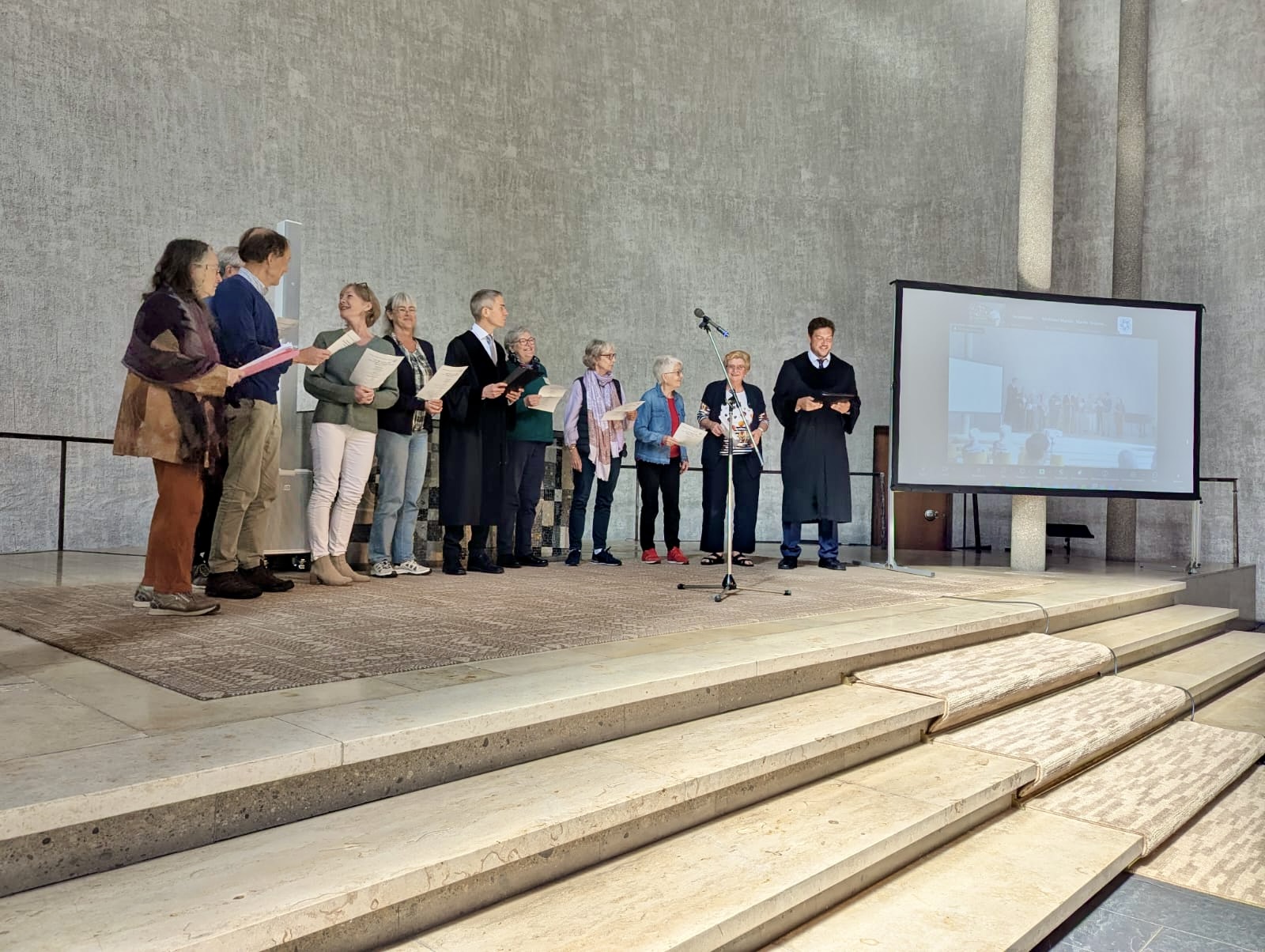
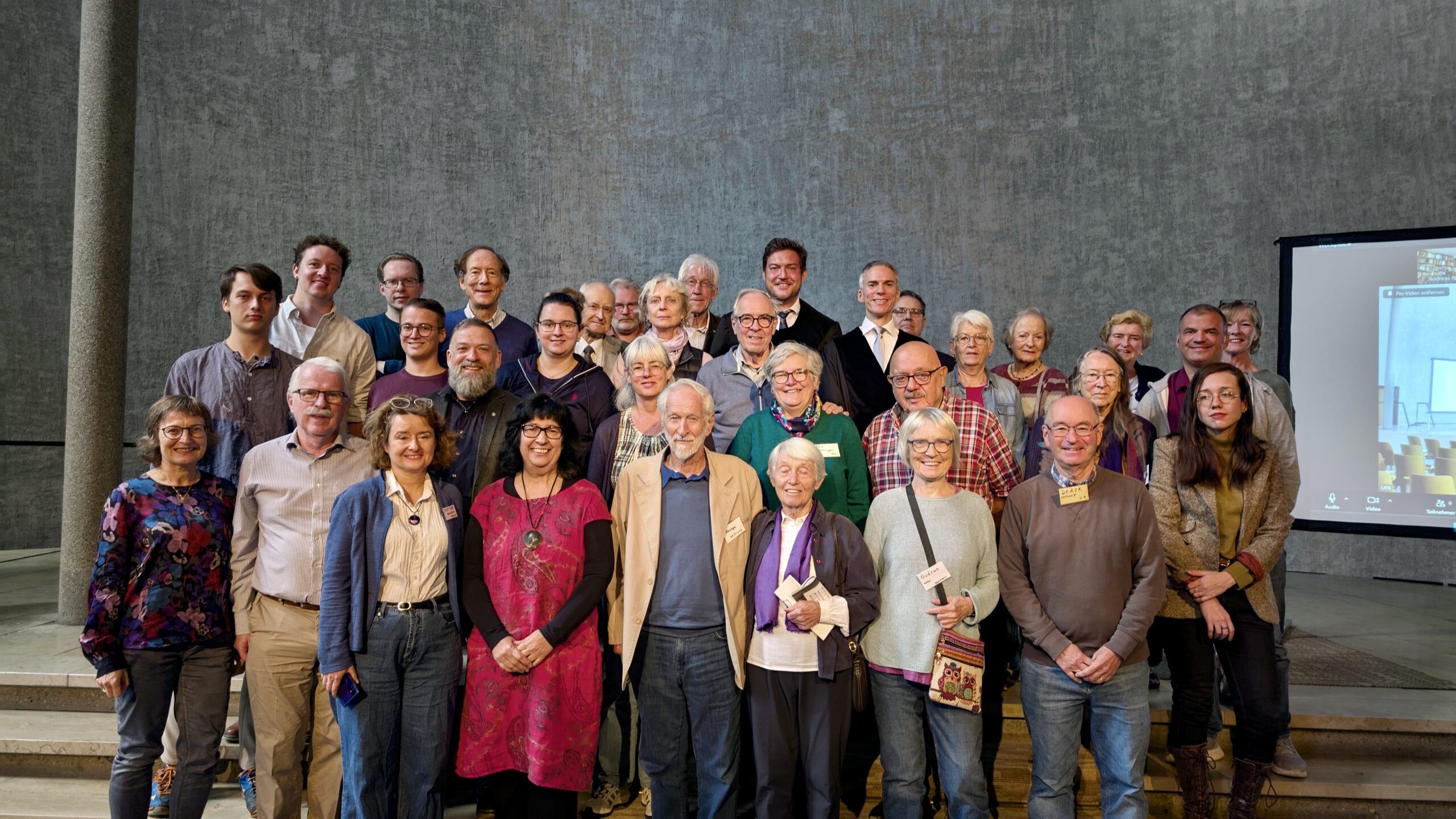
The fourth and final day at the Unitarian Free Religious Community in Frankfurt began with an Interfaith Service. Led by Pastors Alexander Schmahl and myself, this interreligious ceremony brought us together to share our common values of humanity, dialogue, individual freedom, and mutual respect. It was a moment of deep connection that reminded us how much we can achieve when we talk to each other, identify what unites us, and stand up for each other and for a liberal faith.
A special highlight was the presentation by Rev. Dr. Esther Suter. As the IARF’s representative to the United Nations, she gave us a fascinating insight into the work of the “International Association of Liberal Religious Women” and reported on their conference “Power of Dialogue and Partnership,” which had taken place just a few weeks earlier in Malaysia. Her presentation highlighted the crucial role of liberal religious women in promoting dialogue, peace, and justice worldwide.
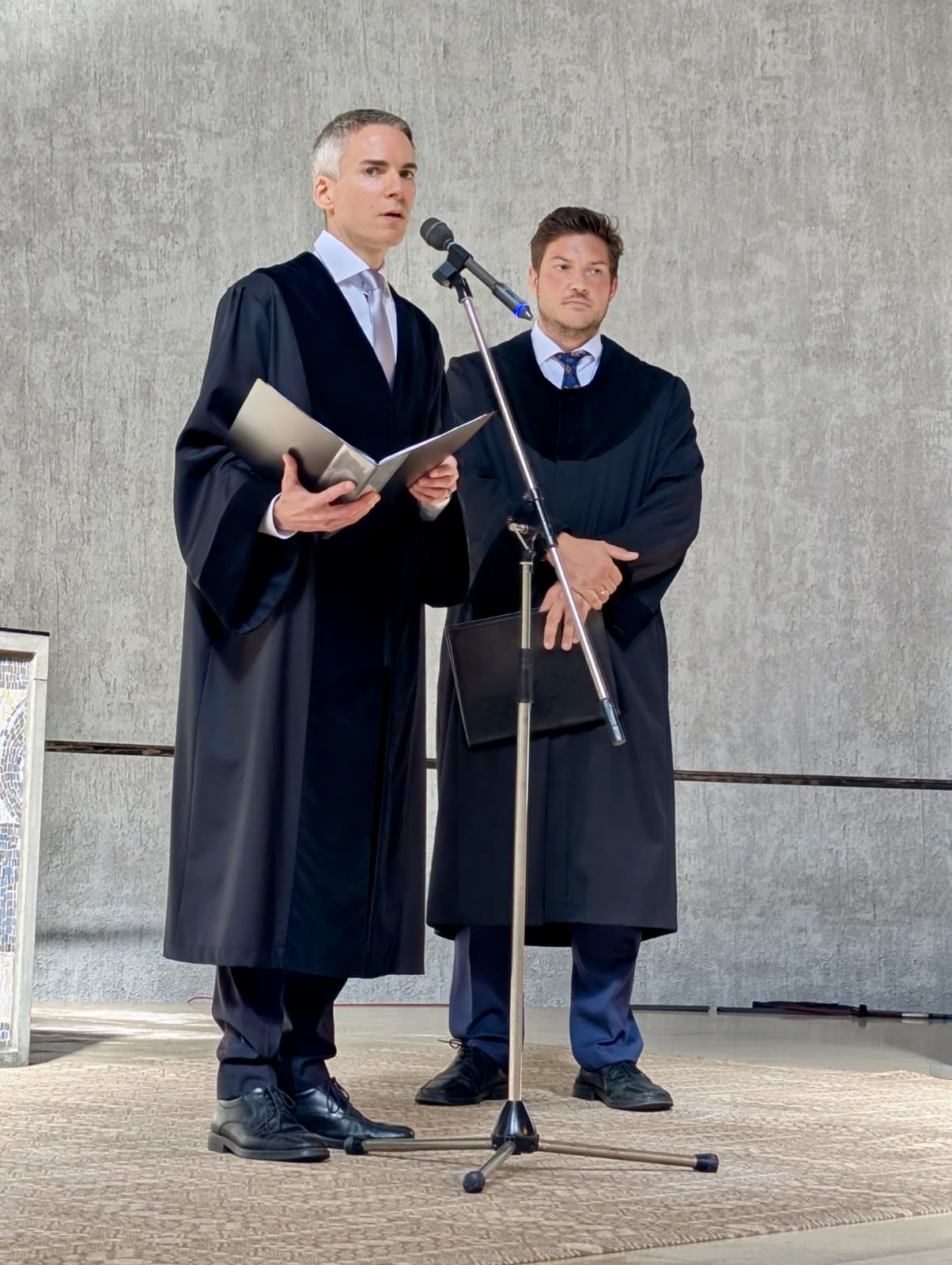
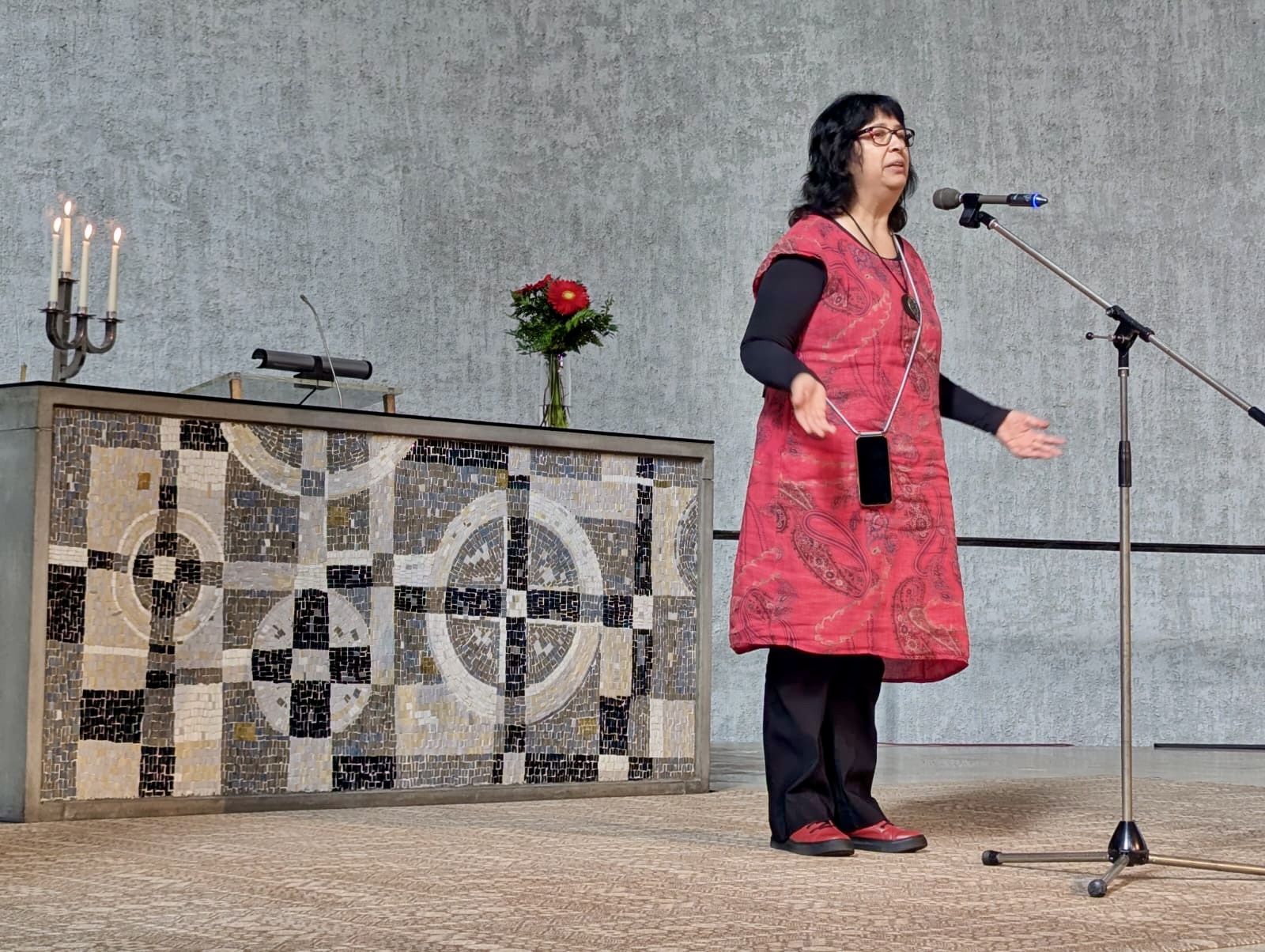
After a final joint reflection on the past days, which summarized the diversity of ideas and the depth of the conversations, the conference came to a worthy conclusion. We are particularly grateful for the lively community we were privileged to experience over the days.
Stand in Solidarity for Rights of Aboriginals and Torrest Strait Islanders to Demonstrate and Worship
As reported by media like The Guardian, on August 31 a group of neo-Nazis and others stormed Camp Sovereignty, a First Nations protest site and historic Aboriginal burial ground in central Melbourne. Attackers reportedly desecrated an ancestral fire, tore down flags and physically assaulted women attending a peaceful ceremony.
The site stands as a symbol of the ongoing Indigenous resistance in Australia and the fight for recognition of Sovereignty and land rights.
The neo-Nazi attack on the sacred site can be considered a clear act of racism and a denial of freedom of religion. We encourage our members and others to support the call from Indigenous leaders for this to be investigated as a hate crime and to demand justice and protection for sacred sites.
You can do so by signing the petition from the global advocacy organization Avaaz to the Commissioner of Australia’s Federal Police and others:
Avaaz – Stop the Neo-Nazi Violence
Last Chance: EME Conference 2025 In-Person Registration Extended!
Great news for those of you who still wish to join us in person! We have extended the registration deadline for in-person attendance at the EME Conference 2025 to September 11th. This is your final opportunity to secure a spot and experience the event in Offenbach and Frankfurt am Main, Germany.
The conference, themed “Limits of Religious Freedom and Tolerance,” runs from September 11-14, 2025, and features a keynote address from the inspiring Seyran Ateş, a distinguished author and women’s rights activist.
Don’t miss out on engaging discussions, valuable workshops, and the chance to connect with fellow members. If you can’t make it in person, remember that online participation is also available.
Don’t Forget the Pre-Conference Tour!
Interested in exploring the roots of the free religious movement? Consider arriving early for the optional Pre-Conference Tour (Sept 9-11), visiting historic congregations and significant sites in Ingelheim, Mainz, Mannheim, Ludwigshafen, and Frankfurt, including the Paulskirche and the Jewish Museum.