
Stand in Solidarity for Rights of Aboriginals and Torrest Strait Islanders to Demonstrate and Worship
As reported by media like The Guardian, on August 31 a group of neo-Nazis and others stormed Camp Sovereignty, a First Nations protest site and historic Aboriginal burial ground in central Melbourne. Attackers reportedly desecrated an ancestral fire, tore down flags and physically assaulted women attending a peaceful ceremony.
The site stands as a symbol of the ongoing Indigenous resistance in Australia and the fight for recognition of Sovereignty and land rights.
The neo-Nazi attack on the sacred site can be considered a clear act of racism and a denial of freedom of religion. We encourage our members and others to support the call from Indigenous leaders for this to be investigated as a hate crime and to demand justice and protection for sacred sites.
You can do so by signing the petition from the global advocacy organization Avaaz to the Commissioner of Australia’s Federal Police and others:
Avaaz – Stop the Neo-Nazi Violence
Global Citizens Pursuing a Just, Peaceable, Inclusive and Sustainable Future: An ICCGC-CoNGO Collaborative Conference

The CoNGO-ICCGC Global Futures Conference, scheduled for August 26 and 27, 2024, at the Church Center for the United Nations in New York, marks a significant assembly at the nexus of religion and civil society, dedicated to charting pathways toward a globally harmonious, just, peaceable, and sustainable future for people and their communities, the planet, and the entire ecological system.
The New York Conference partners with the Interfaith Coalition Conference for Global Citizens (ICCGC) and the Conference of NGOs in Consultative Relationship with the United Nations (CoNGO) to collectively pursue peace, human security, dignity, and planetary sustainability. This collaboration emphasizes local and global cooperation and solidarity across cultures and religions, while remaining mindful of diverse and uneven economic, social, and political conditions.
This conference aims to ignite transformative dialogues and initiatives on a range of issues that are pressing both locally and globally. (Excerpt from Concept Note prepared by ICCGC)
This conference is hosted by Interfaith Coalition Conference for Global Citizens (ICCGC), Conference of NGOs in Consultative Relationship with the United Nations (CoNGO), and Won Buddhism. There are five sessions:
- Session 1. Global Ethics & Global Citizens
- Session 2. Towards a Global Peace
- Session 3. Dialogue between Religions and Civil Society
- Session 4. Youth for Climate Action
- Session 5. Global Citizenship Education for Future Generation
The moderator of Session 5. Global Citizenship Education for Future Generation is Kathy R. Matsui, one of the New York UN representatives of IARF. Global citizenship education (GCED) is needed to face the challenges of the 21st Century and the challenges of the VUCA world, which is volatile, uncertain, complex, and ambiguous. Global Citizenship education encourages global citizens to be independent, to develop global perspectives, to build harmony among people from other countries and ethnic groups, to understand diversity through cross-cultural education, to respect the Earth and all living beings, and to promote global well-being while enriching their lives.
Global citizenship education offers opportunities for youth and adults to learn to create imaginative solutions to world problems, to help solve diverse global issues, and to become active citizens to make changes in society for the good of everyone. In this session, panelists will discuss the following: how global citizenship is practiced in real life, what GCED is to the individual panelists, how GCED is implemented in their specific role and environment, and what message each panelist has for the youth and our future leaders.
The speakers of this session are:
- Panelist 1: Dr. Roberto Catalano (Professor, Sophia University Institute, Italy)
- Panelist 2: Dr. Janet Gerson (Education Director, International Institute on Peace Education)
- Panelist 3: Dr. Russell Pearce (Professor, Fordham University)
- Panelist 4: Rev. James Lynch (Representative for Rissho Kosei Kai to United Nations)
Bahrain: Continued Harassment of Activists by the Government
The Bahrain Center for Human Rights (BCHR) expressed it’s concern about continued harassment of human rights activists by the Bahrain authorities and restricting their right to free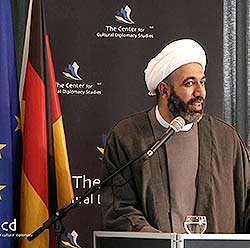 expression. Sheikh Maytham al-Salman, a noted spokesperson, human rights defender and chairman of the Bahrain Interfaith Center, our associate member organization, together with several other persons, was summoned for interrogation over a speech he recently delivered. In August the Sheikh was detained. We wrote about it here.
The BCHR:
believes that the Bahraini authorities’ actions are an indication of its increasingly harsh policies aimed at further harassing human rights defenders in order to silence them, in addition to its continued implementation of further restrictions both in law and practice on the right to free expression. Moreover, human rights defenders and activists in Bahrain have been ongoing targets of the authorities who have attempted countless times to silence them, stop their work and oppress their right to freedom of expression, including BCHR President Nabeel Rajab, activist Zainab al-Khawaja, and human rights defender Naji Fateel…
Accordingly, the Bahrain Center for Human Rights calls on the
government of Bahrain to:
- Drop all charges pending on Sheikh Maytham al-Salman for exercising his freedom of speech
- Release all prisoners who have been convicted for their political opinions; and
- Fully comply with the Bahrain Independent Commission of Inquiry (BICI) recommendations and international laws.
The full text of the article and the Sheikh’s speech over which he was interrogated is available here.
Bahrain: Arrest of Inter-Faith Activist and Head of IARF Member Group Maytham Al Salman
On Saturday 8th August 2015, Sheikh Maytham Al Salman, chairman of the Bahrain Interfaith Centre, an Associate member group of the IARF, and Head of the Religious Freedom Unit in the Bahrain Human Rights Observatory (BHRO), was detained at Manama international airport, charged with “inciting hatred against the regime”. The Sheikh has been detained before. We wrote about this here.
Here you can read our introduction of the Bahrain Interfaith Centre.
Excerpts from article by Global Freedom of Expression, Columbia University (you can read the article here):
An internationally respected inter-faith leader, Sheikh Maytham Al Salman …
is well recognized for his work on building tolerant societies, and on countering incitement to violence and discrimination in accordance with international human rights standards…
Once detained, he was permitted to inform his family, by telephone, that he was being held at the Criminal Investigation Division, Economic Crimes Unit. However, in contravention of his human rights, he was denied access to a lawyer. Pending further legal procedures, Sheikh Maytham was released some 12 hours later.
 Article 165 of the Bahrain prohibits “inciting others to develop hatred or hostility towards the system of government.” It is an offence punishable by imprisonment of up to three years. Such charges are most widely used against human rights activists and media workers involved in promoting human rights in Bahrain or in documenting cases of human rights abuse. …
UN Special Rapporteur’s 2013 Interim Report
The Special Rapporteur’s 2013 Interim Report on Freedom of Religion and Belief was delivered on 7 August 2013 at the 68th Session of the General Assembly.
Theme: Intersection of freedom of religion or belief and equality between men and women.
Convention on Elimination of All forms of Discrimination against Women
- Article 5 – States Parties shall take all appropriate measures:
- To modify the social and cultural patterns of conduct of men and women, with a view to achieving the elimination of prejudices and customary and all other practices which are based on the idea of the inferiority or the superiority of either of the sexes or on stereotyped roles for men and women;
[17] “Many [human rights] violations stem from stereotypical gender roles which are frequently also defended in the name of religion or belief…Gender stereotypes and stereotypical pictures of believers often exist in tandem, a problem disproportionately affecting women from religious minorities”
[33] “…the potential for synergies between freedom of religion or belief and promoting women’s right to equality remains systematically underexplored.”
[28] “empowering groups who traditionally experience discrimination, including women and girls, freedom of religion or belief can serve as a normative reference point for questioning patriarchal tendencies as they exist in different religious traditions. This can lead to more gender-sensitive readings of religious texts and far-reaching discoveries in this field… This accounts for the possibility of direct synergies between freedom of religion or belief on the one hand and policies for promoting the equal rights of women on the other.”
Harmful Practices
[30] “…the Special Rapporteur notes with concern that such harmful practices as female genital mutilation, forced marriage, honour killings, enforced ritual prostitution or denying girls their rights to education are defended in the name of religious traditions. Such defence is frequently controversial within the various religious communities themselves, and many followers of the respective communities (possibly their overwhelming majority) may be heavily opposed to such practices and also voice their opposition publicly. If those still performing harmful practices try to invoke religious freedom for their actions, this must become a case for restricting the freedom to manifest one’s religion or belief. The Special Rapporteur would like to reiterate what his predecessor pointed out in her final report to the General Assembly: “The Special Rapporteur strongly believes that the mandate needs to continue highlighting discriminatory practices that women have had to suffer over centuries and continue to do so, sometimes in the name of religion or within their religious community. It can no longer be taboo to demand that women’s rights take priority over intolerant beliefs used to justify gender discrimination.” (see A/65/207, para. 69).”
Forced Conversion and Forced Marriage
[34] “…antagonistic views of the two human rights norms would further diminish the prospects of persons whose human rights problems fall in the intersection of freedom of religion or belief and equality between men and women. Indeed, human rights violations in the intersection of the two norms are a reality for many women. One obvious example is forced conversion in combination with forced marriage. In a number of countries, women or girls from religious minorities unfortunately run the risk of being abducted, with the purpose of forcing them to convert to the mainstream religion, often in connection with an unwanted marriage.”
To read full report, A/68/290 – see here.
- United Nations Special Rapporteur on freedom of religion or belief, Heiner Bielefeldt, addressing the UN General Assembly, 13 Oct 2013,
See media release here, titled: Harmful practices inflicted on women or girls can never be justified in the name of freedom of religion or belief
- High-level Launching in Geneva of the Rabat Plan of Action, 21 February 2013: http://www.ohchr.org/EN/NewsEvents/Pages/TheRabatPlanofAction.aspx
- The Rabat Plan of Action on the prohibition of advocacy of national, racial or religious hatred that constitutes incitement to discrimination, hostility or violence (see A/HRC/22/17/Add.4)
- The Rabat Plan of Action was jointly adopted by experts, including the:
- Special Rapporteur on Freedom of Opinion and Expression,
- Special Rapporteur on Freedom of Religion or Belief, and the,
- Special Rapporteur on Racism, Racial Discrimination, Xenophobia and Related Intolerance.
- UN Special Rapporteur on Freedom of Religion or Belief’s Country Visits in 2013:
- Sierra Leone, 30 June to 5 July 2013 [LINK]
- Jordan 2 – 12 September 2013
- SRs requests to Governments for future country visits, include:
- Bangladesh,
- Indonesia,
- Kazakhstan,
- Uzbekistan; and,
- Vietnam.
- UN Special Rapporteur on Freedom of Religion or Belief’s Annual Interactive Dialogue with the General Assembly 67th Session, 25 October 2012, New York, on the Right to Conversion, see full statement
- Allegation Letters and Urgent Appeals: The SR sends allegation letters and urgent appeals to States seeking clarification on credible allegations of incidents and governmental action possibly incompatible with the provisions of the Declaration on the Elimination of All Forms of Intolerance and of Discrimination based on Religion (see declaration established under General Assembly resolution 36/55.
- Since this mandate was established, there have been more than 1,290 allegation letters and urgent appeals send to a total of 130 States.
- Status of Communications received between 1 June 2012 and 28 Feb 2013, and replies received from Governments before 30 April 2013. See reports A/HRC/22/67 [LINK] and A/HRC/23/51
Compilation/Summary of Communications to States on FORB:
- USA 34/2012
- 20/12/2012 United States of America JUA
- Mandates: Arbitrary detention; Freedom of expression; Freedom of religion;
- Summary of the allegation transmitted: Alleged possible trial of a conscientious objector. According to the information received, Ms. Kimberly Rivera left the army without authorization while on leave from deployment to Iraq in early 2007. Ms. Rivera went to Canada after she made a decision that she could no longer participate in the war in Iraq or any other conflict for moral reasons. When she was in Canada, Ms. Rivera spoke out publicly about her objection to the conflict in Iraq. It has been reported that Ms. Rivera has been detained by the US military authorities since 20 September 2012 and may be tried before a court martial. If convicted, Ms. Rivera could face up to five years of imprisonment.
- State Response, 08/04/2013
- BGD 2/2013
- 18/01/2013 Bangladesh
- Mandates: Freedom of expression; Freedom of religion; Human rights defenders;
- Summary of the allegation transmitted: Alleged attack on, and stabbing of, a prominent blogger in Dhaka. According to the information received, on 14 January 2013, Mr. Asif Mohiuddin was attacked by three unidentified men as he was leaving his office in Uttara district. He was stabbed several times in the neck and back and was in critical condition at the time of sending the communication. Mr. Mohiuddin is a prominent blogger, whose Bengali language blog ―Almighty only in name, but impotent in reality‖ is reportedly one of the most visited websites in Bangladesh. In his blog, Mr. Mohiuddin, who is an atheist, frequently criticized religion, and also provided commentaries on free speech and other human rights issues.
- State Response, 29/01/2013
- IRN 4/2013
- 28/01/2013 Iran (Islamic JUA Republic of)
- Mandates: Arbitrary detention; Freedom of religion; Independence of judges and lawyers; Iran; Torture;
- Summary of the allegation transmitted: Alleged detention and attacks against a Christian on allegations of committing ―actions against the national security of Iran‖. According to th information received, on 26 September 2012, Mr. Saeed Abedinigalangashi, an Iranian-US citizen, was arrested in the Islamic Republic of Iran before catching a flight back to the United States of America, where he resides. He has been held in Evin prison, Iran, ever since. His lawyer was denied access to the detainee and his file, and no information was provided about the charges brought against him. On 14 January 2012, his lawyer was reportedly informed that Mr. Abedinigalangashi‘s trial would start on 21 January 2013, and allowed access to his file. Mr. Abedinigalangashi has allegedly been held in solitary confinement for four weeks and subjected to beating while in prison. Mr Abedinigalangashi was previously summoned to court in 2005 on account of his religious activity and was detained in 2009. He was released after agreeing to cease his involvement with the ̳house churches‖.
- State Response: No reply.
- KOR 1/2012
- 17/04/2012 Republic of JAL Korea
- Mandates: Freedom of religion; Independence of judges and lawyers; Torture;
- Summary of the allegation transmitted: Alleged deportation and secret detention in Uzbekistan. According to the information received, Mr. X fled to the Republic of Korea in 2008 to escape religious persecution in Uzbekistan. Reportedly, on 7 February 2012, he was arrested on the basis of alleged illegal entry and stay in the country and was taken to Seoul Immigration Office where he remained detained for four days before he was transferred to the Hwasung Foreigner Detention Center. Allegedly, Mr. X was not allowed to file an asylum seeker application until after UNHCR intervened. On 21 March 2012, Mr. X was notified of the rejection of his application for refugee status and was deported to Uzbekistan. Mr. X was reportedly not given a chance to appeal to the Minister of Justice which he was entitled to within 14 days. His mother later learned from the local police that her son had been taken to the National Security Service by the so-called secret police. His fate and whereabouts remained unknown.
- State Response, 21/06/2012
- State Response, 29/08/2012
- BHR 12/2012
- 29/11/2012 Bahrain
- Mandates: Freedom of expression; Freedom of peaceful assembly and of association; Freedom of religion; Human rights defenders;
- Summary of the allegation transmitted: Alleged interrogation and deportation of human rights defender and withdrawal of citizenship of 31 political activists. According to the information received, on 15 November 2012, Dr. Nada Dhaif, along with her husband and two children, were denied access to Kuwait and were subsequently deported. Upon their arrival at Alniuissib Port, Dr. Dhaif was allegedly separated from her family and interrogated on her role in alleged anti-Government protests. She was reportedly also questioned on her and her husband‘s religion, and was denied legal representation during the interrogation. Dr. Dhaif, Chairperson of Bahrain Rehabilitation and Anti-Violence Organization, was subsequently informed that her name was on a list of Bahraini citizens who were denied entry to Kuwait, reportedly provided by the Government of Bahrain in July 2012. Furthermore, on 7 November 2012, the Ministry of the Interior published a list of names of 31 individuals, whose Bahraini citizenship was allegedly revoked by the Ministry on the grounds that the listed persons were allegedly ―damaging the security of the State‖. Of the published names, the majority are reportedly Shiite political activists, two of which are human rights defenders: Mr. Abbas Omran and Mr. Taymour Karimi. 19 of the 31 listed individuals do not reportedly hold another nationality and are therefore now stateless.
- State response, 08/01/2013
17th UPR Session – Country Review of Nigeria
Country Review of Nigeria
Nigerian Government Statements (Opening, Closing, Country Report) [upload pdf]
Media Statement: http://www.ohchr.org/EN/HRBodies/UPR/Pages/Highlights22October2013pm.aspx
First Cycle: Date of consideration: 9 February 2009 – 2.30 p.m. – 5.30 p.m.
Second Cycle: Date of consideration: 22 October 2013 – 9:00 a.m. – 12:30p.m.
Draft Working Group Report: First Cycle [upload pdf], Second Cycle [upload pdf]
Statements on Freedom of Religion or Belief by the Delegation of Nigeria:
16. The Delegation stated that the issue of sexual orientation did not enjoy consensus within the United Nations human rights system and all attempts to integrate sexual orientation into existing universally recognized human rights have so far failed. The overwhelming majority of Nigerians objected to same sex relationship based on their deep religious, cultural and moral orientations, against which no government could successfully legislate. There was no policy or practice of witch-hunting people based on their sexual orientation.
70. The Delegation stated that religious freedom was guaranteed in the Constitution; The Delegations stated that Instances of extra-judicial killings brought to the attention of the Government have been well addressed.
Recommendations’ on Freedom of Religion or Belief in Nigeria by States:
|
State |
Recommendation |
Reference in Report |
|
Togo |
Step up its awareness-raising and information activities focussing on religious and customary chiefs to ensure peaceful coexistence between people and religions
|
134.124 |
|
Canada |
Protect and promote the right of Nigerians to practice their religious faith or beliefs, including by enhancing the dialogue between different faith communities to address inter-religious tensions – particularly those in the Middle Belt States – and to combat all forms of extremism
|
134.122 |
|
Sierra Leone |
Intensify efforts aimed at instituting inter-religious dialogue between elders and religious leaders, including in areas not yet affected by religious unrest, and consider holding a national conference on religious tolerance
|
134.123 |
|
Sudan |
Continue to support programs that ensure religious coexistence and working on developing an inter-religious dialogue
|
134.125 |
|
South Sudan |
Continue strengthening the role of the Inter-Religious Council in order to deepen the ethical values and fight against the moral corruption so that extreme and radical ideologies are eradicated from the society
|
134.126 |
|
Cote D’Ivoire |
Continue actions aimed at peaceful coexistence between different ethnic and religious groups in the country
|
134.127 |
|
Holy See |
Continue its efforts in responding to the on-going violence by extremist groups against Christians and other minorities, by working to enforce human rights standards in protecting vulnerable populations, by prosecuting promoters of violence, and by promoting interreligious dialogue
|
134.128 |
|
Mexico |
Adopt measures to eliminate the economic, social and cultural barriers which exist between different ethnic and religious groups with the aim of facilitating coexistence between them
|
134.165 |
|
Sweden |
Ensure the universality of human rights, safeguarding and protecting human rights of all Nigerians irrespective of gender, age, sexual orientation, gender identity or religious affiliation
|
138.4 |
17th UPR Session – Country Review of Malaysia
Country Review of Malaysia
Malaysian Government Statements (Opening, Closing, Country Report) [upload pdf]
Media Statement: http://www.ohchr.org/EN/HRBodies/UPR/Pages/Highlights24October2013pm.aspx
First Cycle: Date of consideration: 11 February 2009 – 2.30 p.m. – 5.30 p.m.
Second Cycle: Date of consideration: 24 October 2013 – 2:30 p.m. – 6:00 p.m.
Draft Working Group Report: First Cycle [upload pdf], Second Cycle [upload pdf]
Statements on Freedom of Religion or Belief by the Delegation of Malaysia:
66. The delegation further discussed the constitutionally guaranteed freedom of religion in Malaysia which is subjected to the constitutional restrictions pertaining to the propagation of other religion or belief on Muslims and the preservation of public order and national security. Malaysia explained on the recent Court of Appeal decision dated 14 October 2013 on the case concerning the Herald – the Catholic Weekly. In gist, the Court decided clearly that the Minister’s decision to ban the use of the word “ALLAH” in the Malay version of Herald is constitutional and legal. The Court ruled that the Minister’s decision was based on legitimate grounds of public safety and public order as such action raised religious sensitivities in Malaysia. The Minister’s decision as a preventive measure to ensure public safety and public order in Malaysia is legal and also in compliance with the laws to control and restrict the propagation of religious doctrine or belief among Muslims.
73. Malaysia emphasised that Islam and Islamic administration of justice under the Syariah has a long history in Malaysia. The status of Islam as the religion of the Federation and the freedom to practice religions other than Islam is also enshrined in the Constitution.
130. The delegation responded to questions and comments raised in the preceding interactive dialogue by reiterating that Orang Asli rights to land, beliefs, culture and non-discrimination are clearly provided for by the Federal Constitution and the Aboriginal People’s Act 1954.
Recommendations on Freedom of Religion or Belief by other States:
|
State |
Recommendation |
Reference in Report |
|
Canada |
Take concrete steps to implement its commitment to promote and protect the rights of all people to worship in peace and security without discrimination or restriction
|
146.153 |
|
China |
In accordance with national circumstances, continue to strengthen mutual respect and tolerance and different cultures among religions and maintain social plurality while maintaining improved family harmony and respect for women
|
146.87 |
|
Italy |
Revise Malaysia’s legislative framework in order to ensure freedom of religion or belief for all
|
146.152 |
|
Sudan |
Continue its efforts to promote inter-religious dialogues and reconcile different schools of Islamic thoughts and other religions
|
146.154 |
|
Austria |
Continue efforts and engage in a structured interfaith dialogue, including religious minorities
|
146.155 |
|
Austria |
Take measures to ensure that all persons, including Muslims, can freely exercise their right to freedom of religion and belief, without interference by the state and including the right to change their religion |
146.156 |
17th UPR Session – Country Review of China
Country Review of China
Chinese Government Statements (Opening, Closing, Country Report) [upload pdf]
Media Statement: http://www.ohchr.org/EN/HRBodies/UPR/Pages/Highlights22October2013am.aspx
First Cycle: Date of consideration: Mon 9 February 2009 – 9.00 a.m. – 12.00 a.m
Second Cycle: Date of consideration: Tues 22 October 2013 – 9:00 a.m. – 12:30 p.m.
Draft Working Group Report: First Cycle [upload pdf], Second Cycle [upload pdf]
Statements on Freedom of Religion or Belief by the Delegation of China:
17. China has taken concrete actions in protecting people’s freedom of speech and freedom of religious belief in accordance with law. People can express views freely through microblogs, postings and other means. There are 5,500 religious organizations, 100 religious universities and 140,000 sites for religious activities.
19. Minority ethnic groups enjoy extensive human rights. Their freedom of religious belief and the right to use and develop their spoken and written languages are respected and guaranteed.
90. China protects the lawful rights and interests of religious groups and religious sites. Citizens enjoy full range of religious freedom. Those who engage in unlawful or criminal activities under the disguise of “religions” are punishable by law.
91. Remarkable achievements have been made in human rights endeavours in Tibet, where traditional culture and religious freedom are protected. The affordable housing projects in Tibetan-residing areas have been carried out on a voluntary basis, to the satisfaction of vast majority of farmers and herdsmen.
Recommendations on Freedom of Religion or Belief by other States:
|
State |
Recommendation |
Reference in Report |
|
Albania; Chile; Belgium; Hungary; Japan; Maldives; Spain; United Kingdom of Great Britain and Northern Ireland; Sierra Leone; France; Brazil; Bulgaria; Estonia; Ghana; |
Ratify the ICCPR |
176.1. |
|
Slovakia |
Follow the approach it took for economic, social and cultural rights with respect to civil and political rights, including freedom of religion or belief and the right to a fair trial
|
176.54 |
|
Australia |
Expedite legal and institutional reforms to fully protect in law and in practice freedom of expression, association and assembly, and religion and belief
|
176.135 |
|
Spain |
Stop all criminal prosecutions, arrests and all other forms of intimidation of individuals as a result of the peaceful exercise of their rights to freedom of expression, freedom of association, and assembly, or freedom of religion and belief
|
176.136 |
|
Poland |
Take the necessary measures to ensure that the rights to freedom of religion, culture and expression are fully observed and protected in every administrative entity of China
|
176.137 |
|
Malaysia |
Continue promoting the freedom of religious belief and safeguarding social and religious harmony among its people
|
176.138 |
|
Austria |
Take effective measures to protect the right to freedom of religion or belief |
176.139 |
|
Comoros |
Continue its efforts to guarantee freedom of religion at an international level and territorial integrity
|
176.140 |
|
Canada |
Stop the prosecution and persecution of people for the practice of their religion or belief including Catholics, other Christians, Tibetans, Uyghurs, and Falun Gong, and set a date for the visit of the Special Rapporteur on Freedom of Religion or Belief
|
176.141 |
|
Italy |
Consider possible revision of its legislation on administrative restrictions in order to provide a better protection of freedom of religion or belief
|
176.142 |
|
Namibia |
Strengthen the human rights framework to ensure religious freedoms
|
176.143 |
|
Uganda |
Adopt further measures to firmly crack down on cult organizations to safeguard freedom of worship and the normal religious order
|
176.146 |
|
Denmark |
Ensure that all laws, regulations and judicial interpretations comply with the Constitution and the ICCPR to ensure that the constitutionally provided right to freedom of expression is fulfilled
|
176.152 |
|
Tajikistan |
Continue measures to further economic and social development of Xinjiang Uygur Autonomous Region, to protect the right to freedom of religion and belief as well as to maintain stability in this autonomous region.
|
176.230 |
|
France |
In light of concerns about the situation of human rights in Xinjiang and Tibet, respond to the invitation addressed to the Special Rapporteur on freedom of religion or belief to visit these regions
|
176.234 |
17th UPR Session – Country Review of Israel
Country Review of Israel
Israel Government Statements (Opening, Closing, Country Report) [upload pdf]
Media statement http://www.ohchr.org/EN/HRBodies/UPR/Pages/Highlights29October2013pm.aspx
First Cycle: Date of consideration: Thurs 4 December 2008 – 2.30 p.m. – 5.30 p.m.
Second Cycle: Date of consideration: Tues 29 January 2013, 2:30 pm – 6:00 pm; Postponed to Tues 29 October 2013 2:30pm – 6:00pm
Draft Working Group Report: First Cycle [upload pdf], Second Cycle [upload pdf]
Recommendations on Freedom of Religion or Belief by other States:
|
State |
Recommendation |
Reference in Report |
|
United States of America |
Evaluate regulations and laws, including those which grant the Orthodox Rabbinate the right to determine policies affecting non-Orthodox Jews and non-Jews, to ensure that they do not discriminate against persons, especially women, based on their religious beliefs or lack thereof
|
136.18 |
|
Jordan |
Ensure the full enjoyment of all persons under Israel’s jurisdiction, including the Arab minority in Israel proper
|
136.24 |
|
Morocco |
Implement the recommendations of the Special Rapporteur on freedom of religion or belief to Israel to issue non-selective rules for the protection and preservation of religious sites and to designate holy sites on a non-discriminatory basis
|
136.48 |
|
Finland |
136.49 Amend the basic laws and other legislation in order to include the prohibition of discrimination and the principle of equality, in accordance with the recommendations of United Nations human rights treaty bodies
|
136.49 |
|
Tunisia |
Abrogate all discriminatory laws and practices against some groups of populations under its jurisdiction, in particular in the areas of access to justice, employment, education, health, right to property, freedom of expression and opinion, and freedom of religion and belief |
136.50 |
|
Italy |
Intensify efforts to prevent and tackle any act aimed at reducing or impeding the full enjoyment of the freedom of religion for any individual
|
136.63 |
|
France |
Ensure freedom of religion or belief, including access to places of worship
|
136.64 |
|
Pakistan |
Protect access to all sacred places of worship belonging to Muslims, Christians and others
|
136.67 |
|
Egypt |
End all violations of Muslim and Christian holy sites
|
136.68 |
|
Cyprus |
Safeguard equitable protection to all places of worship, including all Muslim and Christian sacred places
|
136.69 |
|
Jordan |
Ensure access to religious sites, particularly in the Holy City of Jerusalem
|
136.70 |
|
Italy |
136.71 Ensure full and unrestricted access to holy sites for all members of the clergy and worship without discrimination
|
136.71 |
|
Jordan |
Refrain from preventing or hindering the restoration of Islamic holy shrines by the Waqf
|
136.72 |
|
Qatar |
End the policy of Judaizing Jerusalem and end all the violations against the sanctity of the Al-Aqsa mosque and other places of worship
|
136.73 |
|
Mexico |
Take measures to ensure compliance of the principle of same salary for same work, putting special attention that distinctions due to religion, ethnic or gender do not prevent the respect of this principle
|
136.77 |
|
Norway |
Intensify efforts to advance the rights of the Arab minority population in Israel
|
136.90 |
|
Morocco |
Ensure that the Palestinians enjoy the religious and cultural rights contained in the Universal Declaration of Human Rights and allow them unhindered access to places of worship in conformity with the Fourth Geneva Convention
|
136.137 |
|
Saudi Arabia |
Guarantee the enjoyment of all Palestinians with their culture, social, and religious rights as per the Universal Declaration of Human Rights, and allowing them to reach places of worship as per the fourth Geneva Convention
|
136.138 |
Bahrain: government violations during Ashura season 2013
Press Conference on Religious Freedom Violations during Ashura (November 2013)
The Department for Religious Freedom in the Bahrain Human Rights Observatory has expressed its strong condemnation of the escalation of the pace of systematic violations on religious freedom in Bahrain during Ashura (November 2013), and the increasing number of official violations carried out by government ministries during Ashura season; noting that the religious ceremony of Ashura has been marked by the people of Bahrain for hundreds of years, on the anniversary of the martyrdom of Imam Hussein, and has become a landmark of Bahrain.
The Head of the Religious freedom Department in the Bahrain Human Rights Observatory, Shaikh Maytham Al Salman, at a press conference on 18th November 2013 said:
“Bahrain has long been the friendliest model in the gulf states representing acceptance, harmony and tolerance between the various components of its society. Bahrainis have long lived peacefully far away from sectarianism, extremism and fanaticism, however several official and non-official parties sought to sow sectarianism between citizens during the political crisis in the country; to distort reality and attempt to portray the political crisis as a sectarian conflict between Shia’s and Sunni’s. They have also attempted and planned to upsurge sectarian violence but have failed to do so due to the persistence of the majority of Bahrainis to not accept being driven down this path.
The recent targeting of Ashura commemorations is regarded an extension of the sectarian agenda, since Ashura is appreciated and respected by all Bahrainis regardless of ideological, political and social differences.
We have witnessed a rise in the rate of governmental violations during Ashura season this year and those violations included the following:
1 – 16 religious centers (Ma’tam) leaders, who have a prominent role in organizing Ashura gatherings; were called for questioning and interrogation by the ministry of interior affairs on issues related to their core administrative work for the centres (Ma’tam). A score of them were threatening as well.
This is regarded by BHRO as a clear violation of religious freedom which is guaranteed under international conventions on human rights, including the Universal Declaration of Human Rights as well as the Constitution of the Kingdom of Bahrain.
Article (22) of the constitution of Bahrain states that “Freedom of conscience is absolute. The State guarantees the inviolability of worship, and the freedom to perform religious rites and hold religious parades and meetings in accordance with the customs observed in the country.”
2 – 11 residential areas marking Ashura, have been targeted by removing or destroying commemorative banners, flags and black cloth.
3- The Destruction or vandalizing of artistic works of Ashura. The Ministry of Interior on the (13 / November 2013) demolished the fine artistic monument (Safinat al Najat or the Ship of Salvation) in the Juffair area.
Juffair residents was surprised by the destruction of the monumental Ship that stood 27 meters long and 10 meters high. Security forces used tear gas to disperse people which caused suffocation to a large number of women and children in a women’s religious center (Ma’tam) near the demolished artistic monument.
4 – The Ministry of Interior raided Ma’tam Al Qaem religious center (Ma’tam) in A’ali and violated its sanctity on 18/11/13 without legal or legitimate justification.
5 – The Ministry of Interior targeting a religious Commemoration march “Labayk ya Hussain ” in the village of Nuwaidrat on 15.11.2013, causing injuries to at least 12 participants.
6 – Summoning the religious vocalist Abdul-Amir Al Biladi on 15/11/2013 to Noaim police center, who was questioned on matters related to his religious belief and personal views.The vocalist Mohammed Jaber and cleric Sheikh Mahmoud Taheri were also summoned by Budaiya police center on 17/11/2013.
7 – A number of citizens were called for interrogation under the pretense of displaying Ashura commemorative banners and flags over their homes or rooftop. This is a clear violation of human rights. It is also a clear indicator that the government provokes serious sectarian tension and denies Shias their right of expressing their religious beliefs freely
8 – Harassment of Citizens heading to the Ashura Commemorative ceremony in some areas in Bahrain and the disruption of the flow of traffic, including issuing traffic tickets to vehicles parked in the designated parking areas
9. Terrorizing the Island of Sitra during its central Ashura Commemoration on 18/11/2013; through breaking into the village with dozens of vehicles and deliberately destroying artistic displays of Ashura hours before the beginning of the ceremony on the 13th of Muharram.
There is no legal justification to prevent citizens from exercising their personal and religious freedom by displaying flags or banners expressing their religious beliefs on their homes or rooftops, and the expression of Grief at the martyrdom of Imam Hussein through processions. Similarly there is no justification to the raiding of Religious centers (Ma’tams) and the destruction of the displays of Ashura. All these practices are considered an obvious war on religious freedom in Bahrain.
Al Salman called on the government of Bahrain to respect its international obligations and commitments to the Universal Declaration of Human Rights, which states in Article (18): “Everyone has the right to freedom of thought, conscience and religion; this right includes freedom to practice his religion or belief, and freedom, either alone or in community with others and in public or private, to manifest his religion or belief in teaching, practice, worship and observance.”
Finally, Al Salman said that the call by the Bahraini Human Rights Observatory to respect the rights and freedom of religious groups is not limited to a certain religious sect or religion without the other; but to respect all of them regardless of religious differences