
Remembrance of Transylvania 2005 Flood
Two decades ago, on August 23rd, 2005, villages in the valley of the Nyikó river in Transylvania (Romania) suffered the most catastrophic flood in memory. Sixteen people have died. The flood destroyed the livelihood of thousands of people of that region. Two thousands of them lost everything, their houses, barns, animals, workshops, machinery, their cars. And all the remaining buildings were badly damaged. However, the devastation of the agriculture made all the people victims. Beside the farms, the flood also damaged the public buildings, such as churches, schools, town halls, and cultural halls. Some of the bridges and the roads became temporarily inaccessible.
Grief took hold of not only those families losing their loved ones, but entire communities. A thirty second video film by a teenager surfaced afterward as a dramatic witness. A family who tried to find refuge in the attic of their house already covered by water, lost hope of surviving. The teenager recorded their farewell:
“This is …. talking from Székely-Szentmihály. It’s over… The end of the world has come. That’s it… If someone finds this, please remember us.”
This family did survive.
Later the cause of the tragedy became evident: the post-communist era opened ways for unchecked greed and criminal negligence. Those who were to protect the society didn’t. Illegally clear-cut forests above the valley brought disaster upon the villages.
The relief and reconstruction efforts demonstrated compassion and solidarity, true heroism by people and organizations across Transylvania, Hungary, countries in Europe and Unitarians in the United States. They responded with impressive financial support. Perhaps the most significant gift came from the Unitarian Universalist Congregation at Shelter Rock, NY and its Veatch Program.
Beside donations pouring in, hundreds of people from the neighboring region came to help with physical work, participating in the massive cleaning and disinfecting first of all. They sheltered the victims in their own houses and provided food, clothing, basic necessities to them. During the first days even some 50 ministers and priests volunteered. Leaders of the Unitarian Youth Organization carried out the main planning and aid distribution tasks.
Then came the reconstruction work by volunteers and generous donors. Houses were rebuilt one after another, churches, schools and other community buildings repaired. An emergency committee was formed, demonstrating an amazing efficiency.
Remarkably, this local emergency committee created two decades ago, has grown into the Providence Charity Organization, now a major relief organization of the Hungarian Unitarian Church. One of their numerous projects is an ecumenical, sustained support of the Hungarian communities in Ukraine since the beginning of the war.
At the 20th anniversary of the tragedy, villages of the Nyikó valley will hold a commemoration on August 23rd. At this occasion they also wish to express their deep gratitude for all those who helped the victims rebuild their homes and their lives.
They extend their invitation also to anyone close or far to join their commemoration on August 23rd in the village of Kobátfalva (Cobatesti).
To fully appreciate the scale of the relief effort, we are sharing a contemporary account from the time. The following report, titled “After flood chronical,” was written by Szabó László, a key organizer of the initial response, in November 2005. It provides a powerful, on-the-ground look at the days and weeks immediately following the disaster.
After flood chronical
On August 23rd, 2005 a terrible flood has destroyed the lifetime work of thousands of people along the Nyikó river and in other regions of Udvarhelyszék. This tragedy not only caused severe economical damages, but also 16 persons have lost their lives. More than two thousand people were affected by the flood directly, but due to agricultural damages almost everyone is a flood victim in these villages. Along the Nyikó river a lot of houses were totally destroyed, and some were highly damaged. Many workshops, equerries, barns and secondary buildings crashed; the water drifted away animals, cars, machinery. The crop was destroyed on many thousands of hectares. The flood took away the already harvested crops and hay stored on the farms. Next to the farms the flood also damaged the public buildings, such as churches, schools, town halls, and cultural halls. Some of the bridges and the roads became temporarily inaccessible.
The catastrophe caused by the flood touched everyone. There are no words to express the grief of those who have lost their loved ones. The fear of death has penetrated into the lives of hundreds, and it will take a long time to overcome this fear. Weeks after the flood a short video film was sent to me, made by a teenager. The film is around thirty seconds recording the flood. He wanted this film to be a farewell on behalf of his family. They found refuge in the attic of their house covered by water: ”This is (…name…) talking from Székelyszentmihály. It’s over… The end of the world has come. That’s it… If someone finds this, please remember us.” Thank God this family survived. Now, months after the flood we remember the victims but we also remember the way in which people joined forces to help those in need. In those days and weeks many people helped the flood victims through voluntary work and through donations. Many people from Székelyföld, from all around Transylvania, from Hungary, from different countries of Europe, from the Unitarian Universalist congregations of the USA, and from all over the world reached out to help. We thank them all!
In the followings my paper will become more personal, because I would like to present to you the happenings in which I have also been participating. On the 18th-21st of August, the current year, the Dávid Ferenc Unitarian Youth Association (DFUYA) organized its annual most important program, the 29th Transylvanian Unitarian Youth Conference in Kobátfalva. We had 230 attenders. The villagers had helped us in a great way organizing this program. They helped us prepare this event, and they assisted us materially and spiritually. The raised donations, they provided us room and board, they cooked for us, etc. In the afternoon of August 23rd after the conference has ended, I also said goodbye to those who became my friends during this great work. But none of us knew that we would meet sooner, than we have expected, namely on the next day.
On the evening of the 23rd of August I was in Segesvár, and there I learned about the catastrophe, so the next day I have changed directions and I went back to Kobátfalva. I drove the car belonging to the DFUYA, holding as much bread and water that I could fit into the car. On my way back I have spoken with some of my fellows from the DFUYA, asking them to come back as soon as they can. In Kobátfalva I have first met Rev. Szombatfalvi József, the dean of the Unitarian Church District of Székelykeresztúr, and Bán Gagyi János, a teacher from Kobátfalva. With the help of some local youth we started to organize the aid. We contacted many people through the phone, to ask for donations and voluntary work.
On the same day I have contacted those – who according to my judgement – were able to lead the aid programme in the neighboring villages. Together we made an assessment of the situation, regarding the flood victims, the destroyed and highly damaged houses, and the most urgent needs. Later that evening we saw the whole picture. We put together a list of the things we had to do, and we helped the locals to form action groups. We also appointed two organizational centers in which we meant to receive the donations: the school of Kobátfalva and the Unitarian parish of Siménfalva. We named the people whose work was to receive, to register and to classify the donations. We did our best to thank all for their help. We tried to stay in touch with them, and to share further needs and requests. We had to store some of the shipment while we were working on making the packages for the families. We have tried to make sure that the donations arrive to the victims according to the possibilities in the affected villages. Sometimes we shipped the packages to each house, in other cases the flood victims were called to the gather for the distribution of the donations. We permanently refreshed the list of needs, and depending on the possibilities, we focused on the exceptional cases too. The parish of Siménfalva was the distribution point for the victims living in that village and in Rugonfalva. The school of Kobátfalva was the distribution point for Székelyszentmihály, Nagykadács, Kiskadács and Kobátfalva.
Other members of our group organized the cleaning and the repairing operations. In the first two weeks many people from different villages and towns came to do voluntary work in the flood zone. Some of them came without calling, others were asked to come and help. There were thirty men from the military squad of Csíkszereda who also helped. (For example on the 27th of August there have been around 100 voluntary workers in Kobatfalva.) In order to manage the cleaning operations quickly, we needed machinery and equipment. In this regard the local sources were very poor. Finally some benefactors offered to help us out. In order to be more efficient both with the action groups and with the machinery we put together a schedule, a list of the things that needed to be done by them. Every night we put together the schedule for the next day, which was often modified in the morning because of the unexpected, but warmly greeted volunteers. These plannings had their results. For example in Kobátfalva nor the voluntary workers, nor the machinery crossed each other’s way, or activity. The whole village was cleaned from top to bottom. Each house, yard, and garden was cleaned. The mud, the garbage, the ruins of the buildings were taken away in a suitable manner. We have also used the industrial water pumps in the same way. Some of the volunteers and engineers stayed for more days at Kobátfalva, so we had to provide them food and shelter. As I have already said, we had a board meeting every evening. There we evaluated the achievements of the day, we checked the stocks in each of the distribution centers, we put together the list for the next day, and shared the work among the action groups. In the beginning this work took a lot of time, especially because we had a board meeting every evening in Kobátfalva, our center, and in two neighboring villages as well.
We were aware of the fact that after a huge flood like the one we had in the Udvarhely region the possibility of an epidemic was very likely, so we urged the officials to start the vaccinations and take the sanitary measures (like the disposal of the animal corpses). In case of future floodings it is essential to be prepared for these things too!
Keeping in touch with the donators and the volunteers, with the representatives of the media, the similar action groups and the different institutions was an important side of our organizational work. We collected the data of the flood damages, we framed the general situation of the damaged region, we summarized the most important requests of the victims, and we channeled this information through flyers printed in three languages to the donators. We also created a database of pictures made about the families and institutions which were highly damaged by the water. So our fundraising activity and our public relation activity was a continuous one.
Let’s take a look to the donations of the first days. What kind of donation did we ask for, what was brought in the first period? Drinkable water, bread and other basic food supplies, disinfecting and cleaning lotions, blankets, clothes, rubber boots, working tools and kitchen equipment etc. Some donators supplied warm food for several days for the flood victims. During the following weeks we started to receive other donations as well, such as grain crops, building materials, school equipment etc. The shipment of all the donations required money. If we couldn’t arrange the transportation we had to cover the expenses. In this situation, asking for cash seemed to be more reasonable. We didn’t distribute cash among the flood victims but purchase tickets. In this activity as well we wanted to be as fair as we could be, so we evaluated the loss of each household and we distributed the tickets proportionally. We created a survey sheet with 121 columns, through which we evaluated the damage made to each household. As you can see, our aim was to get the broader picture of everybody’s individual loss and damage.
In the first two weeks the helping activities were more first aid-like. Later we started the more time-consuming activities such as renovating or, in some cases, reconstructing the damaged or totally destroyed houses, barns and fences. We tried to find those people who were able and willing to donate their money for the constructions. We dreamed about new houses for those whose was completely taken away by the flood. When a certain amount of money came together we did not hesitate to lay the foundation for the first house. Only the fools start constructions in the fall, some told us. But discouragement couldn’t stop us. We worked further… We thought that if the benefactors see that we are really capable of building a house, they will support us in building others too. We were right, so now 4 family houses are being built. We are aware of the fact that we couldn’t respect the traditional architectural style of this area. Next to this the new houses have been built in the flood area, which means that the next flood will have the possibility to hit them again.
It was very clear for us even during the first days that the damage, made by the flood in a few hours, was so enormous that it would take us a long time and very hard work to come back to our normal lifestyle. Because we all understood that we have to work for a longer period of time, we have decided to change our action group into a Relief Committee. So we did on the 5th of September. The aim of our Relief Committee is to provide a long-time assistance for the flood victims from the following villages: Kobátfalva, Székelyszentmihály, Nagykadács and Kiskadács. Our work (still) contains fundraising, channeling the donations in a just way, rebuilding the destroyed homes, restoring the public buildings. To the end of August the mayor’s office in Siménfalva restarted its normal activity; the local government is doing its job again. So we have decided to let the leaders of the local government, and the boards of the two churches, Unitarian and Calvinist, to take care of the flood victims in Siménfalva. We plan to concentrate on other four villages.
The members of the committee are: local organizers, representatives of the church communities, of the DFUYA and of the flood victims. Of course having this committee doesn’t mean that we don’t keep in touch with other institutions or groups. On the contrary, we would like to make as many people involved in this work as it is possible. We actually have a great cooperation with different action groups, with the local governments, with humanitarian organizations, with institutions, and with everybody who is willing to help the needy. We soon started to work together with groups like us from other flooded places, with different aid organizations, churches, institutions and with everyone who wanted to help.
Another important aspect of our work is to keep the village communities informed. As in the previous months, we plan to have village meetings in the future as well. These meetings will offer the possibility for everybody in the village to get to know our work, and to express their suggestions and complaints. Hopefully we’ll mutually be able to clarify the misunderstandings, and rebuild the trust among us.
With the help of professionals we also would like to offer pastoral counseling to the flood victims. With some spiritual help hopefully they will be able to cure the wounds caused by the terrible shock.
I’m sure we’ll keep in our hearts for ever the day when the bishop of the Unitarian Church visited this region together with the leadership of the church and with more then 50 ministers on September 2nd. They came with shovels, with buckets, but also as pastoral counselors, to help the victims keep the faith and hope in themselves and in their future. The same pastoral help came with the Reformed bishop, Tőkés László, who visited us on the 3rd of September. The worship services, the prayers, the counselings helped all of us restart our everyday life.
We try to keep a good atmosphere in this region. We try to emphasize our connectedness to each other. To pursue these two main goals we think it’s important to influence the people through cultural events, such as organizing performances (folkdance, renaissance music, reciting poems etc.) in the villages.
This spring together with our sponsors we plan the renewal of the village center of Kobátfalva. Next to that we plan to rebuild and enlarge the school and the kindergarten, and to deepen the bed of the Bodolló stream in Kobátfalva. In Kiskadács we want to rebuild a bridge and to build a chapel. In Székelyszentmihály we also plan to redesign the village center. It’s a huge plan to do something about the deepening of the bed of the Nyikó river. We plan to educate ourselves regarding the civil action works. There is a lot to learn about how should we act as responsible citizens in a catastrophe situation, such as flood, fire, etc. We are looking for opportunities where we can learn about the above mentioned issues. It’s a heart warming feeling to know that out there in the world there are so many compassionate, wonderful people who would like to help us both financially and being present, working together with us. When I say out there, I’m thinking about Transylvania, Hungary, USA, the Netherlands and the other helpful countries.
After three months of work we felt that it is time to talk about our achievements and future plans especially with those who helped us in our work in solving the problems of the flooded Nyikó valley.
Finally I turn to God, and I ask Him / Her to spare everyone around the world from calamities. However if catastrophes need to happen then I ask Him / Her to send such compassionate, generous, heartful givers, voluntary workers and coorganizers He / She sent us this year, in that sorrowful August and in the following months.
Congress 2023: Updates On Programme, Keynote Speaker, And Sponsorships
The International Association for Religious Freedom (IARF) is thrilled to share some crucial updates on our forthcoming 36th World Congress in Cluj, Romania (to be held on 4-6 September 2023 as a hybrid event, also available on Zoom).
We’re eager to engage with all participants, both in person and online, in what is set to be a truly inspirational event. Please visit the Congress website and remember to register!
Detailed Programme Announced
We’re excited to reveal our comprehensive programme, an engaging blend of lectures, workshops, devotions, panel discussions, and circle group interactions. Highlights include a tribute to Archbishop Tutu’s contributions to faith, justice, and peace by Rev. John Young, a heart-to-heart conversation with Ukrainian refugees, and insightful presentations on interfaith dialogues in the Holy Land and reconciliation between Japan and Korea.
Our timetable offers a minute-by-minute breakdown of the 3-day event, ensuring you won’t miss out on any of the enlightening sessions. We will be updating the programme regularly as we continue to refine the event schedule, so keep checking our website or sign up for our newsletter for the latest updates.
Keynote Speaker Confirmed
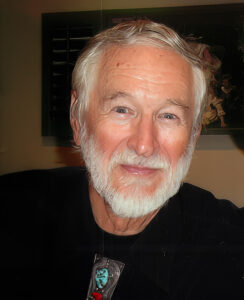
We are honoured to announce that Prof. George M. Williams will be our keynote speaker. Professor Emeritus at the Department of Religious Studies, California State University, Prof. Williams boasts an impressive academic and professional career dedicated to exploring and promoting interfaith understanding and liberal religions.
Prof. Williams was awarded his Ph.D. from the University of Iowa in 1972, specializing in religion in modern India. His research and teaching focus primarily on religions that liberate and liberal religion. This has not only fueled his interest and involvement with IARF but also earned him two honorary doctorates: in May 1994, the Starr King School for the Ministry awarded him the Litterarum Humanarum Doctor, and in October 1996, he received the Doctor Honoris Causa from the United Protestant Theological School of Cluj, Romania (the city where the Congress will be held).
A celebrated specialist on Svâmî Vivekânanda and the Hindu Renaissance, Dr. Williams contributed significantly to the American Academy of Religion, particularly in the development of the section on Hinduism. He’s also known for his work on digital archiving, translation, and preparation of databases for sacred texts like the Bhagavad Gita.
Prof. Williams has spent nearly two decades studying liberal Buddhist and Shinto groups in Japan, resulting in numerous publications and multimedia resources. His work on a Shinto digital dictionary was a pioneering educational resource and the first electronic publication of Scholars Press of the American Academy of Religion.
Beyond academia, Prof. Williams has been recognized for his work promoting interfaith cooperation and understanding. The American Chapter of the International Association for Religious Freedom (IARF) presented him with the 1989 Distinguished Service Award. He has given guest lectures at numerous universities and seminaries across the world, sharing insights on liberal religion.
Since retiring in 2003, Dr. Williams has continued his academic endeavors, publishing further works and assisting the Hawaiian faith, Kanenuiakea, to become the second indigenous member of IARF. His latest book, “Cosmic Sage: Imaoka Shin’ichirō, Prophet of Free Religion,” released in 2019, tells the story of the influential Japanese religious leader who helped IARF include non-western liberal religions as full members.
We look forward to Dr. Williams’ keynote speech, “Remembering History as a Prelude to Reconciliation,” and the insights he will share based on his vast experience and knowledge in the field of interfaith and reconciliation. It is an opportunity not to be missed!
Sponsorship Opportunities
We understand that not everyone may be able to afford to travel to Cluj or purchase the online Congress pass. To ensure maximum participation, we’re offering partial and full sponsorships for IARF members, particularly young adults, courtesy of a generous grant from our Europe and Middle East region. If you need assistance, please write to us at [email protected].
To all our members and non-members alike, we invite you to join us at this unique gathering where we will explore our theme, “Faith in Reconciliation,” in depth. We can’t wait to see you in Romania – or online – for a transformative experience of dialogue, learning, exchange, and collaboration.
If you have any questions or need assistance with registration, visa issues, or travel and accommodation, feel free to reach out to the IARF Administrator, Lukasz Liniewicz, at [email protected].
IALRW’s Congress to Follow the IARF Congress on 7-9 September 2023
The International Association for Religious Freedom (IARF) is delighted to announce that our member organisation, the International Association of Liberal Religious Women (IALRW), will be hosting their World Congress in Cluj-Napoca (Kolozsvár) from the 7th to the 8th of September, 2023. This congress comes directly after the IARF World Congress, presenting a unique opportunity to attend both events in succession.
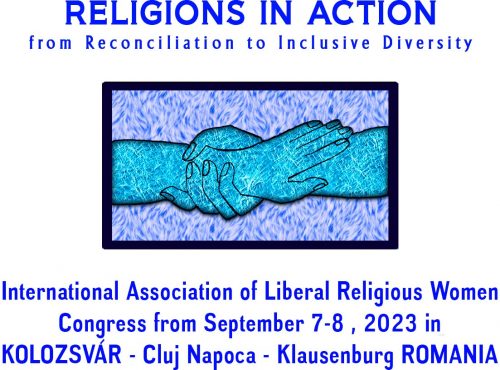
The congress will be held under the theme “Religion in Action: From Reconciliation to Inclusive Diversity”, reflecting the IALRW’s ongoing dedication to fostering dialogue and understanding among women of diverse faith traditions. Although the speakers for the event have not yet been confirmed, we assure you that the lineup will consist of some of the most insightful voices in the field. We will be publishing the program shortly, so please keep an eye on our website for updates.
The World Congress will be graciously hosted by the Hungarian Unitarian Church at the House of Religious Freedom, a historic 15th-century townhouse located in Cluj-Napoca. Known as one of the oldest and most significant townhouses in the city, the House of Religious Freedom has been lovingly restored by the Hungarian Unitarian Church and is dedicated to promoting the ideals of religious freedom and tolerance.
IALRW’s history is rooted in the IARF, and its focus on women’s issues in religious communities and interfaith cooperation remains a cornerstone of its mission. The organisation welcomes women from liberal faith communities around the world, fostering an environment of mutual support in the search for spiritual enrichment and identity. We are confident that this upcoming World Congress will be a testament to this mission, offering attendees the chance to engage in enriching dialogue and meaningful action.
For further information about the World Congress, please contact Dr. Esther Suter at [email protected]. You can also visit the IALRW website at https://www.ialrw.org/ to learn more about their ongoing projects, recent research, and member organisations.
The IARF and IALRW look forward to welcoming you in Cluj-Napoca (Kolozsvár) for these back-to-back congresses. Please mark your calendars and join us in fostering interfaith dialogue and inclusive diversity.
IARF’s 36th World Congress – “Faith in Reconciliation” (4-6 September 2023)
About the Congress
Join the International Association for Religious Freedom (IARF) for its 36th World Congress, titled “Faith in Reconciliation,” taking place in Cluj-Napoca, Romania, and online from September 4-6, 2023. This highly anticipated event will bring together the multifaith, multicultural, and multiethnic IARF community that began in 1901.
Congress Accessibility
For the first time in IARF history, this Congress will be fully accessible online. Enjoy interactive live broadcasts of all events, side events tailored to different time zones, and a virtual lobby for networking and building connections even if you’re unable to travel to Romania.
Congress Theme
The Congress theme, “Faith in Reconciliation,” seeks to explore the role of religion in fostering healing, reconciliation, and just peace around the globe. Discussions will cover topics such as the role of religious leaders in reconciliation, the place of religious narratives in modern societies, and the lessons interfaith dialogue can offer to the broader social and political realm.
IARF Background
The IARF was established in 1900 and currently has over 40 members, representing diverse religious traditions from around the world. Past World Congresses have featured esteemed keynote speakers such as the Dalai Lama, Karen Armstrong, and Jen Bailey.
Registration
You can register here. There are two types of Congress passes available – regular passes for in-person participation and online passes. Sponsorship opportunities are also available.
Program Updates
The full program will be published in early April. Sign up for the IARF newsletter to receive program and other updates.
Contact Information
If you have any questions or require assistance, please contact IARF Administrator Lukasz Liniewicz at [email protected].
Mark your calendars and join us in September for a transformative experience that explores the multifaceted nature of reconciliation and the role of faith in bringing about global change.