
Bahrain: Continued Harassment of Activists by the Government
The Bahrain Center for Human Rights (BCHR) expressed it’s concern about continued harassment of human rights activists by the Bahrain authorities and restricting their right to free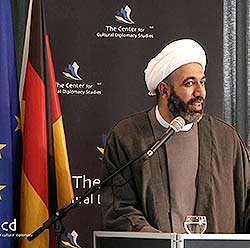 expression. Sheikh Maytham al-Salman, a noted spokesperson, human rights defender and chairman of the Bahrain Interfaith Center, our associate member organization, together with several other persons, was summoned for interrogation over a speech he recently delivered. In August the Sheikh was detained. We wrote about it here.
The BCHR:
believes that the Bahraini authorities’ actions are an indication of its increasingly harsh policies aimed at further harassing human rights defenders in order to silence them, in addition to its continued implementation of further restrictions both in law and practice on the right to free expression. Moreover, human rights defenders and activists in Bahrain have been ongoing targets of the authorities who have attempted countless times to silence them, stop their work and oppress their right to freedom of expression, including BCHR President Nabeel Rajab, activist Zainab al-Khawaja, and human rights defender Naji Fateel…
Accordingly, the Bahrain Center for Human Rights calls on the
government of Bahrain to:
- Drop all charges pending on Sheikh Maytham al-Salman for exercising his freedom of speech
- Release all prisoners who have been convicted for their political opinions; and
- Fully comply with the Bahrain Independent Commission of Inquiry (BICI) recommendations and international laws.
The full text of the article and the Sheikh’s speech over which he was interrogated is available here.
Bahrain: Arrest of Inter-Faith Activist and Head of IARF Member Group Maytham Al Salman
On Saturday 8th August 2015, Sheikh Maytham Al Salman, chairman of the Bahrain Interfaith Centre, an Associate member group of the IARF, and Head of the Religious Freedom Unit in the Bahrain Human Rights Observatory (BHRO), was detained at Manama international airport, charged with “inciting hatred against the regime”. The Sheikh has been detained before. We wrote about this here.
Here you can read our introduction of the Bahrain Interfaith Centre.
Excerpts from article by Global Freedom of Expression, Columbia University (you can read the article here):
An internationally respected inter-faith leader, Sheikh Maytham Al Salman …
is well recognized for his work on building tolerant societies, and on countering incitement to violence and discrimination in accordance with international human rights standards…
Once detained, he was permitted to inform his family, by telephone, that he was being held at the Criminal Investigation Division, Economic Crimes Unit. However, in contravention of his human rights, he was denied access to a lawyer. Pending further legal procedures, Sheikh Maytham was released some 12 hours later.
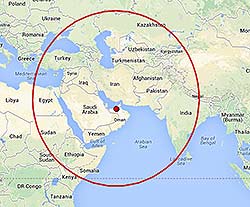 Article 165 of the Bahrain prohibits “inciting others to develop hatred or hostility towards the system of government.” It is an offence punishable by imprisonment of up to three years. Such charges are most widely used against human rights activists and media workers involved in promoting human rights in Bahrain or in documenting cases of human rights abuse. …
Bahrain: government violations during Ashura season 2013
Press Conference on Religious Freedom Violations during Ashura (November 2013)
The Department for Religious Freedom in the Bahrain Human Rights Observatory has expressed its strong condemnation of the escalation of the pace of systematic violations on religious freedom in Bahrain during Ashura (November 2013), and the increasing number of official violations carried out by government ministries during Ashura season; noting that the religious ceremony of Ashura has been marked by the people of Bahrain for hundreds of years, on the anniversary of the martyrdom of Imam Hussein, and has become a landmark of Bahrain.
The Head of the Religious freedom Department in the Bahrain Human Rights Observatory, Shaikh Maytham Al Salman, at a press conference on 18th November 2013 said:
“Bahrain has long been the friendliest model in the gulf states representing acceptance, harmony and tolerance between the various components of its society. Bahrainis have long lived peacefully far away from sectarianism, extremism and fanaticism, however several official and non-official parties sought to sow sectarianism between citizens during the political crisis in the country; to distort reality and attempt to portray the political crisis as a sectarian conflict between Shia’s and Sunni’s. They have also attempted and planned to upsurge sectarian violence but have failed to do so due to the persistence of the majority of Bahrainis to not accept being driven down this path.
The recent targeting of Ashura commemorations is regarded an extension of the sectarian agenda, since Ashura is appreciated and respected by all Bahrainis regardless of ideological, political and social differences.
We have witnessed a rise in the rate of governmental violations during Ashura season this year and those violations included the following:
1 – 16 religious centers (Ma’tam) leaders, who have a prominent role in organizing Ashura gatherings; were called for questioning and interrogation by the ministry of interior affairs on issues related to their core administrative work for the centres (Ma’tam). A score of them were threatening as well.
This is regarded by BHRO as a clear violation of religious freedom which is guaranteed under international conventions on human rights, including the Universal Declaration of Human Rights as well as the Constitution of the Kingdom of Bahrain.
Article (22) of the constitution of Bahrain states that “Freedom of conscience is absolute. The State guarantees the inviolability of worship, and the freedom to perform religious rites and hold religious parades and meetings in accordance with the customs observed in the country.”
2 – 11 residential areas marking Ashura, have been targeted by removing or destroying commemorative banners, flags and black cloth.
3- The Destruction or vandalizing of artistic works of Ashura. The Ministry of Interior on the (13 / November 2013) demolished the fine artistic monument (Safinat al Najat or the Ship of Salvation) in the Juffair area.
Juffair residents was surprised by the destruction of the monumental Ship that stood 27 meters long and 10 meters high. Security forces used tear gas to disperse people which caused suffocation to a large number of women and children in a women’s religious center (Ma’tam) near the demolished artistic monument.
4 – The Ministry of Interior raided Ma’tam Al Qaem religious center (Ma’tam) in A’ali and violated its sanctity on 18/11/13 without legal or legitimate justification.
5 – The Ministry of Interior targeting a religious Commemoration march “Labayk ya Hussain ” in the village of Nuwaidrat on 15.11.2013, causing injuries to at least 12 participants.
6 – Summoning the religious vocalist Abdul-Amir Al Biladi on 15/11/2013 to Noaim police center, who was questioned on matters related to his religious belief and personal views.The vocalist Mohammed Jaber and cleric Sheikh Mahmoud Taheri were also summoned by Budaiya police center on 17/11/2013.
7 – A number of citizens were called for interrogation under the pretense of displaying Ashura commemorative banners and flags over their homes or rooftop. This is a clear violation of human rights. It is also a clear indicator that the government provokes serious sectarian tension and denies Shias their right of expressing their religious beliefs freely
8 – Harassment of Citizens heading to the Ashura Commemorative ceremony in some areas in Bahrain and the disruption of the flow of traffic, including issuing traffic tickets to vehicles parked in the designated parking areas
9. Terrorizing the Island of Sitra during its central Ashura Commemoration on 18/11/2013; through breaking into the village with dozens of vehicles and deliberately destroying artistic displays of Ashura hours before the beginning of the ceremony on the 13th of Muharram.
There is no legal justification to prevent citizens from exercising their personal and religious freedom by displaying flags or banners expressing their religious beliefs on their homes or rooftops, and the expression of Grief at the martyrdom of Imam Hussein through processions. Similarly there is no justification to the raiding of Religious centers (Ma’tams) and the destruction of the displays of Ashura. All these practices are considered an obvious war on religious freedom in Bahrain.
Al Salman called on the government of Bahrain to respect its international obligations and commitments to the Universal Declaration of Human Rights, which states in Article (18): “Everyone has the right to freedom of thought, conscience and religion; this right includes freedom to practice his religion or belief, and freedom, either alone or in community with others and in public or private, to manifest his religion or belief in teaching, practice, worship and observance.”
Finally, Al Salman said that the call by the Bahraini Human Rights Observatory to respect the rights and freedom of religious groups is not limited to a certain religious sect or religion without the other; but to respect all of them regardless of religious differences
Bahrain Interfaith Centre, our newest associate
The IARF has recently (April 2013) welcomed the Bahrain Interfaith Centre as an associate member group.
Contacts with this group have been established in 2012 through our representative with the UN ECOSOC in Geneva, Mr. Morse Flores.
IARF welcomes groups that are multi-faith and that are working non-violently and peacefully to promote religious freedom. Groups which have a limited scope and have not been rooted deeply in their societies for a length of time are being received as associate members.
IARF expects to invite the Bahrain Interfaith Centre to join it as a full member in coming years. The group has submitted the following account of the situation which led to it being called into existence, followed by a description of its aims and purposes.
Rev. Drs. Wytske Dijkstra, Chair of Europe & Middle East region
Introducing the Bahrain Interfaith Centre
by Sheikh Maytham Al-Salman, Chairman
Sectarianism in Bahrain
Throughout history, men and women of religion have stood against tyranny and fought for the natural right of all individuals to practice their own faiths and beliefs, free from harassment, suppression and persecution. Regimes and social powers have utilized sectarianism to divide human societies into sects living in conflict in many scenarios in history. Bahrain, after the unfortunate events which took place in the aftermath of 14 February 2011, has faced mass criticism at a public and governmental level for practicing, nurturing, developing and tolerating sectarianism.
Sectarianism is defined as discrimination or hatred arising from attaching importance to perceived differences between subdivisions within a group, such as between different denominations of a religion, class, regional or factions of a political movement.
The ideological underpinnings of attitudes and behaviours labelled ‘sectarian’ are extraordinarily varied. Members of a religious or political group may believe that their own salvation, or the success of their particular objectives, requires aggressively seeking converts from other groups; adherents of a given faction may believe that for the achievement of their own political or religious project their internal opponents must be purged.
At a governmental level the government of Bahrain claims to refuse sectarianism, however the Report of the Bahrain Independent Commission of Inquiry, released to HM King Hamad bin Isa Al Khalifa on 23rd November 2011, finds that sectarianism was practiced at a governmental level especially in the following areas:
- Sectarianism has been broadcast, practiced and escalated in the public national media, especially on Bahrain TV
- Sectarianism was the drive to demolish more than 37 centres of worship;
- Sectarianism was the drive to expel and suspend thousands from their jobs in the private and public sector;
- Sectarianism was evident in the mass punishment of villages in Bahrain;
- Sectarianism is practiced in the linguistic and physical behaviour of the police forces
At a public level, reports have found that sectarianism is practiced, enrooted and escalated between Shi’a and Sunni, between local nationals and naturalized Bahrainis, those of Bedouin descent and of urban descent, the opposition and the government-loyal communities, and other social groups.
Bahrain: An instance of Religious Discrimination?
Religious discrimination is valuing or treating a person or group differently because of what they do or do not believe. A concept like ‘religious discrimination’ is necessary to take into account ambiguities of the term ‘religious persecution’: the most infamous cases in which people have been executed for beliefs perceived to be heretic are generally recognizable as persecution.
Although the constitution in Bahrain claims that Freedom of Religion is a constitutional right, the religious Shi’a majority claim religious discrimination is practiced on a mass scale against them.
Shi’a feel that they are denied the equal protection of the laws; equality of status under the law; equal treatment in the administration of justice; and equality of opportunity and access to employment, education, housing, public services and facilities, and public accommodation – all due to their exercise of their right to religious freedom and opinion.
Bahrain Interfaith Center
Bahrain Interfaith Center is a non-profit team of open-minded, moderate Bahraini volunteers attempting to protect religious rights, prevent religious and social discrimination and sectarianism, encourage interfaith dialogue, denounce sectarian violence and support peace initiatives.
Bahrain Interfaith Center was created in 2012 to cultivate harmony amongst religious groups and sects in Bahrain. We intend to be dedicated to protecting the religious and social rights of people in Bahrain. We will attempt to prevent discrimination, to uphold religious freedom, to investigate cultural and religious rights violations, and pressure the government to end abusive sectarian and religious practices, and respect international human rights law.
To accomplish this, we invite individuals and communities who respect religious and faith pluralism to join our mission in promoting tolerance, confronting sectarianism and religious discrimination and encouraging interfaith dialogue.
Our Vision
We believe that achieving internal and external peace is an agreed upon goal in the majority of religions and faiths. Thus it is the role of religious leaders to promote understanding among people of all faiths, and to strongly prohibit all forms of violence and aggression against all people, regardless of their faith or race. If religious leaders promote this vision, religious and cultural fears and hatreds will be replaced with understanding and respect.
Core Values
- Personal worth: People are worthy of respect, support, and caring simply because they are human. Everyone should be treated in a fair manner regardless of race, religion, and sect
- Lack of discrimination: Working towards promoting a culture in Bahrain that is relatively free of discrimination on the basis of religion, thought and social background
- Dignity: The dignity of the human person. We oppose the use of torture and cruel or unusual punishment against people regardless of their thought, religion or social background.
- Democracy: We believe that the promotion of true(not fake)democracy eliminates discrimination. We also support democratic processes within religious, political, and other structures.
- Promoting religious neutrality within government: We believe governments should treat everyone equally regardless of religion or sect. The government should not promote one religion or sect over another, promote religion over secular beliefs, or promote secular beliefs over religion, accuse a sect of being national and the other being a betrayer.
- Personal freedom: The freedoms of religious beliefs, speech, association, and expression at the individual, congregational and denominational level.
- Freedom of speech: “The freedom for faith groups to discuss each other’s traditions”.
Religious Freedom Unit
Bahrain Interfaith Centre has established a Religious Freedom Unit to report violations of religious freedom in Bahrain. The Unit is also heading the Religious Freedom Committee at the Bahrain Human Rights Observatory. The Unit has been active internationally and locally in issuing reports on violations of religious freedom.
—————————————————————————-
Introducing the Bahrain Interfaith Centre – PDF copy, 3 pages