
Side Events at UN HRC 2014
Two events organised by IARF at the 25th Session of the UN Human Rights Council (HRC), March 2014
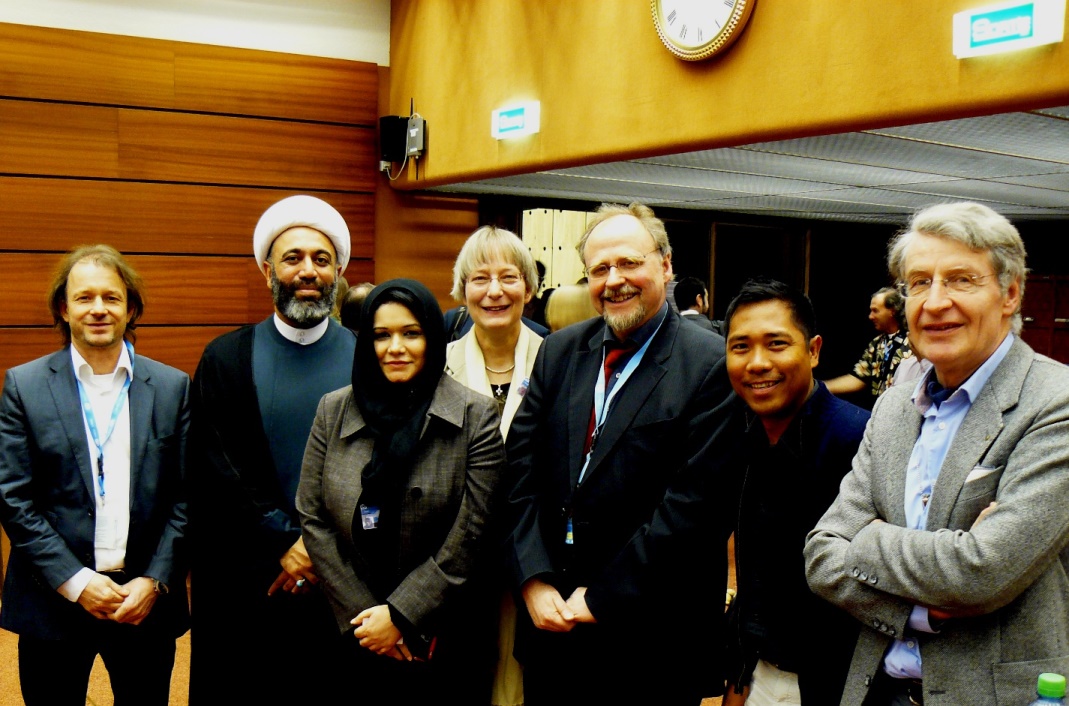
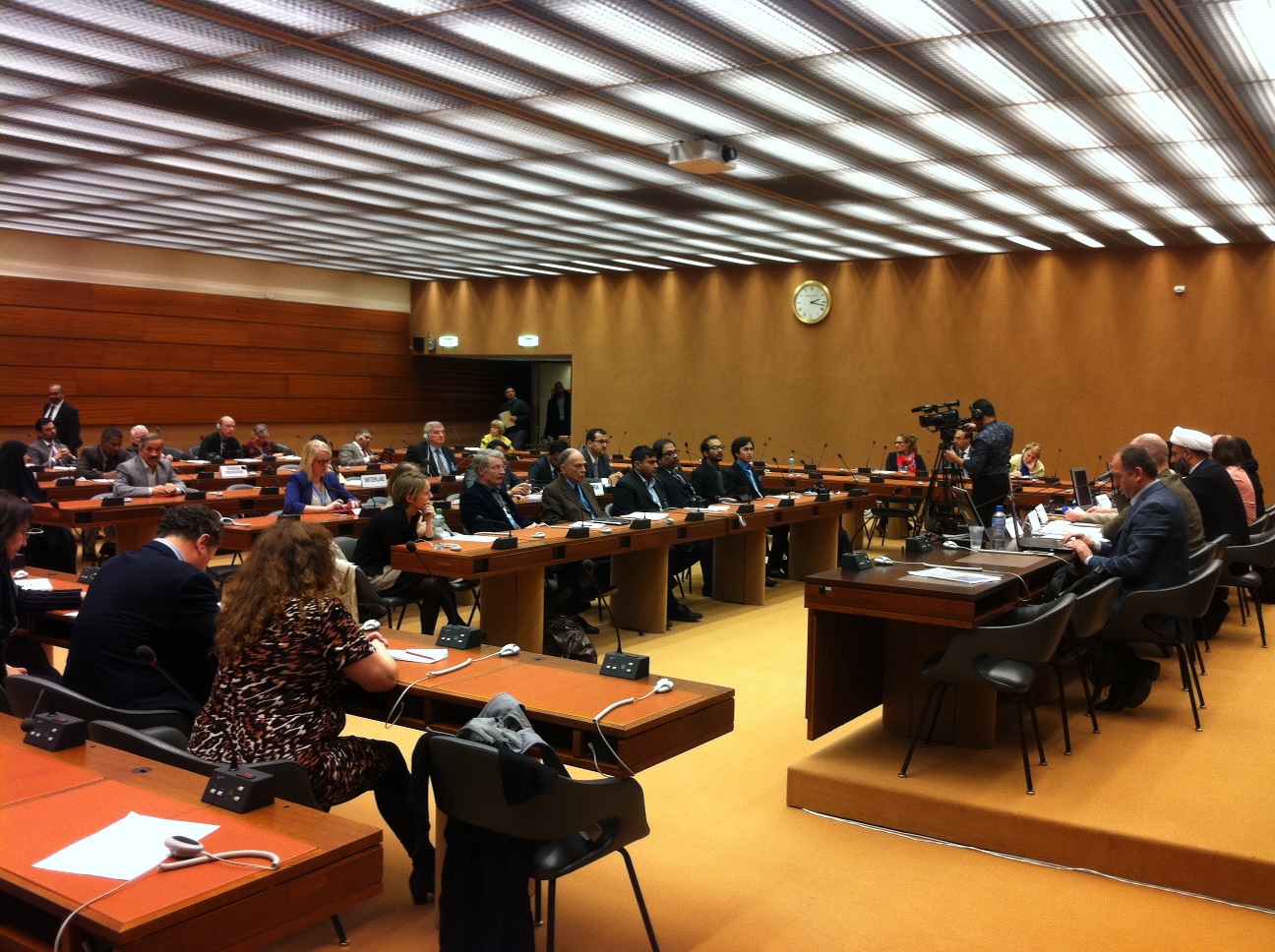
Side Event ‘Rise of Religious Intolerance’
Monday, 10 March 2014 – 2:00 to 4:00 PM
Room XXV, Palais des Nations, Geneva
UN HRC Side Event ‘Rise of Religious Intolerance’ – Flyer (PDF, 1 page)
Discussion on the rise of violence attributed to religious intolerance in various regions of the world where antipathy toward members of religious minorities is used to justify targeted hatred, assaults, restrictions and violent attacks on their religious institutions.
Held in conjunction with the Annual Report of the UN Special Rapporteur on Freedom of Religion or Belief (FoRB) – part of the Programme of Work of the 25th Session of the HRC; complements the Special Rapporteur’s presentation of his Annual Report, which this year is titled “Tackling manifestations of collective religious hatred“.
Report in Pakistan newspaper The News
Report in Pakistan magazine Business Standard
Video report
Thursday 13 March
Room XXI, Palais des Nations
In collaboration with the CoNGO Sub-committee on Freedom of Religion or Beliefs:
Open/Interactive Dialogue with the UN Special Rapporteur on Freedom of Religion or Beliefs
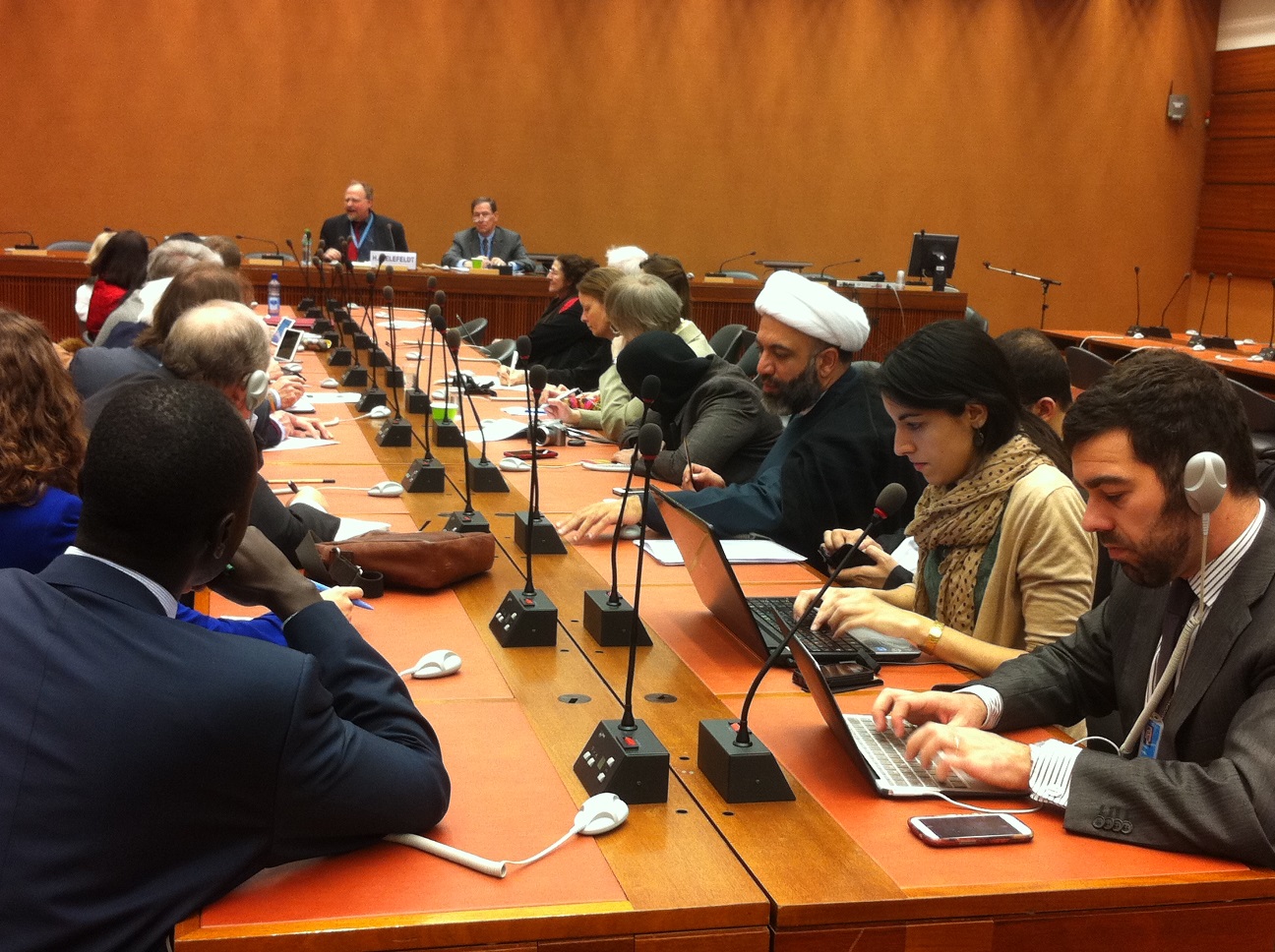
NGO Joint Oral Statement
As a practitioner of Human Rights Education in South Asia, IARF at the UN is member of the NGO Working Group on Human Rights Education & Learning within the structure of CoNGO (the Committee of NGOs).
At this session of the HRC, IARF facilitated a workshop which delivered the following Joint Oral Statement regarding the Third Phase of the World Programme for Human Rights Education (2015-2019):
2014 HRC25 – NGOJointOralStatement ITEM 3 – WPHRE P3
Member group leader detained
On Thursday 5th December 2013, Sheikh Maytham Al Salman, Head of the Religious Freedom Unit in the Bahrain Human Rights Observatory (BHRO), and chairman of the Bahrain Interfaith Centre, an Associate member group of the IARF, was summoned to Al Hoora police station by the investigation unit of the Ministry of Interior Affairs, Manama.
For almost two hours, he was interrogated by two officers about his work in the area of religious freedom – namely, in being outspoken to the western press, and holding a press conference on the violations during Ashura on 18 November.
He was accused of:
1- inciting hatred against the regime
2- calling for unlawful gatherings (a press conference on the Ashura violations of 18th November 2013)
3- insulting a government body
He was also questioned about membership in the Bahrain Human Rights Observatory (BHRO) – a coalition of human rights organizations and defenders whose religious freedom unit he has been invited to head. The unit’s role is to defend religious rights and freedoms regardless of ideology or religion.
No violence was involved.
See here for our report on the 18th November 2013 press conference which occasioned this detention.
UN Forum on Minority Issues – IARF Oral Submissions
Human Rights Council – Sixth session of the Forum on Minority Issues
“Beyond freedom of religion or belief: Guaranteeing the rights of religious minorities”
26 and 27 November 2013
@Room XX of the Palais des Nations, Geneva, Switzerland
IARF’s six-person delegation included our two Zurich-based colleagues and two delegates from our partner organization based in Brussels (Human Rights Without Frontiers International), and spoke in four agenda items:
a). legal framework of protection of religious minorities;
b). protection of existence and prevention of violence against religious minorities;
c). promotion and protection of identity of religious minorities;
d). the promotion of constructive interfaith dialogue, consultation and exchange.
Oral Interventions:
- 26th
On the legal framework for the protection of religious minorities
Speaker: M. Jean-Claude Cantieni, president of Libref, IARF’s member group in Switzerland, using the example of Libref, and the Swiss legal framework as a good practice, although with specific recommendations as the Swiss legal framework is far from perfect.
IARF Oral Statement Forum on Minority Issues (PDF, 1 page, French-language) - 27th
On protection and prevention of violence against religious minorities and protection of identity of religious minorities.
Speaker: Arben Sulejmani, representative of IARF member group the Bektashi Order of Macedonia, on the situation of the Bektashi religious minority.
IARF Oral Statement on Macedonia (PDF 1 page) - Good Practice session: Constructive Interfaith Dialogue and Exchange
South Asia (Agenda Item 4)
________________
From the OHCHR’s pre-meeting Draft recommendations on guaranteeing the rights of religious minorities:
H. Prevention of violence and protection of the security of religious minorities
49. States have the responsibility to protect human rights and security for all and to create conditions of peace and stability. They must act appropriately and rapidly to protect the rights and security of persons belonging to religious minorities under threat and prosecute anyone who commits, supports or incites violence against them.
50. Preventive measures should be taken against acts of violence directed against persons or religious sites belonging to religious minorities. In situations of extreme risk, appropriate preventive measures should be rapidly deployed by law enforcement bodies and adapted as the situation evolves. States should take all necessary measures to ensure protection for and prevent attacks and violence against advocates for religious minorities’ rights and those who fulfil leadership or community roles and may be at greater risk of violence.
51. States should ensure that all cases of intimidation, harassment, persecution and other serious human rights violations against religious minorities are thoroughly and immediately investigated and perpetrators punished. Appropriate measures, including legal assistance, should be made available to religious minority groups as required in order to document cases of violence or intimidation and effectively prosecute those who commit attacks on them and communal violence.
52. In conflict situations, special attention must be paid to the situation and security of persons belonging to vulnerable religious minorities. Efforts should be made to fully reintegrate with dignity religious communities that have been displaced during conflict to their places of origin, allow access to all places of worship and other religious sites, and ensure protection of religious minorities present on the territory. Religious minorities from all religions within a State should be actively involved, including at the earliest stages and throughout peacebuilding initiatives and reconciliation processes.
I. Interfaith dialogue, consultation and exchange
53. In multi-faith societies, efforts to build a climate of trust, understanding, acceptance and interfaith cooperation and exchange should be established. Such measures benefit the whole of society and are essential elements of good governance.
54. States should consider creating or facilitating national and regional institutions aimed at fostering interfaith dialogue and projects promoting a culture of understanding and a spirit of acceptance. The establishment of formal and informal national and local institutions and platforms for dialogue where representatives of religious groups meet regularly to discuss issues of common concerns should be encouraged.
55. The potential of religious and political leaders in helping to build tolerant, inclusive societies and initiate and support such efforts and activities should be harnessed. Such influential community and national figures should be at the forefront of dialogue and inter-community cohesion efforts, as well as in publicly condemning any advocacy of religious hatred, discrimination, hostility or violence.
56. Initiatives relating to interreligious and interfaith dialogues should be as inclusive as possible and should be encouraged at the grass-roots level. The participation of women and young people belonging to religious minorities should be particularly encouraged and ensured through active outreach. The use of different channels of communication, such as the media, arts and local institutions, to foster interfaith dialogue and exchange should also be promoted.
13th Universal Periodic Review
In 2012, on the basis of our human rights education work in India, we submitted to the Office of the High Commissioner for Human Rights in Geneva, our first contribution to this new mechanism of the UN (established 2006) for the monitoring of states’ human rights records.
- IARF Joint UPR Submission 2012 – India (PDF, 8 pages)
- Webcast of UPR Report of India 24 May 2012 (UN site; see 6:40 in video for religious freedom)
- Webcast of adoption of UPR Report of India 30 May 2012 (UN site)
XIX Session of the Human Rights Council
29 February to 23 March 2012
IARF has two involvements in this 2012 session:
1 Written & Oral Statements
Written Statements to the Human Rights Council (HRC) exist as a means for NGOs to directly lobby the HRC’s member states. The Statements are intended to highlight specific thematic issues or country situations. They are also one of the best ways to show support for the work of specific Special Rapporteurs (in fact, the Special Rapporteurs’ reports rely much on information received from NGOs).
- Joint written Statement to Human Rights Council on religious minorities in India
- Joint Written Statement to Human Rights Council on religious minorities in Pakistan
The HRC also provides for a specific interactive dialogues (around 2-3 hours) involving NGOs giving also 2-minute Oral Statements highlighting key issues of their greatest concern, directly after a Special Rapporteur has presented her/his report.
This year the Report was given on 6th March. IARF joined with Civicus in the following statements:
- Oral Intervention on violence against children, Philippines
- Oral Intervention on arbitrary detention, Philippines
In the September session, IARF also joined other NGOs in the following:
2 NGO Panel Series on Human Rights Education in Practice 1-page flyer, PDF
In parallel with the 19th Session of the Human Rights Council
Palais des Nations, 15th March 2012
Co-sponsored by the Platform for Human Rights Education & Training in the Human Rights Council with the following member States: Costa Rica, Italy, Morocco, Philippines, Senegal, Slovenia & Switzerland.
This panel series is one of the key activities of the NGO Working Group on Human Rights Education & Learning of which IARF is one of the key members.
Panel 2: “Human Rights Education in Formal Settings” 1-page flyer, PDF
Organised by IARF in conjunction with the Kennedy Centre for International Studies
This topic focuses on our experience in providing HRE training in universities & colleges primarily in India.
September 2012 session:
1
Consolidated Report of NGO panel series on Human Rights Education during the 19th Session of the Human Rights Council in March 2012, organized by IARF in collaboration with 5 other international NGOs based in Geneva. (PDF, 17 pages)
2
IARF also participated in the interactive dialogue following the report of the Special Rapporteur on the Rights of Indigenous Peoples.
Please see our Representative’s short write-up Indigenous Peoples and Access to Justice (PDF, 1 page).
IARF and HRWF co-sponsor HRC UPR side event
UN Human Rights Council, Universal Periodic Review (UPR)
Side Event on freedom of religion in Russia
29 April 2013
in conjunction with the review of the human rights records of Russia through the Working Group on the UPR of the Human Rights Council.
Jointly organised by IARF and Human Rights Without Frontiers International (HRWFI)
Topics & Speakers:
- The law on extremism – Alexandr Verkhovsky from Sova Center in Moscow
- A number of court cases in Russia – Sergey Ivanenko, a Russian lawyer
- European Court decisions against Russia in religious matters – Attorney Patricia Duval from Paris
- Religious intolerance fostered by the state and anti-sect movements in Russia – Willy Fautré from Brussels
HRWF Report: Russia Side Event, UPR 2013 (PDF 1 page)
Bangladesh chapter statement on anti-Buddhist riots
Attack on the Buddhists and their Temples in Bangladesh
A Report by IARF Bangladesh Chapter
07 October 2012
On the night of the 29th September 2012 a militant group of people attacked the Buddhist communities of Ramu, a small town in the district of Cox’s Bazar of Chittagong division in Bangladesh. The culprits set fire on more than fifty houses and damaged twelve Buddhist temples. Most of the houses attacked were burnt into ashes and all the temples attacked were seriously damaged. One of these temples was also a museum of the history of Buddhism in Bangladesh.
The Buddhist have lost more than fifty houses and twelve temples have been seriously damaged. But the nation has lost more than what we can even conceive of. The attack on the Buddhists and their temples is not only an attack on the minority people, it was an attack against the state and the nation as a whole. This has damaged the image of Bangladesh as country which was known as a role model of inter-religious harmony. No language is enough to explain the tragedy of the affected people and no word is sufficient enough to condemn this heinous activity.
The free printed media and the electronic media of Bangladeshgave a massive coverage of the incident. The entire nation was stunned. All the leaders of different political parties including the Government, the members of the civil society, religious leaders and human rights organizations condemned the incident with the strongest possible language. The members of the IARF, Bangladesh Chapter also brought out a Protest Rally against this unfortunate incident. We demanded that the burnt houses be properly rebuilt, the affected people be given compensation and shelter, and all the temples be rebuilt immediately by the Govt.
Since 30th September there have been Protest Rallies throughout the country, because (1) 99% of people in Bangladesh believe in inter-religious harmony and peaceful co-existence; (2) This incident has damaged the image of Bangladesh as a country of inter-religious harmony; (3) The Buddhists, by nature, are peace-loving people and for hundreds of years Muslims and Buddhists have been living together in an ideal and peaceful manner.
The report of the Enquiry Commission formed by the Govt. is yet to be out. That is why we are not sure as to who are responsible for the unfortunate incident. We hope, within few days the report will be available. However, it is almost evident that a group of fanatics are responsible for this unfortunate incident. Until the report of the Enquiry Commission is out, we cannot be sure about the motive.
Buddhist religious leaders including some Buddhist Ministers of the present Govt. met the Prime Minister of Bangladesh yesterday (06.10.2012). She assured all concerned that the Govt. would take stern action against the culprits. She will visit the site of occurrence tomorrow (8th September). She was in USA during the incident, which is why she could not go their earlier.
Meanwhile, some culprits have already been arrested and two of them have confessed. On the basis of the national demand, the Officer in Charge of Police of Ramu Town has been arrested for his failure to control the situation, and he has been in police remand. It is quite encouraging to note that Buddhists and Muslims in Cox’s Bazar held a Harmony Rally. The entire nation expressed solidarity with the Buddhists in the country, and the demand of exemplary punishment of the culprits has become a national demand. It has become everybody’s slogan: “Bangladesh is a country of Hindus, Muslims, Buddhists and Christians, and we must live like brothers and sisters of the same parents.”
Let us all pray for the best and hope for the best. Side by side, we seek forgiveness from those who have become victims of fanaticism.
Dr. Kazi Nurul Islam
President, Bangladesh Chapter
Peace Commission statement on Syria
Statement on Syria
09 September 2012
The Peace Commission of the International Association for Religious Freedom has noted with great concern that in the pursuit of geostrategic policies, ill-considered military and material support of ‘popular’ revolutions with poorly-defined aims and structures has led to situations where human rights have been systematically abused, religious freedom has been denied, and transnational violence exacerbated.
Amongst the consequences of such support has been the inability of affected countries to sustain democratic governance; the destruction of sites of international cultural or religious importance; large-scale military intervention; and the spread of conflict to neighbouring democratic states.
The growing conflict in Syria has seen the development of terrorist organisations with ideologies of religious and ethnic hatred which threaten the peace and security of all nations in the region. They are funded and supported by non-democratic states with sectarian rulers who are known to promote enmity towards Christians, Jews and various denominations of Islam within their own national territories.
It is therefore essential for the long-term peace and stability of the region, and for the safety of countless citizens of Syria’s neighbours, that the international community applies diplomatic pressure to ensure that aid from any state is not intended or diverted to support sectarian or racially motivated terror.
London Conference on plight of Sabian Mandaeans of Iraq
26th April 2012
House of Lords, London
IARF was contacted on 20 March 2012 by Dr Layla Alroomi, the spokesperson of the Mandaean Human Rights Group (MHRG), with a request to attend a conference regarding:
The plight of the Sabian Mandaeans of Iraq as a Religious, Ethnic and Linguistic minority …getting more serious. Since 2003 this small community has been exposed to a hate campaign by extremists. These continued acts of violence have forced 85% of these indigenous people of Iraqto leave mainly to neighbouring countries. Moreover due to the recent critical developments in Syria, the situation of the Mandaean refugees is getting very worrying with regard to their safety and survival.
Pejman Khojasteh from our British Chapter represented IARF at this conference, giving a presentation on the assistance that IARF can provide in terms of our consultative status with the UN’s ECOSOC.
- Report on 2012 Conference on Sabian Mandaeans (PDF, 2 pages)
- Mandaeans tell their stories (8-minute video)
- Mandaean human rights in Iraq (website of Mandaean Associations Union)
- Mandaean Human Rights Group (MHRG) Annual Report 2011 (PDF, 58 pages)