
Happy Thanksgiving!
In the United States, it is customary to wish everyone a Happy Thanksgiving on the last Thursday of November. Despite global challenges, there is still much to be grateful for—even as the world stands at a tipping point between hope and fear, light and darkness.
This year has been fraught with war, climate inaction, and growing inequities, yet the principles of religions and spiritualities calling us to beauty, truth, and justice are more necessary than ever. In the darkness, the candles of liberal faith can shine brightly.
The International Association for Religious Freedom is moving in a new direction. All International Council members are now expected to contribute either as workers or by appointing associates to represent their chapters or member groups. So far, this has proven effective in our committees for finance, UN representation, and developing the website for free communication.
Membership has grown, with Sony College in Chhindwara, India, and Pagan Federation International joining us. IARF’s strength lies in its openness to diverse perspectives—religious, spiritual, or secular—and its recognition of every faith’s unique contributions to our collective enrichment. No tradition has a monopoly on truth; through dialogue, we find new ways to serve a struggling world. (Several more groups are preparing their applications.)
Contributions from regions such as Europe and the U.S. have increased, and individual donations—some surpassing those of member groups—have been especially impactful.
Personally, I am deeply grateful for the positive reception of the Free Religion Institute. The concept of “free religion” – inspired by figures like Raja Rammohan Roy, Ralph Waldo Emerson, and Dr. Imaoka Shin’ichirô – explores liberating spiritualities across traditions. Translating this vision across languages remains challenging, as political and historical contexts often distort the meaning of freedom.
Andrew Brown suggests “free-religion” as a way to reconnect with the liberative essence of faith traditions. Today, we face enslavements in new forms. Free-religion invites us to confront these with liberating practices.
We need your support. Volunteer as an editor, librarian, teacher, or researcher, or help with technical tasks for the Institute and the website. If volunteering isn’t possible, please consider donating to sponsor an intern or a program.
Let us honor Guji Yukitaka Yamamoto’s plea: “Do not let IARF die.” Together, we can keep its mission alive.
George Williams
IARF President
Access to Worship at Native Hawaiian Shrine Denied
Upon returning to Hawai’i, I intended to worship at the Kanenuiakea healing shrine, Kane’aki Heiau, as per my custom according to my multiple faiths. However, access was denied, as it is now restricted to members of Mauna ‘Olu Estates. It is reported that no Hawaiian owners reside there.
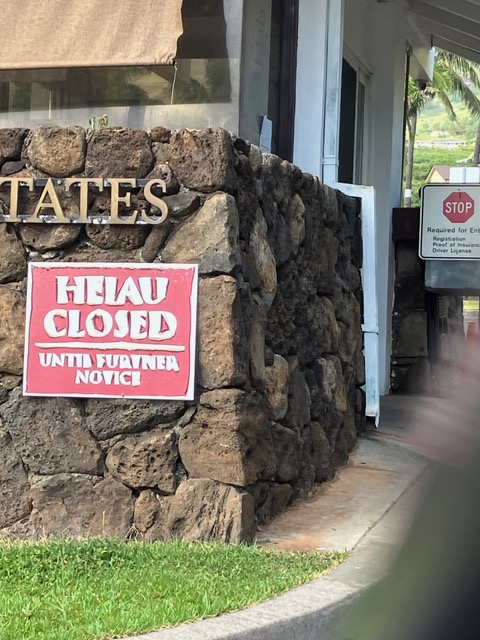
Access to Worship at Kahe’aki Heiau Denied
–Until Further Notice!
While the United States protects property rights, it does not recognize indigenous communal property, particularly places of worship that lack legal status under U.S. law. Kane’aki Heiau, a sacred temple and shrine, was first surrounded by a homeowners’ association and then claimed by it. The association now benefits from a tax deduction for preserving historic cultural property. Despite this, Hawaiians’ right to access is denied and enforced by State of Hawaii property rights law.
While the United States protects property rights, it does not recognize indigenous communal property, particularly places of worship that lack legal status under U.S. law. Kane’aki Heiau, a sacred temple and shrine, was first surrounded by a homeowners’ association and then claimed by it. The association now benefits from a tax deduction for preserving historic cultural property. Despite this, Hawaiians’ right to access is denied and enforced by State of Hawaii property rights law.
The International Association for Religious Freedom (IARF) and Religions for Peace are investigating how to effectively protest this apparent violation of U.S. and State of Hawaii constitutional rights regarding freedom of religion. Historically, the U.S. Supreme Court has interpreted freedom of religion as belief but not worship. Will colonial attitudes against indigenous worship change to support the religious freedom to pray at an acknowledged ancient temple?
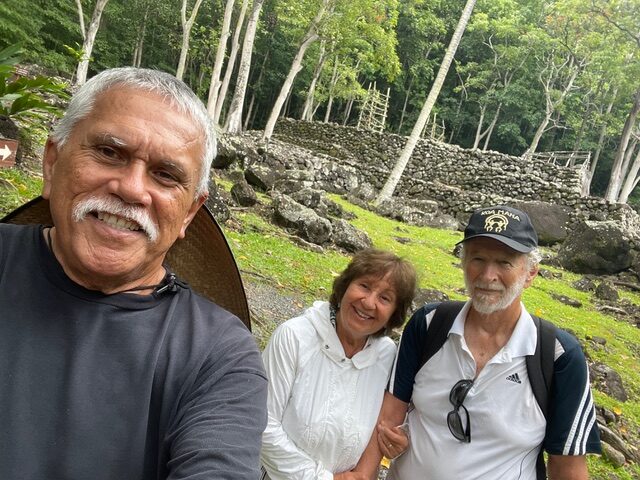
Kumu Glen Kila, George and Zizi at Kane’aki Heiau 2 years ago after climbing over locked gates. Kumu Glen is the Kahuna-nui, High Priest of Kanenuiakea, a faith with a thousand year history just on the Waianae Wahipana (west coast of Oahu).
Festive reflections: Chanukah
In the coming year we will be publishing reflections around the time of big festivals of the many religions represented in IARF. We begin with Chanukah, the Jewish festival of light. The author of this piece is Rabbi Robert Carroll, member of the International Council, our governing body, and the Interfaith Encounter Association, one of our Middle Eastern member groups.
Jewish historical memory reflects a constant tension between the particular and universal. To give one example: The Exodus from Egypt was on one level the story of a major incident in the life of a very minor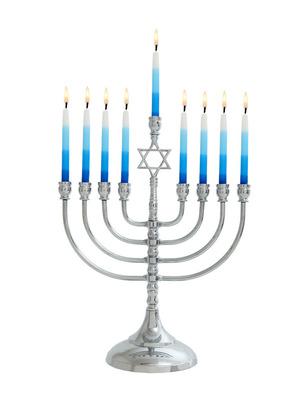 people. It can be read as nothing more than that. But the God of the Exodus is also the God of all humanity and the Exodus, in Jewish teaching, foreshadows the Redemption that God will one day bring to all peoples. For Jews, to remember the Exodus is also to work hand in hand with God to bring that day about. So too the story of Chanukah – on one level it’s only about one small nation fighting for its cultural survival. But on a deeper level it contains many messages for all of us.
The basic story is well-known from the Books of Maccabees and the historical writings of the historian Flavius Josephus:
In the 2nd century BCE Antiochus Epiphanes, king of the Seleucid (Syrian) remnant of Alexander the Great’s empire, began a campaign to forcibly Hellenize the Jews of the land of Israel. A statue of Zeus was erected in the Holy Temple in Jerusalem. Pigs were sacrificed on God’s altar, in brazen defiance of God’s command. Those who kept the Sabbath or circumcised their sons, as Biblical law requires, were executed.
Though the Seleucids had the support of the High Priest and elements of Israelite society, a rebellion quickly took root, led by a group of priests from Modi’in, Mattathias and his son Judah (known as Judah the Maccabee). Despite suffering many initial defeats their guerilla war was successful, recapturing Jerusalem within three years. The word “Chanukah” simply means “rededication” and refers to the eight days of celebration which then took place. Talmudic legend relates that although only one cruze of ritual oil had remained undefiled, it miraculously burned for eight days – hence the origin of the Jewish custom of lighting a Menorah, or 8-branched candelabrum, adding a successive candle during each night of Chanukah.
As we can now see, the Chanukah story is one of a particular people fighting for its religious and cultural self-determination. But like the story of the Exodus, it has elements that speak to all of us.
One of the greatest modern-day Jewish sages, Rabbi Abraham Isaac Kuk, taught that all peoples and cultures reflect and embody the light of God; just as God is infinite, God’s wisdom – His light – shines forth in manifold forms, and in all nations and faiths. Josephus fittingly coined the phrase “Festival of Lights” to describe Chanuka, and indeed over the centuries, the symbolism of light and flame came to be the holiday’s dominant motif. It speaks to us today in more ways than one: Do we want to bring warmth and illumination to the world, or do we want to be arsonists who burn and destroy?
The Chanukah story is almost 22 centuries old, yet it seems that in our day more than ever, the idea of freedom is at risk from those who would use the fire of faith to consume and oppress rather than to illuminate, to show compassion, or to perceive the holiness that all people as children of God have within themselves.
Ultimately, this is the question that Chanuka asks us: What kind of lights do we want to kindle in our world?
The 35th Congress: Reimagine Interfaith
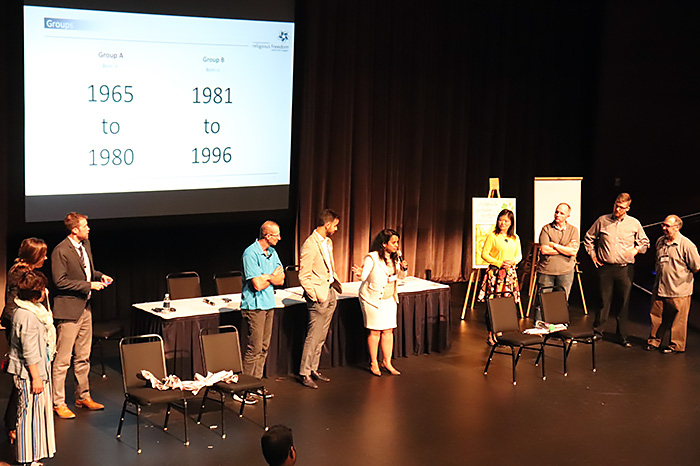
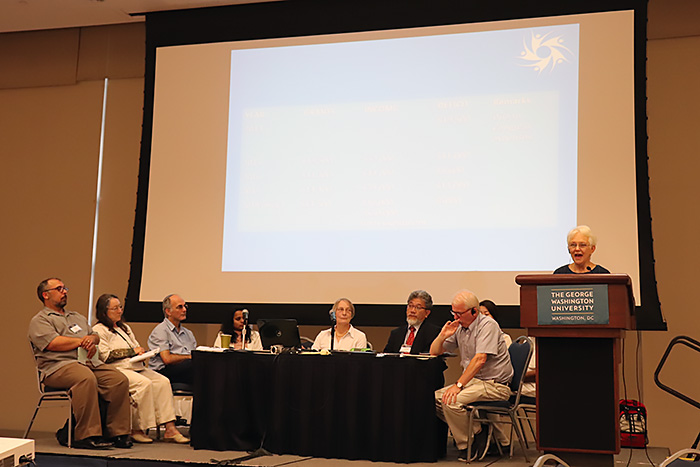
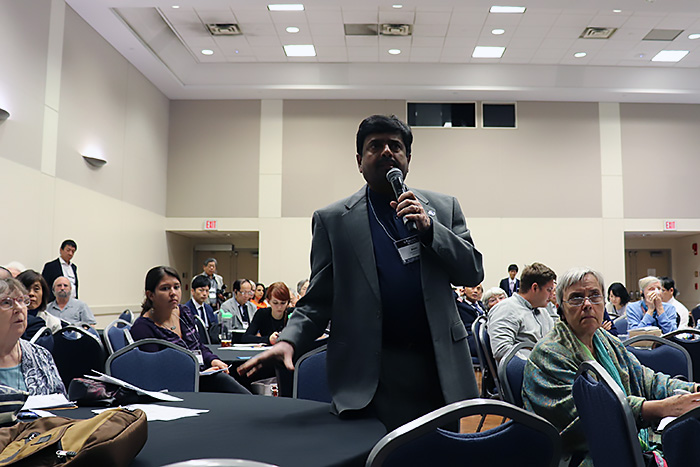
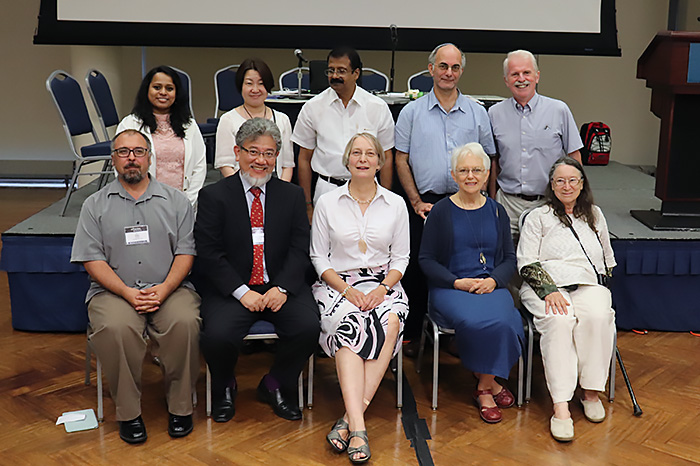
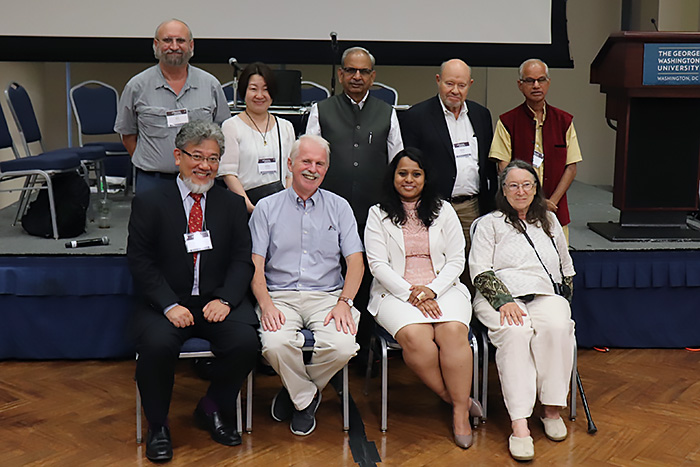
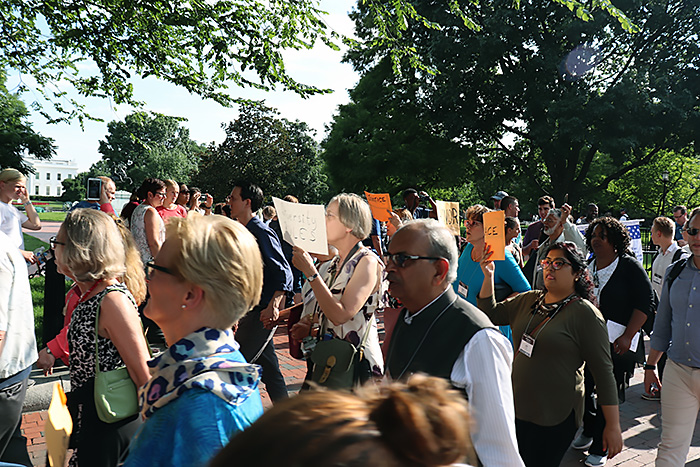
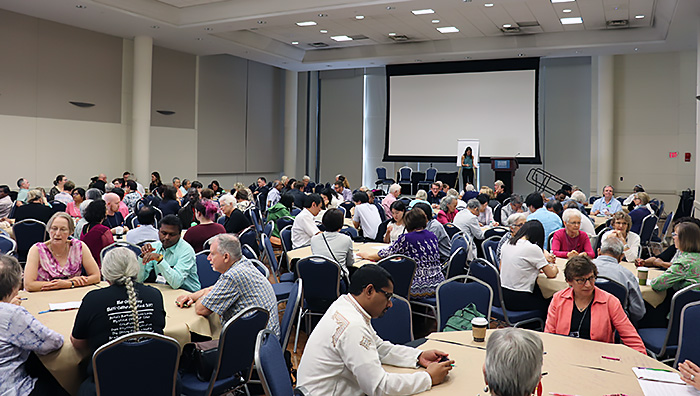
Our 35th Congress, held on 29 July – 1 August at George Washington University in Washington DC (USA), was something we hadn’t tried before. Namely, we chose the format of a collaboration project and were able to gather many wonderful, diverse partners with the support of the host, our member group, the Unitarian Universalist Association.
The Reimagine Interfaith Conference, like every Congress before, incorporated fellowship, learning, sharing, the General Meeting, Chapter and regional meetings, worship and many other wonderful experiences. This time we were honoured to share them with various friends from our partner organizations, which enriched the event in many different ways and allowed everyone to benefit from the enormous networking and skill-building opportunities.
Reimagine Interfaith was organized at our initiative and co-sponsored by such renowned organizations as Religions for Peace USA, United Religions Initiatives USA, United Church of Christ, the Hindu Temple Society of North America, GW Interfaith, Interfaith Youth Core, Fezana and Shoulder to Shoulder, as well as multiple religious communities.
Moving forward
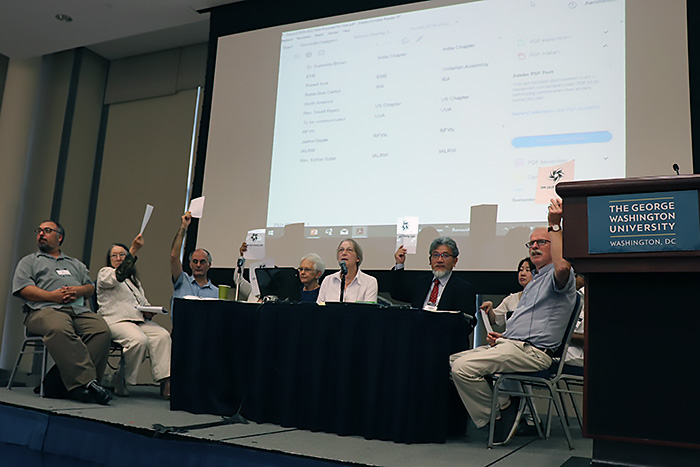
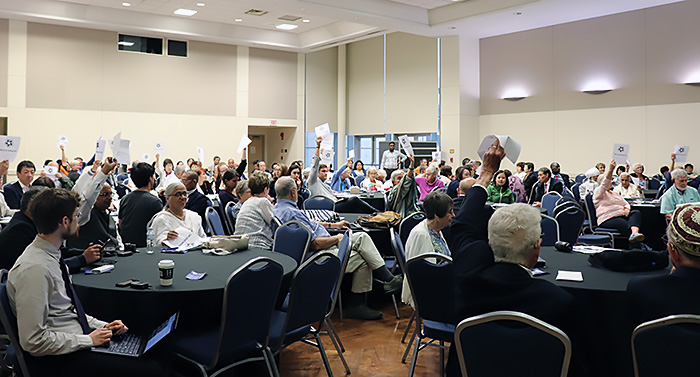
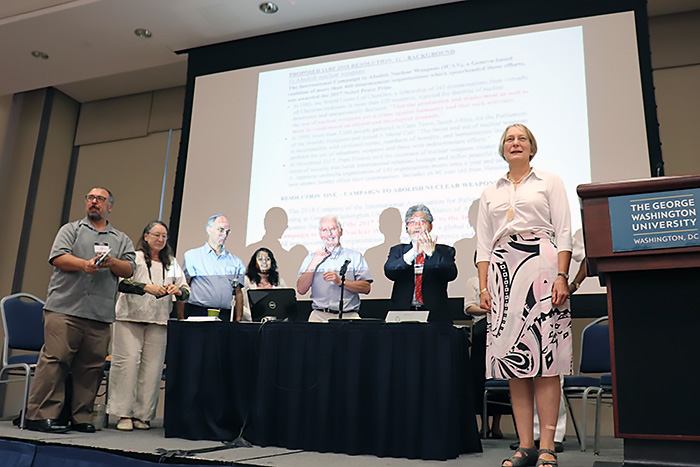
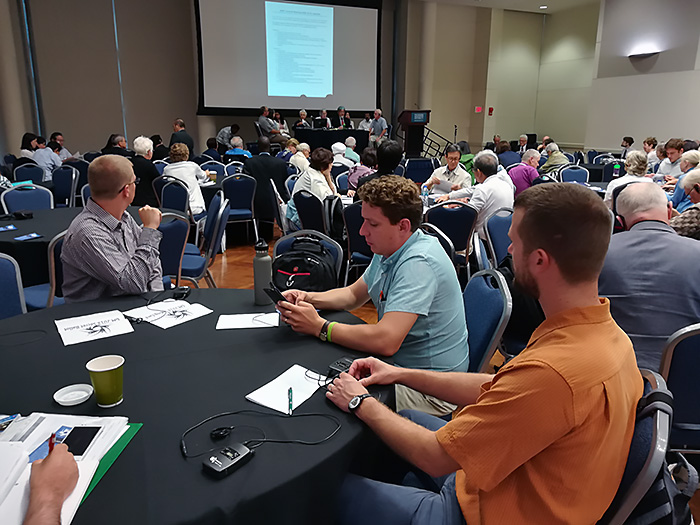
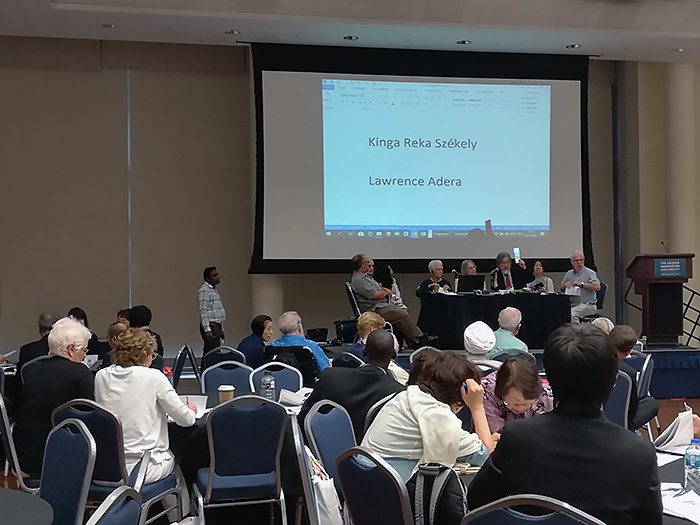
The General Meeting, attended by over a hundred delegates from all over the world, reviewed the performance of the organization and took a number of important decisions that will guide our work in the upcoming four years. Pursuing efficiency and even greater transparency, the association, currently incorporated as a Charitable Company under UK law, will transform into an Incorporated Charity Organisation, a new form of legal personality designed to simplify the way charities operate and help them focus more on their statutory goals by eliminating a number of cumbersome administrative obligations. This will provide an opportunity to redraft our constitution guided by the experience we have gained since the current document was adopted. The process has already began, launched by the outgoing Council, and will lead to calling an extraordinary General Meeting to approve the new constitution as soon as possible. The delegates approved of the work of the outgoing Council, presided by the Rev. Wytske Dijkstra, and elected a new International Council for a four-year term. The following persons were elected:
[table id=11 /]
The Chapters and Regions, as well as our sister organisation, the International Association of Liberal Religious Women, had a their meetings too. It was felt that enthusiasm has not diminished; indeed, it has grown and many new plans were made. The Congress, with its networking, fellowship and brainstorming opportunities with fellow IARF members and our partners, made it apparent that interfaith work is not less needed than a century ago, when IARF was being formed, strengthened our resolve to pursue the cause of liberty, tolerance, peace and justice. A number of interesting initiatives were born, among them a project to create a discussion paper taking out the most pressing issues we are currently confronted with, that will stimulate internal conversation as well as dialogue and cooperation with our partners: to find greater understanding of what is needed and of what new means we can employ to move forward. We will be reporting about the developments as these initiatives bear fruit.
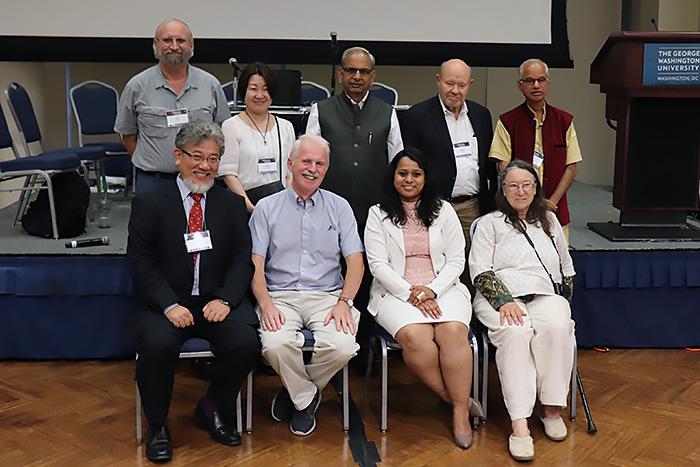

We are happy to have been able to celebrate the achievements of two prominent interfaith activists and support the work of an accomplished and unique interfaith project run by young adults.
The Schweitzer Award
The Franco-German theologian, organist, philosopher, physician, and Nobel Peace Prize winner Albert Schweitzer was a member of our organisation – perhaps the best-known of all. Schweitzer’s passionate quest was to discover a universal ethical philosophy, anchored in a universal reality, and make it directly available to all of humanity. The keynote of Schweitzer’s personal philosophy was the idea of Reverence for Life. Since 1975, we have honoured his contribution by creating the “IARF Albert Schweitzer Award for Distinguished Service to the Cause of Liberal Religion“. The Award is presented at each IARF Congress, currently held at 4-year intervals. Recent recipients include the Dalai Lama and Karen Armstrong.
This year the award went to Sheikh Khaled Bentounès, the Sufi master of the Shadhiliyah-Darquawiya-Alawiya Sufi Tariqat based in France. The Sheikh is the founder and president of AISA (International Sufi Association Alawiyya), a UN-accredited organisation promoting peace efforts, interfaith dialogue and reconciliation, as well as women’s rights. In 2014 AISA launched a global campaign for the UN to establish the “International Day of Living Together in Peace” on 16 May. A petition to the UN was Created by Sheikh Bentounès “to demonstrate to the political authorities our desire for peace”, to which IARF has committed itself in 2015.
The Sheikh is an outspoken and charismatic advocate of freedom, human rights and border-defying relationships based on spirituality and humanism. A remarkable character and a highly charismatic religious leader in his own right, he is a key figure in an international network for promoting interreligious harmony and peace. His views on religion are inclusive and universal. He is equally apt to be at the centre of mystic gatherings as to lead large interfaith manifestations.
By: Mazaré, the Sanctuaries
For Reimagining Interfaith
extraordinary.
you’re here
you’re finally here.
i’ve heard so much about you
the glowing ones
i’ve seen snapshots of your eyes
not just open,
sho ‘nuf awake
like history books
written by the underdogs
eyes not just enlightened,
ablaze.
like a candle turned blow torch
you now see the jewels you have
that others lack
and you see the jewels
being ripped from others’ chests,
feet stepping on necks
backbones yanked out of place
so that upstanding citizens
can’t stand up straight
this enrages you
they say you shouted
at a pack of lions once.
they were circling this gazelle
who was wearing a hijab
wearing a cross
wearing a red dot
they were clawing at her
sneering, poking, prodding
prepping
to pounce
The Greeley Award
In the early seventies, Rev. Dana McLean Greeley served IARF as its president. A prominent Universalist leader throughout his career, he introduced a number of innovations to IARF and widened its scope by introducing several Japanese groups from Shinto and Buddhist traditions as members. The primary goals of the award are to support organizations of young adults, and the communities within which they are engaged, to conduct programs of leadership development, human rights education, and engagement in understanding one another’s beliefs within the context of commitment to religious freedom.
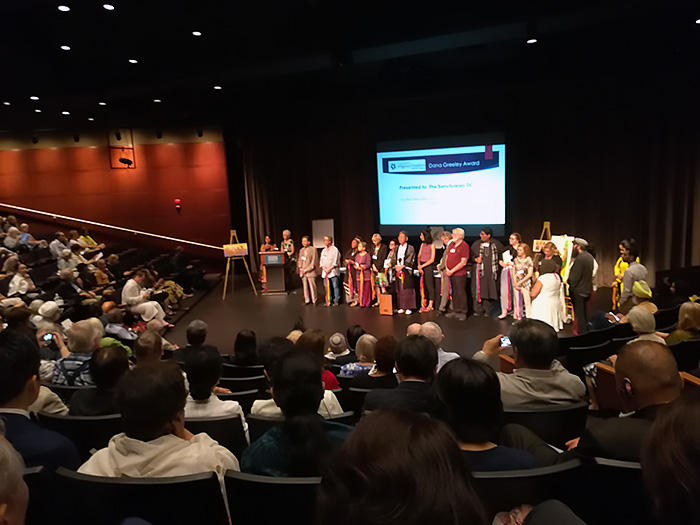
The Award, in the form of a monetary grant, is presented at each IARF Congress to a group of young adults in recognition of their contribution to interfaith work. This year the award went to The Sanctuaries: Interfaith Arts Education. This is how The Sanctuaries explains its mission.
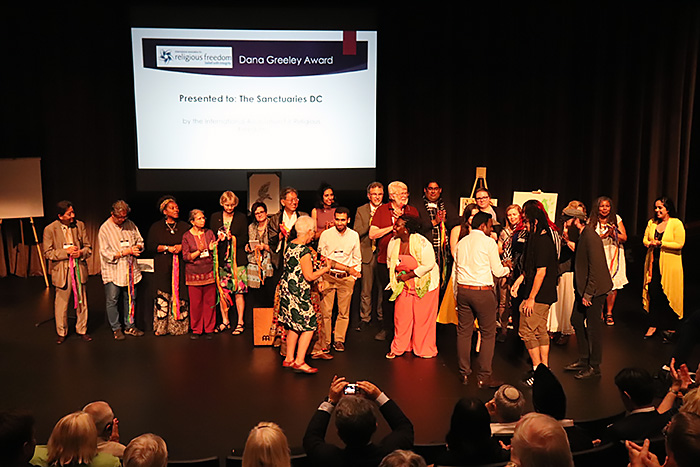 The Sanctuaries is the first interfaith arts community in the United States. We use the arts to transform two of the most divisive global issues of our time – race and religion – into forces for personal growth and social change. We fulfil this mission in two ways. First, through our multicultural community of over 150 artists, we deepen interfaith understanding by hosting regular events, retreats, and multimedia arts showcases. Second, through our Art for Social Impact training program, we educate interfaith artists how to be leaders in their local communities. Participants in this highly selective program gain first-hand experience working on the front lines of grass-roots justice campaigns to address the systems that keep us divided in the first place.
The Distinguished Leadership Award
 The IARF award for Distinguished Leadership in International Liberal Religion, established in 1980, is presented to prominent IARF activists who contributed most to the shape of the organisation and the pursuit of its goals. Former recipients include Shinichiro Imaoka (1981), Dana McLean Greeley (1984) and Diether Gehrmann (1990).
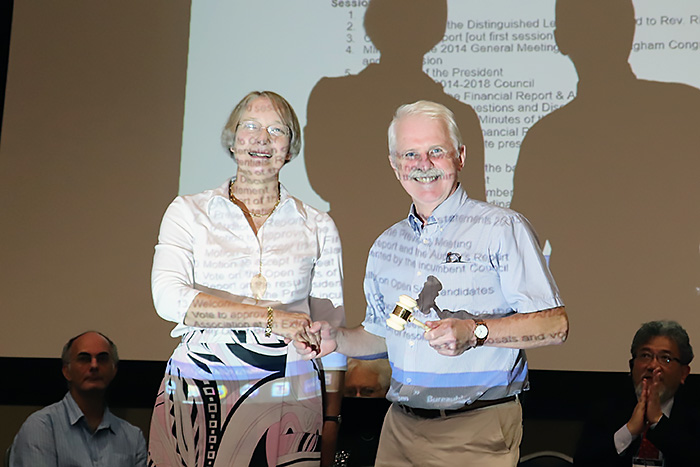
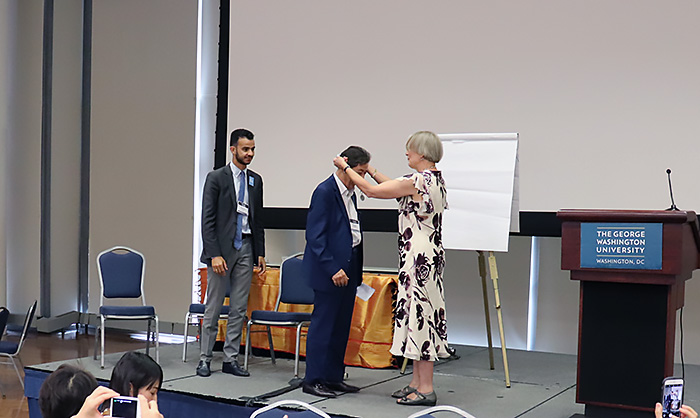
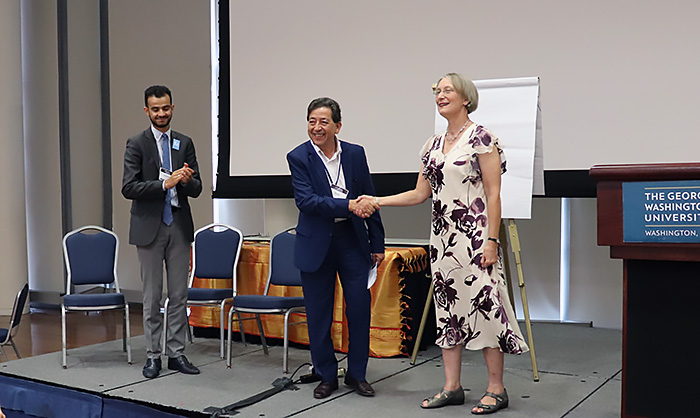
The commemorative plaque and certificate will be presented to Rev. Richard Boeke. Throughout several decades of his involvement in IARF Rev. Boeke has been active on both the international and national (Chapter) level, in England and the United States, working to promote peace and understanding between religions and cultures. His work and writings speak of the urgency of religious and cultural dialogue, especially among groups that appear radically disparate. He is unceasingly working to facilitate dialogue with well-regarded leaders, activists, and scholars of many faiths, as well as at the grassroots level.
Accounts from the Congress
It was pleasant time to interfaith meeting which I learnt and shared a lot across the world. The receptions were welcoming, both of the conference and dormitory. Accommodation, food and refreshments all were exquisite. Programs, presenters, spiritual focus and group meetings we fanatic. Speeches were charming across the board, from the president to all the council who spoken. The elections were conducted fairly and new council were welcoming and ready to work.
A selection of the most important things I have gained and experienced:
– I celebrated other faith belief without losing mine.
– Partner with others who do not look like me.
– Plant the seed of my faith to other faith groups
– My faith was not compromised directly
In conclusion, the Reimagining Interfaith Conference brought interfaith communities into better alignment with social equity and social justice that are concern without any community faith being converted. Internationally, we got to know people and learnt to break barriers internally and externally from all the interfaith fraternity. Generally, Reimaging Interfaith Conference was international condition building across the identity.
This Reimagining Interfaith/IARF 35th World Congress was a new experience for me. Therefore, I was very nervous if they would accept me, as I do not have a religion. Although I have participated in many meetings and conferences before, they were never ones focused on religion, so negative things crossed through my mind. However, I was told that Japan has customs that make religion feel familiar even if someone does not have experience with a particular religion. I thought I understood that but I realized I actually didn’t. That is probably because I hadn’t faced religion and also hadn’t felt how important having a religion is, but I experienced the importance of having a religion and the inner warmth of human through this RI/IARF conference.
In this program, there were several opportunities to discuss in a group named “circle group”. Most of them were meeting for the first time and English, which is not my first language because I’m from Japan, made me concerned with how I should behave and if they would accept me. Especially since I am not a native English speaker, my fears of being misunderstood when speaking English always cross my mind. Although it is a linguistic problem, it is internalized and appear as features of ourselves. The linguistic issue weakens myself and it comes to the forefront. Those things made me even more nervous in the circle group.
Furthermore, speaking with a lot of strangers made me even more concerned with how I should behave and if I really could explain the way I feel ; hence, I decided to not expose myself much. Also, because the theme was religion, I found it hard to be open-minded as I do not belong to any religion and do not have knowledge about it.
In the circle group, I was just listening to the others and didn’t give any opinion. Because of this, the others in the group probably thought I was a cranky person even though I thought I was being cheerful as I ordinarily am, which I believed to relieve myself. However, I gradually realized that was wrong. I alienated myself by keeping my emotions in check. Because of this, when they said to me “Eri, would you like to talk about yourself?” , I kept refusing it but gradually, I realized how I was alienating myself. Eventually I cried as I realized my true nature, but the members of circle group listened to me carefully and accepted me the way I am. They told me about their views of religion and told me “ It’s okay, no worries” when I talked to them about why I was anxious. I think that warmth and kindness connect people beyond any religion. It is certainly an important part of religion to build their personality. I experienced the view of religions and learned to help and support each other.
Until now, I have not belonged to a religion and had an inferiority complex when I was among people with religion. Even though I do not have a religion, I believe in a god or buddha somewhere in my mind, and now I know everyone accepted who I am, which made me more confident. Furthermore, I thought I perhaps have a hybrid view of religion. Because I do not have religion, I strongly wanted to change my views of religion so that I could build
various teachings of my own.
I do not belong to a religion, but it reflects on myself or my views of religion by
learning various religions. I hope that I would like to continue learning to express myself with confidence in the future.
Impressions from the Congress

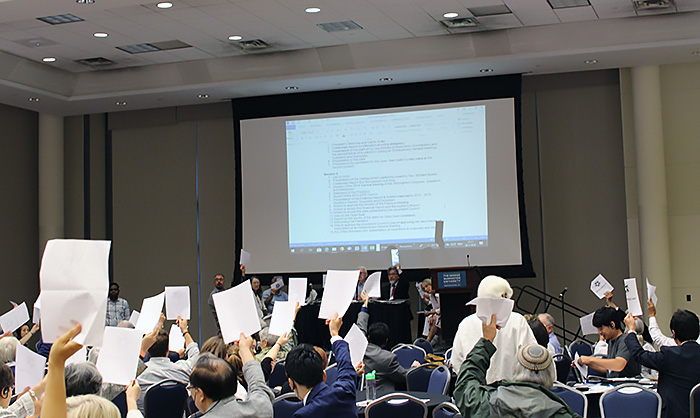

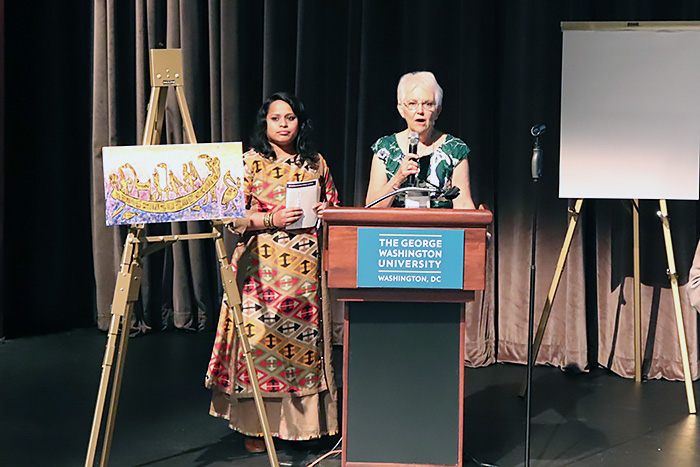
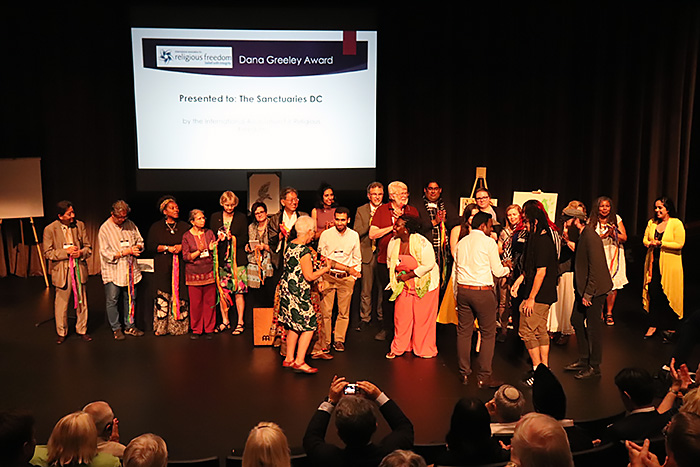
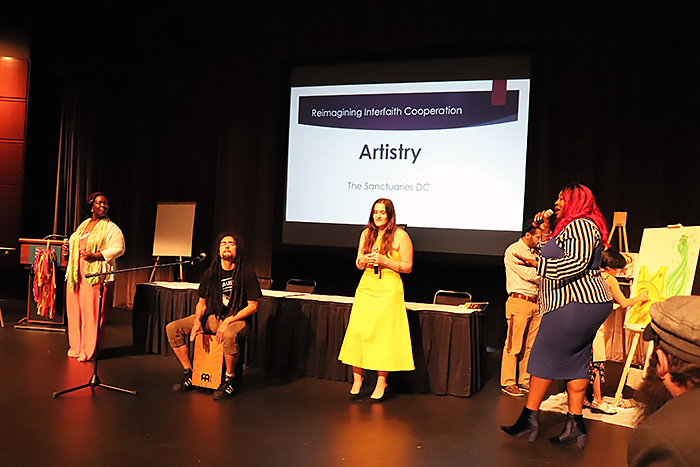
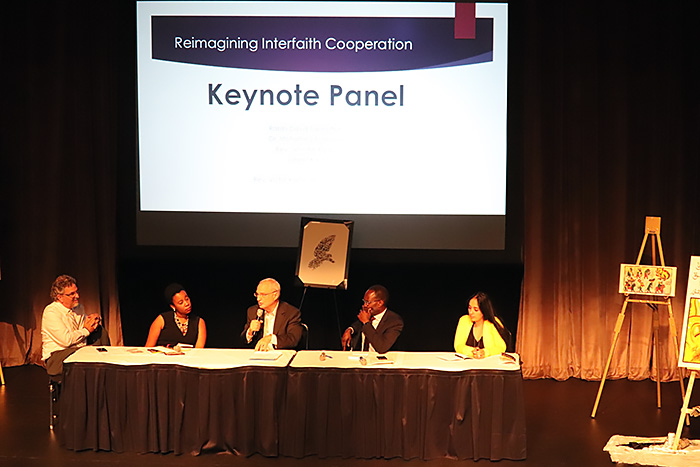
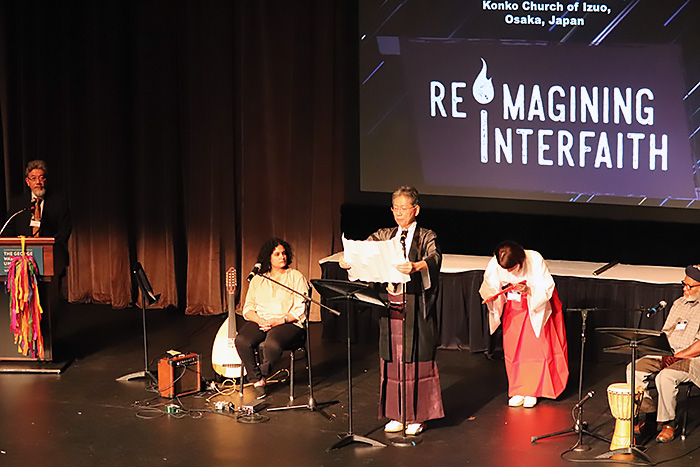
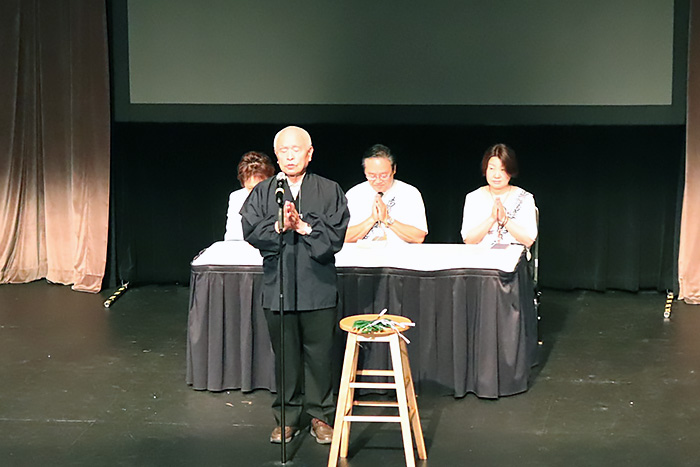
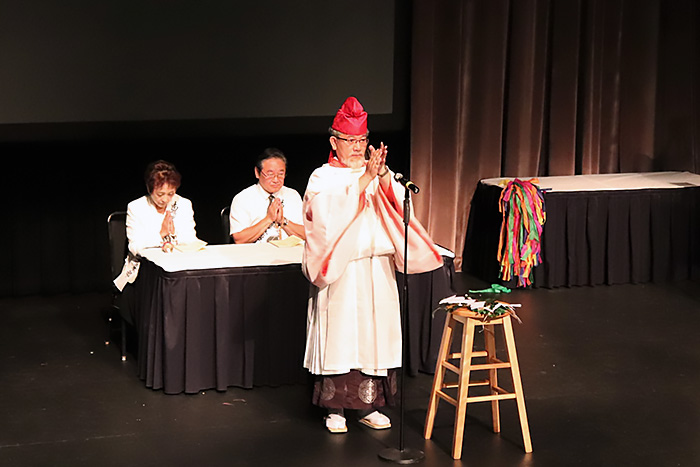

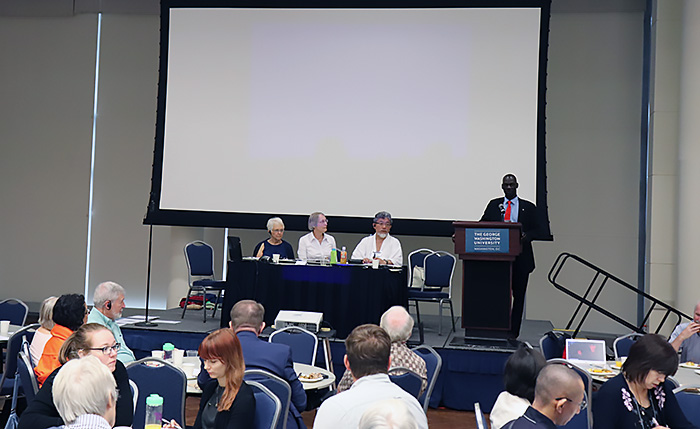


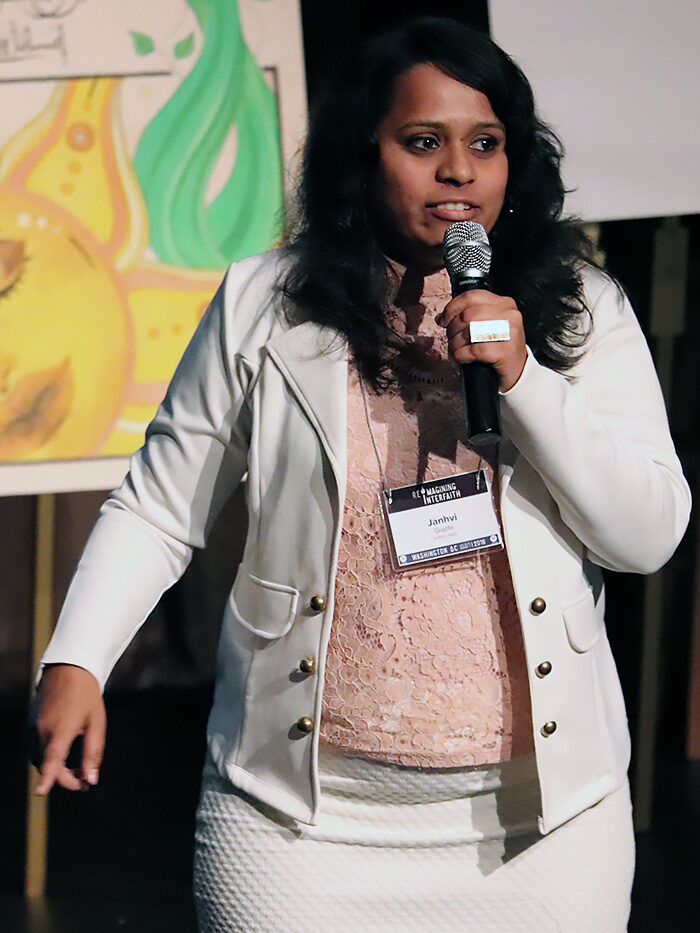





Winner of the Dana McLean Greeley Award for young adult interfaith work
After carefully considering the 12 applications we received this year, each well-prepared and outlining a valuable project we would love to support, the Greeley Award Committee, tasked with this difficult duty, decided to award the project submitted by The Sanctuaries: Interfaith Arts Education.
This is how The Sanctuaries elaborate on their mission to ignite the sacred power of the arts for social change:
The Sanctuaries is the first interfaith arts community in the United States. Founded in Washington, DC, by a group of twenty young adults in 2013, we use the arts to transform two of the most divisive global issues of our time – race and religion – into forces for personal growth and social change. We fulfil this mission in two ways. First, through our multicultural community of over 150 artists, we deepen interfaith understanding by hosting regular events, retreats, and multimedia arts showcases. These programs are often the only structured opportunities in the city for young adults of different religious backgrounds to build lasting relationships of mutual care and support. Second, through our Art for Social Impact training program, we educate interfaith artists how to be leaders in their local communities. Participants in this highly selective program gain first-hand experience working on the front lines of grass-roots justice campaigns to address the systems that keep us divided in the first place.
What distinguishes our approach:
– It centers young adults. Too often, programs are created for young people, not by them. This project positions young adults as valuable teachers of this work for audiences of all ages. In the process, it builds trust and understanding across lines of social and generational division.
– It builds collective capacity. Too often, programs perpetuate dependency on an outside expert. This project equips teachers to share frameworks and skills that enable communities to move this work forward on their own. In the process, it builds long-term capacity, not clients.
– It scales by invitation. Too often, programs grow for numbers rather than for needs. This project relies on individuals and communities inviting teachers into their context to advance this work. In the process, it builds a replicable and respectful model of collaboration. As Dana McLean Greeley once exhorted: “Let us find something worthwhile to love, and something worthwhile to do, and give ourselves away, and we shall find ourselves again.” At the heart of our approach is this spirit of embodiment. This work is something that’s not just done, but lived.
You can learn more about the project and the organization on its website, thesanctuaries.org, and its Facebook page, www.facebook.com/SanctuariesDC/
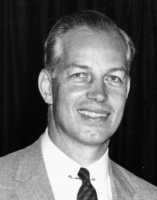
The Background of the Dana McLean Greeley Award
In 1969, Rev. Greeley [was] a pivotal force in giving the International Association for Religious Freedom (IARF) the name it still carries, and new, committed leadership from both Shinto and Buddhist traditions in Japan. He loved IARF’s heritage, and boldly moved it into its future. The Award was created by the IARF to respond to the intention of the Dana McLean Greeley Foundation for Peace and Justice to honor Rev. Greeley’s memory and life achievements for peace through the gift of a $50,000 endowment to the IARF, announced at a service and celebration held in Concord, MA, on November 5, 2006.
The Founding Purpose: The historical Mission of the Award has been to celebrate the achievements of young adults within a religious and/or interfaith community with a strong commitment to human rights, justice, and peace. The award supports an ongoing or new project of a group, featuring the collaborative engagement of young adults with their community, providing the group with material support. In turn, the group is committed to work with young adults, to develop leaders within the next generation, and to expand understanding of human rights, justice, and interfaith dialog within the context of religious freedom.
Goals of the Award: The primary goals of the award are to support organizations of young adults, and the communities within which they are engaged, to conduct programs of leadership development, human rights education, and engagement in understanding one another’s beliefs within the context of commitment to religious freedom.
The Award (or awards) will be presented at each IARF Congress, currently held at 4-year intervals. They will be celebrated and promoted at a special ceremony, and through publicity within and beyond the IARF.
Registration and call for programme suggestions for the 35th Congress open: early registration discounts!
Registration is now open for the Conference “Reimagining Interfaith Cooperation”, which will be held on 29 July – 1 August 2018 in Washington DC and incorporate the 35th World Congress of the IARF. Please fill in this form to register. You will benefit from early registration: there is a significant discount for those who register before 15 December! Should you experience any difficulties, contact our Administrator at luke[at]iarf.net. Below, as well as on the registration form, you will find more details concerning registration rates and our cancellation and refund policy:
Early Registration Deadline: 
Early General Registration is $295. Rate increases to $365 on 31 January. Rate increases to $400 on April 1.
Registration Closes:
Monday, June 25
Cancellation and Refund Policy
Cancellation before December 31, 2017: 75% Refund
Cancellation before March 31, 2018: 50% Refund
Cancellation after March 31, 2018: 25% Refund
There will be no refunds after June 25th.
Programme Tracks (more about these here) will be curated by a team of people with passion and expertise in each subject area. The teams are open to your ideas and suggestions for presentations, trainings and other skill-building events to take place within the program track they are developing. All program suggestions should be submitted by January 15, 2018 to the co-chairs of the Program Committee: Sari Heidenreich (sari[at]uri.org) and Megan Weiss (maweiss[at]csbsju.edu).
Congress 2018: programme outline, venue and accommodation
[include-page id=”8613″]
Save the Date: The 35th World Congress: August 2018, Washington DC
We are pleased to announce the Interfaith Conference that will incorporate the 35th World Congress of the IARF: Reimagining Interfaith Cooperation.
The Conference, to be held on 29 July – 1 August 2018 in Washington DC, USA, is a joint project of the IARF, the Unitarian Universalist Association, our member group, and our partners: the United Religions Initiative, the United Church of Christ and Religions for Peace. We’re very excited to be working with so many fantastic partners and hope to meet you all in Washington next year.
The venue of the Conference, one of local Universities, will be announced in October, which is also when registration will open. The registration fee is 325 USD per person and 100 USD for young adults (under 35), and includes meals as well as local transportation and conference kit. Updates, including names of speakers, detailed programme and helpful practical information, will be posted on the Conference’s website, www.reimagineinterfaith.org, as well as on our website – both will be regularly updated. You can pre-register to receive notifications here or follow us on Facebook for the latest news.
You may read more about our Congresses here.
Please contact IARF Administrator with any questions at luke[at]iarf.net.

2017 International Council Meeting
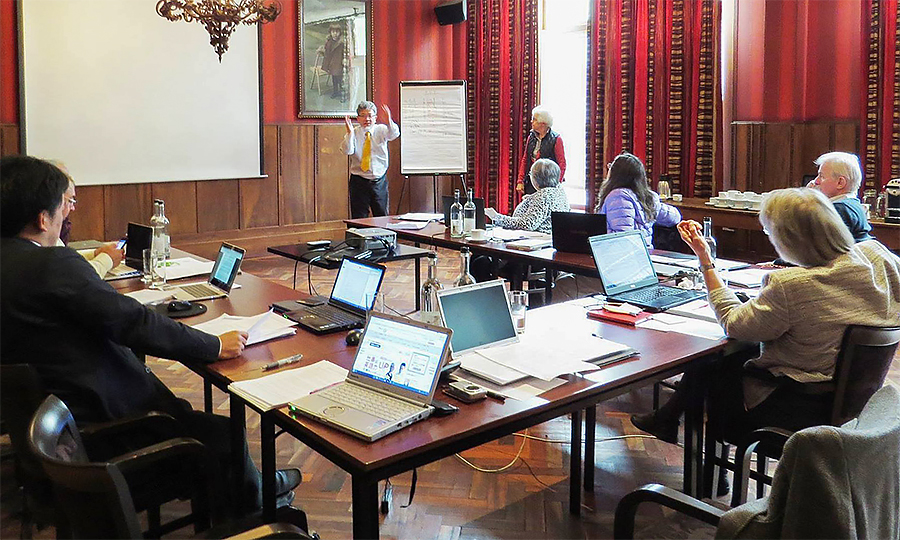
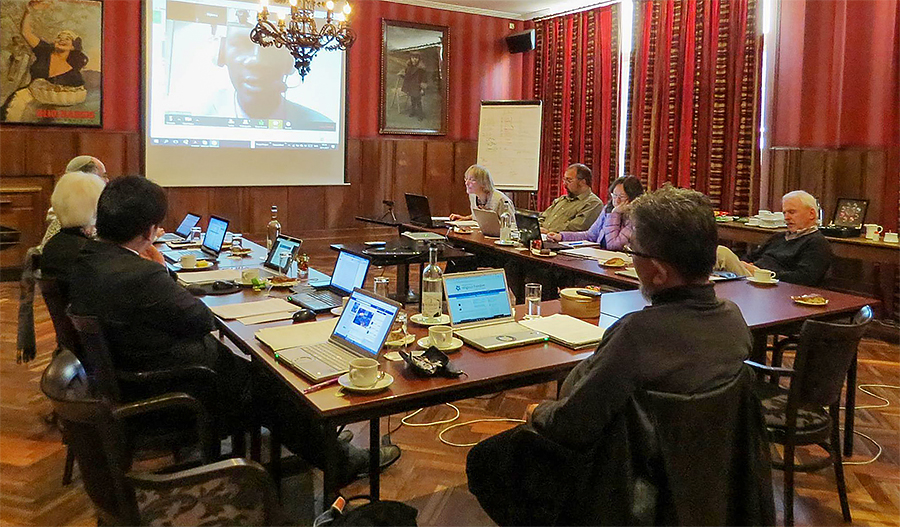
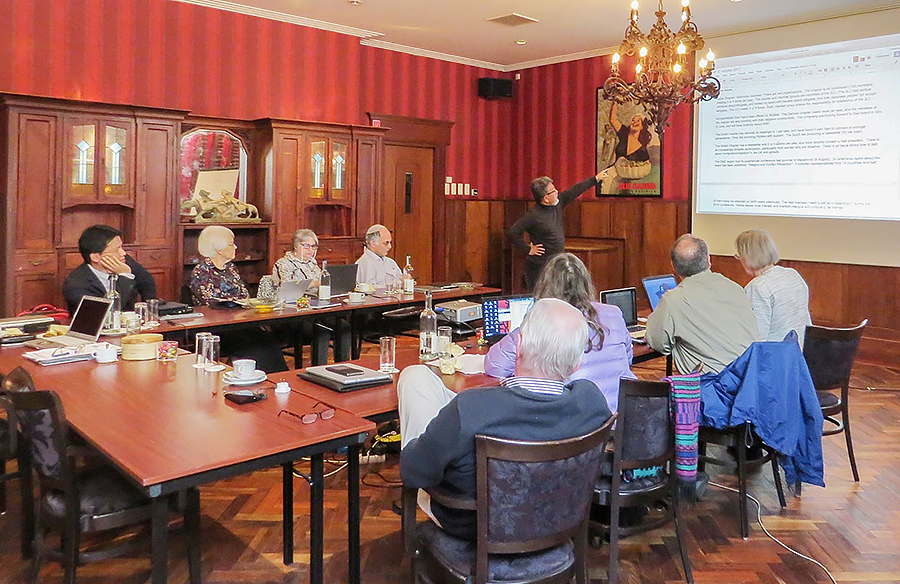
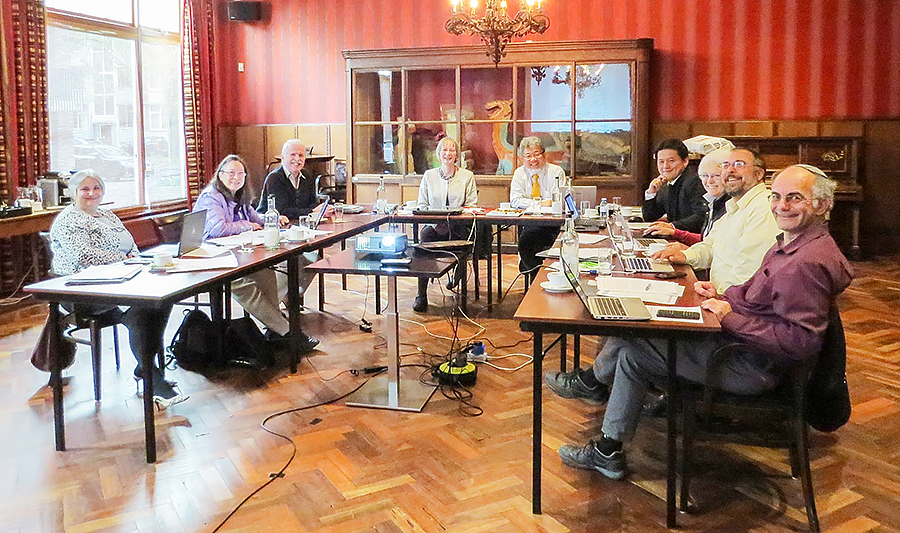
The International Council* of the IARF had its annual meeting on 19-20 April in IJmuiden, the Netherlands. It was an occasion to share experiences, concerns, ideas and moments of meditation, and savour the atmosphere of diversity, friendship and cooperation that characterizes IARF. This time several people joined the session by teleconference to make the meeting as productive as possible. Lawrence Adera, Secretary of the Kenya Chapter, talked about the challenges facing the chapter and the hopes he has for the future, while the RFYN (youth) council member from India joined the meeting this way as she was unable to attend personally.
The Council reviewed last year’s work and evaluated our progress in key areas. Special emphasis was put on plans to increase our impact and efficiency. In order to facilitate this the Council worked on improving the financial prospects, updating the statutes to remove inefficiencies in the way IARF operates and better serve the current needs of the organization, as well as on expanding our activities by reaching out to new partners. The progress of various projects we fund and organize has been examined and new grants awarded to support the efforts of our member organizations and partners to further our goals: human rights education, facilitation of interreligious dialogue and collaboration, promotion of liberal religiosity and interfaith work.
A topic of special importance was of course the upcoming World Congress, which will take the form of a broader interfaith conference and will be held at the end of July/beginning of August 2018 in Washington D.C., USA. The Congress is being organized by our member group, the Unitarian Universalist Association, the US Chapter and the co-sponsors, the United Religious Initiative and Religions for Peace USA. It will be the sixth Congress in the United States (the last one was held in 1987 in Stanford, CA; see list of past Congresses here or read about our history here).
The Council reviewed the progress of preparations, which are being directed by the Host Committee presided by the council member from the United States, Eric Cherry, and members of our US Chapter, and made decisions that will enable us to publicly announce details of the Congress very shortly. As soon as the last details are agreed upon, most likely within a month, you will find extensive information on it on this website, our social media and in many other places. The Congress is shaping up to be a wonderful, inspiring event that will once again bring together the IARF community to worship, share, learn, train and take pleasure in each other’s presence. We’re looking forward to it with anticipation and a lot of enthusiasm for the work that must be done to make it a memorable occasion.
* The Council is our governing body elected at quadrennial World Congresses and currently comprising 11 members from all over the world: America, Europe, East and South Asia, and representing Judaism, Christianity, Islam, Hinduism, Shinto, Buddhist, and other religions, and thereby reflecting our commitment to diversity (read more on the Governance page).
EME Conference 2017
[include-page id=”7964″]