
Faith Must Be a Liberating Force: IARF Statement on the Berlin CSD Attack
Berliners gathered in mourning on Sunday, 26 July, following the previous evening’s attack near the city’s Christopher Street Day celebrations. One woman was killed and many others were injured. Germany’s federal prosecutor has taken over the investigation on suspicion of an Islamist motive; the full circumstances remain under investigation.
On Sunday, an interfaith memorial service was held at St Mary’s Church on Alexanderplatz, followed by a silent march to the Brandenburg Gate. Seyran Ateş and Tugay Saraç led the Islamic contribution on behalf of the Ibn Rushd-Goethe Mosque. In the mosque’s invitation, Ateş wrote:
As the Ibn Rushd-Goethe Mosque, we do not merely stand alongside the queer community — we are part of that community.
Seyran Ateş
Reflecting on Qur’an 5:32 — “Whoever kills a person, it is as though they had killed all humanity” — Ateş added:
God does not make a person’s worth dependent on their religion, origin, or sexual orientation. Every person is a creation of God. Every person possesses equal dignity. And every human life is sacred.
Seyran Ateş
IARF is deeply saddened by this tragedy, which took a human life, brought injury and suffering to many more, and deepened fear among people already vulnerable to hostility. We condemn this act of violence without reservation. We mourn the woman who was killed and stand with those who were injured, their loved ones, our members and friends in Berlin and across Germany, and all those who now feel threatened.
Difference should never be treated as a threat or become a cause of fear and hatred. Religious extremism must be named and confronted. But this attack must not be cynically used as a pretext to demonise an entire group, whether ethnic or religious. Collective guilt is both false and dangerous.
For more than 125 years, IARF has brought together people who affirm the intrinsic value of every human being and each person’s right to self-determination and unconstrained intellectual and spiritual growth, within a culture of mutual respect. Together with our members, partners and countless people of goodwill, we strive for a world in which individuals can live out their truth while according that same right to others.
Such a world can be achieved only through honest dialogue, real and effective measures to protect vulnerable groups, and actions that give expression to our experience of faith as a liberating and reconciling force — in our communities, across regions and countries, and globally, in every sphere of social life.
The mosque’s invitation concluded with words that also express the spirit in which IARF offers this statement:
Love is halal. Hatred is never permitted.
Ibn Rushd-Goethe Mosque
Please Sign the Petition for Yezidis in the Netherlands
In recent months, IARF has supported young Yezidis in the Netherlands in their efforts to oppose a recent change in Dutch asylum policy, under which it is now deemed safe for Yezidis and followers of some other minority religions to return to Iraq and resume their previous lives, whereas international organisations and experts say the opposite.
For members and readers resident in the Netherlands
Please read, sign and share the petition below, and show your moral support for the young Yezidis.
When Wealth Fences in the Sacred
On 5 March, the International Association for Religious Freedom (IARF) addressed the UN Human Rights Council to highlight a structural failure in many jurisdictions where private property and quiet enjoyment rights are not balanced against the rights of indigenous communities to practice their faith and honor their deceased.
The situation is starkly illustrated by the Kāneʻākī Heiau in Hawaiʻi—a 600-year-old Native Hawaiian temple currently enclosed within a private residential development. Among those affected is Prof. George Williams, a past President of the IARF who was adopted into the Kanenuiakea faith. We share his complete submission below.
When Wealth Fences in the Sacred
On a steep hillside on Oʻahu, overlooking the Waianae coast, a small but growing controversy is drawing international attention from advocates of religious freedom.
Within a gated luxury development lies an ancient Native Hawaiian healing Heiau—a temple site traditionally associated with medicine and spiritual restoration—along with ancestral burial grounds protected under state preservation laws.


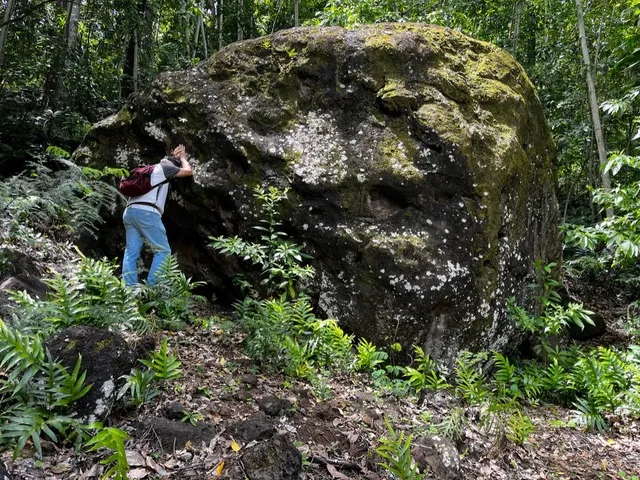


Community members and religious freedom advocates say access to the sacred site has been effectively restricted by the homeowners’ association (HOA) that now controls the surrounding land.
The dispute began years ago when the rocky hillside was developed into a high-end residential enclave. Legal agreements transferring community land to HOA control included provisions requiring maintenance of the Heiau and continued public access.
But as property values rose, the HOA tightened security. While Wai’anae is cited as having one of the lowest median household incomes in all of Hawai’i — and the highest Native Hawaiian population in the world, the gated neighborhood of 46 households enclosing Kaneʻaki Heiau, has the highest income in Hawai’i according to census data.
And after its gate was installed, visitors could be turned away. Some Native “practitioners” (a term used to avoid ridicule) say they were warned they could face arrest for trespassing if they attempted to reach the Heiau for prayer or ceremony.
For many Indigenous Hawaiians, sacred space is inseparable from the land itself. Unlike traditions centered inside religious buildings, Native Hawaiian spirituality takes place in natural settings—mountains, shorelines, burial grounds, and temple platforms built of stone.
“When access is blocked, worship is blocked,” said one advocate involved in the dispute. And at Kaneʻaki Heiau, even if access were to be allowed, it had to be supervised by the HOA!
The conflict has now drawn the attention of the International Association for Religious Freedom (IARF), one of the world’s oldest interfaith organizations. Leaders within the association have approved filing an Amicus Curiae brief stressing U.S. Constitutional and International guarantees of freedom to worship.
IARF has historically defended minority faith communities around the world. Supporters say this case reflects a pattern in American history in which Indigenous religions have been marginalized or dismissed.
Native spiritual practices were criminalized in parts of the United States until the late 19th and early 20th centuries. Although federal laws now recognize Indigenous religious rights, enforcement often depends on local conditions and legal interpretation.
“This isn’t only about one Hawaiian hillside,” said an interfaith leader familiar with the matter. “It’s about whether religious freedom includes traditions rooted in land and nature rather than inside of churches, mosques, or synagogues.”
Interestingly, the legal challenge has been propelled in part by a successful couple who purchased a home with the right of access through the HOA’s gate. But soon they faced harassment on what seems racial and social grounds. They refused to leave. Instead, they pressed for enforcement of the original access obligations. They were joined by Indigenous Hawaiians and those who were denied access to worship or visit their healing shrine or ancestors’ graves.
Observers say the case could set an important precedent for how homeowners’ associations interact with sacred and archaeological sites nationwide. At its heart, the dispute raises profound legal questions: Does ownership of surrounding land allow a private association or corporation to restrict access to a sacred site protected by law? Can communal burial grounds be effectively privatized by encirclement? Do property rights supersede the cultural and religious rights of Indigenous peoples whose sacred spaces do not resemble conventional religious buildings?
For interfaith groups, the answer carries broader implications. Religious freedom, they argue, must apply not only to majority traditions with visible institutions, but also to Indigenous communities whose sanctuaries are woven from the earth itself.
In Hawaiʻi, where land is more than property and history more than a footnote, this small hillside may become a symbol of something much larger—the effort to reconcile property and religious rights, ownership with reverence.
Please consider signing a petition in support of religious freedom.
Protecting Ancestral Heritage: IARF Addresses the UN on Indigenous Burial Rights on Private Land
March 5, 2026 — During the ongoing session of the UN Human Rights Council, the International Association for Religious Freedom (IARF) took the floor to address a critical but often overlooked intersection of human rights: the right of Indigenous Peoples to access and care for their ancestral burial sites when those sites are located on privately owned land.
The statement was delivered during the Interactive Dialogue with Dr. Nazila Ghanea, the UN Special Rapporteur on Freedom of Religion or Belief, responding to her latest report on how freedom of religion or belief relates to death and honouring the deceased.
Watch the Oral Statement
The Regulatory Gap: Private Property vs. Sacred Duties
While many States have established protections for sacred and burial sites, these frameworks frequently suffer from a significant blind spot. Protections are often conditioned on government action or apply strictly to publicly managed lands.
When ancestral lands and burial sites fall into private hands or under private residential governance, Indigenous communities are frequently severed from their heritage. Without national frameworks extending to private property, communities are left without legal recourse to fulfill their religious and cultural duties to their ancestors.
Grounding the Issue: Kāneʻākī Heiau in Hawaiʻi
To illustrate the profound impact of this regulatory gap, IARF highlighted the situation at the Kāneʻākī Heiau site in Mākaha, Hawaiʻi. Here, Native Hawaiian practitioners face immense barriers—enforced by private residential governance—when seeking to access and care for their iwi kūpuna (ancestral remains).
This is not an isolated incident. The full scale of this problem remains largely undocumented globally, leaving many Indigenous communities silently cut off from their most sacred sites.
IARF’s Call to Action
In our statement to the Human Rights Council, the IARF urged States to take the following crucial steps:
- Conduct Systematic Assessments: States must actively document sacred and burial sites affected by private land governance.
- Develop Effective Frameworks: We need concrete legislative and policy solutions that balance private property rights with the fundamental human right to manifest religion and care for the deceased.
We look forward to continuing this vital conversation with the Special Rapporteur and UN Member States to ensure that honoring the deceased is a right guaranteed to all, regardless of modern property lines.
Full Transcript of the Oral Statement
Interactive Dialogue with the Special Rapporteur on Freedom of Religion or Belief 3 March 2026
“Mr. President,
The International Association for Religious Freedom welcomes Special Rapporteur Ghanea’s report on freedom of religion and honouring the deceased. We particularly appreciate paragraph four, which highlights the barriers Indigenous Peoples face in accessing burial lands to honour their ancestors.
In many States, protections for burial sites are conditioned on government action or apply only to publicly managed lands. This leaves a significant regulatory gap when such sites fall within privately owned or governed land. Without national frameworks extending to these contexts, private property mechanisms can effectively sever Indigenous communities from their ancestral heritage.
As an illustrative example, at the Kāneʻākī Heiau site in Hawaiʻi, Native Hawaiian practitioners face profound barriers—enforced by private residential governance—when seeking to access and care for their iwi kūpuna, their ancestral remains.
We note that the full scale of this problem remains largely undocumented, and we encourage States to undertake systematic assessments of sacred and burial sites affected by private land governance, as a necessary first step toward effective frameworks that balance property rights with the fundamental right to manifest religion and care for the deceased.
Special Rapporteur, what concrete legislative or policy best practices have proven effective in enabling States to reconcile private land governance with the protection of Indigenous Peoples’ rights to access and care for sacred and burial sites?
Thank you.”
Further Reading:
- Read the Special Rapporteur’s full report (A/HRC/61/50)
Update from the US Chapter: Concerns Raised Over New “Religious Liberty Commission”
Our colleagues in the United States have shared a significant update regarding the current climate of religious freedom in their region. In a recent communication to members, the US Chapter raised serious concerns regarding the Administration’s establishment of a “Religious Liberty Commission” within the Department of Justice.
US Chapter President George Garland has alerted members to what the Board views as a troubling development, noting that the new commission appears to prioritize specific conservative religious interests in a way that conflicts with federal law. The Chapter stresses the importance of maintaining a clear separation of church and state to protect the rights of all faith communities.
In response, the IARF-US President and Board have formally endorsed a lawsuit filed by the Interfaith Alliance and a diverse coalition of partners, including Muslims For Progressive Values and Hindus For Human Rights. The legal challenge asserts that the commission was unlawfully constituted and seeks to ensure transparency regarding its recommendations.
The US Chapter is currently encouraging its members to contact their representatives in Congress to address the matter.
For the full statement from President Garland and further details on the coalition’s legal action, please visit the US Chapter website.
Read the full update at iarfus.org
Sit-in Demonstration by Yezidis in The Hague Because of Recent Dutch Policy Change
Young Yezidis are holding a sit-in demonstration this month in front of The Hague Central train station to express their concerns about a recent change in Dutch policy. Under this new policy, the government now considers it generally safe for Yezidis and other religious minority groups to return to Iraq—either to the city of Sinjar and its surroundings, or to camps in the Kurdish Autonomous Region. As a result of this change, many requests for asylum by Yezidis have been rejected in the past 1.5 years.
Yezidis believe that since the genocide of 2014, they cannot safely live in Iraq due to continuing discrimination, hate speech from other groups, a lack of law and order, and widespread impunity. Recent developments in Iraq and Syria have only increased these concerns.
In Germany, Yezidis face similar problems. Please support the Yezidis by writing to your Member of Parliament, donating to Yezidi organizations, or encouraging them by passing by their sit-in demonstration in The Hague. IARF supports the Yezidis in the Netherlands.
Interfaith Statement Supporting Trans, Intersex and Nonbinary People
On the International Transgender Day of Remembrance, the International Association for Religious Freedom welcomes the statement on the rights of Trans, Intersex and Nonbinary People issued by the Unitarian Universalist Association, our member group, in coalition with several faith groups, including the United Church of Christ, the Episcopal Church and other Christian denominations, Union for Reform Judaism and other Jewish organisations, and others.
As an organisation uniting free and liberal religious communities and individuals, we advocate religious freedom as first and foremost freedom within religion, a freedom to live one’s life creatively and without coercion in a shared experience of the divine and a shared pursuit of justice. We acknowledge the value of the prophetic voice of progressive religion and humanistic philosophy as many still suffer discrimination, alienation, vilification and ridicule, and, in many parts of the world, may lose their freedom or even their lives for failing to conform to social norms, even though they inflict no harm on others.
Regrettably, religion often plays a role in providing justification for condemning and persecuting them, and inflicts great spiritual suffering by proclaiming their identity, their experience and expression of humanity as sinful and abominable in the eyes of the divine. This makes voices like these, where people of faith come together to speak both to society at large and to those often excluded by religion, not mere statements, but acts that have the power to change lives. By offering a different perspective and testifying to the healing, transformative power of faith, we can make a difference, just as we strive to do so in the daily lives of our communities.
Stand in Solidarity for Rights of Aboriginals and Torrest Strait Islanders to Demonstrate and Worship
As reported by media like The Guardian, on August 31 a group of neo-Nazis and others stormed Camp Sovereignty, a First Nations protest site and historic Aboriginal burial ground in central Melbourne. Attackers reportedly desecrated an ancestral fire, tore down flags and physically assaulted women attending a peaceful ceremony.
The site stands as a symbol of the ongoing Indigenous resistance in Australia and the fight for recognition of Sovereignty and land rights.
The neo-Nazi attack on the sacred site can be considered a clear act of racism and a denial of freedom of religion. We encourage our members and others to support the call from Indigenous leaders for this to be investigated as a hate crime and to demand justice and protection for sacred sites.
You can do so by signing the petition from the global advocacy organization Avaaz to the Commissioner of Australia’s Federal Police and others:
Avaaz – Stop the Neo-Nazi Violence
IARF Is Shocked by Lack of Respect Towards Indigenous Group in Brazil and Peru
The British newspaper The Guardian reported on Sunday, 27 July about efforts of missionaries to contact the isolated Korubu indigenous group in the border area of Brazil and Peru. The goal of these efforts was reportedly to convert the community to Christianity. The newspaper writes that the missionaries and organisations engaged in illegal activities, since Brazilian law does not permit proselytising in Korubu territory and stipulates that isolated groups must initiate any contact.
IARF is shocked by the story in the Guardian and maintains that all communities, and especially isolated indigenous groups, must have their beliefs, traditions, and autonomy respected. This principle has been laid down in several treaties and declarations of the UN. Forcing contact with unknown technologies, like described in the article in the Guardian, is both immoral and against the letter and spirit of the UN treaties. It can be considered as a modern form of colonialism which destroys rich local cultures and identities, and can inflict lasting harm.
IARF urges the organisations involved to cease these activities immediately and insists that individuals and organisations responsible be held accountable.