
On 5 March, the International Association for Religious Freedom (IARF) addressed the UN Human Rights Council to highlight a structural failure in many jurisdictions where private property and quiet enjoyment rights are not balanced against the rights of indigenous communities to practice their faith and honor their deceased.
The situation is starkly illustrated by the Kāneʻākī Heiau in Hawaiʻi—a 600-year-old Native Hawaiian temple currently enclosed within a private residential development. Among those affected is Prof. George Williams, a past President of the IARF who was adopted into the Kanenuiakea faith. We share his complete submission below.
When Wealth Fences in the Sacred
On a steep hillside on Oʻahu, overlooking the Waianae coast, a small but growing controversy is drawing international attention from advocates of religious freedom.
Within a gated luxury development lies an ancient Native Hawaiian healing Heiau—a temple site traditionally associated with medicine and spiritual restoration—along with ancestral burial grounds protected under state preservation laws.


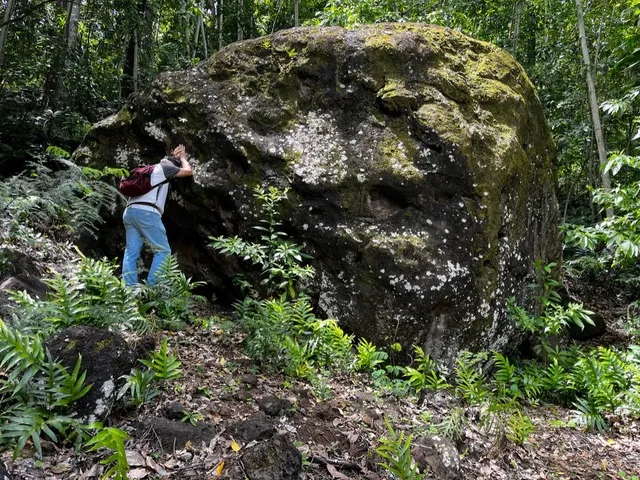


Community members and religious freedom advocates say access to the sacred site has been effectively restricted by the homeowners’ association (HOA) that now controls the surrounding land.
The dispute began years ago when the rocky hillside was developed into a high-end residential enclave. Legal agreements transferring community land to HOA control included provisions requiring maintenance of the Heiau and continued public access.
But as property values rose, the HOA tightened security. While Wai’anae is cited as having one of the lowest median household incomes in all of Hawai’i — and the highest Native Hawaiian population in the world, the gated neighborhood of 46 households enclosing Kaneʻaki Heiau, has the highest income in Hawai’i according to census data.
And after its gate was installed, visitors could be turned away. Some Native “practitioners” (a term used to avoid ridicule) say they were warned they could face arrest for trespassing if they attempted to reach the Heiau for prayer or ceremony.
For many Indigenous Hawaiians, sacred space is inseparable from the land itself. Unlike traditions centered inside religious buildings, Native Hawaiian spirituality takes place in natural settings—mountains, shorelines, burial grounds, and temple platforms built of stone.
“When access is blocked, worship is blocked,” said one advocate involved in the dispute. And at Kaneʻaki Heiau, even if access were to be allowed, it had to be supervised by the HOA!
The conflict has now drawn the attention of the International Association for Religious Freedom (IARF), one of the world’s oldest interfaith organizations. Leaders within the association have approved filing an Amicus Curiae brief stressing U.S. Constitutional and International guarantees of freedom to worship.
IARF has historically defended minority faith communities around the world. Supporters say this case reflects a pattern in American history in which Indigenous religions have been marginalized or dismissed.
Native spiritual practices were criminalized in parts of the United States until the late 19th and early 20th centuries. Although federal laws now recognize Indigenous religious rights, enforcement often depends on local conditions and legal interpretation.
“This isn’t only about one Hawaiian hillside,” said an interfaith leader familiar with the matter. “It’s about whether religious freedom includes traditions rooted in land and nature rather than inside of churches, mosques, or synagogues.”
Interestingly, the legal challenge has been propelled in part by a successful couple who purchased a home with the right of access through the HOA’s gate. But soon they faced harassment on what seems racial and social grounds. They refused to leave. Instead, they pressed for enforcement of the original access obligations. They were joined by Indigenous Hawaiians and those who were denied access to worship or visit their healing shrine or ancestors’ graves.
Observers say the case could set an important precedent for how homeowners’ associations interact with sacred and archaeological sites nationwide. At its heart, the dispute raises profound legal questions: Does ownership of surrounding land allow a private association or corporation to restrict access to a sacred site protected by law? Can communal burial grounds be effectively privatized by encirclement? Do property rights supersede the cultural and religious rights of Indigenous peoples whose sacred spaces do not resemble conventional religious buildings?
For interfaith groups, the answer carries broader implications. Religious freedom, they argue, must apply not only to majority traditions with visible institutions, but also to Indigenous communities whose sanctuaries are woven from the earth itself.
In Hawaiʻi, where land is more than property and history more than a footnote, this small hillside may become a symbol of something much larger—the effort to reconcile property and religious rights, ownership with reverence.
Please consider signing a petition in support of religious freedom.