
Interfaith Harmony Gathering
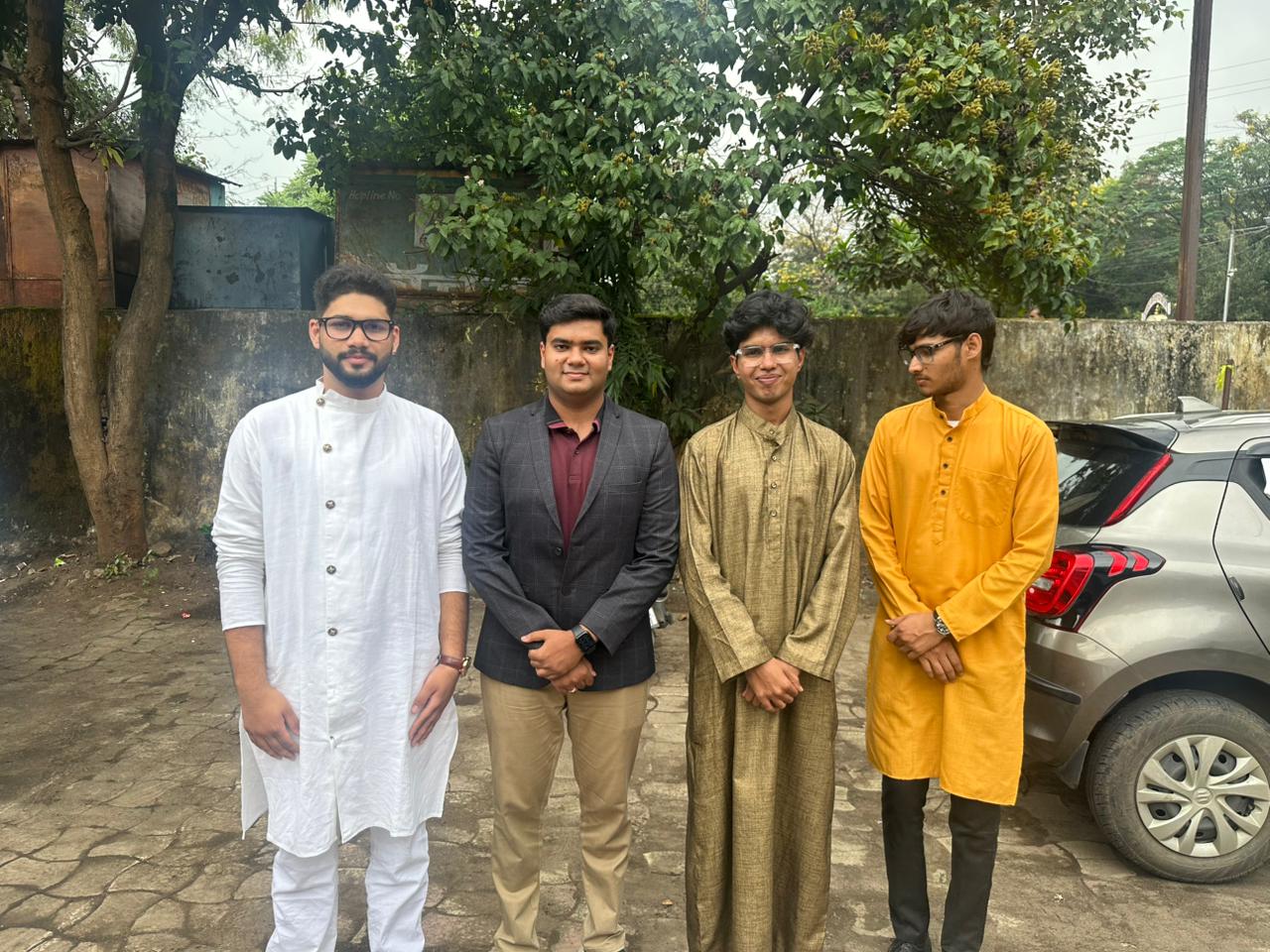
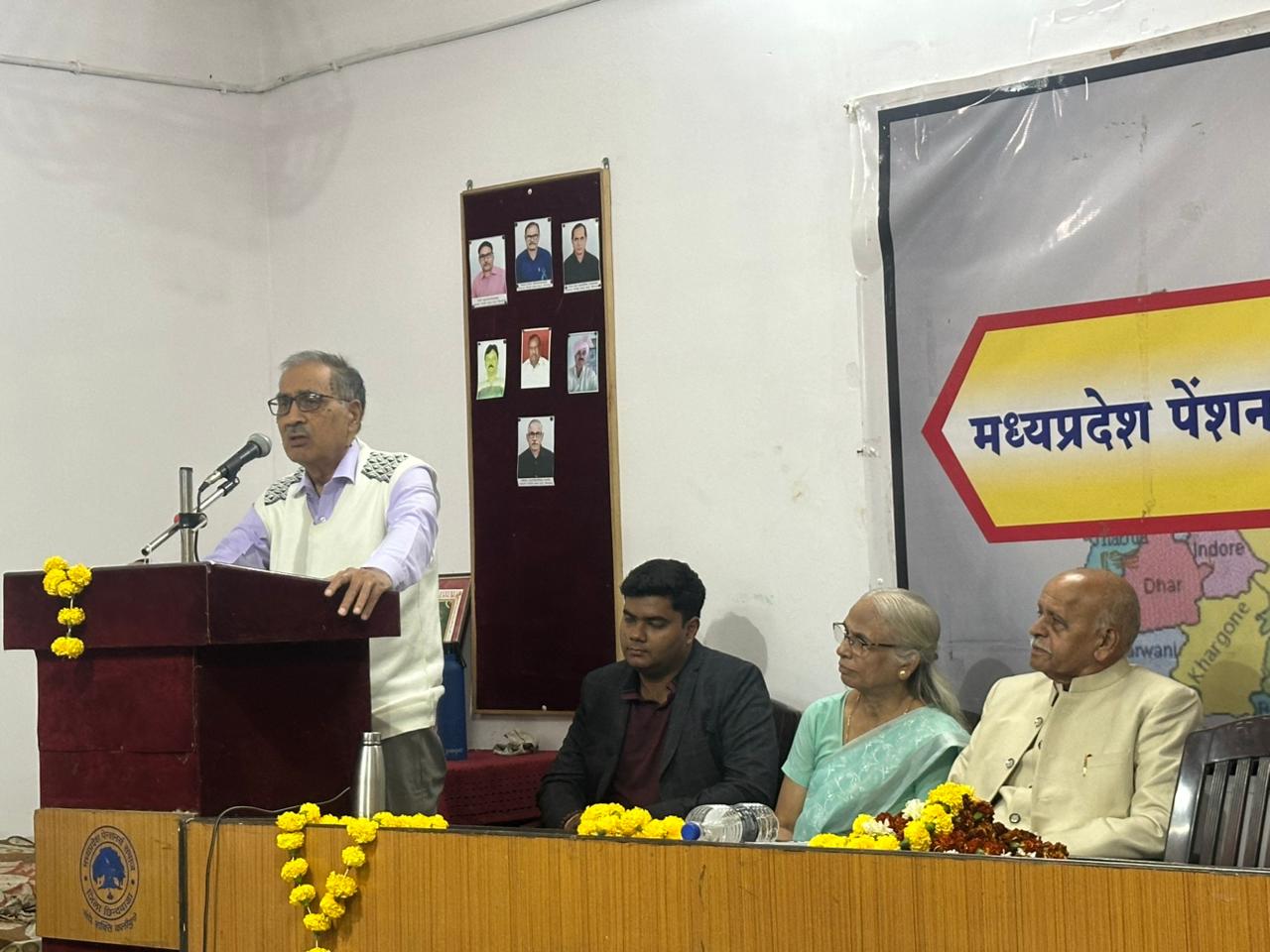
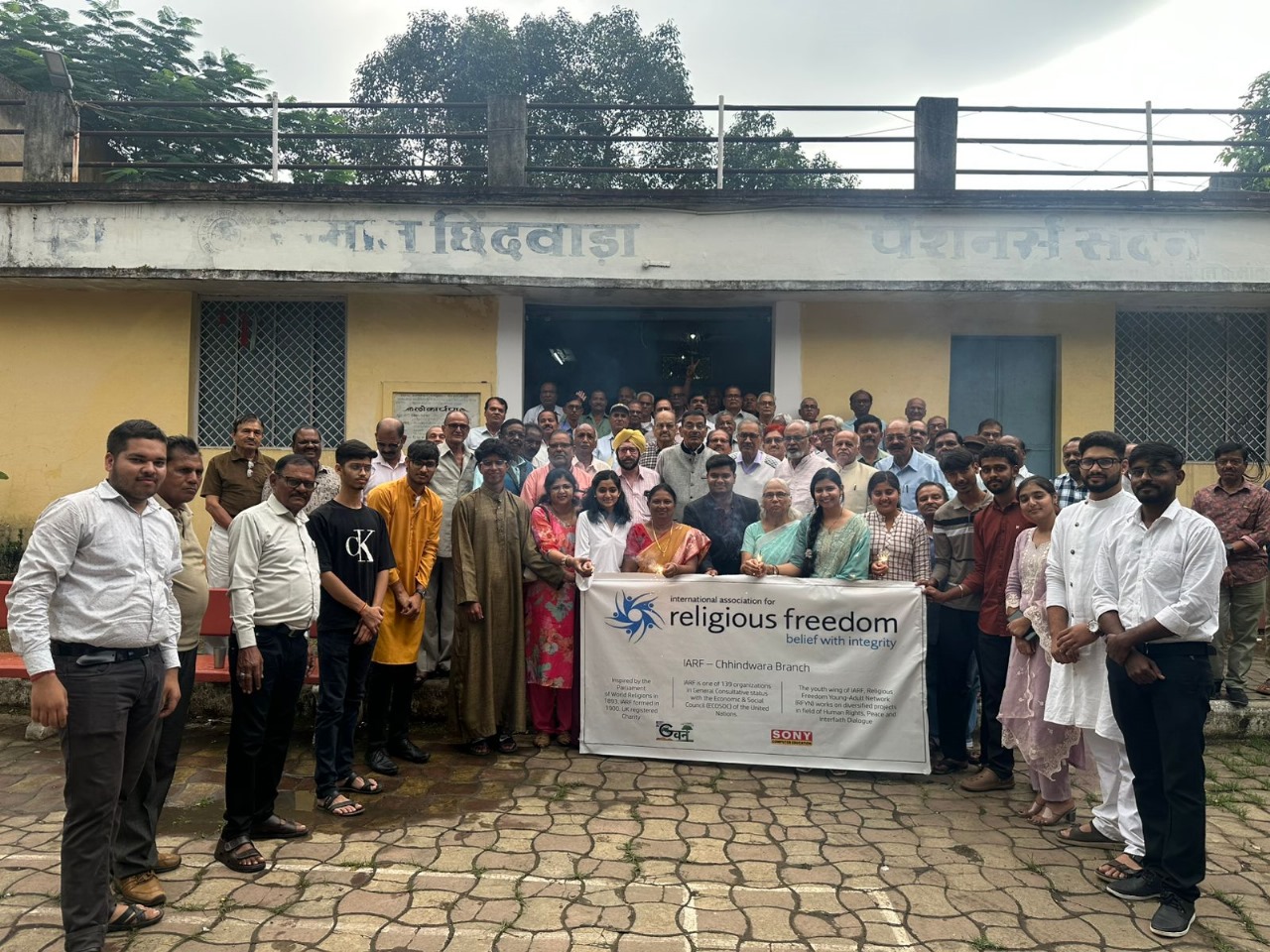
The Chhindwara Branch of the International Association for Religious Freedom (IARF) organized a दिवाली मिलन (Diwali Meetup) and Interfaith Harmony event at Pensioners Sadar, Chhindwara, bringing together senior community members, youth participants, and interfaith representatives in a shared celebration of peace, respect, and human dignity.
The program included prayer recitations by young students belonging to Christianity, Hindu, Jain, Muslim and Sikh traditions, demonstrating IARF’s long-standing commitment to interfaith understanding and freedom of belief. The active involvement of the youth highlighted the role of education and dialogue in strengthening a culture of mutual respect across generations.
Mr. Aayush Soni, Vice President of IARF & RFYN representative, addressed the gathering and extended warm Diwali greetings to all present. He briefly updated the attendees on recent IARF activities at the national and international level, including developments from the EME Conference and initiatives of the Free Religion Institute, reinforcing the shared vision of continued interfaith cooperation and educational outreach.
Dr. K. K. Shrivastava, Founder and senior member of the IARF Chhindwara Branch, who served as the chief guest, emphasized the importance of peaceful coexistence, human rights, and the protection of religious freedom for every individual, which remain central to IARF’s mission worldwide.
The program was coordinated by Dr. Brown, former India Chapter Representative of IARF, who guided the flow of the event and shared his insights on the value of interfaith cooperation in contemporary society. He also underscored the growing need to expand interfaith efforts in the region and expressed support for the establishment of a North India Chapter of IARF to further strengthen grassroots engagement.
The gathering was attended by members of the Pensioners’ Association, representatives from local organizations, and students from Sony College, reflecting a meaningful blend of experience and youthful energy. The program reaffirmed the Chhindwara Branch’s dedication to building harmony through dialogue, compassion, and education.
In Memoriam: Br. M.D. Sebastian, SHJ
The International Association for Religious Freedom (IARF) remembers with deep gratitude the life and legacy of Br. M.D. Sebastian, SHJ (1941–2025), who dedicated his life to promoting peace, harmony, and interfaith understanding.
Br. Sebastian was not only a committed religious leader but also a tireless advocate for dialogue across faiths. As a long-time member and supporter of IARF, he actively participated in numerous IARF conferences, where he spoke with conviction on the importance of interfaith dialogue. He had a special love for guiding the younger generation, often addressing students, motivating them to embrace diversity, and inspiring them to become ambassadors of peace.
One of his remarkable contributions was the publication of a book for students on interfaith understanding, a pioneering effort to nurture young minds with values of tolerance, acceptance, and universal brotherhood. Through his writings, teachings, and community service, Bro. Sebastian consistently emphasized that interfaith dialogue is not only necessary for peace but also essential for the growth of humanity.
Even until his last days, he remained deeply committed to the cause of IARF, offering his wisdom, guidance, and blessings to its mission of building bridges between communities.
Today, as we honor his memory, we also celebrate his vision, a world where people of all faiths can live together in peace and friendship. Br. M.D. Sebastian’s life continues to be an inspiration to all who walk the path of interfaith harmony.
Br. Britto, SHJ
National Secretary
IARF India Chapter
International Day of Peace 2025 – Report from BV Foundation
Under the auspices of the B.V. Foundation for Peace and Harmony, South India (a Member Group of the International Association for Religious Freedom – IARF) and the Gandhi Centre, Visakhapatnam, a grand meeting was held at the Seminar Hall of L.B. College to mark the International Day of Peace. The event was presided over by the noted social worker, Prof. Narava Prakash Rao.
The distinguished invitees and chief speakers of the occasion were Professor V. Balamohan Das (Former Vice-Chancellor, Nagarjuna University and President of Gandhi Centre) and Professor K. Ravi (Former Director, Academic Staff College, Andhra University).
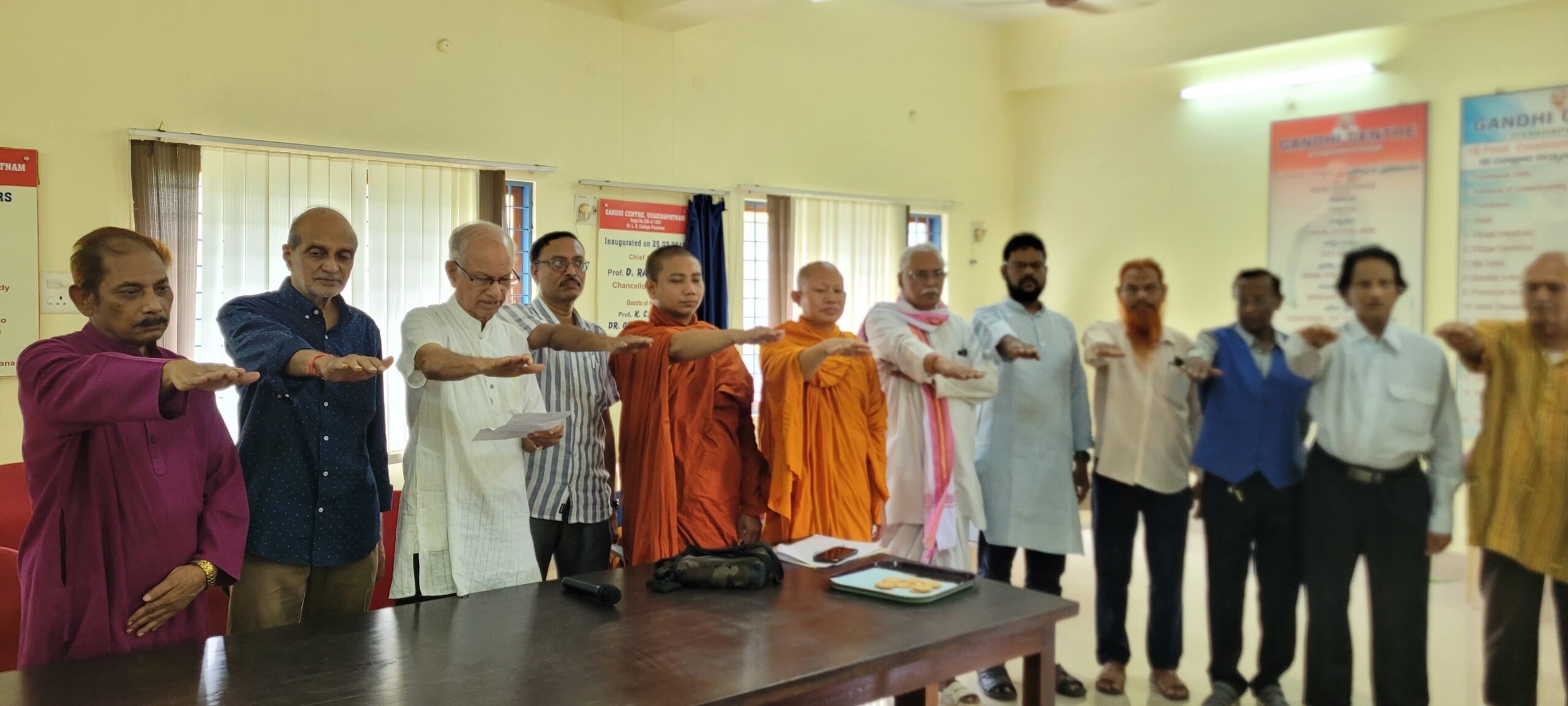
The programme commenced with all members garlanding the statue of Mahatma Gandhi at the Peace Centre and paying their homage. In his presidential address, Prof. Narava Prakash Rao explained the purpose of holding such a meeting on this day. He spoke on the growing unrest in the world, highlighted the role of IARF in protecting human rights, and enlightened the gathering about its advisory contributions to the United Nations and the significance of such efforts.
The eminent speakers present emphasized that violence can never be justified and elaborated on the responsibilities of governments and citizens in building peace.
Professor K. Ravi reiterated that violence is never justifiable, reminding that history itself has been altered because of violence. He called upon scientists, technologists, citizens, and rulers to work for peace. He observed that peace today has been reduced to a mere ornamental word, while world leaders have grown increasingly war-hungry. As a result, unrest has spread everywhere, and nations are engaged in amassing power. He warned that artificial intelligence too is taking distorted forms, leading to further threats to world peace.
Buddhist monks Rajdham Bhikshu and Kanth Bhikshu remarked that before global peace can be realized, inner mental peace must first be cultivated.
Professor V. Balamohan Das, President of the Gandhi Centre, shared his grave concern about the rising hatred across the world and the unrest it is fostering. He expressed deep anguish, pointing out that as of today, 108 civil wars are raging across the globe. He praised the tireless efforts of many organizations striving to prevent a third world war, but confessed his own fear at the very thought of what might happen if such a war were to break out. He stressed the urgent responsibility of governments to initiate and implement programmes that can dismantle this culture of hatred and violence.
Dr. Kochchrlakota Venkata Satyanarayana Murty (Joint Secretary, Gandhi Centre) stated that wars are dangerous, and drew attention to the views expressed in the Vedas and Indian epics regarding such destructive culture. He expressed hope that better days would surely come, but emphasized that war is indeed a great obstacle to world peace. He urged that every individual and every family must develop an earnest yearning for peace.
Dr. L. Prajnan Kumar (URI Convener) and Abdul Munir Mushad (IARF Convener) also participated and shared their views.
At the conclusion of the meeting, all the participants took a solemn pledge to safeguard world peace.
Among those present were Sri Suresh (Commissioner of Police Office), Sri Jogarao, Sri Hussain, Sri Naidu, members of IARF, and several prominent citizens of Visakhapatnam.
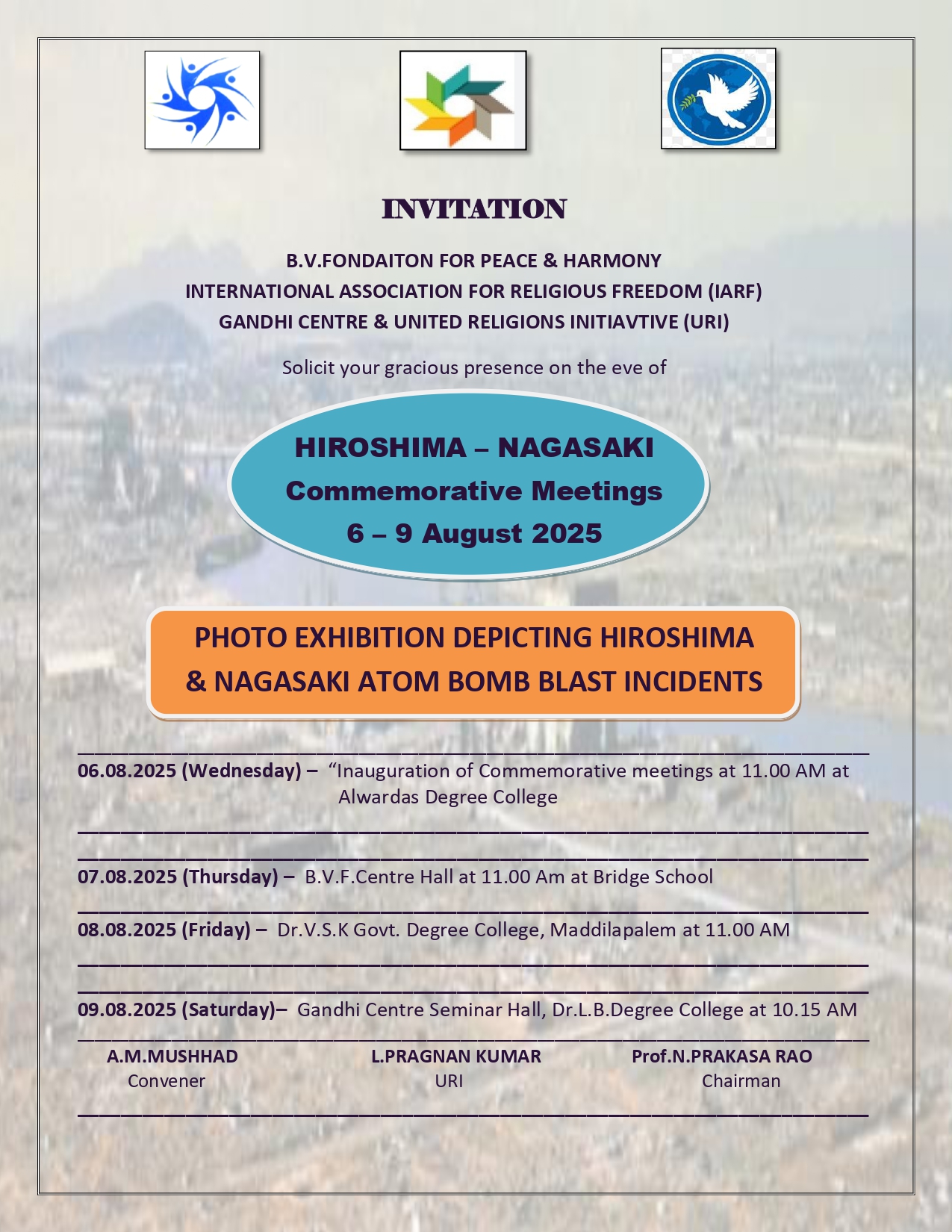
Invitation: Remembering Hiroshima & Nagasaki
On behalf of the IARF India Chapter and the B.V. Foundation, I invite you to join us and our partners for a series of meetings from 6-9 August 2025, to remember the events of Hiroshima and Nagasaki.
We believe that remembering the human cost of conflict is essential to our shared work for peace and religious freedom. A photo exhibition will be on display at each location.
Please join us:
- Aug 6, 11:00 AM: Alwardas Degree College
- Aug 7, 11:00 AM: B.V.F. Centre Hall, Bridge School
- Aug 8, 11:00 AM: Dr. V.S.K Govt. Degree College, Maddilapalem
- Aug 9, 10:15 AM: Gandhi Centre Seminar Hall, Dr. L.B. Degree College
We hope you can join us for this important act of remembrance.
The Rev. Dr. Richard Boeke: A Life of Faith in Action Across Borders
The Rev. Dr. Richard “Dick” Boeke (March 2, 1931 – May 25, 2025), a tireless advocate for interfaith cooperation and religious freedom, passed away on May 25th. His legacy in the Unitarian Universalist tradition and the International Association for Religious Freedom (IARF) reflects a rare combination of theological depth, institutional leadership, and joyful service.
Born into a Southern Baptist family, Dick’s spiritual journey led him through study and reflection to the Unitarian faith while in seminary. He often remarked that study liberates—a theme that ran through his ministry and international engagement. As a minister in the UUA, he brought a passion for global understanding that extended far beyond his pulpit.
In the IARF, he found a spiritual home where his commitments to pluralism, dialogue, and peace could flourish. Inspired by the teachings of Shin’ichirō Imaoka, Dick became a leading voice for Free Religion—a vision of spirituality unbound by dogma, rooted instead in a reverence for truth, openness, and moral responsibility. He advocated for serious study of others’ religions as an act of mutual respect.
Among his many achievements was helping to establish the Albert Schweitzer Award within IARF, which honored figures who embodied service to humanity in the spirit of liberal religion. The first recipient was Founder Nikkyo Niwano of Rissho Koseikai, a model of Buddhist leadership for peace. Richard’s personal humility was evident in his constant lifting up of others whose lives inspired hope and courage.
Another example of his international bridge-building was his collaboration with Chief Priest Yukitaka Yamamoto to create Tsubaki America, the first Shinto shrine for interfaith worship in the continental U.S. His work helped translate Japanese spiritual values into a global context—offering Americans a way to engage with Shinto practice and nature-based reverence.
Richard’s writings and teachings emphasized faith not as rigid belief, but as trust—in others, in life, and in the transformative power of service. His generous spirit, like his enduring smile, touched lives around the world.
May his memory continue to be a light—illuminating paths of wisdom, compassion, and unshakable hope.
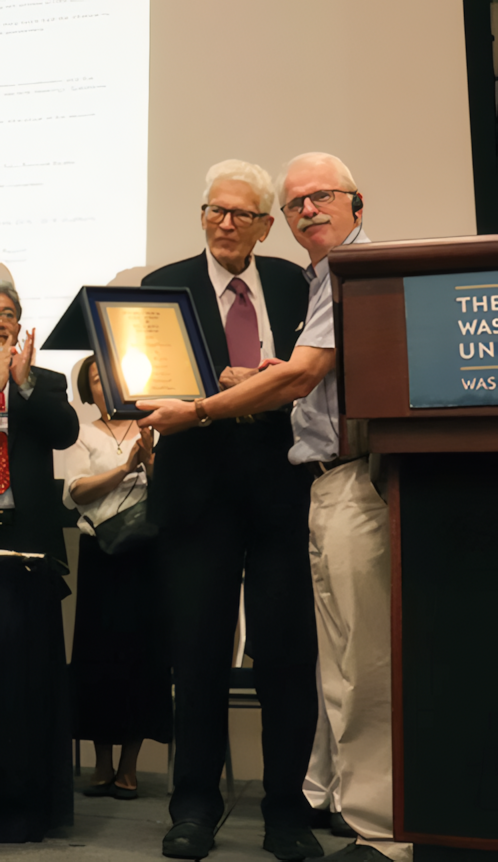
The IARF is deeply grateful to the Boeke family for sharing Rev. Dr. Boeke’s wish that memorial contributions be made to our organisation. We thank all who may choose to honor his memory in this way.
Those wishing to make a gift may do so here. Your support will help continue the work that was so dear to him.
2569th Buddha Birth Anniversary Celebration at Gandhi Centre, Visakhapatnam
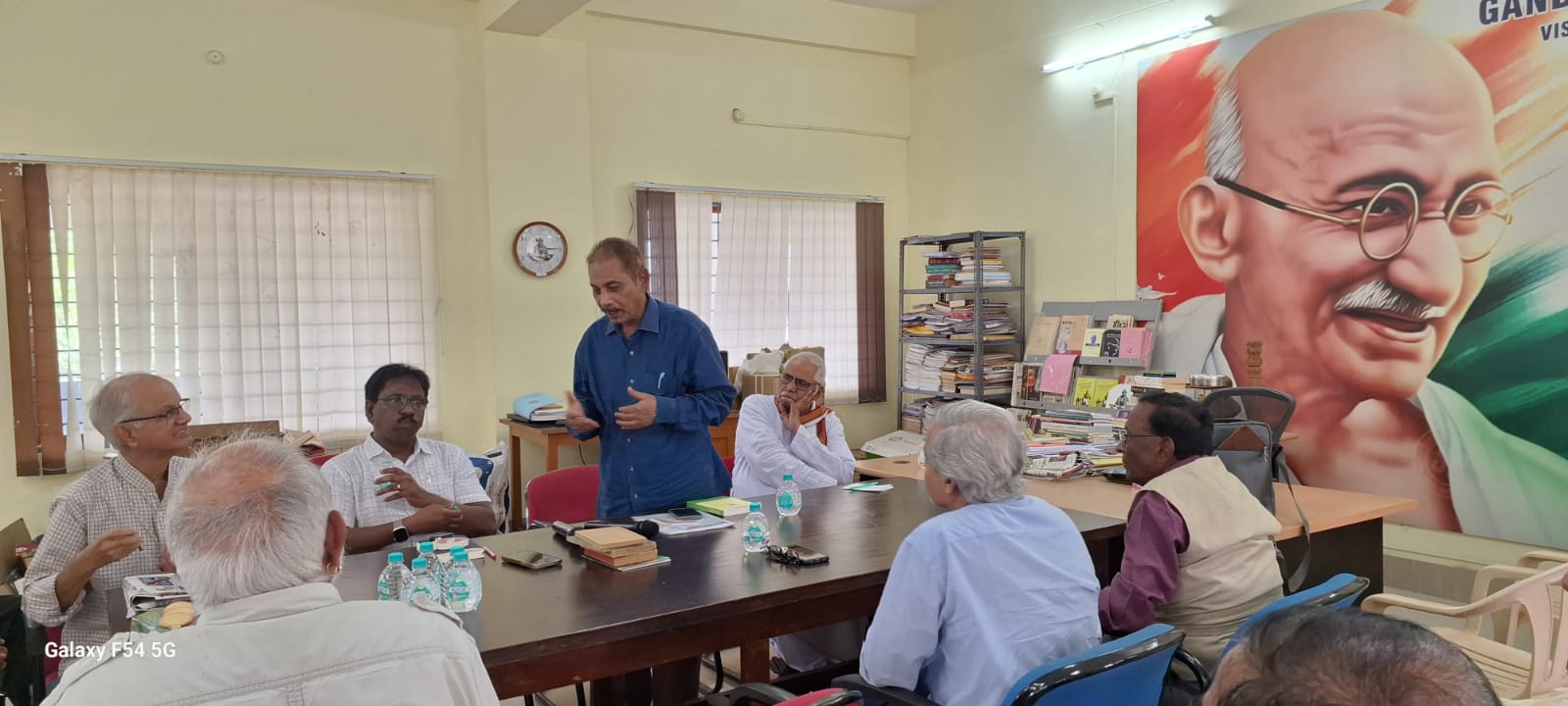
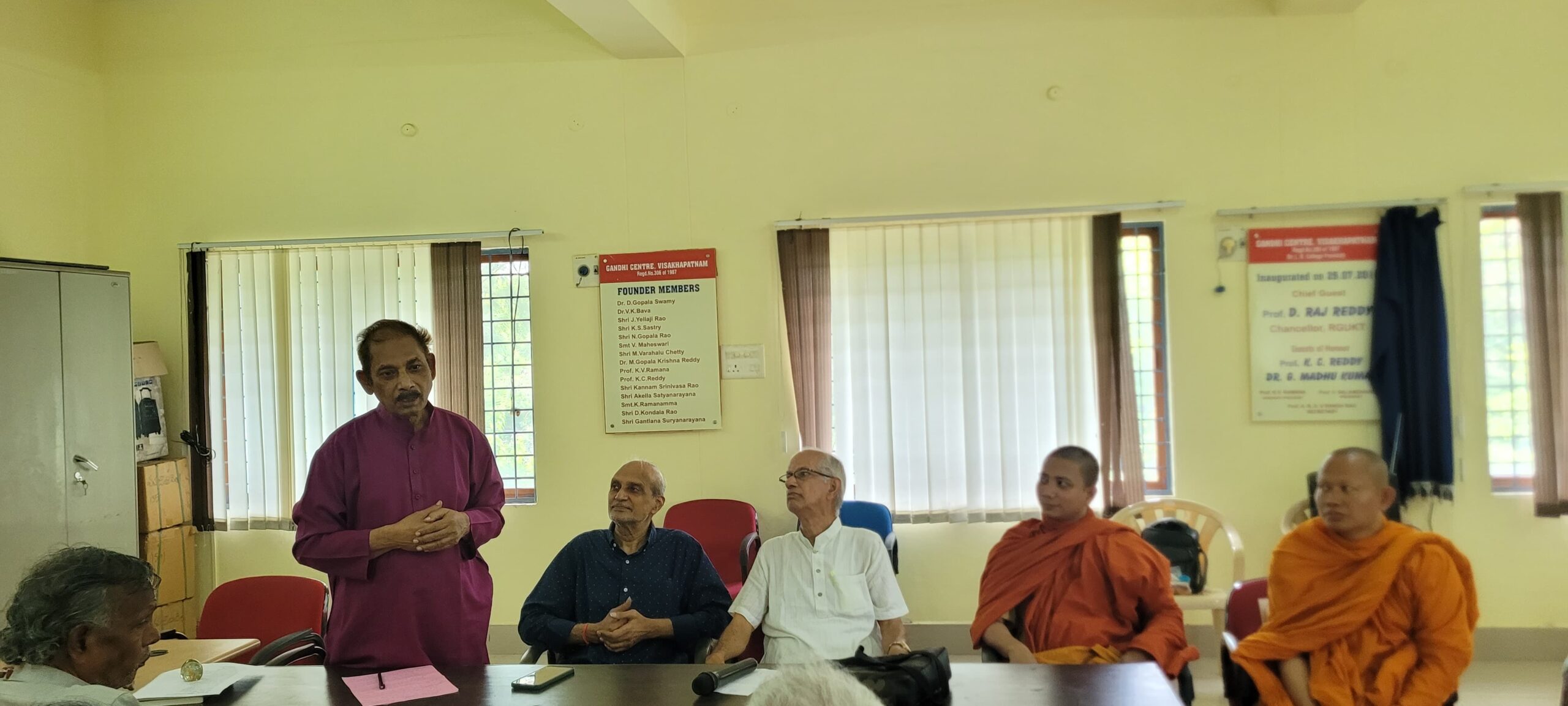
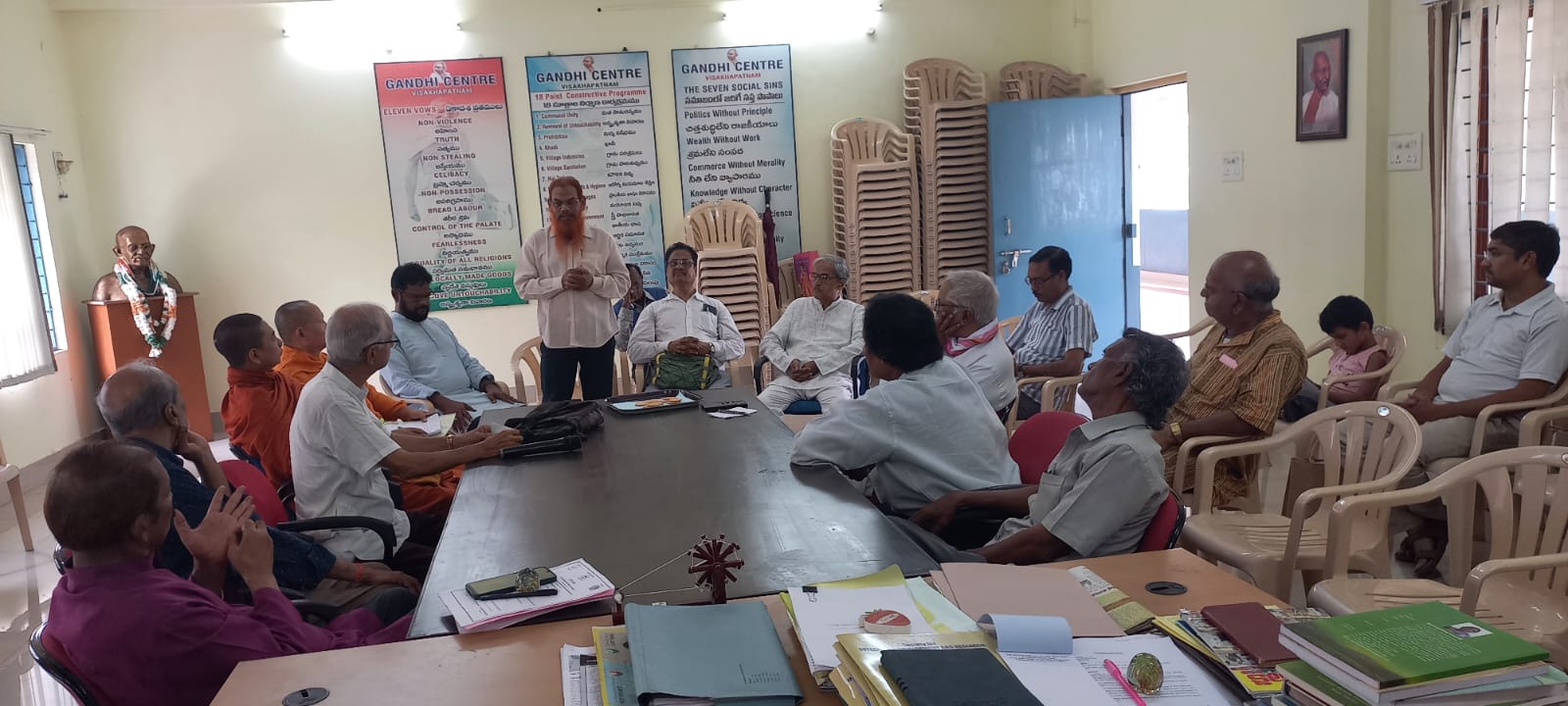
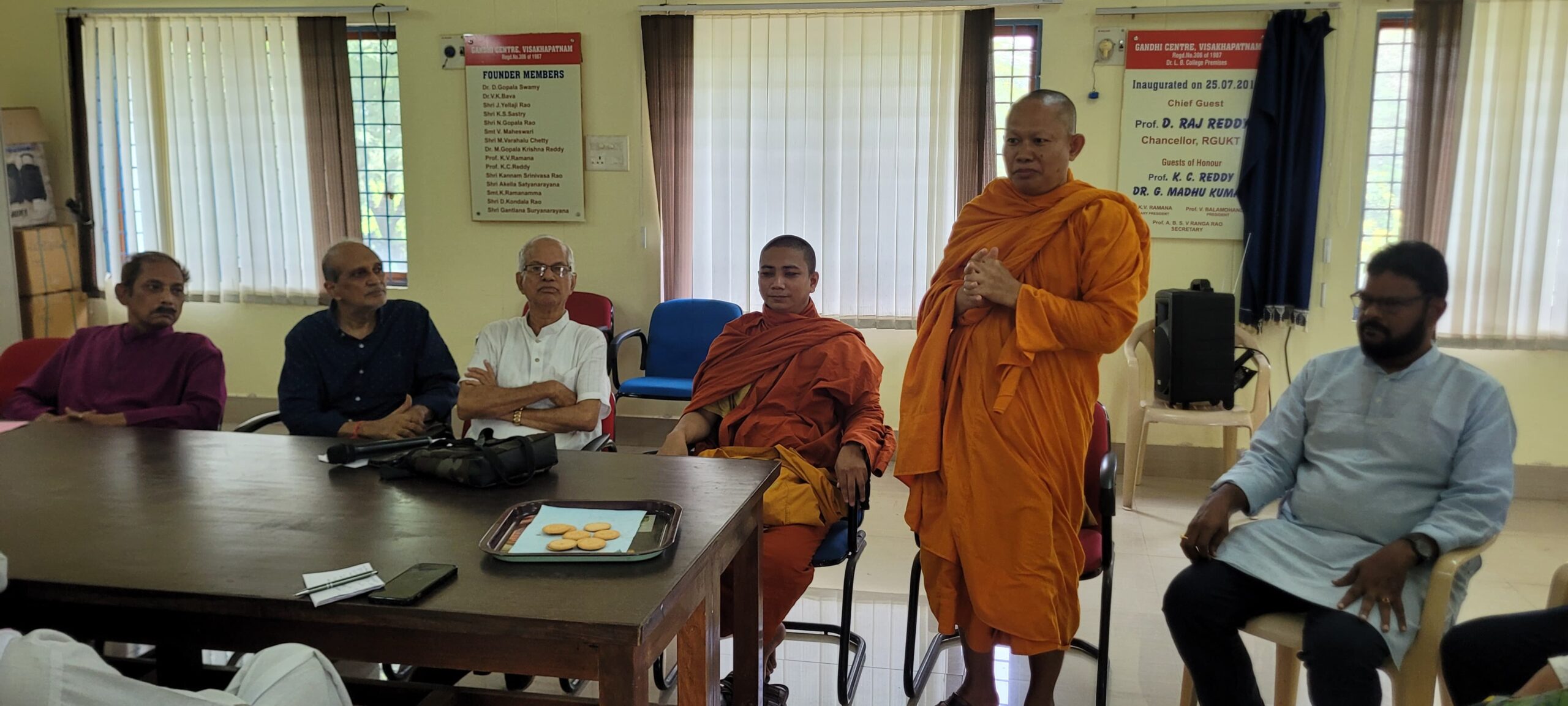
On May 24, 2025, the B.V. Foundation for Peace & Harmony (a member group of IARF), in collaboration with United Religions Initiative and the Gandhi Centre, Visakhapatnam, hosted a lecture on “Buddhism in Promoting Peace and Harmony” to mark the 2569th Buddha Birth Anniversary.
Dr. Maturi Srinivas, a noted pulmonologist and Buddhist scholar, delivered a powerful keynote emphasizing Buddhism’s role in advancing human rights, non-violence, and ethical living. Highlighting principles such as Mudita (sympathetic joy), Maitri (friendship), and Karuna (compassion), he stressed the relevance of Buddhist teachings in fostering interfaith understanding, social harmony, and ecological balance. He also addressed how Buddhism encourages self-reflection and a mindful “let-go” approach to life, which means accepting life as it comes, while also acting with awareness, responsibility, and ethical clarity.
In his presidential address, Professor Narava Prakash Rao, BVF Chairman, called on attendees to promote harmony through religious understanding, lamenting Buddhism’s diminished presence in its homeland. He affirmed that religion should support human welfare, not dominate daily life.
Professor V. Balamohan Das (Former Chancellor of Nagarjuna University and President of the Gandhi Centre) shared personal reflections on Acharya Nagarjuna (known as “the Second Buddha) and his efforts to reintroduce Buddha Purnima celebrations in academia.
Professor Paddaiah, a professor of Human Genetics, described yoga and meditation from the viewpoint of genetics and society, in the context of following the principles of Buddhism.
The session concluded with a customary vote of thanks, reinforcing a shared commitment to interfaith peace and human dignity.
INVINCIBLE: Peace and Conflict Resolution for Young Adults
The youth wing of the International Association for Religious Freedom (IARF) brought its peace and conflict resolution program to Mumbai, targeting young leaders at Pramod Ram Ujagar Tiwari Saket Institute of Management (PRUTSIM). The December 14 event, called “INVINCIBLE,” engaged participants aged 18-25 in conversations about peace-building and understanding conflict.
Janhvi Gupte kicked off with an ice-breaker that got participants talking openly about tough issues. This approach worked especially well, creating an atmosphere where students felt comfortable discussing conflict and its resolution.
Aayush Soni followed with an overview of IARF and RFYN’s work worldwide, showing students how they could get involved in peace-building efforts.
The program took a serious turn as participants explored the consequences of conflict, examining the Hiroshima-Nagasaki bombing. Gupte’s presentation on history’s deadliest wars brought home the reality of conflict, while photos of Hiroshima created a lasting impact. The story of Sadako Sasaki, a survivor who became a symbol of peace, resonated deeply with participants.
Discussions then moved to practical applications, exploring how peace affects daily life. Participants examined personal, social, and environmental aspects of peace-building, looking at concrete ways to resolve conflicts in their own lives.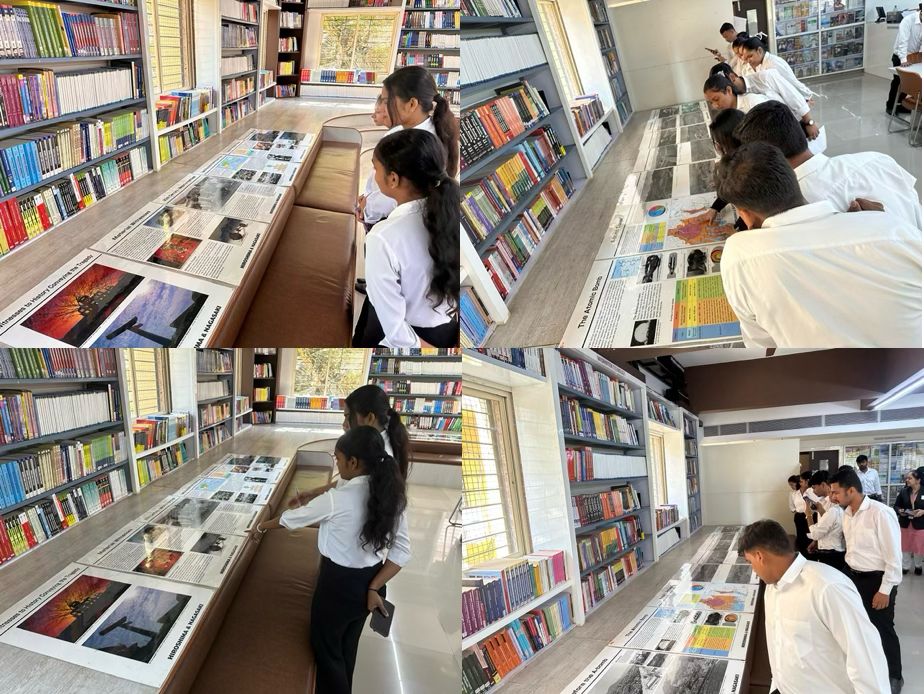
The program wrapped up in PRUTSIM’s library, where participants viewed posters from Japan showing the impact of nuclear weapons. This exhibition drove home the real consequences of war.
In a spontaneous show of commitment, participants took a peace pledge, promising never to support nuclear weapons. Their engagement and feedback showed the program hit its mark.
The event ended with Immanuel Manish Daniel encouraging participants to join RFYN’s peace efforts. PRUTSIM’s support, including presenting appreciation certificates to facilitators, demonstrated their commitment to peace education.
INVINCIBLE at PRUTSIM showed that young people engage enthusiastically with peace initiatives when presented in relevant, interactive ways. The participants’ response suggests a growing awareness of the importance of conflict resolution skills among future leaders.
Happy Thanksgiving!
In the United States, it is customary to wish everyone a Happy Thanksgiving on the last Thursday of November. Despite global challenges, there is still much to be grateful for—even as the world stands at a tipping point between hope and fear, light and darkness.
This year has been fraught with war, climate inaction, and growing inequities, yet the principles of religions and spiritualities calling us to beauty, truth, and justice are more necessary than ever. In the darkness, the candles of liberal faith can shine brightly.
The International Association for Religious Freedom is moving in a new direction. All International Council members are now expected to contribute either as workers or by appointing associates to represent their chapters or member groups. So far, this has proven effective in our committees for finance, UN representation, and developing the website for free communication.
Membership has grown, with Sony College in Chhindwara, India, and Pagan Federation International joining us. IARF’s strength lies in its openness to diverse perspectives—religious, spiritual, or secular—and its recognition of every faith’s unique contributions to our collective enrichment. No tradition has a monopoly on truth; through dialogue, we find new ways to serve a struggling world. (Several more groups are preparing their applications.)
Contributions from regions such as Europe and the U.S. have increased, and individual donations—some surpassing those of member groups—have been especially impactful.
Personally, I am deeply grateful for the positive reception of the Free Religion Institute. The concept of “free religion” – inspired by figures like Raja Rammohan Roy, Ralph Waldo Emerson, and Dr. Imaoka Shin’ichirô – explores liberating spiritualities across traditions. Translating this vision across languages remains challenging, as political and historical contexts often distort the meaning of freedom.
Andrew Brown suggests “free-religion” as a way to reconnect with the liberative essence of faith traditions. Today, we face enslavements in new forms. Free-religion invites us to confront these with liberating practices.
We need your support. Volunteer as an editor, librarian, teacher, or researcher, or help with technical tasks for the Institute and the website. If volunteering isn’t possible, please consider donating to sponsor an intern or a program.
Let us honor Guji Yukitaka Yamamoto’s plea: “Do not let IARF die.” Together, we can keep its mission alive.
George Williams
IARF President
From the ICCGC-CoNGO Confernece
The CoNGO-ICCGC Global Futures Conference, held on August 26 and 27, 2024, at the Church Center for the United Nations in New York, marked a significant assembly at the nexus of religion and civil society, dedicated to charting pathways toward a globally harmonious, just, peaceable, and sustainable future for people and their communities, the planet, and the entire ecological system.
The New York Conference partnered with the Interfaith Coalition Conference for Global Citizens (ICCGC) and the Conference of NGOs in Consultative Relationship with the United Nations (CoNGO) to collectively pursue peace, human security, dignity, and planetary sustainability. This collaboration emphasized local and global cooperation and solidarity across cultures and religions, while remaining mindful of diverse and uneven economic, social, and political conditions.
This conference aimed at igniting transformative dialogues and initiatives on a range of issues that are pressing both locally and globally. (Excerpt from Concept Note prepared by ICCGC)
This conference was hosted by Interfaith Coalition Conference for Global Citizens (ICCGC), Conference of NGOs in Consultative Relationship with the United Nations (CoNGO), and Won Buddhism. There were five sessions: Session 1. Global Ethics & Global Citizens, Session 2. Towards a Global Peace, Session 3. Dialogue between Religions and Civil Society, Session 4. Youth for Climate Action, and Session 5. Global Citizenship Education for Future Generation.
The moderator of Session 5. Global Citizenship Education for Future Generation was Kathy R. Matsui, one of the New York UN representatives of IARF. Global Citizenship education encourages global citizens to be independent, to develop global perspectives, to build harmony among people from other countries and ethnic groups, to understand diversity through cross-cultural education, to respect the Earth and all living beings, and to promote global well-being while enriching their lives. The four panelists discussed the following: how global citizenship is practiced in real life, what GCED is to the individual panelists, how GCED is implemented in their specific role and environment, and what message each panelist has for the youth and our future leaders. Furthermore, session 5 focused on the principles, values and criteria needed to practice global citizenship education. Having learned from the past, with the advancement of science and technology, the panelists further discussed what is our mission to appreciate and put to practice an education that would enhance the creativity and innovative values of the future generation, a generation that can think in terms of what can be done for the benefit of all, what can be done to protect and respect the life and dignity of all living beings.
The first speaker of the four panelists of this session was Dr. Robert Catalano, presently a professor at Sophia University close to Florence, Italy. He has also served as Director of center for interreligious dialogue of the Focalare for 13 years. The second speaker was Dr. Janet Gerson, Education Director of the International Institute on Peace Education. She is also Co-Director Emeritus, Peace Education Center, Teachers College, Columbia University, NYC.
The 3rd speaker was Professor Russell Pearce, the Edward & Marilyn Bellet Chair in Legal Ethics, Morality and Religion at Fordham University School of Law. Our final speaker was Rev. James A. Lynch, Jr., a Reverend authorized by the lay Buddhist Organization Rissho Kosei Kai. He is also an official representative for Rissho Kosei Kai to the United Nations.
The session ended as the panelists and the participants danced along with the song the final speaker, Rev. Lynch played in his presentation, a song by Cat Stevens.
Session 5 has fulfilled our collaborative pursuit of an education that prepares global citizens to practice collective peace and human security, human dignity, and planetary sustainability, and local and global cooperation and solidarity, across cultures and religions, and mindful of uneven and diverse economic, social and political conditions.
Global Citizens Pursuing a Just, Peaceable, Inclusive and Sustainable Future: An ICCGC-CoNGO Collaborative Conference
The CoNGO-ICCGC Global Futures Conference, scheduled for August 26 and 27, 2024, at the Church Center for the United Nations in New York, marks a significant assembly at the nexus of religion and civil society, dedicated to charting pathways toward a globally harmonious, just, peaceable, and sustainable future for people and their communities, the planet, and the entire ecological system.
The New York Conference partners with the Interfaith Coalition Conference for Global Citizens (ICCGC) and the Conference of NGOs in Consultative Relationship with the United Nations (CoNGO) to collectively pursue peace, human security, dignity, and planetary sustainability. This collaboration emphasizes local and global cooperation and solidarity across cultures and religions, while remaining mindful of diverse and uneven economic, social, and political conditions.
This conference aims to ignite transformative dialogues and initiatives on a range of issues that are pressing both locally and globally. (Excerpt from Concept Note prepared by ICCGC)
This conference is hosted by Interfaith Coalition Conference for Global Citizens (ICCGC), Conference of NGOs in Consultative Relationship with the United Nations (CoNGO), and Won Buddhism. There are five sessions:
- Session 1. Global Ethics & Global Citizens
- Session 2. Towards a Global Peace
- Session 3. Dialogue between Religions and Civil Society
- Session 4. Youth for Climate Action
- Session 5. Global Citizenship Education for Future Generation
The moderator of Session 5. Global Citizenship Education for Future Generation is Kathy R. Matsui, one of the New York UN representatives of IARF. Global citizenship education (GCED) is needed to face the challenges of the 21st Century and the challenges of the VUCA world, which is volatile, uncertain, complex, and ambiguous. Global Citizenship education encourages global citizens to be independent, to develop global perspectives, to build harmony among people from other countries and ethnic groups, to understand diversity through cross-cultural education, to respect the Earth and all living beings, and to promote global well-being while enriching their lives.
Global citizenship education offers opportunities for youth and adults to learn to create imaginative solutions to world problems, to help solve diverse global issues, and to become active citizens to make changes in society for the good of everyone. In this session, panelists will discuss the following: how global citizenship is practiced in real life, what GCED is to the individual panelists, how GCED is implemented in their specific role and environment, and what message each panelist has for the youth and our future leaders.
The speakers of this session are:
- Panelist 1: Dr. Roberto Catalano (Professor, Sophia University Institute, Italy)
- Panelist 2: Dr. Janet Gerson (Education Director, International Institute on Peace Education)
- Panelist 3: Dr. Russell Pearce (Professor, Fordham University)
- Panelist 4: Rev. James Lynch (Representative for Rissho Kosei Kai to United Nations)