

Yezidi petition supported by IARF presented to Dutch parliament
A petition supported by IARF was presented to the Dutch House of Representatives’ Committee for Asylum and Migration on 22 September 2026. HeerlenMondiaal reports that a small delegation delivered the petition, whose presentation board recorded 6,015 signatories.
IARF co-signed the petition, following its support for young Yezidis in the Netherlands earlier this year. At Ipenburg, a member of IARF’s Dutch Chapter, attended the presentation.
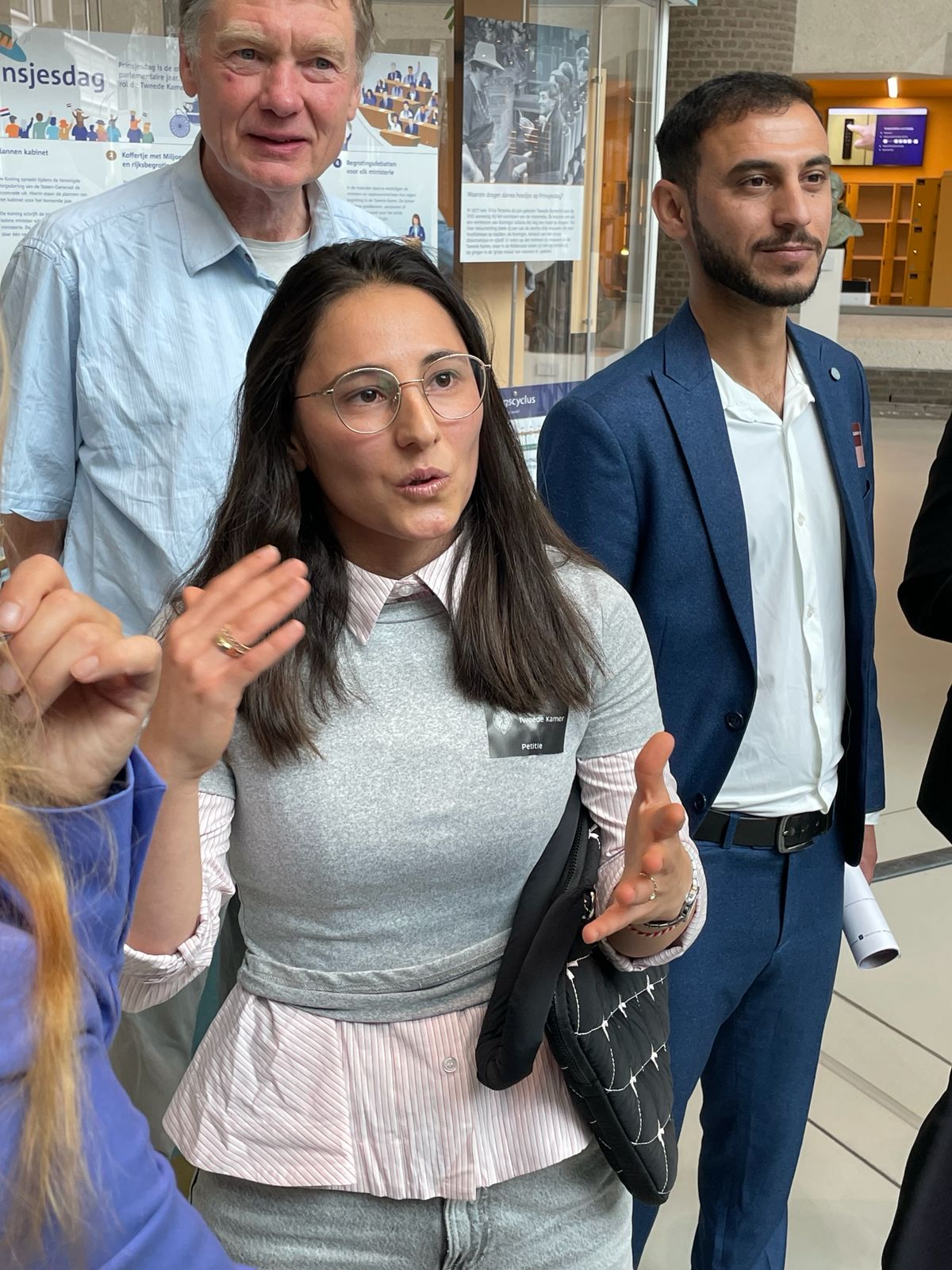
A personal impression from the handover
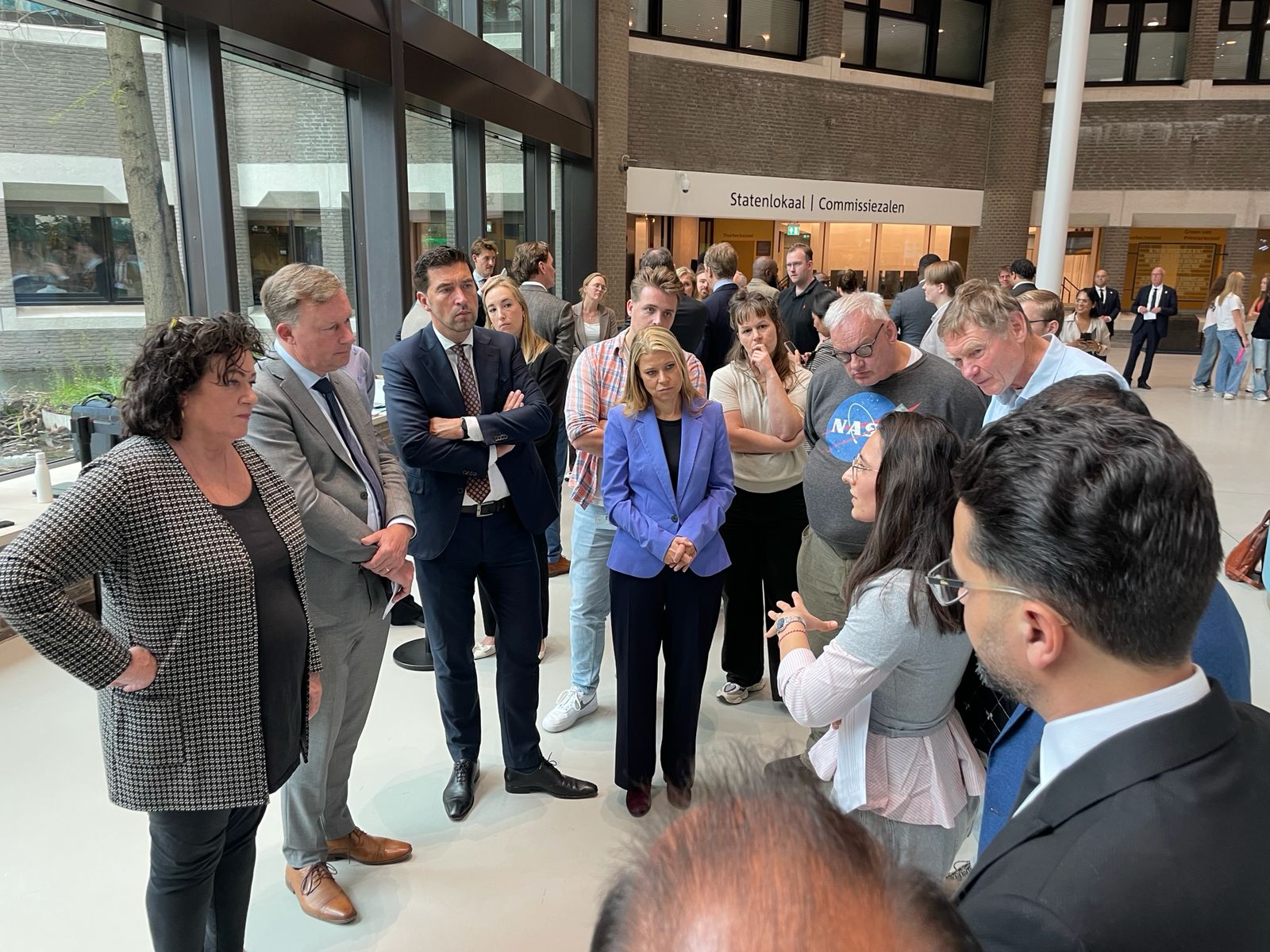
On Tuesday 22 September 2026, I attended the presentation of the petition to members of the Dutch parliament in The Hague.
Around six Yezidis were present. Nara Silo, from Heerlen, spoke on behalf of the group, telling her story from memory. Five MPs attended, representing BBB, SGP, D66, CDA and PRO. They listened very attentively and stayed afterwards to speak with Nara at some length. I came away with a very positive feeling.
I also spoke with an older Yezidi man from Hengelo. Our conversation touched on the community’s language and the oral transmission of its religion and history. I still know little about Yezidi religion and rituals, but the conversation left me reflecting on the vulnerability of a religious and cultural heritage passed down in this way.
At Ipenburg
The concerns raised
The petition, published in Dutch, asks the authorities to reassess the protection available to Yezidis who face return to Iraq. Its organisers point to continuing insecurity and displacement, the absence of effective protection, and inadequate living conditions and services in areas of return. They argue that these circumstances require particular attention in asylum decisions.
Yezidis are an ethnic and religious minority from Iraq. The petition places their present concerns in the context of the 2014 genocide perpetrated by ISIS and its continuing consequences for survivors and displaced families. It asks for a reassessment of their specific vulnerability and of the conditions for a safe and sustainable return.
Following up on IARF’s June appeal
On 19 June, IARF published an appeal about the petition, inviting members and readers resident in the Netherlands to read and share it. The parliamentary handover is the next reported stage of that campaign. Presenting a petition does not, in itself, constitute a change in asylum policy or a decision on individual applications.
The organisers’ handover report includes photographs and links to Dutch newspaper coverage. The full petition text is also available in Dutch.
Updated on 26 September 2026 to add At Ipenburg’s personal account and photographs from the handover, shared with permission.
Update from the US Chapter: Concerns Raised Over New “Religious Liberty Commission”
Our colleagues in the United States have shared a significant update regarding the current climate of religious freedom in their region. In a recent communication to members, the US Chapter raised serious concerns regarding the Administration’s establishment of a “Religious Liberty Commission” within the Department of Justice.
US Chapter President George Garland has alerted members to what the Board views as a troubling development, noting that the new commission appears to prioritize specific conservative religious interests in a way that conflicts with federal law. The Chapter stresses the importance of maintaining a clear separation of church and state to protect the rights of all faith communities.
In response, the IARF-US President and Board have formally endorsed a lawsuit filed by the Interfaith Alliance and a diverse coalition of partners, including Muslims For Progressive Values and Hindus For Human Rights. The legal challenge asserts that the commission was unlawfully constituted and seeks to ensure transparency regarding its recommendations.
The US Chapter is currently encouraging its members to contact their representatives in Congress to address the matter.
For the full statement from President Garland and further details on the coalition’s legal action, please visit the US Chapter website.
Read the full update at iarfus.org
Sit-in Demonstration by Yezidis in The Hague Because of Recent Dutch Policy Change
Young Yezidis are holding a sit-in demonstration this month in front of The Hague Central train station to express their concerns about a recent change in Dutch policy. Under this new policy, the government now considers it generally safe for Yezidis and other religious minority groups to return to Iraq—either to the city of Sinjar and its surroundings, or to camps in the Kurdish Autonomous Region. As a result of this change, many requests for asylum by Yezidis have been rejected in the past 1.5 years.
Yezidis believe that since the genocide of 2014, they cannot safely live in Iraq due to continuing discrimination, hate speech from other groups, a lack of law and order, and widespread impunity. Recent developments in Iraq and Syria have only increased these concerns.
In Germany, Yezidis face similar problems. Please support the Yezidis by writing to your Member of Parliament, donating to Yezidi organizations, or encouraging them by passing by their sit-in demonstration in The Hague. IARF supports the Yezidis in the Netherlands.
IARF Is Shocked by Lack of Respect Towards Indigenous Group in Brazil and Peru
The British newspaper The Guardian reported on Sunday, 27 July about efforts of missionaries to contact the isolated Korubu indigenous group in the border area of Brazil and Peru. The goal of these efforts was reportedly to convert the community to Christianity. The newspaper writes that the missionaries and organisations engaged in illegal activities, since Brazilian law does not permit proselytising in Korubu territory and stipulates that isolated groups must initiate any contact.
IARF is shocked by the story in the Guardian and maintains that all communities, and especially isolated indigenous groups, must have their beliefs, traditions, and autonomy respected. This principle has been laid down in several treaties and declarations of the UN. Forcing contact with unknown technologies, like described in the article in the Guardian, is both immoral and against the letter and spirit of the UN treaties. It can be considered as a modern form of colonialism which destroys rich local cultures and identities, and can inflict lasting harm.
IARF urges the organisations involved to cease these activities immediately and insists that individuals and organisations responsible be held accountable.
IARF Vision and Identity Statement
We are pleased to present the IARF Vision and Identity Statement, a foundational document recently adopted by our International Council. This statement is the result of thoughtful collaboration, inspired by discussions at our 2023 Congress and developed by a dedicated working group. It was formally adopted by the International Council at its March meeting this year.
This Vision and Identity Statement clarifies our shared purpose and direction as we move forward. It outlines our aspiration to be a vital global network, connecting liberal religious communities and individuals across diverse faiths and cultures. Crucially, it reaffirms our core mission: to advance free and liberal religion, protect religious minorities, and promote human rights.
As IARF marks its 125th anniversary, this vision serves as both a reflection on our rich legacy and a compass for our future work. It helps us articulate what “free and liberal religion” means in today’s complex world and how we intend to pursue our advocacy, education, and community-building efforts.
The full document is currently available in English, Japanese, and Hungarian, and we extend our sincere thanks to the members who dedicated their time and skill to these translations. We plan to make it available in more languages in the future.
We encourage all our members and friends to read the full Vision and Identity Statement. Your reflections and feedback are welcome as we continue to live into this shared understanding.
Read the Full StatementIARF Endorses Statements on Women’s Rights and Minority Religious Identity
IARF Applauds Rejection of Bill to Repeal FGM Ban in The Gambia

The National Assembly of Gambia
Since our call for support of the Petition Against FGM Ban Repeal in The Gambia, which the Nala Feminist Collective started, the situation has evolved positively. The third reading of the bill was initially planned for July 24.
IARF, an organization uniting liberal religious groups from diverse faith traditions across the globe, stands firmly against human rights violations, particularly those justified under the guise of religious or cultural practices. We are pleased to report that the bill to repeal the ban on FGM was rejected on July 15, and the planned third reading on July 24 will not take place.
IARF and its member organizations congratulate Parliament Speaker Fabakary Jatta and the National Assembly of The Gambia for this wise decision. This outcome has an impact beyond The Gambia and will continue to forward the dignity and self-determination of all human beings.
We remain committed to supporting efforts that protect human rights and bodily integrity worldwide.
Context
Female Genital Mutilation/Cutting (FGM/C) is a practice that involves the partial or total removal of external female genitalia for non-medical reasons. It affects an estimated 200 million women and girls worldwide, with more than three-quarters of females aged between 15 and 49 in some regions having undergone the procedure. The practice can lead to severe immediate risks such as pain, shock, hemorrhage, and infections, as well as long-term consequences for sexual health and mental wellbeing.
The Gambia’s 2015 ban on FGM/C was a significant milestone in the global effort to eradicate this harmful practice. The recent attempt to repeal this ban had raised alarms among human rights organizations globally. The IARF, as part of its commitment to human rights and religious freedom, had engaged in advocacy efforts, including drafting formal communications to Gambian authorities expressing concern over the potential repeal.
The rejection of the bill to repeal the FGM/C ban not only maintains crucial protections for women and girls in The Gambia but also reinforces the country’s commitment to international human rights standards. This decision aligns with various human rights conventions ratified by The Gambia, including the Convention on the Elimination of All Forms of Discrimination against Women (CEDAW) and the Convention on the Rights of the Child.
Introducing our New Community Platform on IARF.net!
We are thrilled to announce the addition of a community platform to our official website, IARF.net. This platform is designed to foster stronger connections, promote grassroots activities, and provide our volunteers with efficient teamwork tools.
Registration
Every member of a Member Group or a Chapter, an individual member, or a registered Congress participant is encouraged to register here. You can easily sign up using your email or Google account. Please allow a few hours for our admin to approve your account. Until it is approved, you will only be able to edit your profile inforfmation.
Profile Setup
To maintain a community based on transparency and trust, we kindly request members to upload a photo of themselves and write a short bio entry. This not only verifies your membership but also helps other members to know you better!
Purpose of the Community Platform
Our goal with this platform is multi-fold. We aim to:
- Make it easier for individual members to connect with other members worldwide
- Encourage members to write content for the website
- Boost grassroots activities
- Enhance the online event experience for events like the upcoming Congress in Cluj Faith in Reconciliation, the recent European Regional Conference Does Religion Make You Free, inter-member events like the conference held together by the Japan Chapter, RFYN and the India Chapter earlier this year, the IARF Dialogues series, and more.
- Make collaboration for our volunteers easier by giving them access to teamwork tools
- Stimulate collaboration within the organisation
What can you do on our Community Platform?
Once registered, you can:
- View and message other members here
- Submit content for the website (all content will be reviewed by a moderator, unless you are an editor)
- Join social and work groups here
- Share your thoughts, pictures, videos, and other files
- Announce events and meetings and participate in events held by other groups, and browse an event calendar
…and much more!
Ongoing Development
Please note that our community platform is still in the developmental phase. Our Administrator Luke is diligently working on it to improve and perfect the user experience. As we’re still in the testing phase, the user base may not be extensive yet – but we are hoping for this to change very soon!
Luke would greatly appreciate any feedback and would be happy to answer all questions or provide individual support in registering and using the platform. Please contact him through a message on IARF.net, send an email to [email protected], or contact him on WhatsApp at +31641744951.
We believe that this community platform will revolutionize the way we interact, communicate, and collaborate. So, sign up today, and let’s build a stronger and more connected IARF together!
Winner of the Dana McLean Greeley Award for young adult interfaith work
After carefully considering the 12 applications we received this year, each well-prepared and outlining a valuable project we would love to support, the Greeley Award Committee, tasked with this difficult duty, decided to award the project submitted by The Sanctuaries: Interfaith Arts Education.
This is how The Sanctuaries elaborate on their mission to ignite the sacred power of the arts for social change:
The Sanctuaries is the first interfaith arts community in the United States. Founded in Washington, DC, by a group of twenty young adults in 2013, we use the arts to transform two of the most divisive global issues of our time – race and religion – into forces for personal growth and social change. We fulfil this mission in two ways. First, through our multicultural community of over 150 artists, we deepen interfaith understanding by hosting regular events, retreats, and multimedia arts showcases. These programs are often the only structured opportunities in the city for young adults of different religious backgrounds to build lasting relationships of mutual care and support. Second, through our Art for Social Impact training program, we educate interfaith artists how to be leaders in their local communities. Participants in this highly selective program gain first-hand experience working on the front lines of grass-roots justice campaigns to address the systems that keep us divided in the first place.
What distinguishes our approach:
– It centers young adults. Too often, programs are created for young people, not by them. This project positions young adults as valuable teachers of this work for audiences of all ages. In the process, it builds trust and understanding across lines of social and generational division.
– It builds collective capacity. Too often, programs perpetuate dependency on an outside expert. This project equips teachers to share frameworks and skills that enable communities to move this work forward on their own. In the process, it builds long-term capacity, not clients.
– It scales by invitation. Too often, programs grow for numbers rather than for needs. This project relies on individuals and communities inviting teachers into their context to advance this work. In the process, it builds a replicable and respectful model of collaboration. As Dana McLean Greeley once exhorted: “Let us find something worthwhile to love, and something worthwhile to do, and give ourselves away, and we shall find ourselves again.” At the heart of our approach is this spirit of embodiment. This work is something that’s not just done, but lived.
You can learn more about the project and the organization on its website, thesanctuaries.org, and its Facebook page, www.facebook.com/SanctuariesDC/

The Background of the Dana McLean Greeley Award
In 1969, Rev. Greeley [was] a pivotal force in giving the International Association for Religious Freedom (IARF) the name it still carries, and new, committed leadership from both Shinto and Buddhist traditions in Japan. He loved IARF’s heritage, and boldly moved it into its future. The Award was created by the IARF to respond to the intention of the Dana McLean Greeley Foundation for Peace and Justice to honor Rev. Greeley’s memory and life achievements for peace through the gift of a $50,000 endowment to the IARF, announced at a service and celebration held in Concord, MA, on November 5, 2006.
The Founding Purpose: The historical Mission of the Award has been to celebrate the achievements of young adults within a religious and/or interfaith community with a strong commitment to human rights, justice, and peace. The award supports an ongoing or new project of a group, featuring the collaborative engagement of young adults with their community, providing the group with material support. In turn, the group is committed to work with young adults, to develop leaders within the next generation, and to expand understanding of human rights, justice, and interfaith dialog within the context of religious freedom.
Goals of the Award: The primary goals of the award are to support organizations of young adults, and the communities within which they are engaged, to conduct programs of leadership development, human rights education, and engagement in understanding one another’s beliefs within the context of commitment to religious freedom.
The Award (or awards) will be presented at each IARF Congress, currently held at 4-year intervals. They will be celebrated and promoted at a special ceremony, and through publicity within and beyond the IARF.
Bahrain: Continued Harassment of Activists by the Government
The Bahrain Center for Human Rights (BCHR) expressed it’s concern about continued harassment of human rights activists by the Bahrain authorities and restricting their right to free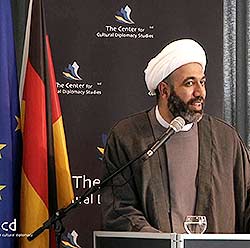 expression. Sheikh Maytham al-Salman, a noted spokesperson, human rights defender and chairman of the Bahrain Interfaith Center, our associate member organization, together with several other persons, was summoned for interrogation over a speech he recently delivered. In August the Sheikh was detained. We wrote about it here.
The BCHR:
believes that the Bahraini authorities’ actions are an indication of its increasingly harsh policies aimed at further harassing human rights defenders in order to silence them, in addition to its continued implementation of further restrictions both in law and practice on the right to free expression. Moreover, human rights defenders and activists in Bahrain have been ongoing targets of the authorities who have attempted countless times to silence them, stop their work and oppress their right to freedom of expression, including BCHR President Nabeel Rajab, activist Zainab al-Khawaja, and human rights defender Naji Fateel…
Accordingly, the Bahrain Center for Human Rights calls on the
government of Bahrain to:
- Drop all charges pending on Sheikh Maytham al-Salman for exercising his freedom of speech
- Release all prisoners who have been convicted for their political opinions; and
- Fully comply with the Bahrain Independent Commission of Inquiry (BICI) recommendations and international laws.
The full text of the article and the Sheikh’s speech over which he was interrogated is available here.