Two decades ago, on August 23rd, 2005, villages in the valley of the Nyikó river in Transylvania (Romania) suffered the most catastrophic flood in memory. Sixteen people have died. The flood destroyed the livelihood of thousands of people of that region. Two thousands of them lost everything, their houses, barns, animals, workshops, machinery, their cars. And all the remaining buildings were badly damaged. However, the devastation of the agriculture made all the people victims. Beside the farms, the flood also damaged the public buildings, such as churches, schools, town halls, and cultural halls. Some of the bridges and the roads became temporarily inaccessible.
Grief took hold of not only those families losing their loved ones, but entire communities. A thirty second video film by a teenager surfaced afterward as a dramatic witness. A family who tried to find refuge in the attic of their house already covered by water, lost hope of surviving. The teenager recorded their farewell:
“This is …. talking from Székely-Szentmihály. It’s over… The end of the world has come. That’s it… If someone finds this, please remember us.”
This family did survive.
Later the cause of the tragedy became evident: the post-communist era opened ways for unchecked greed and criminal negligence. Those who were to protect the society didn’t. Illegally clear-cut forests above the valley brought disaster upon the villages.
The relief and reconstruction efforts demonstrated compassion and solidarity, true heroism by people and organizations across Transylvania, Hungary, countries in Europe and Unitarians in the United States. They responded with impressive financial support. Perhaps the most significant gift came from the Unitarian Universalist Congregation at Shelter Rock, NY and its Veatch Program.
Beside donations pouring in, hundreds of people from the neighboring region came to help with physical work, participating in the massive cleaning and disinfecting first of all. They sheltered the victims in their own houses and provided food, clothing, basic necessities to them. During the first days even some 50 ministers and priests volunteered. Leaders of the Unitarian Youth Organization carried out the main planning and aid distribution tasks.
Then came the reconstruction work by volunteers and generous donors. Houses were rebuilt one after another, churches, schools and other community buildings repaired. An emergency committee was formed, demonstrating an amazing efficiency.
Remarkably, this local emergency committee created two decades ago, has grown into the Providence Charity Organization, now a major relief organization of the Hungarian Unitarian Church. One of their numerous projects is an ecumenical, sustained support of the Hungarian communities in Ukraine since the beginning of the war.
At the 20th anniversary of the tragedy, villages of the Nyikó valley will hold a commemoration on August 23rd. At this occasion they also wish to express their deep gratitude for all those who helped the victims rebuild their homes and their lives.
They extend their invitation also to anyone close or far to join their commemoration on August 23rd in the village of Kobátfalva (Cobatesti).
To fully appreciate the scale of the relief effort, we are sharing a contemporary account from the time. The following report, titled “After flood chronical,” was written by Szabó László, a key organizer of the initial response, in November 2005. It provides a powerful, on-the-ground look at the days and weeks immediately following the disaster.
After flood chronical
By Szabó László Kobátfalva, 23 November 2005
On August 23rd, 2005 a terrible flood has destroyed the lifetime work of thousands of people along the Nyikó river and in other regions of Udvarhelyszék. This tragedy not only caused severe economical damages, but also 16 persons have lost their lives. More than two thousand people were affected by the flood directly, but due to agricultural damages almost everyone is a flood victim in these villages. Along the Nyikó river a lot of houses were totally destroyed, and some were highly damaged. Many workshops, equerries, barns and secondary buildings crashed; the water drifted away animals, cars, machinery. The crop was destroyed on many thousands of hectares. The flood took away the already harvested crops and hay stored on the farms. Next to the farms the flood also damaged the public buildings, such as churches, schools, town halls, and cultural halls. Some of the bridges and the roads became temporarily inaccessible.
The catastrophe caused by the flood touched everyone. There are no words to express the grief of those who have lost their loved ones. The fear of death has penetrated into the lives of hundreds, and it will take a long time to overcome this fear. Weeks after the flood a short video film was sent to me, made by a teenager. The film is around thirty seconds recording the flood. He wanted this film to be a farewell on behalf of his family. They found refuge in the attic of their house covered by water: ”This is (…name…) talking from Székelyszentmihály. It’s over… The end of the world has come. That’s it… If someone finds this, please remember us.” Thank God this family survived. Now, months after the flood we remember the victims but we also remember the way in which people joined forces to help those in need. In those days and weeks many people helped the flood victims through voluntary work and through donations. Many people from Székelyföld, from all around Transylvania, from Hungary, from different countries of Europe, from the Unitarian Universalist congregations of the USA, and from all over the world reached out to help. We thank them all!
In the followings my paper will become more personal, because I would like to present to you the happenings in which I have also been participating. On the 18th-21st of August, the current year, the Dávid Ferenc Unitarian Youth Association (DFUYA) organized its annual most important program, the 29th Transylvanian Unitarian Youth Conference in Kobátfalva. We had 230 attenders. The villagers had helped us in a great way organizing this program. They helped us prepare this event, and they assisted us materially and spiritually. The raised donations, they provided us room and board, they cooked for us, etc. In the afternoon of August 23rd after the conference has ended, I also said goodbye to those who became my friends during this great work. But none of us knew that we would meet sooner, than we have expected, namely on the next day.
On the evening of the 23rd of August I was in Segesvár, and there I learned about the catastrophe, so the next day I have changed directions and I went back to Kobátfalva. I drove the car belonging to the DFUYA, holding as much bread and water that I could fit into the car. On my way back I have spoken with some of my fellows from the DFUYA, asking them to come back as soon as they can. In Kobátfalva I have first met Rev. Szombatfalvi József, the dean of the Unitarian Church District of Székelykeresztúr, and Bán Gagyi János, a teacher from Kobátfalva. With the help of some local youth we started to organize the aid. We contacted many people through the phone, to ask for donations and voluntary work.
On the same day I have contacted those – who according to my judgement – were able to lead the aid programme in the neighboring villages. Together we made an assessment of the situation, regarding the flood victims, the destroyed and highly damaged houses, and the most urgent needs. Later that evening we saw the whole picture. We put together a list of the things we had to do, and we helped the locals to form action groups. We also appointed two organizational centers in which we meant to receive the donations: the school of Kobátfalva and the Unitarian parish of Siménfalva. We named the people whose work was to receive, to register and to classify the donations. We did our best to thank all for their help. We tried to stay in touch with them, and to share further needs and requests. We had to store some of the shipment while we were working on making the packages for the families. We have tried to make sure that the donations arrive to the victims according to the possibilities in the affected villages. Sometimes we shipped the packages to each house, in other cases the flood victims were called to the gather for the distribution of the donations. We permanently refreshed the list of needs, and depending on the possibilities, we focused on the exceptional cases too. The parish of Siménfalva was the distribution point for the victims living in that village and in Rugonfalva. The school of Kobátfalva was the distribution point for Székelyszentmihály, Nagykadács, Kiskadács and Kobátfalva.
Other members of our group organized the cleaning and the repairing operations. In the first two weeks many people from different villages and towns came to do voluntary work in the flood zone. Some of them came without calling, others were asked to come and help. There were thirty men from the military squad of Csíkszereda who also helped. (For example on the 27th of August there have been around 100 voluntary workers in Kobatfalva.) In order to manage the cleaning operations quickly, we needed machinery and equipment. In this regard the local sources were very poor. Finally some benefactors offered to help us out. In order to be more efficient both with the action groups and with the machinery we put together a schedule, a list of the things that needed to be done by them. Every night we put together the schedule for the next day, which was often modified in the morning because of the unexpected, but warmly greeted volunteers. These plannings had their results. For example in Kobátfalva nor the voluntary workers, nor the machinery crossed each other’s way, or activity. The whole village was cleaned from top to bottom. Each house, yard, and garden was cleaned. The mud, the garbage, the ruins of the buildings were taken away in a suitable manner. We have also used the industrial water pumps in the same way. Some of the volunteers and engineers stayed for more days at Kobátfalva, so we had to provide them food and shelter. As I have already said, we had a board meeting every evening. There we evaluated the achievements of the day, we checked the stocks in each of the distribution centers, we put together the list for the next day, and shared the work among the action groups. In the beginning this work took a lot of time, especially because we had a board meeting every evening in Kobátfalva, our center, and in two neighboring villages as well.
We were aware of the fact that after a huge flood like the one we had in the Udvarhely region the possibility of an epidemic was very likely, so we urged the officials to start the vaccinations and take the sanitary measures (like the disposal of the animal corpses). In case of future floodings it is essential to be prepared for these things too!
Keeping in touch with the donators and the volunteers, with the representatives of the media, the similar action groups and the different institutions was an important side of our organizational work. We collected the data of the flood damages, we framed the general situation of the damaged region, we summarized the most important requests of the victims, and we channeled this information through flyers printed in three languages to the donators. We also created a database of pictures made about the families and institutions which were highly damaged by the water. So our fundraising activity and our public relation activity was a continuous one.
Let’s take a look to the donations of the first days. What kind of donation did we ask for, what was brought in the first period? Drinkable water, bread and other basic food supplies, disinfecting and cleaning lotions, blankets, clothes, rubber boots, working tools and kitchen equipment etc. Some donators supplied warm food for several days for the flood victims. During the following weeks we started to receive other donations as well, such as grain crops, building materials, school equipment etc. The shipment of all the donations required money. If we couldn’t arrange the transportation we had to cover the expenses. In this situation, asking for cash seemed to be more reasonable. We didn’t distribute cash among the flood victims but purchase tickets. In this activity as well we wanted to be as fair as we could be, so we evaluated the loss of each household and we distributed the tickets proportionally. We created a survey sheet with 121 columns, through which we evaluated the damage made to each household. As you can see, our aim was to get the broader picture of everybody’s individual loss and damage.
In the first two weeks the helping activities were more first aid-like. Later we started the more time-consuming activities such as renovating or, in some cases, reconstructing the damaged or totally destroyed houses, barns and fences. We tried to find those people who were able and willing to donate their money for the constructions. We dreamed about new houses for those whose was completely taken away by the flood. When a certain amount of money came together we did not hesitate to lay the foundation for the first house. Only the fools start constructions in the fall, some told us. But discouragement couldn’t stop us. We worked further… We thought that if the benefactors see that we are really capable of building a house, they will support us in building others too. We were right, so now 4 family houses are being built. We are aware of the fact that we couldn’t respect the traditional architectural style of this area. Next to this the new houses have been built in the flood area, which means that the next flood will have the possibility to hit them again.
It was very clear for us even during the first days that the damage, made by the flood in a few hours, was so enormous that it would take us a long time and very hard work to come back to our normal lifestyle. Because we all understood that we have to work for a longer period of time, we have decided to change our action group into a Relief Committee. So we did on the 5th of September. The aim of our Relief Committee is to provide a long-time assistance for the flood victims from the following villages: Kobátfalva, Székelyszentmihály, Nagykadács and Kiskadács. Our work (still) contains fundraising, channeling the donations in a just way, rebuilding the destroyed homes, restoring the public buildings. To the end of August the mayor’s office in Siménfalva restarted its normal activity; the local government is doing its job again. So we have decided to let the leaders of the local government, and the boards of the two churches, Unitarian and Calvinist, to take care of the flood victims in Siménfalva. We plan to concentrate on other four villages.
The members of the committee are: local organizers, representatives of the church communities, of the DFUYA and of the flood victims. Of course having this committee doesn’t mean that we don’t keep in touch with other institutions or groups. On the contrary, we would like to make as many people involved in this work as it is possible. We actually have a great cooperation with different action groups, with the local governments, with humanitarian organizations, with institutions, and with everybody who is willing to help the needy. We soon started to work together with groups like us from other flooded places, with different aid organizations, churches, institutions and with everyone who wanted to help.
Another important aspect of our work is to keep the village communities informed. As in the previous months, we plan to have village meetings in the future as well. These meetings will offer the possibility for everybody in the village to get to know our work, and to express their suggestions and complaints. Hopefully we’ll mutually be able to clarify the misunderstandings, and rebuild the trust among us.
With the help of professionals we also would like to offer pastoral counseling to the flood victims. With some spiritual help hopefully they will be able to cure the wounds caused by the terrible shock.
I’m sure we’ll keep in our hearts for ever the day when the bishop of the Unitarian Church visited this region together with the leadership of the church and with more then 50 ministers on September 2nd. They came with shovels, with buckets, but also as pastoral counselors, to help the victims keep the faith and hope in themselves and in their future. The same pastoral help came with the Reformed bishop, Tőkés László, who visited us on the 3rd of September. The worship services, the prayers, the counselings helped all of us restart our everyday life.
We try to keep a good atmosphere in this region. We try to emphasize our connectedness to each other. To pursue these two main goals we think it’s important to influence the people through cultural events, such as organizing performances (folkdance, renaissance music, reciting poems etc.) in the villages.
This spring together with our sponsors we plan the renewal of the village center of Kobátfalva. Next to that we plan to rebuild and enlarge the school and the kindergarten, and to deepen the bed of the Bodolló stream in Kobátfalva. In Kiskadács we want to rebuild a bridge and to build a chapel. In Székelyszentmihály we also plan to redesign the village center. It’s a huge plan to do something about the deepening of the bed of the Nyikó river. We plan to educate ourselves regarding the civil action works. There is a lot to learn about how should we act as responsible citizens in a catastrophe situation, such as flood, fire, etc. We are looking for opportunities where we can learn about the above mentioned issues. It’s a heart warming feeling to know that out there in the world there are so many compassionate, wonderful people who would like to help us both financially and being present, working together with us. When I say out there, I’m thinking about Transylvania, Hungary, USA, the Netherlands and the other helpful countries.
After three months of work we felt that it is time to talk about our achievements and future plans especially with those who helped us in our work in solving the problems of the flooded Nyikó valley.
Finally I turn to God, and I ask Him / Her to spare everyone around the world from calamities. However if catastrophes need to happen then I ask Him / Her to send such compassionate, generous, heartful givers, voluntary workers and coorganizers He / She sent us this year, in that sorrowful August and in the following months.
From the ICCGC-CoNGO Confernece
The CoNGO-ICCGC Global Futures Conference, held on August 26 and 27, 2024, at the Church Center for the United Nations in New York, marked a significant assembly at the nexus of religion and civil society, dedicated to charting pathways toward a globally harmonious, just, peaceable, and sustainable future for people and their communities, the planet, and the entire ecological system.
The New York Conference partnered with the Interfaith Coalition Conference for Global Citizens (ICCGC) and the Conference of NGOs in Consultative Relationship with the United Nations (CoNGO) to collectively pursue peace, human security, dignity, and planetary sustainability. This collaboration emphasized local and global cooperation and solidarity across cultures and religions, while remaining mindful of diverse and uneven economic, social, and political conditions.
This conference aimed at igniting transformative dialogues and initiatives on a range of issues that are pressing both locally and globally. (Excerpt from Concept Note prepared by ICCGC)
This conference was hosted by Interfaith Coalition Conference for Global Citizens (ICCGC), Conference of NGOs in Consultative Relationship with the United Nations (CoNGO), and Won Buddhism. There were five sessions: Session 1. Global Ethics & Global Citizens, Session 2. Towards a Global Peace, Session 3. Dialogue between Religions and Civil Society, Session 4. Youth for Climate Action, and Session 5. Global Citizenship Education for Future Generation.
The moderator of Session 5. Global Citizenship Education for Future Generation was Kathy R. Matsui, one of the New York UN representatives of IARF. Global Citizenship education encourages global citizens to be independent, to develop global perspectives, to build harmony among people from other countries and ethnic groups, to understand diversity through cross-cultural education, to respect the Earth and all living beings, and to promote global well-being while enriching their lives. The four panelists discussed the following: how global citizenship is practiced in real life, what GCED is to the individual panelists, how GCED is implemented in their specific role and environment, and what message each panelist has for the youth and our future leaders. Furthermore, session 5 focused on the principles, values and criteria needed to practice global citizenship education. Having learned from the past, with the advancement of science and technology, the panelists further discussed what is our mission to appreciate and put to practice an education that would enhance the creativity and innovative values of the future generation, a generation that can think in terms of what can be done for the benefit of all, what can be done to protect and respect the life and dignity of all living beings.
The first speaker of the four panelists of this session was Dr. Robert Catalano, presently a professor at Sophia University close to Florence, Italy. He has also served as Director of center for interreligious dialogue of the Focalare for 13 years. The second speaker was Dr. Janet Gerson, Education Director of the International Institute on Peace Education. She is also Co-Director Emeritus, Peace Education Center, Teachers College, Columbia University, NYC.
The 3rd speaker was Professor Russell Pearce, the Edward & Marilyn Bellet Chair in Legal Ethics, Morality and Religion at Fordham University School of Law. Our final speaker was Rev. James A. Lynch, Jr., a Reverend authorized by the lay Buddhist Organization Rissho Kosei Kai. He is also an official representative for Rissho Kosei Kai to the United Nations.
The session ended as the panelists and the participants danced along with the song the final speaker, Rev. Lynch played in his presentation, a song by Cat Stevens.
Session 5 has fulfilled our collaborative pursuit of an education that prepares global citizens to practice collective peace and human security, human dignity, and planetary sustainability, and local and global cooperation and solidarity, across cultures and religions, and mindful of uneven and diverse economic, social and political conditions.
Access to Worship at Native Hawaiian Shrine Denied
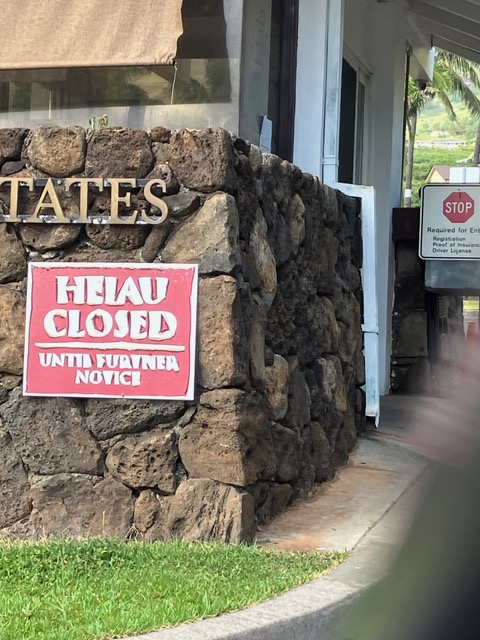
Upon returning to Hawai’i, I intended to worship at the Kanenuiakea healing shrine, Kane’aki Heiau, as per my custom according to my multiple faiths. However, access was denied, as it is now restricted to members of Mauna ‘Olu Estates. It is reported that no Hawaiian owners reside there.
Access to Worship at Kahe’aki Heiau Denied
–Until Further Notice!
While the United States protects property rights, it does not recognize indigenous communal property, particularly places of worship that lack legal status under U.S. law. Kane’aki Heiau, a sacred temple and shrine, was first surrounded by a homeowners’ association and then claimed by it. The association now benefits from a tax deduction for preserving historic cultural property. Despite this, Hawaiians’ right to access is denied and enforced by State of Hawaii property rights law.
While the United States protects property rights, it does not recognize indigenous communal property, particularly places of worship that lack legal status under U.S. law. Kane’aki Heiau, a sacred temple and shrine, was first surrounded by a homeowners’ association and then claimed by it. The association now benefits from a tax deduction for preserving historic cultural property. Despite this, Hawaiians’ right to access is denied and enforced by State of Hawaii property rights law.
The International Association for Religious Freedom (IARF) and Religions for Peace are investigating how to effectively protest this apparent violation of U.S. and State of Hawaii constitutional rights regarding freedom of religion. Historically, the U.S. Supreme Court has interpreted freedom of religion as belief but not worship. Will colonial attitudes against indigenous worship change to support the religious freedom to pray at an acknowledged ancient temple?
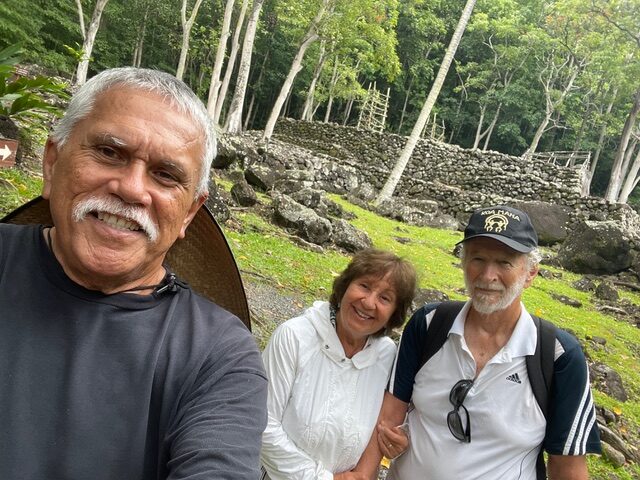
Kumu Glen Kila, George and Zizi at Kane’aki Heiau 2 years ago after climbing over locked gates. Kumu Glen is the Kahuna-nui, High Priest of Kanenuiakea, a faith with a thousand year history just on the Waianae Wahipana (west coast of Oahu).
IARF 124th Annivesary Celebrated by BV Foundation for Peace and Harmony
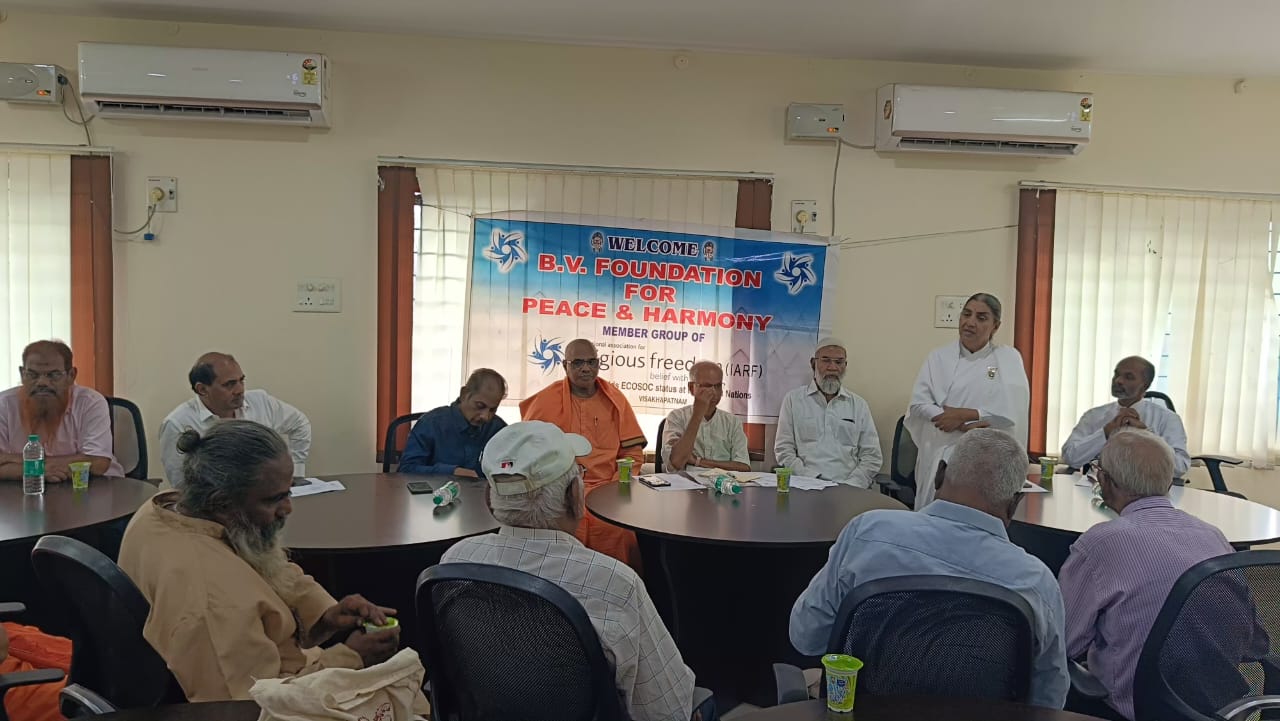
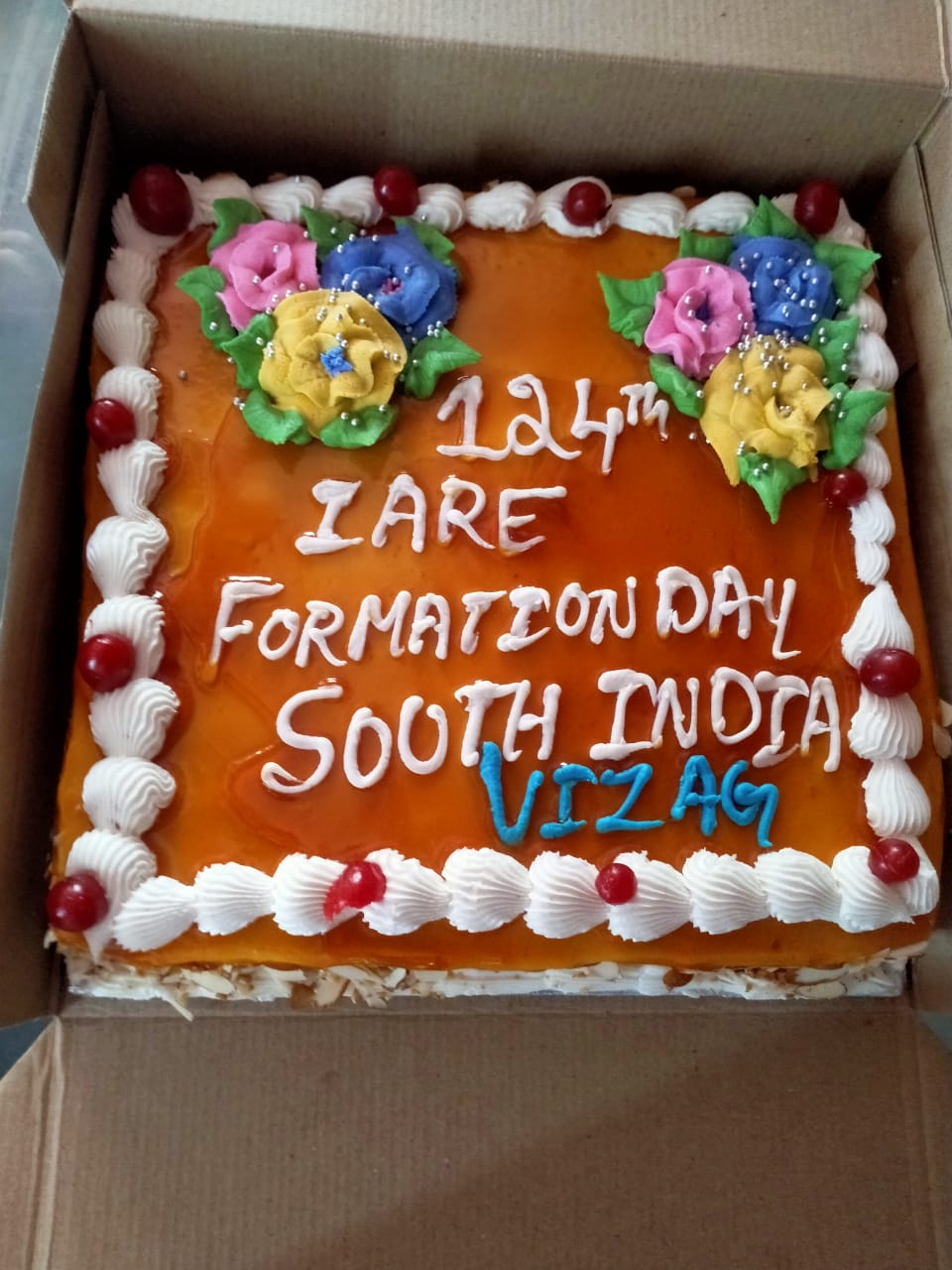
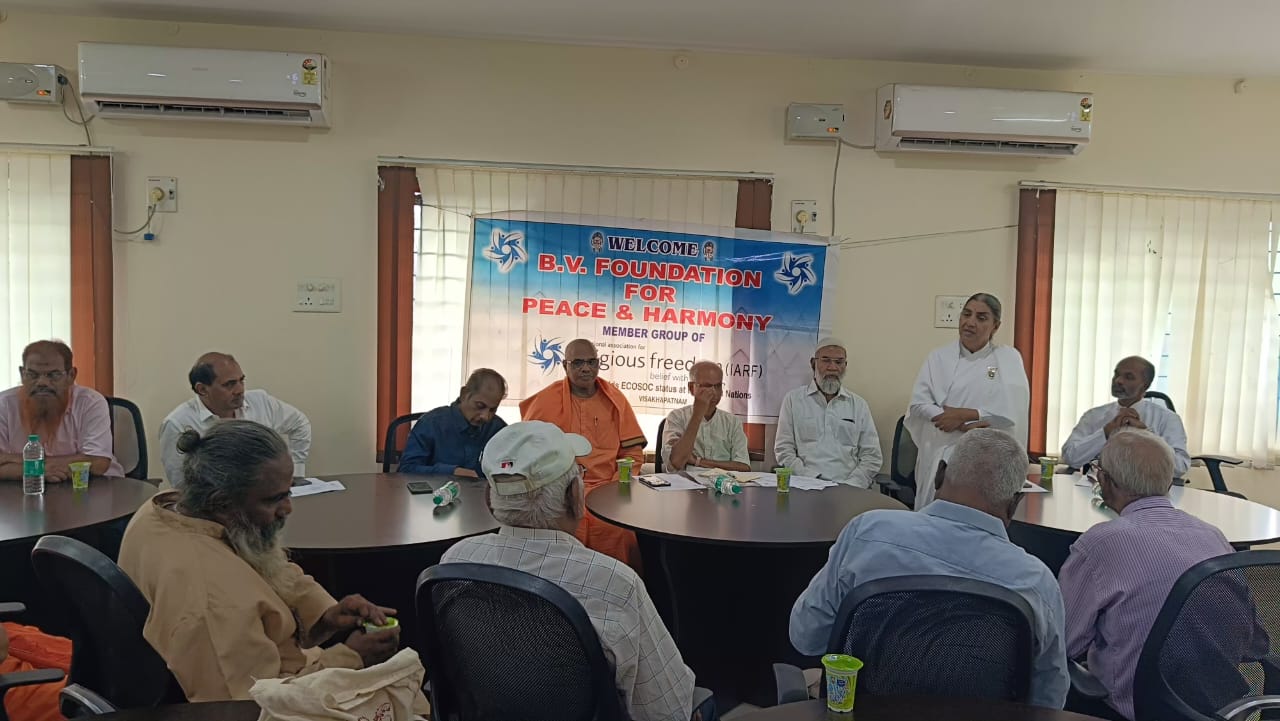
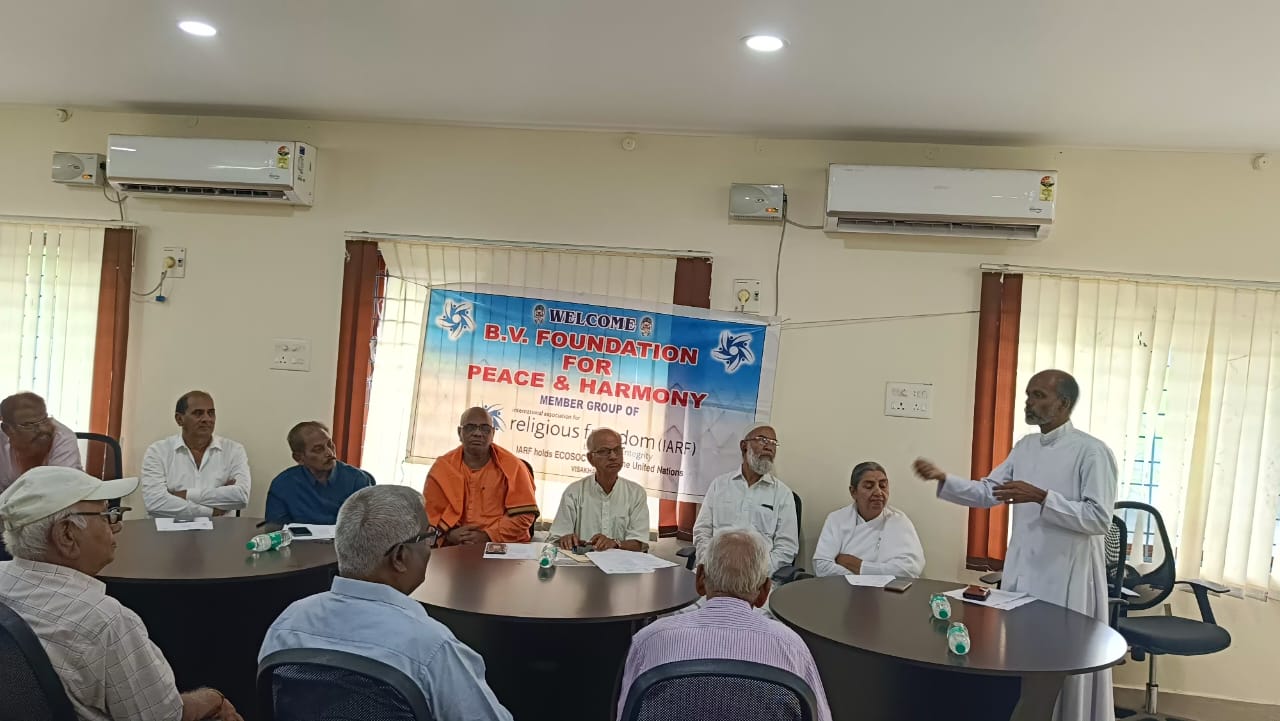
The BV Foundation for Peace and Harmony, a member group of IARF South India, celebrated the 124th IARF Formation Day on Saturday, May 25th, at the Gandhi Center Seminar Hall located at Dr. LB College in Visakhapatnam, Andhra Pradesh, South India. Prof. Prakasa Rao, chairman of the foundation, presided over the meeting.
The celebration began with an interfaith prayer, followed by a cake-cutting ceremony. In his presidential address, Prof. Rao highlighted that the IARF was established on May 25th, 1900, in Boston to realize the vision of the World Parliament of Religion held in 1893. As the oldest interfaith organization in the world, IARF collaborates with religious communities and secular organizations committed to openness, free religious inquiry, human dignity, social responsibility, and service. The organization also works to protect religious freedom and fundamental human rights through its representatives at the United Nations.
The chief guest, Prof. V. Balamohandas, former vice-chancellor of Acharya Nagarjuna University and president of the Gandhi Center, commended IARF’s remarkable 124-year history and called for improved religious tolerance worldwide. He emphasized that while religious worship and beliefs are personal matters, the coexistence of people belonging to different religions is a tradition that IARF should continue to uphold. Prof. Balamohandas termed atrocities committed in the name of caste, color, and community as barbaric, stressing that peace is only possible when all religions coexist and live in harmony.
Other speakers who endorsed the chief guest’s statement included:
Swami Swasamvedya Nanda, secretary of Ramakrishna Mission
Syed Shamsuddin, Additional District Government Qazi
Sushil Sekhani Jain, chairman of Mahaveer International
B. Gowtam Babu, the Buddhist Society of India
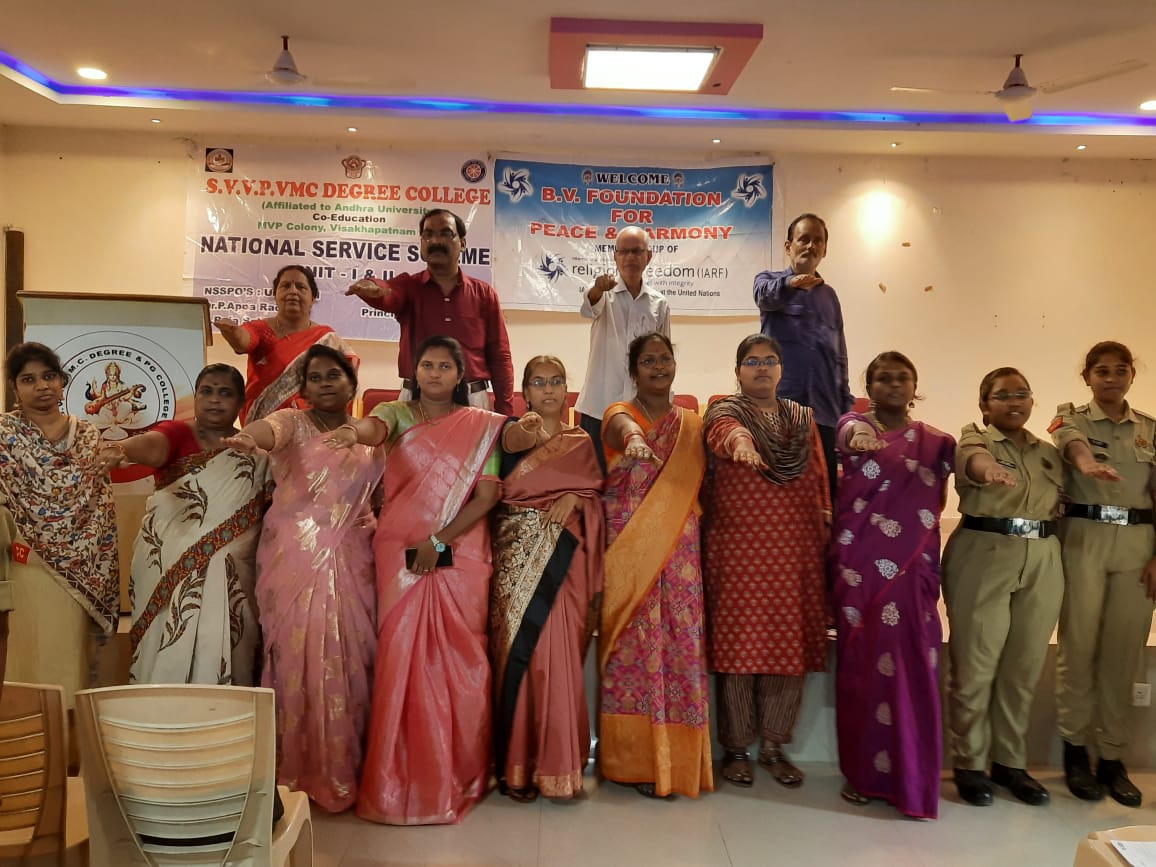
The convener, Abdul Muneer Mushhad, proposed a vote of thanks. The meeting concluded with participants taking a peace pledge and singing the Indian national anthem, “Jana Gana Mana.”
Update from the 68th UN Commission on the Status of Women
Rev. Dr. Esther Suter, our main representative to the UN, has written a short update on the 68th session of the UN Commission on the Status of Women (CSW). It touches upon critical issues discussed during the event, including the challenges faced by women in the digital age, the importance of including young voices in the fight for gender equality, and the ongoing struggle between cultural practices and universal human rights. A more detailed report from the event will follow.
Pushback against the Pushback
The 68th session of the UN Commission on the Status of Women received 10,600 registrations from NGOs, and 4,800 participants travelled to New York.
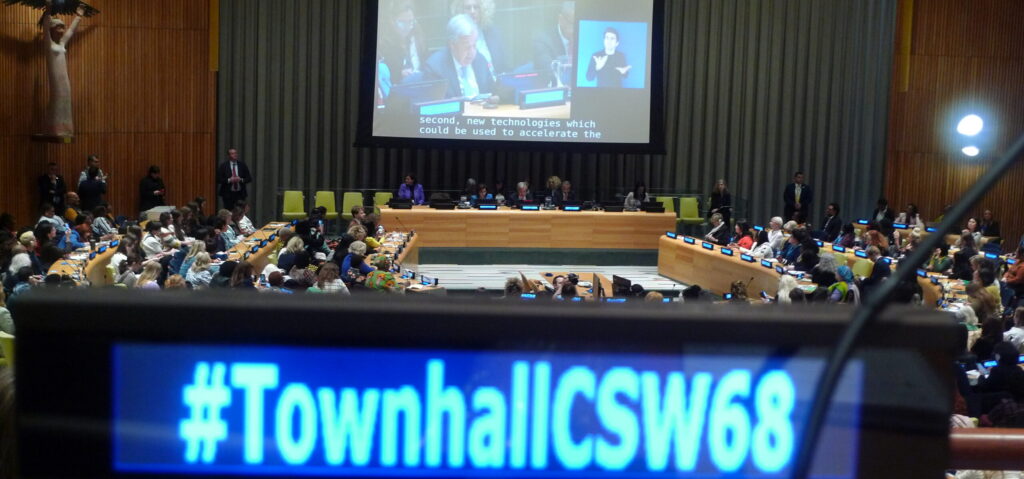
At the Town Hall Meeting for civil society on March 13, the General Secretary Antonio Guterres warned that AI is a male-dominated and defined field that ignores a women-specific mindset. This ‘Digital Gender Divide’ must be bridged. He encouraged women to work together with like-minded men. These men could take on the persuasive work that is difficult for women to carry out in discussions with religious (male) leaders about gender equality or domestic violence. The topic of male values about masculinity in education of boys and for adult men must be reintroduced in order to raise awareness of stereotypical patterns. “Pushback against the pushback,” he advised.
One visible success is the inclusion of the younger generation. Young women like 18-year-old Toniyah made a statement: As an African-American, she spoke about the changing narrative that black voices are not being heard. She belongs to Black Girls Rising Inc., an organization in Ohio that accompanies black girls and focuses on their mental and emotional health. A research project follows girls growing up and examines how they experience their world and how they are affected by stress factors. They want to change the narrative that their voices are not important enough and try out positions of power where they are heard. So Toniyah can say: “We are the youth, so therefore we are the future.”
Cultural or (female) human right?
An African woman in a parallel event told about a “pushback”: In 2015, Gambia banned female circumcision by law and punished it with up to three years in prison. Politicians supported a controversial bill on March 18 to lift this ban. The Gambia would be the first country in the world to remove legal protection from such a harmful practice for millions of women and girls, on the grounds of the (male) petitioner that the ban violates the rights of citizens. This practice is in keeping with an ancient culture and religion in what is now a predominantly Muslim country. Genital circumcision (also known as genital mutilation) is internationally classified as a harmful practice and contradicts universal human rights.
The Gambia organized a side event on “Empowering Women and Girls by addressing Poverty through Sexual and Gender Based Violence financing in the Gambia” with the First Lady of the Republic of Gambia. Neither in the introduction nor in the votes was the possible change in the law mentioned. The reports focused on measures such as the establishment of “Shelter.” The issue of violence against women and girls was described in general terms, without mentioning FGM or referring to it as violence. One journalist asked directly, and the official answer was that this bill would not be presented to parliament. It remains to be seen whether women in the Gambia will sufficiently oppose such a bill. Could this example indicate a new trend? Or will it create opposing forces and help deepen the issue of cultural and religious identity?
Watch “Levels of Dialogue: Religious Experience in an Interfaith Context”
In this session, recorded on 13 November 2023 during Inter Faith Week, the British Chapter of the International Association for Religious Freedom, in collaboration with the World Congress of Faiths, embarked on a deep exploration of interreligious dialogue’s dynamic tension between the unique characteristics of different faiths and their universal connections.
The event, held via Zoom, provided a platform for participants to engage with the complex interactions between various religious origins, developmental paths, belief systems, and spiritual practices, highlighting the potential for a familial resemblance among diverse faith traditions.
Featuring a keynote by the Reverend Canon Dr. Alan Race, Chair of the World Congress of Faiths and editor of Interreligious Insight, this recording offers invaluable insights into the challenges and opportunities presented by interfaith dialogue.
Dr. Race, a retired Anglican priest-theologian with an extensive background in the theology of religions and interreligious dialogue, shares perspectives from his latest book, My Journey as a Religious Pluralist (Wipf and Stock, 2021), enriching our understanding of how religious experiences and dialogues intersect with the broader quest for mutual understanding and respect among faiths.
Join us in this recorded session to explore the intricate landscape of interfaith dialogue, where the particularities of each religion meet the universal quest for spiritual connection and understanding.
https://www.youtube.com/watch?v=WzH6Yo58Gxg
BV Foundation Commemorates International Day of Peace 2023
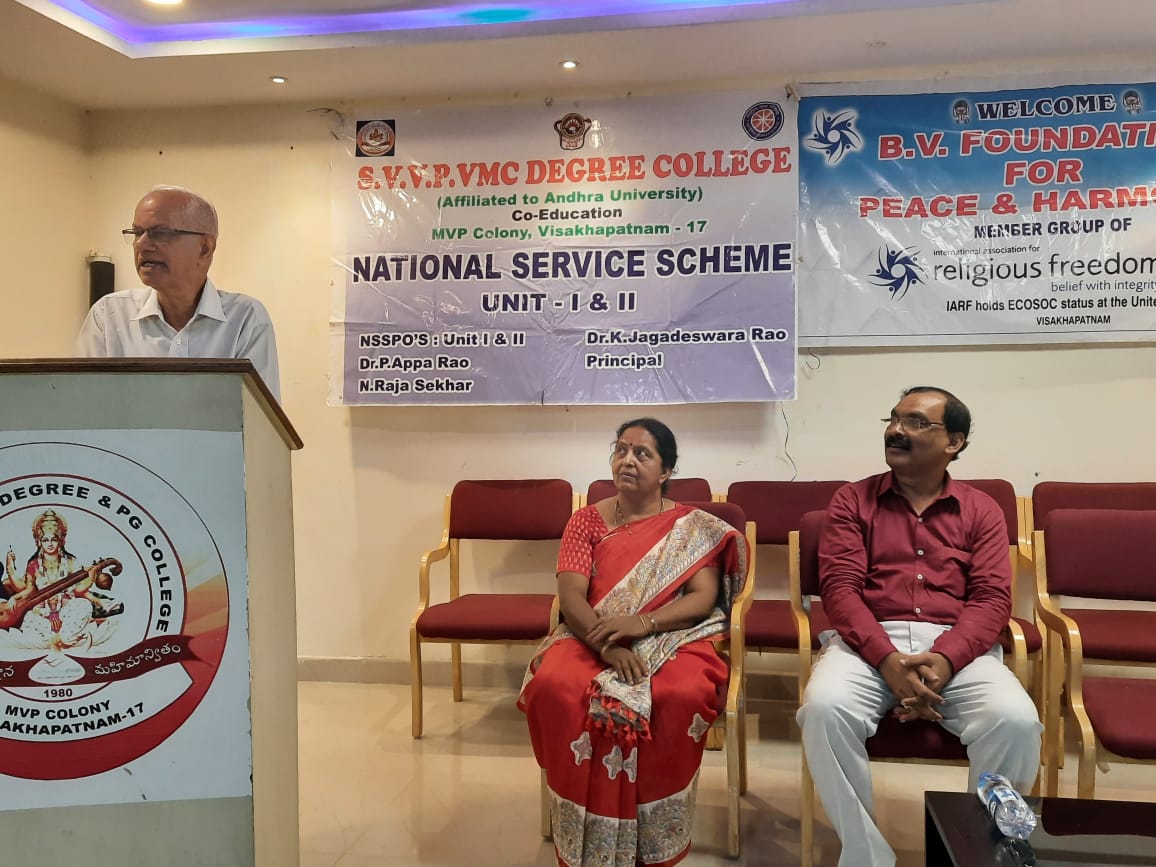
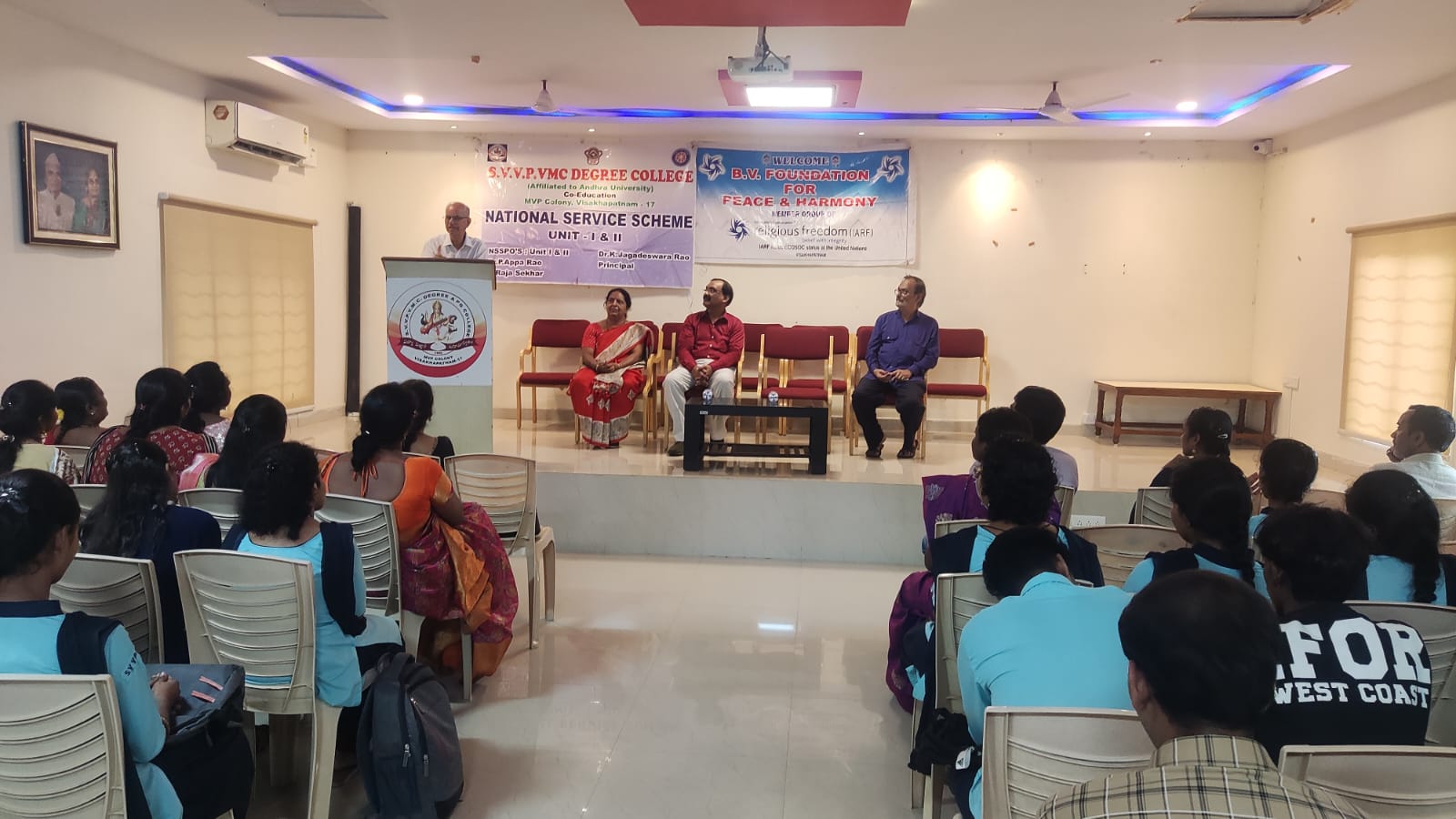
Summary The BV Foundation for Peace and Harmony, a member group of the International Association for Religious Freedom (IARF), hosted a special event in honor of the International Day of Peace on September 21, 2023. The event was conducted at SVVP Degree College in MVP Colony, Visakhapatnam, Andhra Pradesh, under the chairmanship of Prof. Prakasa Rao.
Lighting the Lamp of Peace The day began with the time-honored tradition of lighting a lamp to signify the commencement of the celebrations. Dr. K. Jagadeshwara Rao, the Principal of SVVP Degree College, served as the chief guest for the occasion. A multi-faith prayer session was conducted to unite all attendees in a solemn commitment to peace.
Advocating for Global Harmony
The focal point of the event was a series of speeches highlighting the critical need for fostering global peace. Prof. Prakasa Rao took the audience on a historical journey, elaborating that the International Day of Peace was established by the United Nations General Assembly on September 21, 1981. The goal behind this designation is to promote nonviolence, peace, and ceasefire among nations and individuals worldwide.
This Year’s Theme: End Racism and Build Peace
The current year’s theme resonated strongly with the audience, emphasizing the necessity to “End Racism and Build Peace.” Prof. Rao stressed that maintaining social harmony is of utmost importance, especially in an era where antisocial elements are disturbing the peace through violent activities.
Allocating Resources for Peace Over War
The speakers also discussed how nations often allocate extensive budgets for defense at the expense of vital sectors such as healthcare, food security, social welfare, and education. They argued for a reevaluation of priorities, emphasizing the significance of peace for societal wellbeing.
A Standing Ovation for UNO’s Efforts
Dr. K. Jagadeshwara Rao applauded the relentless efforts made by the United Nations to uphold peace despite numerous challenges. He suggested that educational institutions have a pivotal role to play in sensitizing the youth about methods to maintain global peace.
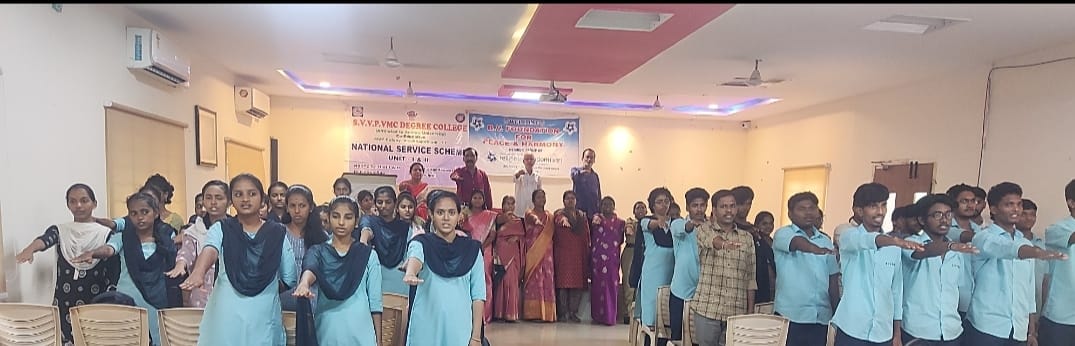
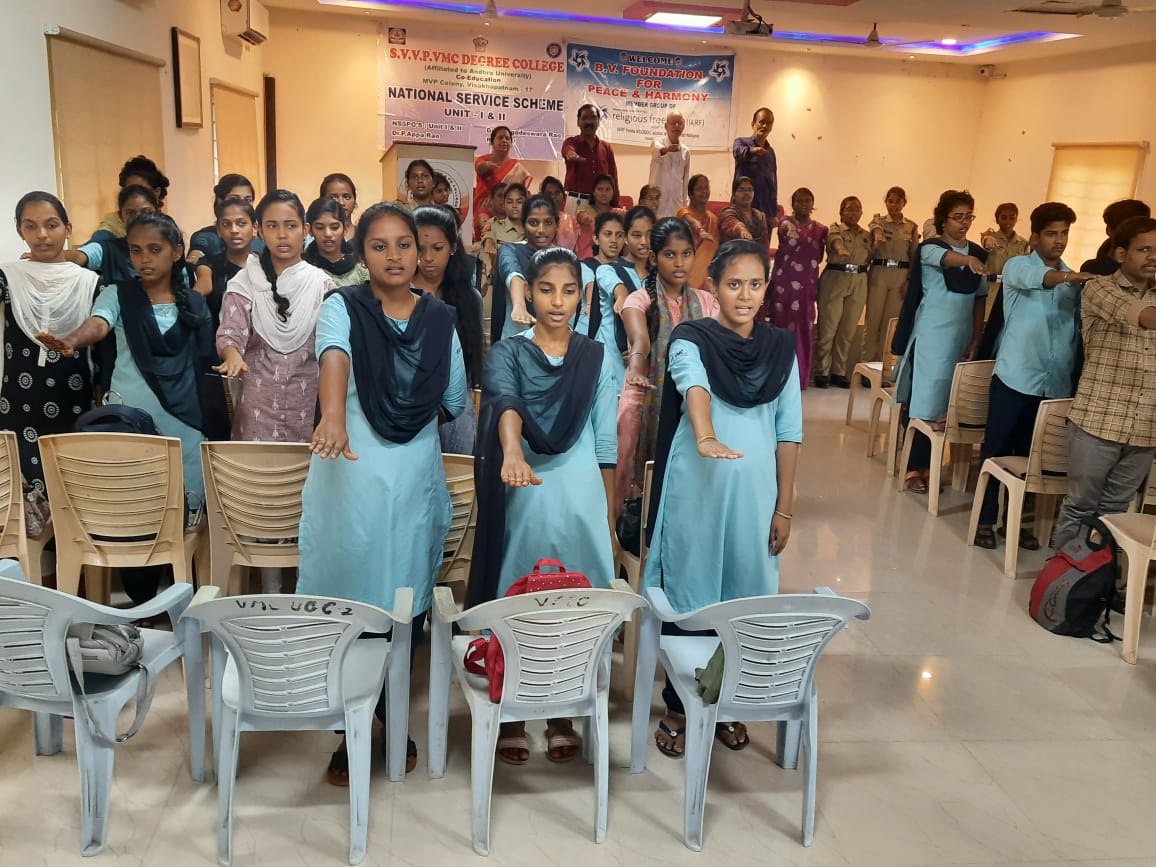
Taking the Peace Pledge
The event concluded with all attendees taking a pledge for peace, thereby symbolizing a collective commitment to promoting harmony across communities, nations, and religions.
For more information on upcoming events and how you can participate, please contact the BV Foundation at [email protected].in.
Visakhapatnam Commemorates Hiroshima and Nagasaki
by Prof. Narava Prakasa Rao, IC Member, IARF and Chairman, BV Foundation for Peace and Harmony Member Group
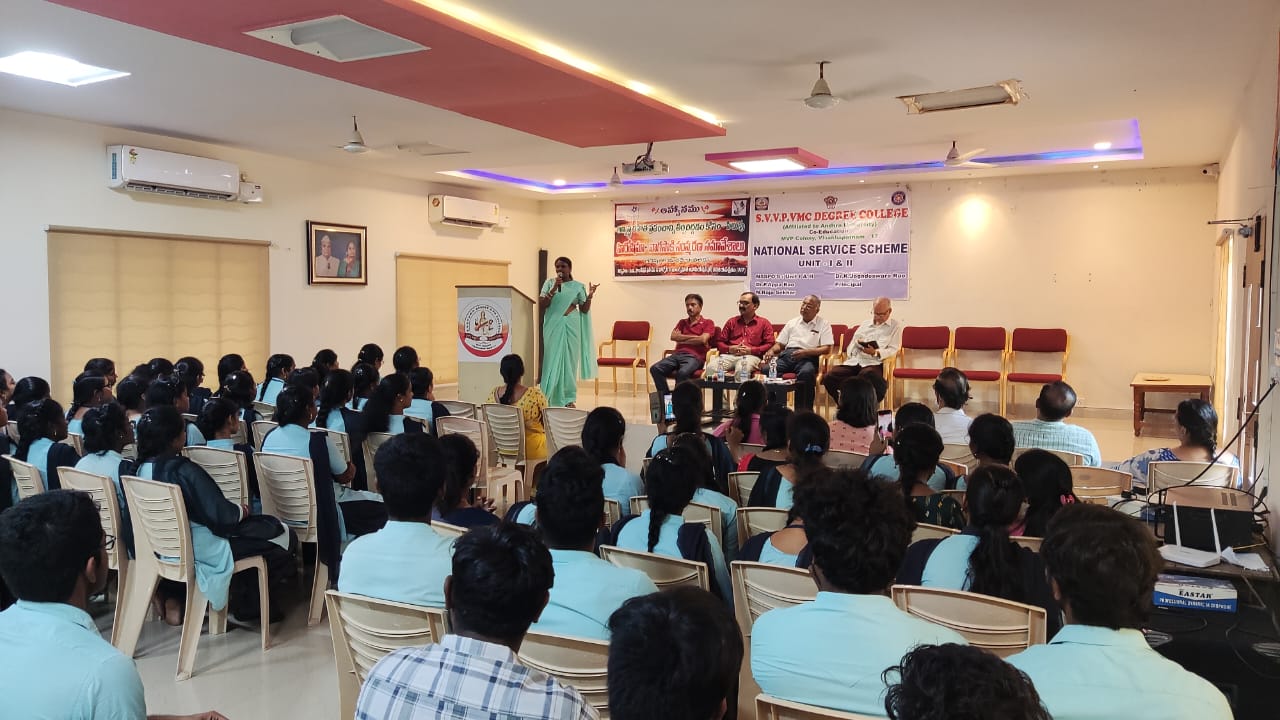
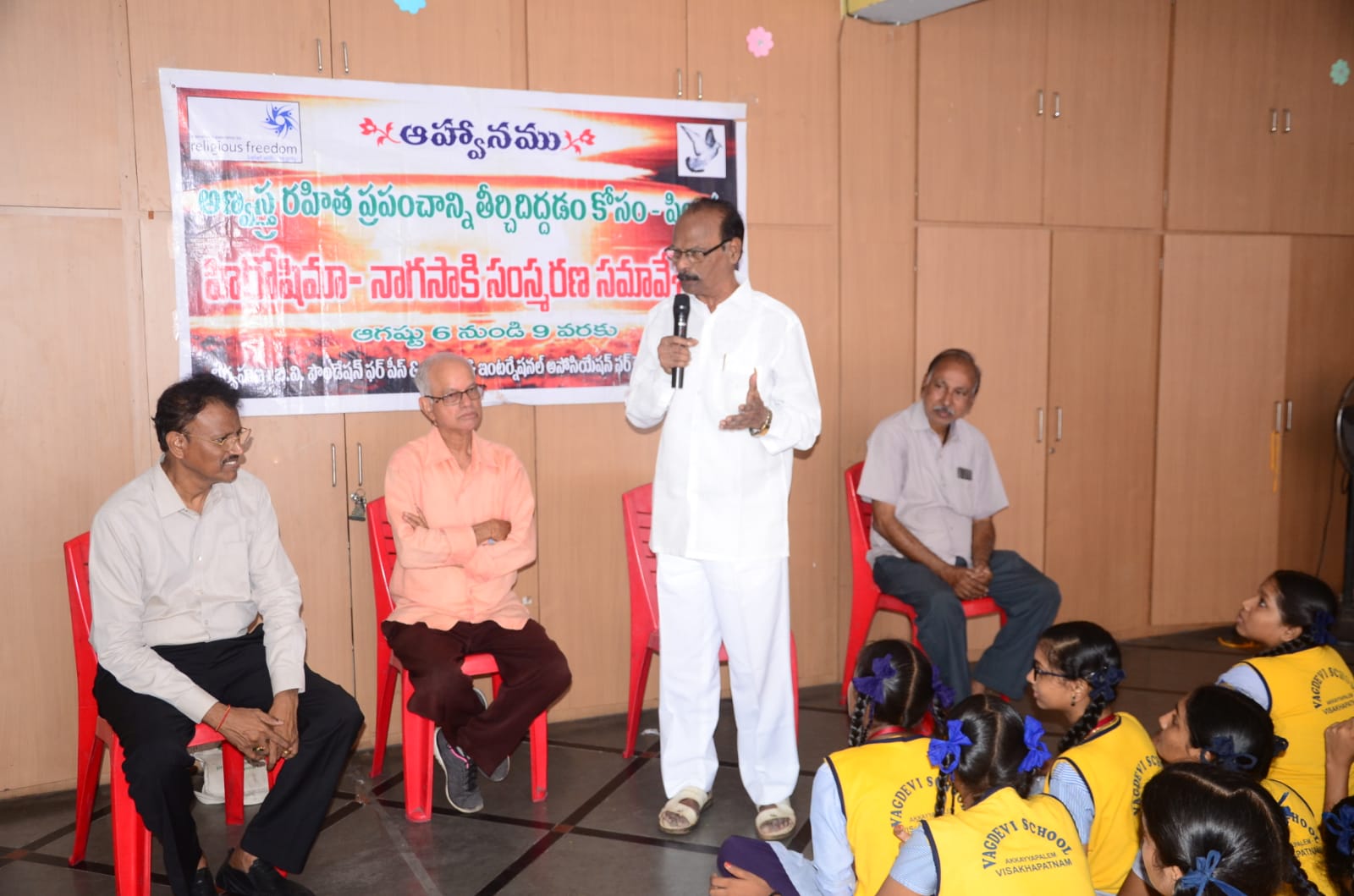
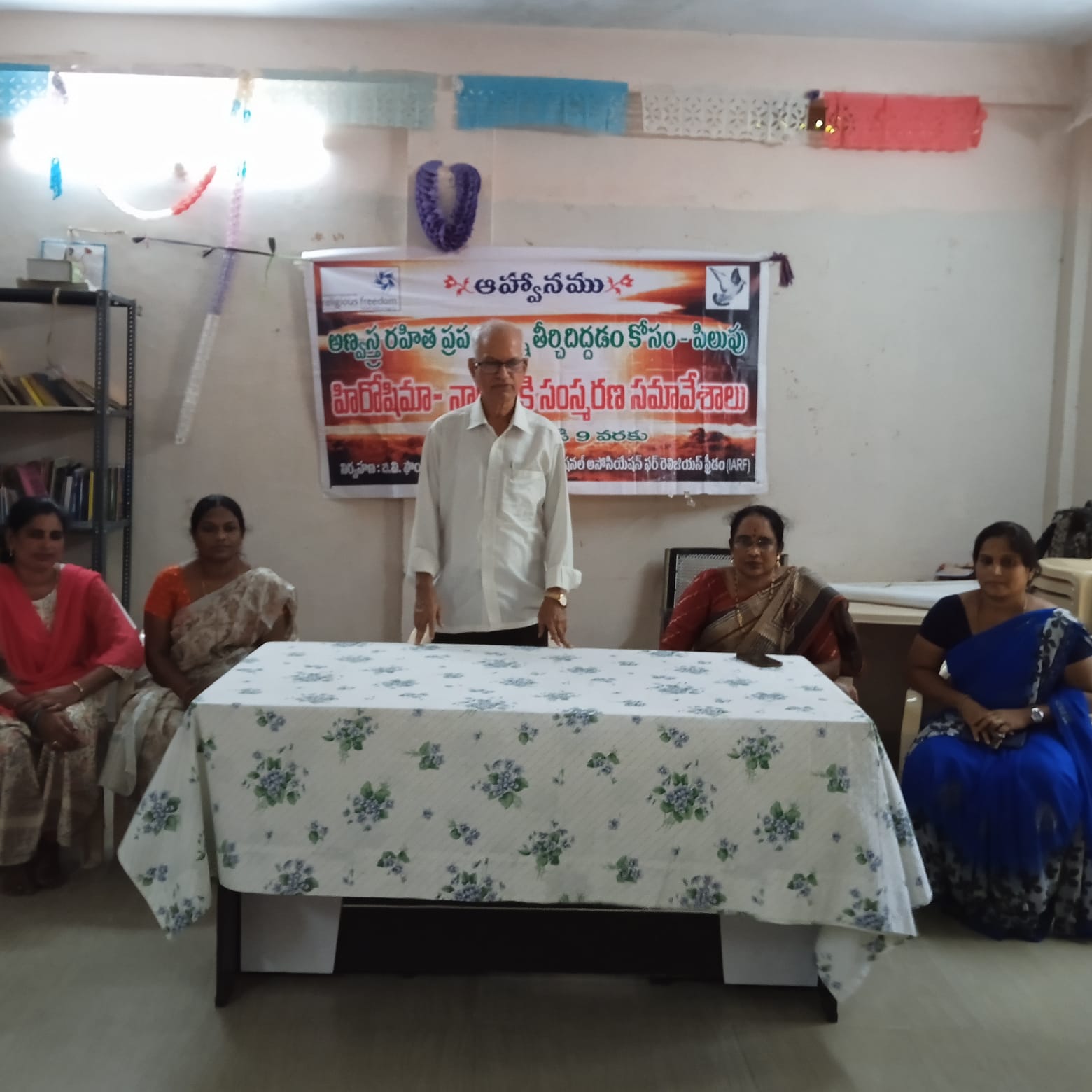
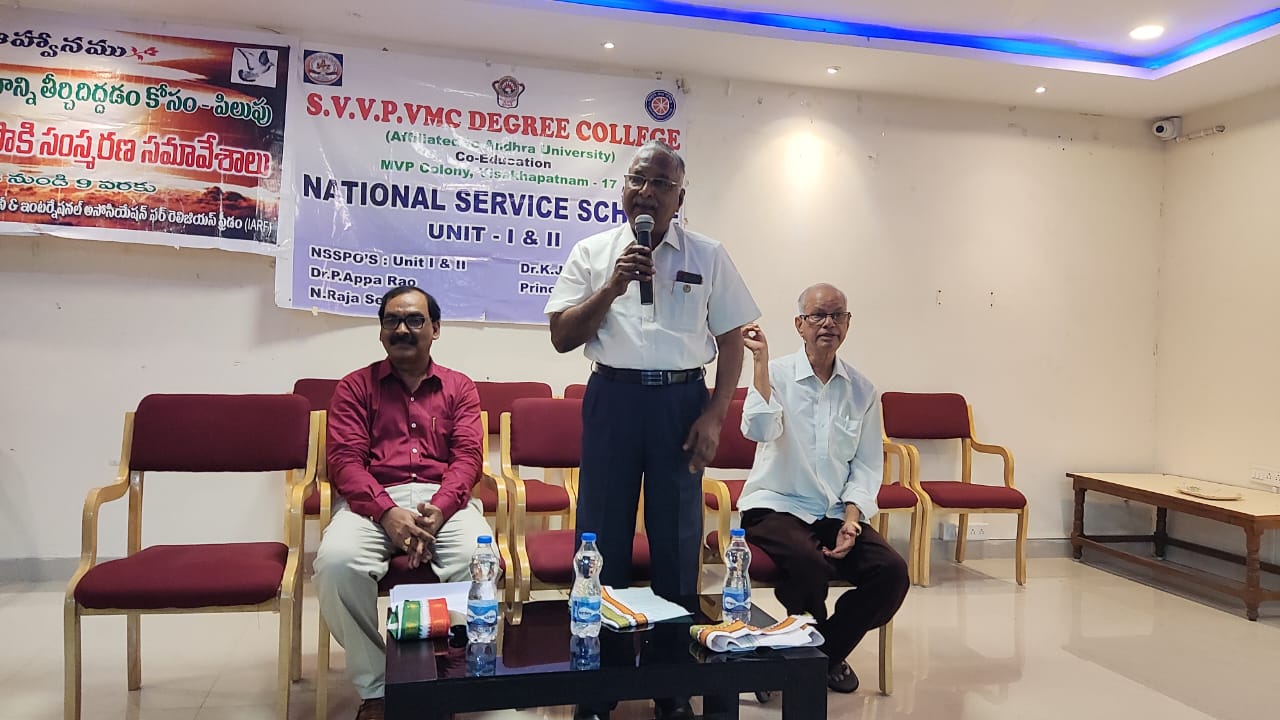
VISAKHAPATNAM, INDIA – From August 6th to 9th, 2023, the International Association for Religious Freedom (IARF) in collaboration with the BV Foundation for Peace and Harmony conducted a series of commemorative meetings at various schools and colleges across Visakhapatnam. These meetings marked the somber anniversaries of the Hiroshima and Nagasaki atom bomb explosions, aiming to educate and inculcate a quality mindset among the public, with special emphasis on the student community.
Under the guidance and coordination of Prof. Narava Prakasa Rao, IC Member and chairman of the Foundation for Peace and Harmony, these annual meetings have been successfully held to shed light on the tragedies of August 1945. This year, it commemorated the 78th anniversary of the devastating nuclear attacks which took the lives of at least 129,000 innocent individuals, marking a dark day in global history. This stands as the sole instance of nuclear weapons being employed in warfare.
Speakers at the commemorative meetings highlighted the peaceful applications of atomic energy. Through comprehensive PowerPoint presentations, the importance of nuclear power, application of non-conventional energy resources, and the necessary safety measures were emphasized. Attendees were informed about the potential benefits of nuclear energy in societal development, such as cost-effective methods to desalinate seawater, medical uses like MRI scans and radiotherapy, among other treatments. However, they also emphasized the essential need for proper nuclear waste management to prevent the severe hazards posed by radiation and toxins.
A strong message resonated across all sessions: while nuclear energy has the potential to propel societal advancements, the devastation caused by nuclear bombs and the consequential radiation cannot be ignored. To reinforce this message and promote peace, a PEACE pledge was undertaken by students at every meeting.
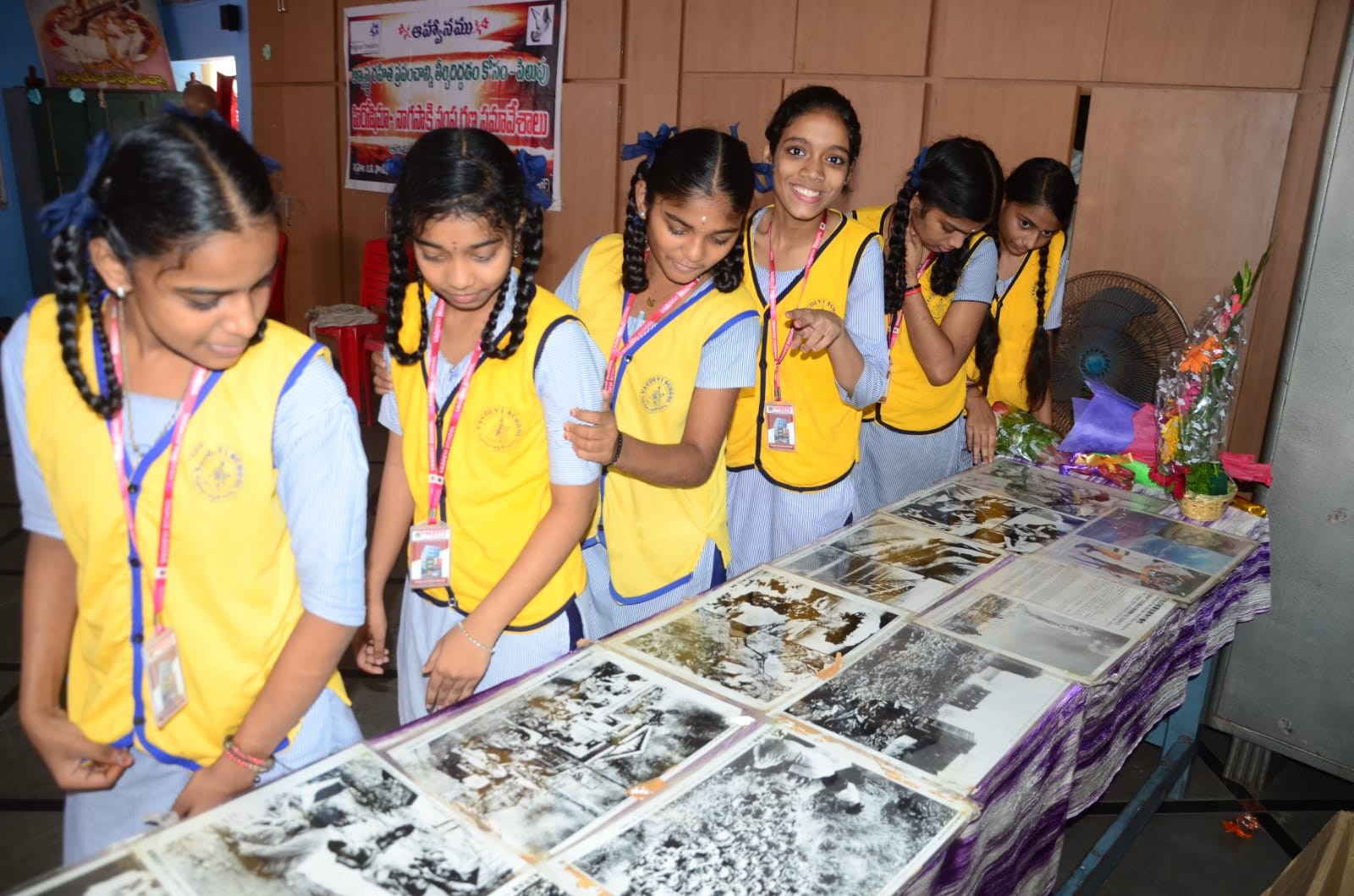
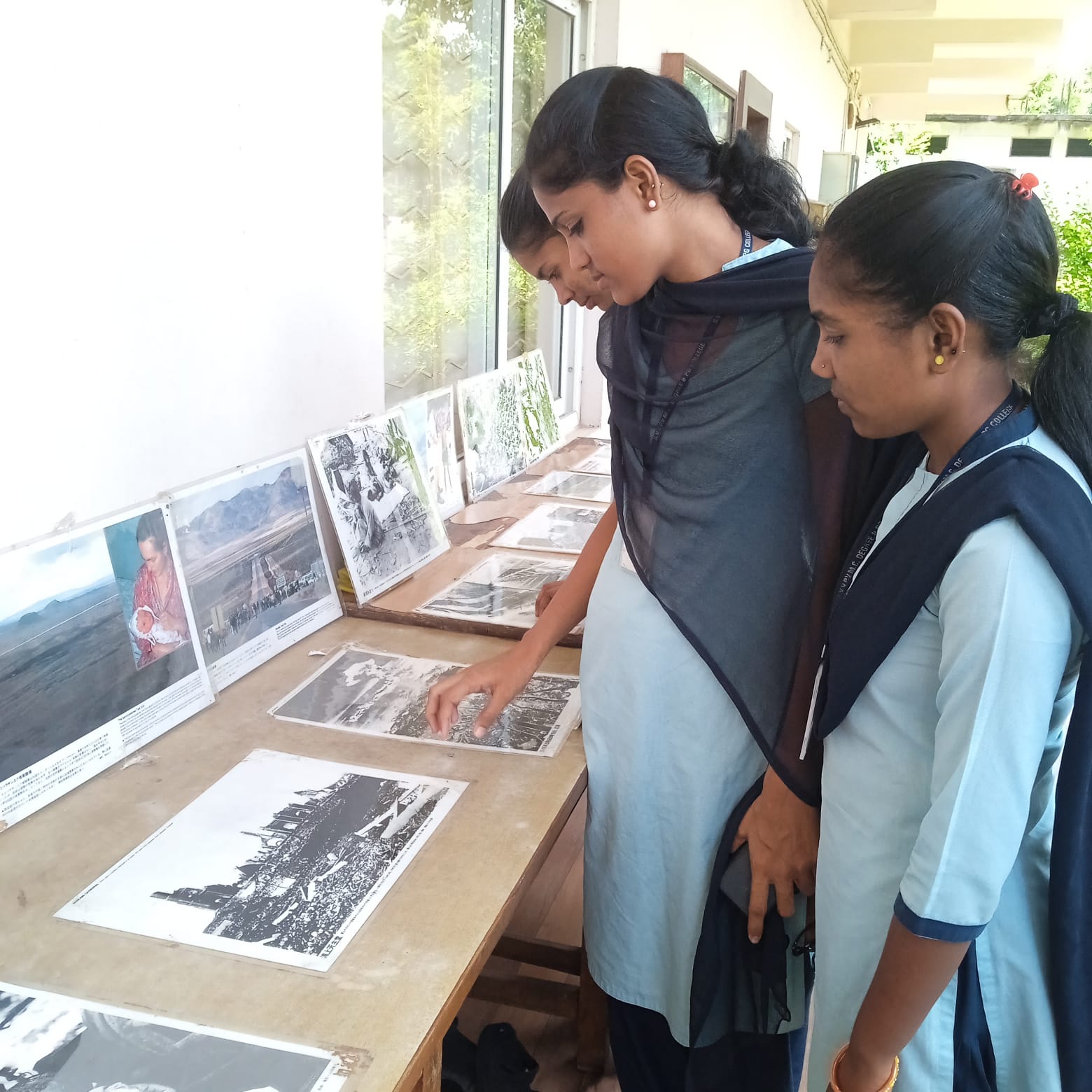
Complementing the series of meetings was a powerful photo exhibition, which offered attendees a visual journey through the tragic events of Hiroshima and Nagasaki. Documentaries depicting the historical events and their aftermath were also screened, making the significance of the incidents even more palpable.
In these trying times, initiatives like these underscore the importance of peaceful coexistence and the prudent use of powerful resources. The dedicated efforts of organizations like the IARF and BV Foundation serve as a beacon of hope for a world aspiring for peace and harmony.
by Prof. Narava Prakasa Rao, IC Member, IARF and Chairman, BV Foundation for Peace and Harmony Member Group
VISAKHAPATNAM, INDIA – From August 6th to 9th, 2023, the International Association for Religious Freedom (IARF) in collaboration with the BV Foundation for Peace and Harmony conducted a series of commemorative meetings at various schools and colleges across Visakhapatnam. These meetings marked the somber anniversaries of the Hiroshima and Nagasaki atom bomb explosions, aiming to educate and inculcate a quality mindset among the public, with special emphasis on the student community.
Under the guidance and coordination of Prof. Narava Prakasa Rao, IC Member and chairman of the Foundation for Peace and Harmony, these annual meetings have been successfully held to shed light on the tragedies of August 1945. This year, it commemorated the 78th anniversary of the devastating nuclear attacks which took the lives of at least 129,000 innocent individuals, marking a dark day in global history. This stands as the sole instance of nuclear weapons being employed in warfare.
Speakers at the commemorative meetings highlighted the peaceful applications of atomic energy. Through comprehensive PowerPoint presentations, the importance of nuclear power, application of non-conventional energy resources, and the necessary safety measures were emphasized. Attendees were informed about the potential benefits of nuclear energy in societal development, such as cost-effective methods to desalinate seawater, medical uses like MRI scans and radiotherapy, among other treatments. However, they also emphasized the essential need for proper nuclear waste management to prevent the severe hazards posed by radiation and toxins.
A strong message resonated across all sessions: while nuclear energy has the potential to propel societal advancements, the devastation caused by nuclear bombs and the consequential radiation cannot be ignored. To reinforce this message and promote peace, a PEACE pledge was undertaken by students at every meeting.
Complementing the series of meetings was a powerful photo exhibition, which offered attendees a visual journey through the tragic events of Hiroshima and Nagasaki. Documentaries depicting the historical events and their aftermath were also screened, making the significance of the incidents even more palpable.
In these trying times, initiatives like these underscore the importance of peaceful coexistence and the prudent use of powerful resources. The dedicated efforts of organizations like the IARF and BV Foundation serve as a beacon of hope for a world aspiring for peace and harmony.
Human Rights Day Observed by the Visakhapatnam Branch
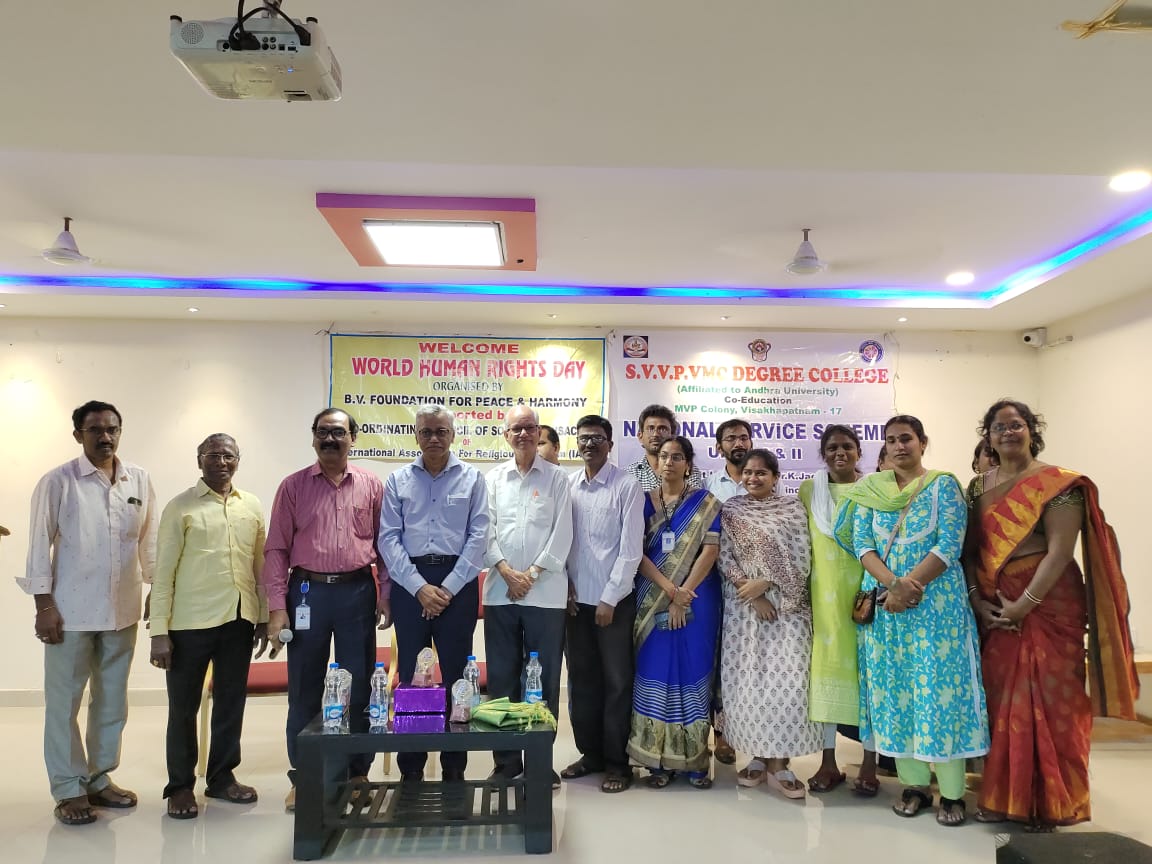
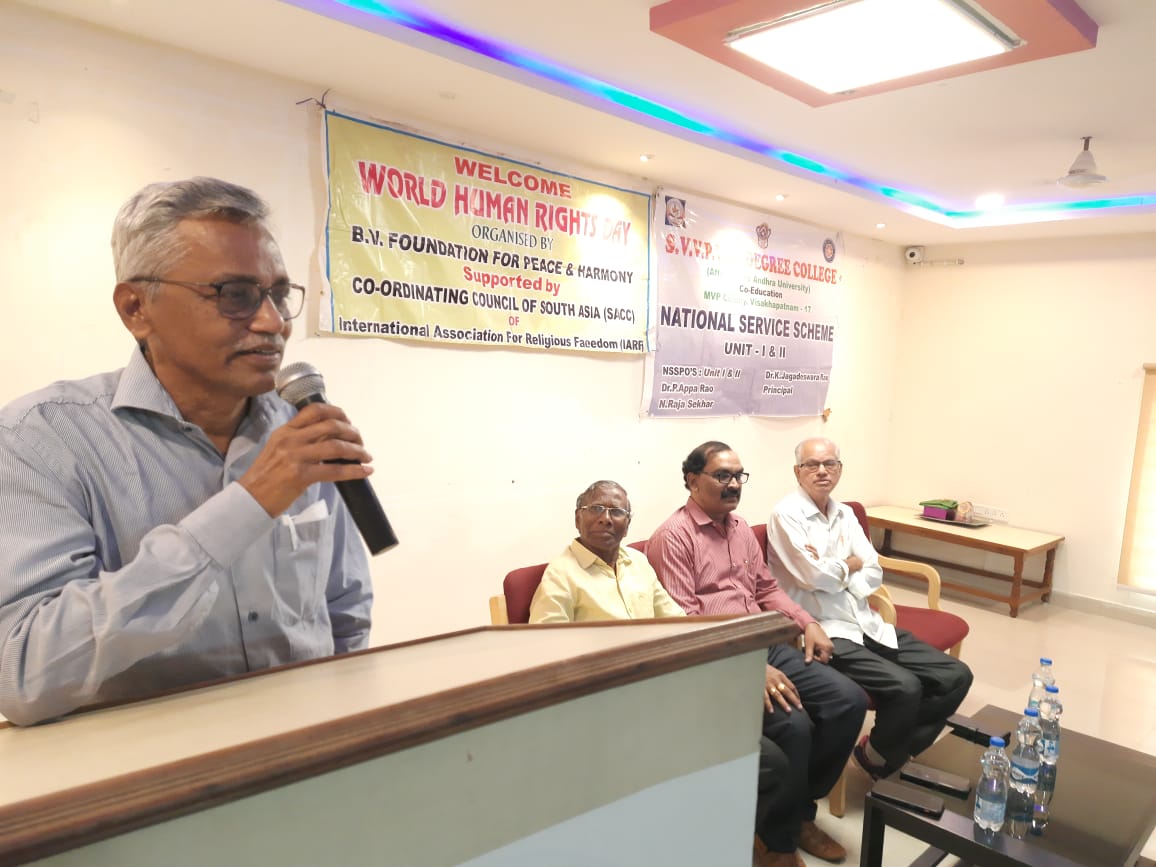
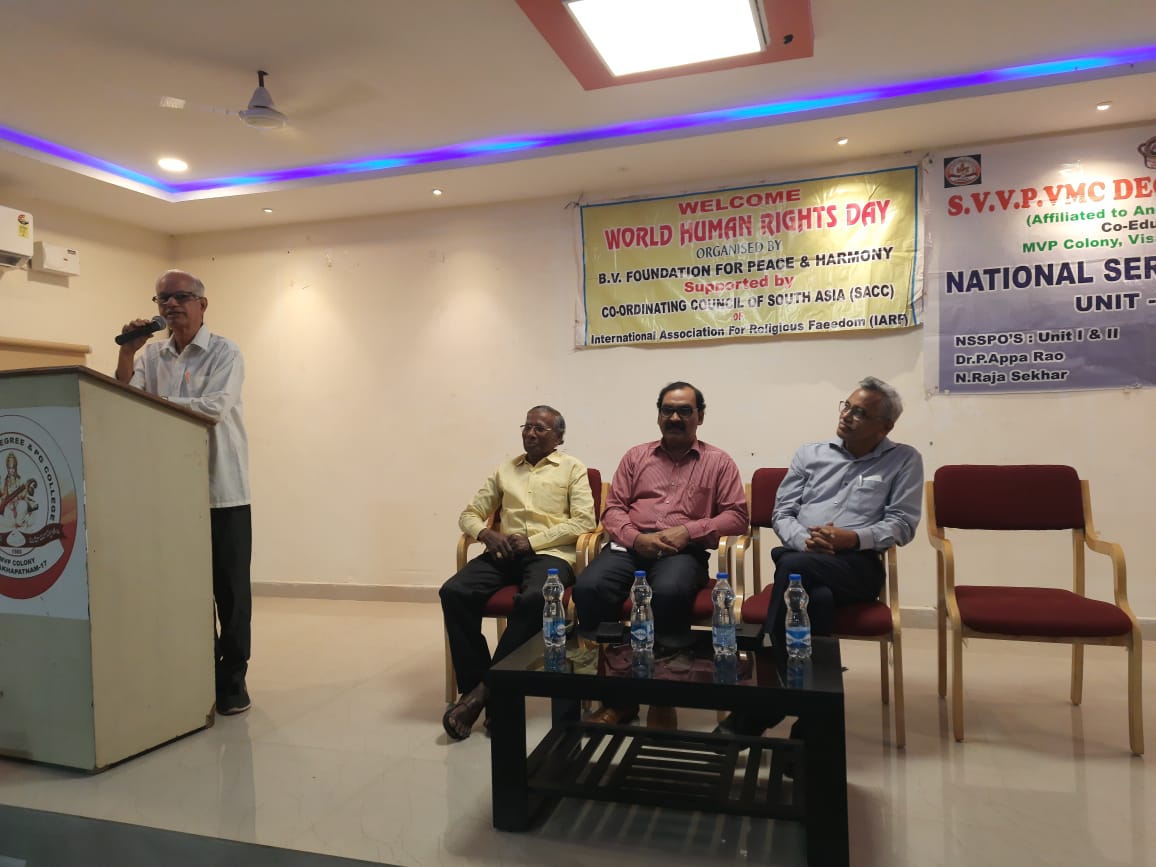
On Saturday, December 10th 2022, the BV Foundation for Peace and Harmony and the India Chapter of the International Association for Religious Freedom Visakhapatnam Branch organized a special meeting to mark World Human Rights Day. The event was held at the SVVP VMC Degree and PG Courses seminar hall in MVP Colney, Visakhapatnam. The purpose of the meeting was to educate degree and PG students about human rights and their role in protecting them.
Prof. Narava Prakasa Rao, International Council Member of the IARF, presided over the meeting. He emphasized the need for young people to be aware of various issues and to act responsibly in safeguarding their rights. He also emphasized that today’s youth are not useless, but rather their potential is underused. If they are motivated and their potential is utilized properly, they can make significant contributions towards building a just society.
The chief guest of the event, Prof. A. Rajendra Prasad, former Vice Chancellor of Nagarjuna University, called on the students to become change agents and work towards protecting human rights. He also emphasized the need for stronger enforcement of the Human Rights Act of 1993 and for the framing of rules under the Act to make it an effective law. He pointed out that the most vulnerable sections of society, such as children and women, often have their human rights violated and therefore there is an urgent need to increase awareness of human rights among these groups.
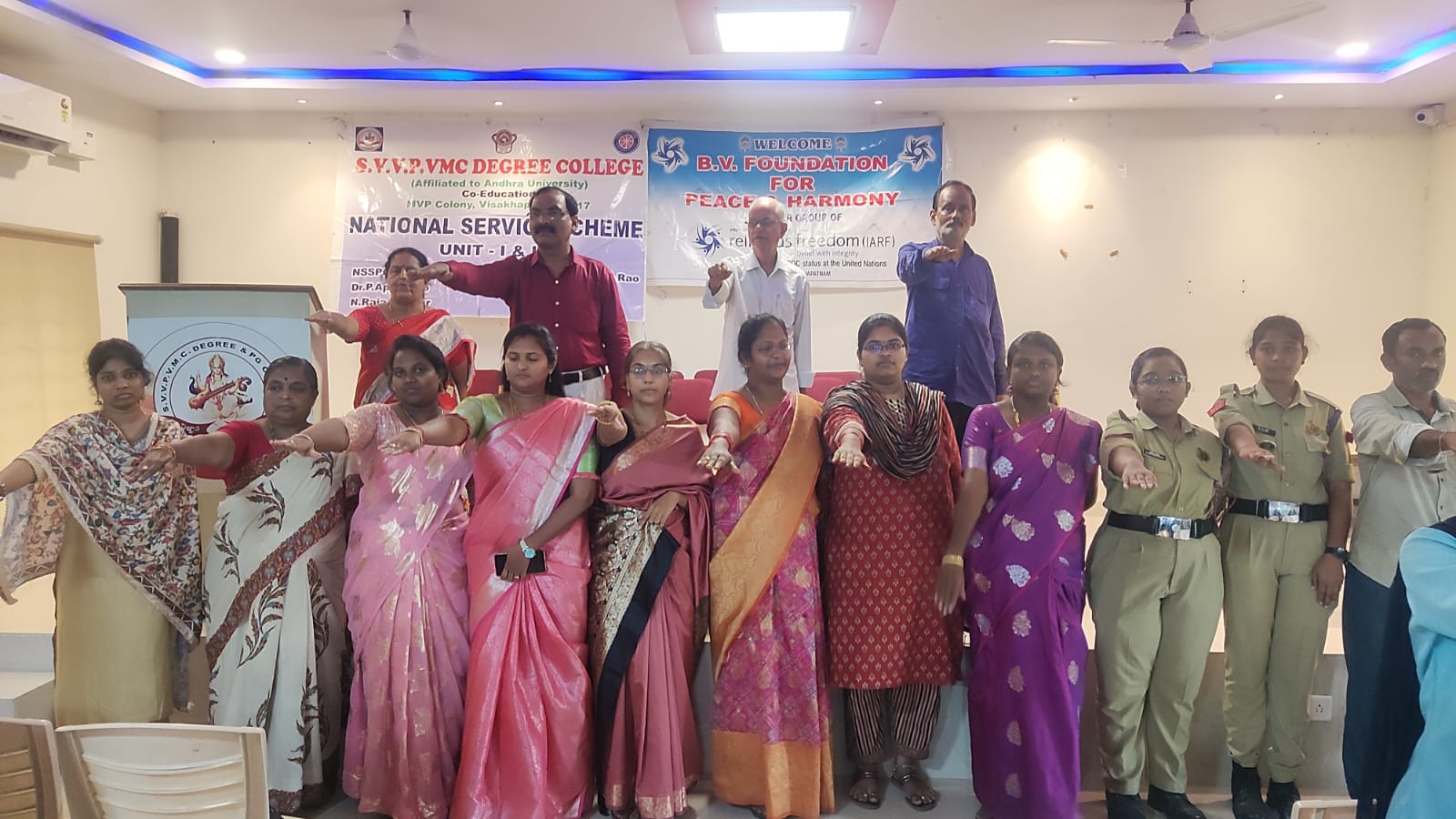
A debate competition was also held among the students on this occasion. Other attendees at the event included Dr. K. Rajesh, Principal of the Degree college, Sambasiva Rao, Principal of the Junior college, Dr. Appa Rao, NSS Coordinator, Dr. Ganesh Babji, Mrs. Syamala, and others.
Statement by IARF Kenya Chapter concerning current events in the country
Our Kenya Chapter has released the following statement regarding the troubling events taking place in the country. We join them in prayers and hope for a peaceful conduct of elections and national reconciliation later on. You can read more about the situation in Kenya here.
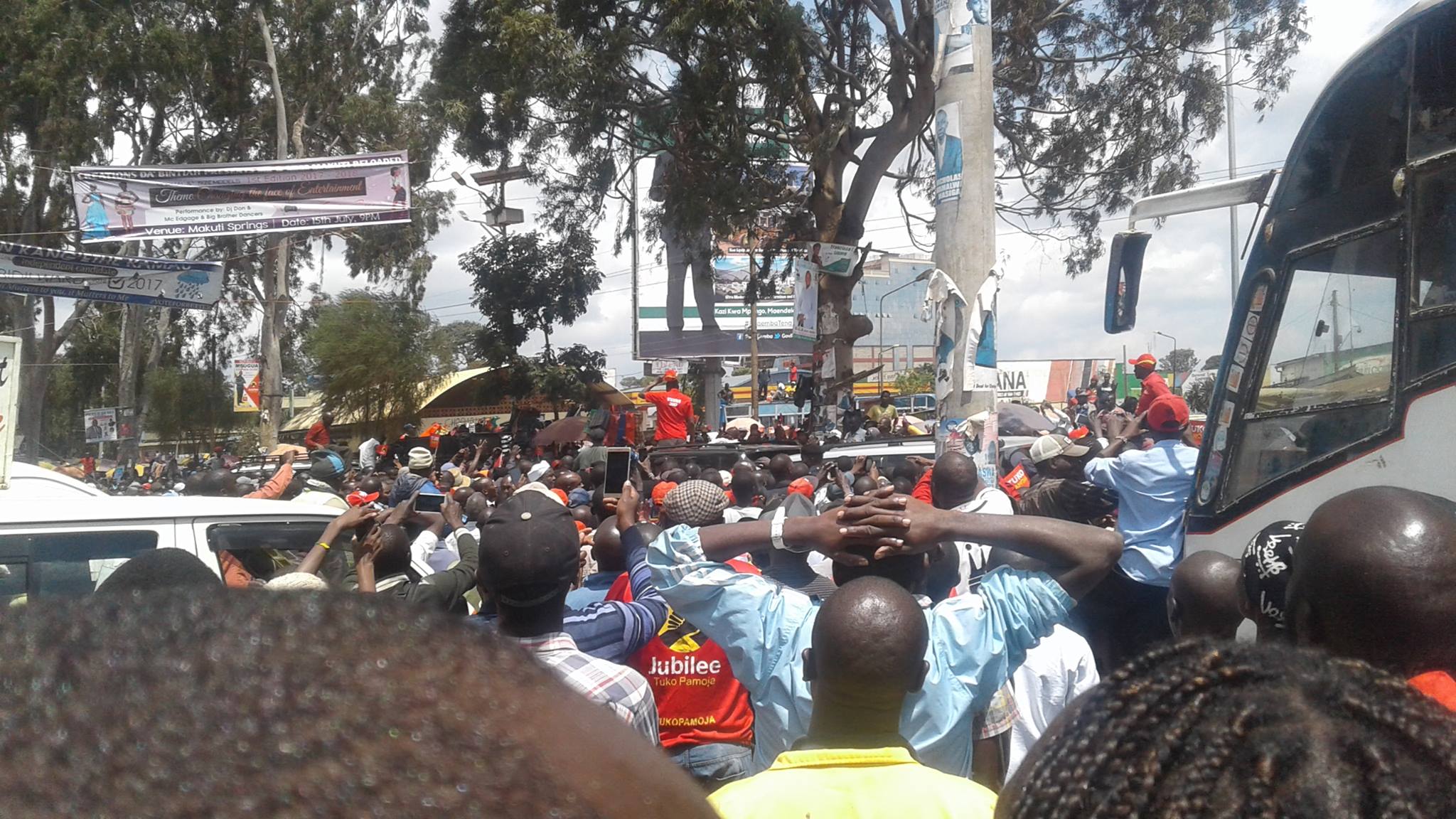
Protesters in Nairobi.
1st August 2017
The International Association for Religious Freedom (IARF) Kenya Chapter condemns in the strongest terms possible the continues killing of innocent prominent persons that are great developers for this nation. As the IARF community, we appeal to the president and the security agencies of this country to be sincere and tell Kenyans and the whole world why this is happening under their watch. These killings of innocent people or anybody else to serve the interests of some individuals should not be accepted under any circumstances. We are still mourning our lost heroes whom we laid to rest a few weeks ago, and similar events brining still more great losses continue to happen in our country. “Should we say hell has dropped from heaven to the earth called Kenya?” As an IARF community whose main agenda is to preach peace among the religions of the world, we strongly condemn the ’assassins’ who carry out such acts of cowardice. We strongly believe that this is not ‘ethicist war’, but one being waged by people who do not value human life, and who pretend to be rulers. We therefore ask religious leaders to come together and preach peace, and also to advise our community members to do the same. Let us share the sorrow of the loved ones who have been affected by these killings. We support the Kenyan people and its leaders, and commiserate with them during this time of loss, anguish and pain. We also call upon all Kenyans to exercise restraint and patience as we pray for peace for Kenya. We are also praying for security agencies who are currently investigating these killings which have taken our people hostage. We call upon all our religious leaders to ceaselessly pray for peace for Kenya, and also in other parts of the world. Lawrence Adera Secretary, IARF Kenya Chapter