
Watch “Levels of Dialogue: Religious Experience in an Interfaith Context”
In this session, recorded on 13 November 2023 during Inter Faith Week, the British Chapter of the International Association for Religious Freedom, in collaboration with the World Congress of Faiths, embarked on a deep exploration of interreligious dialogue’s dynamic tension between the unique characteristics of different faiths and their universal connections.
The event, held via Zoom, provided a platform for participants to engage with the complex interactions between various religious origins, developmental paths, belief systems, and spiritual practices, highlighting the potential for a familial resemblance among diverse faith traditions.
Featuring a keynote by the Reverend Canon Dr. Alan Race, Chair of the World Congress of Faiths and editor of Interreligious Insight, this recording offers invaluable insights into the challenges and opportunities presented by interfaith dialogue.
Dr. Race, a retired Anglican priest-theologian with an extensive background in the theology of religions and interreligious dialogue, shares perspectives from his latest book, My Journey as a Religious Pluralist (Wipf and Stock, 2021), enriching our understanding of how religious experiences and dialogues intersect with the broader quest for mutual understanding and respect among faiths.
Join us in this recorded session to explore the intricate landscape of interfaith dialogue, where the particularities of each religion meet the universal quest for spiritual connection and understanding.
https://www.youtube.com/watch?v=WzH6Yo58Gxg
Levels of Dialogue: Religious Experience in an Interfaith Context
Join us on Zoom on 13 November
All are invited to attend this joint Event of the British Chapter of the International Association for Religious Freedom and the World Congress of Faiths to mark Inter Faith Week on 13 November 2023 from 18.30-20.00 (UK time) on Zoom. You can register for the event and obtain the Zoom link here.
The Theme
Religions have different origins, developmental pathways, belief systems, and spiritualities. Yet there remains the possibility of a family resemblance between them. This tension or ambiguity inherent in the dynamic of ‘particularity in relation to universality’ is explored, argued over, and negotiated through interreligious dialogue. This talk rehearses some of the factors involved in how the reality of religious experience might be related to the demands and outcomes of dialogue as such.
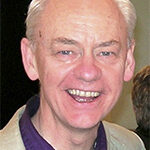
Our Speaker – Revd Canon Dr Alan Race
The Revd Canon Dr Alan Race is Chair of the World Congress of Faiths and the editor of its journal ‘Interreligious Insight’, a retired Anglican priest-theologian, and the author of books and articles on the themes of theology of religions and interreligious dialogue. His most recent book is ‘My Journey as a Religious Pluralist’ (Wipf and Stock, 2021).
British Chapter meeting: EME Conference and Week of Prayer for World Peace
On Thursday 20 October, at Essex Unitarian Church in Kensington, London, the British Chapter and the Peace Commission of the IARF hosted a report on the August Europe and Middle East IARF Conference in Macedonia, Religion and Conflict Prevention.
Speakers were former IARF International Council member Dr. Shlomo Alon from Israel and Derek McAuley, chair of IARF Europe and Middle East. Here you can learn more about the conference.
After a tea break, participants sat in a circle and each did a reading from the 2016 Week of Prayer for World Peace, 16 -23 October.
The British Chapter Annual Meeting will be held at 1 PM, Saturday, 10 December 2016 at Essex Hall. IARF President, Wytske Dijkstra, will be present and the speaker will be John Kinahan.
(Photo courtesy of Rev Sarah Tinker)
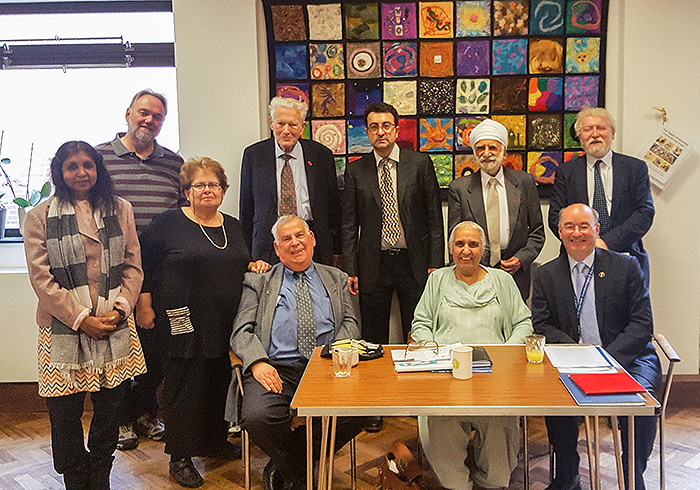
Conference Report: Religious Freedom & Responsibility for Planet & People
IARF Peace Commission / World Congress of Faiths / Horsham Interfaith
Report on 2013 Conference “Religious Freedom and Responsibility for Planet and People”
@Unitarian Church in Horsham, Sussex
20-23 August 2013
Report: Horsham hosts international conference (PDF 4 pages)
PAPERS (available as a print publication)
- French, Prof. Hal – The Genius of Interfaith
- Gehrmann, Dorle – Doing the Splits
- Hunter, Rev. Dr. Doris – Religion and Violence
- Matsui, Prof K. – Teaching Conflict Resolution Processes through Animation Resource Materials
- Manoja, Dr. Kishan – Apostasy and Conversion
- Kannanchira, Fr. Roby – Celebrating Diversity
- McKanan, Dr. Dan – Ethics and Magic
- Stolov, Dr. Yehuda – Peace in the Holy Land
- Yamamoto, Guji & Ochiai, Rev. – Shinto Shrines & Reverence for Nature
Video: Dr. Yehuda Stolov – “Peace in the Holy Land: It can be done“
Video: Rev Dr Marcus Braybrooke – “A Widening Vision (Interfaith Pioneers)”
Video: Music interlude, Stuart Coupe
[portfolio_slideshow]
Congress 2014 venue familiarisation
6 July 2013
Rev. Yoshinobu Miyake, representing IARF’s president Most Rev. Mitsuo Miyake, visited Birmingham together with IARF Treasurer Jeff Teagle and British Chapter committee member Derek McAuley (Chief Officer of the Unitarian General Assembly of Unitarian and Free Christian Churches), as guests of Shaykh Muhammad Amin-Evans, Chair of the Congress Host Committee.
They were given a broad overview of the prospective setting and hosting arrangements in Birmingham city centre and the University of Birmingham campus.
Since it was a Saturday most of the campus buildings and services were closed, but a walk around the grounds took in a visit the Chaplaincy Centre at St Francis Hall and the Barber Institute of Fine Arts, and a look over four-star accommodation at one of UoB’s conference buildings.
A small early-evening reception at the nearby Al-Mahdi Institute introduced Yoshinobu-sensei to some local faith representatives and supporters of Congress. Sensei made a short inspiring talk to introduce IARF and express the aims of Congress.
[portfolio_slideshow]
British Chapter committee member elected to IFN-UK Executive
1 July 2013
The British Chapter of IARF has congratulated committee member Derek McAuley on his election to the Executive Committee of the Inter Faith Network for the United Kingdom.
The Inter Faith Network plays a key role in promoting good relations between people of different faiths in this country and advancing public knowledge and mutual understanding of the teachings, traditions and practices of the different faith communities in Britain.
The Executive Committee are the trustees and directors of the organization which is a registered charity and company.
Derek was nominated in the category of ‘Other Inter Faith Organisations’ at the Annual General Meeting held in Birmingham on 1 July 2013 and acts in an individual capacity.
Derek said:
“I am pleased to have the support of the IARF in my new role. IFN plays a significant role in promoting inter faith dialogue which as recent events have shown is key to good community relations. I am proud of the long-standing commitment of IARF, from its establishment in 1900, to developing good inter faith relations among the religions of the world and was a founder member of the Inter Faith Network”.
Announcement of 34th World Congress, 2014
“Challenges for Religious Freedom in the digital age”
Sun 24 to Weds 27 August 2014
University of Birmingham,
United Kingdom
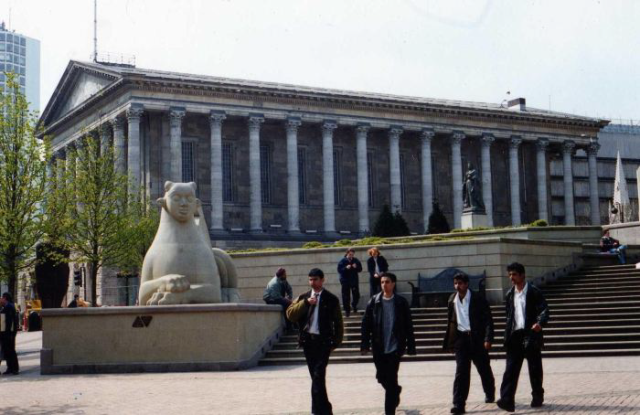
Announcement flyer (PDF)
Updates (also on Twitter and Facebook Friends and Event pages)
Information to date on the Congress
Tehmina Kazi on Religion, Religious Freedom and Secularism
Religion, Religious Freedom and Secularism
– by Tehmina Kazi
This article appeared in the March 2013 edition of the IARF British Chapter’s Newsletter and IARF Peacemaking Commission News
For the last three and a half years, I have been the Director of a registered charity named British Muslims for Secular Democracy. When I tell other people what I do at networking events and dinner parties, most are delighted, a small proportion give me funny looks, and the rest remain abjectly confused about what secularism actually means (as well as its attendant implications for religious minorities living in the UK).
Hence, I was pleased to find out about the publication of Jacques Berlinerblau’s book, How to Be Secular: A Call to Arms for Religious Freedom last year. While it was written from an American perspective, it also provided a rigorously-researched blueprint for addressing some of these issues in the UK. As Berlinerblau summarises, “So everyone uses the term (secularism), but its definition remains vague. One of my conclusions is, if there’s ever going to be a coherent secular movement in the United States, there will have to be clear articulation of its core values and principles.”
The associate professor says his definition of secularism does not in any way denigrate religion, but rather stresses a core secular goal of “enabling citizens to live peaceably with other citizens whose creed is different than their own.” While many political scientists have articulated pluralistic visions of a secular society, Berlinerblau goes several notches further by embracing the symbiotic relationship between religious communities and secularists. He describes how their respective success as civic actors is often dependent on each other, and outlines a 12-step programme to revive secularism, which actively includes and empowers people of faith. For example, he states, “Either secularism and Catholicism, whose relations have often been strained, must have this peace pipe moment or secularism in America isn’t going to go very far.”
How does all of this apply to a British context, particularly to Muslims? Very well, as it happens. In Contextualising Islam in Britain, a ground-breaking research project conducted by Cambridge University, a diverse group of Muslim participants were asked “What does it mean to live faithfully as a Muslim in Britain today?” An overwhelming majority of them affirmed their support for the British model of procedural secularism (which means that it is theoretically possible for all voices, whether religious or not, to access the public sphere equally). The participants observed that procedural secularism provides many benefits for British Muslims, including religious freedom. As British Muslims we are able, for the most part, to practice our faith in an atmosphere of respect and security, with recourse to established anti-discrimination provisions if this is not the case. Many public sector workplaces now have multi-faith prayer rooms, and halal food options (notwithstanding occasional pork DNA scares!) are available in school canteens and prisons.
Secularism in the UK can only thrive on the basis of specific pacts that different communities make with each other. Non-religious groups and individuals must accept the fact that some people view their faith as the most important part of their identities, even if this may seem perplexing. The onus is also on religious groups and individuals to forge common ground on contentious issues such as women’s rights, LGBT rights, freedom of expression and the establishment of good inter-faith – and, crucially, intra-faith – relations. While certain commentators have argued that these issues have become a stick with which to beat religious minorities, I don’t think we should be encouraging the victim mentality and “Get out of jail” card that this analysis engenders.
First, we should be putting our “equalities hats” on – and keeping them there. This means acknowledging the six protected equality grounds – gender, age, disability, race, religion and sexual orientation – and respecting their rights, but also insisting that each group upholds their responsibilities. For example, this means that a religious group who believes gay marriage to be sinful is entitled to hold such a view, but never entitled to prevent other religious organisations from holding such ceremonies if they so wish.
They should also expect to be robustly challenged on those views. By the same token, an employer who finds Islam repugnant should never be empowered – either by tacit acceptance or active collusion – to bully their Muslim employees. Thankfully, there are many wonderful initiatives like the Measuring Anti-Muslim Attacks project (Tell MAMA) which provide support to people who have been treated badly due to their “Muslimness,” or even perceived “Muslimness”.
Second, we should revisit religious texts that speak of civic engagement in positive terms. Within a procedural secular state such as Britain, Muslims have rights and responsibilities that are in keeping with Islamic teachings. Far from advocating withdrawal from society, mainstream Islamic scholarship regards civic engagement as highly desirable for Muslim citizens. Understanding that being a religious Muslim in Britain today also means living a full life as a citizen – with all the rights and responsibilities that entails – is a crucial step towards becoming well-integrated citizens in today’s Britain.
For example, Imam Abu Ishaq al-Shatibi, a 14th-century Andalusian scholar, articulated this principle in his work on the Maqasid al Sharia (goals of the sharia, or Islamic principles). He drew parallels between citizens’ rights and responsibilities in a state – such as freedom of conscience and the obligation to speak out against tyranny – and the objectives of Islam.
More needs to be done to highlight this area of thought, and how it can be used as inspiration in the lives of British Muslims, and followers of any faith, today.
______________
Tehmina Kazi is a Law Graduate of the LSE, and the Director of British Muslims for Secular Democracy.
President joins signatories to G8 letter
IARF President Most Rev. Mitsuo Miyake and Council member Rev. Takeshi Nishida were among 80 religious leaders signatory to a letter to the Financial Times urging G8 countries to follow the UK in meeting existing commitments to spend 0.7% of national income on aid.
Original FT article requires subscription to view, but this story is reported on the Archbishop of Canterbury’s site.
Their names appear in the list of signatories below the article (Pres. Miyake #74, Rev. Nishida #77).
IARF Peace Commission Conference 2013
Theme: RELIGIOUS FREEDOM & RESPONSIBILITY
Co-Sponsored by IARF Peacemaking Commission and World Congress of Faiths (WCF)
Starts 20 August, continue though 23 or 24 August.
@Unitarian Church in Horsham (25 minutes from Gatwick Airport, one hour from London) rooms in the Travelodge 100 yards away.
Registration, room and board: £260 (approx $390 US), reduced for shared rooming.
£50 each for non-residential registration if lodging & supper not required.
Full registration has now closed.
Registration with meals but without accommodation will remain open until 15 August: £50 by cheque to “Horsham Interfaith Forum” c/o Richard Boeke 16 St. Mary’s Gardens, Horsham, RH12 1JP
IARF-WCF Horsham 2013 – Conference Poster
(Conference Poster — one-page print version)
IARF 2013 Horsham – Daily Schedule
Attending to speak and lead sessions:
Rev. Chris Hudson MBE, Belfast;
Dr. Marcus Braybrooke, President WCF;
Rt. Rev. Kieran Conry, Roman Catholic Bishop of Arundel & Brighton;
Dr Kishan Manocha, Director, Office of External Affairs of the Baha’i Community of the U.K.
Dr. Dan McKanan, Harvard;
Dr. Shlomo Alon, Vice-President IARF;
Adv. V. Rengapashyam, IARF Council, India;
Dr. Yehuda Stolov, IARF Council Member, Israel;
Professor Hal French, University of South Carolina, IARF US Chapter chair;
Sheikh Muhammad Amin-Evans
Charanjit & Ajit Singh MBE;
Dorothee Gehrmann, Germany;
Dr. Doris Hunter, IARF Council, USA;
Annelies Trenning, IARF Council, Netherlands.
Speakers’ bios (PDF)
Outing to Worth Abbey 22 Aug
23 Aug: Peacemaking Commission till 3pm.