
Interfaith Harmony Gathering
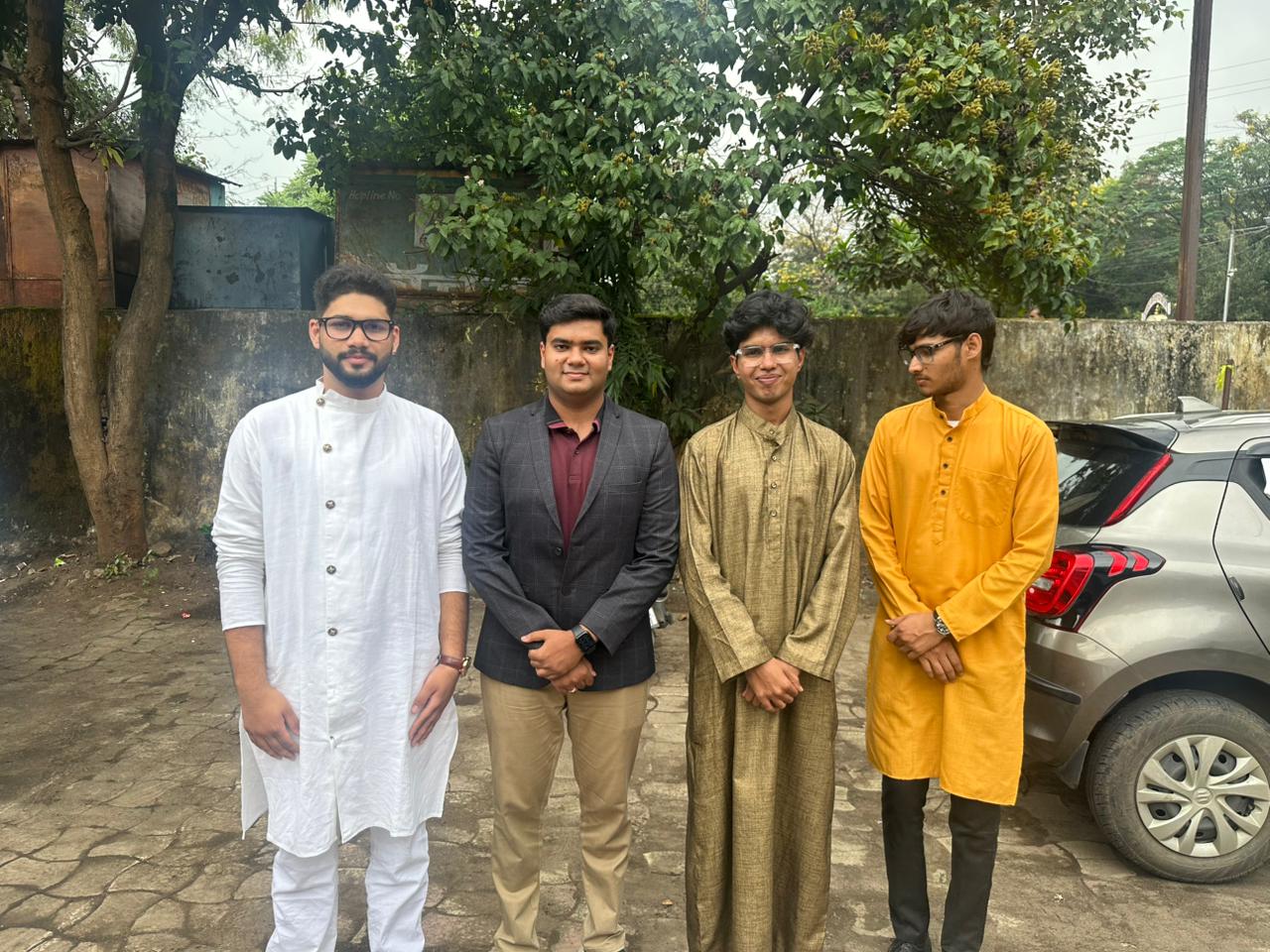
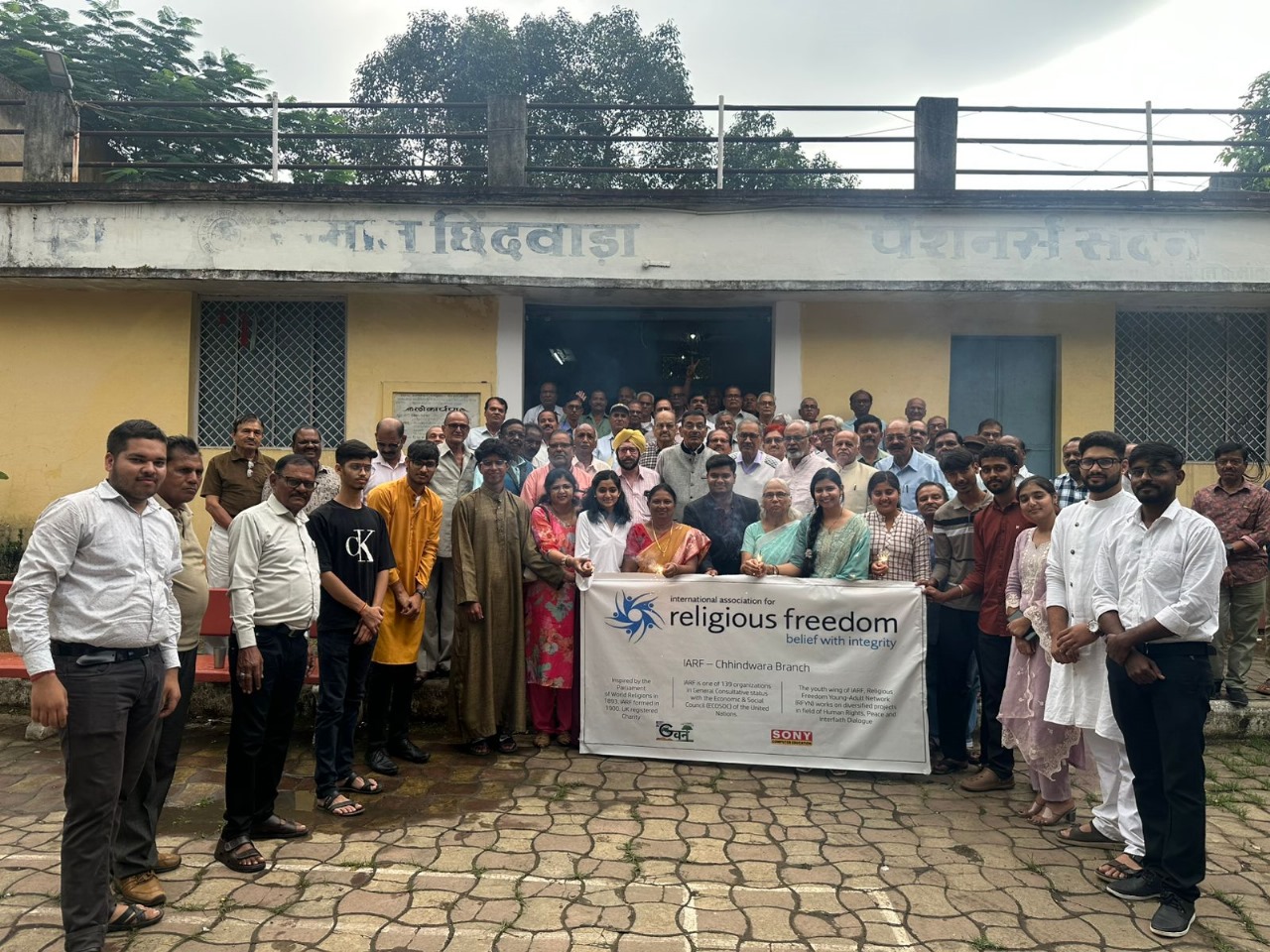
The Chhindwara Branch of the International Association for Religious Freedom (IARF) organized a दिवाली मिलन (Diwali Meetup) and Interfaith Harmony event at Pensioners Sadar, Chhindwara, bringing together senior community members, youth participants, and interfaith representatives in a shared celebration of peace, respect, and human dignity.
The program included prayer recitations by young students belonging to Christianity, Hindu, Jain, Muslim and Sikh traditions, demonstrating IARF’s long-standing commitment to interfaith understanding and freedom of belief. The active involvement of the youth highlighted the role of education and dialogue in strengthening a culture of mutual respect across generations.
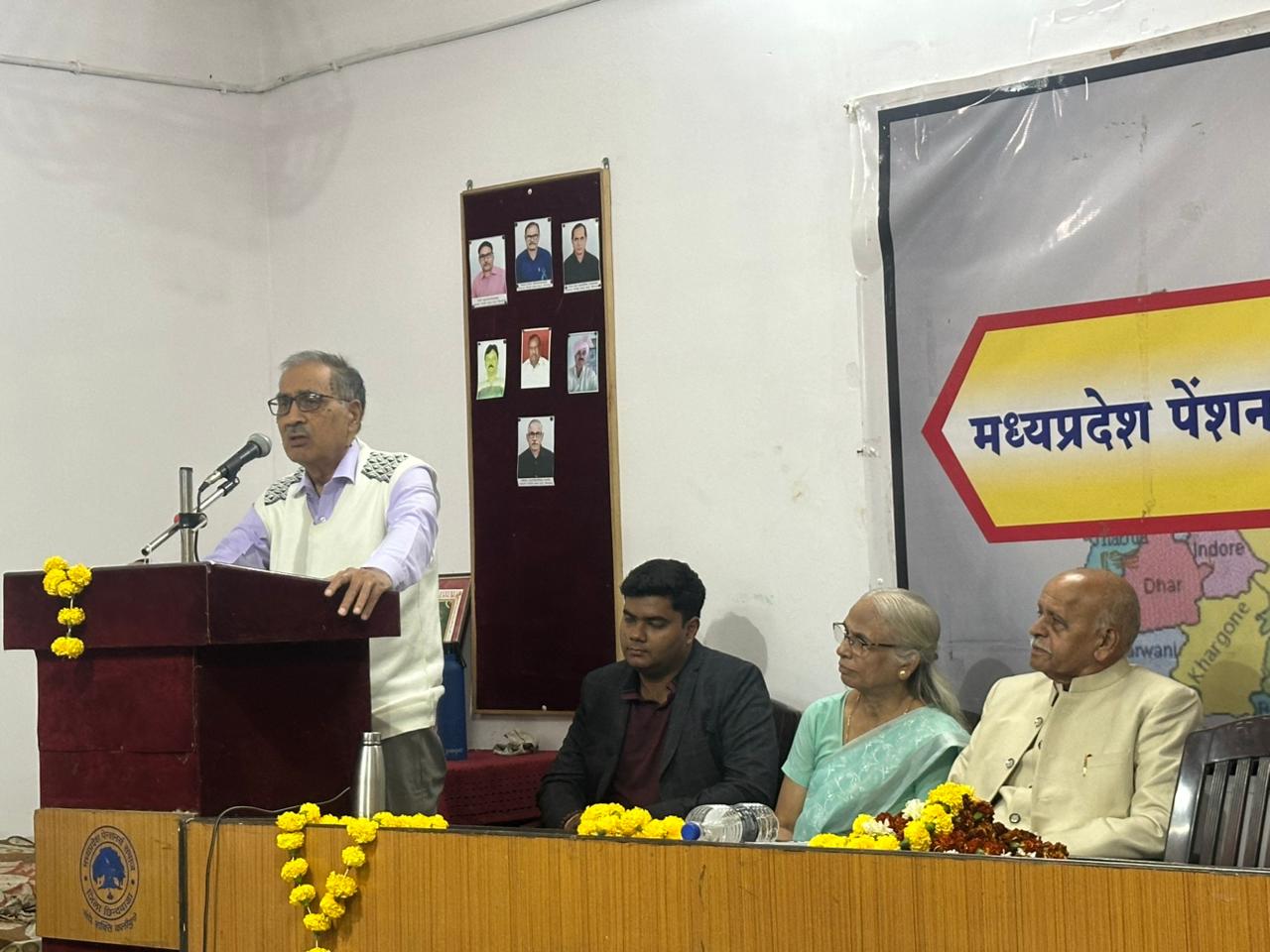
Mr. Aayush Soni, Vice President of IARF & RFYN representative, addressed the gathering and extended warm Diwali greetings to all present. He briefly updated the attendees on recent IARF activities at the national and international level, including developments from the EME Conference and initiatives of the Free Religion Institute, reinforcing the shared vision of continued interfaith cooperation and educational outreach.
Dr. K. K. Shrivastava, Founder and senior member of the IARF Chhindwara Branch, who served as the chief guest, emphasized the importance of peaceful coexistence, human rights, and the protection of religious freedom for every individual, which remain central to IARF’s mission worldwide.
The program was coordinated by Dr. Brown, former India Chapter Representative of IARF, who guided the flow of the event and shared his insights on the value of interfaith cooperation in contemporary society. He also underscored the growing need to expand interfaith efforts in the region and expressed support for the establishment of a North India Chapter of IARF to further strengthen grassroots engagement.
The gathering was attended by members of the Pensioners’ Association, representatives from local organizations, and students from Sony College, reflecting a meaningful blend of experience and youthful energy. The program reaffirmed the Chhindwara Branch’s dedication to building harmony through dialogue, compassion, and education.
The Limits of Tolerance and Religious Freedom: Report from the 2025 EME Conference
The tension and excitement were immense: participants from around the world gathered in our community to discuss one of the greatest challenges of our time. Where must religious freedom end to protect more essential human rights? Where should the boundaries of our tolerance be drawn when we face extreme beliefs and worldviews?
For four days, the participants tackled these and other questions. Unitarians, Unitarian Universalists, Remonstrants, Free Christians, liberal Muslims, Christian Unitarians, and other free-religious and freethinking movements from the USA, Brazil, Europe, and the Middle East showed how seriously they take this issue. Yet, coming together—the warm, open, and friendly encounters and exchanges—was always the top priority. New acquaintances and even friendships were formed. Old companions reunited, and complete strangers discovered how much they share!
Absolute highlights of this conference were our guests of honor: Firstly, the President of the International Association for Religious Freedom (IARF), Professor George Williams, who traveled all the way from Hawaii. Secondly, women’s rights activist and Imam Seyran Ateş, founder of the Ibn Rushd-Goethe Mosque, delivered the keynote address for the conference, offering a deep insight into the world of dealing with extremism and intolerance—especially as she is constantly confronted with it herself. Moreover, she honored us by participating in the interfaith service with a contribution of her own.
In the following, we would like to give you a more detailed insight into the conference and the pre-tour! But first, the most important thing: An immeasurable “Thank You” goes to my team at Schillerplatz. Philippe Bender, Alexander Goy, Henry Rodriguez, and Kathrin Corso worked in the background to ensure the smooth care and support of our house guests. Additionally, Johannes Spindler from the Unitarians – Religious Community of Free Faith, was a great help from the very first minute in managing technical and organizational tasks on-site, and in him, I found a new friend and companion.
And last but not least, there are Gudrun Hahn from the Frankfurt community and chair of the German IARF member group, Matthias Pilger-Strohl, Dorothee Gehrmann, Angela and Alexandra Wegel from our community, as well as Pastor Alexander, Sonja Weisdorf, and Stefan Vardopoulos from the Frankfurt community, where the last day of the conference took place and who took care of all the challenges for a successful conclusion. A big thank you finally goes to Lukasz Liniewicz, who as the Secretary of IARF supported the live streams and organization! “Thank you” to all of you!
Below, you can find recordings of the main events from the conference, hosted in the new IARF Digital Library. Each video includes subtitles available in both English and German.
Conference Pre-Tour: Offenbach and Frankfurt in a Nutshell
Pre-Tour: Day 1, Tuesday, September 9, 2025
On the first day of our pre-tour, we had a lot planned as a grand bus tour was on the agenda. Together with the guests of the IARF EME Conference, we visited many friendly Free Religious communities near and far.
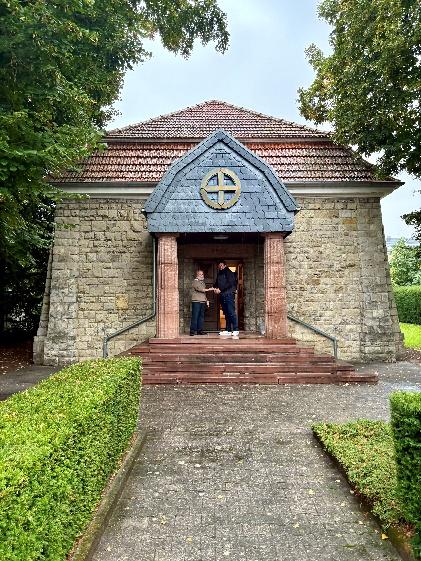
The tour started at the Free Religious Community in Ingelheim. Here we admired the oldest completely preserved consecration hall from 1910 and were introduced to the beginnings of the Free Religious movement.
After a short drive, we reached the Free Religious Community in Mainz, in the heart of the Rhine city. There, we were once again warmly welcomed and had the opportunity to learn about the situation of the community and the movement during the Nazi regime in the Third Reich.
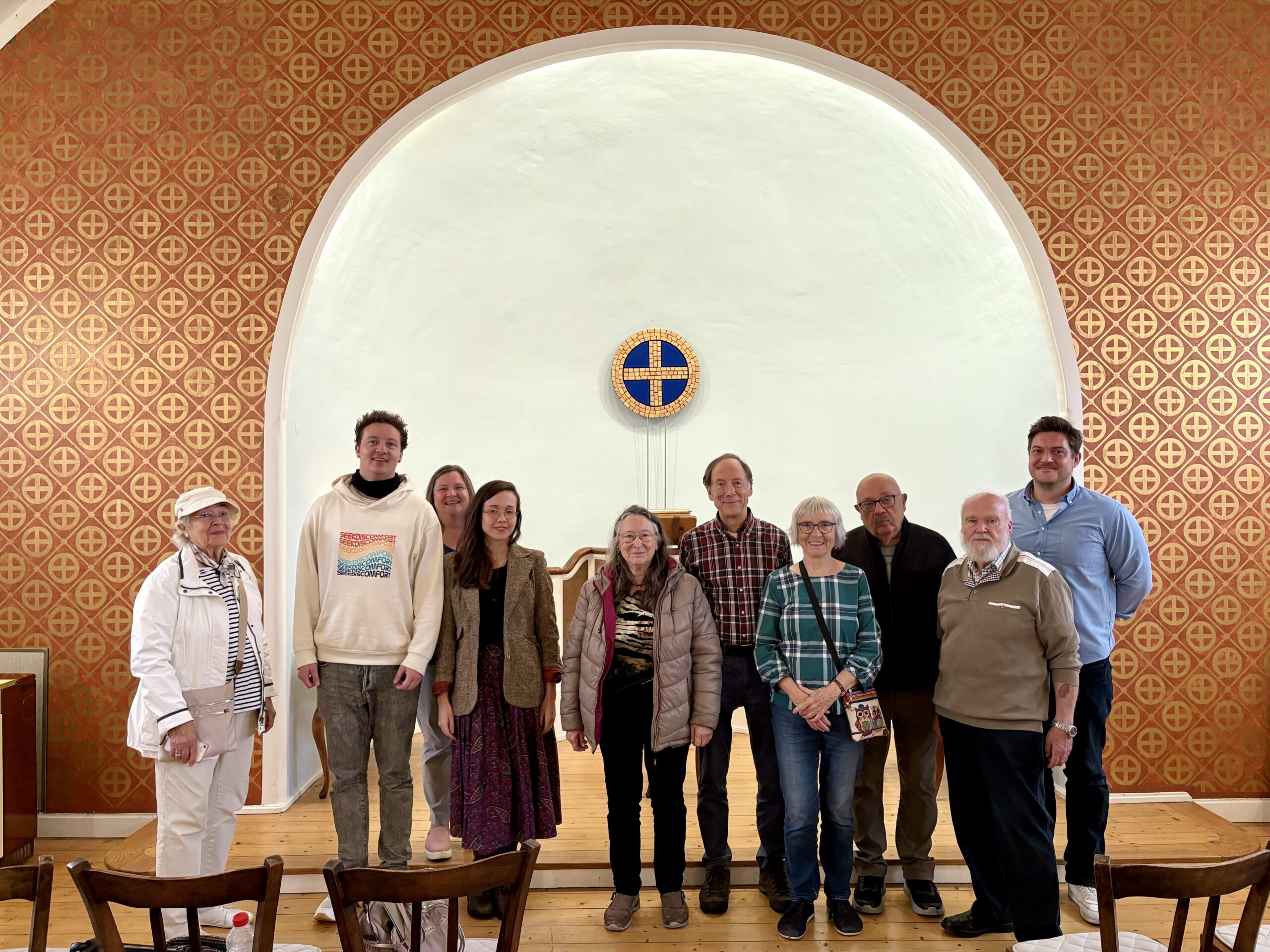
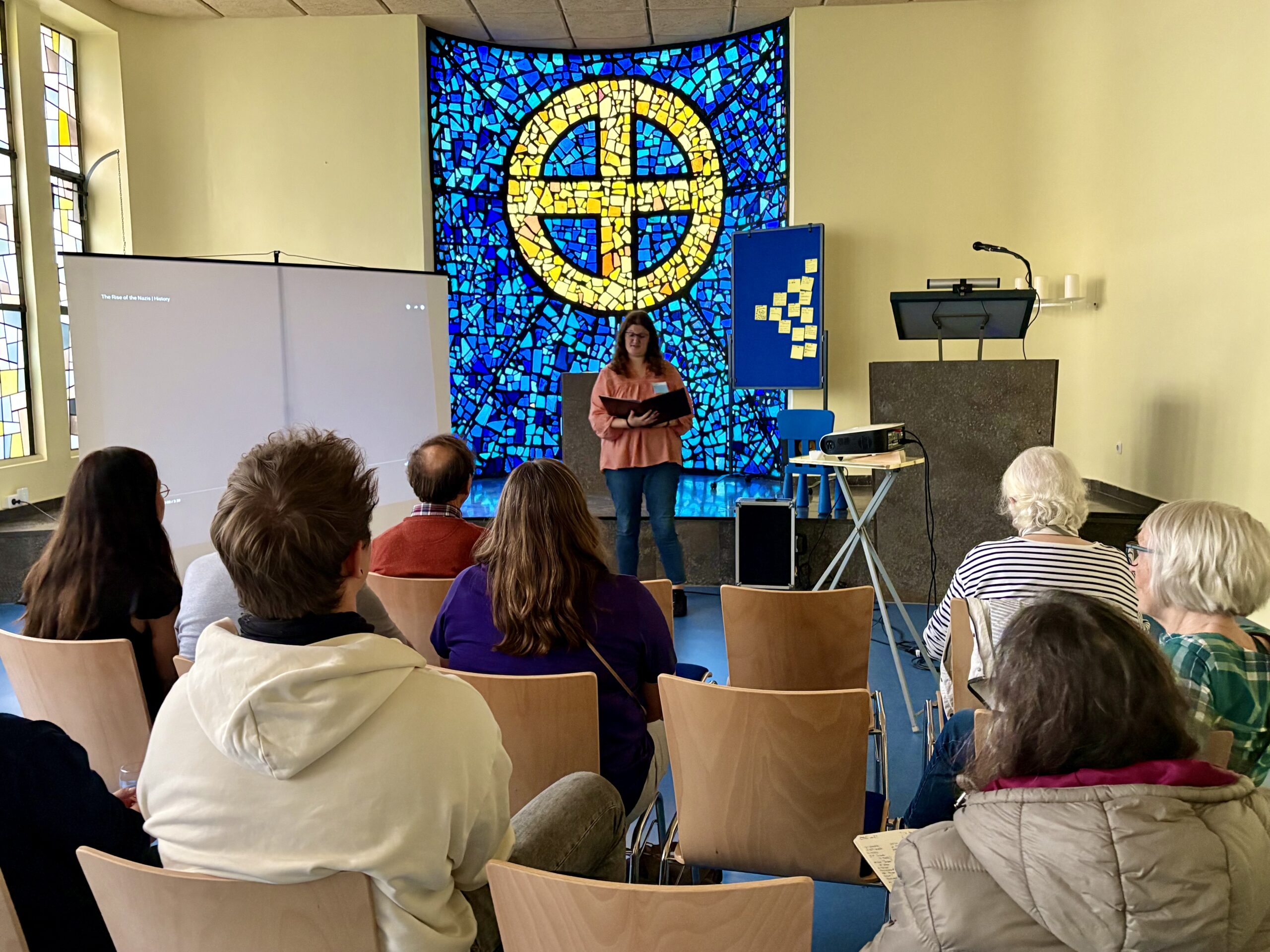
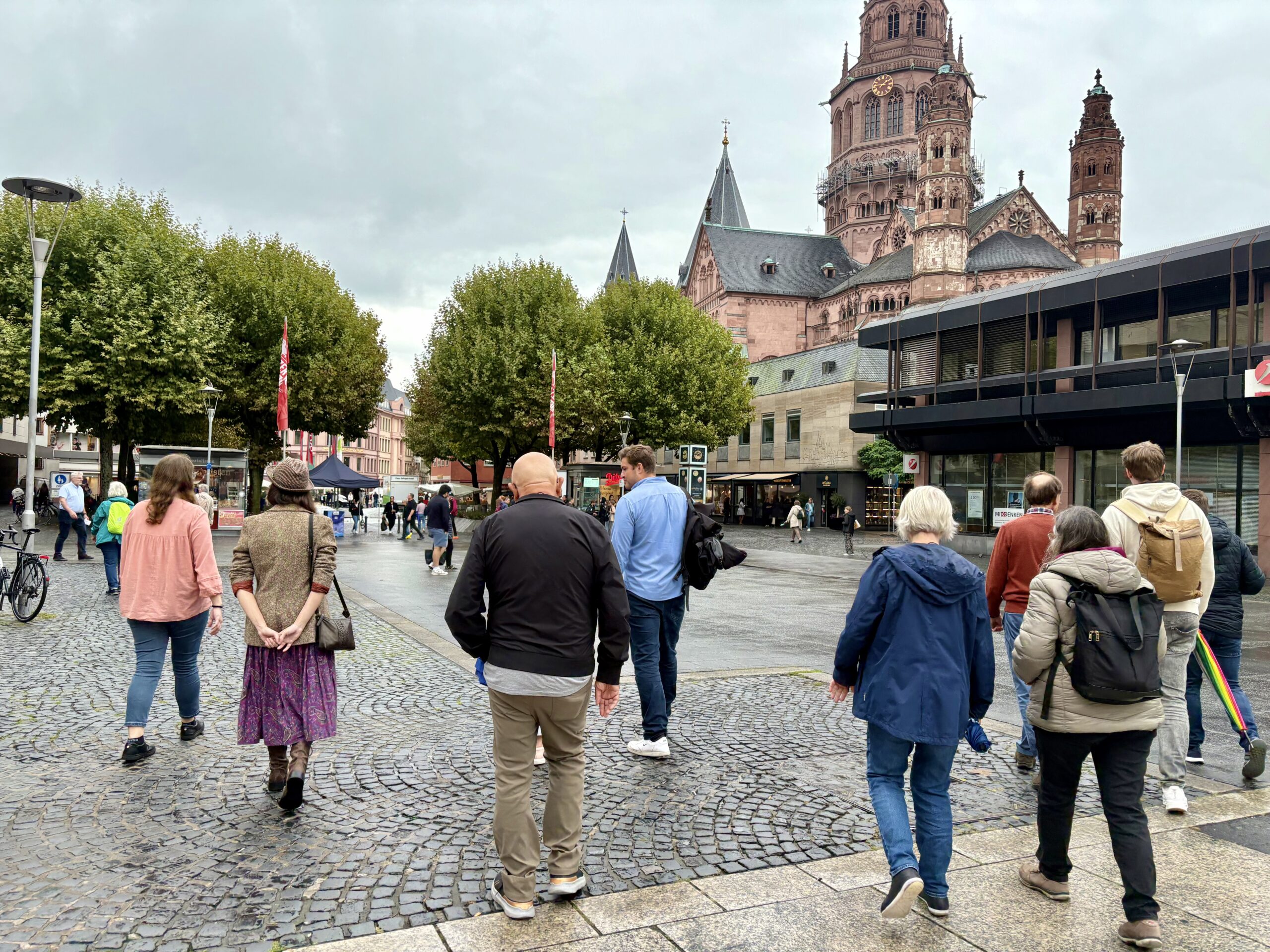
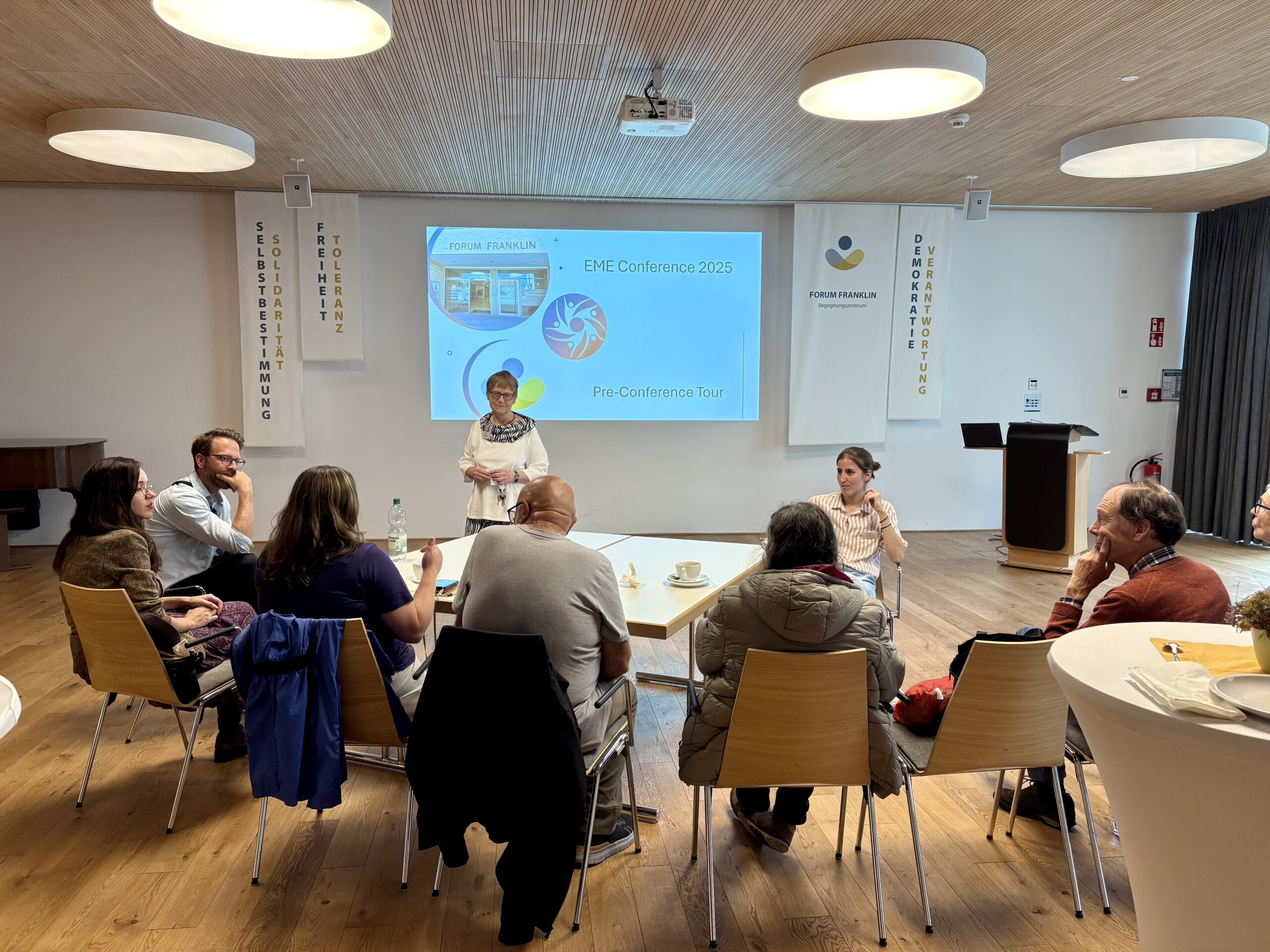
A leap into the present was taken at the Forum Franklin in Mannheim, the headquarters of the Free Religious State Community of Baden. Here, impressive ways of social and intergenerational encounters based on free-thinking and humanistic values were presented.
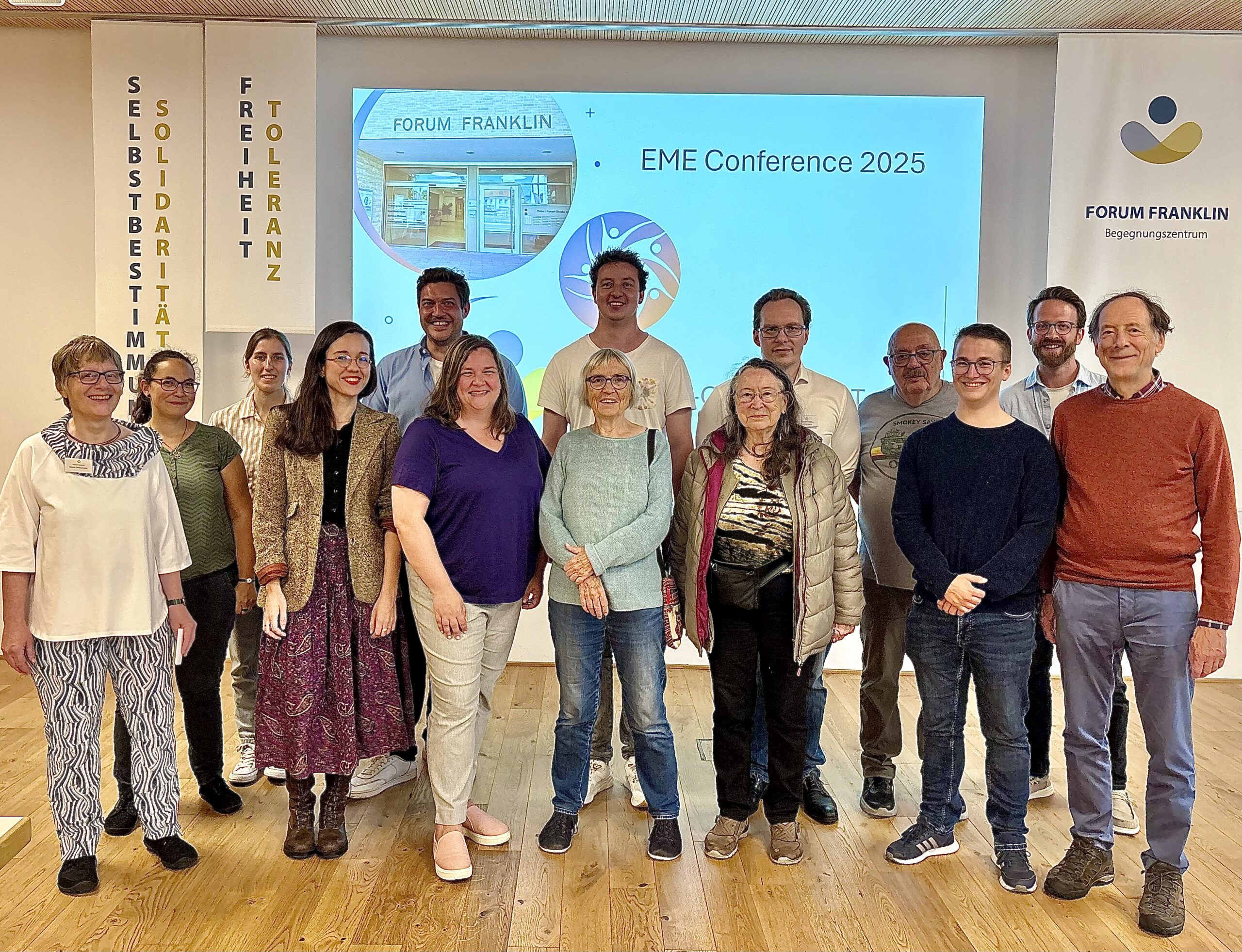
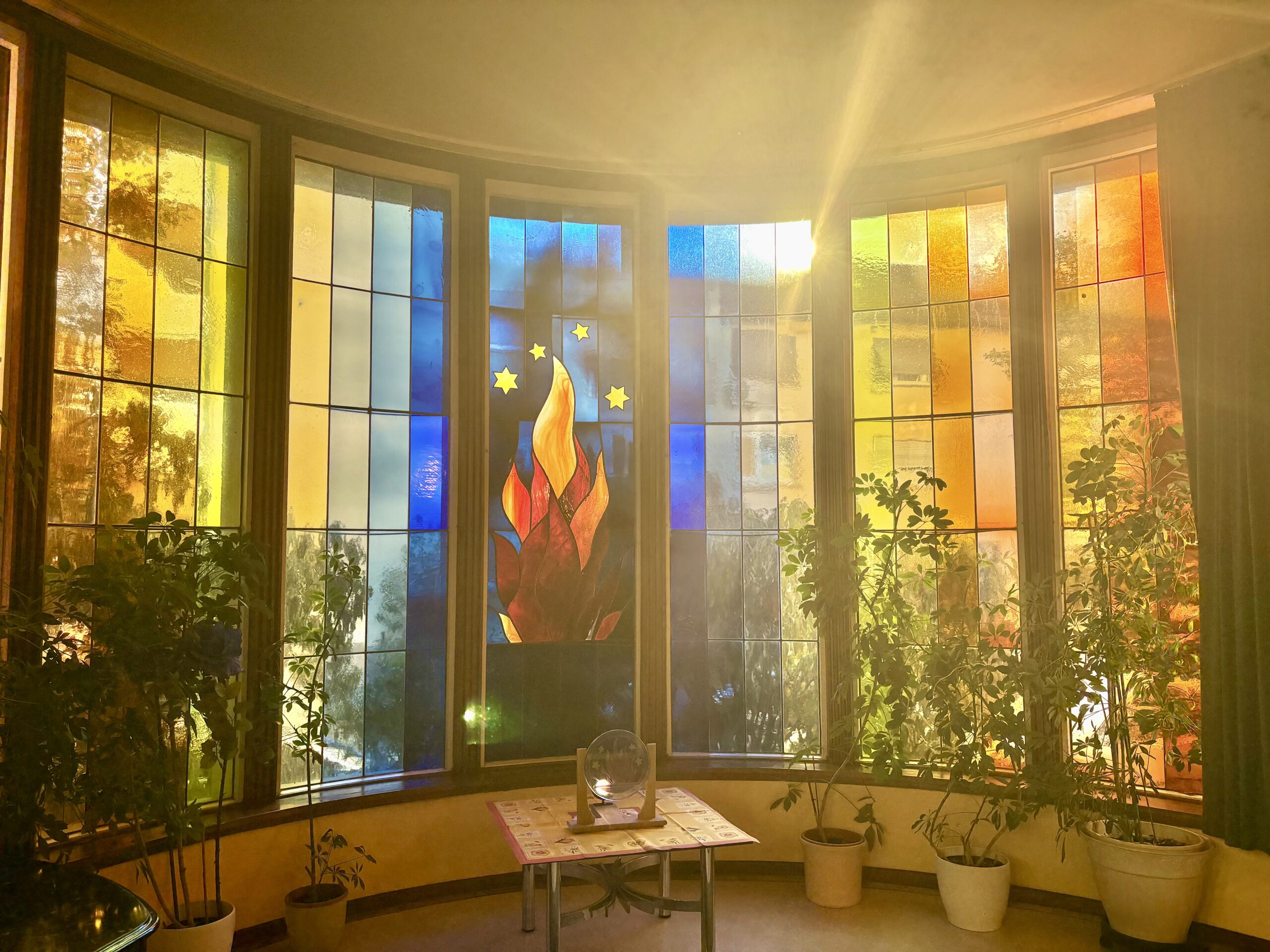
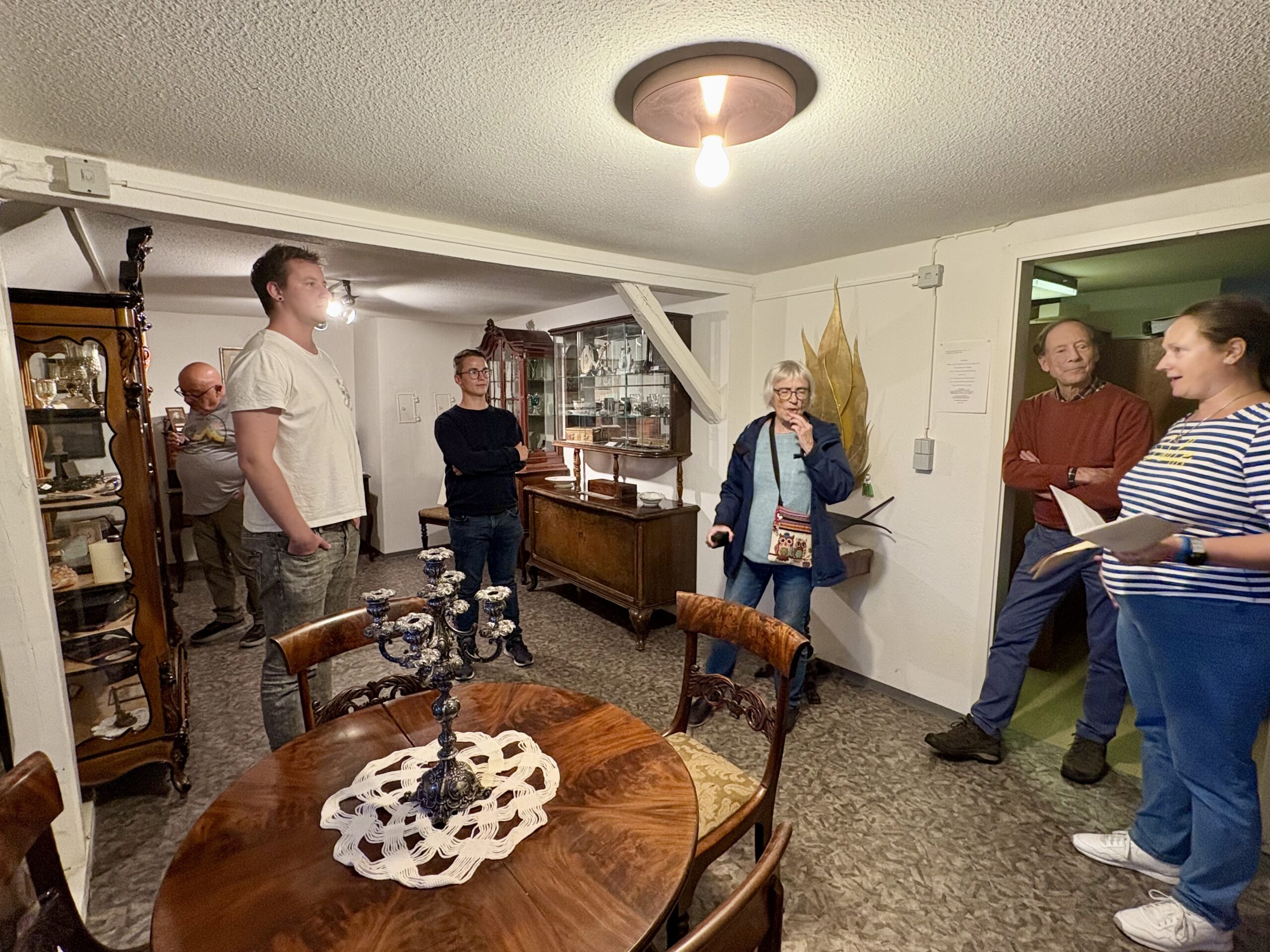
The joyous conclusion took place in Ludwigshafen at our friendly Free Religious State Community of Palatinate. We were warmly hosted, informed, and entertained with singing and good conversations. We also gained insights into the Ronge Museum, which contains the estate of the co-founder of the Free Religious movement, Johannes Ronge.
Pre-Tour: Day 2, Wednesday, September 10, 2025
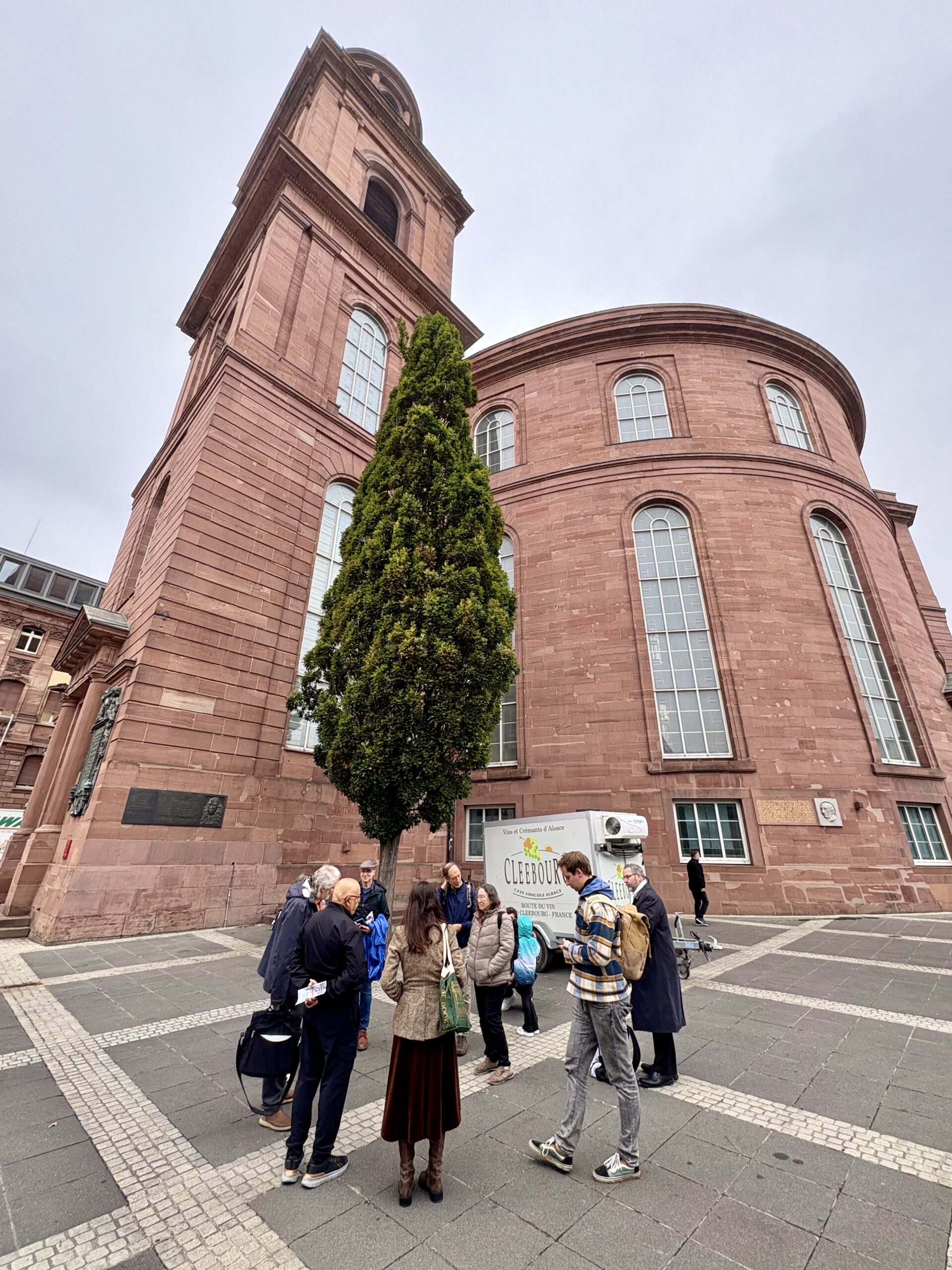
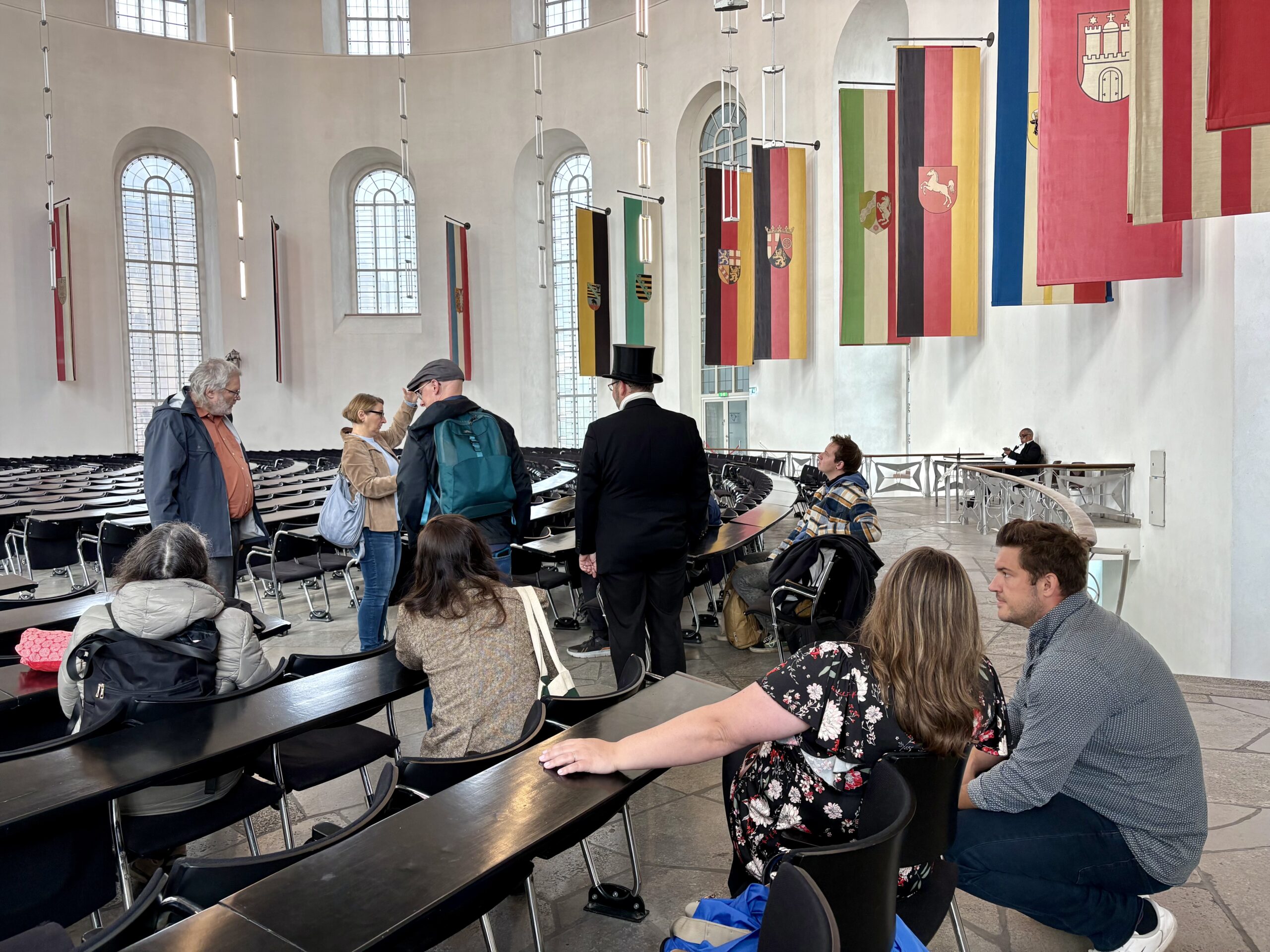
The focus of this day was the city of Frankfurt am Main, and what better place to start than where a part of the Free Religious movement began: in Frankfurt’s St. Paul’s Church (Paulskirche)!
Arriving at the historic building, a guided tour brought us closer to the connections between the German Revolution, the Frankfurt National Assembly, and the city of Frankfurt. Moreover, through a small journey through time, we were able to connect with contemporary witnesses of the Free Religious movement who were active in the Paulskirche parliament.
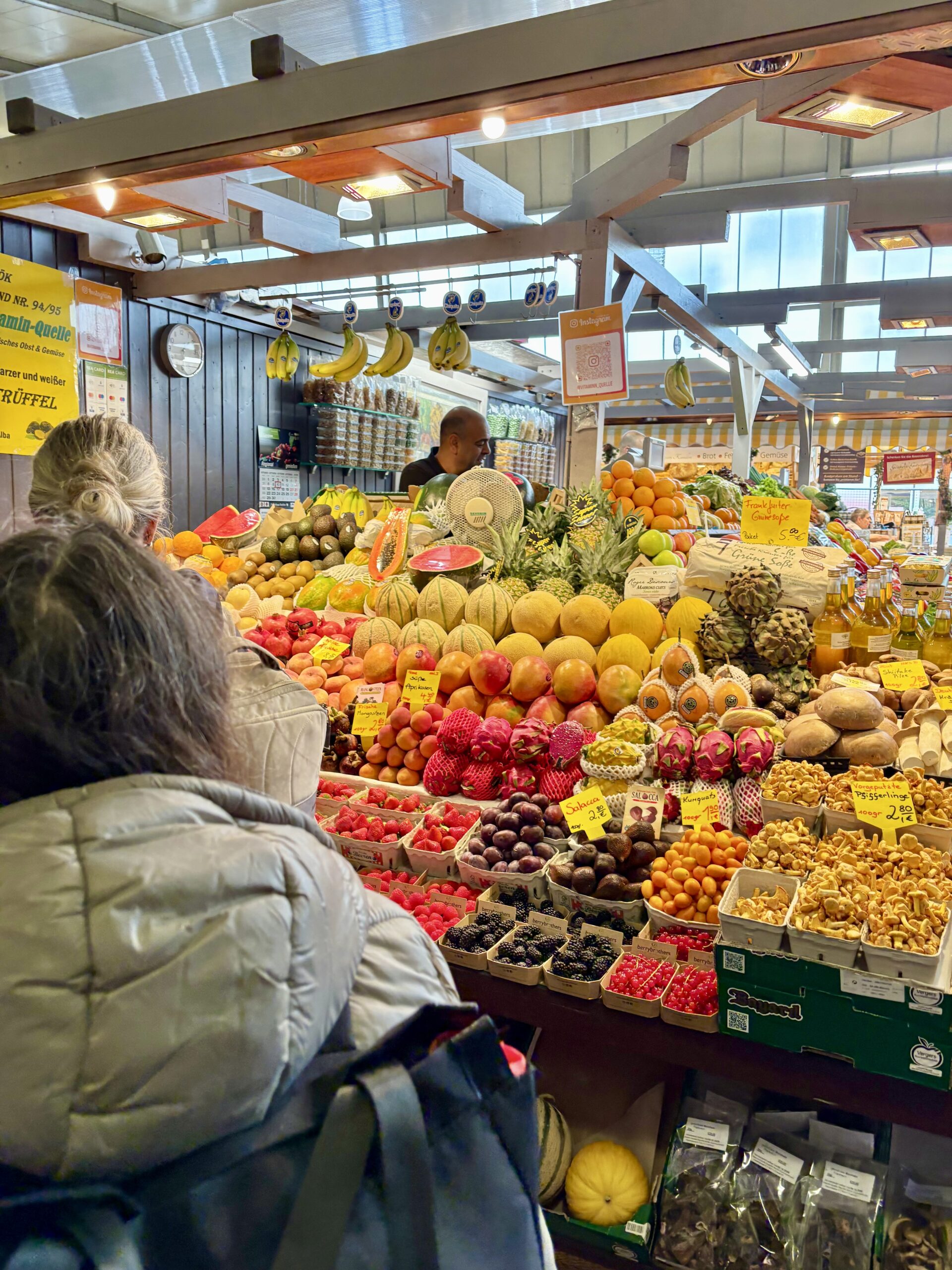
After the tour, we soaked up the Frankfurt lifestyle with a snack in the Kleinmarkthalle!
Strengthened, we then met with our sister community, the Unitarian Free Religious Community of Frankfurt, where we were warmly welcomed as usual, and the guests got an insight into our partnership.
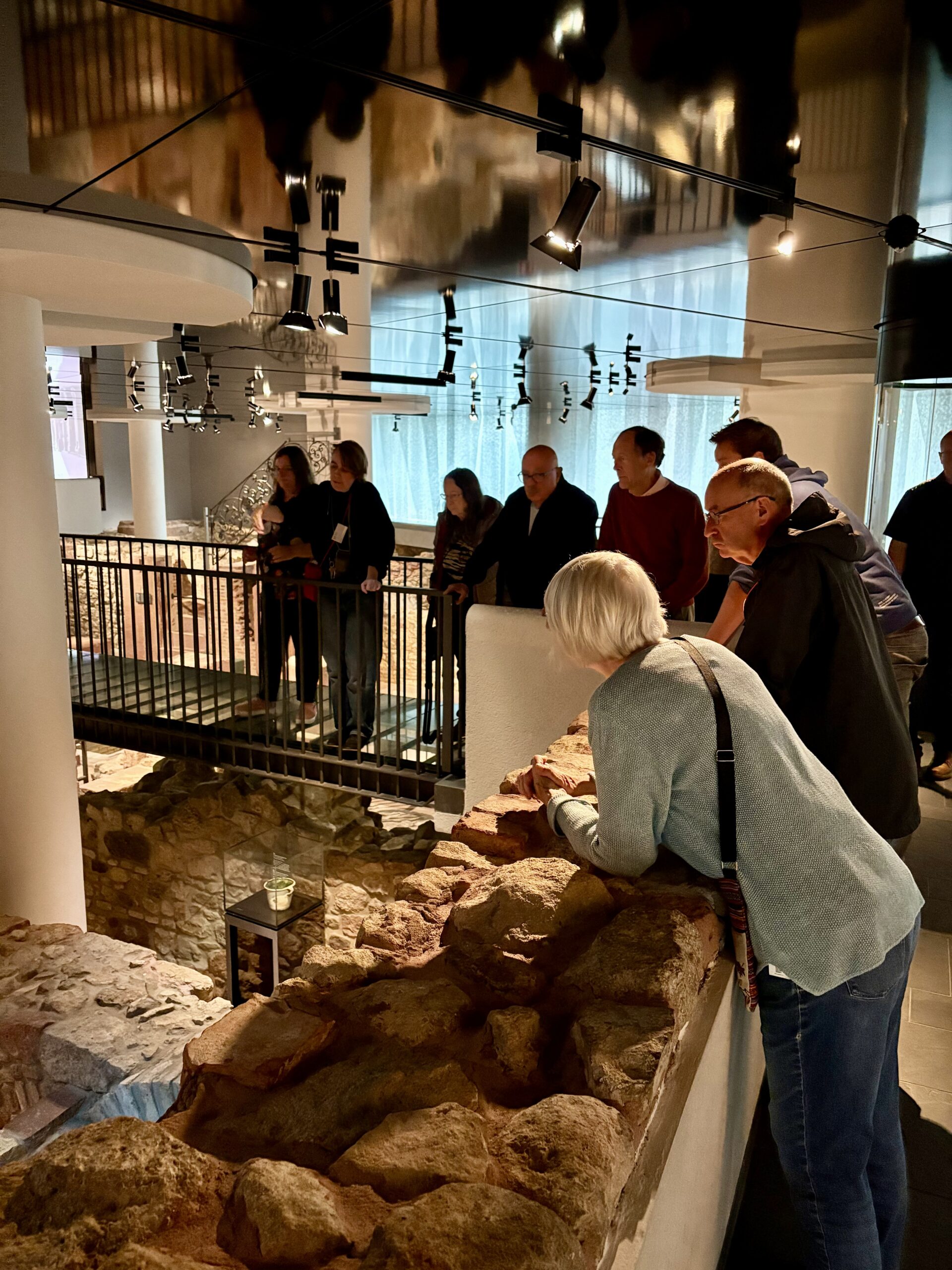
The Museum Judengasse was our next stop. In an impressive way, the guests were introduced to the historical life of the people in the Frankfurt Ghetto and shown how social protest for preservation and a culture of remembrance can lead to success.
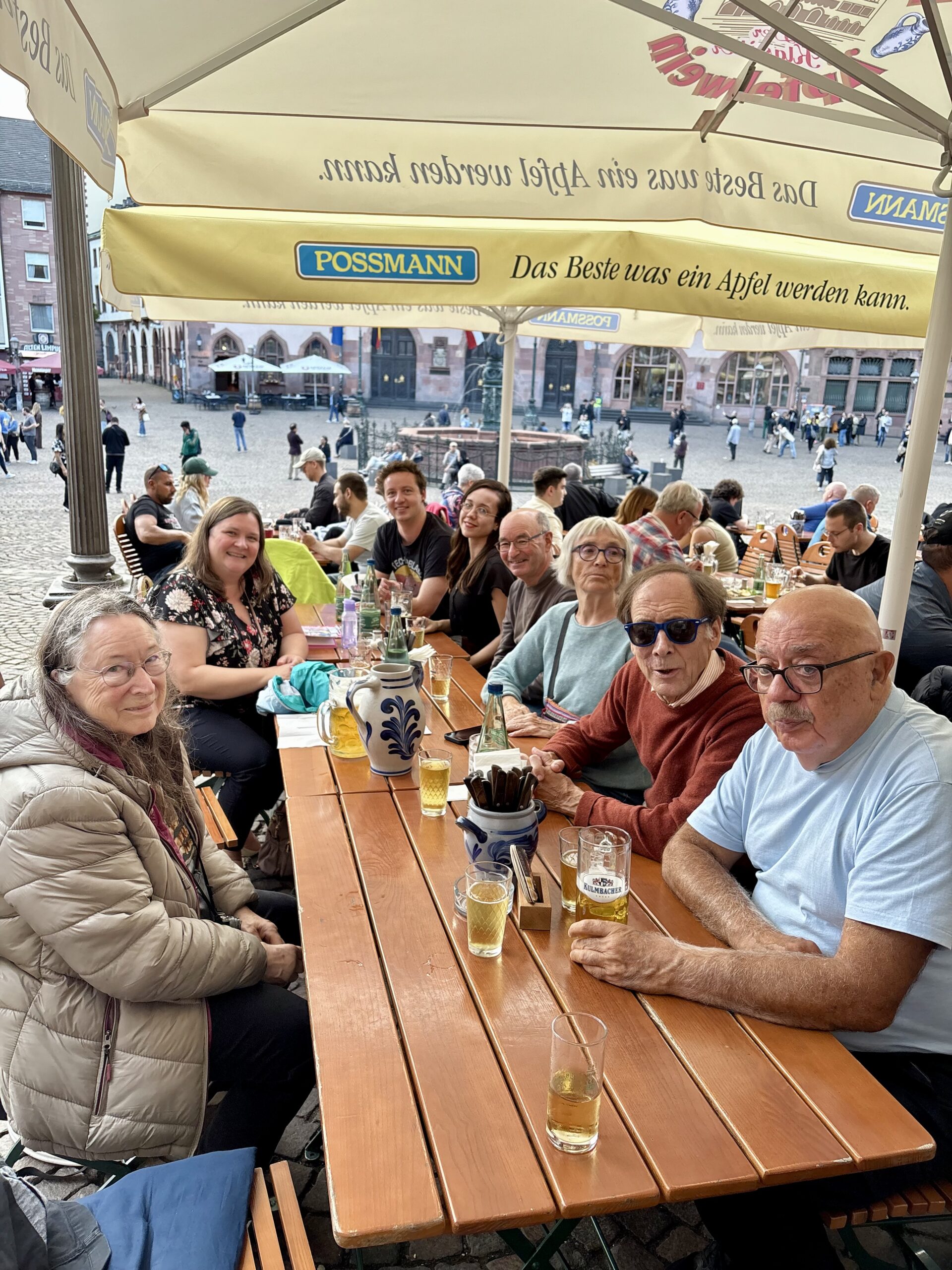
After these many impressions, we ended the day relaxing on Frankfurt’s Römer square with apple wine, excited for what the next day—the official opening day of the conference—would bring.
Pre-Tour: Day 3, Thursday, September 11, 2025
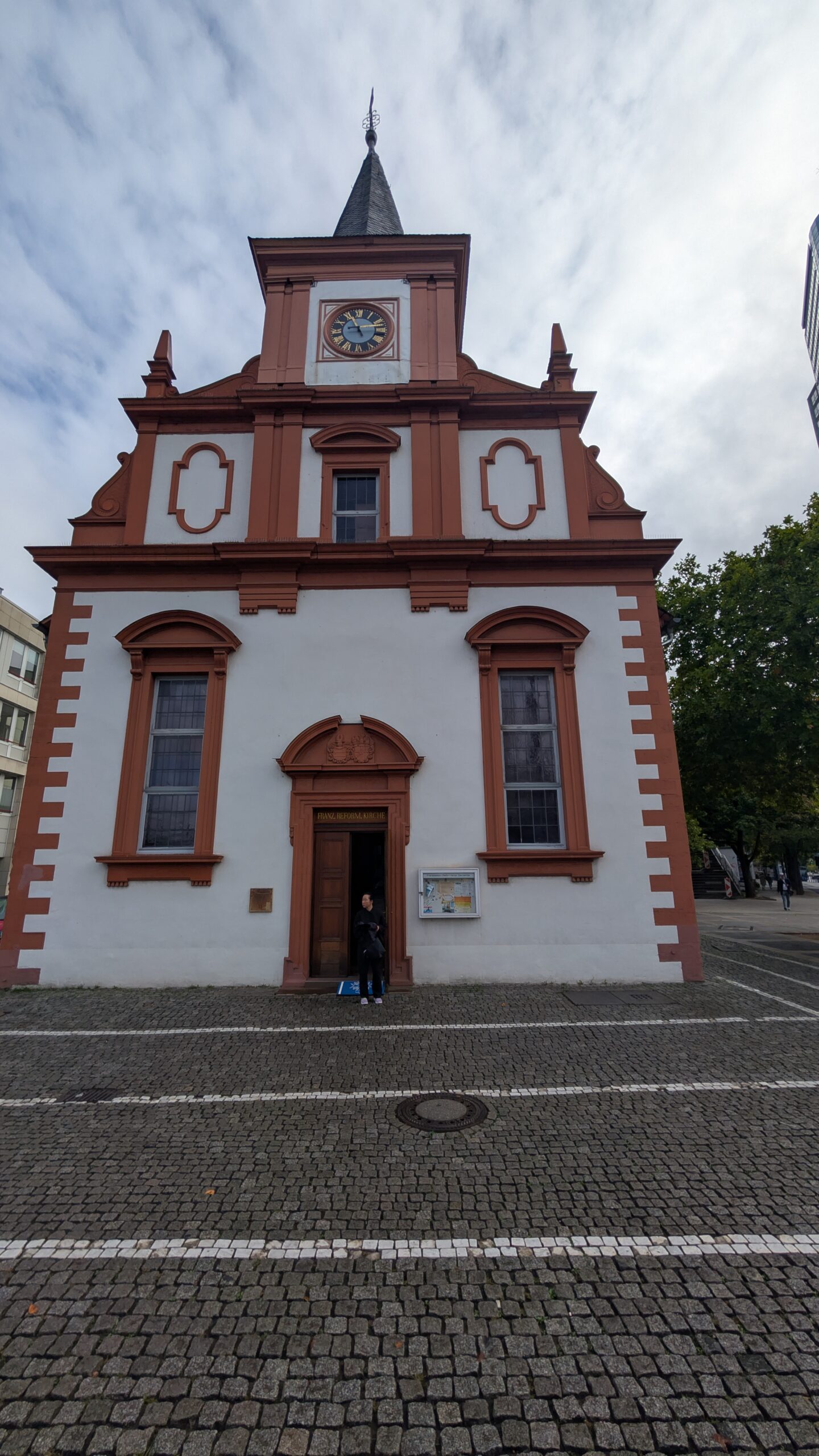
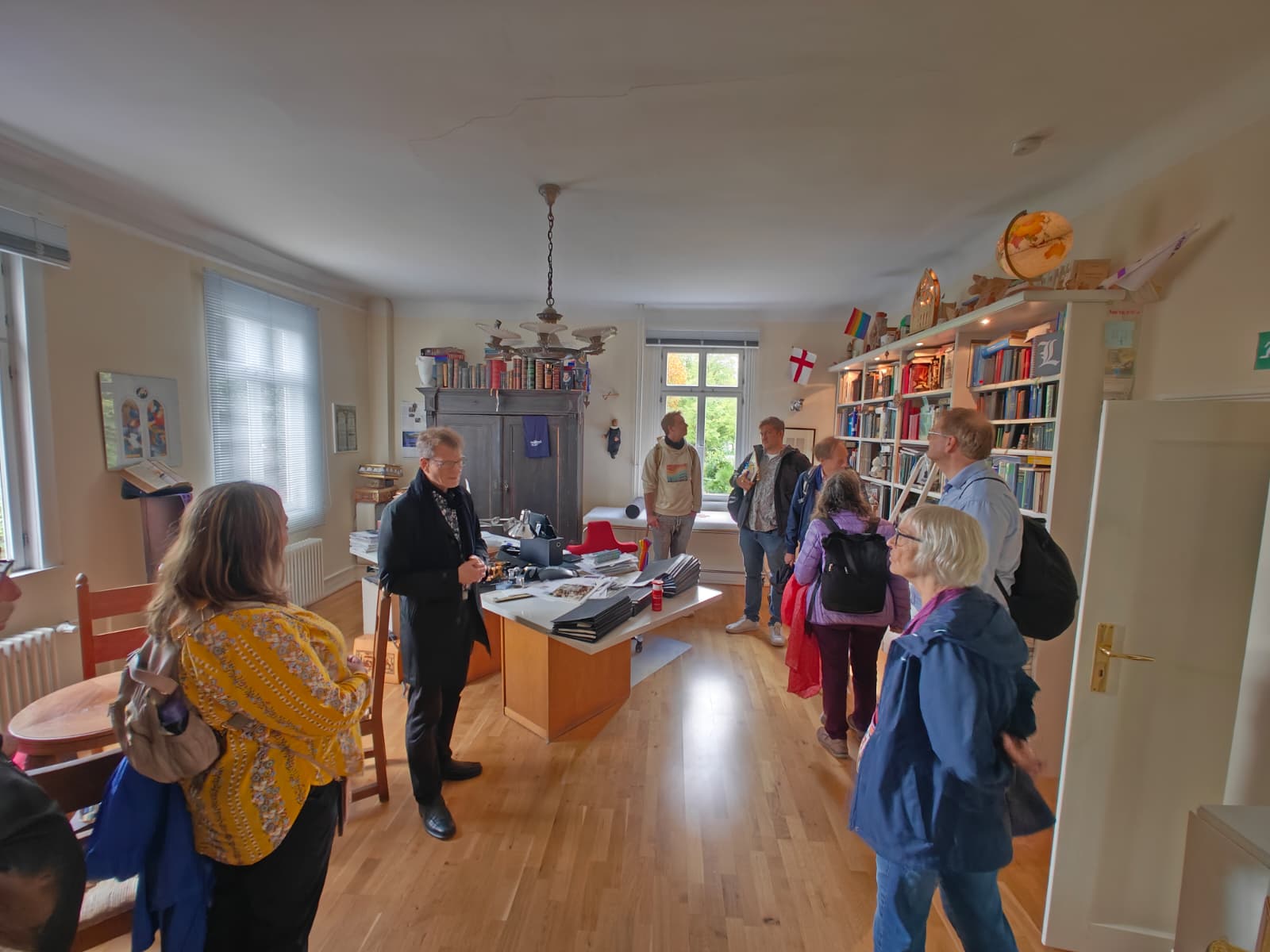
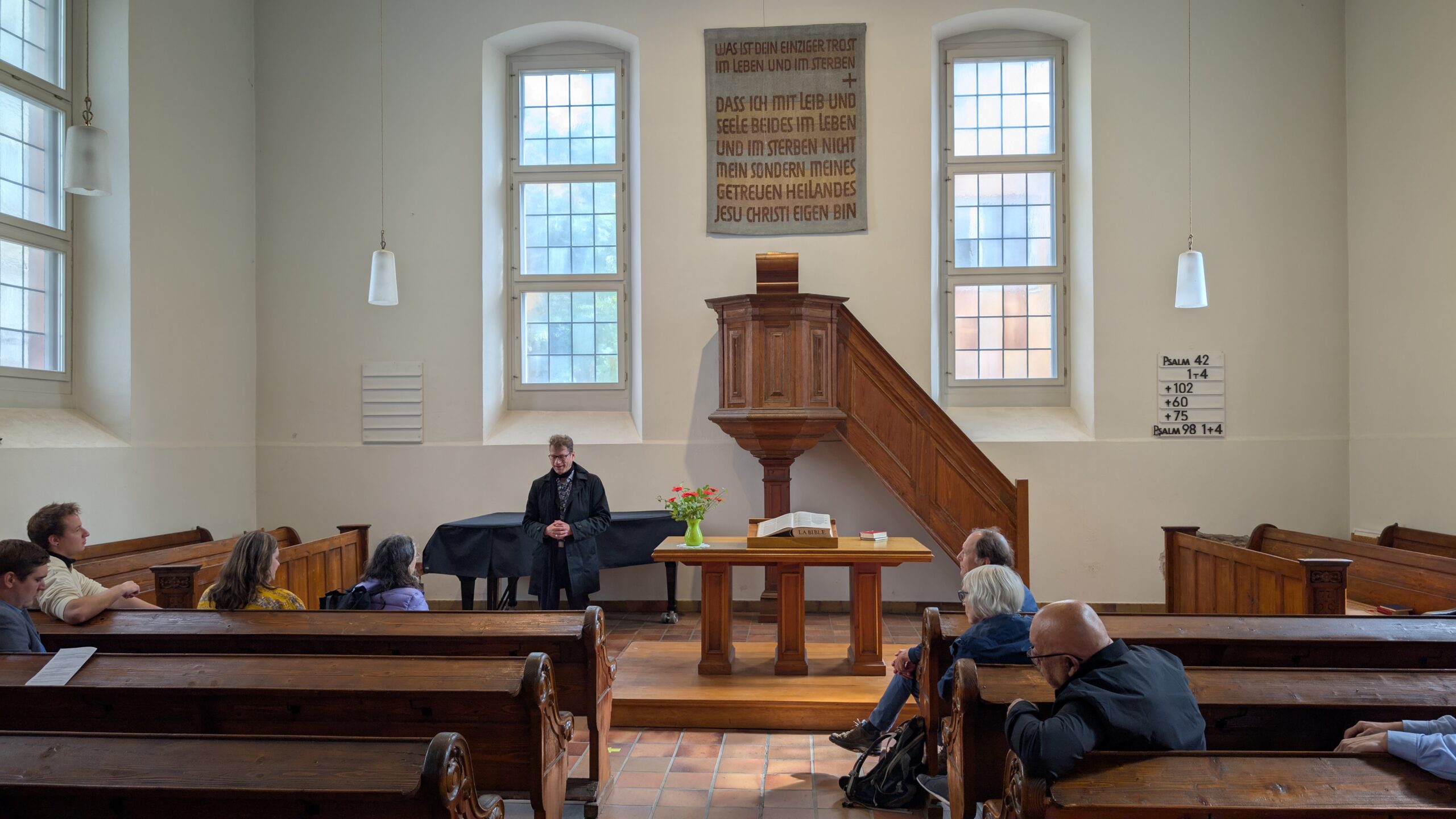
On the third day of the pre-tour, which was also set to transition into the conference opening in the evening, we visited the French-Reformed Church in Offenbach and were warmly welcomed by board member Sven Malsy and Pastor Schneider-Trotier. We were guided through the church and the parish house, learning about the important and interesting history of the Huguenots in Offenbach.
Afterwards, the group visited the Albert Schweitzer Center, which has found its new home in Offenbach. Unfortunately, there are no pictures of this visit.
Conference: Day 1, Thursday, September 11, 2025
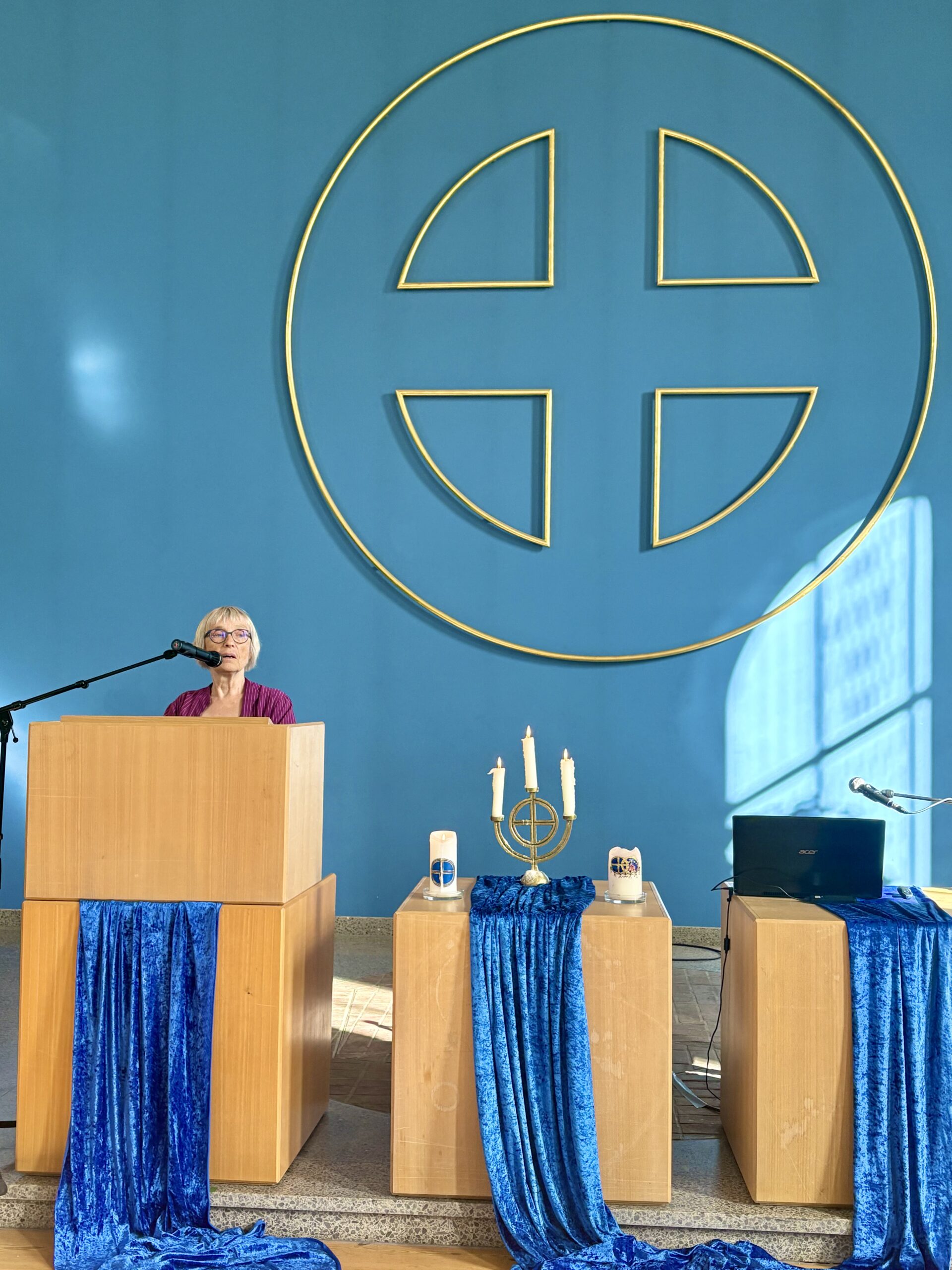
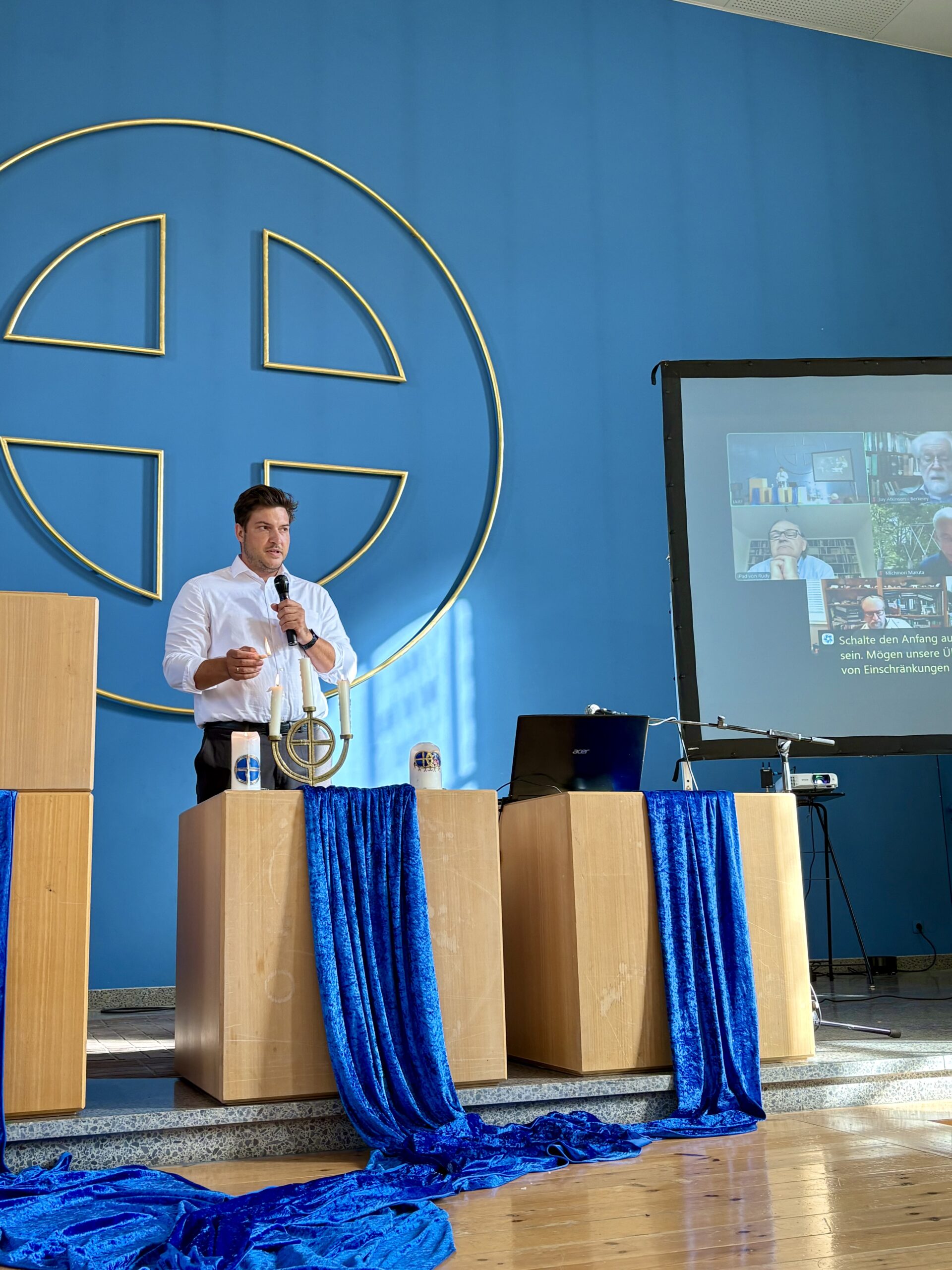
After a two-and-a-half-day pre-tour, the festive opening of the IARF EME Conference ’25 had finally arrived, and to our great joy, we were able to welcome many guests from near and far from various liberal religious communities!
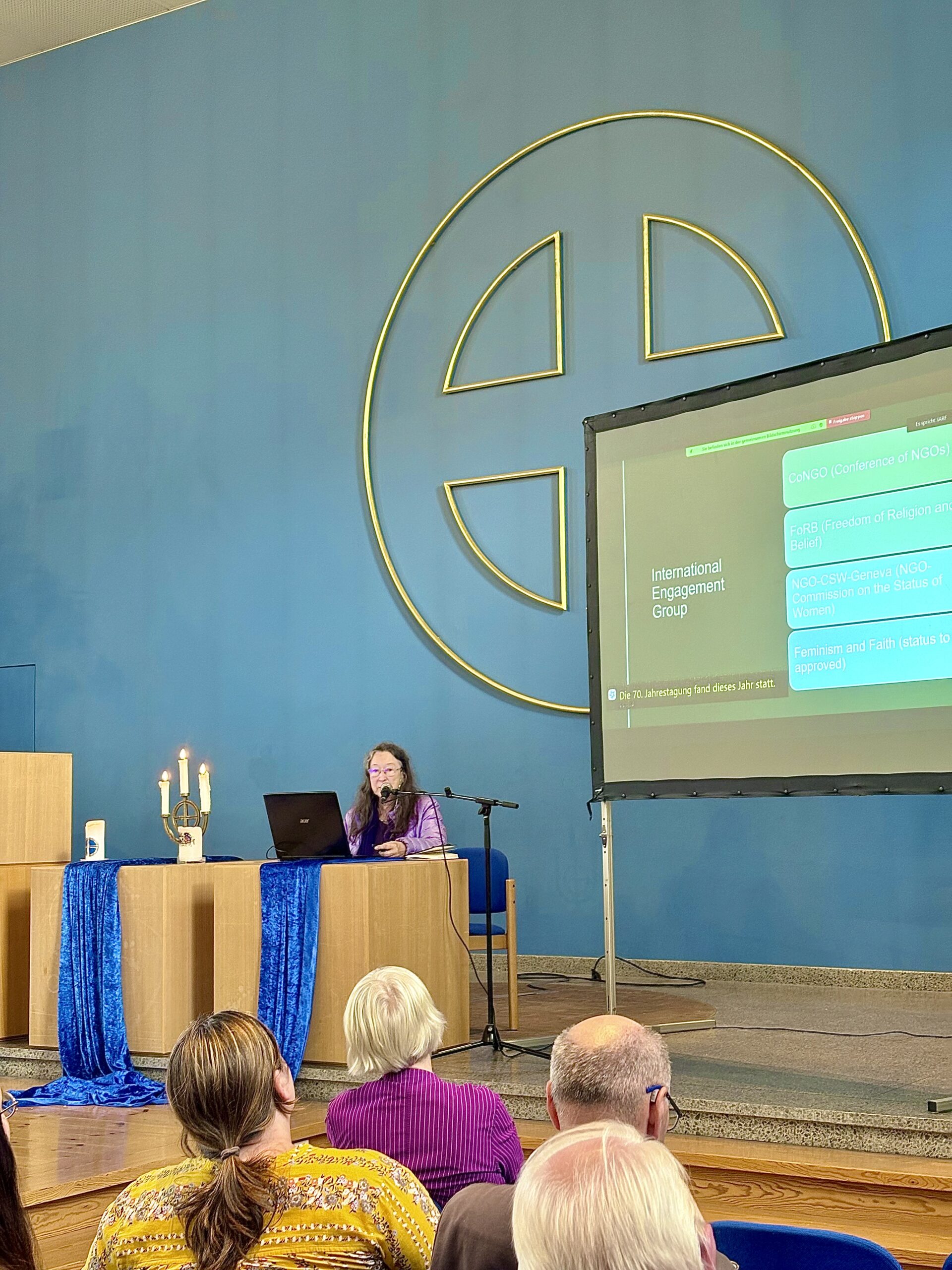
As pastor of our Free Religious community and chairman of the European group of the International Association for Religious Freedom, I opened the conference with a short reflection and a speech. Gudrun Hahn, chair of the German IARF group, and Prof. George M. Williams, President of the IARF, also took the opportunity to address the participants in the consecration hall or those connected online. The opening concluded with a presentation by Rev. Dr. Esther Suter, IARF representative to the United Nations.
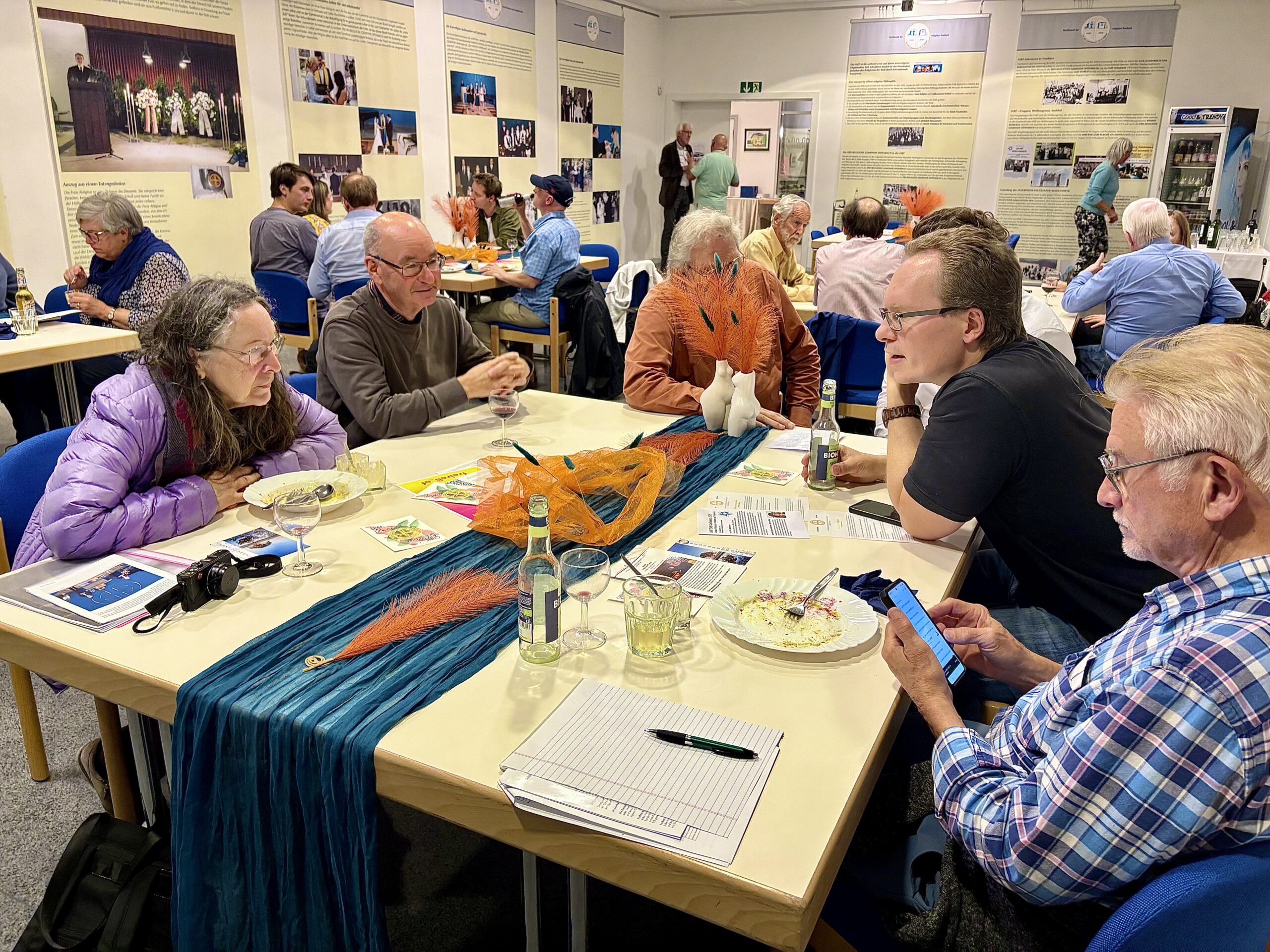
During dinner, all guests had the opportunity to network, maintain existing contacts, and exchange and deepen thoughts in a relaxed atmosphere.
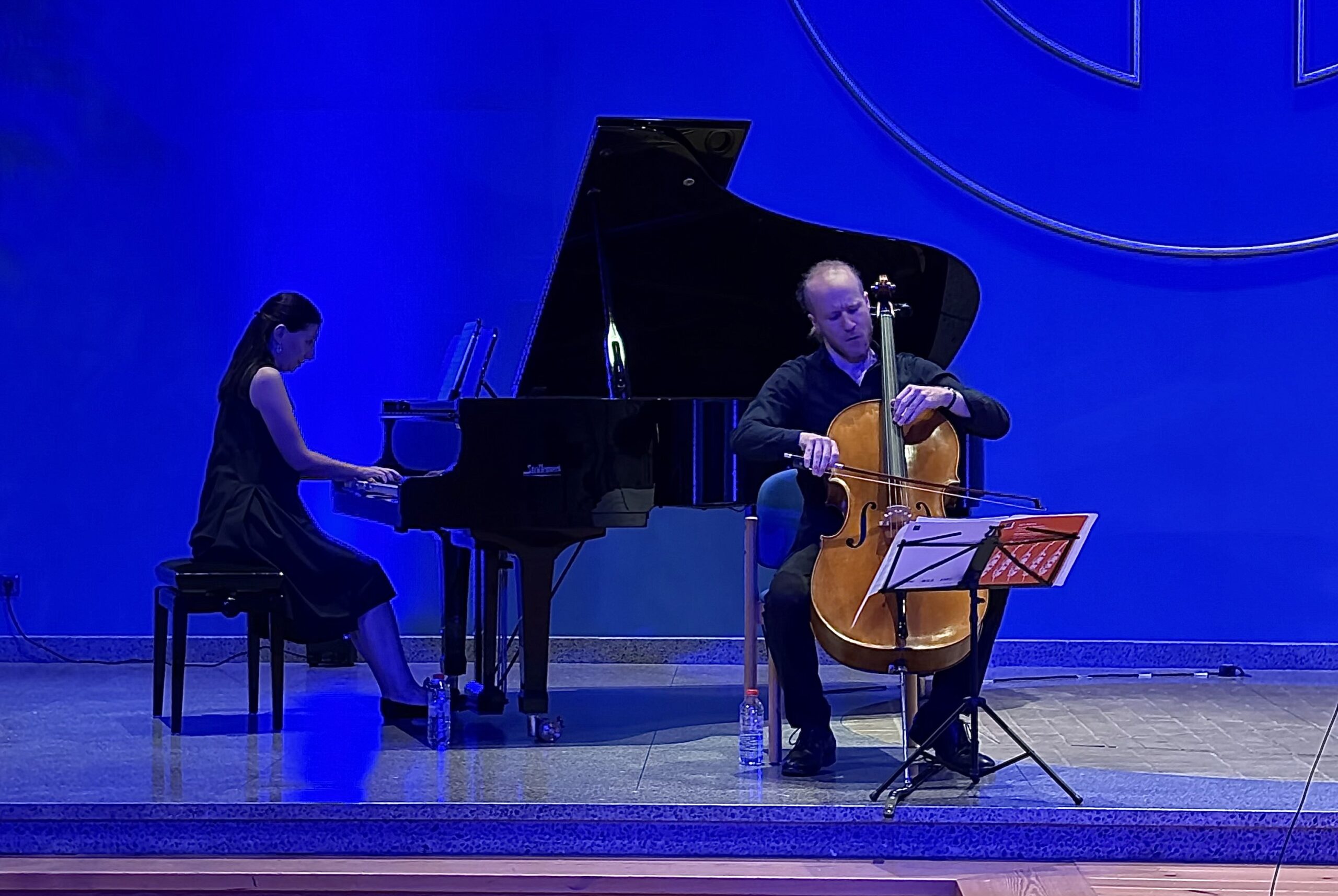
To conclude this memorable opening, a cultural highlight awaited the participants: Master cellist Christopher Herrmann and concert pianist Ekaterine Kintsurashvili thrilled the audience with a wonderful concert, where fans of both classical and modern music were fully catered for with creative arrangements.
Conference: Day 2, Friday, September 12, 2025
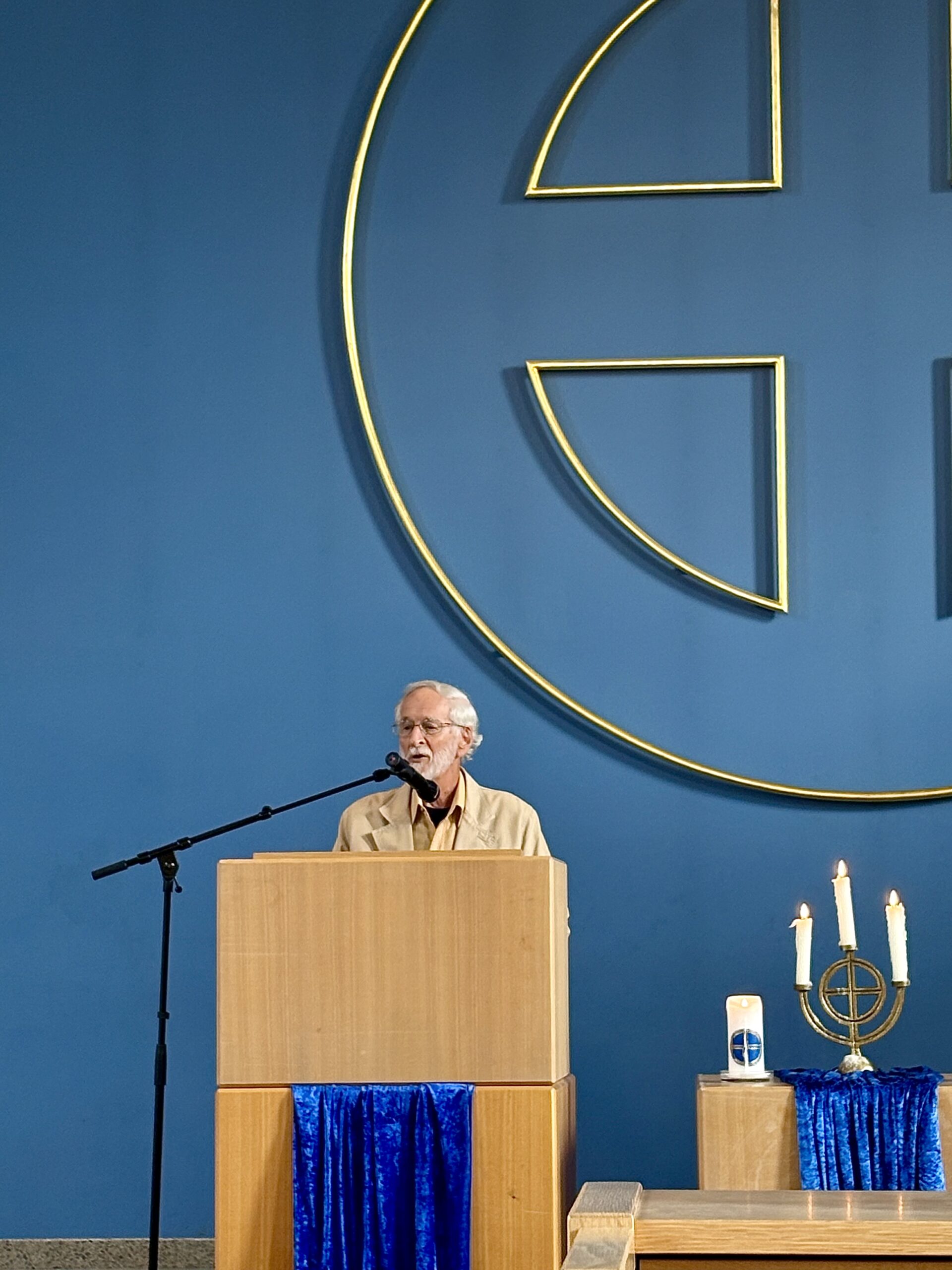
The morning began with my presentation, giving an insight into the rich history, vibrant present, and future-oriented goals of the Free Religious movement. I emphasized how this liberal religious community has always defended individual religious freedom and an open, tolerant society. A powerful reminder of the importance of questioning traditional dogmas, finding one’s own free path of faith, and staying in dialogue with one another.
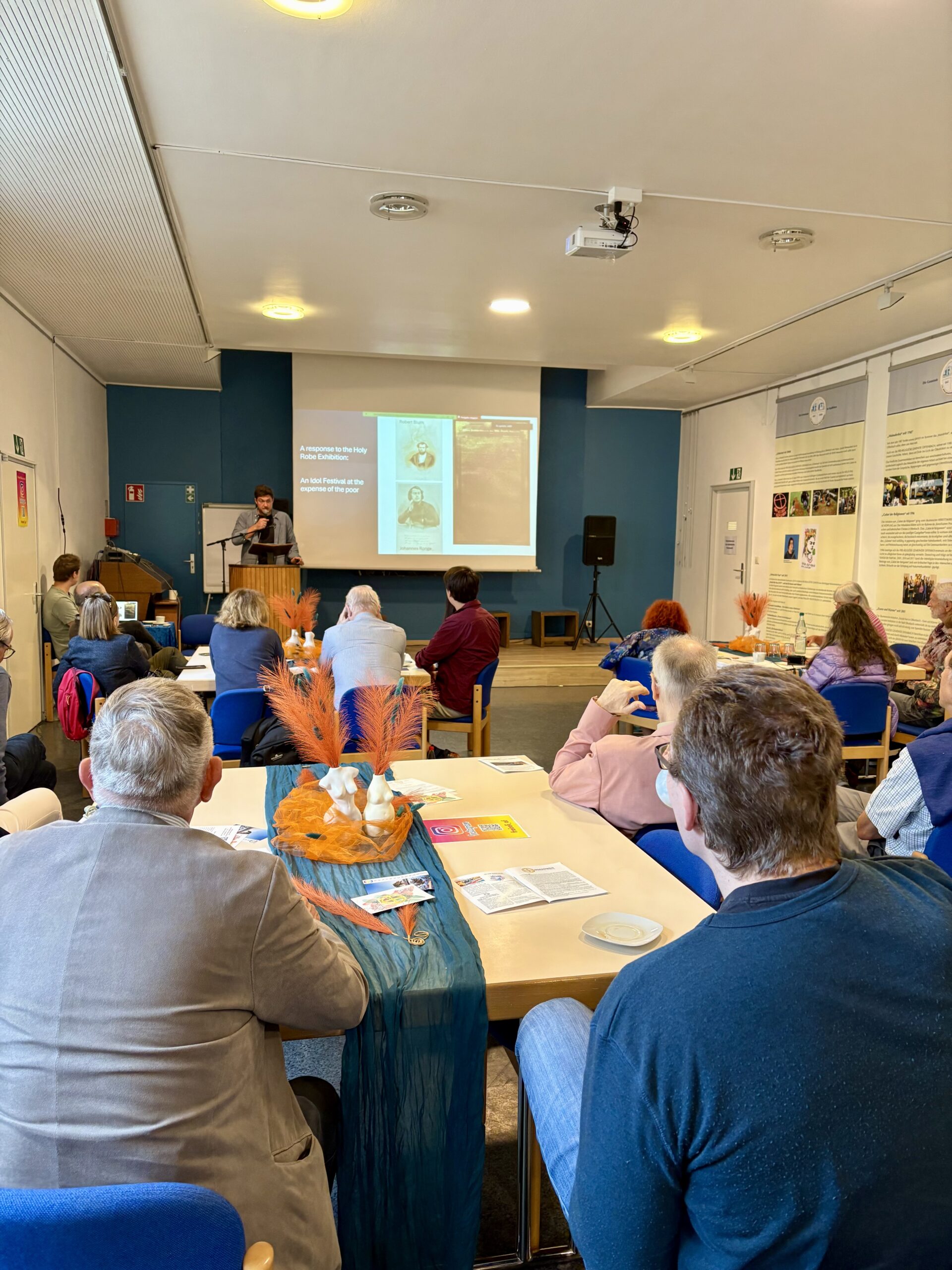
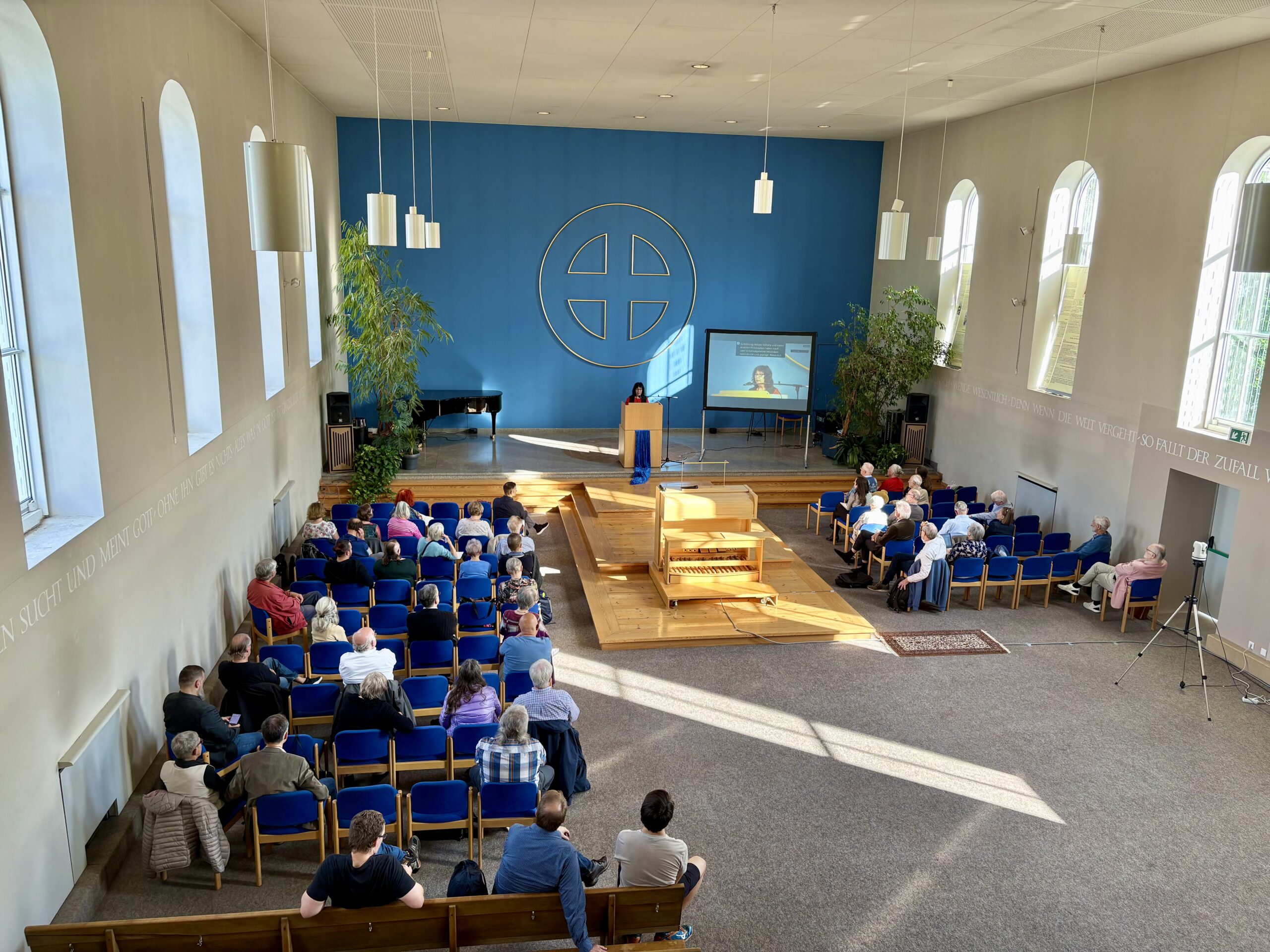
In the afternoon, the full attention was on Kurt Bangert, representing the Federation of Free Christians, who spoke on liberal theology and religious freedom, and Norbert Rácz, who provided an insight into the “Evolution of Religious Freedom Through History.”
The highlight of the day was undoubtedly the keynote speech by Seyran Ateş. The distinguished lawyer, author, and founder of the liberal Ibn Rushd-Goethe Mosque delivered a speech titled “Limits of Tolerance and Liberal Religion” that touched us all. She spoke with remarkable clarity about the possibilities of a liberal Islam that sees itself as an integral part of a pluralistic, democratic society. At the same time, she urgently warned against the dangers of a political, conservative Islam that curtails freedom and human rights, pointing out that politics often shies away from confronting this issue. Her call to stand up for an enlightened and tolerant faith was an inspiring call to action for all of us.
Conference: Day 3, Saturday, September 13, 2025
The morning started with a “Panel of Free Religion.” On the podium were women’s rights activist and Imam Seyran Ateş, IARF President Prof. George Williams, the President of the Federation of Free Religious Communities in Germany, Renate Bauer, and Robert Ince, former President of the IARF. Moderated by myself, the group discussed the meaning of religious freedom and the challenges facing liberal faith communities in today’s world. It was a fascinating discussion that showed how different and yet how similar the paths to a free and self-determined faith can be.
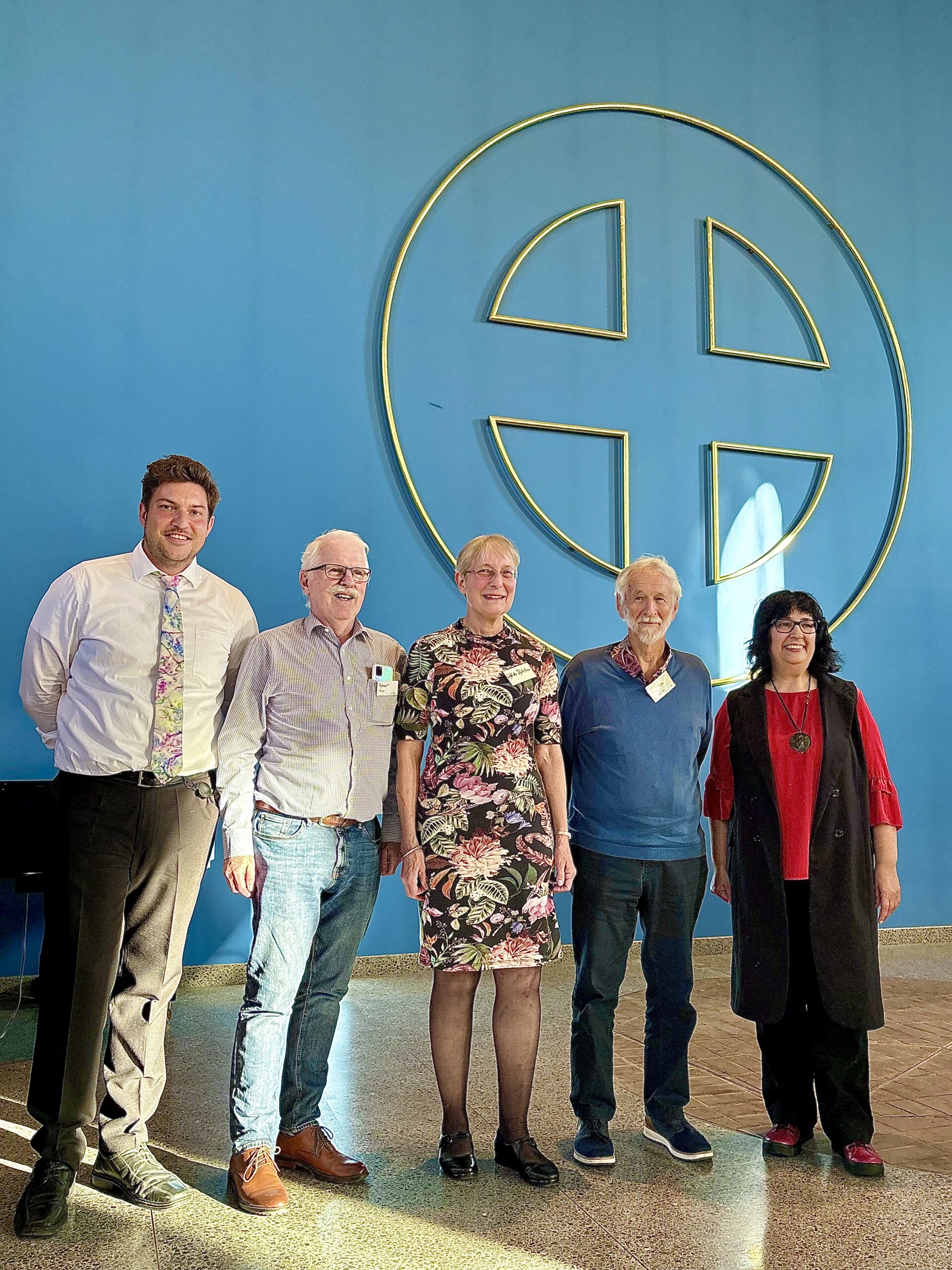
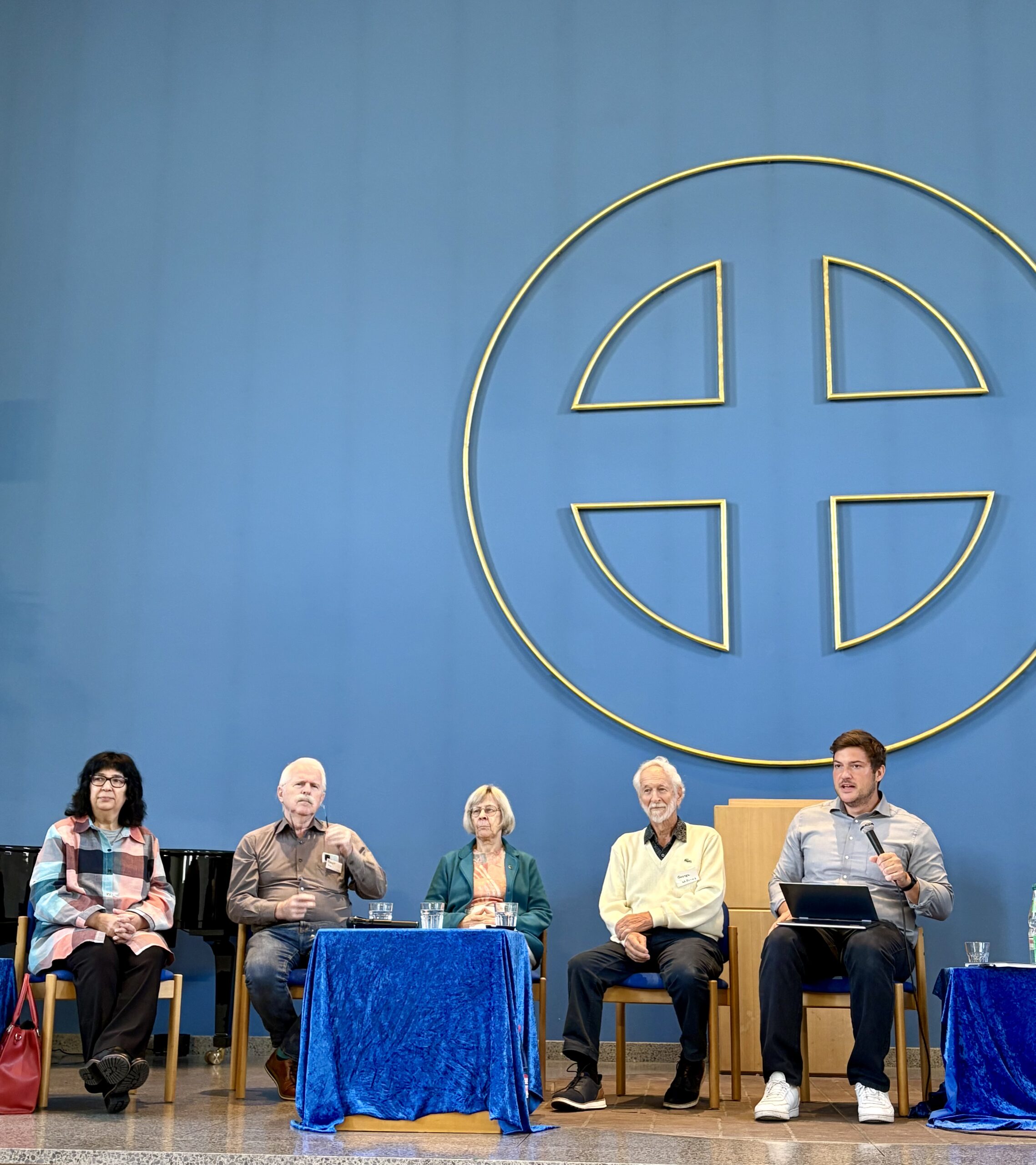
The highlight of the day was the presentation by Gabriela Frey. The coordinator of the European Buddhist Union and its representative at the Council of Europe spoke about “Interreligious & Interconvictional Dialogue on a European Level – The Council of Europe: Work, Potentials and Challenges.” She shared her many years of experience working for religious freedom in European institutions and highlighted the opportunities and hurdles that interreligious dialogue faces at the political level.
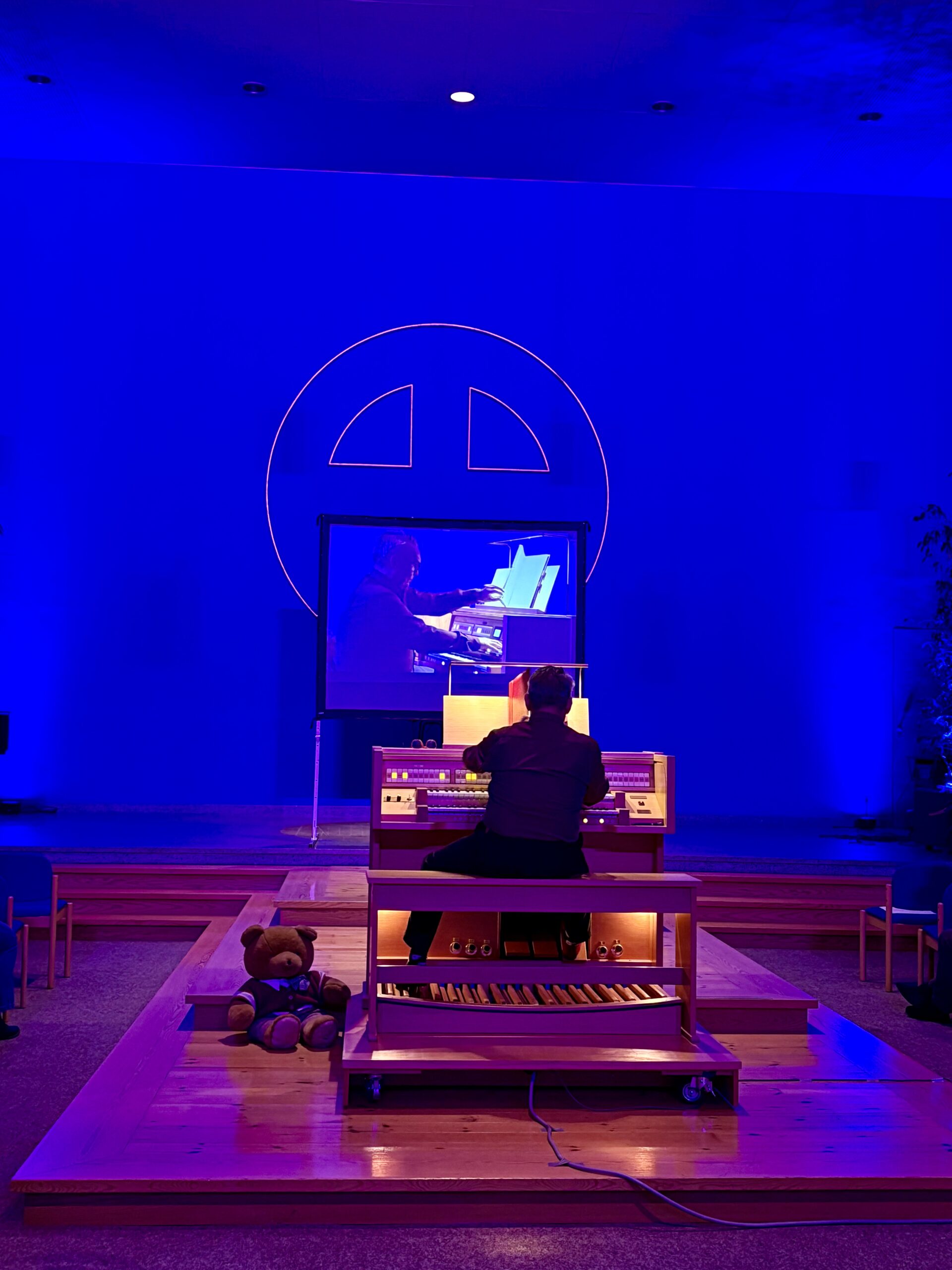
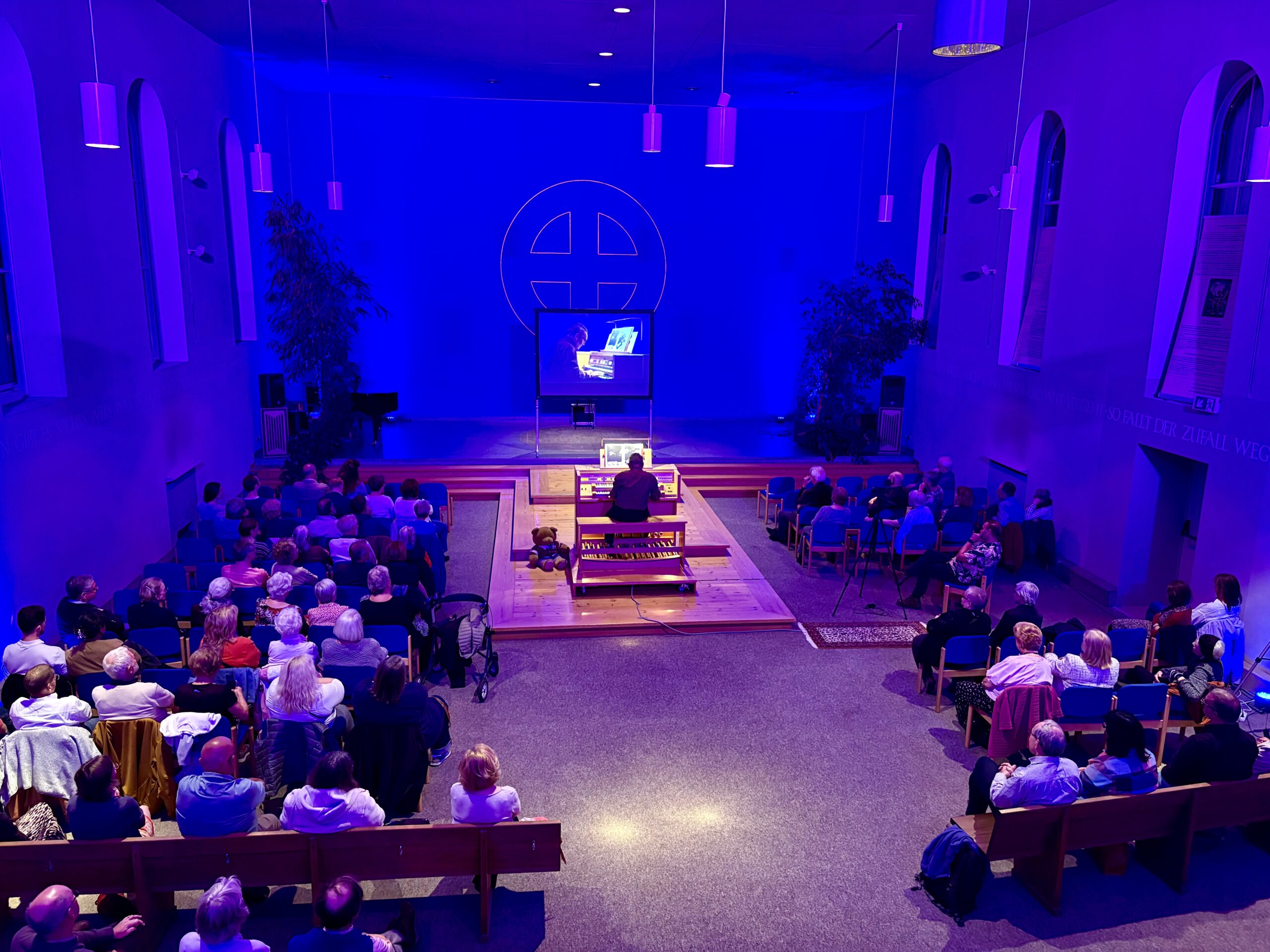
The day concluded with a true delight for the guests! Master organist Detlef Steffenhagen enchanted us with his captivating concert program “Organ goes cinema.” The sounds of the organ filled the consecration hall and created an unforgettable finale for this eventful day.
Conference: Day 4, Sunday, September 14, 2025
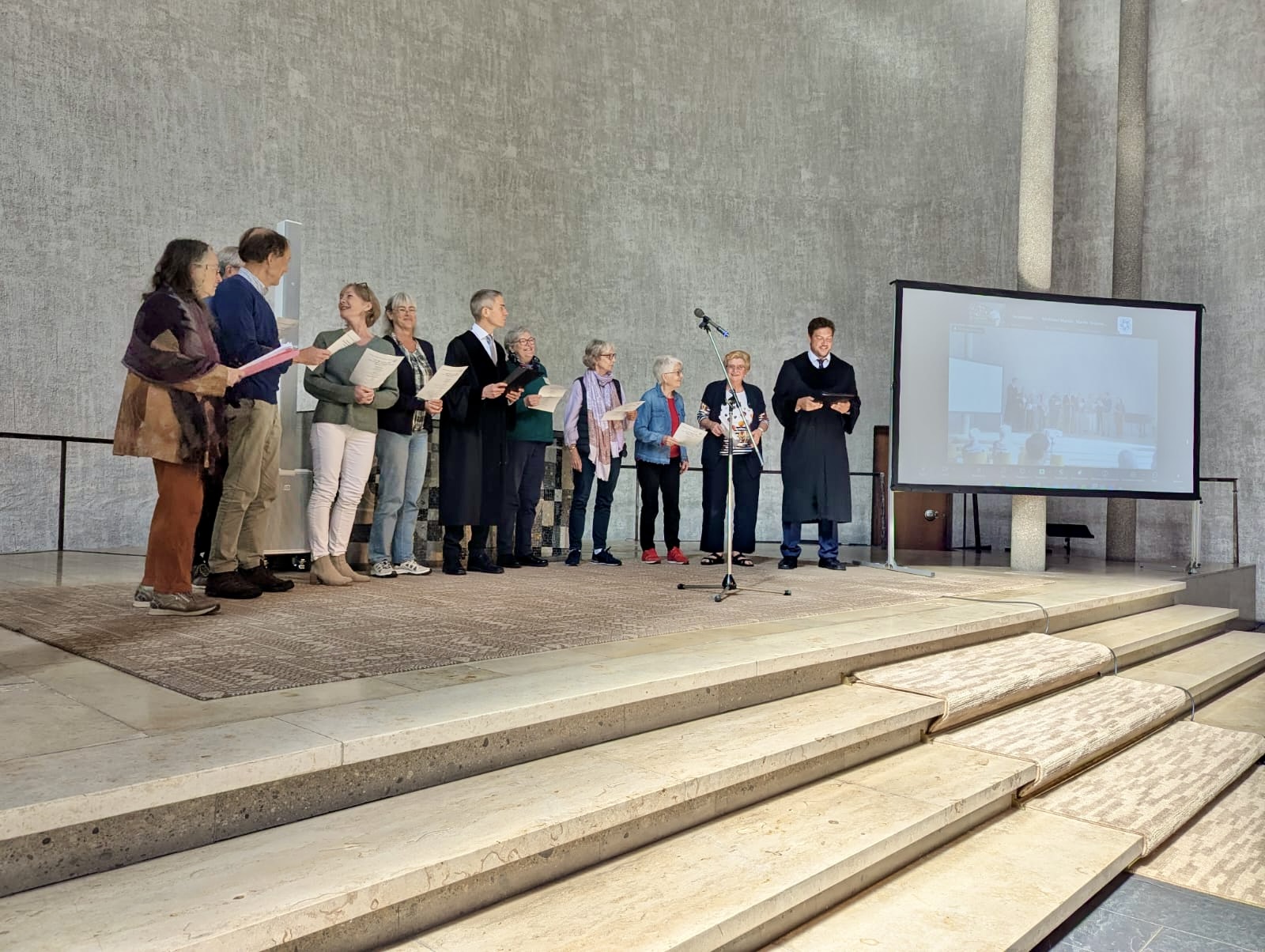
The fourth and final day at the Unitarian Free Religious Community in Frankfurt began with an Interfaith Service. Led by Pastors Alexander Schmahl and myself, this interreligious ceremony brought us together to share our common values of humanity, dialogue, individual freedom, and mutual respect. It was a moment of deep connection that reminded us how much we can achieve when we talk to each other, identify what unites us, and stand up for each other and for a liberal faith.
A special highlight was the presentation by Rev. Dr. Esther Suter. As the IARF’s representative to the United Nations, she gave us a fascinating insight into the work of the “International Association of Liberal Religious Women” and reported on their conference “Power of Dialogue and Partnership,” which had taken place just a few weeks earlier in Malaysia. Her presentation highlighted the crucial role of liberal religious women in promoting dialogue, peace, and justice worldwide.
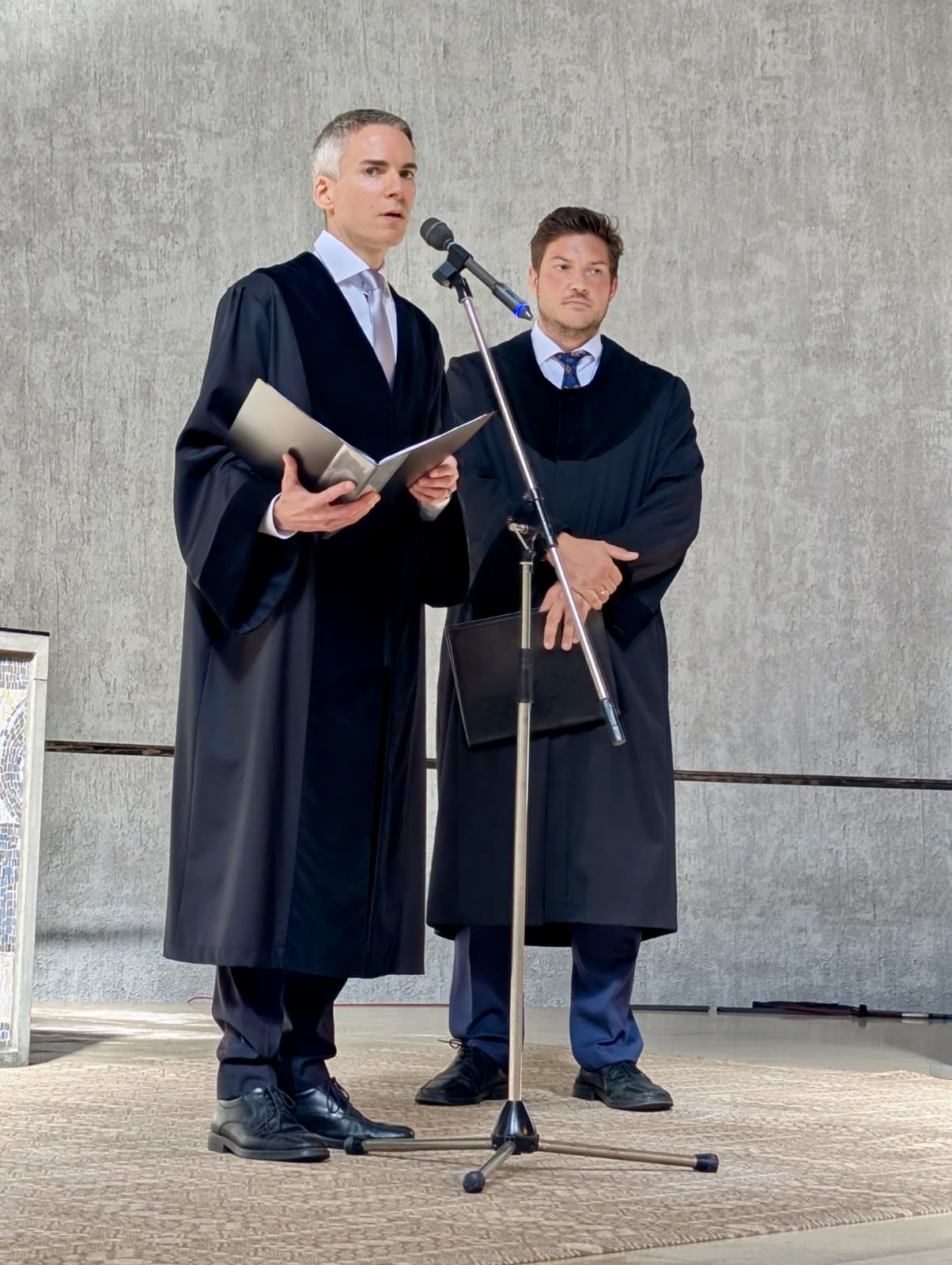
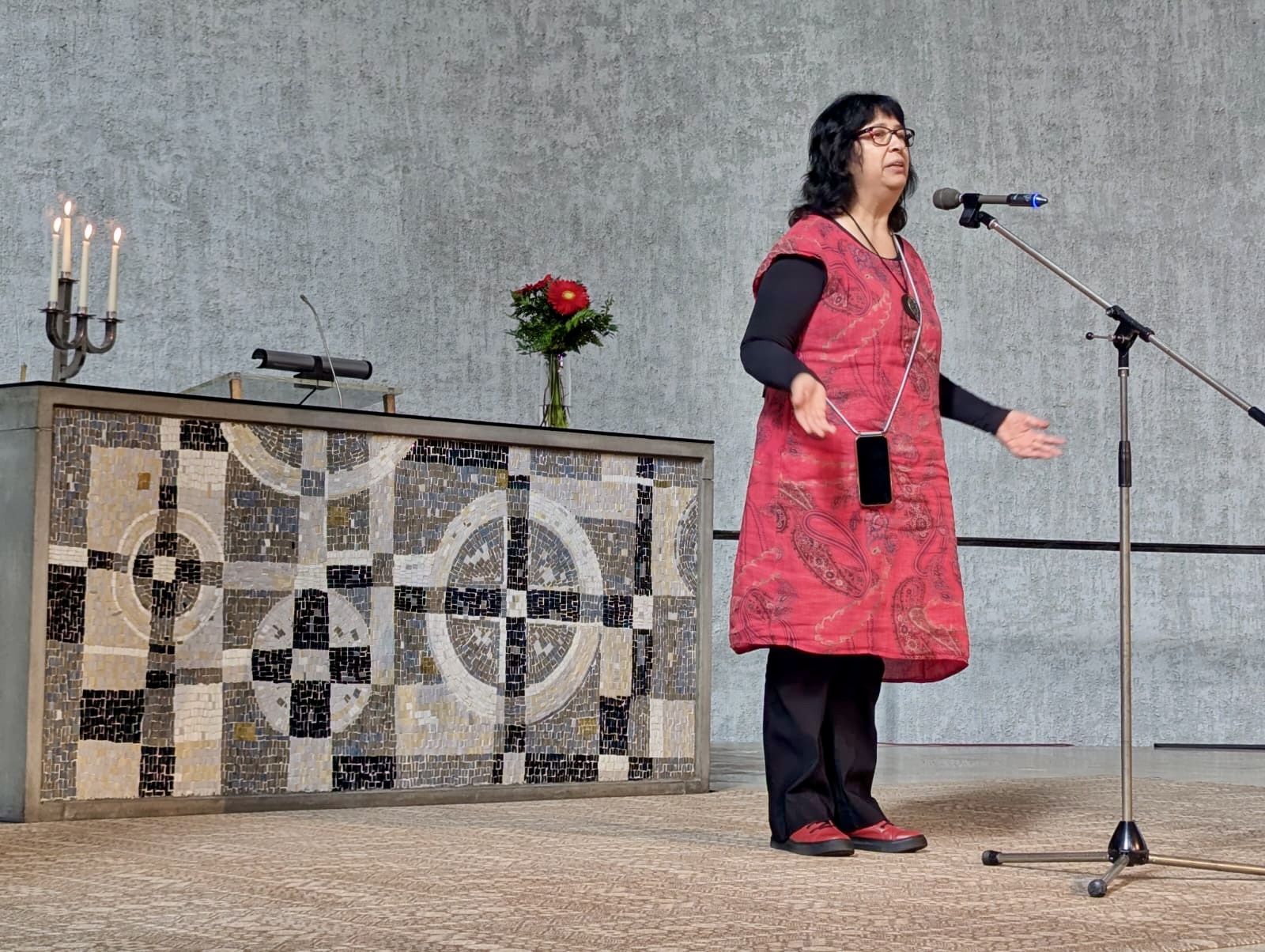
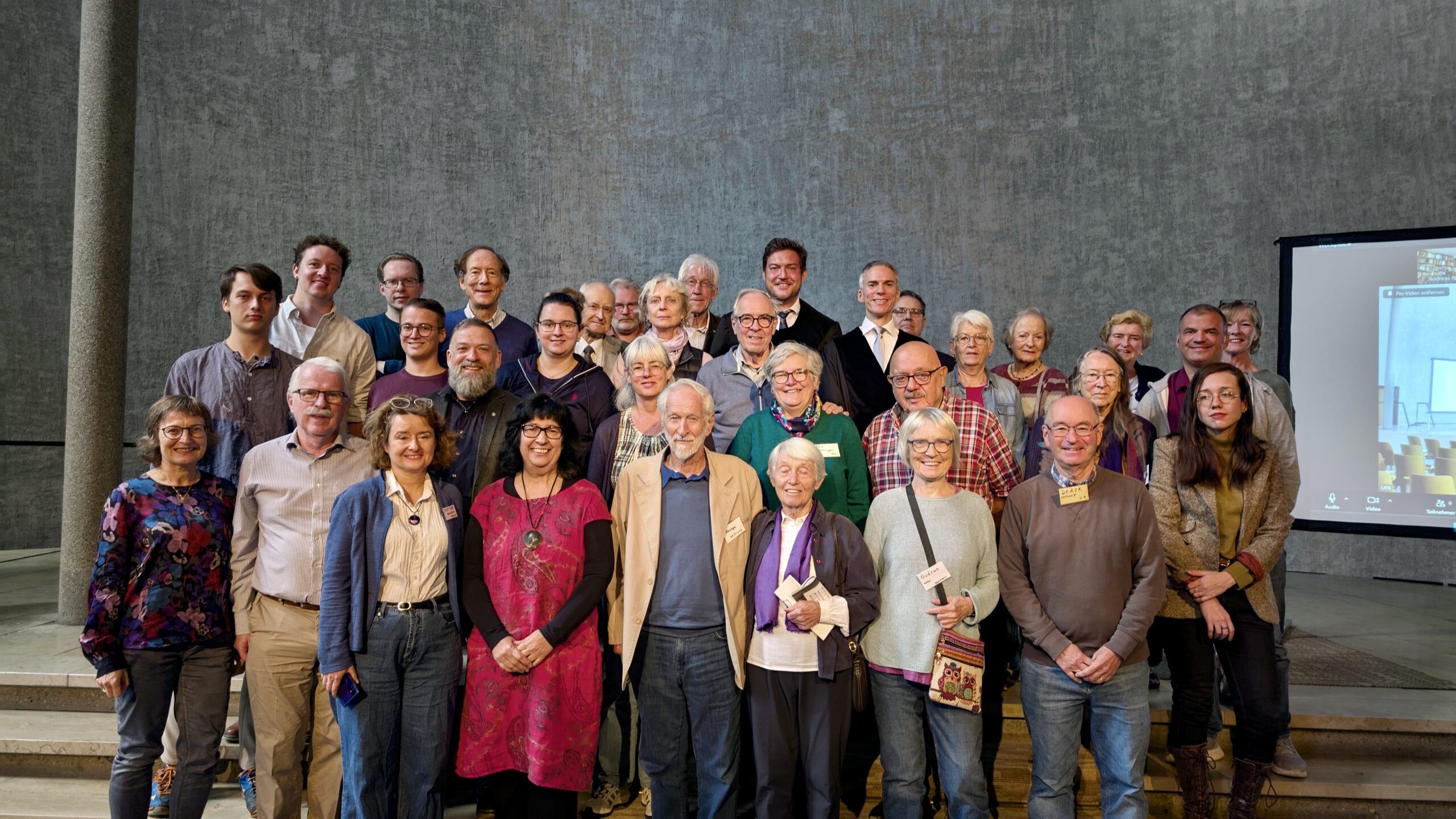
After a final joint reflection on the past days, which summarized the diversity of ideas and the depth of the conversations, the conference came to a worthy conclusion. We are particularly grateful for the lively community we were privileged to experience over the days.
Stand in Solidarity for Rights of Aboriginals and Torrest Strait Islanders to Demonstrate and Worship
As reported by media like The Guardian, on August 31 a group of neo-Nazis and others stormed Camp Sovereignty, a First Nations protest site and historic Aboriginal burial ground in central Melbourne. Attackers reportedly desecrated an ancestral fire, tore down flags and physically assaulted women attending a peaceful ceremony.
The site stands as a symbol of the ongoing Indigenous resistance in Australia and the fight for recognition of Sovereignty and land rights.
The neo-Nazi attack on the sacred site can be considered a clear act of racism and a denial of freedom of religion. We encourage our members and others to support the call from Indigenous leaders for this to be investigated as a hate crime and to demand justice and protection for sacred sites.
You can do so by signing the petition from the global advocacy organization Avaaz to the Commissioner of Australia’s Federal Police and others:
Avaaz – Stop the Neo-Nazi Violence
Last Chance: EME Conference 2025 In-Person Registration Extended!
Great news for those of you who still wish to join us in person! We have extended the registration deadline for in-person attendance at the EME Conference 2025 to September 11th. This is your final opportunity to secure a spot and experience the event in Offenbach and Frankfurt am Main, Germany.
The conference, themed “Limits of Religious Freedom and Tolerance,” runs from September 11-14, 2025, and features a keynote address from the inspiring Seyran Ateş, a distinguished author and women’s rights activist.
Don’t miss out on engaging discussions, valuable workshops, and the chance to connect with fellow members. If you can’t make it in person, remember that online participation is also available.
Don’t Forget the Pre-Conference Tour!
Interested in exploring the roots of the free religious movement? Consider arriving early for the optional Pre-Conference Tour (Sept 9-11), visiting historic congregations and significant sites in Ingelheim, Mainz, Mannheim, Ludwigshafen, and Frankfurt, including the Paulskirche and the Jewish Museum.
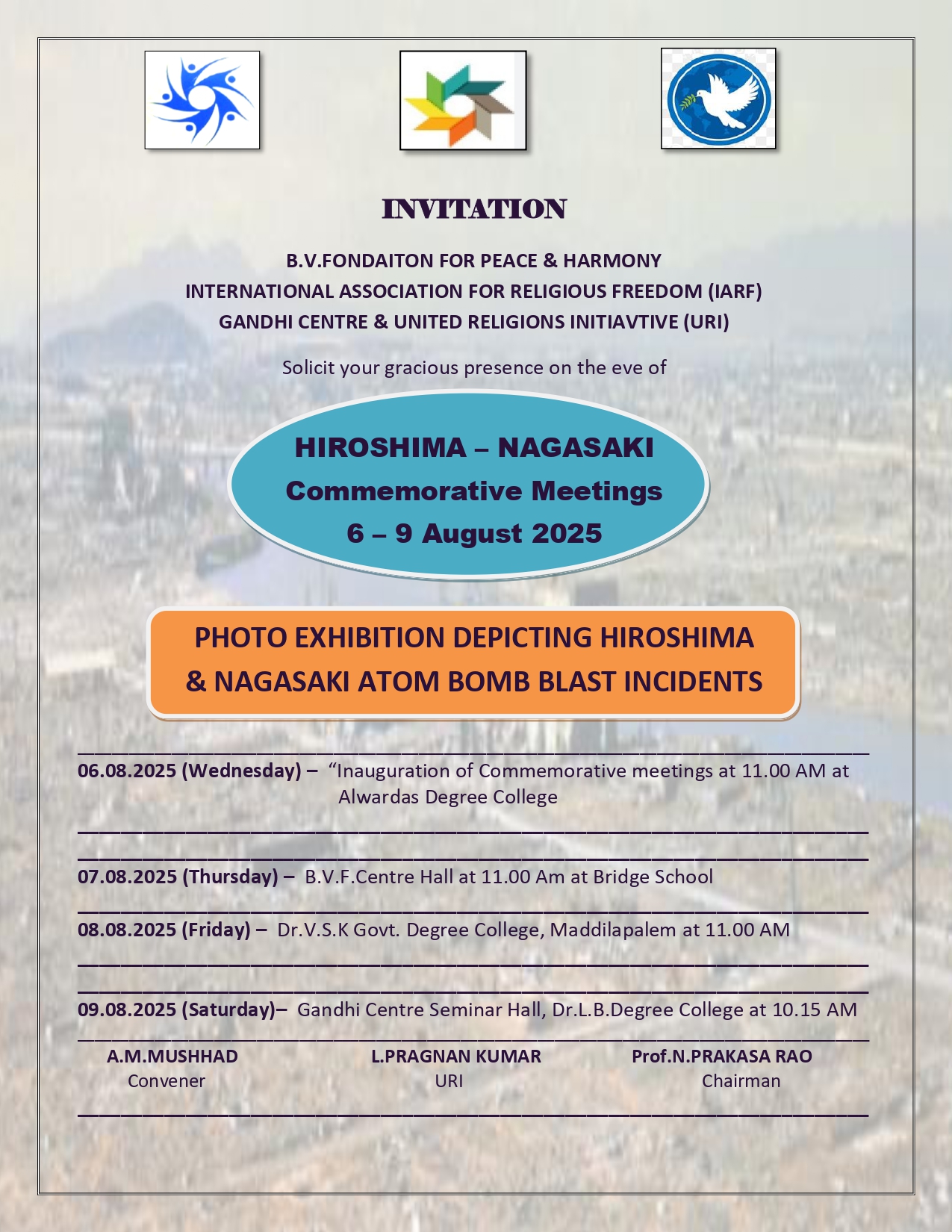
Invitation: Remembering Hiroshima & Nagasaki
On behalf of the IARF India Chapter and the B.V. Foundation, I invite you to join us and our partners for a series of meetings from 6-9 August 2025, to remember the events of Hiroshima and Nagasaki.
We believe that remembering the human cost of conflict is essential to our shared work for peace and religious freedom. A photo exhibition will be on display at each location.
Please join us:
- Aug 6, 11:00 AM: Alwardas Degree College
- Aug 7, 11:00 AM: B.V.F. Centre Hall, Bridge School
- Aug 8, 11:00 AM: Dr. V.S.K Govt. Degree College, Maddilapalem
- Aug 9, 10:15 AM: Gandhi Centre Seminar Hall, Dr. L.B. Degree College
We hope you can join us for this important act of remembrance.
Spring 2026 IARF Study Tour to Japan
One valuable aspect of IARF is the opportunity for members from different countries, religions, and cultures to meet and inspire each other. IARF is now planning a tour to Japan for spring 2026 to study Japan’s religious and spiritual traditions, with a particular focus on those connected to our member organisations.
The programme will include meetings with various groups associated with our members and member organisations, as well as activities commemorating the end of World War II and the atomic bombings of Hiroshima and Nagasaki.
Courses from IARF’s online Free Religion Institute, such as the one announced in this newsletter, will be one way to prepare for the study tour. Plans are still in their early stages, but if you are interested, please send an email to [email protected]. This also applies if you have specific suggestions or wishes for the tour (for instance, a particular theme) or if you would like to be part of the preparatory committee. We will keep you informed through future newsletters.
Express Your Interest
EME Conference 2025: Register now!
For the first time, this EME conference will be hybrid, allowing members and friends from around the world to join us either in person or online.
This year’s theme, “Limits of Religious Freedom and Tolerance,” promises thoughtful discussion and exploration. We’ll delve into how liberal religious perspectives engage with contemporary challenges to freedom of thought, conscience, and belief. Our hosts, the Frei-religiöse Gemeinde Offenbach and the Unitarische Freie Religionsgemeinde Frankfurt, are both celebrating their 180th anniversaries, adding a layer of historical depth to our meeting.
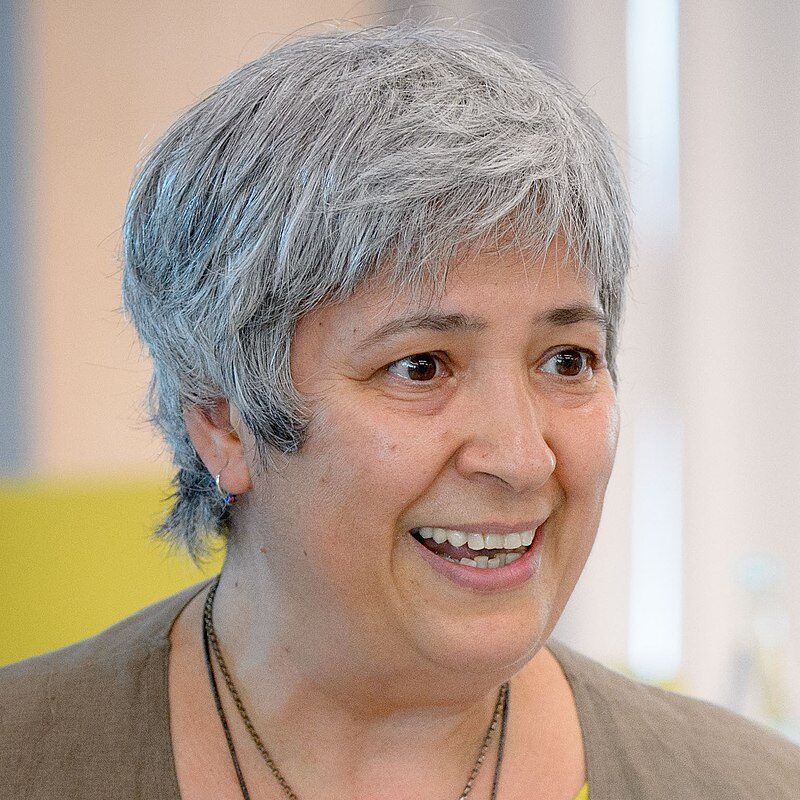
Keynote Speaker Spotlight
We are particularly pleased to welcome Seyran Ateş as our opening keynote speaker. A prominent author, women’s rights activist, and founder of the liberal Ibn-Rushd-Goethe Mosque, she will share insights on “Limits of Tolerance and Liberal Religion”.
Wikipedia Bio
Mosque (Wiki)
Mosque Website
Beyond the keynote, look forward to engaging sessions, including a panel discussion on Free Religion featuring Pascal Schilling and George Williams, parallel workshops exploring topics like Liberal Theology’s contribution to religious freedom (led by Dr. Kurt Bangert) and the historical evolution of these freedoms (with Rev. Norbert Rácz), plus valuable Circle Group discussions for deeper connection. Enjoy networking during dinners and coffee breaks, and experience a special Jazz and Blues Organ Concert by the acclaimed Barbara Dennerlein. The conference concludes with an Interfaith Service hosted by our Frankfurt congregation.
Interested in exploring the roots of the free religious movement? Consider arriving early for the optional Pre-Conference Tour (Sept 9-11), visiting historic congregations and significant sites in Ingelheim, Mainz, Mannheim, Ludwigshafen, and Frankfurt, including the Paulskirche and the Jewish Museum.
Find Key Information Quickly:
About the Conference
Meet the Hosts
Registration Details
Conference Programme
Pre-Conference Tour
Accommodation Info
Ready to join the conversation?
Head over to the official conference page for the full schedule, speaker bios, registration options (including online participation and the pre-tour), and travel advice. Sign up now to secure your place!
Visit Conference Page & Register
We’re looking forward to seeing you in Germany for what promises to be an insightful and connecting conference!
Celebrating 40 Years: A Report on the IARF JLC Anniversary Gathering
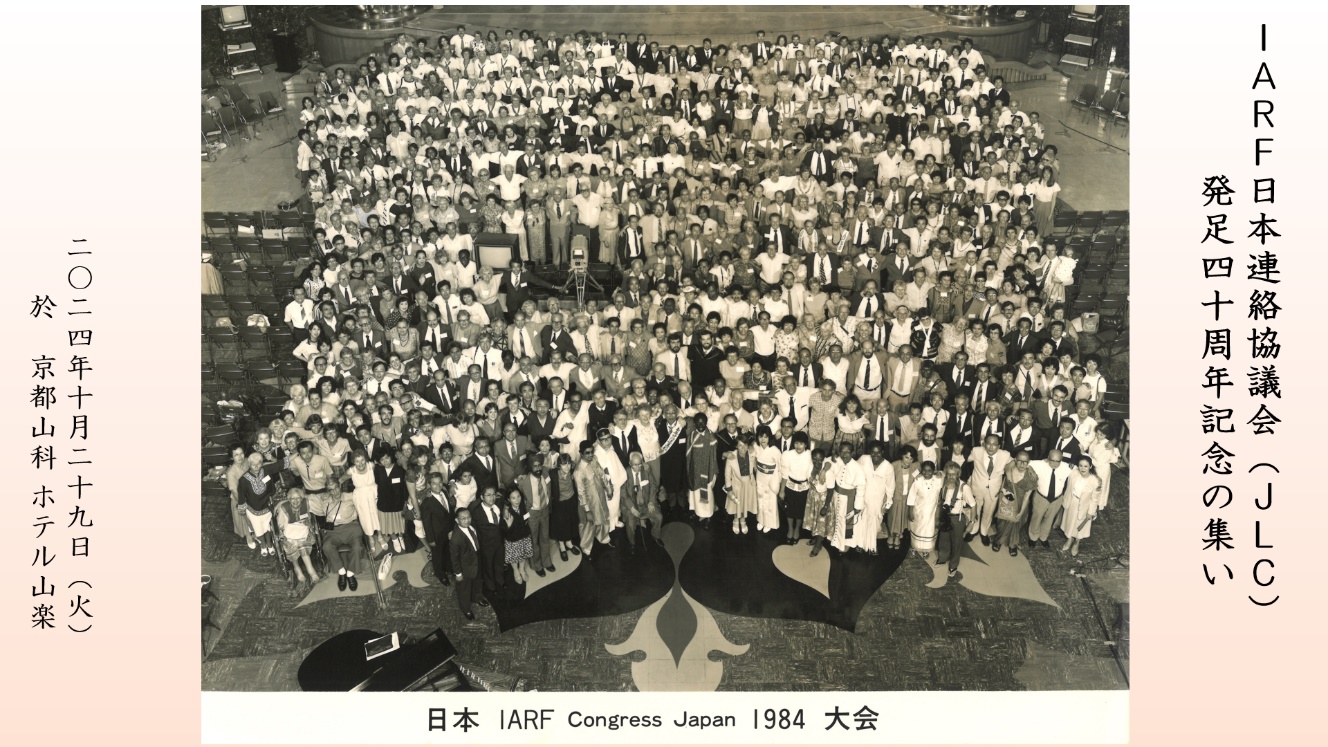
Objective
The year 2024, it has been 40 years since the IARF Japan Liaison Committee (JLC) was established on the occasion of the 25th IARF World Congress in Tokyo in 1984. To commemorate this, a gathering was held to celebrate the 40th anniversary of the JLC.
We looked back on the 40 years of the JLC, reflected on the passion of the original members, deepened the exchange between members and wished to continue developing IARF activities in Japan in the future.
Summary
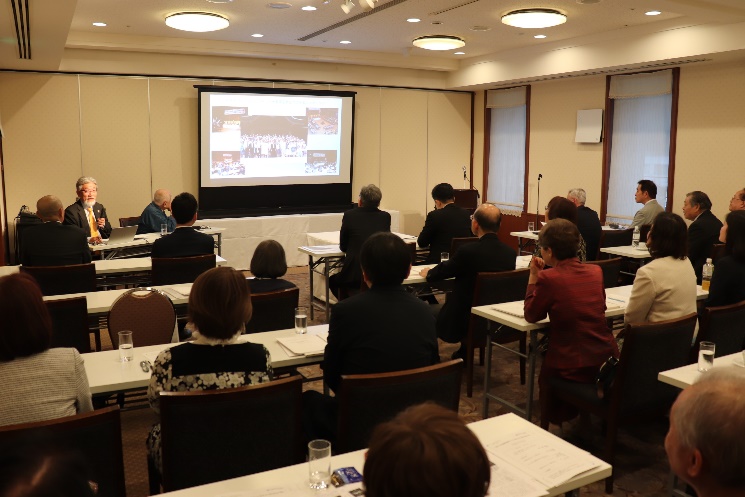
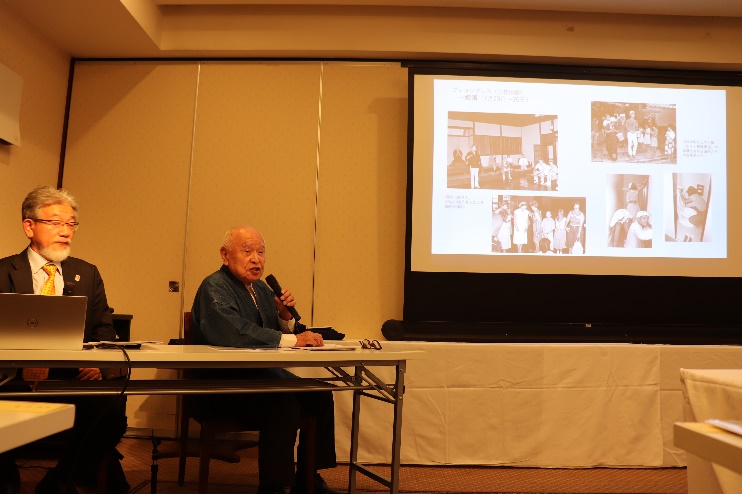
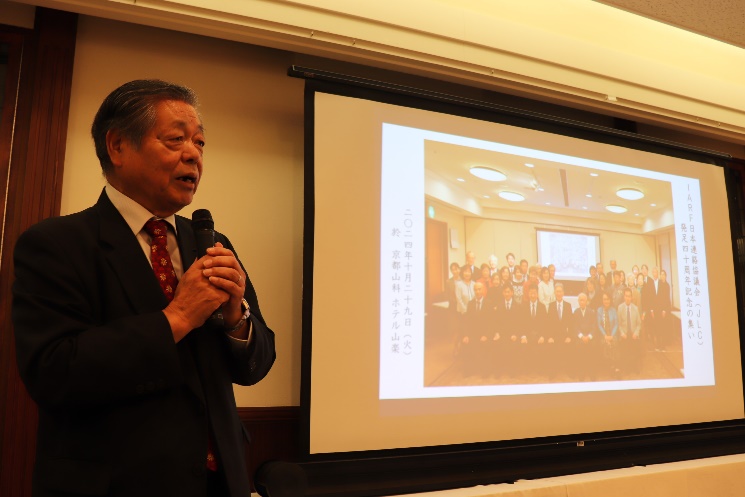
Part 1: Slideshow Session ‘JLC – 40 years of history through images’
After the MC, Rev. Torazo Tanino, declared the meeting open, Rev. Yukinobu Sahara gave the opening address. The moderator, Rev. Yoshinobu Miyake, and commentator, Rev. Takashi Nishida, were then introduced, and the history of the JLC was reviewed through a slide presentation entitled ‘JLC – 40 years of history through images’.
The history of the JLC was reviewed with detailed explanations by Rev. Miyake of the photos on each slide, as well as reminiscences told by Rev. Nishida and other participants.
While the Tokyo Congress is highly regarded for its overall programme management, it also made a strong impression on international participants in terms of human exchange.
Representatives of Rissho Kosei-kai, Konko Church of Izuo and Tsubaki Grand Shrine first participated in the 20th World Congress held in Boston, USA, in 1969, when the ‘International Congress of Free Christians and Other Religious Liberals.’ was renamed the ‘International Association for Religious Freedom’.
In 1981, Rev. Nikkyo Niwano of Rissho Kosei-kai was elected as the first Japanese president of the IARF. In 1984, Tokyo was chosen as the venue for the 25th World Congress of the IARF, the first time in Asia.
The Japanese member groups organised the JEC (Japan Congress Executive Committee) and meticulously prepared for the Tokyo Congress. Several options were prepared not only for the main congress programme but also for pre-congress tours and post-congress tours, including programmes to introduce and exchange Japanese culture in particular.
After the great success of the Tokyo Congress, the ‘Japan Congress Executive Committee’ was taken over by the ‘IARF Japan Liaison Committee (JLC)’, which later developed IARF’s activities in Japan. Since then, several members of the JLC have served continuously on the IARF International Council, and have also made their significant international contributions, such as the election of Rev. Yukitaka Yamamoto of the Tsubaki Grand Shrine as International President in 1996 and Rev. Mitsuo Miyake of the Konko Church of Izuo in 2010. A number of JLC members have also willingly participated in IARF World Congresses held in various cities around the world.
In addition to these international activities, the JLC has held regular liaison meetings several times a year to share information on domestic and international activities, and has also organised fieldworks and study sessions in Japan.
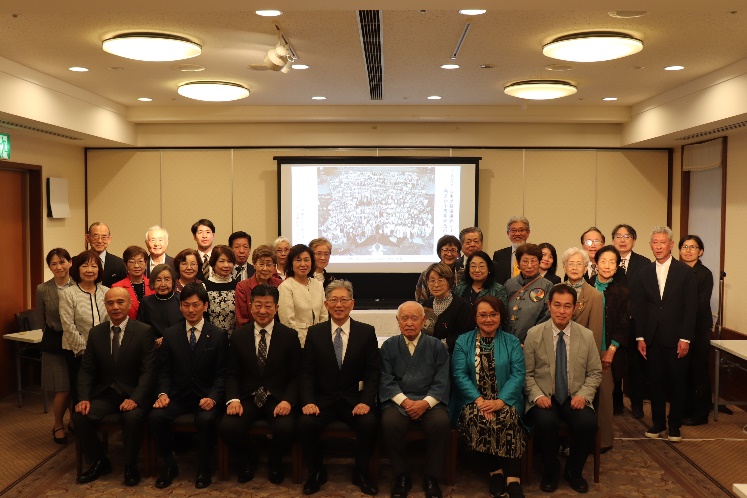
After showing the slides, Rev Kosuke Shiba of the Japan Chapter gave a closing address and led the closing prayer to conclude the first part of the meeting. And then, all of a ll the participants took part in a group photo.
Part 2: Social Gathering
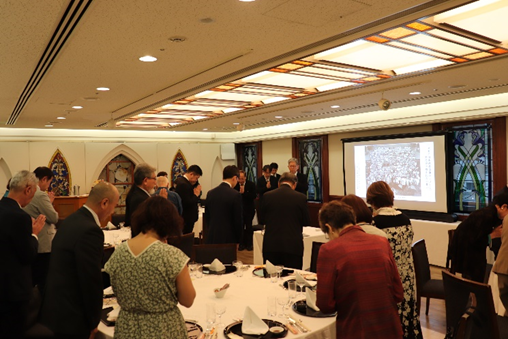
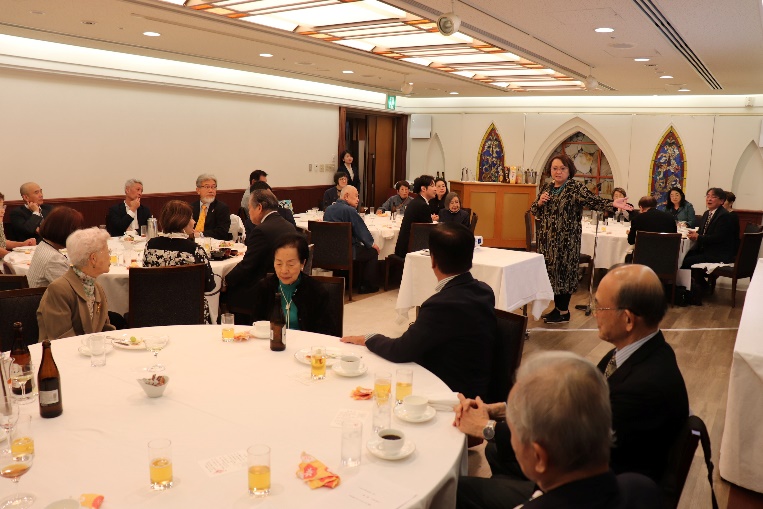
The second part of the meeting was a social gathering to celebrate the 40th anniversary and to deepen mutual exchange among members. After an opening address and opening prayer by Rev. Kazuhiro Motoyama of Tamamitsu Shrine, congratulatory speeches were given by three people. First, we received a congratulatory address from Rev. Nichiko Niwano, President of Rissho Kosei-kai, read on his behalf by Rev. Yukinobu Sahara, followed by a congratulatory address from Rev. Mitsuo Miyake of Konko Church of Izuo, who served as the 33rd President of IARF. Dr. George Williams, the current IARF President, also delivered a congratulatory message, which was read on his behalf by the MC, Mr. Souru Tanino.
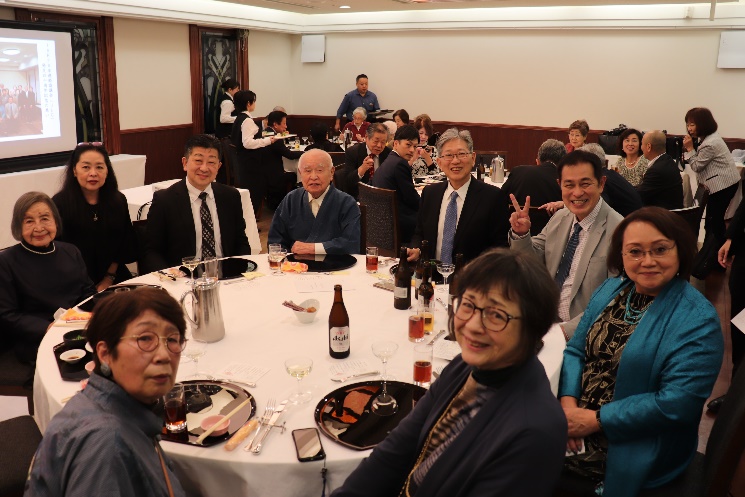
Following a toast led by Rev. Toshihide Yamamoto of the Mutsumikai, participants enjoyed a meal while socialising. Each of the Japan Chapter and IALRW members present was introduced. A short video created by President Williams to commemorate the Tokyo Congress was also shown, as well as photos that could not be included in Part 1 due to time constraints. Ms. Haruyo Masuda, a participant from the Japan Chapter, spoke about her experience of hosting participants at the 1984 Tokyo Congress, which included a programme of ‘home visits’. Rev Mitsuo Miyake expressed his gratitude and appreciation to the secretariat staff and others involved in the preparations for the day.
We also enjoyed a video recording of the 25th IARF Congress held in Tokyo in 1984. All of the participants shared cheerful moments. With the closing speech and prayer led by Prof. Kathy Matsui, the whole programme of the gathering came to a joyful close.
INVINCIBLE: Peace and Conflict Resolution for Young Adults
The youth wing of the International Association for Religious Freedom (IARF) brought its peace and conflict resolution program to Mumbai, targeting young leaders at Pramod Ram Ujagar Tiwari Saket Institute of Management (PRUTSIM). The December 14 event, called “INVINCIBLE,” engaged participants aged 18-25 in conversations about peace-building and understanding conflict.
Janhvi Gupte kicked off with an ice-breaker that got participants talking openly about tough issues. This approach worked especially well, creating an atmosphere where students felt comfortable discussing conflict and its resolution.
Aayush Soni followed with an overview of IARF and RFYN’s work worldwide, showing students how they could get involved in peace-building efforts.
The program took a serious turn as participants explored the consequences of conflict, examining the Hiroshima-Nagasaki bombing. Gupte’s presentation on history’s deadliest wars brought home the reality of conflict, while photos of Hiroshima created a lasting impact. The story of Sadako Sasaki, a survivor who became a symbol of peace, resonated deeply with participants.
Discussions then moved to practical applications, exploring how peace affects daily life. Participants examined personal, social, and environmental aspects of peace-building, looking at concrete ways to resolve conflicts in their own lives.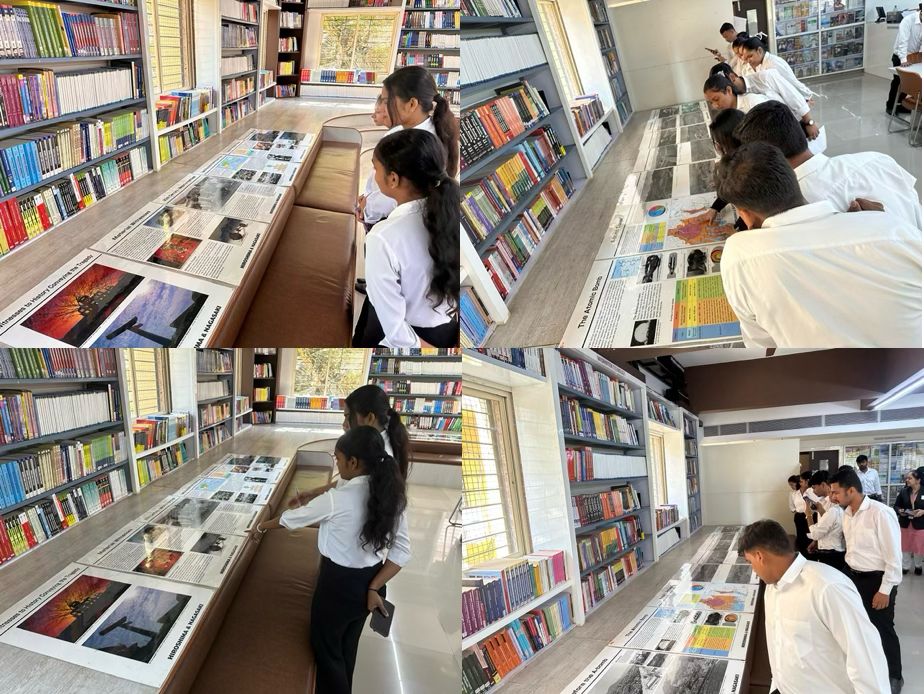
The program wrapped up in PRUTSIM’s library, where participants viewed posters from Japan showing the impact of nuclear weapons. This exhibition drove home the real consequences of war.
In a spontaneous show of commitment, participants took a peace pledge, promising never to support nuclear weapons. Their engagement and feedback showed the program hit its mark.
The event ended with Immanuel Manish Daniel encouraging participants to join RFYN’s peace efforts. PRUTSIM’s support, including presenting appreciation certificates to facilitators, demonstrated their commitment to peace education.
INVINCIBLE at PRUTSIM showed that young people engage enthusiastically with peace initiatives when presented in relevant, interactive ways. The participants’ response suggests a growing awareness of the importance of conflict resolution skills among future leaders.
Empowering Foundations: Advancing Equality and Opportunity through Rural Engagement
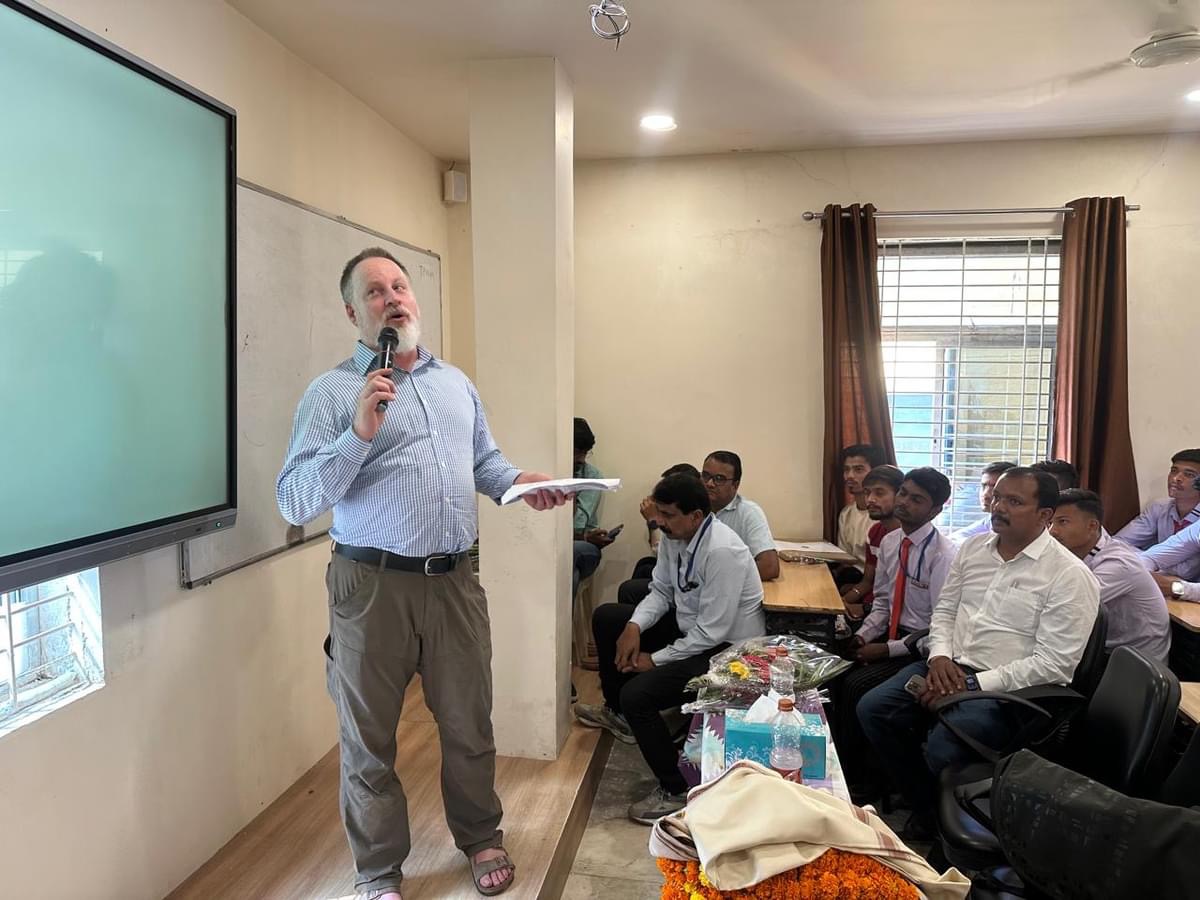
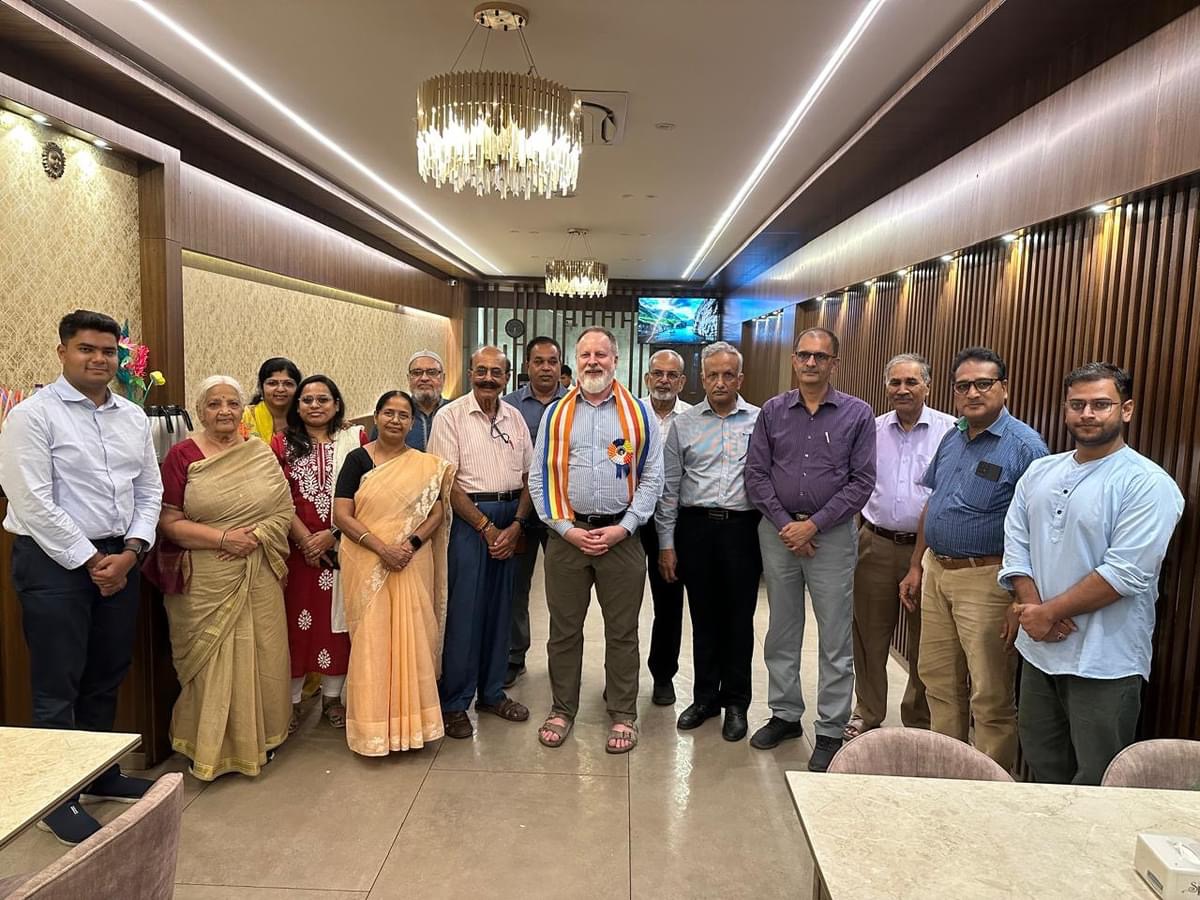
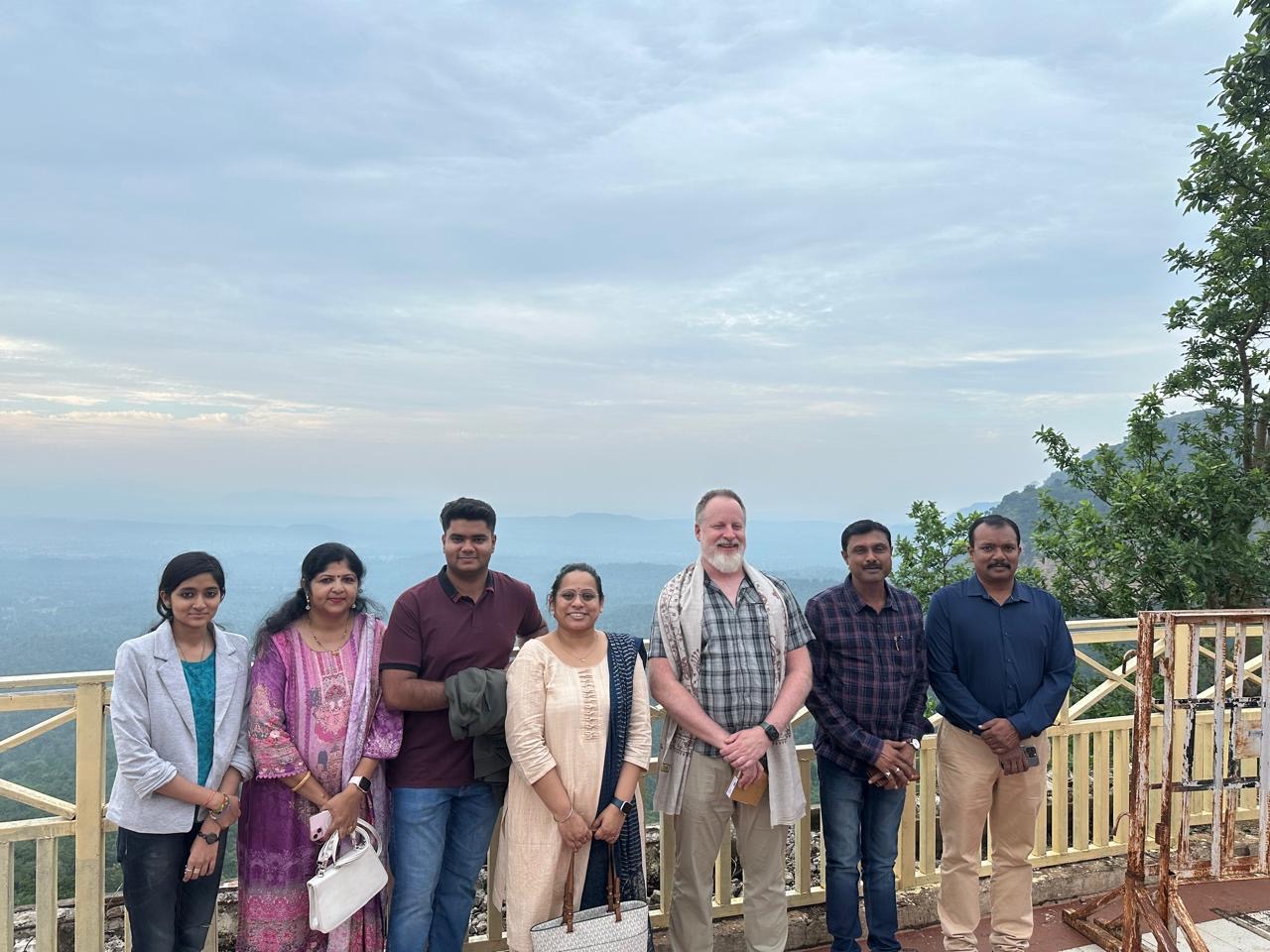
In a significant demonstration of international interest in rural India’s development initiatives, David Moss, Senior Vice President and Head of Trading Compliance at a leading New York-based investment management company, conducted an extensive two-day visit to various IARF-RFYN projects in Chhindwara, Madhya Pradesh, during October 19-20, 2024. The visit showcased remarkable achievements in youth empowerment, interfaith harmony, and women’s economic development.
Youth Empowerment and Skill Development
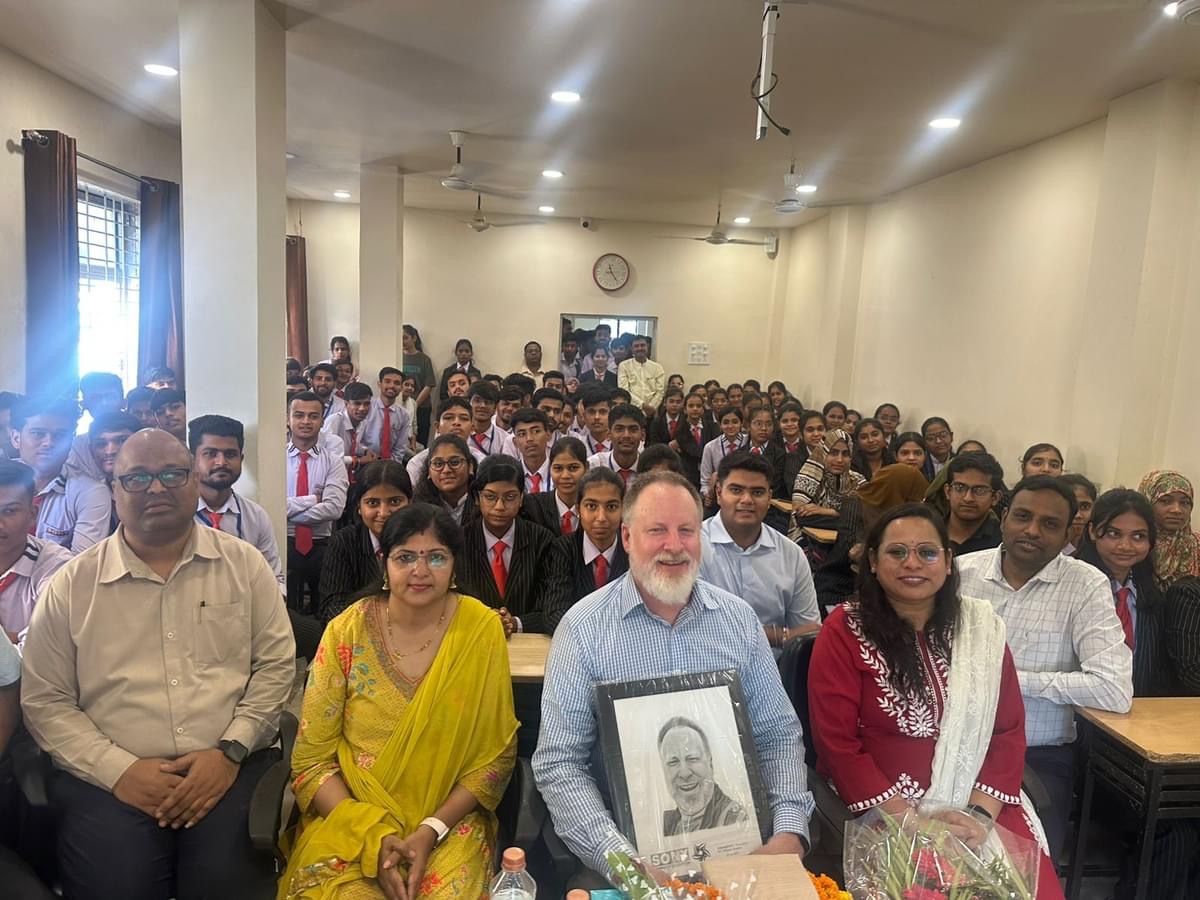
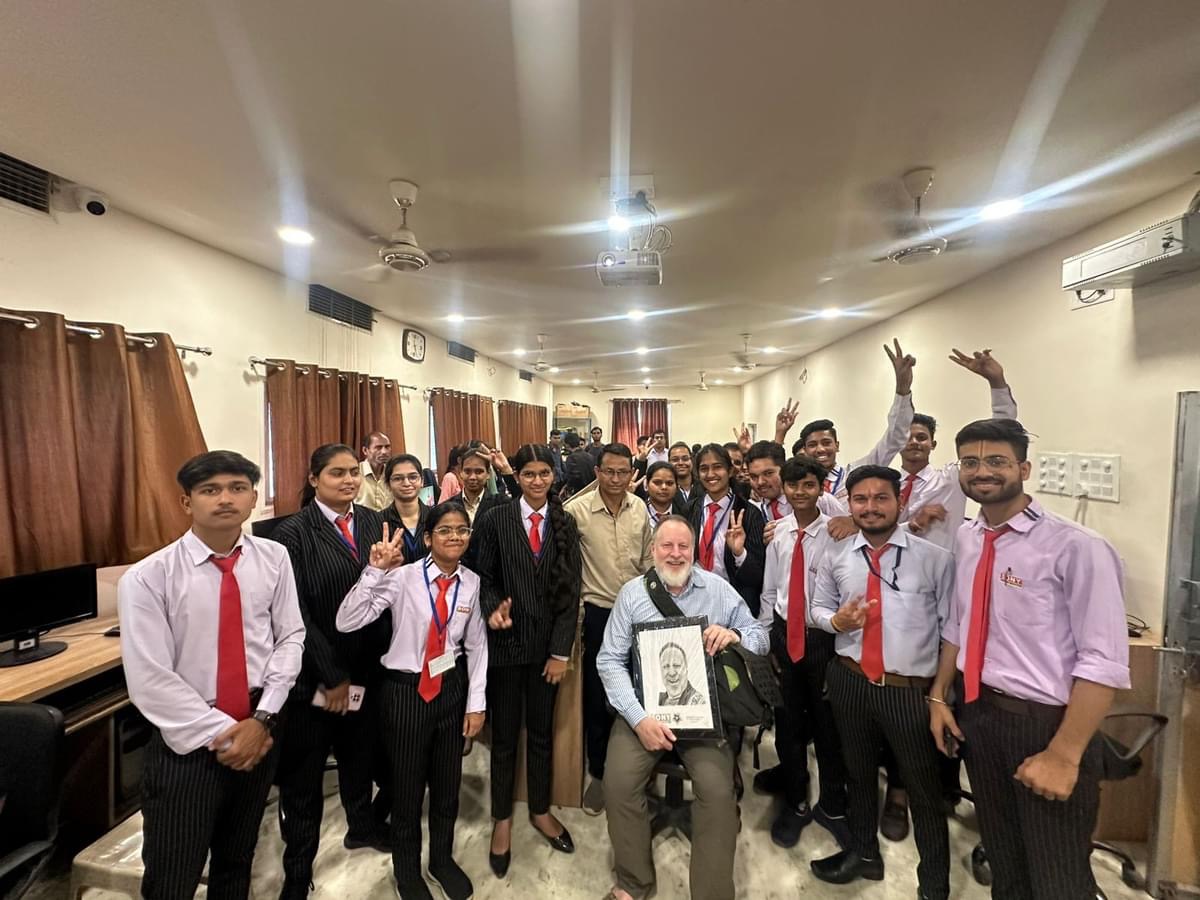
At the heart of the visit was a compelling session at Sony Computer Education centre, where Moss engaged with RFYN, aspiring professionals, sharing invaluable insights about global finance career opportunities. Moving beyond traditional accounting roles, he emphasized critical skills needed in today’s financial sector, including professional email communication, financial fundamentals, and proficiency in digital tools such as Excel and Google Sheets. Moss particularly stressed the importance of staying informed about global financial trends.
The impact of his guidance was evident in the enthusiastic response from participants, who presented him with a hand-sketched portrait as a token of their appreciation.
Interfaith Harmony and Educational Initiatives
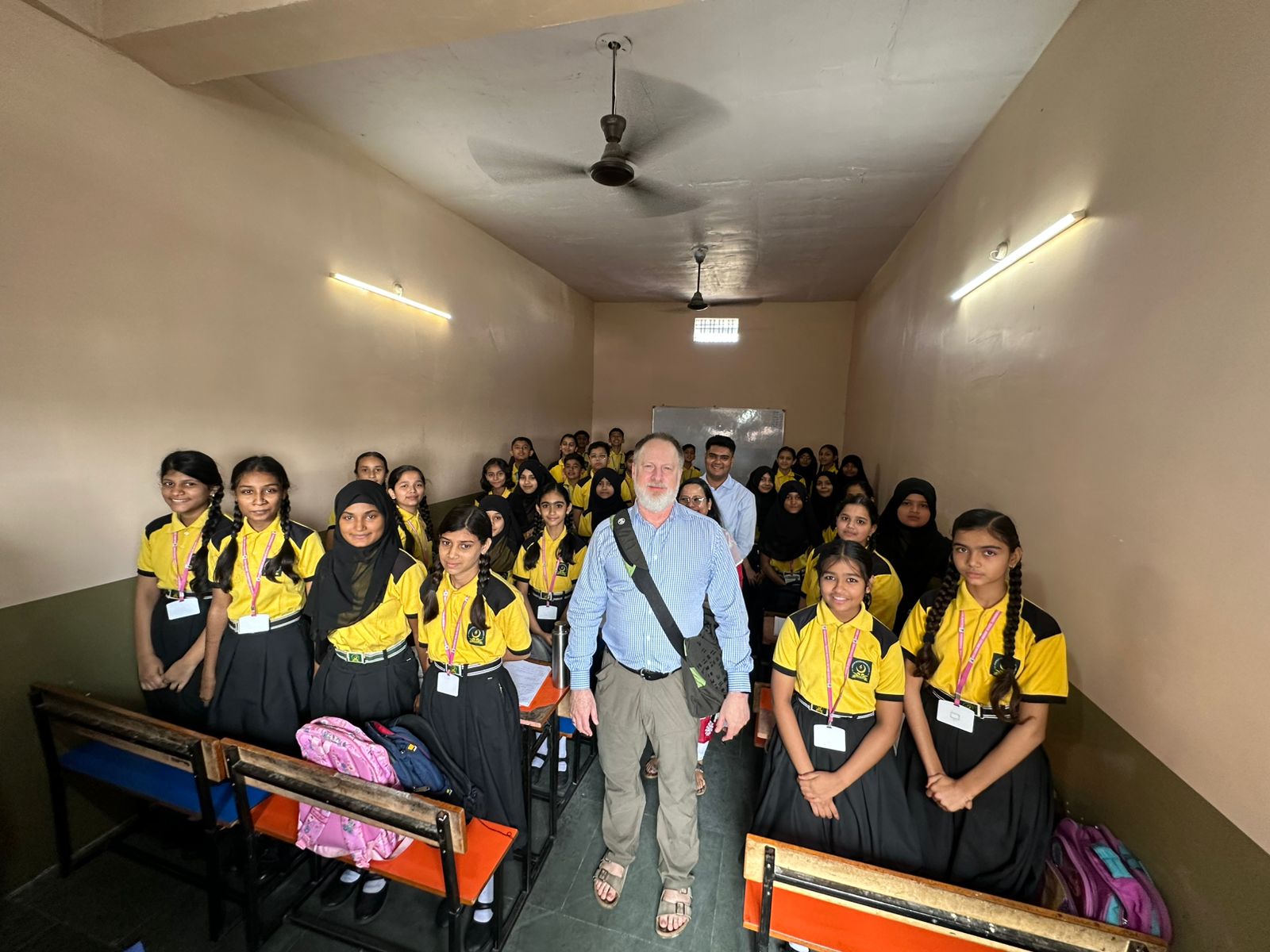
The visit highlighted significant strides in promoting interfaith harmony through education and cultural exchange. Moss visited Anjuman English Medium school, An Urdu school which stands as a beacon of religious integration. The school’s unique approach ensures children aged 5-13 years from various religious backgrounds study together, fostering early understanding of religious diversity. Despite language barriers, students made commendable efforts to interact with Moss in English, demonstrating their commitment to global communication skills.
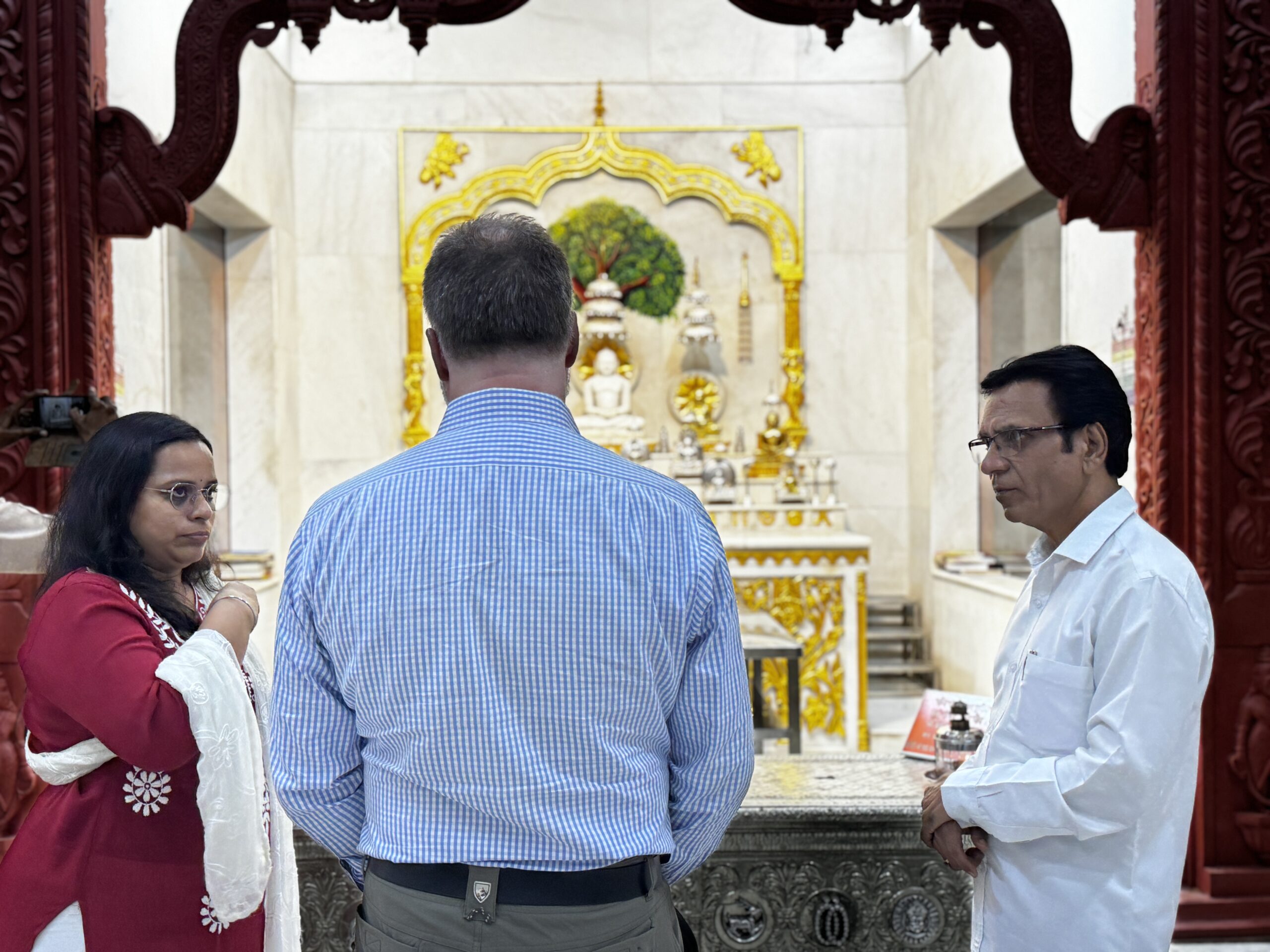
Further emphasizing the interfaith aspect, Moss visited a local Jain temple, where Mr. Deepak raj Jain provided insights into Jain philosophy and traditions. This cultural exchange exemplified the program’s commitment to promoting understanding across different communities.
Vocational Training and Career Development
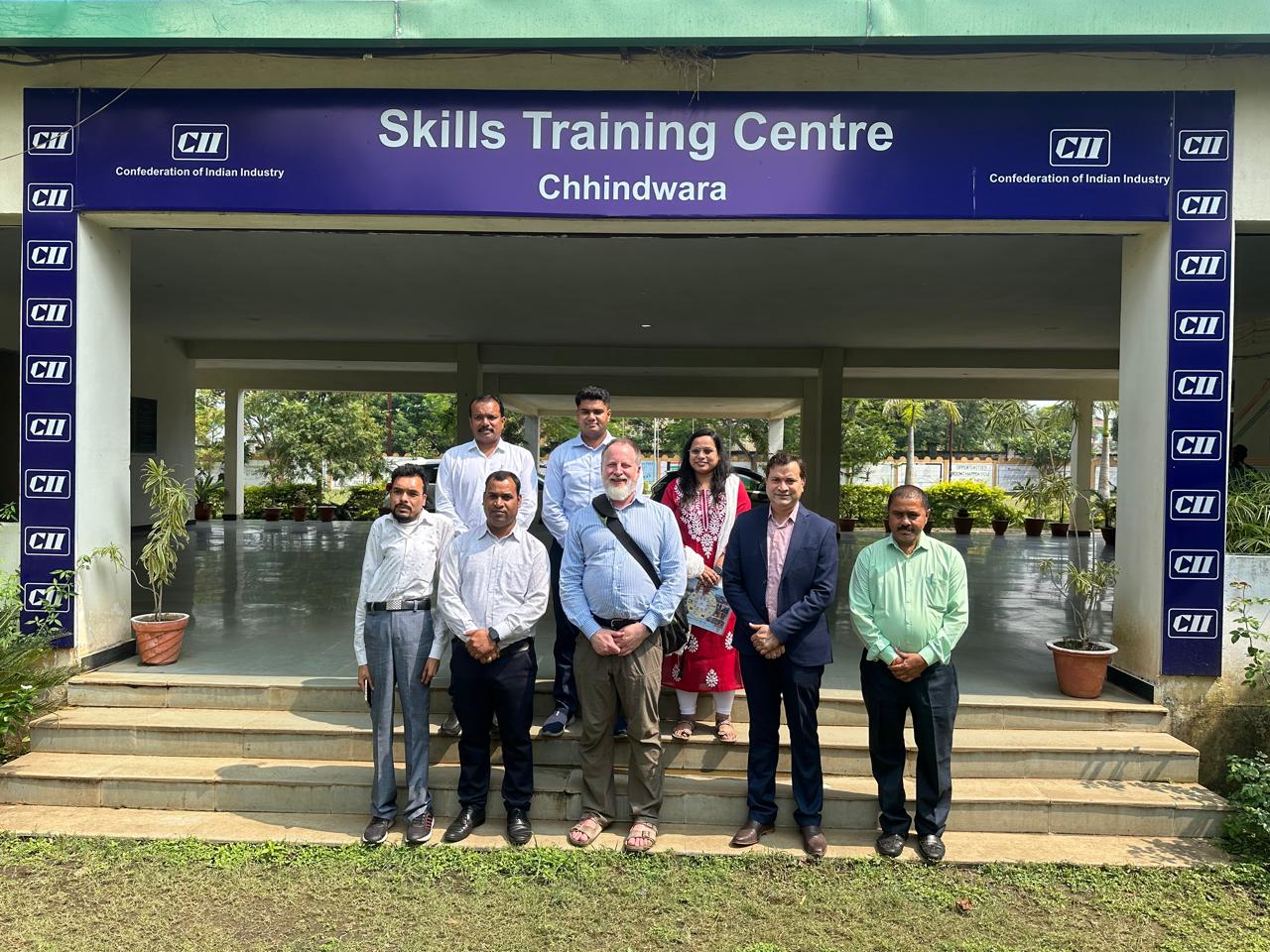
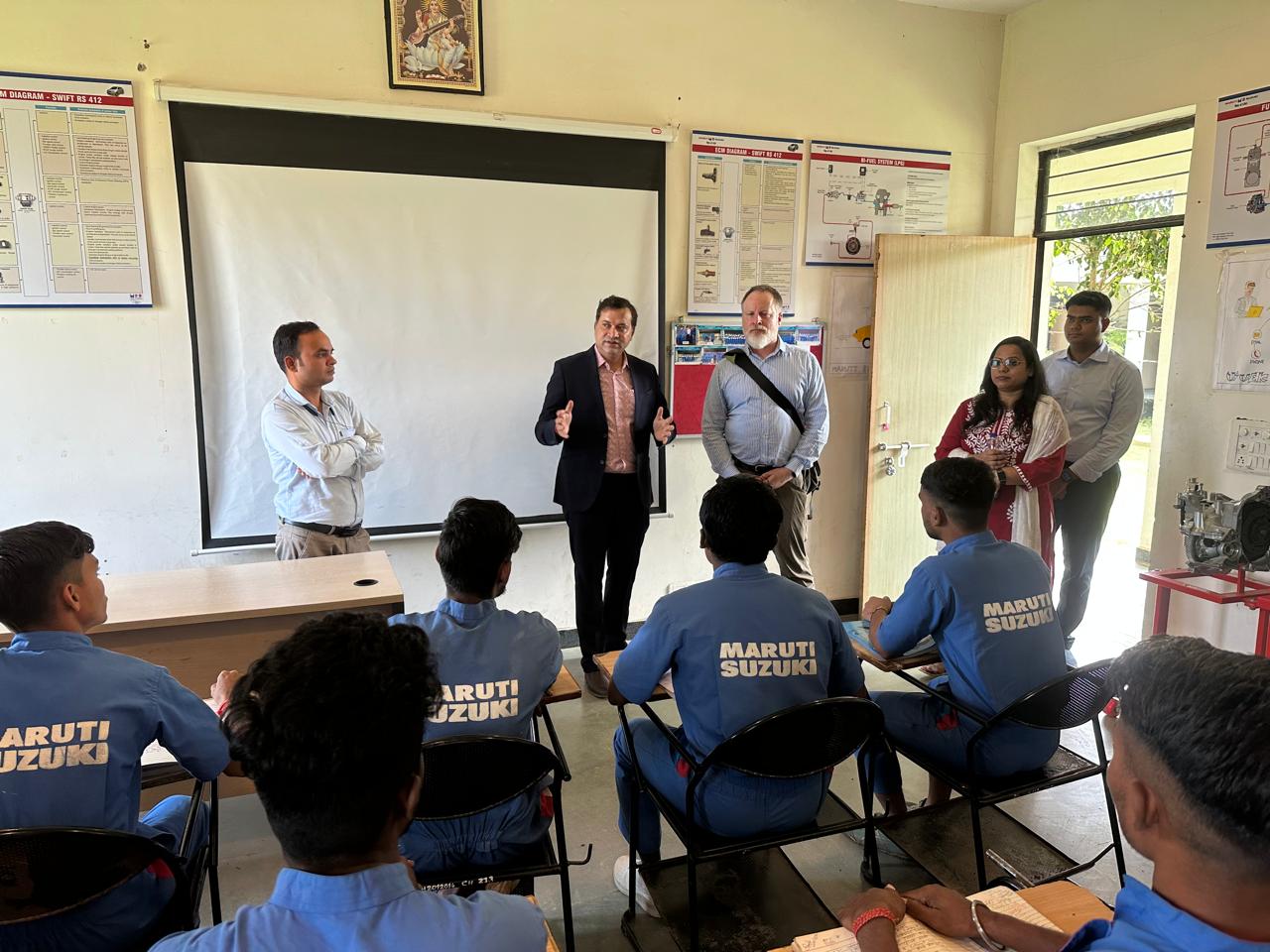
A significant portion of the visit focused on RFYN’s innovative ‘Careerfirst’ initiative, which bridges the gap between underprivileged youth and employment opportunities through government-sponsored vocational training. Moss visited several prestigious training centres, including CII (Confederation of indian industries), ATDC (Apparel Training & Design Centre), and Ashok Leyland’s training facility in Chhindwara. During these visits, he engaged directly with students, learning about their economic backgrounds and aspirations. His encouragement to complete their courses and pursue career goals resonated strongly with the trainees.
Women Empowerment and Rural Economic Development
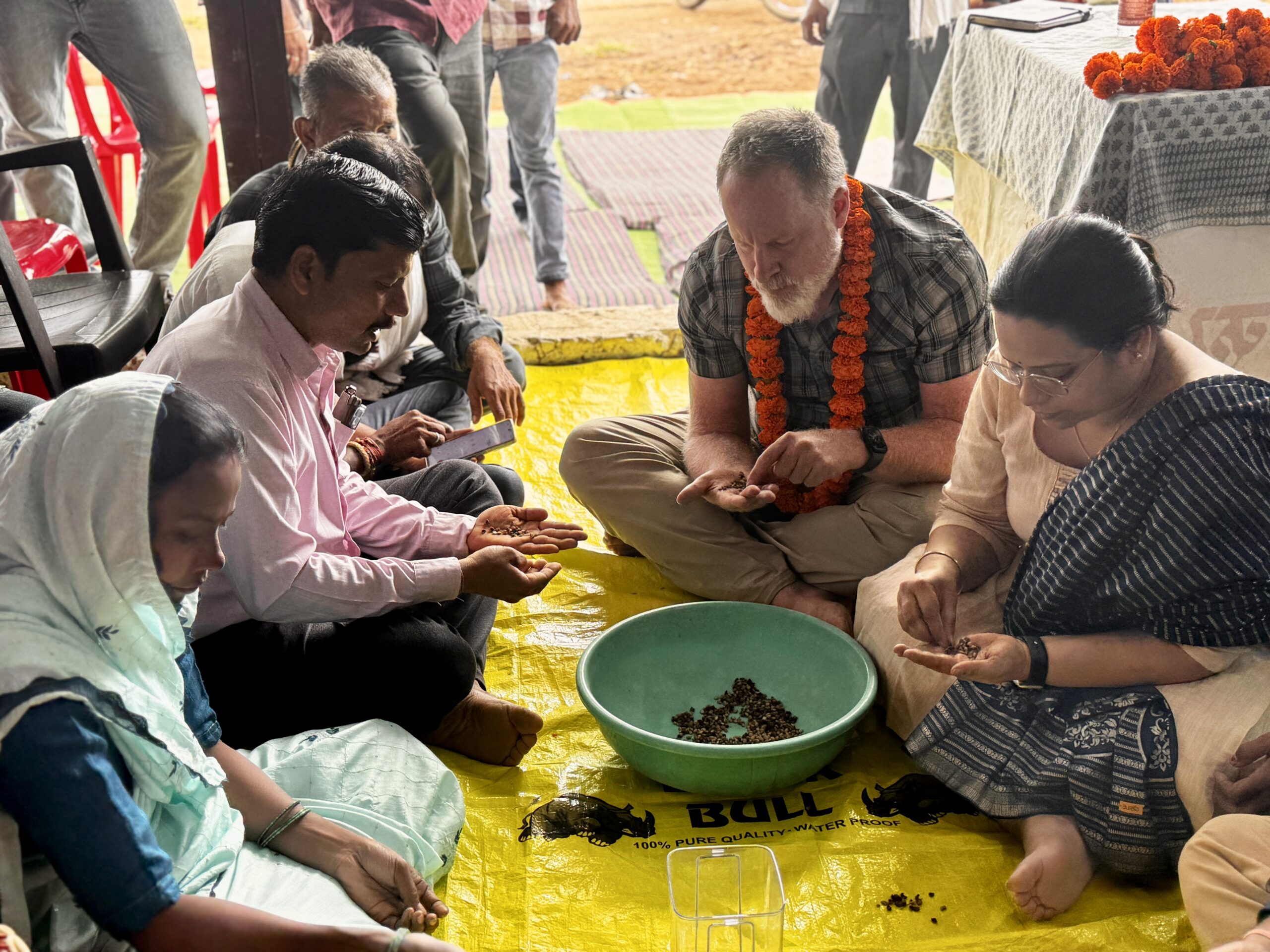
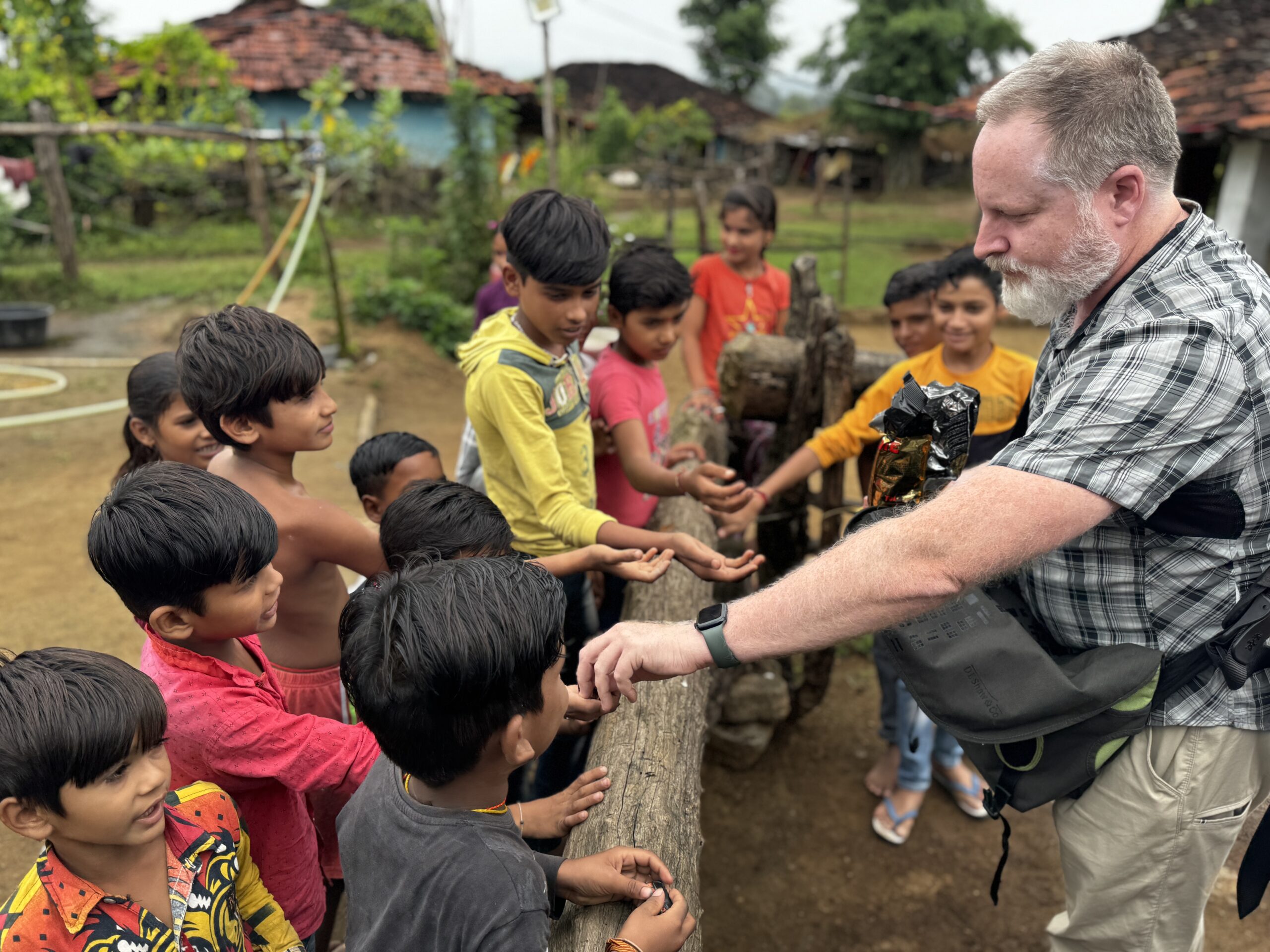
In Bamhni village near Tamiya block, situated 95 km from Chhindwara, Moss witnessed the transformative impact of RFYN India’s women empowerment projects, which have shown remarkable success over the past 7-8 years. The village, predominantly tribal and challenged by work opportunities, has been uplifted through a collaborative initiative involving Cosmo foundation, Sony Computer Education and RFYN.
The installation of Chironji de-shelling machines has created sustainable livelihood opportunities for women’s self-help groups. This initiative processes seeds from the Buchanania lanzan plant, a high-value dry fruit with strong export demand, particularly in Gulf countries. Villagers shared how this mechanization has provided an additional benefit to their economic conditions.
Leadership and Recognition
During his visit, Moss met with IARF Chhindwara Branch members to learn about the organization’s history and development in the region. The success of these various initiatives is attributed to a dedicated team of professionals, including Mr. Manoj Soni (Secretary, IARF Chhindwara Branch), Mr. Aayush Soni (RFYN Representative and VP, IARF), Mr. Immanuel Manish Daniel (Senior Member, IARF), Dr. SA Brown (Ex. Council Member, IARF), Dr. KK Shrivastava (Founding Member of IARF Chhindwara branch), Mr. Ansari (Founding Member of IARF Chhindwara branch), Mr. Ratnesh Jain (IARF Member), Mr. Vishwesh Chandel (Member, IARF Chhindwara Branch), Mrs. Kirti Soni (Director, Sony Computer Education), and Ms. Janhvi Gupte (Ex. VP and RFYN Representative, IARF).
Future Implications
“The synergy between various stakeholders – from government agencies to educational institutions and community organizations – is what makes these initiatives truly successful,”
Moss observed during his concluding remarks. The visit highlighted how targeted interventions, when properly executed, can create sustainable change in rural communities while promoting education, women’s empowerment, and interfaith harmony.
The success of these programs, particularly in Bamhni village and through the Careerfirst initiative, demonstrates the effectiveness of RFYN’s approach in identifying and bridging gaps between job seekers and employers. This model of rural development, combining skill development, women’s empowerment, and interfaith harmony, could serve as a template for similar initiatives across rural India.
The comprehensive nature of David Moss’s visit not only highlighted the impact of RFYN’s initiatives but also strengthened the connection between global expertise and local development efforts in rural India, setting a promising precedent for future international collaborations in rural development.