
When Wealth Fences in the Sacred
On 5 March, the International Association for Religious Freedom (IARF) addressed the UN Human Rights Council to highlight a structural failure in many jurisdictions where private property and quiet enjoyment rights are not balanced against the rights of indigenous communities to practice their faith and honor their deceased.
The situation is starkly illustrated by the Kāneʻākī Heiau in Hawaiʻi—a 600-year-old Native Hawaiian temple currently enclosed within a private residential development. Among those affected is Prof. George Williams, a past President of the IARF who was adopted into the Kanenuiakea faith. We share his complete submission below.
When Wealth Fences in the Sacred
On a steep hillside on Oʻahu, overlooking the Waianae coast, a small but growing controversy is drawing international attention from advocates of religious freedom.
Within a gated luxury development lies an ancient Native Hawaiian healing Heiau—a temple site traditionally associated with medicine and spiritual restoration—along with ancestral burial grounds protected under state preservation laws.


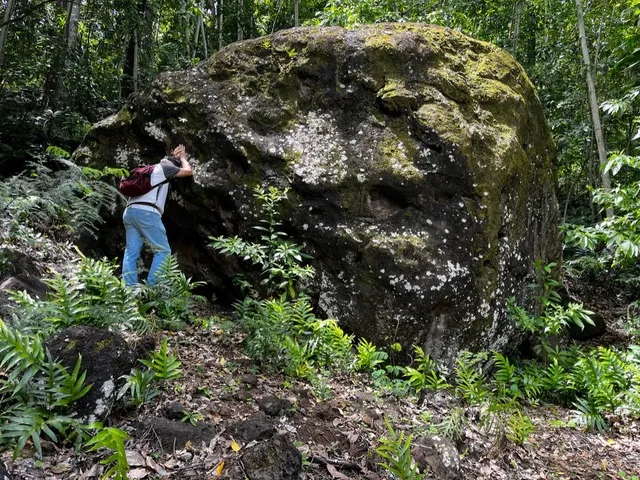


Community members and religious freedom advocates say access to the sacred site has been effectively restricted by the homeowners’ association (HOA) that now controls the surrounding land.
The dispute began years ago when the rocky hillside was developed into a high-end residential enclave. Legal agreements transferring community land to HOA control included provisions requiring maintenance of the Heiau and continued public access.
But as property values rose, the HOA tightened security. While Wai’anae is cited as having one of the lowest median household incomes in all of Hawai’i — and the highest Native Hawaiian population in the world, the gated neighborhood of 46 households enclosing Kaneʻaki Heiau, has the highest income in Hawai’i according to census data.
And after its gate was installed, visitors could be turned away. Some Native “practitioners” (a term used to avoid ridicule) say they were warned they could face arrest for trespassing if they attempted to reach the Heiau for prayer or ceremony.
For many Indigenous Hawaiians, sacred space is inseparable from the land itself. Unlike traditions centered inside religious buildings, Native Hawaiian spirituality takes place in natural settings—mountains, shorelines, burial grounds, and temple platforms built of stone.
“When access is blocked, worship is blocked,” said one advocate involved in the dispute. And at Kaneʻaki Heiau, even if access were to be allowed, it had to be supervised by the HOA!
The conflict has now drawn the attention of the International Association for Religious Freedom (IARF), one of the world’s oldest interfaith organizations. Leaders within the association have approved filing an Amicus Curiae brief stressing U.S. Constitutional and International guarantees of freedom to worship.
IARF has historically defended minority faith communities around the world. Supporters say this case reflects a pattern in American history in which Indigenous religions have been marginalized or dismissed.
Native spiritual practices were criminalized in parts of the United States until the late 19th and early 20th centuries. Although federal laws now recognize Indigenous religious rights, enforcement often depends on local conditions and legal interpretation.
“This isn’t only about one Hawaiian hillside,” said an interfaith leader familiar with the matter. “It’s about whether religious freedom includes traditions rooted in land and nature rather than inside of churches, mosques, or synagogues.”
Interestingly, the legal challenge has been propelled in part by a successful couple who purchased a home with the right of access through the HOA’s gate. But soon they faced harassment on what seems racial and social grounds. They refused to leave. Instead, they pressed for enforcement of the original access obligations. They were joined by Indigenous Hawaiians and those who were denied access to worship or visit their healing shrine or ancestors’ graves.
Observers say the case could set an important precedent for how homeowners’ associations interact with sacred and archaeological sites nationwide. At its heart, the dispute raises profound legal questions: Does ownership of surrounding land allow a private association or corporation to restrict access to a sacred site protected by law? Can communal burial grounds be effectively privatized by encirclement? Do property rights supersede the cultural and religious rights of Indigenous peoples whose sacred spaces do not resemble conventional religious buildings?
For interfaith groups, the answer carries broader implications. Religious freedom, they argue, must apply not only to majority traditions with visible institutions, but also to Indigenous communities whose sanctuaries are woven from the earth itself.
In Hawaiʻi, where land is more than property and history more than a footnote, this small hillside may become a symbol of something much larger—the effort to reconcile property and religious rights, ownership with reverence.
Please consider signing a petition in support of religious freedom.
The Rev. Dr. Richard Boeke: A Life of Faith in Action Across Borders
The Rev. Dr. Richard “Dick” Boeke (March 2, 1931 – May 25, 2025), a tireless advocate for interfaith cooperation and religious freedom, passed away on May 25th. His legacy in the Unitarian Universalist tradition and the International Association for Religious Freedom (IARF) reflects a rare combination of theological depth, institutional leadership, and joyful service.
Born into a Southern Baptist family, Dick’s spiritual journey led him through study and reflection to the Unitarian faith while in seminary. He often remarked that study liberates—a theme that ran through his ministry and international engagement. As a minister in the UUA, he brought a passion for global understanding that extended far beyond his pulpit.
In the IARF, he found a spiritual home where his commitments to pluralism, dialogue, and peace could flourish. Inspired by the teachings of Shin’ichirō Imaoka, Dick became a leading voice for Free Religion—a vision of spirituality unbound by dogma, rooted instead in a reverence for truth, openness, and moral responsibility. He advocated for serious study of others’ religions as an act of mutual respect.
Among his many achievements was helping to establish the Albert Schweitzer Award within IARF, which honored figures who embodied service to humanity in the spirit of liberal religion. The first recipient was Founder Nikkyo Niwano of Rissho Koseikai, a model of Buddhist leadership for peace. Richard’s personal humility was evident in his constant lifting up of others whose lives inspired hope and courage.
Another example of his international bridge-building was his collaboration with Chief Priest Yukitaka Yamamoto to create Tsubaki America, the first Shinto shrine for interfaith worship in the continental U.S. His work helped translate Japanese spiritual values into a global context—offering Americans a way to engage with Shinto practice and nature-based reverence.
Richard’s writings and teachings emphasized faith not as rigid belief, but as trust—in others, in life, and in the transformative power of service. His generous spirit, like his enduring smile, touched lives around the world.
May his memory continue to be a light—illuminating paths of wisdom, compassion, and unshakable hope.
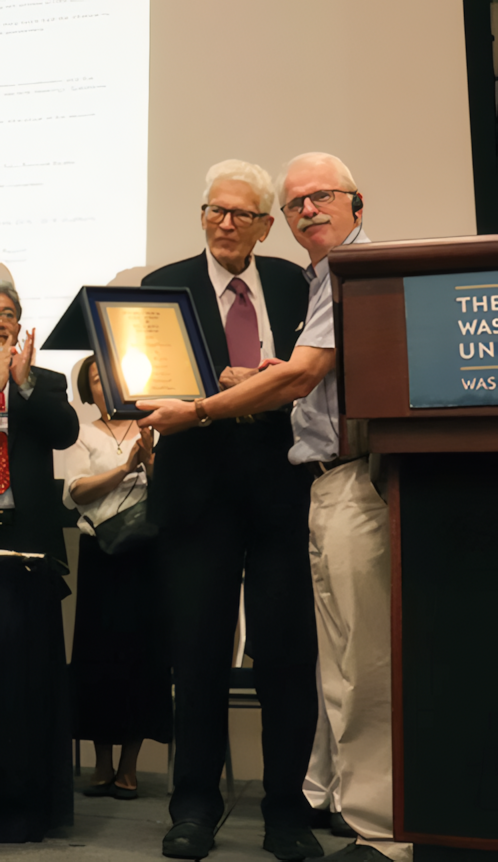
The IARF is deeply grateful to the Boeke family for sharing Rev. Dr. Boeke’s wish that memorial contributions be made to our organisation. We thank all who may choose to honor his memory in this way.
Those wishing to make a gift may do so here. Your support will help continue the work that was so dear to him.
Happy Thanksgiving!
In the United States, it is customary to wish everyone a Happy Thanksgiving on the last Thursday of November. Despite global challenges, there is still much to be grateful for—even as the world stands at a tipping point between hope and fear, light and darkness.
This year has been fraught with war, climate inaction, and growing inequities, yet the principles of religions and spiritualities calling us to beauty, truth, and justice are more necessary than ever. In the darkness, the candles of liberal faith can shine brightly.
The International Association for Religious Freedom is moving in a new direction. All International Council members are now expected to contribute either as workers or by appointing associates to represent their chapters or member groups. So far, this has proven effective in our committees for finance, UN representation, and developing the website for free communication.
Membership has grown, with Sony College in Chhindwara, India, and Pagan Federation International joining us. IARF’s strength lies in its openness to diverse perspectives—religious, spiritual, or secular—and its recognition of every faith’s unique contributions to our collective enrichment. No tradition has a monopoly on truth; through dialogue, we find new ways to serve a struggling world. (Several more groups are preparing their applications.)
Contributions from regions such as Europe and the U.S. have increased, and individual donations—some surpassing those of member groups—have been especially impactful.
Personally, I am deeply grateful for the positive reception of the Free Religion Institute. The concept of “free religion” – inspired by figures like Raja Rammohan Roy, Ralph Waldo Emerson, and Dr. Imaoka Shin’ichirô – explores liberating spiritualities across traditions. Translating this vision across languages remains challenging, as political and historical contexts often distort the meaning of freedom.
Andrew Brown suggests “free-religion” as a way to reconnect with the liberative essence of faith traditions. Today, we face enslavements in new forms. Free-religion invites us to confront these with liberating practices.
We need your support. Volunteer as an editor, librarian, teacher, or researcher, or help with technical tasks for the Institute and the website. If volunteering isn’t possible, please consider donating to sponsor an intern or a program.
Let us honor Guji Yukitaka Yamamoto’s plea: “Do not let IARF die.” Together, we can keep its mission alive.
George Williams
IARF President
Access to Worship at Native Hawaiian Shrine Denied
Upon returning to Hawai’i, I intended to worship at the Kanenuiakea healing shrine, Kane’aki Heiau, as per my custom according to my multiple faiths. However, access was denied, as it is now restricted to members of Mauna ‘Olu Estates. It is reported that no Hawaiian owners reside there.
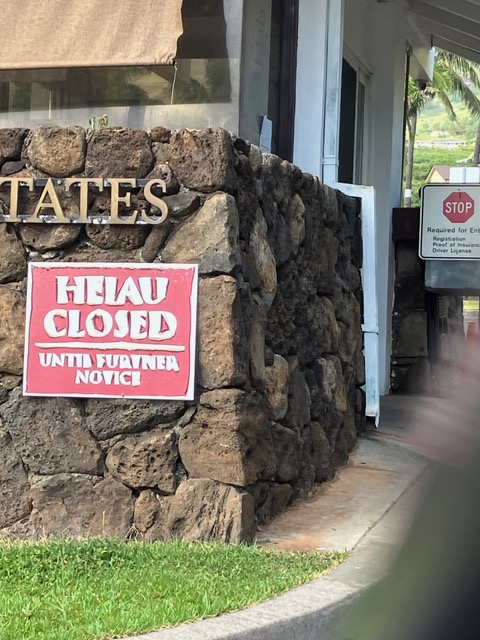
Access to Worship at Kahe’aki Heiau Denied
–Until Further Notice!
While the United States protects property rights, it does not recognize indigenous communal property, particularly places of worship that lack legal status under U.S. law. Kane’aki Heiau, a sacred temple and shrine, was first surrounded by a homeowners’ association and then claimed by it. The association now benefits from a tax deduction for preserving historic cultural property. Despite this, Hawaiians’ right to access is denied and enforced by State of Hawaii property rights law.
While the United States protects property rights, it does not recognize indigenous communal property, particularly places of worship that lack legal status under U.S. law. Kane’aki Heiau, a sacred temple and shrine, was first surrounded by a homeowners’ association and then claimed by it. The association now benefits from a tax deduction for preserving historic cultural property. Despite this, Hawaiians’ right to access is denied and enforced by State of Hawaii property rights law.
The International Association for Religious Freedom (IARF) and Religions for Peace are investigating how to effectively protest this apparent violation of U.S. and State of Hawaii constitutional rights regarding freedom of religion. Historically, the U.S. Supreme Court has interpreted freedom of religion as belief but not worship. Will colonial attitudes against indigenous worship change to support the religious freedom to pray at an acknowledged ancient temple?
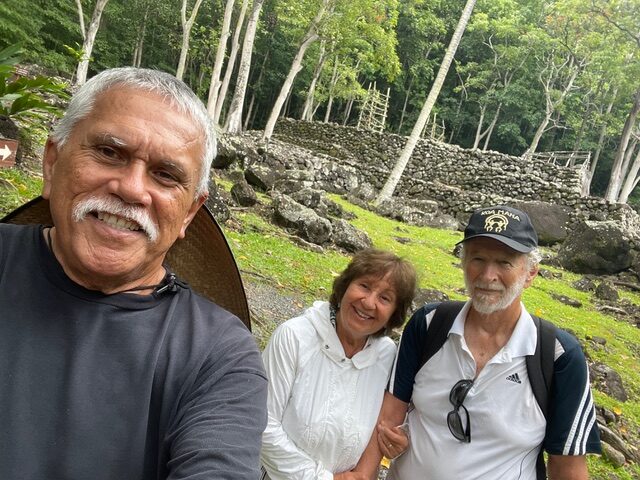
Kumu Glen Kila, George and Zizi at Kane’aki Heiau 2 years ago after climbing over locked gates. Kumu Glen is the Kahuna-nui, High Priest of Kanenuiakea, a faith with a thousand year history just on the Waianae Wahipana (west coast of Oahu).
President’s New Year Letter
Dear Sisters and Brothers of IARF,
As the Winter Solstice ushers in a change of seasons, may the increasing light bring us hope, rebirth, and renewal. Our traditions universally celebrate the New Year with symbols of the victory of light over darkness, good over evil. Christmas heralds Jesus as the Light of the World, Hanukkah celebrates the Festival of Lights and the miracle of the menorah, the Druidic Alban Arthan witnesses the Oak King triumphing over the Holly King symbolizing light conquering darkness, and Kwanzaa honors African traditions by lighting a Kinara. These messages of hope and renewal are universal, even in the many traditions that mark the New Year at the onset of other seasons like spring or harvest.
Never in our lifetimes has the symbolism of the struggle between darkness and light been more palpable in our lived reality. Never has the message at the heart of the International Association of Religious Freedom been more pertinent. Like the shortened days of winter, we have experienced a period of diminished resources and perhaps a waning belief in our unique organization – the oldest interfaith community, known for its contributions to religious freedom, peace, progressive religion and a liberating spirituality that frees from suffering, oppression, addiction, and more.
Our past successes should fill us with pride, but they also call us to recognize our place and role in the world. We are the world! This realization urges us to acknowledge our utmost importance at a time when the world is facing more challenges than ever. In our 123 years, IARF has adapted to the spiritual needs of each era. Now, we must meet the challenges of this new epoch.
As an interfaith association, we must remember the values of our traditions in cultivating love and peace. We are more than just an organization; we are a conscience of a world that is losing its compassion, kindness, and love of truth.
I sense an expectation from our member groups to rejuvenate ourselves with newfound energy and enthusiasm. We have the moment, the enthusiasm, the energy, and the will to guide IARF through these dark times. We have a mission, and our people expect us to overcome the danger of fading into oblivion.
The challenge is even greater because IARF is far from having an adequate financial basis. However, we can and must become more generous toward our cherished organization. New programs will include a focus on youth, a digital education program titled the Institute for the Study of Free Religion with over 50 courses in liberating spirituality, a speakers bureau, online chats, representation in the United Nations, shared media, printed materials, and more. While limited resources might hold us back, the need for our diverse faith perspectives has never been greater.
May your New Year be blessed, happy, and safe. May you share your light with a neighbor.

George Williams, IARF President
Highlights from the 2023 IARF Congress