|
Some Thoughts, Questions,
and a Mo’olelo
The 36th Congress of IARF was a resounding success, energizing us to launch new programs and build on past achievements. Let's focus on one committee: the Institute for Free Religion.
Three centuries of fighting for religious freedom have gained global attention, even resulting in United Nations declarations recognizing it as a fundamental human right. Yet, this struggle has also faced a cunning backlash, twisting religious freedom to exclude, belittle, and even persecute others in its name. It's now a politically divisive concept, losing its clear religious and spiritual essence.
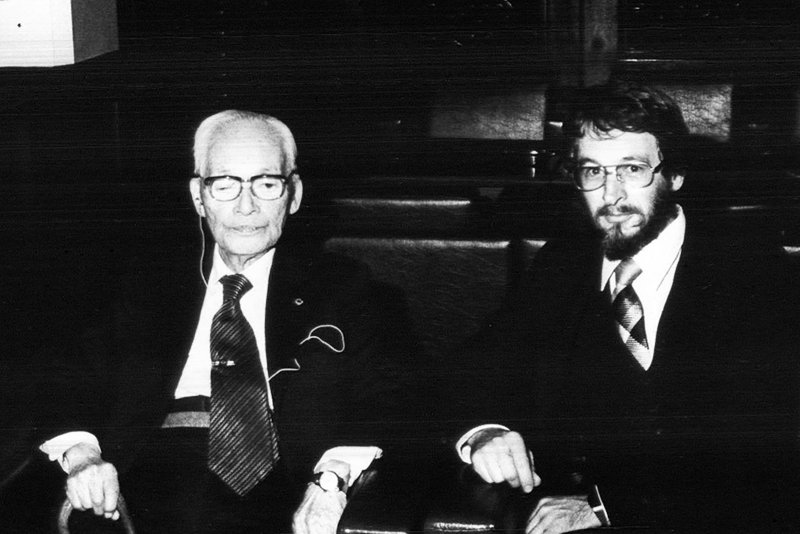
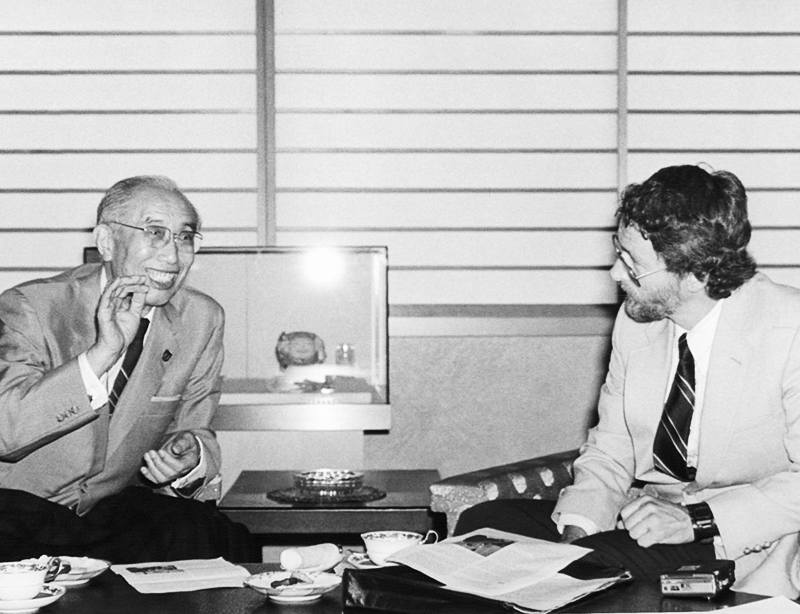
Let me share a Mo'olelo, a story, about two remarkable Japanese leaders who discussed religious freedom and free religion. Their conversations birthed the idea for an Institute for the Study of Free Religion.
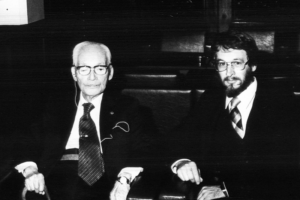
Dr. Shin’ichirō Imaoka sent me around Japan in 1981 to interview IARF members and learn something about Japanese religious groups that had joined IARF--and especially how they sought to liberate and transform persons and groups beyond the ordinary. From Chief Priest Yukitaka Yamamoto of Tsubaki Grand Shrine to Takeshi Nishida-san of Itto-en, each interview was preceded by extensive reading to understand their teachings and practices. Nor did he think that was enough to help me appreciate how IARF brought together what were called new religions and old, established ones. He sent me to meet with Rev. Toshio Miyake of Konko Kyo Church of Izuo, Rev. Genyu Yamamoto of Shose-ji (a Pure Land Buddhist temple of Kameoka), Rev. Michio Akashi of the Universalist Church, and even a few more. And for each there was more reading--and listening, the hallmark of interfaith understanding.
For this Mo’olelo let me focus on the interview with Founder Nikkyō Niwano. He had yet to lead Risshō Kōsei-kai to its esteemed position in the Buddhist world, but he had represented Buddhism at Vatican II in 1965 and would soon receive the Templeton Award.
I prepared by reading "Lifetime Beginner," the Lotus Sutra, and many of his articles in Dharma World. It was Niwano sensei's life crises that intrigued me, as Mahatma Gandhi's intrigued Eric Erickson.
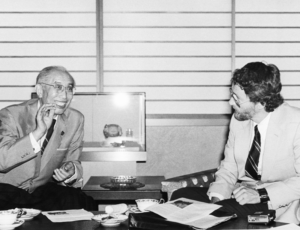
During the interview, translated simultaneously by Dr. Masuo Nazu, Founder Niwano viewed his crises as potential failures that became opportunities, a testament to his belief in spiritual growth and change. Both Imaoka sensei and Founder Niwano spoke of change one as freedom, the other as liberation. That is where the idea of an Institute was born. However, there seems to be a gap between Western and Asian understanding of Free Religion, even when spoken as liberating spirituality.
Articulating this concept in English, Japanese, or Sanskrit has proved challenging. It is time of an online way to share our wonderful traditions’ wisdom, to study together, to find new ways to cooperate and act upon these insights.
Let me end with a few questions. What is free religion? What benefits come from adult-level understanding of one's religion? And also from understanding other religions? Can laypeople be spiritually free and embrace free religion? How do we transcend literalism as we grow spiritually?
How do different religious experiences help us face life’s crises? Are we more than apex predators, capable of overcoming our history of aggression?
Ultimately, how do we become humans with divine spirits, like the mystics, sages, saints, or indigenous healers? How do we strengthen our spiritual resources, and when do we seek help from others, family, and community?
These are just some questions our diverse religious traditions can explore, not just in digital classrooms but in our daily lives and spiritual journeys. May the Institute for the Study of Free Religion become a reality for liberating spirituality.
Prof. George Williams, IARF President |