
Side Events at UN HRC 2014
Two events organised by IARF at the 25th Session of the UN Human Rights Council (HRC), March 2014
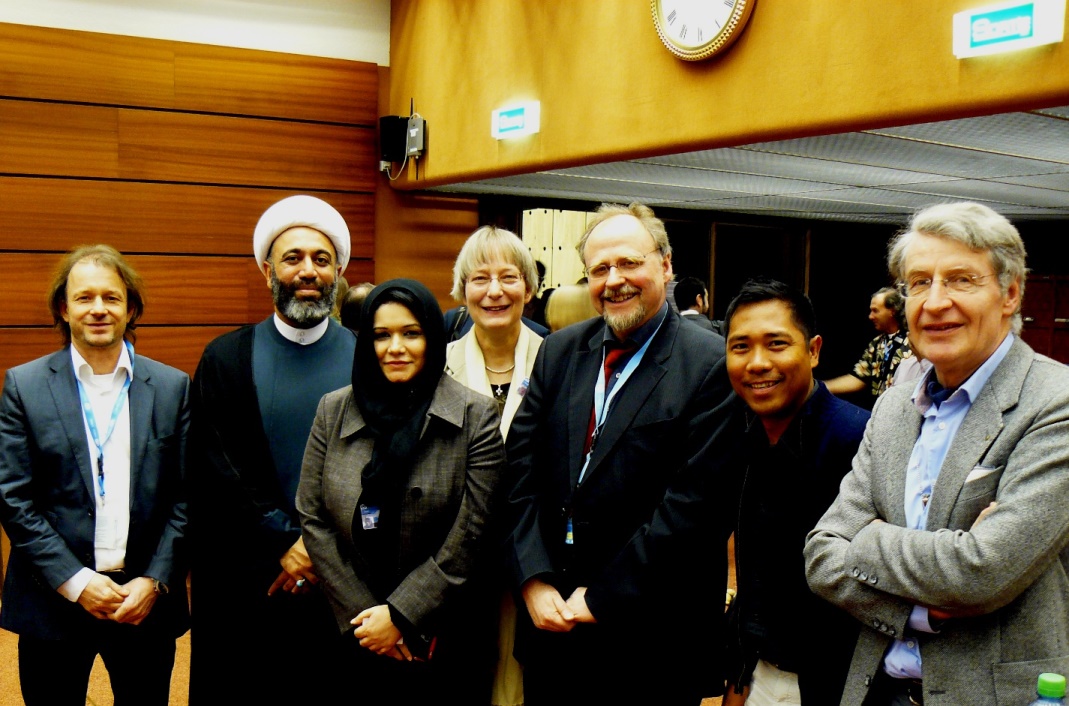
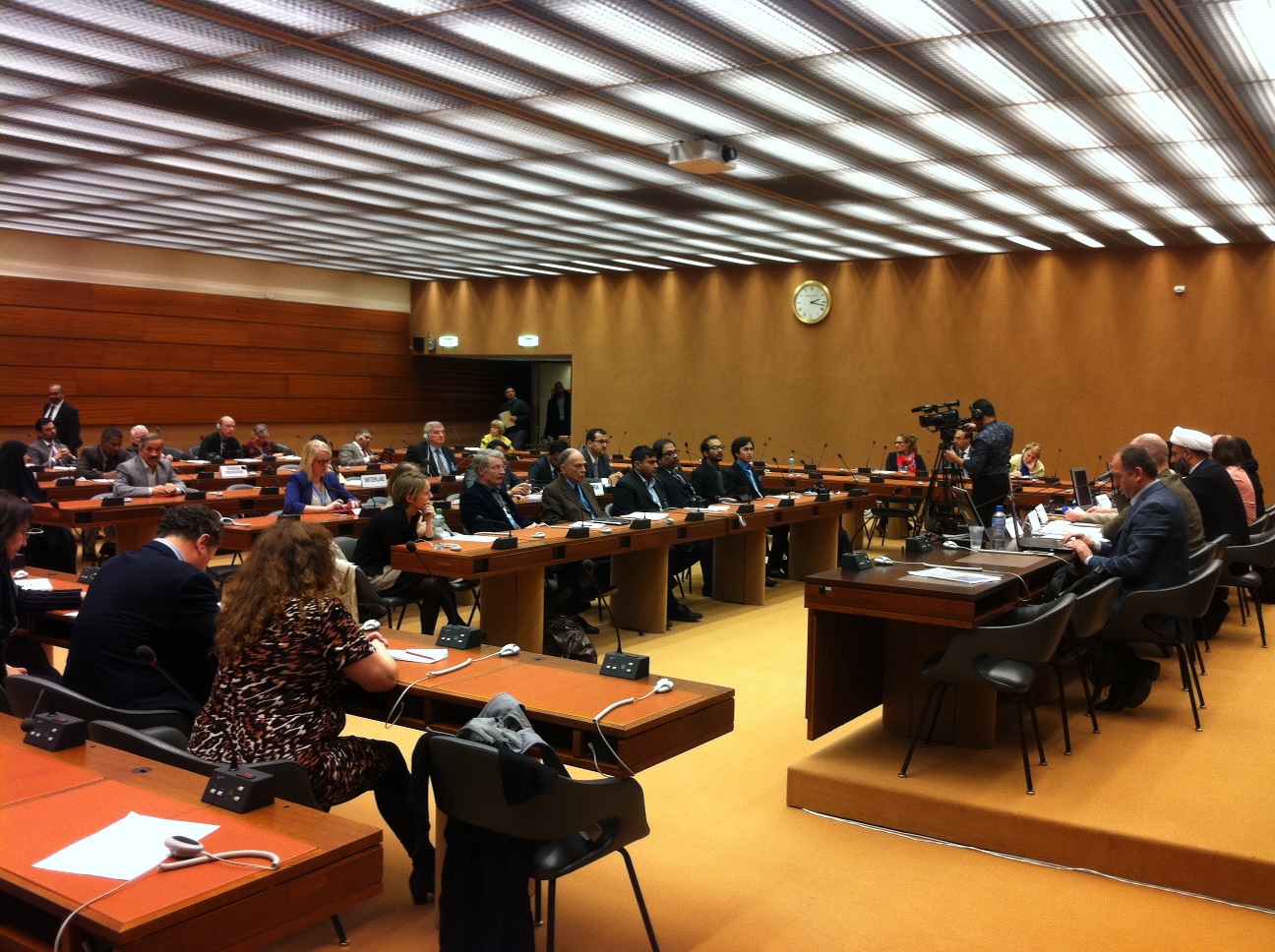
Side Event ‘Rise of Religious Intolerance’
Monday, 10 March 2014 – 2:00 to 4:00 PM
Room XXV, Palais des Nations, Geneva
UN HRC Side Event ‘Rise of Religious Intolerance’ – Flyer (PDF, 1 page)
Discussion on the rise of violence attributed to religious intolerance in various regions of the world where antipathy toward members of religious minorities is used to justify targeted hatred, assaults, restrictions and violent attacks on their religious institutions.
Held in conjunction with the Annual Report of the UN Special Rapporteur on Freedom of Religion or Belief (FoRB) – part of the Programme of Work of the 25th Session of the HRC; complements the Special Rapporteur’s presentation of his Annual Report, which this year is titled “Tackling manifestations of collective religious hatred“.
Report in Pakistan newspaper The News
Report in Pakistan magazine Business Standard
Video report
Thursday 13 March
Room XXI, Palais des Nations
In collaboration with the CoNGO Sub-committee on Freedom of Religion or Beliefs:
Open/Interactive Dialogue with the UN Special Rapporteur on Freedom of Religion or Beliefs
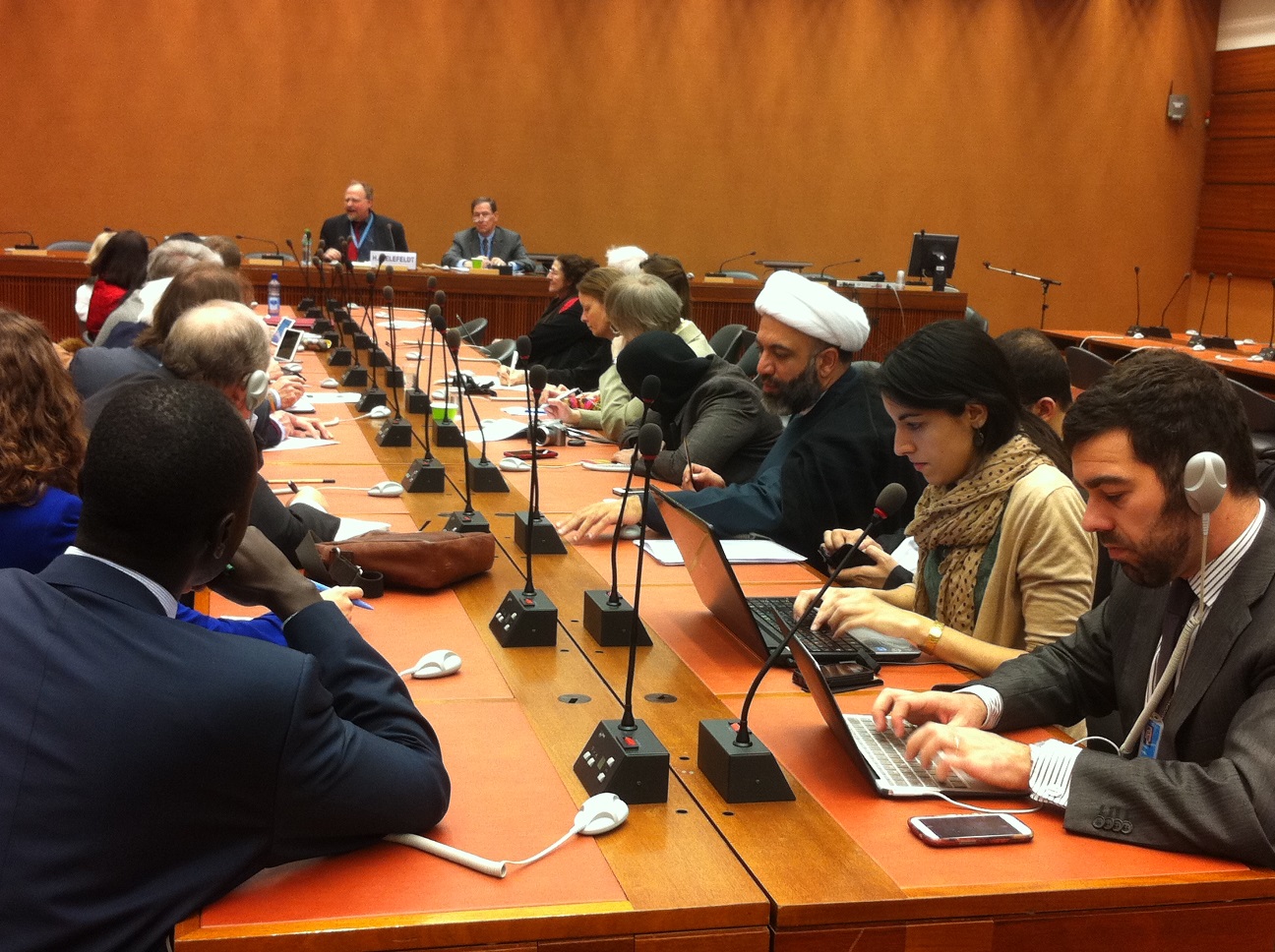
NGO Joint Oral Statement
As a practitioner of Human Rights Education in South Asia, IARF at the UN is member of the NGO Working Group on Human Rights Education & Learning within the structure of CoNGO (the Committee of NGOs).
At this session of the HRC, IARF facilitated a workshop which delivered the following Joint Oral Statement regarding the Third Phase of the World Programme for Human Rights Education (2015-2019):
2014 HRC25 – NGOJointOralStatement ITEM 3 – WPHRE P3
Bektashi Order of Macedonia welcomed into membership
The IARF has recently welcomed the Bektashi Order of Macedonia as a new member group. It is a branch of the Bektashi Order of Dervishes which has members in 31 countries, with headquarters originally in Turkey, now established in Albania. It is Alevite in character.
The order has its origin in the teachings and life of the 13th century Haji Bektash Veli in Anatolia, in present-day Turkey. In the early 16th century it took its present shape as a Sufi order. It has been closely connected to the Janitsar elite forces of the Ottoman empire, until these were disbanded in 1826. Thus it spread its influence throughout the Balkans. After the prohibition of all Sufi orders in Turkey in 1925, and the consequent shutdown of its historical centre, the order moved to Ankara, until, four years later, the central power was shifted to Albania, where a considerable population of affiliates had been in existence since the 18th century. Right from the start of the communist period, heavy persecution took place, with several of the order’s leaders being executed. When, in 1967, all religious practices were being prohibited, all places of worship in Albania were shut down. The order is now in the process of reestablishing itself.
Though Bektashi dervises render their services to a wide circle of followers, actual membership of the order is through initiation only. Applicants are guided on their spiritual path by a teacher, whose teachings may vary according to the context, be it religious, cultural, or socio-political. It is thus that Bektashiism has incorporated elements of a wide range of religious styles – Sunni, Sufi, Shia, and Christian among them – as well as pre-existent religions, including early Christianity. It is, and has been throughout its history, open to new ideas. Mysticism is eminent in all teachings and practises . Scriptures consist of poetry rather than doctrinal teachings. Music is used as a vehicle to convey teachings. Remarkable is the principle of gender equality in rituals and practises.
The Macedonian branch of the Bektashi order has a reason of its own to be the first among the Alevites to join IARF: in its home country it has no right to exist. Legally, only one person can represent its membership, on a personal basis, since no organization is allowed. Its places of worship have been handed over to a different Muslim organization, largely Sunni in character. Many are now being neglected, put to a different use, or have been levelled to the ground. Supporting groups like these has been one of the aims of IARF right from its founding. It is hoped that membership of IARF will raise their profile and thus improve their chances of being accepted.
See also: