
National Chapter formed in Nepal
A new chapter has been founded in Nepal.
Formed in May 2003, the chapter has already held an inauguration ceremony (attended by 125 people) and sponsored both an art and essay competition at two secondary schools.
In October 2003, the chapter sponsored four half-day programmes in western Nepal (Terai region) that examined the situations of the Christian, Hindu, Muslim, and Buddhist communities respectively. These symposia were attended by a total of nearly 120 participants. Through interaction and open discussion, the chapter gained valuable knowledge about the religious life of Nepal. The symposia also resulted in the formation of several district-level committees to facilitate the chapter’s work to bring religions in the country into closer dialogue.
Human Rights Education training of Dalits & Adivasis, Kerala
May 2009
from the Report (PDF, 2 pages):
In May the second phase of the HRE program in Kerala began enthusiastically, with a new India Chapter branch opening after a program at the Adivasi & Dalit House Settlement Colony at Kurumthar in Pathanamthitta district.
[nggallery id=18]
Human Rights Education workshop 2005, Vishakhapatnam
9 – 10 July 2005
St. Ann’s College for Women, Malkapuram, Vishakhapatnam.
Organized by local member group, Bala Vikas Foundation for Peace & Harmony (BVFPH).
Report (PDF, 4 pages)
RFYN Empowerment Training
Davao, Philippines 26 Dec 2003 – 3 Jan 2004
Thirty young people from all over the Philippines attended the IARF’s RFYN empowerment training at Waterfront Hotel in Davao City, Mindanao – ‘IPs’ (indigenous people), Christians, Moslems and Unitarians.
Oxford-based Ramola Sundram, the RFYN International Co-ordinator, came to Davao, as did Japan-based Morse Flores, a Filipino ‘IP’ (indigenous person), to help Angie Grapa with facilitation.
The training was based on experiential learning, where the ‘here and now’ was given emphasis. It was process-oriented, while the content was fitted to the different issues in religious freedom. The participants also had sessions in self-awareness, team building and leadership training.
General objectives of the programme were for participants to:
· receive an experiential training enabling them to appreciate the value of one’s own spiritual practice at the same time as that of others;
· nurture a genuine concern about one’s own freedom of religion or belief as well as that of others;
· find ways of teaching and influencing others so that they too will be able to uphold the values of respect and acceptance of others;
· become critical thinkers and agents of change through the leadership skills learnt.
At the beginning, the group was polite and a bit distant from one another – especially the new members without any idea of what they would be going into. But those who were able to attend an earlier activity tried to reach out to the new ones, and helped them integrate. They learned that religion is not a hindrance in relating to others, and in the end all agreed that harmony can be attained in spite of our faith differences.
[nggallery id=1]
There were also meetings with elders from Moslem groups and indigenous tribes, in which the youth are not normally free to ask questions of their seniors; here, therefore, the opportunity was taken to give them this chance. In the caucus that preceded the opening programme, participants considered the questions they would put to the elders: would they be appropriate, and how would they frame them?
Some of the other activities were: Weaver’s Triangles as taught during Budapest Congress (which are a training in how to make workable RF [religious freedom] projects in one’s respective areas); sharing of RF stories; a dance workshop teaching indigenous dances that everyone performed in the closing ceremony; and, cement-flooring the Aromanon tribal hall, as a gift offering to the tribe. This was the social action section of the project.
Aromanon tribal hall
Some of the participants belonged to the Aromanon, whose spiritual site had been visited during the April 2003 tour, when it was seen that they worshipped on the bare earth in their communal hall. After consultations, it was decided that it would be a great offering to the tribe if the bare floor of the worship space were concreted. The chief and his wife were very pleased to host an interfaith group of young adults, but first they had to perform a ritual before the participants’ arrival, to ask permission from their ancestor spirits. Once they considered that this had been granted, the project plan was finalised.
The young adults travelled quite a distance to get to the hall, and the only access was on foot. In order to formalise the gift of our service, a sheet of white cloth & some betel nut were presented according to the traditional symbolism of the tribe. Sand etc. was carried up on a bullock cart and by the young adults. We were joined there by other young adults from the tribe and the chief’s family & helpers. It was great not only to achieve something concrete by the end of the afternoon, but also to share in discussions with young people from the community. Finally, the chief and his wife performed a special ritual of thanks, attended by the participants in a sacred place near the tribal hall.
Great team spirit had been built up by the end of the project. Many thanks to the following: Rev. Rebecca Sienes for handling the finances; National Co-ordinator for the Philippines Woodrow Maquiling, who did a great job seeing to it that the venue and participants were well taken care of; Myrna Ecdang and Pacita Raz for chaperoning; and Dr. Sebellon Wale, who with great dignity led the Mindanao delegation to the venue with their musical instruments and equipment, and stayed to the end.


North American annual conference 2012 report
zs fryjgb
International Young Adult Program, Chennai, 2009
September 11th to 13th, 2009
@ Dhyana Ashram, Chennai
The Role of Young Adults in Human Rights and Duties (PDF, illustrated, 12 pages)
Visit Flickr page (new tab)
Japan & U.S. Chapters’ first person-to-person exchange
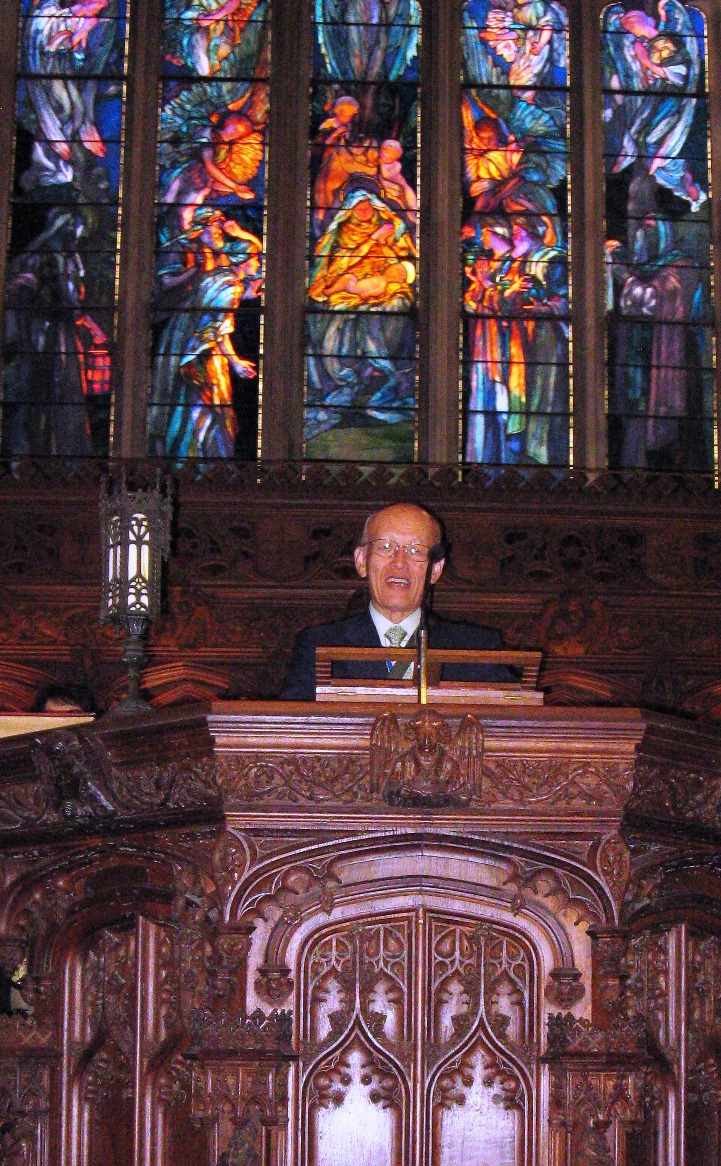
On 20th October 2011 a delegation of 23 members of the Japan Chapter of the IARF arrived in Washington, D.C., led by former IARF President Rev. Norio Sakai.
Please see the reports below.
While still in Boston, Rev. Sakai asked Rev. Richard Kellaway if he would help organize a return visit to Japan. This is planned for October 2012.
First Japan Chapter-US Chapter Person-to-Person Exchange: Video (5 clips, link to Flickr); PDF
“Dialogue between religions: Future or past?”
Saturday, October 15, 2011
Amsterdam
(video, Dutch language)
A seminar about the how & why of a dialogue between the religions
(Does this dialogue have a future? How to do the dialogue of the future? )
Speakers included Manuela Kalsky & Bart Brandsma.
The seminar was organized by
- the International Association for Religious Freedom (IARF) Netherlands
- Core Rural Female Trialogue (KLVT)
- Inter Religious Reflection – Dutch Centre forInter-religious and philosophical dialogue (IB NSID)
- United Religions Initiative (URI) Netherlands
- World Conference on Religion & Peace (WCRP) Netherlands
…with the support of Church & World.
2011 Annual General Meeting of India Chapter
@ Adichunchanagiri Mahasamsthama Matt, Mysore Branch
9th October 2011
Please visit the photo set on Flickr.
Caussanel Inter-religious Students movement, 2010-2011
Caussanel Inter Religious Students Movement was started at Thirunelveli, in Tamil Nadu State, India, with the motto of Universal Brotherhood…
Report (PDF, illustrated, 5 pages)
Visit Flickr page for inter-religious students’ program held on 13th Nov 2010.