IARF Applauds Rejection of Bill to Repeal FGM Ban in The Gambia
The National Assembly of Gambia
Since our call for support of the Petition Against FGM Ban Repeal in The Gambia, which the Nala Feminist Collective started, the situation has evolved positively. The third reading of the bill was initially planned for July 24.
IARF, an organization uniting liberal religious groups from diverse faith traditions across the globe, stands firmly against human rights violations, particularly those justified under the guise of religious or cultural practices. We are pleased to report that the bill to repeal the ban on FGM was rejected on July 15, and the planned third reading on July 24 will not take place.
IARF and its member organizations congratulate Parliament Speaker Fabakary Jatta and the National Assembly of The Gambia for this wise decision. This outcome has an impact beyond The Gambia and will continue to forward the dignity and self-determination of all human beings.
We remain committed to supporting efforts that protect human rights and bodily integrity worldwide.
Context
Female Genital Mutilation/Cutting (FGM/C) is a practice that involves the partial or total removal of external female genitalia for non-medical reasons. It affects an estimated 200 million women and girls worldwide, with more than three-quarters of females aged between 15 and 49 in some regions having undergone the procedure. The practice can lead to severe immediate risks such as pain, shock, hemorrhage, and infections, as well as long-term consequences for sexual health and mental wellbeing.
The Gambia’s 2015 ban on FGM/C was a significant milestone in the global effort to eradicate this harmful practice. The recent attempt to repeal this ban had raised alarms among human rights organizations globally. The IARF, as part of its commitment to human rights and religious freedom, had engaged in advocacy efforts, including drafting formal communications to Gambian authorities expressing concern over the potential repeal.
The rejection of the bill to repeal the FGM/C ban not only maintains crucial protections for women and girls in The Gambia but also reinforces the country’s commitment to international human rights standards. This decision aligns with various human rights conventions ratified by The Gambia, including the Convention on the Elimination of All Forms of Discrimination against Women (CEDAW) and the Convention on the Rights of the Child.
Access to Worship at Native Hawaiian Shrine Denied
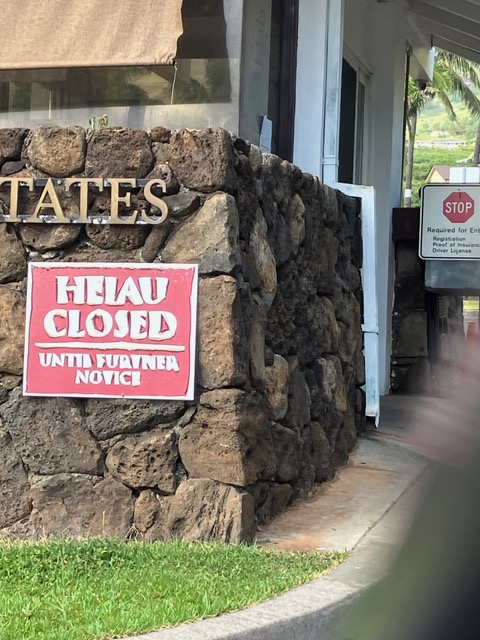
Upon returning to Hawai’i, I intended to worship at the Kanenuiakea healing shrine, Kane’aki Heiau, as per my custom according to my multiple faiths. However, access was denied, as it is now restricted to members of Mauna ‘Olu Estates. It is reported that no Hawaiian owners reside there.
Access to Worship at Kahe’aki Heiau Denied
–Until Further Notice!
While the United States protects property rights, it does not recognize indigenous communal property, particularly places of worship that lack legal status under U.S. law. Kane’aki Heiau, a sacred temple and shrine, was first surrounded by a homeowners’ association and then claimed by it. The association now benefits from a tax deduction for preserving historic cultural property. Despite this, Hawaiians’ right to access is denied and enforced by State of Hawaii property rights law.
While the United States protects property rights, it does not recognize indigenous communal property, particularly places of worship that lack legal status under U.S. law. Kane’aki Heiau, a sacred temple and shrine, was first surrounded by a homeowners’ association and then claimed by it. The association now benefits from a tax deduction for preserving historic cultural property. Despite this, Hawaiians’ right to access is denied and enforced by State of Hawaii property rights law.
The International Association for Religious Freedom (IARF) and Religions for Peace are investigating how to effectively protest this apparent violation of U.S. and State of Hawaii constitutional rights regarding freedom of religion. Historically, the U.S. Supreme Court has interpreted freedom of religion as belief but not worship. Will colonial attitudes against indigenous worship change to support the religious freedom to pray at an acknowledged ancient temple?
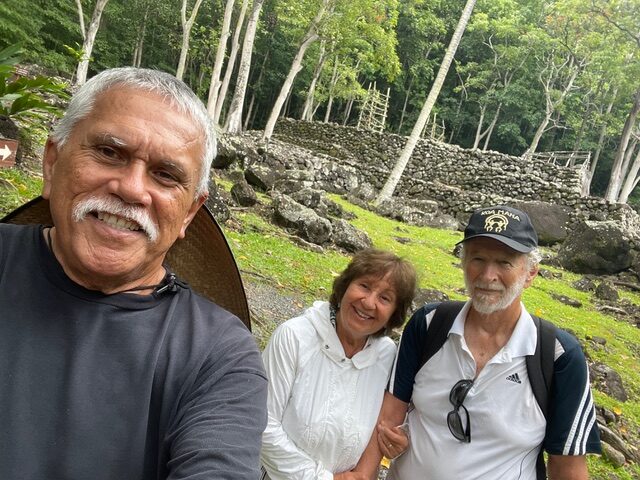
Kumu Glen Kila, George and Zizi at Kane’aki Heiau 2 years ago after climbing over locked gates. Kumu Glen is the Kahuna-nui, High Priest of Kanenuiakea, a faith with a thousand year history just on the Waianae Wahipana (west coast of Oahu).
Statement by IARF Kenya Chapter concerning current events in the country
Our Kenya Chapter has released the following statement regarding the troubling events taking place in the country. We join them in prayers and hope for a peaceful conduct of elections and national reconciliation later on. You can read more about the situation in Kenya here.
Protesters in Nairobi.
1st August 2017
The International Association for Religious Freedom (IARF) Kenya Chapter condemns in the strongest terms possible the continues killing of innocent prominent persons that are great developers for this nation. As the IARF community, we appeal to the president and the security agencies of this country to be sincere and tell Kenyans and the whole world why this is happening under their watch. These killings of innocent people or anybody else to serve the interests of some individuals should not be accepted under any circumstances. We are still mourning our lost heroes whom we laid to rest a few weeks ago, and similar events brining still more great losses continue to happen in our country. “Should we say hell has dropped from heaven to the earth called Kenya?” As an IARF community whose main agenda is to preach peace among the religions of the world, we strongly condemn the ’assassins’ who carry out such acts of cowardice. We strongly believe that this is not ‘ethicist war’, but one being waged by people who do not value human life, and who pretend to be rulers. We therefore ask religious leaders to come together and preach peace, and also to advise our community members to do the same. Let us share the sorrow of the loved ones who have been affected by these killings. We support the Kenyan people and its leaders, and commiserate with them during this time of loss, anguish and pain. We also call upon all Kenyans to exercise restraint and patience as we pray for peace for Kenya. We are also praying for security agencies who are currently investigating these killings which have taken our people hostage. We call upon all our religious leaders to ceaselessly pray for peace for Kenya, and also in other parts of the world. Lawrence Adera Secretary, IARF Kenya Chapter
IARF Kenya Chapter: Mission to West Pokot
Below you will find a short report from our Kenya Chapter about their recent activities.
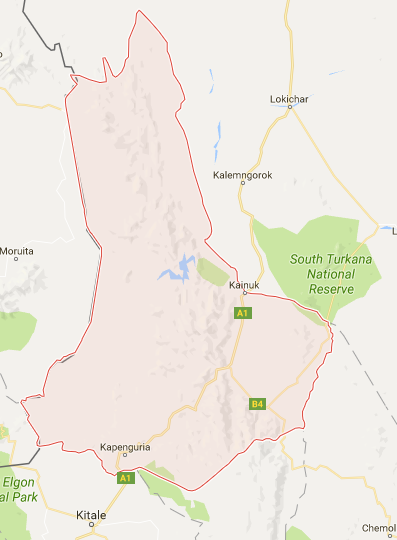
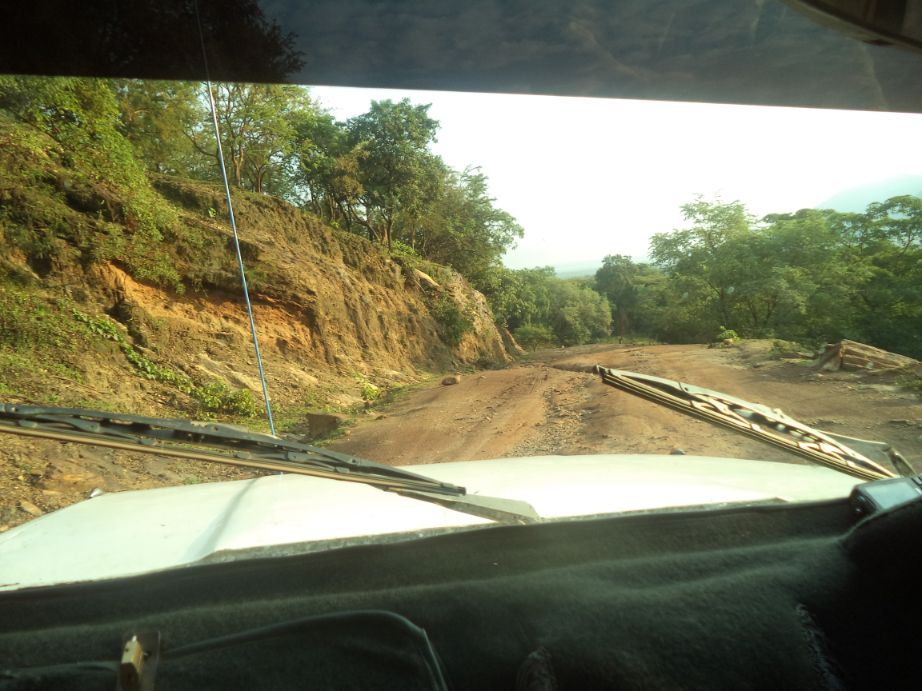
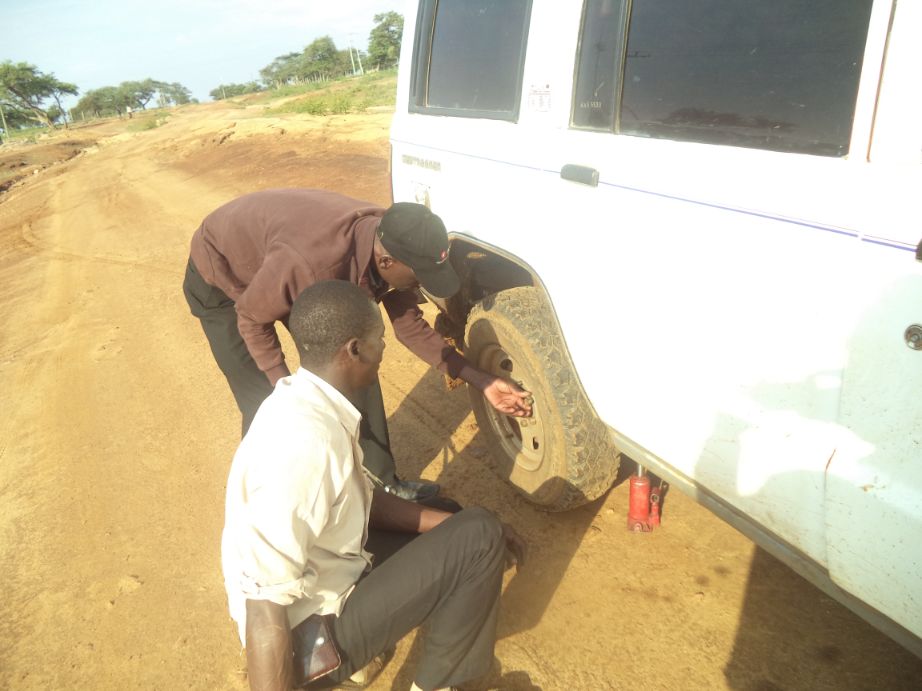
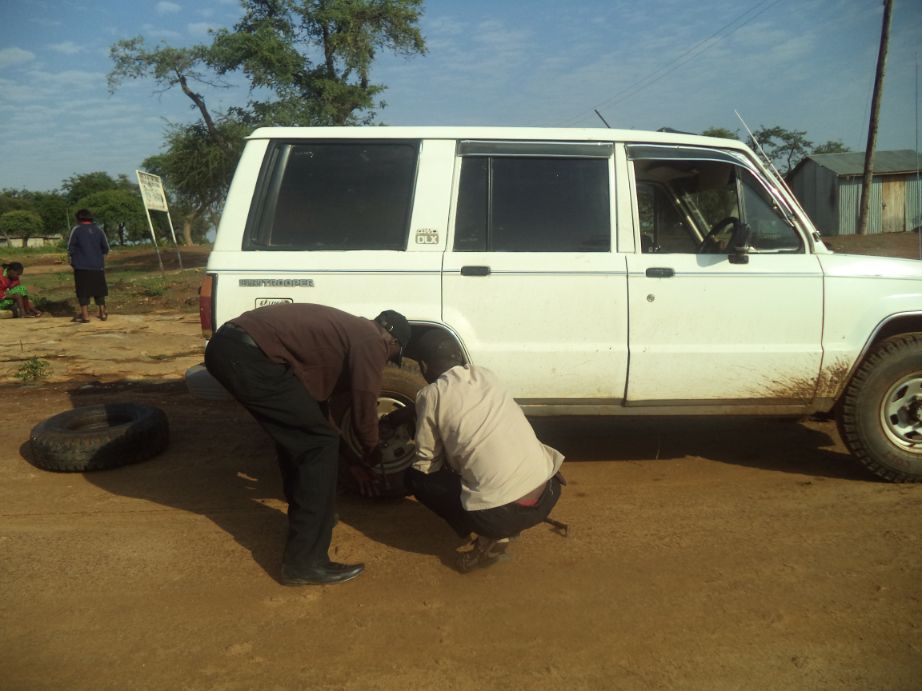
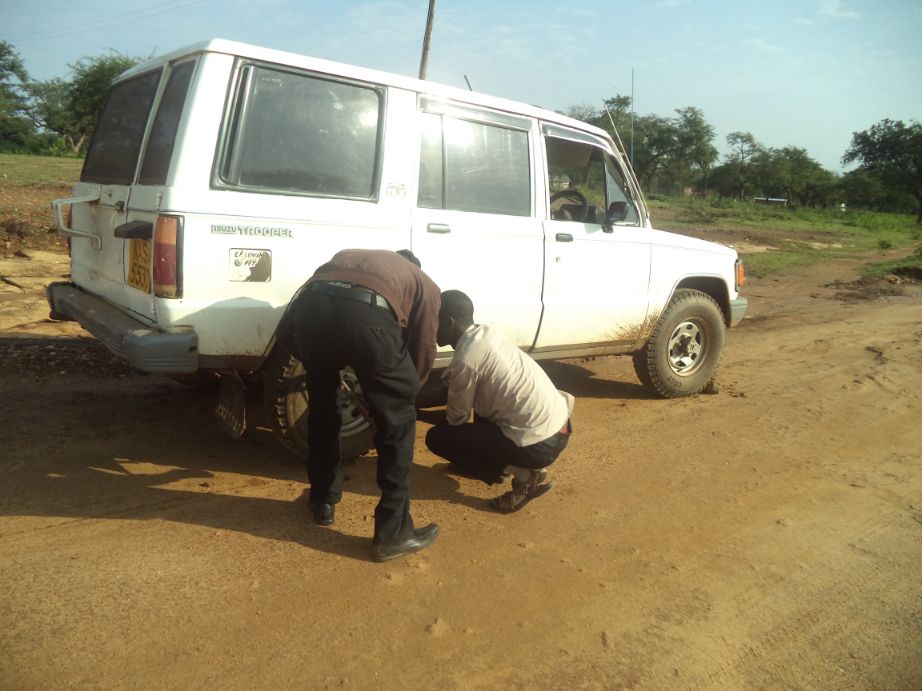
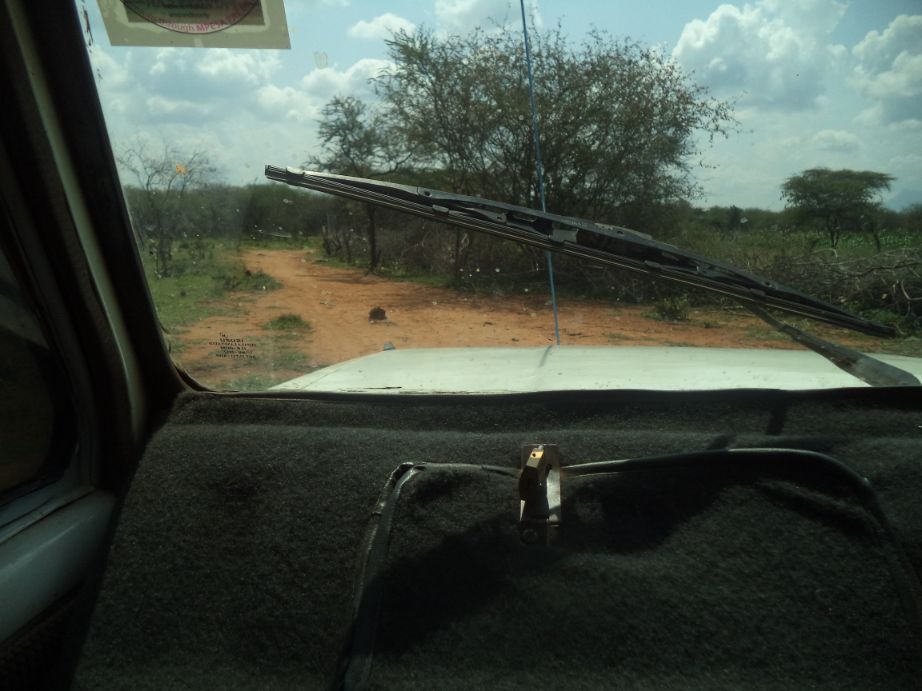
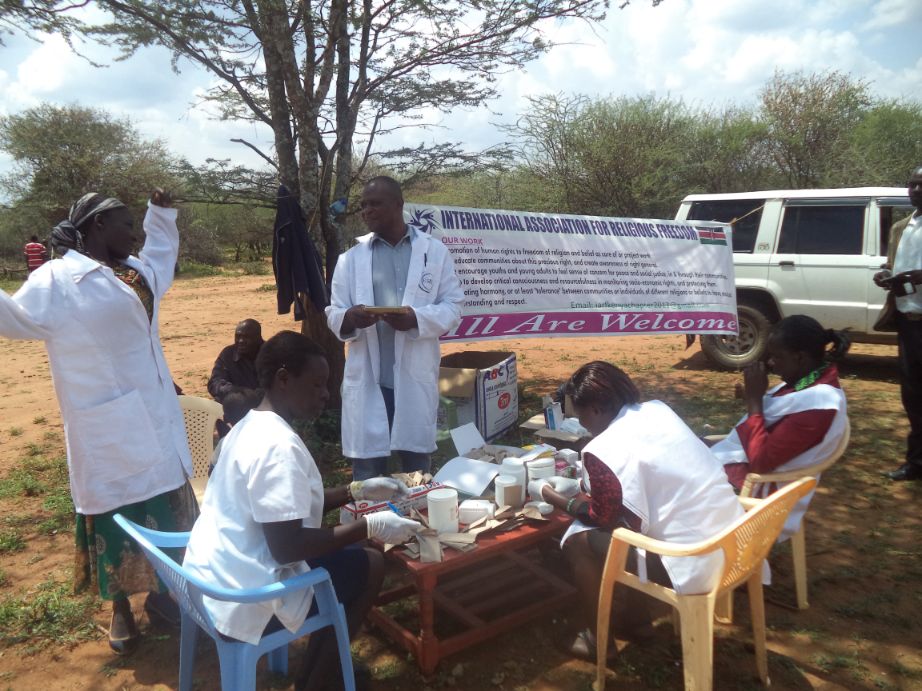
Our two-day travel for the interfaith, peace and human rights education program to West Pokot, Kenya began on 1 June. West Pokot lies almost 700 km or about 400 miles away from Nairobi, the Capital city of Kenya.
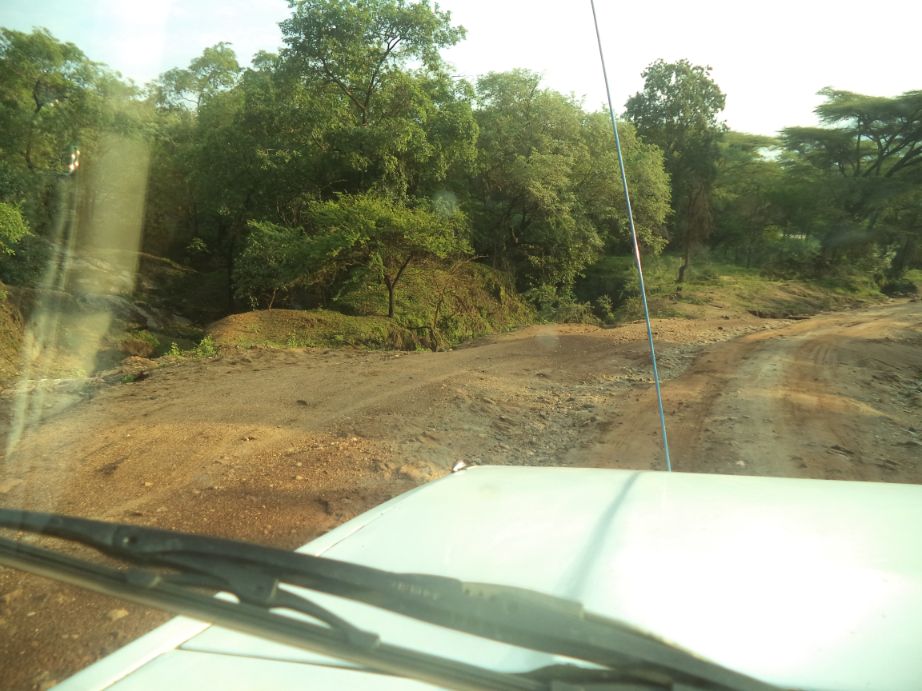
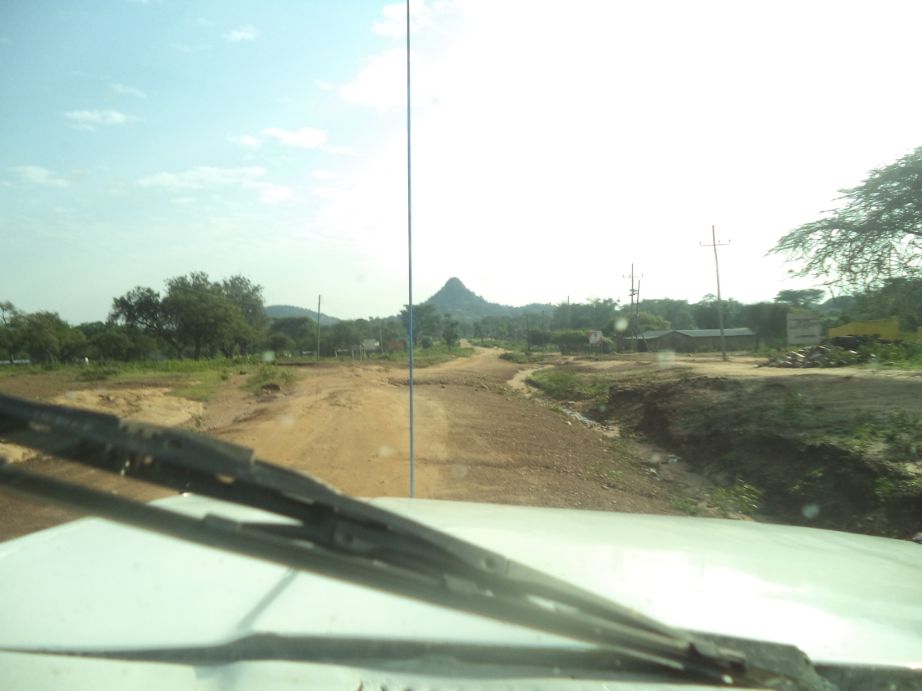
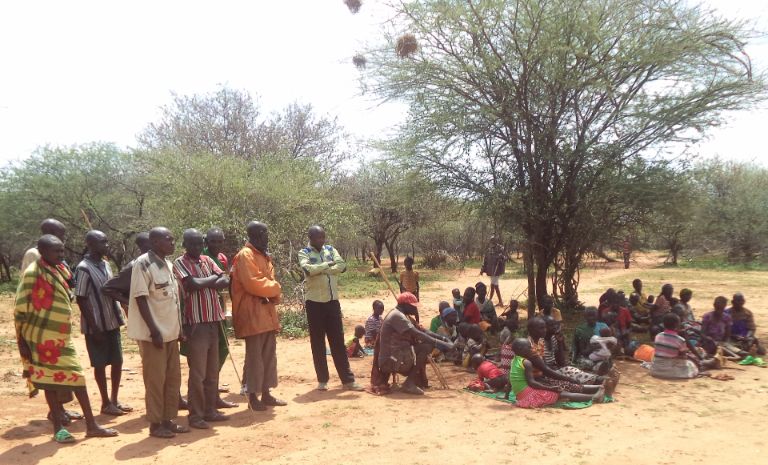
The trip was initially scheduled for three months ago, but we were curtailed by heavy downpour as a result of which the roads were damaged and some bridges linking this area cut-off. Poverty and illiteracy are alarmingly high in this region. There are no houses, no shopping centers, only scattered mad houses / shanties in bushy surroundings. It’s a densely populated region and people here solely depend on cattle and goat rearing. They dress by wrapping themselves in special cloth garments of a particular color.
It’s a very volatile region experiences a lot of fighting and inter-tribal clashes, cattle rustling being the main problem. There are only a few religious organizations which are heavily traditional, speak only the local dialect and are very weary of strangers, particularly vehicles. They are used to wars so when having a meeting women sit at a separate area while men scatter themselves standing each with a weapon in hand as you will see in some of the pictures here. Pointing a camera at them is not tolerated but we managed to take some shots surreptitiously.
We found agreement, however, and had a good time with them. Our message was well received and we managed to get hold of opinion leaders and key people in peace building and human rights awareness program who, we hope, will continue to propagate the message to many.
The launch of our peace programme in these community shown how powerful IARF can be in bringing people and communities together.
We are working right now on a new idea for interfaith and human rights education days all over the 47 counties, especially where different religions coexist, as the crucial time for this country 2017 election is approaching.
We natured the community with a slogan “where there is peace, there is food, good school, good health facilities and there is a development”
Peace is about you. By marking the day you can make a real difference. Now is the time to start acting!
Lawrence Adera, Chapter Secretary
l;
Training of Trainers in Human Rights and Interfaith Peace
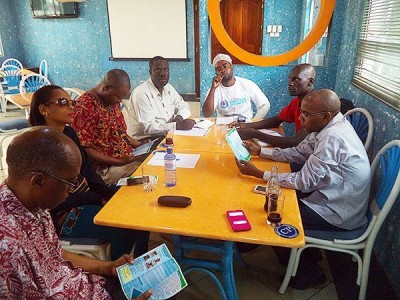
On the 24th and 25th of October the Kenya Chapter of IARF held a training event concerning human rights and interfaith peace. Hereyou can read the full report (PDF, 1MB).
Introductory Inter-Faith Meeting in Mombasa, Kenya
Date: 25th July, 2015
Host: Hamis Juma Kitenje
Presiding IARF Kenya Chapter Officials:
Rev. Lawrence Adera, Secretary;
Bishop Martin Mwambu, Treasurer
In attendance were:
Hamad S. Mwakilesho – Kikoneni in Kwale county coast Region
Tsuma E. Jembe – Chibana Kaloleni in Kilifi County coast Region
Janet N. Mwaburi – Kilifi county
Timson Maneno – Tana River county
Anderson Chai – Malindi -Mombasa Technical University
Athmani Mwanzeje Ali – Mariakani Region
Nicanori Kiriga – TaitaTaveta county
Hamis Juma Kitenje – Mombasa County (Host)
Agenda:
Prayers from religious groups
Introduction:- IARF Kenya Chapter officials, Host and Interfaith Delegates
Presentation from IARF Kenya Chapter officials
Views from the interfaith delegates
Way forward (full participation of region)
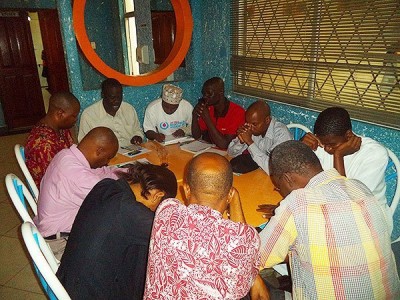
The meeting started at 11:45 AM with a word of prayer from Hamad, a Muslim, and Bishop Mwambu representing Christians, and Niconari of traditional belief. We received and accepted an apology from Sigh, Rahma, Saida (Muslim women and Bohra community representatives) and Baha’i brothers.
Rev.Lawrance, Secretary IARF Kenya chapter, introduced and gave a brief but complete history of IARF internationally and locally, its objectives and main focus. He told the representatives from all the counties of Coast region of the need to embrace IARF objectives and join hands in fulfilling IARF mandate in the region and beyond.
He noted that, Mombasa being a very volatile region and notorious for inter-religious conflicts, IARF Kenya Chapter activism in the area is an ideal venture, hence a need for firm IARF representation.
Bishop Martin Mwambu highlighted on the history of Kenya chapter formation and the force that drove us to be where we are as a chapter in Kenya. He briefed the participants on the achievements of the Kenya chapter so far and the already ongoing TOT programs. He also touched on the activities that we do, and the positive feedback.
Views / Opinion From Participants
All participants were happy and appreciated IARF presence in Kenya and in particular our visit which they described as long overdue. They desired such introductory meetings to be held across all the counties of Coast region in the shortest time possible.
Government organs and civil society should be informed and also be involved or send representation in all IARF activities. e.g Office of the County commissioners, Governors, Senators, Muslim caucus and inter-religious society leaders, civil society and other interested organizations with similar vision and objectives.
There was also a need for the involvement of youths /students of universities, colleges, and Secondary Schools because they are the most affected, easily influenced, and easy targets of agents of doom.
A youth delegate, Mr Hamad, requested for a close working relationship with IARF Kenya chapter because of the organization’s good repute. He believes IARF Kenya chapter will bring about the required change and transform youths into responsible, educated and cautious citizens on human rights issues, and earn everlasting peace..
They agreed to work hand in hand with IARF Kenya chapter to realize the much desired peace and co-existence of all humanity regardless of race, tribe, religion, or colour, and therefore to organize or participate in all human rights education and peace forums.
There was much need for women representation for such activities, as they are also potential instruments of peace and quick avenues in reaching the affected women in the region.
We noted that there was urgent need for peace sensitization meetings and training on human rights in the following areas:
Tana River
Garissa
Lamu
Likoni
(These are hot spots of inter-religious conflict)
Summary
There is an urgent need for sensitization on peace programs in the region mostly in the identified inter-religious conflict hot spots.
There is need for full government agencies’ involvement in all IARF Kenya chapter activities in the region.
Security has been very elusive due to rampant religious youth radicalization and countless warlike groupings making security a major challenge for the government.
Hence proper IARF Kenya chapter introduction and objectives should be very clear to the government, security organs and all relevant departments. A call for a closer IARF Kenya chapter and government working relationship.
Much efforts and energies should be directed towards this region of Mombasa to enhance a quicker co-existence between Muslims who are the majority and other minority religions to avoid future conflicts which can easily degenerate into fully fledged war, like what Kenya almost experienced in 1997 where over 100,000 people were displaced in Mombasa alone, who even to date have not been fully resettled.
It was in this region that a student was suspended from school for not attending Christian mass, and there is a case to that effect in court of law. Churches have been burnt down and mosques have also been attacked in retaliation. There is a lot to be done in this region.
There was evident passion in the participants and in them we saw strong, energized people who exhibited seriousness and zeal in helping IARF Kenya chapter realize its goal and objectives in our advocacy for peace and human rights education, and elimination of inter-faith disharmony. Because of that we are happy IARF officials now.
Finally we also resolved that a courtesy call to the county commissioner, Governor and senator should be done as soon as possible and IARF activities kicked off without further delay.
In the corridors of justice it is said justice delayed is justice denied and in IARF Kenya chapter corridors we say Peace, sensitization and human rights education delayed in Mombasa is peace denied in Mombasa.
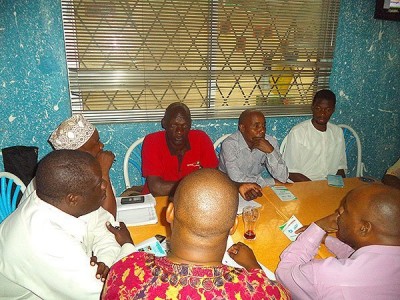
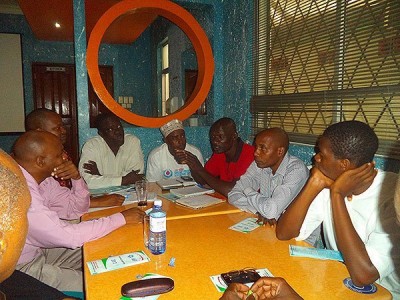
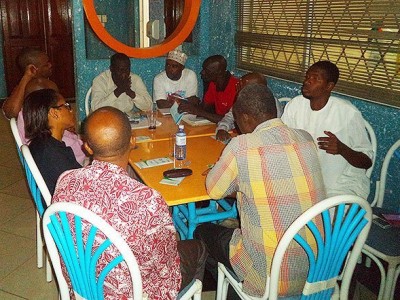
The meeting, which was punctuated with applause, drinks and lunch, was very vibrant and ended on a positive note after about 4 hours 45 minutes.
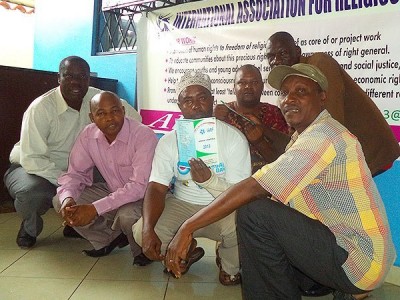
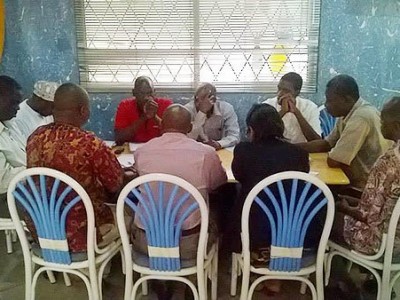
The participants enjoyed a group photo at the end.
At exactly 3.00 pm afternoon the meeting was closed with a prayer from Timson Maneno from Tana River County.
This report was compiled & prepared by:
Rev. Lawrence Adera
IARK Kenya chapter Secretary
And with the approval of the treasurer as the actual and factual true representation of what transpired.
Kenya Chapter – Training of Trainers for Human Rights Education
Jerusalem Centre, Kitale, KENYA 10-12 April 2015
Host: Kenya Chapter President Bishop Michael Wafula
Facilitator- Mrs. Joyce N. Wamalwa
Co. Trainers- Sister Irene
Rev. Lawrence Adera
Bishop Martin Mwambu
Duncan Magero
There was a warm welcome from the participants. For few hours we were given sermons by the Chapter President, Bishop Michael, who introduced his team to the congregation.
There were about 33 people who were interested.
They were divided into two categories. This was done according how they have been participating on chapter event training for HRE that has been held all over the country. The senior class had 15 students and the junior class had 18 students.
The first class was trained in Mt. Zion hall by the chapter lead trainer Mrs. Joyce. The materials she used in the training were from The Human Rights Education Handbook (Effective practices for learning, action and change)
The second class had 18 students. The majority has idea about HRE but had not gone a thorough training like the first class. They were trained at Jerusalem hall. They got their training in support of the book called Many Faiths, One Humanity.
The class was mentored by the other trainers under the supervision of the President and the secretary.
The training ended well with a ceremony awarding the first class with a participation certificate.
The training took two days. There were a few suggestions before it ended. The second class requested to have their final training on June this year, which shall be communicated later and shall depends on the availability of the funds.
The participants enjoyed a group photo at the end.
Rev. Lawrence Adera, IARK Kenya chapter Secretary
[portfolio_slideshow id=6268]
Introductory Meeting of IARF – Kampala, Uganda, 10may2015
We use cookies and local browser storage to keep you securely logged in and maintain your preferences. No third-party trackers or ad networks are used. Read our Privacy Policy.
Strictly NecessaryAlways Active
Keeps you logged in and protects forms from submission forgery. Necessary for account operation.
Usability & UI PreferencesOptional
Remembers details like chat widget coordinates and records if you have voted in a poll to prevent repeated popups.
JavaScript Core PlatformAlways Active
JavaScript is required to render the interactive app, direct messaging, offline caching, and calendars. No tracking libraries are loaded.
Why do we use JavaScript?
Our platform runs as a modern, interactive single-page application for logged-in members. We connect securely to socket.iarf.net via WebSockets for instant message delivery and online status indicators.
Where does my data go?
All data belongs exclusively to IARF and is stored on our secure VPS located in the EU. We do NOT run Google Analytics, Facebook Pixels, or other tracking code. External requests are only made to fetch FontAwesome icons and Google Fonts from public CDNs to display symbols and typography.
What happens offline?
We install a Service Worker to cache layout elements locally. No personal information is stored inside the local cache; it only speeds up navigation and enables basic offline views.



Poverty and illiteracy are alarmingly high in this region. There are no houses, no shopping centers, only scattered mad houses / shanties in bushy surroundings. It’s a densely populated region and people here solely depend on cattle and goat rearing. They dress by wrapping themselves in special cloth garments of a particular color.