BV Foundation Commemorates International Day of Peace 2023
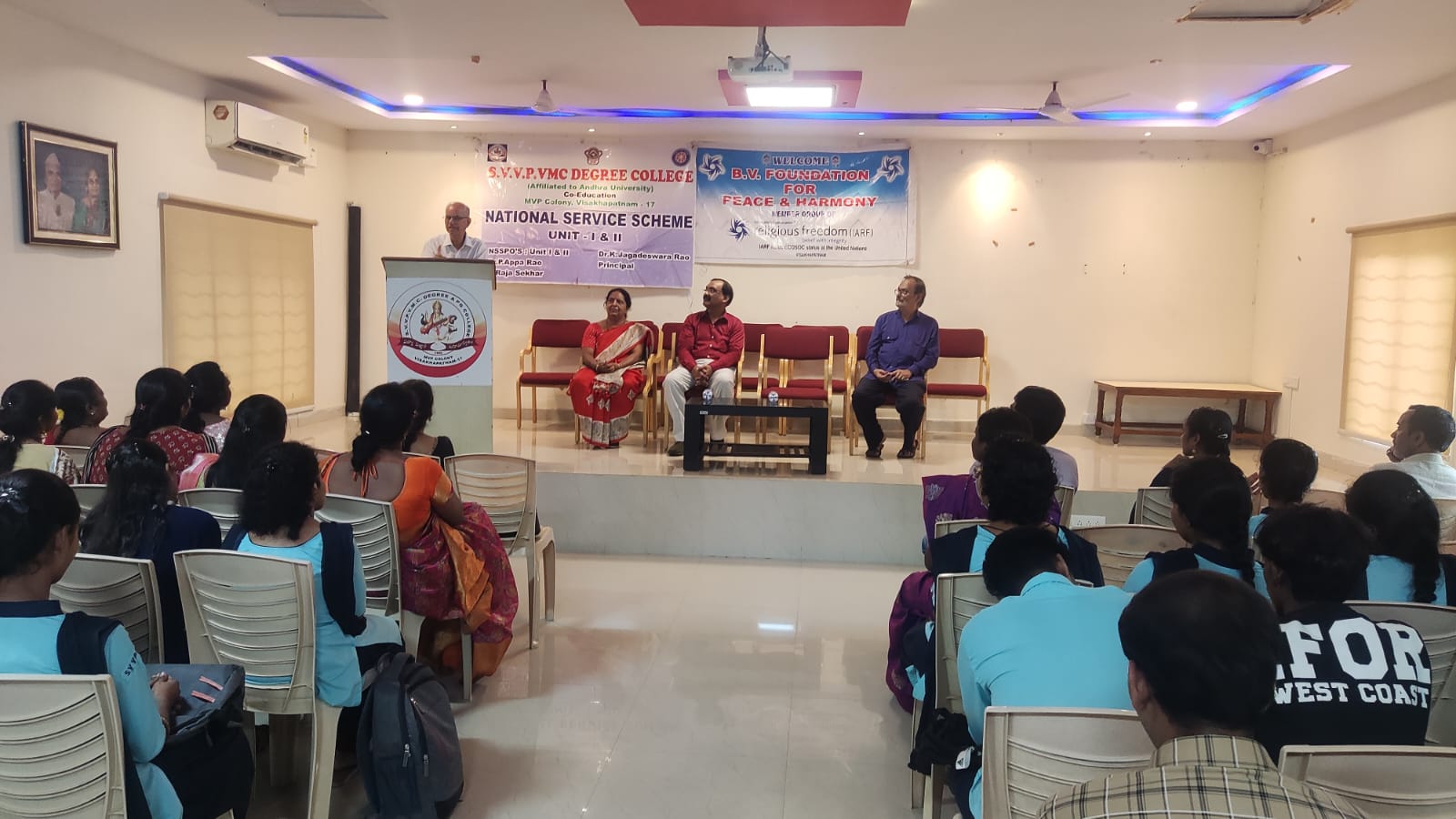
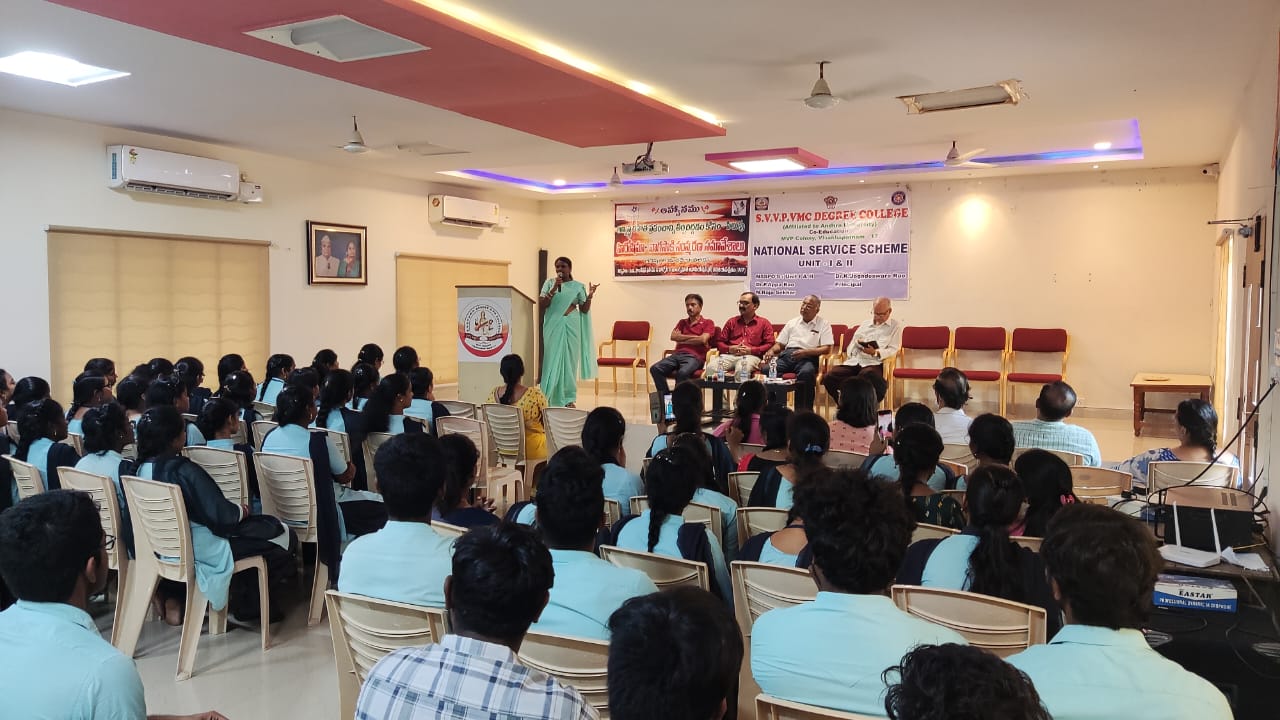
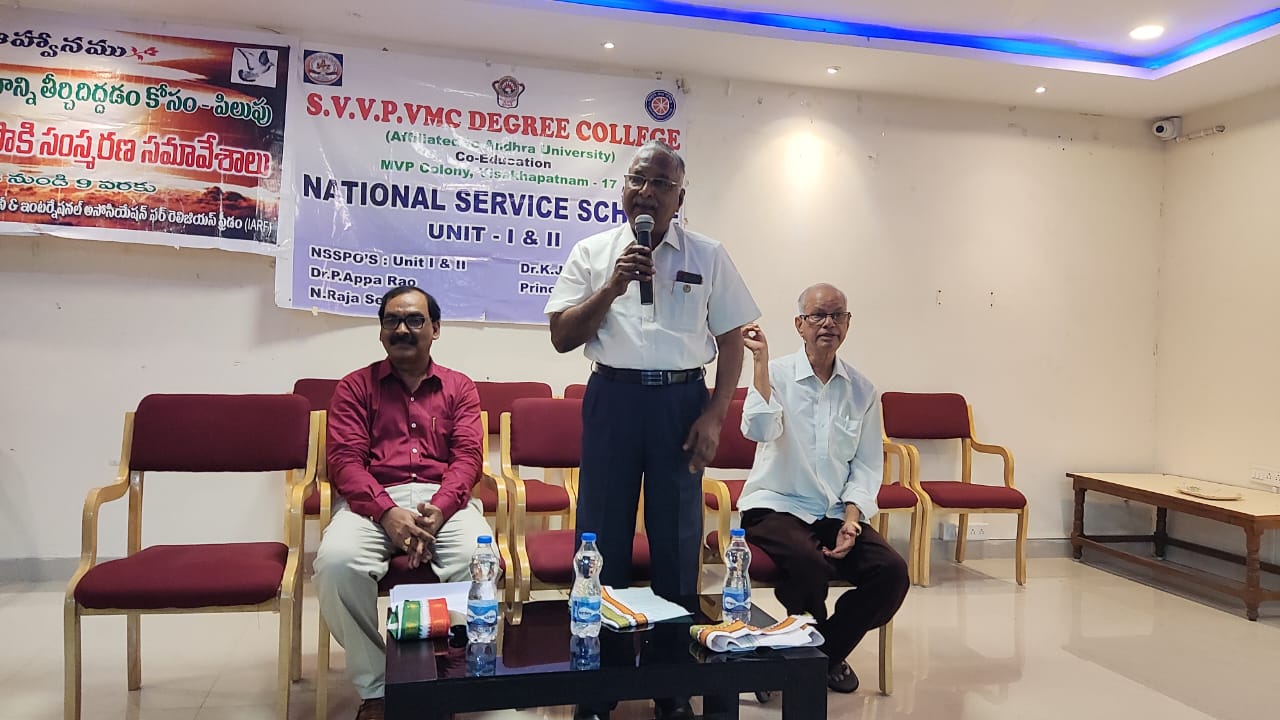
Summary The BV Foundation for Peace and Harmony, a member group of the International Association for Religious Freedom (IARF), hosted a special event in honor of the International Day of Peace on September 21, 2023. The event was conducted at SVVP Degree College in MVP Colony, Visakhapatnam, Andhra Pradesh, under the chairmanship of Prof. Prakasa Rao.
Lighting the Lamp of Peace The day began with the time-honored tradition of lighting a lamp to signify the commencement of the celebrations. Dr. K. Jagadeshwara Rao, the Principal of SVVP Degree College, served as the chief guest for the occasion. A multi-faith prayer session was conducted to unite all attendees in a solemn commitment to peace.
Advocating for Global Harmony
The focal point of the event was a series of speeches highlighting the critical need for fostering global peace. Prof. Prakasa Rao took the audience on a historical journey, elaborating that the International Day of Peace was established by the United Nations General Assembly on September 21, 1981. The goal behind this designation is to promote nonviolence, peace, and ceasefire among nations and individuals worldwide.
This Year’s Theme: End Racism and Build Peace
The current year’s theme resonated strongly with the audience, emphasizing the necessity to “End Racism and Build Peace.” Prof. Rao stressed that maintaining social harmony is of utmost importance, especially in an era where antisocial elements are disturbing the peace through violent activities.
Allocating Resources for Peace Over War
The speakers also discussed how nations often allocate extensive budgets for defense at the expense of vital sectors such as healthcare, food security, social welfare, and education. They argued for a reevaluation of priorities, emphasizing the significance of peace for societal wellbeing.
A Standing Ovation for UNO’s Efforts
Dr. K. Jagadeshwara Rao applauded the relentless efforts made by the United Nations to uphold peace despite numerous challenges. He suggested that educational institutions have a pivotal role to play in sensitizing the youth about methods to maintain global peace.
Taking the Peace Pledge
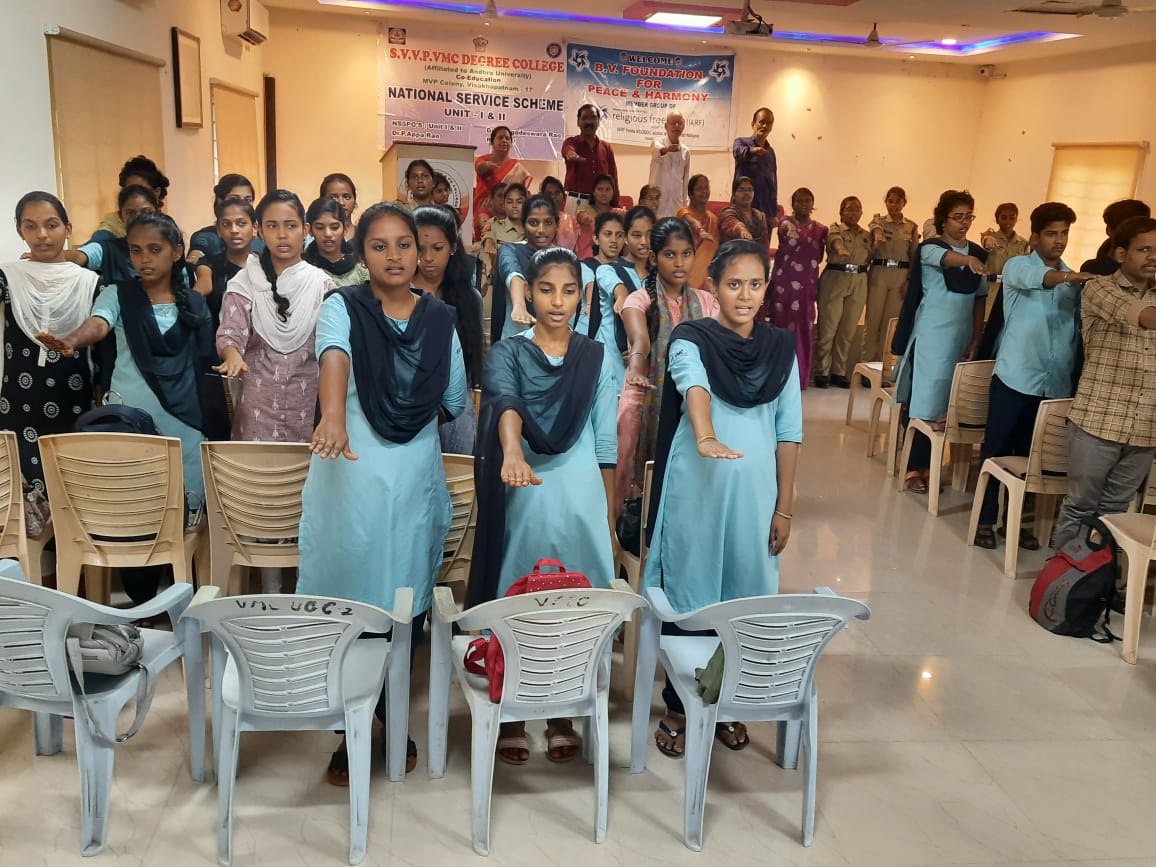
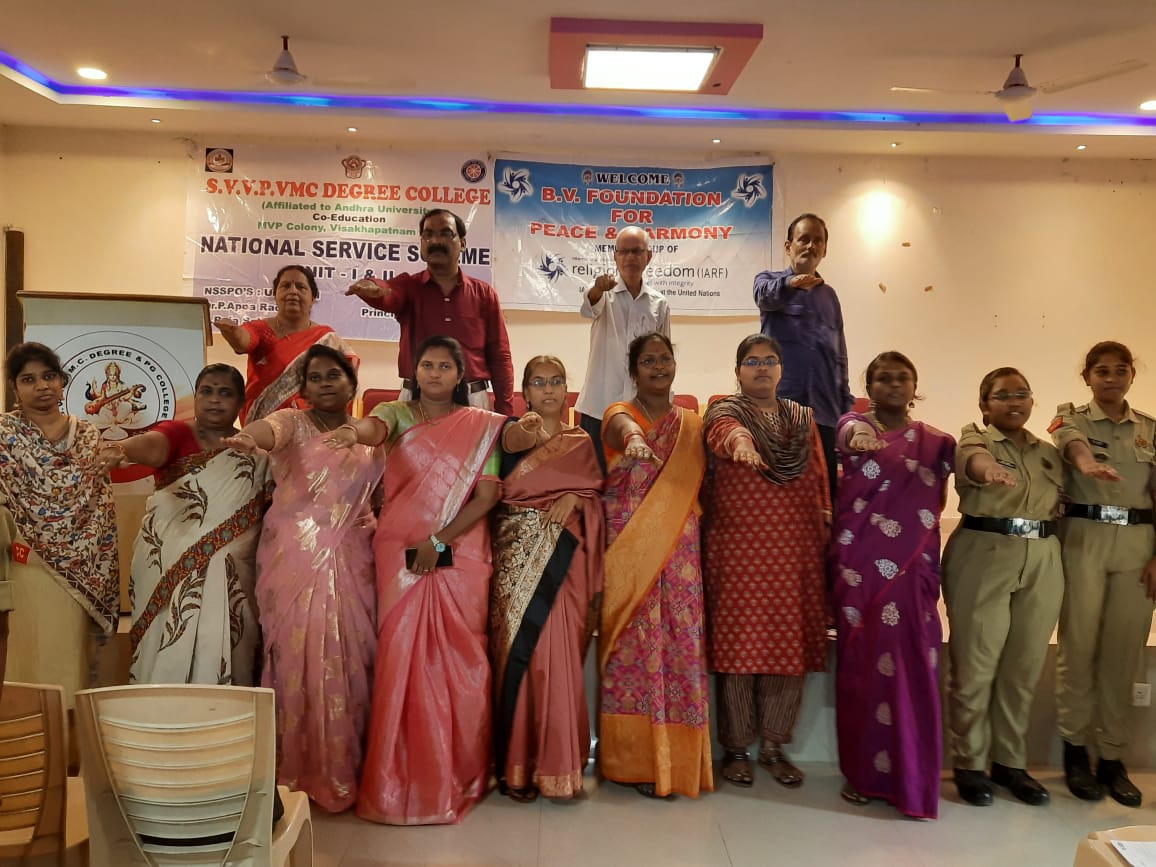
The event concluded with all attendees taking a pledge for peace, thereby symbolizing a collective commitment to promoting harmony across communities, nations, and religions.
For more information on upcoming events and how you can participate, please contact the BV Foundation at [email protected].in.
Visakhapatnam Commemorates Hiroshima and Nagasaki
by Prof. Narava Prakasa Rao, IC Member, IARF and Chairman, BV Foundation for Peace and Harmony Member Group
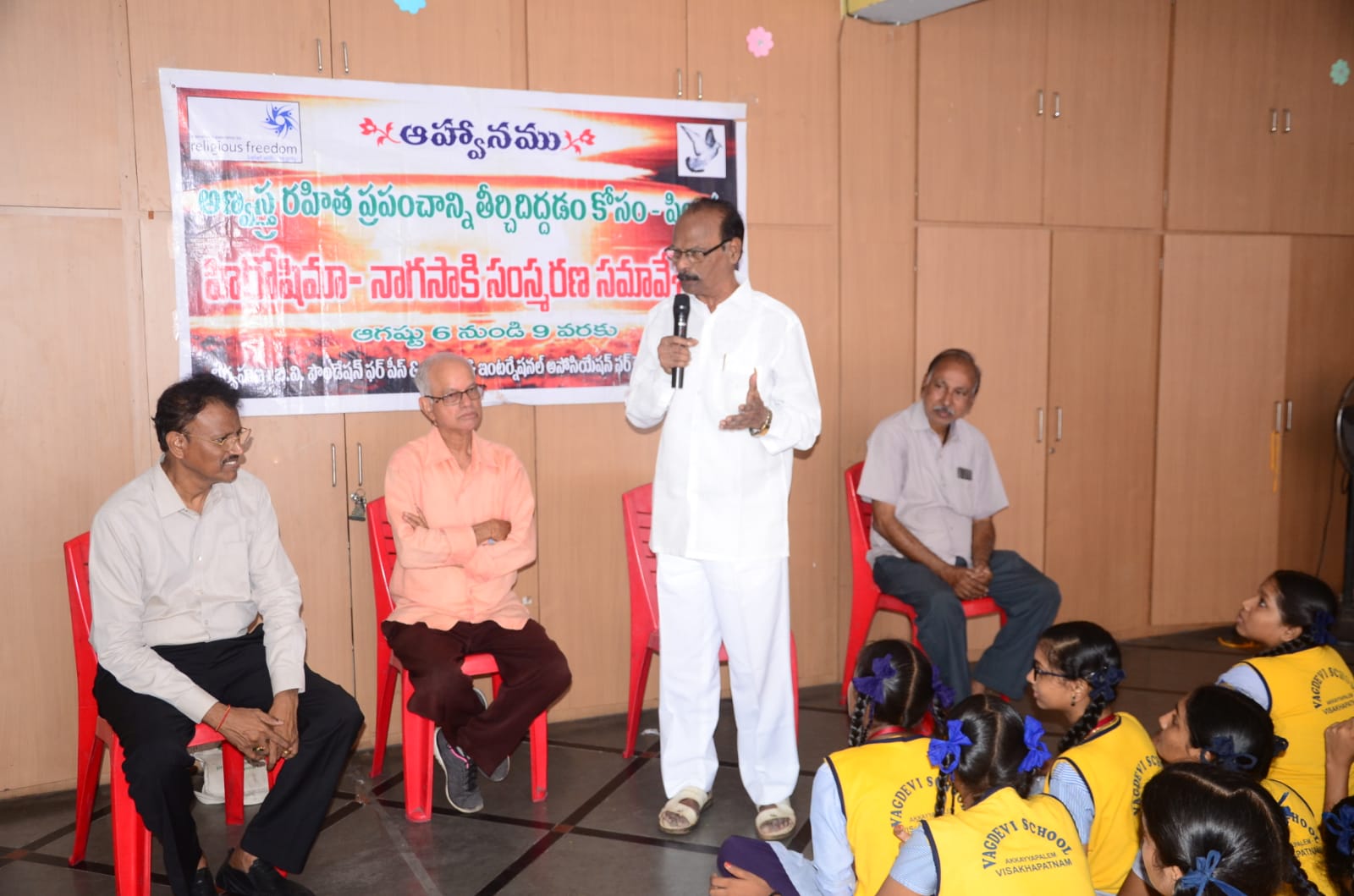
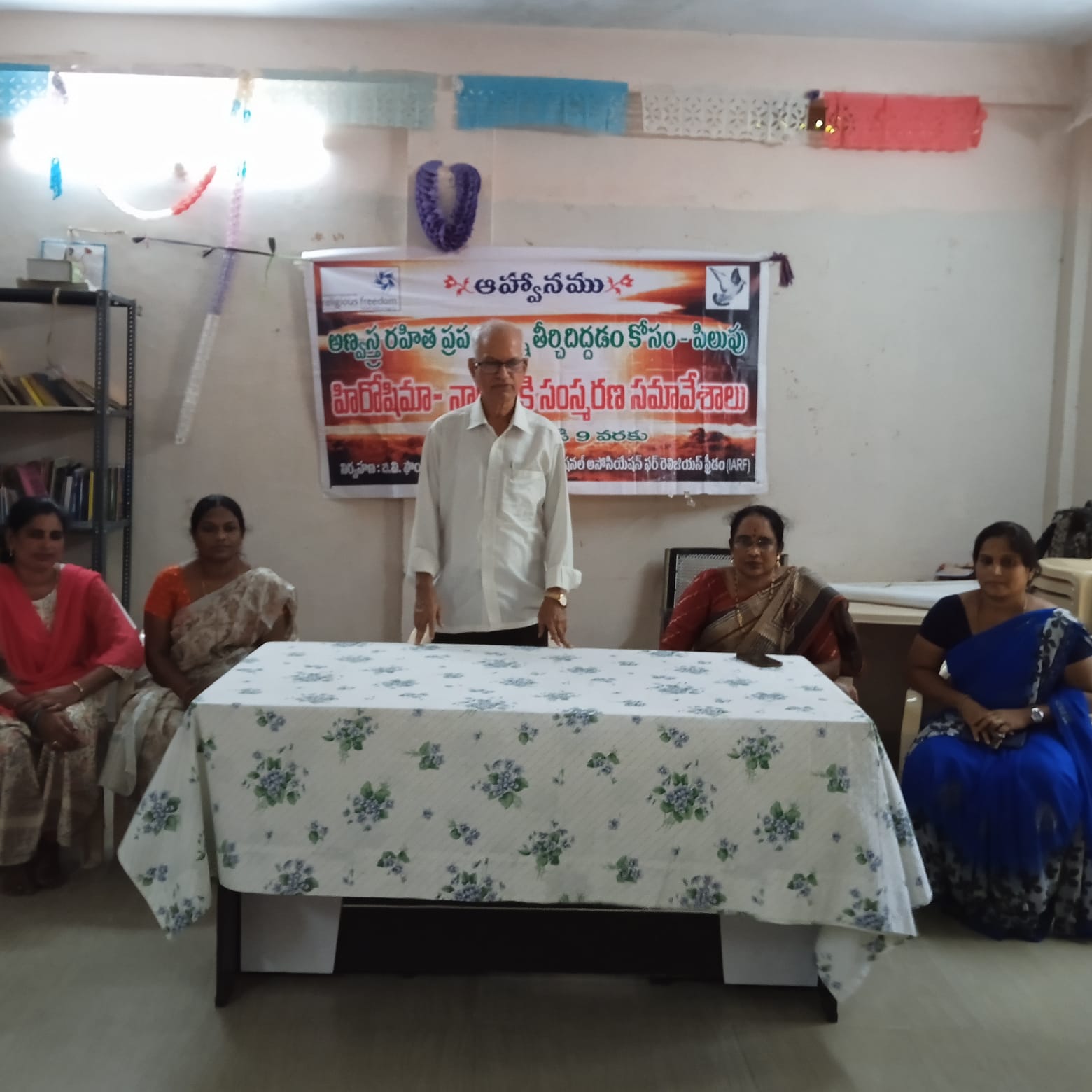
VISAKHAPATNAM, INDIA – From August 6th to 9th, 2023, the International Association for Religious Freedom (IARF) in collaboration with the BV Foundation for Peace and Harmony conducted a series of commemorative meetings at various schools and colleges across Visakhapatnam. These meetings marked the somber anniversaries of the Hiroshima and Nagasaki atom bomb explosions, aiming to educate and inculcate a quality mindset among the public, with special emphasis on the student community.
Under the guidance and coordination of Prof. Narava Prakasa Rao, IC Member and chairman of the Foundation for Peace and Harmony, these annual meetings have been successfully held to shed light on the tragedies of August 1945. This year, it commemorated the 78th anniversary of the devastating nuclear attacks which took the lives of at least 129,000 innocent individuals, marking a dark day in global history. This stands as the sole instance of nuclear weapons being employed in warfare.
Speakers at the commemorative meetings highlighted the peaceful applications of atomic energy. Through comprehensive PowerPoint presentations, the importance of nuclear power, application of non-conventional energy resources, and the necessary safety measures were emphasized. Attendees were informed about the potential benefits of nuclear energy in societal development, such as cost-effective methods to desalinate seawater, medical uses like MRI scans and radiotherapy, among other treatments. However, they also emphasized the essential need for proper nuclear waste management to prevent the severe hazards posed by radiation and toxins.
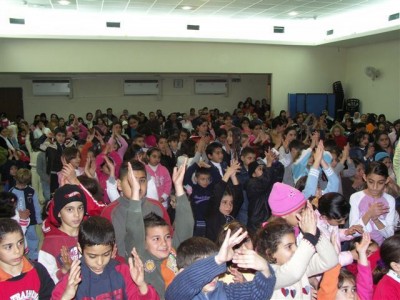
A strong message resonated across all sessions: while nuclear energy has the potential to propel societal advancements, the devastation caused by nuclear bombs and the consequential radiation cannot be ignored. To reinforce this message and promote peace, a PEACE pledge was undertaken by students at every meeting.
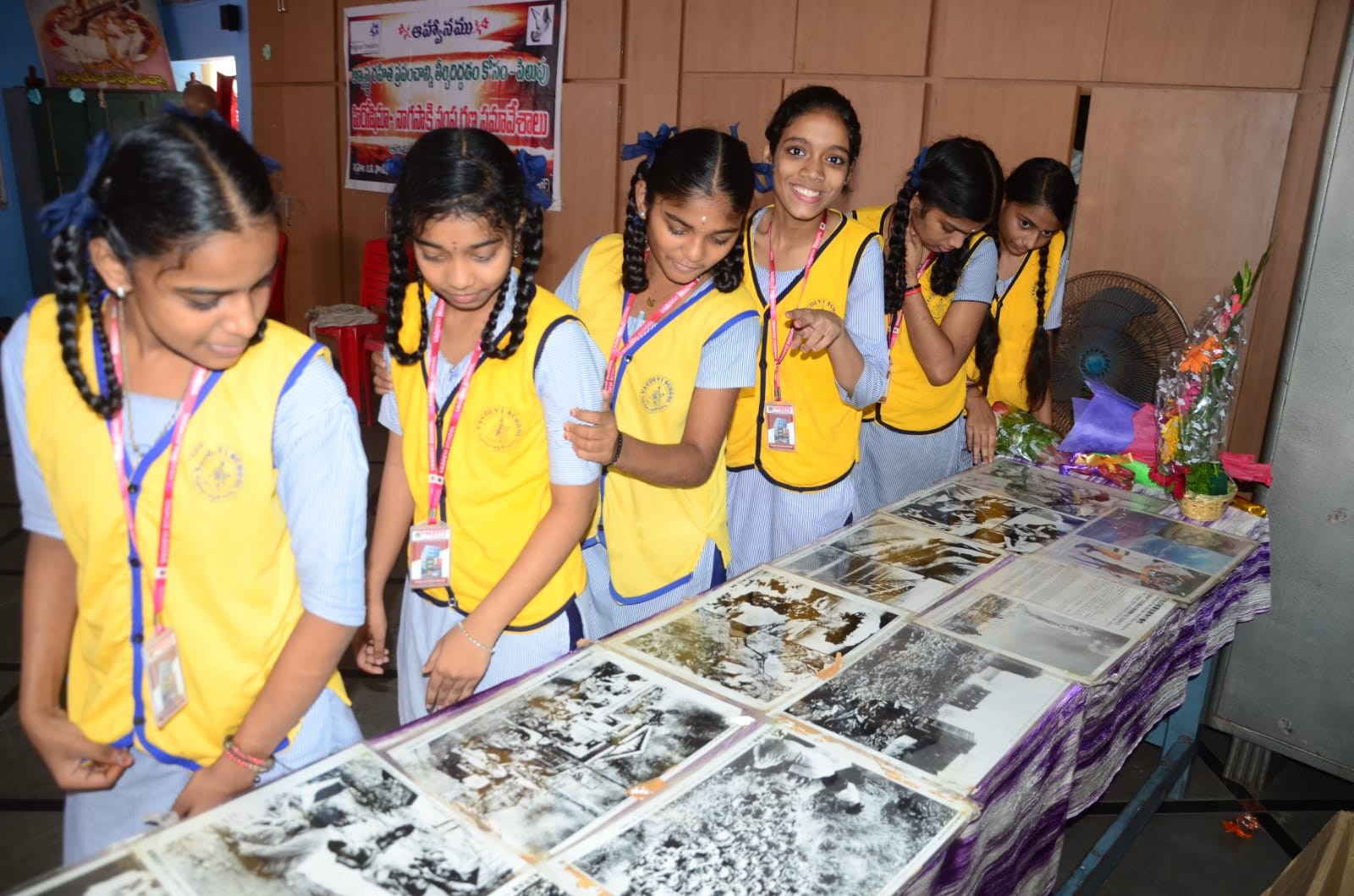
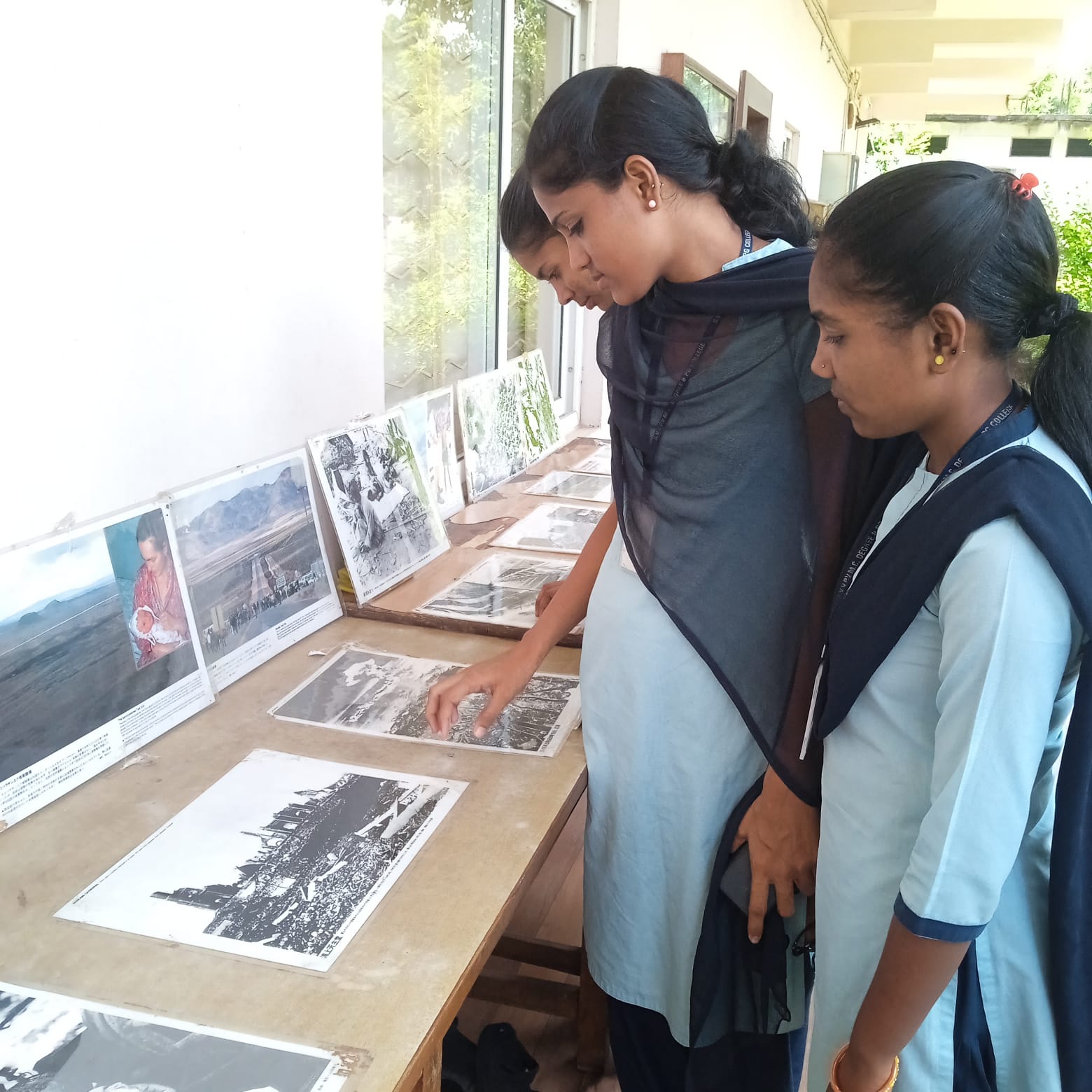
Complementing the series of meetings was a powerful photo exhibition, which offered attendees a visual journey through the tragic events of Hiroshima and Nagasaki. Documentaries depicting the historical events and their aftermath were also screened, making the significance of the incidents even more palpable.
In these trying times, initiatives like these underscore the importance of peaceful coexistence and the prudent use of powerful resources. The dedicated efforts of organizations like the IARF and BV Foundation serve as a beacon of hope for a world aspiring for peace and harmony.
by Prof. Narava Prakasa Rao, IC Member, IARF and Chairman, BV Foundation for Peace and Harmony Member Group
VISAKHAPATNAM, INDIA – From August 6th to 9th, 2023, the International Association for Religious Freedom (IARF) in collaboration with the BV Foundation for Peace and Harmony conducted a series of commemorative meetings at various schools and colleges across Visakhapatnam. These meetings marked the somber anniversaries of the Hiroshima and Nagasaki atom bomb explosions, aiming to educate and inculcate a quality mindset among the public, with special emphasis on the student community.
Under the guidance and coordination of Prof. Narava Prakasa Rao, IC Member and chairman of the Foundation for Peace and Harmony, these annual meetings have been successfully held to shed light on the tragedies of August 1945. This year, it commemorated the 78th anniversary of the devastating nuclear attacks which took the lives of at least 129,000 innocent individuals, marking a dark day in global history. This stands as the sole instance of nuclear weapons being employed in warfare.
Speakers at the commemorative meetings highlighted the peaceful applications of atomic energy. Through comprehensive PowerPoint presentations, the importance of nuclear power, application of non-conventional energy resources, and the necessary safety measures were emphasized. Attendees were informed about the potential benefits of nuclear energy in societal development, such as cost-effective methods to desalinate seawater, medical uses like MRI scans and radiotherapy, among other treatments. However, they also emphasized the essential need for proper nuclear waste management to prevent the severe hazards posed by radiation and toxins.
A strong message resonated across all sessions: while nuclear energy has the potential to propel societal advancements, the devastation caused by nuclear bombs and the consequential radiation cannot be ignored. To reinforce this message and promote peace, a PEACE pledge was undertaken by students at every meeting.
Complementing the series of meetings was a powerful photo exhibition, which offered attendees a visual journey through the tragic events of Hiroshima and Nagasaki. Documentaries depicting the historical events and their aftermath were also screened, making the significance of the incidents even more palpable.
In these trying times, initiatives like these underscore the importance of peaceful coexistence and the prudent use of powerful resources. The dedicated efforts of organizations like the IARF and BV Foundation serve as a beacon of hope for a world aspiring for peace and harmony.
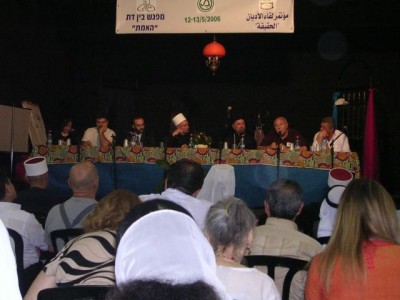
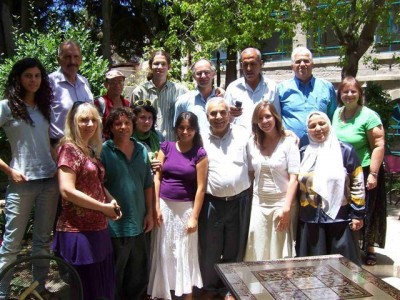
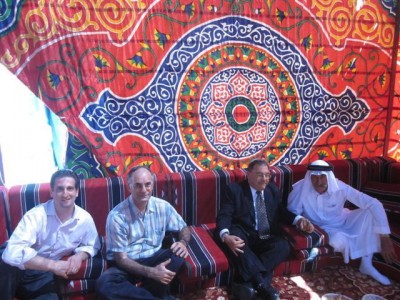
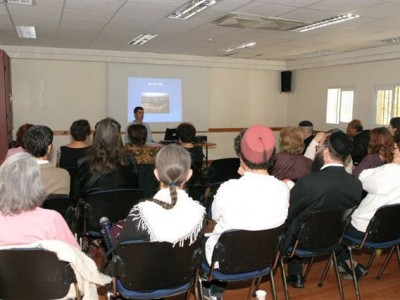
Spotlighting the IEA, our Member Group in the Holy Land
If you are a member of the IARF (a Member Group or Chapter), you can also find Dr. Yehuda Stolov on our community platform.
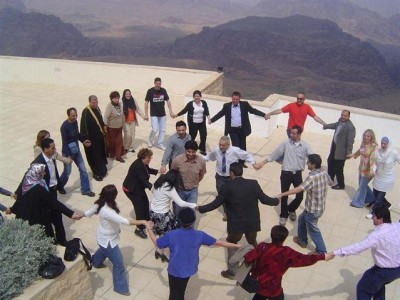
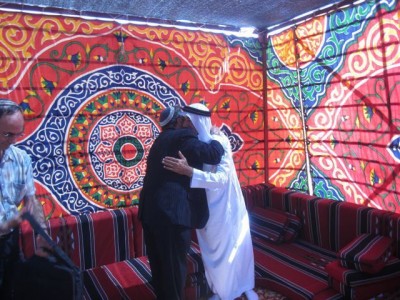
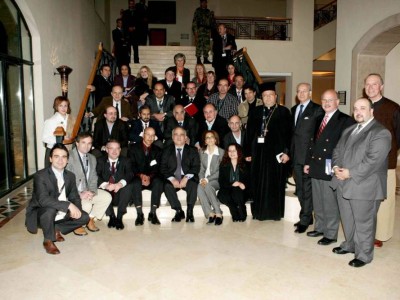
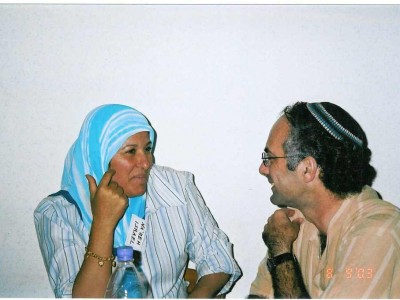
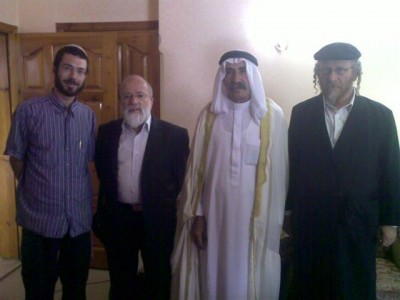
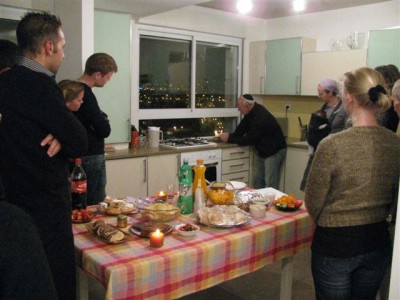
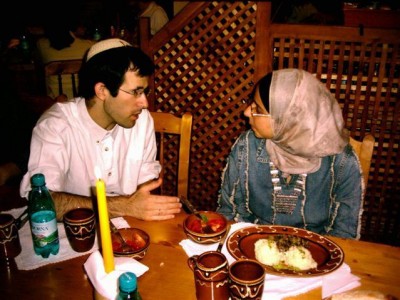
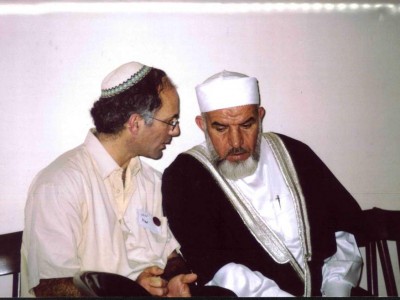
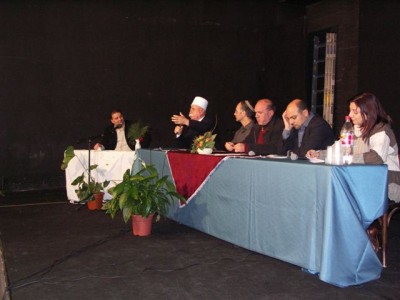
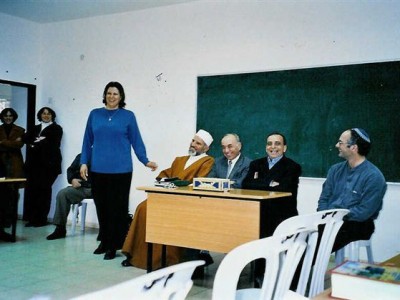
The IARF is thrilled to introduce and spotlight one of its longstanding member organisations, the Interfaith Encounter Association (IEA). Based in Israel, the IEA has been dedicating itself tirelessly to the cause of interfaith dialogue and grassroots peacebuilding for over two decades. Thee IARF has offered several grants to the IEA over the years as we believe it is precisely this kind of grassroots, volunteer-based, transparent movements that is especially needed in areas afflicted by conflict and prejudice. IARF has helped fund its Leaders’ Forum operating in the Jerusalem & Hebron areas, and encounters between Jewish religious students and Muslim young adults. For historical information see Jerusalem-Hebron Religious Leaders’ Forum 2011 report and Religious Leaders – 12.12 – 7.13 report. Dr. Yehuda Stolov, the Executive Director of the IEA, has served as a member of the International Council (IARF’s Board) from 2014 to 2018.
A Truly Diverse Engagement
IEA’s mission to create a foundation for sustainable peace is apparent in the diverse religious and political backgrounds of its coordinators and participants. They represent different areas from Negev to Galilee, Hebron to Otniel, and East to West Jerusalem, striving continuously to overcome challenges and establish peace. By engaging a wide spectrum of people, the IEA aims to build the infrastructure for peace, one encounter at a time.
The Resurgence of IEA Activities in 2022: A Record Number of Encounters
In the wake of Covid-19, the year 2022 marked a resurgence of pre-pandemic levels of activity for the IEA. A record total of 412 encounters were held, with eight groups renewing their activities or starting anew. The resulting participation was unprecedented, as thousands of individuals across various ages, viewpoints, social statuses, religions, and cultures came together in these bridge-building encounters, forging mutual understanding and friendship.
The Presidential Award: A Testament to Tireless Work
One highlight of the year was the IEA receiving the Presidential Award for Volunteerism from the President’s own hands, a moment that was celebrated with all coordinators at the President’s residence. This honor represents the tireless work behind the scenes that includes strategic planning, administrative paperwork, and continuous communication, all carried out with the support of caring individuals, families, and communities.
The Principle of Constructive Dialogue and Mutual Respect
Within the IEA, the principle of constructive dialogue and mutual respect is fostered among different traditional and cultural backgrounds and faiths. In 2022, the 39 active groups successfully organized 412 encounters throughout the year, focusing on various religious themes and promoting joint study and dialogue.
A Glimpse into Diverse Scenarios
The IEA’s remarkable work was visible in diverse scenarios, such as the Jaffa interfaith group discussing active listening and peace concepts; the Reut-Sadaqa group in Jerusalem discussing dream interpretations and renewal rituals; the Debate of Peace group involving Jewish and Arab high school students in Model UN simulations, and many more.
Online Engagement: Interfaith Dialogue in the Comfort of Your Home
In the online realm, the IEA continued to make interfaith dialogue accessible right from the living rooms via groups like 929 and the New Testament Study, while two of their groups, Teaneck, NJ, and D.C. and beyond, brought the IEA’s essence to the U.S., meeting both online and offline.
Beyond Encounters: IEA’s Special Events
The IEA’s extensive work is not limited to these encounters, but also includes events that bring together people from different groups across the Holy Land. In 2022, the IEA held an annual Iftar dinner, an Interfaith Encounter Day, and an Interfaith Singing Evening, demonstrating their continued commitment to promoting peace and unity through shared experiences.
Joining the IEA: An Open Invitation
The Interfaith Encounter Association invites you to join in this important work. Whether through participating in a local group, spreading the word on social media, partnering with your institution, or providing financial support, your contribution can help further the cause of peace.
IARF Ideals Practiced in Our Congregation – Free-Religious Congregation in Offenbach am Main, Germany
The free-religious community in Offenbach has been a part of the International Association for Religious Freedom (IARF) since the 1920s. Besides our connection with the international IARF community, a significant concern is promoting dialogue, cooperation, and the further development of religious life among diverse religions and worldviews. Below, we present a few of the projects and activities of our community:
Café International
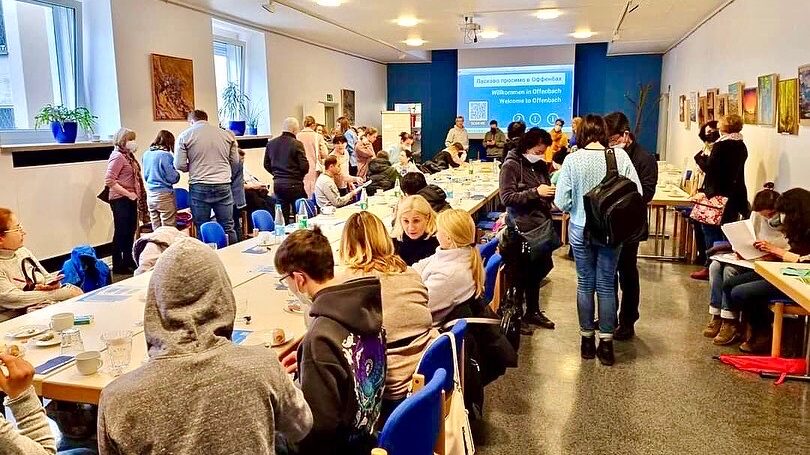
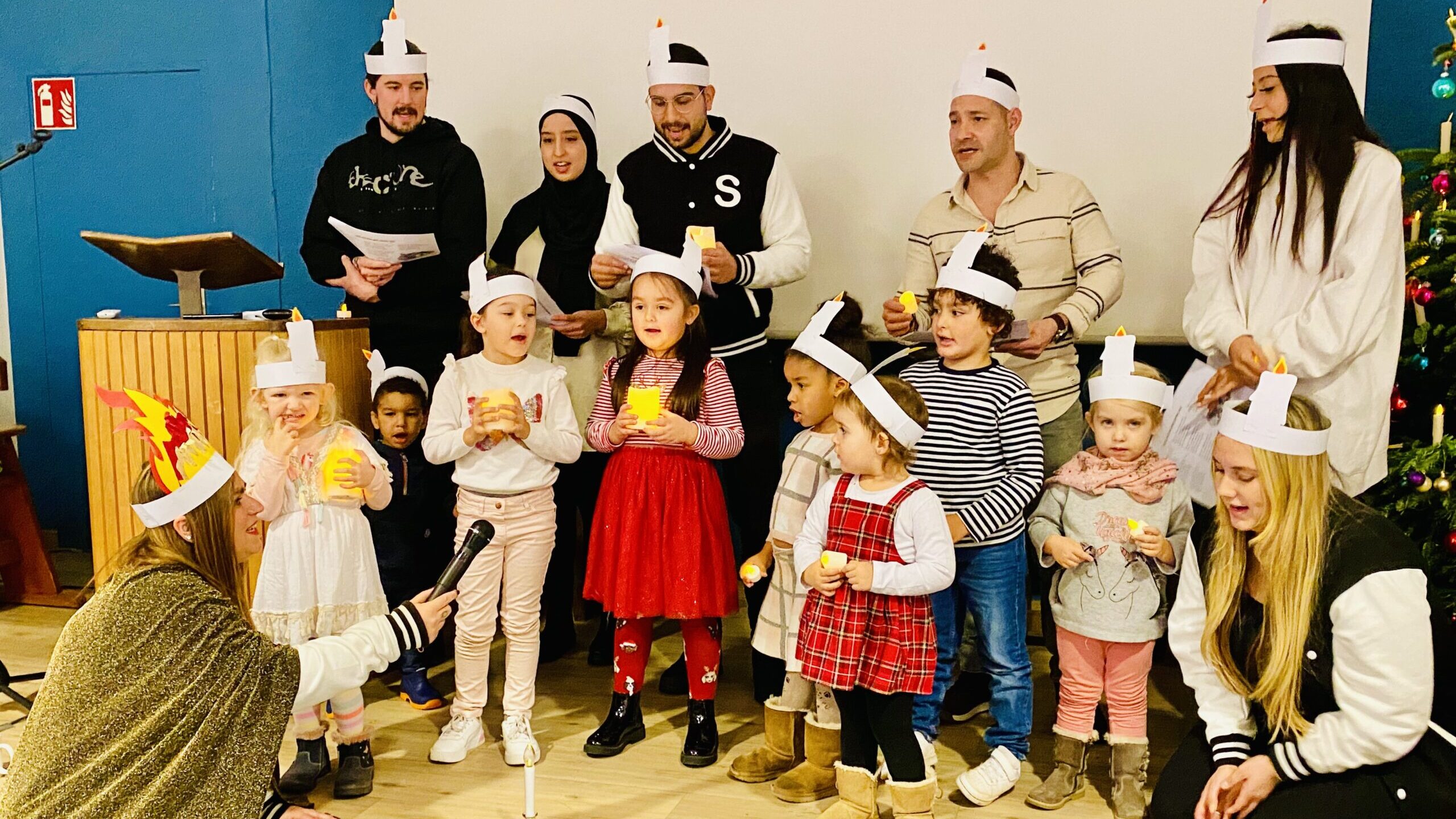
Held twice a month, Café International provides individuals of all backgrounds a space to meet, exchange ideas, and receive assistance with everyday life. Volunteers aid newcomers to the city, while joint excursions featuring language guides and an educational program for children showcase how living together can be simplified despite language and cultural barriers. Café International evolved from Café Hallo, an initiative launched in April 2022 for refugees from Ukraine.
Circle of Religions
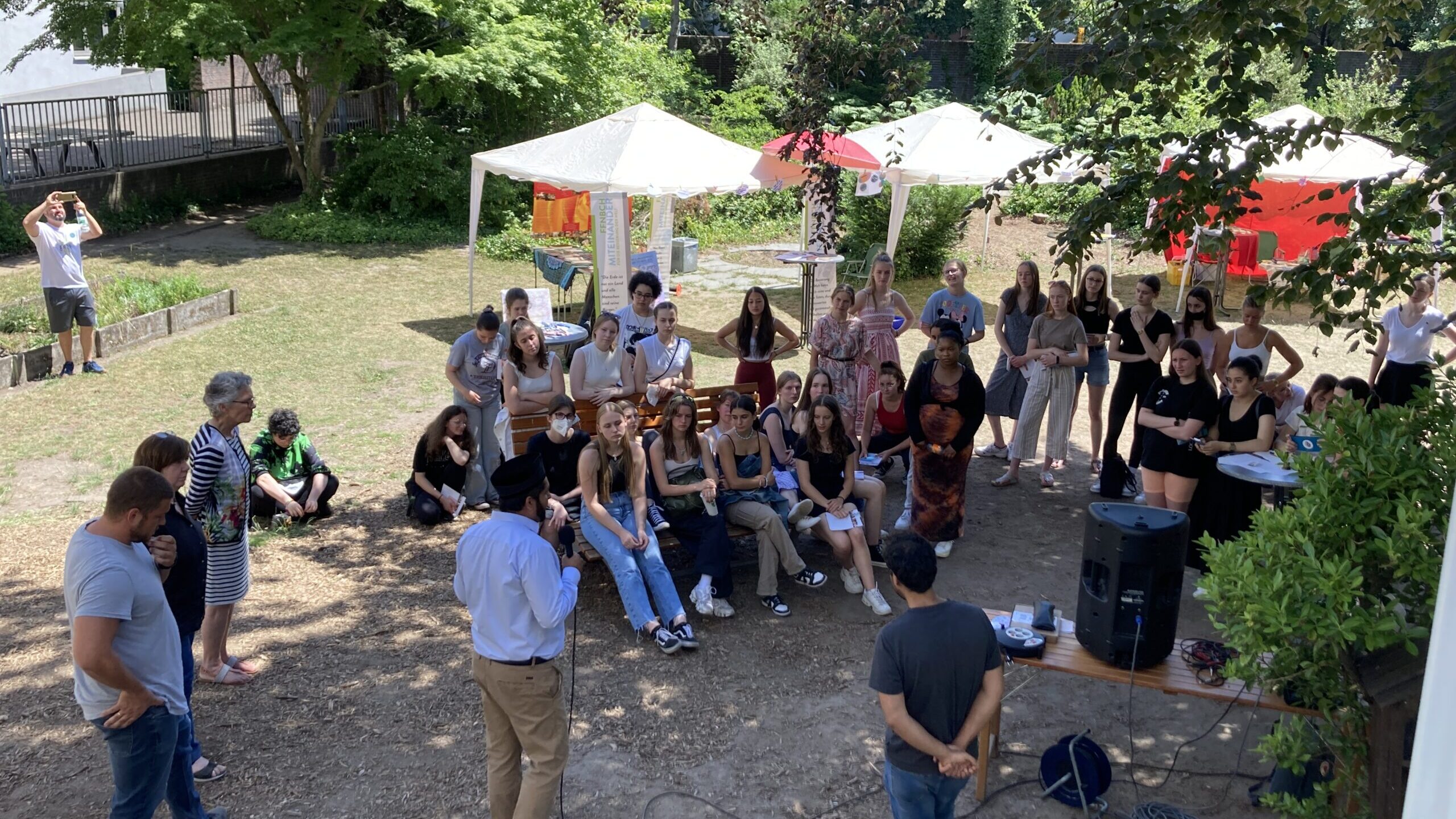
Our free-religious community in Offenbach is a co-founder of this group, which has organized several “Days of Religions”. During this event, various religious communities present themselves in public spaces and schools, addressing questions such as: How does your religion relate to the diversity of sexual orientations and identities? What are your views on abortion? etc. Annually, we also coordinate a “Prayer of Religions” where each religious community delves into its religious practices before discussing a common topic.
Church Asylum
We offer church asylum or shelter to those persecuted for political, religious, or inhumane reasons. In light of the influx of refugees from Syria, Ukraine, and other third-world countries, we strive to provide them a safe haven and aid in their integration into our society.
Kindergarten
Our free-religious community in Offenbach and its gGmbH now operate three kindergartens. Here, we foster children from a multitude of cultures and religions. In these kindergartens, we run a program for school beginners, teaching them about various religions and the importance of respectful coexistence.
Festival of Women
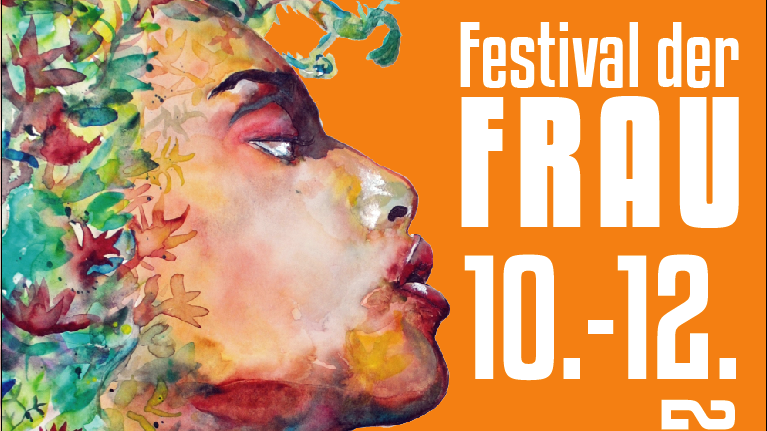
Every two years, we organize a festival dedicated to the persistent unequal treatment of women and men across all walks of life. In conjunction with this, we hold a panel discussion on “Women in Religion” and a consecration hour that critically addresses this topic. All proceeds are donated to the women’s shelter in Offenbach.
About the Free-Religious Community Offenbach
The Free-Religious Community Offenbach, established on March 9, 1845, is one of the earliest and largest free-religious communities in Germany, with around 1,150 members. As a liberal religious community, we encompass a spectrum of beliefs, from religious humanists to rationalistic pantheists and dogma-free Christians. We encourage each member to form their own faith, fostering freedom of thought, faith, and conscience without strict adherence to holy scriptures or universally accepted doctrines.
The community was founded by individuals active in education, social care, and economic life, who were interested in religious-rationalist reform and political-democratic changes. Today, we continue to uphold these ideals, seeking co-determination in both church and state matters, championing social justice, equal rights, and educational opportunities for all. Despite the significant societal changes since our establishment, our guiding principles remain grounded in a dogma-free religion and a deep sense of unity in the spirit of humanity.
The Free-Religious Community Offenbach is part of the Bund Freireligiöser Gemeinden Deutschlands and is connected globally through the International Humanist and Ethical Union (IHEU) and the International Association for Religious Freedom (IARF). Despite our widespread connections, we maintain our independence, primarily serving the city and county of Offenbach but reaching far beyond.
Our community center, located in the city center, serves as a hub for a range of activities, including Sunday celebrations, lectures, discussions, festivals, group activities, rites of passage, and social care services. In an ever-evolving world, we continue to adapt our statements, work methods, and community life while preserving our foundational faith and principles.
IALRW’s Congress to Follow the IARF Congress on 7-9 September 2023
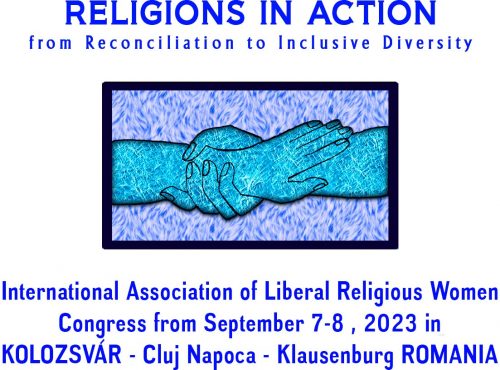
The International Association for Religious Freedom (IARF) is delighted to announce that our member organisation, the International Association of Liberal Religious Women (IALRW), will be hosting their World Congress in Cluj-Napoca (Kolozsvár) from the 7th to the 8th of September, 2023. This congress comes directly after the IARF World Congress, presenting a unique opportunity to attend both events in succession.
The congress will be held under the theme “Religion in Action: From Reconciliation to Inclusive Diversity”, reflecting the IALRW’s ongoing dedication to fostering dialogue and understanding among women of diverse faith traditions. Although the speakers for the event have not yet been confirmed, we assure you that the lineup will consist of some of the most insightful voices in the field. We will be publishing the program shortly, so please keep an eye on our website for updates.
The World Congress will be graciously hosted by the Hungarian Unitarian Church at the House of Religious Freedom, a historic 15th-century townhouse located in Cluj-Napoca. Known as one of the oldest and most significant townhouses in the city, the House of Religious Freedom has been lovingly restored by the Hungarian Unitarian Church and is dedicated to promoting the ideals of religious freedom and tolerance.
IALRW’s history is rooted in the IARF, and its focus on women’s issues in religious communities and interfaith cooperation remains a cornerstone of its mission. The organisation welcomes women from liberal faith communities around the world, fostering an environment of mutual support in the search for spiritual enrichment and identity. We are confident that this upcoming World Congress will be a testament to this mission, offering attendees the chance to engage in enriching dialogue and meaningful action.
For further information about the World Congress, please contact Dr. Esther Suter at [email protected]. You can also visit the IALRW website at https://www.ialrw.org/ to learn more about their ongoing projects, recent research, and member organisations.
The IARF and IALRW look forward to welcoming you in Cluj-Napoca (Kolozsvár) for these back-to-back congresses. Please mark your calendars and join us in fostering interfaith dialogue and inclusive diversity.
Human Rights Day Observed by the Visakhapatnam Branch
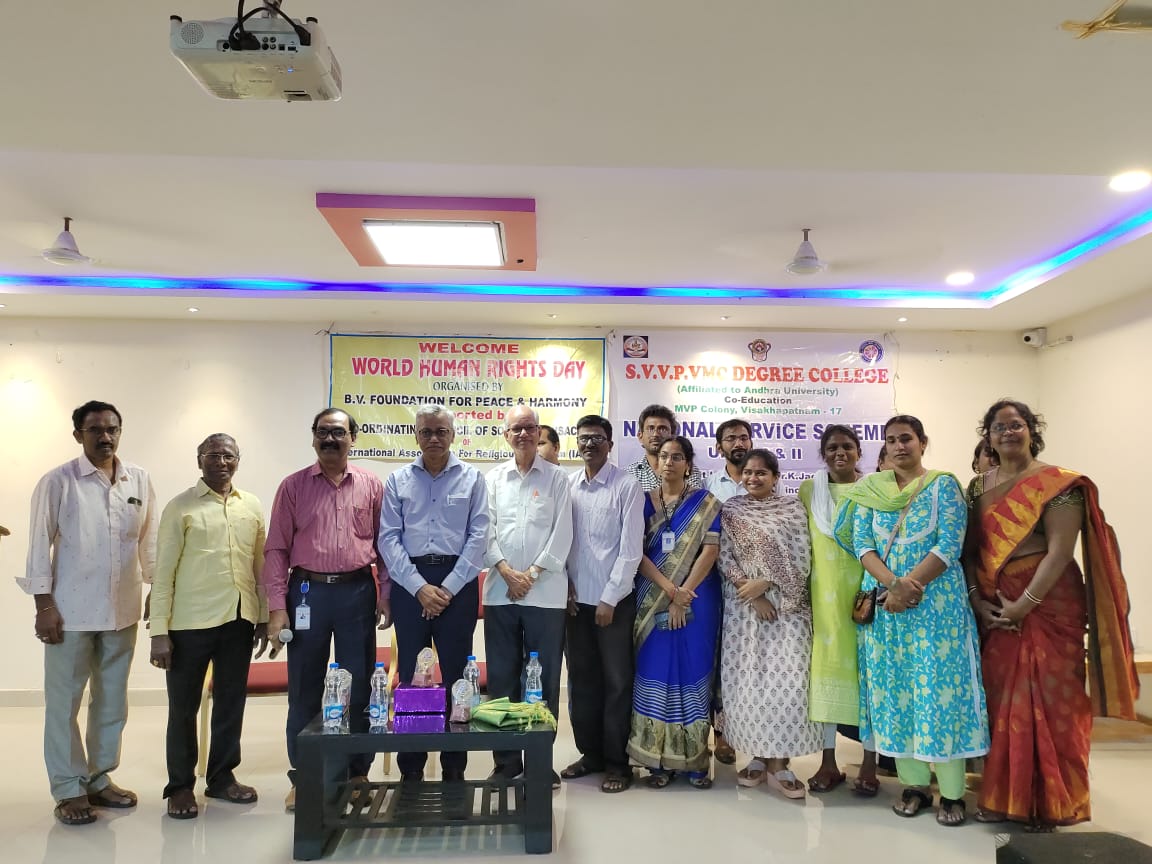
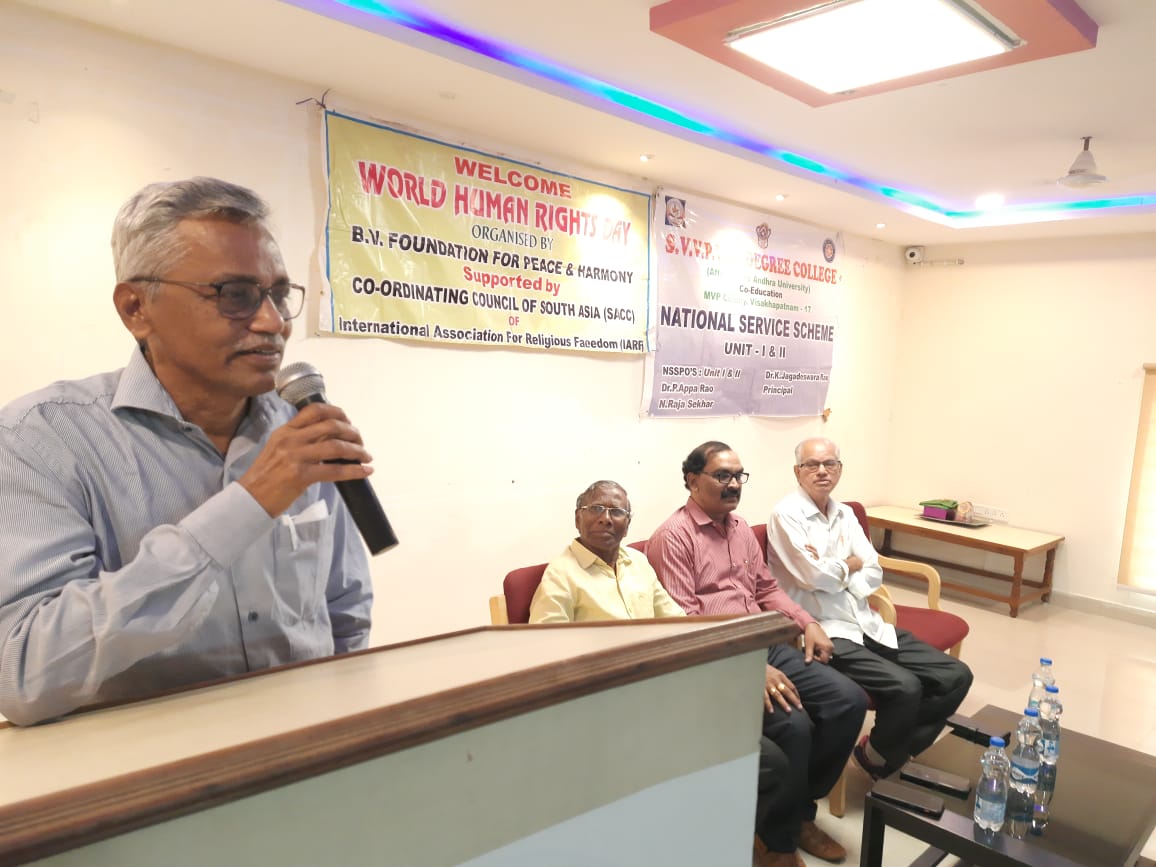
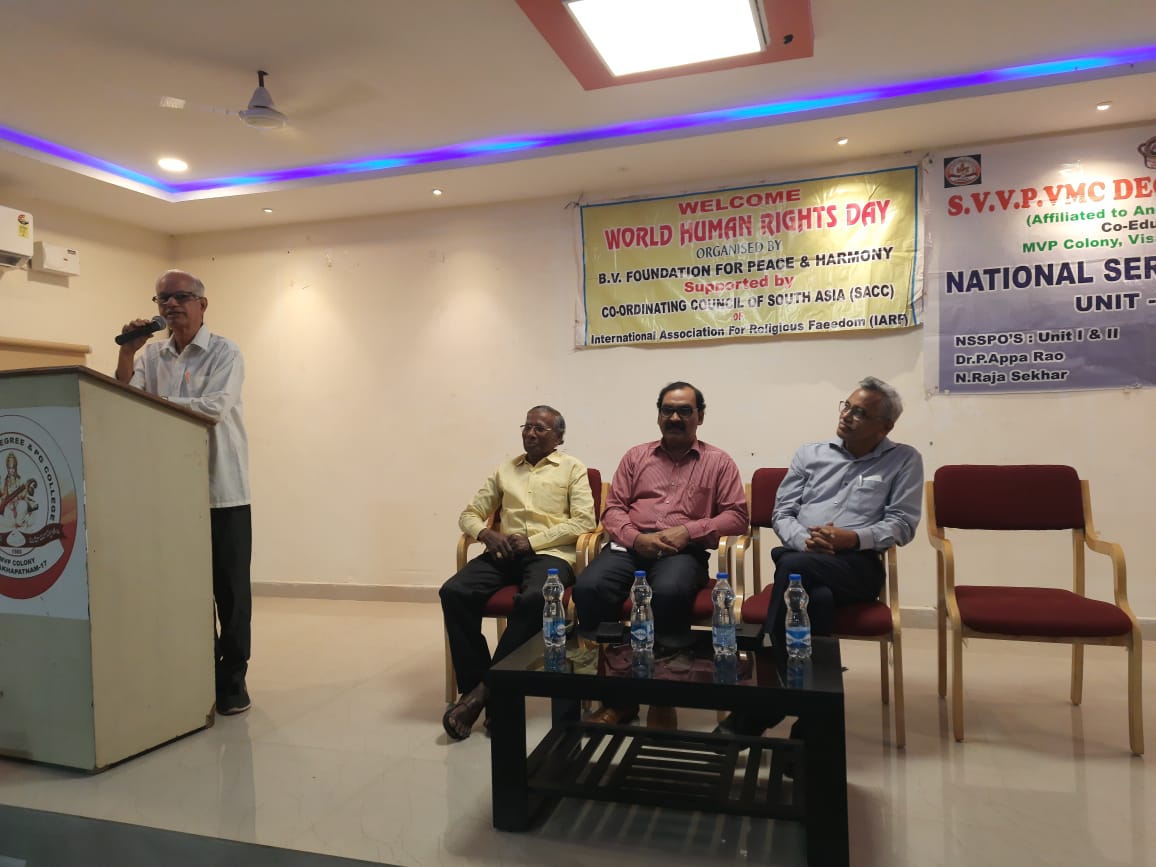
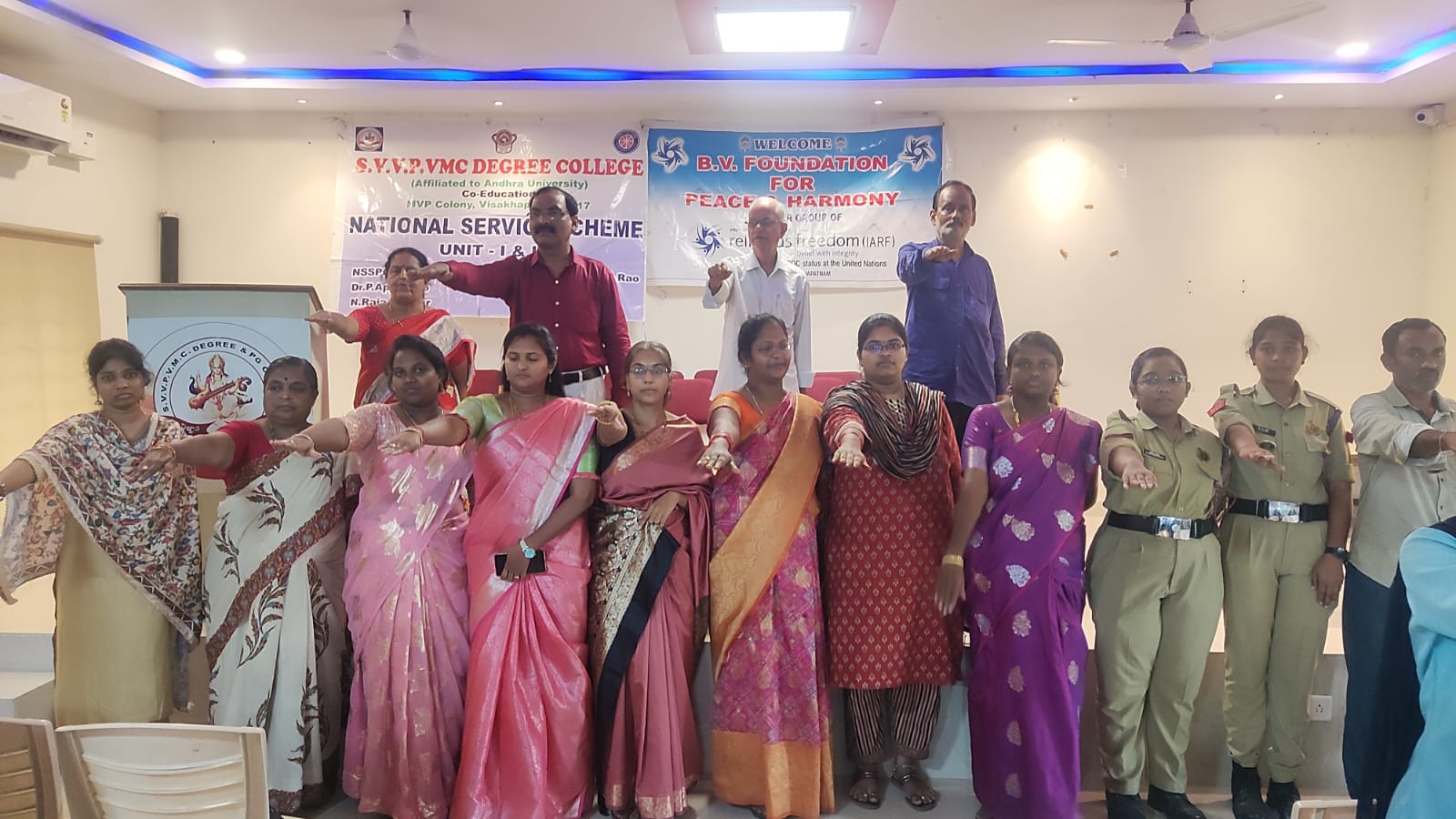
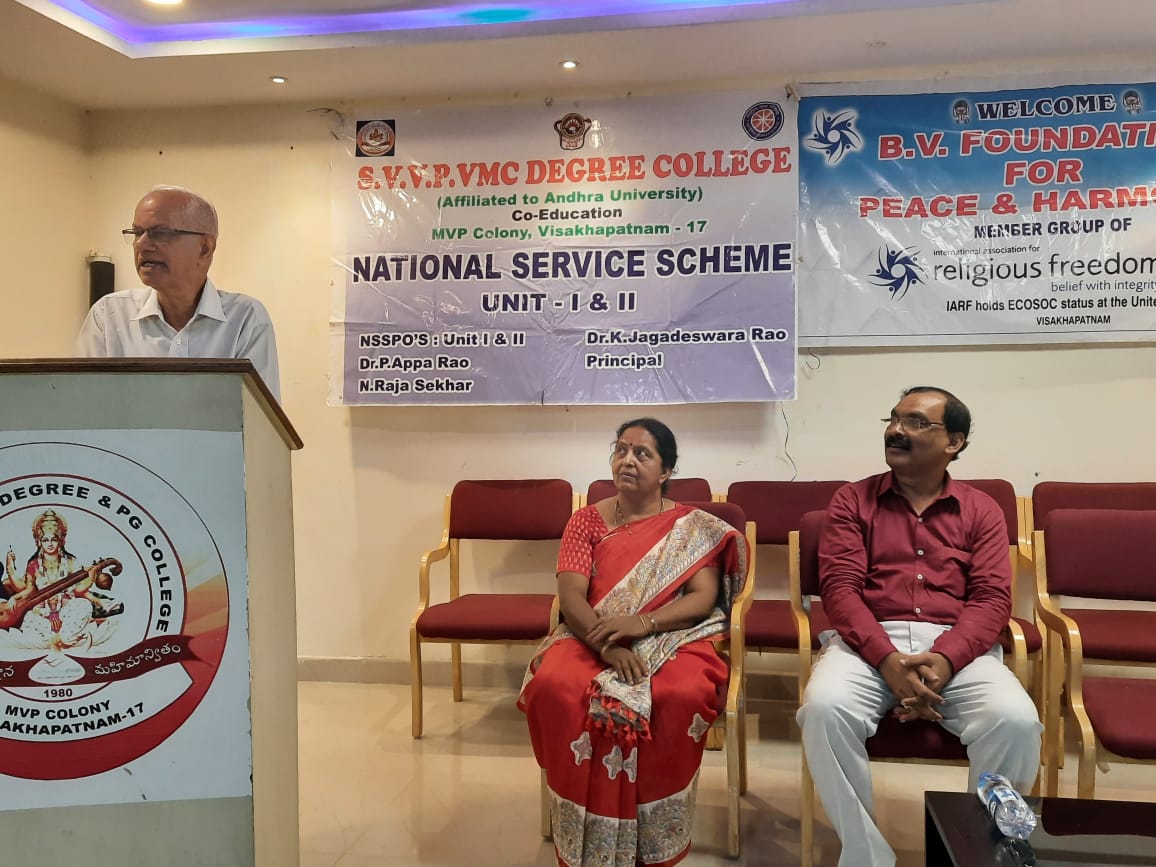
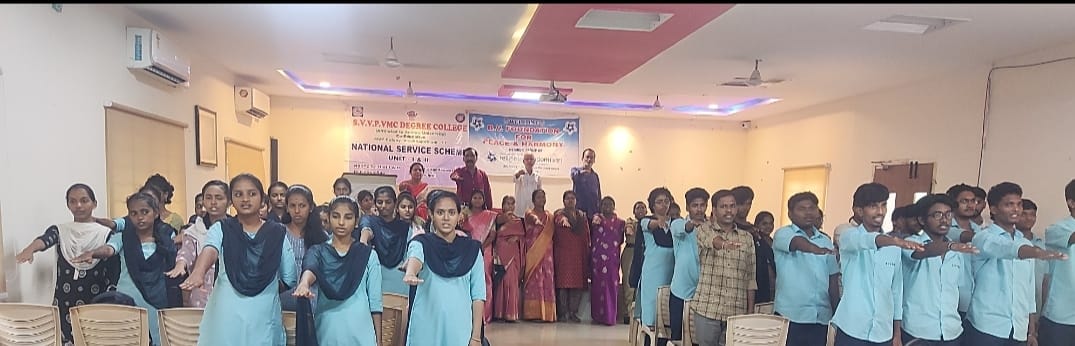
On Saturday, December 10th 2022, the BV Foundation for Peace and Harmony and the India Chapter of the International Association for Religious Freedom Visakhapatnam Branch organized a special meeting to mark World Human Rights Day. The event was held at the SVVP VMC Degree and PG Courses seminar hall in MVP Colney, Visakhapatnam. The purpose of the meeting was to educate degree and PG students about human rights and their role in protecting them.
Prof. Narava Prakasa Rao, International Council Member of the IARF, presided over the meeting. He emphasized the need for young people to be aware of various issues and to act responsibly in safeguarding their rights. He also emphasized that today’s youth are not useless, but rather their potential is underused. If they are motivated and their potential is utilized properly, they can make significant contributions towards building a just society.
The chief guest of the event, Prof. A. Rajendra Prasad, former Vice Chancellor of Nagarjuna University, called on the students to become change agents and work towards protecting human rights. He also emphasized the need for stronger enforcement of the Human Rights Act of 1993 and for the framing of rules under the Act to make it an effective law. He pointed out that the most vulnerable sections of society, such as children and women, often have their human rights violated and therefore there is an urgent need to increase awareness of human rights among these groups.
A debate competition was also held among the students on this occasion. Other attendees at the event included Dr. K. Rajesh, Principal of the Degree college, Sambasiva Rao, Principal of the Junior college, Dr. Appa Rao, NSS Coordinator, Dr. Ganesh Babji, Mrs. Syamala, and others.
Festive reflections: Chanukah
In the coming year we will be publishing reflections around the time of big festivals of the many religions represented in IARF. We begin with Chanukah, the Jewish festival of light. The author of this piece is Rabbi Robert Carroll, member of the International Council, our governing body, and the Interfaith Encounter Association, one of our Middle Eastern member groups.
Jewish historical memory reflects a constant tension between the particular and universal. To give one example: The Exodus from Egypt was on one level the story of a major incident in the life of a very minor people. It can be read as nothing more than that. But the God of the Exodus is also the God of all humanity and the Exodus, in Jewish teaching, foreshadows the Redemption that God will one day bring to all peoples. For Jews, to remember the Exodus is also to work hand in hand with God to bring that day about. So too the story of Chanukah – on one level it’s only about one small nation fighting for its cultural survival. But on a deeper level it contains many messages for all of us.
The basic story is well-known from the Books of Maccabees and the historical writings of the historian Flavius Josephus:
In the 2nd century BCE Antiochus Epiphanes, king of the Seleucid (Syrian) remnant of Alexander the Great’s empire, began a campaign to forcibly Hellenize the Jews of the land of Israel. A statue of Zeus was erected in the Holy Temple in Jerusalem. Pigs were sacrificed on God’s altar, in brazen defiance of God’s command. Those who kept the Sabbath or circumcised their sons, as Biblical law requires, were executed.
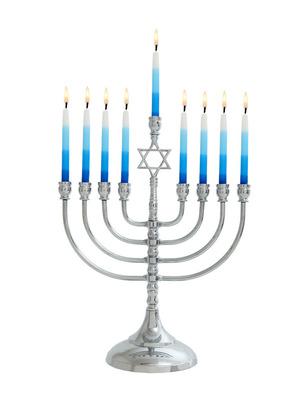
Though the Seleucids had the support of the High Priest and elements of Israelite society, a rebellion quickly took root, led by a group of priests from Modi’in, Mattathias and his son Judah (known as Judah the Maccabee). Despite suffering many initial defeats their guerilla war was successful, recapturing Jerusalem within three years. The word “Chanukah” simply means “rededication” and refers to the eight days of celebration which then took place. Talmudic legend relates that although only one cruze of ritual oil had remained undefiled, it miraculously burned for eight days – hence the origin of the Jewish custom of lighting a Menorah, or 8-branched candelabrum, adding a successive candle during each night of Chanukah.
As we can now see, the Chanukah story is one of a particular people fighting for its religious and cultural self-determination. But like the story of the Exodus, it has elements that speak to all of us.
One of the greatest modern-day Jewish sages, Rabbi Abraham Isaac Kuk, taught that all peoples and cultures reflect and embody the light of God; just as God is infinite, God’s wisdom – His light – shines forth in manifold forms, and in all nations and faiths. Josephus fittingly coined the phrase “Festival of Lights” to describe Chanuka, and indeed over the centuries, the symbolism of light and flame came to be the holiday’s dominant motif. It speaks to us today in more ways than one: Do we want to bring warmth and illumination to the world, or do we want to be arsonists who burn and destroy?
The Chanukah story is almost 22 centuries old, yet it seems that in our day more than ever, the idea of freedom is at risk from those who would use the fire of faith to consume and oppress rather than to illuminate, to show compassion, or to perceive the holiness that all people as children of God have within themselves.
Ultimately, this is the question that Chanuka asks us: What kind of lights do we want to kindle in our world?
Winner of the Dana McLean Greeley Award for young adult interfaith work
After carefully considering the 12 applications we received this year, each well-prepared and outlining a valuable project we would love to support, the Greeley Award Committee, tasked with this difficult duty, decided to award the project submitted by The Sanctuaries: Interfaith Arts Education.
This is how The Sanctuaries elaborate on their mission to ignite the sacred power of the arts for social change:
The Sanctuaries is the first interfaith arts community in the United States. Founded in Washington, DC, by a group of twenty young adults in 2013, we use the arts to transform two of the most divisive global issues of our time – race and religion – into forces for personal growth and social change. We fulfil this mission in two ways. First, through our multicultural community of over 150 artists, we deepen interfaith understanding by hosting regular events, retreats, and multimedia arts showcases. These programs are often the only structured opportunities in the city for young adults of different religious backgrounds to build lasting relationships of mutual care and support. Second, through our Art for Social Impact training program, we educate interfaith artists how to be leaders in their local communities. Participants in this highly selective program gain first-hand experience working on the front lines of grass-roots justice campaigns to address the systems that keep us divided in the first place.
What distinguishes our approach:
– It centers young adults. Too often, programs are created for young people, not by them. This project positions young adults as valuable teachers of this work for audiences of all ages. In the process, it builds trust and understanding across lines of social and generational division.
– It builds collective capacity. Too often, programs perpetuate dependency on an outside expert. This project equips teachers to share frameworks and skills that enable communities to move this work forward on their own. In the process, it builds long-term capacity, not clients.
– It scales by invitation. Too often, programs grow for numbers rather than for needs. This project relies on individuals and communities inviting teachers into their context to advance this work. In the process, it builds a replicable and respectful model of collaboration. As Dana McLean Greeley once exhorted: “Let us find something worthwhile to love, and something worthwhile to do, and give ourselves away, and we shall find ourselves again.” At the heart of our approach is this spirit of embodiment. This work is something that’s not just done, but lived.
In 1969, Rev. Greeley [was] a pivotal force in giving the International Association for Religious Freedom (IARF) the name it still carries, and new, committed leadership from both Shinto and Buddhist traditions in Japan. He loved IARF’s heritage, and boldly moved it into its future. The Award was created by the IARF to respond to the intention of the Dana McLean Greeley Foundation for Peace and Justice to honor Rev. Greeley’s memory and life achievements for peace through the gift of a $50,000 endowment to the IARF, announced at a service and celebration held in Concord, MA, on November 5, 2006.
The Founding Purpose: The historical Mission of the Award has been to celebrate the achievements of young adults within a religious and/or interfaith community with a strong commitment to human rights, justice, and peace. The award supports an ongoing or new project of a group, featuring the collaborative engagement of young adults with their community, providing the group with material support. In turn, the group is committed to work with young adults, to develop leaders within the next generation, and to expand understanding of human rights, justice, and interfaith dialog within the context of religious freedom.
Goals of the Award: The primary goals of the award are to support organizations of young adults, and the communities within which they are engaged, to conduct programs of leadership development, human rights education, and engagement in understanding one another’s beliefs within the context of commitment to religious freedom.
The Award (or awards) will be presented at each IARF Congress, currently held at 4-year intervals. They will be celebrated and promoted at a special ceremony, and through publicity within and beyond the IARF.
Save the Date: The 35th World Congress: August 2018, Washington DC
We are pleased to announce the Interfaith Conference that will incorporate the 35th World Congress of the IARF: Reimagining Interfaith Cooperation.
The Conference, to be held on 29 July – 1 August 2018 in Washington DC, USA, is a joint project of the IARF, the Unitarian Universalist Association, our member group, and our partners: the United Religions Initiative, the United Church of Christ and Religions for Peace. We’re very excited to be working with so many fantastic partners and hope to meet you all in Washington next year.
The venue of the Conference, one of local Universities, will be announced in October, which is also when registration will open. The registration fee is 325 USD per person and 100 USD for young adults (under 35), and includes meals as well as local transportation and conference kit. Updates, including names of speakers, detailed programme and helpful practical information, will be posted on the Conference’s website, www.reimagineinterfaith.org, as well as on our website – both will be regularly updated. You can pre-register to receive notifications hereor follow us on Facebookfor the latest news.
Please contact IARF Administrator with any questions at luke[at]iarf.net.
Statement by IARF Kenya Chapter concerning current events in the country
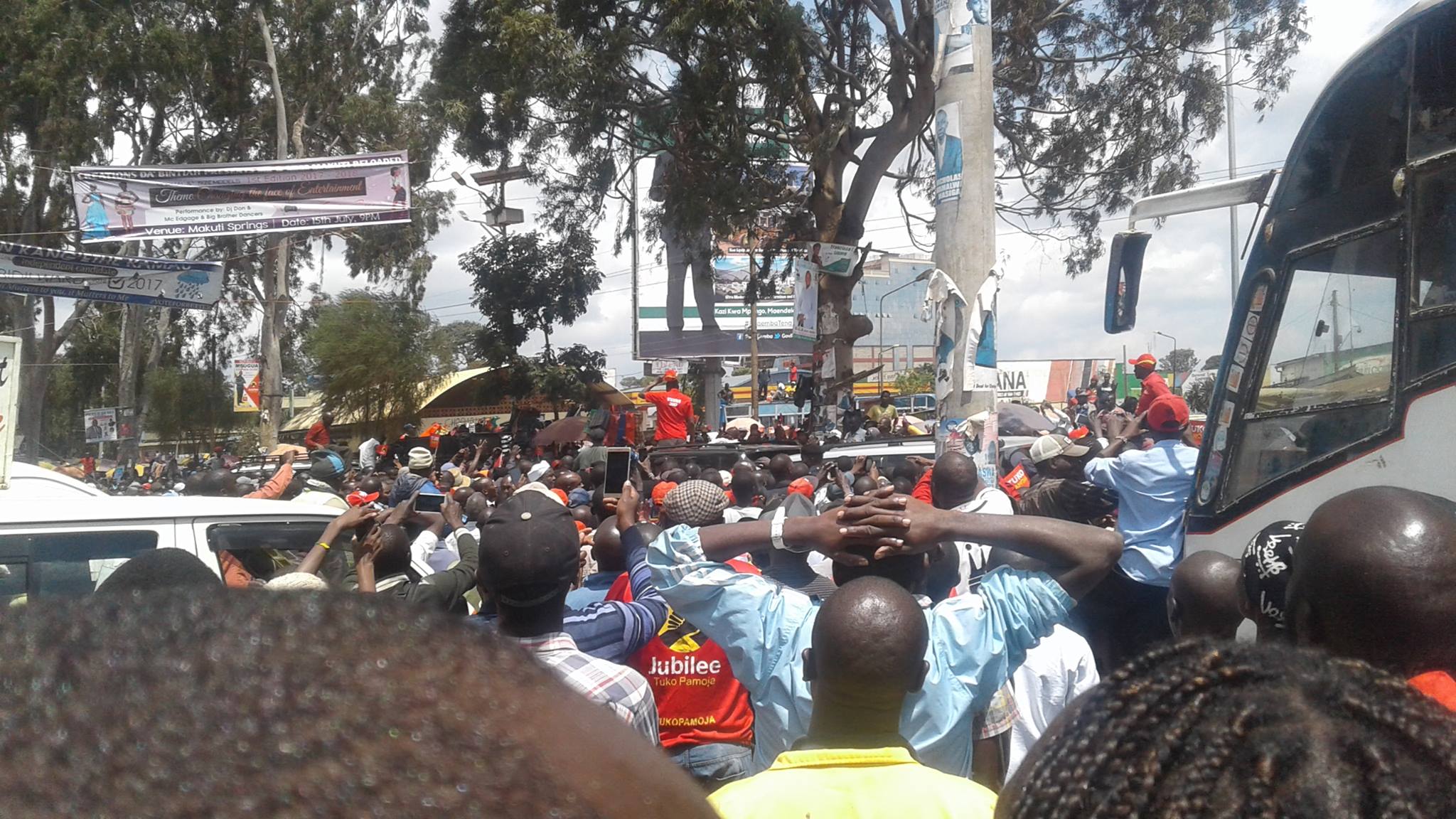
Our Kenya Chapter has released the following statement regarding the troubling events taking place in the country. We join them in prayers and hope for a peaceful conduct of elections and national reconciliation later on. You can read more about the situation in Kenya here.
Protesters in Nairobi.
1st August 2017
The International Association for Religious Freedom (IARF) Kenya Chapter condemns in the strongest terms possible the continues killing of innocent prominent persons that are great developers for this nation. As the IARF community, we appeal to the president and the security agencies of this country to be sincere and tell Kenyans and the whole world why this is happening under their watch. These killings of innocent people or anybody else to serve the interests of some individuals should not be accepted under any circumstances. We are still mourning our lost heroes whom we laid to rest a few weeks ago, and similar events brining still more great losses continue to happen in our country. “Should we say hell has dropped from heaven to the earth called Kenya?” As an IARF community whose main agenda is to preach peace among the religions of the world, we strongly condemn the ’assassins’ who carry out such acts of cowardice. We strongly believe that this is not ‘ethicist war’, but one being waged by people who do not value human life, and who pretend to be rulers. We therefore ask religious leaders to come together and preach peace, and also to advise our community members to do the same. Let us share the sorrow of the loved ones who have been affected by these killings. We support the Kenyan people and its leaders, and commiserate with them during this time of loss, anguish and pain. We also call upon all Kenyans to exercise restraint and patience as we pray for peace for Kenya. We are also praying for security agencies who are currently investigating these killings which have taken our people hostage. We call upon all our religious leaders to ceaselessly pray for peace for Kenya, and also in other parts of the world. Lawrence Adera Secretary, IARF Kenya Chapter


 people. It can be read as nothing more than that. But the God of the Exodus is also the God of all humanity and the Exodus, in Jewish teaching, foreshadows the Redemption that God will one day bring to all peoples. For Jews, to remember the Exodus is also to work hand in hand with God to bring that day about. So too the story of Chanukah – on one level it’s only about one small nation fighting for its cultural survival. But on a deeper level it contains many messages for all of us.