
“Considering that religion or belief, for anyone who professes either, is one of the fundamental elements in his conception of life…”
November 25 marks a pivotal, yet often overlooked, milestone in the history of human rights. On this day in 1981, after nearly two decades of geopolitical gridlock, the United Nations General Assembly adopted Resolution 36/55: the Declaration on the Elimination of All Forms of Intolerance and of Discrimination Based on Religion or Belief., the first international instru ment dedicated solely to freedom of religion.
While the 1948 Universal Declaration of Human Rights laid the foundation, it was this 1981 document that finally codified the specific rights of conscience—freedom to worship, to teach, to publish, and to organize—into international norms. But this victory was not inevitable. It was achieved through the tenacious intervention of civil society when governments had all but given up.
The story of the 1981 Declaration is, in large part, a story of liberal religion. Through the leadership of the IARF and our member groups—particularly the Unitarian Universalist Association (UUA)—our representatives spearheaded the consensus that protects the rights of believers and non-believers alike.
Deep Roots: A Legacy of Visionary Activism
Long before the Declaration was drafted, the IARF recognized that religious freedom required a global political framework. As detailed in the IARF’s Centennial Reflections, this engagement began with Elvira Fradkin, a visionary American Unitarian from Montclair, New Jersey.
Present at the founding of the United Nations in San Francisco in 1945, Fradkin understood early on that the new world order needed the voice of liberal religion. It was her persistence that convinced the IARF to register with the UN Economic and Social Council (ECOSOC) in the 1950s—one of fewer than 300 NGOs to do so at the time. Her work laid the logistical and moral groundwork for the battles that would come decades later.
The Cold War Deadlock: Diplomacy Over Dogma
By 1972, the UN’s effort to create a binding treaty on religious freedom had stalled completely. The drafting process was paralyzed by the rigidity of the Cold War. The Soviet bloc refused to sign any document that did not explicitly protect atheism and shield the state from “religious interference.” Meanwhile, various Western and Islamic nations clashed over the definition of religious rights, particularly regarding the right to change one’s religion.
In this vacuum of political will, religious freedom was becoming a casualty of superpower posturing. This is where the IARF and the UUA played their most decisive role. Because liberal religion honors the inherent dignity of all paths—theistic, non-theistic, and atheistic—our representatives were uniquely positioned to bridge the ideological divide.
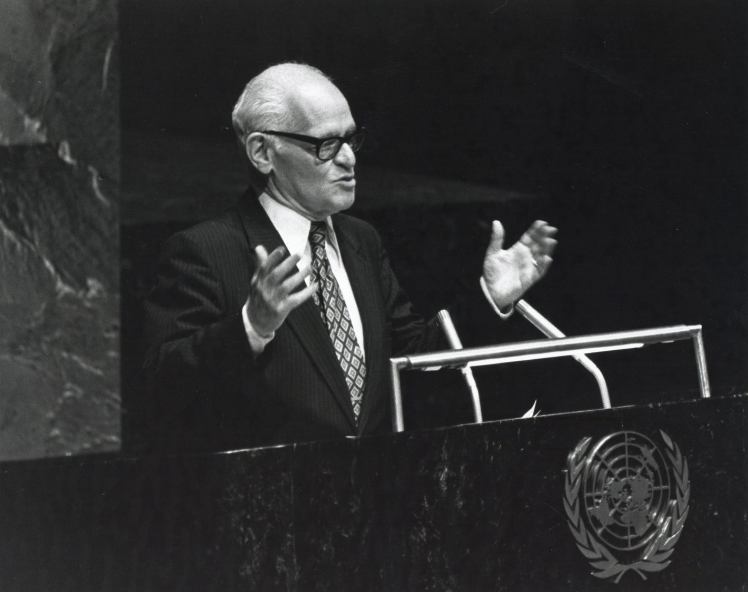
Two leaders from our community were central to breaking the impasse:
- Prof. Auguste-Raynald Werner, the IARF Representative in Geneva. A distinguished Professor of International Law, Werner worked tirelessly within the UN Commission on Human Rights. He used his legal expertise to craft language capable of satisfying opposing political blocs, ensuring the text was robust enough to protect rights but flexible enough to pass.
- Dr. Homer A. Jack, a Unitarian Universalist minister serving as Secretary-General of the WCRP. He spearheaded the “Gang of Four” NGOs that refused to let the issue die. When member states moved to shelve the draft, Jack mobilized the NGO community to pressure the General Assembly to prioritize a non-binding Declaration over a doomed Treaty—a strategic pivot that saved the project.
The “Religion or Belief” Compromise
One of the most significant contributions of the liberal religious lobby was the insistence on the phrasing “Religion or Belief.” This distinction was not merely semantic; it was the key to consensus. It ensured that the Declaration covered theistic faiths, non-theistic traditions, and atheistic views equally.
This inclusivity satisfied the Eastern bloc’s demand for the protection of non-religious convictions while aligning perfectly with the IARF’s principle of universal tolerance. It established a precedent that remains vital today: that freedom of conscience belongs to everyone, not just the religious.
Connecting the Dots: A Legacy of Action
The adoption of the Declaration was a victory, but as Dr. Jack noted in his memoirs, Homer’s Odyssey, a declaration without enforcement is just paper. The IARF’s leadership was central to building the machinery that enforces these rights today.
Institutionalizing Freedom: The Role of Sue Nichols
The creation of the NGO Committee in New York—the primary body that coordinates civil society advocacy on this issue today—was inextricably linked to the IARF and the UUA.
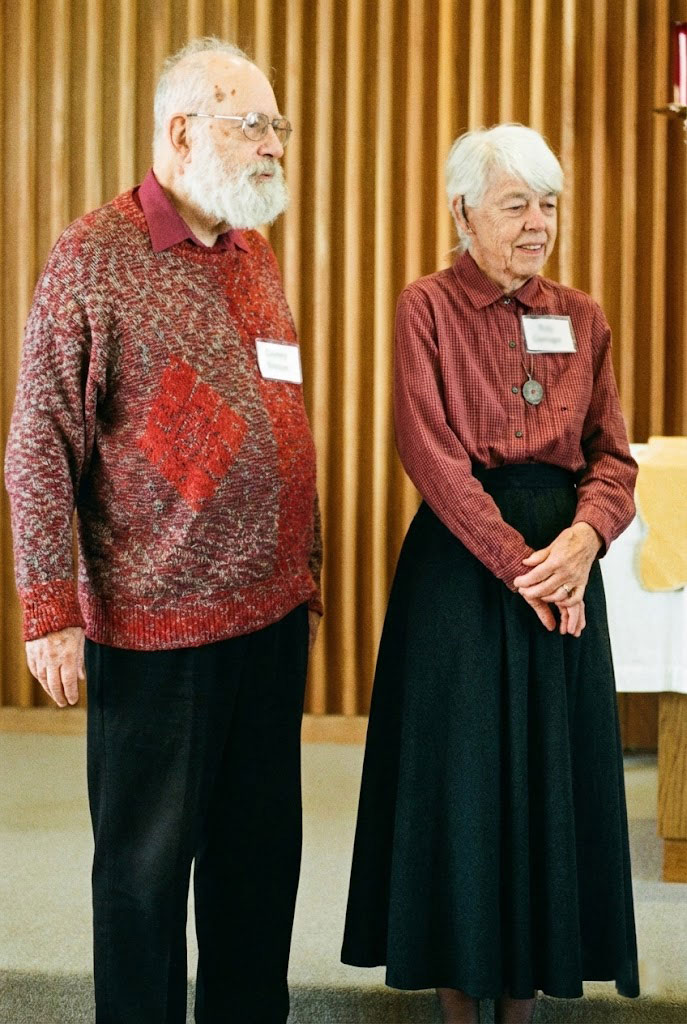
Sue Nichols, who co-directed the Unitarian Universalist UN Office with her husband Vernon, served as the IARF’s representative on the ground in New York during this critical period. Following the commissioning of the seminal “Salzberg Study” by Dr. Jack to explore implementation strategies, Nichols took the lead in formalizing the NGO coalition.
She became the founding President of the NGO Committee in New York. Under her leadership, the committee moved from an informal pressure group to a recognized powerhouse within the UN system. It established the tradition of the “Annual Day” to commemorate the 1981 Declaration and works directly with the Special Rapporteur to highlight violations globally.
A Continuing Responsibility
The 1981 Declaration remains the most important international instrument for religious freedom since the Universal Declaration of Human Rights. It serves as the basis for the mandate of the Special Rapporteur and laid the groundwork for modern diplomatic breakthroughs, such as Human Rights Council Resolution 16/18, which shifted the focus from protecting abstract religions to protecting living human beings from discrimination.
Today, the IARF continues this work as an active member of the NGO Committees on Freedom of Religion or Belief in both New York and Geneva. We honor the legacy of Fradkin, Werner, Jack, and Nichols not by looking backward, but by continuing to press for the rights of all people—regardless of their creed—to believe, or not believe, in freedom.
We Are Still Active Today
The IARF continues to honor this legacy. We remain an active member of the NGO Committees on Freedom of Religion or Belief in both New York and Geneva, working with the Special Rapporteur to ensure rights are respected.
Get Involved: IARF members are warmly invited to join our International Engagement Working Group to support our continued advocacy at the United Nations.
- Read “Centennial Reflections”: The full chapter on the IARF at the United Nations by Ruth Neuendorffer and Sue Nichols is available in our library for detailed historical context.
- Memoirs: For a personal account of the diplomatic struggle, see “Homer’s Odyssey” by Dr. Homer Jack.
- Primary Source: Read the full text of the 1981 Declaration.