
Please Sign the Petition for Yezidis in the Netherlands
In recent months, IARF has supported young Yezidis in the Netherlands in their efforts to oppose a recent change in Dutch asylum policy, under which it is now deemed safe for Yezidis and followers of some other minority religions to return to Iraq and resume their previous lives, whereas international organisations and experts say the opposite.
For members and readers resident in the Netherlands
Please read, sign and share the petition below, and show your moral support for the young Yezidis.
Access to Worship at Native Hawaiian Shrine Denied
Upon returning to Hawai’i, I intended to worship at the Kanenuiakea healing shrine, Kane’aki Heiau, as per my custom according to my multiple faiths. However, access was denied, as it is now restricted to members of Mauna ‘Olu Estates. It is reported that no Hawaiian owners reside there.
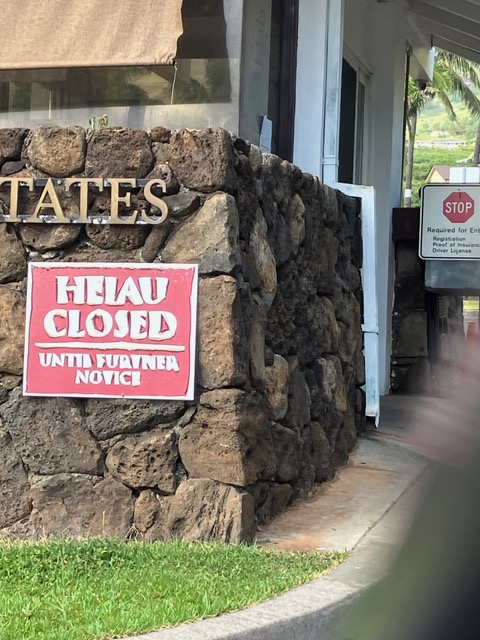
Access to Worship at Kahe’aki Heiau Denied
–Until Further Notice!
While the United States protects property rights, it does not recognize indigenous communal property, particularly places of worship that lack legal status under U.S. law. Kane’aki Heiau, a sacred temple and shrine, was first surrounded by a homeowners’ association and then claimed by it. The association now benefits from a tax deduction for preserving historic cultural property. Despite this, Hawaiians’ right to access is denied and enforced by State of Hawaii property rights law.
While the United States protects property rights, it does not recognize indigenous communal property, particularly places of worship that lack legal status under U.S. law. Kane’aki Heiau, a sacred temple and shrine, was first surrounded by a homeowners’ association and then claimed by it. The association now benefits from a tax deduction for preserving historic cultural property. Despite this, Hawaiians’ right to access is denied and enforced by State of Hawaii property rights law.
The International Association for Religious Freedom (IARF) and Religions for Peace are investigating how to effectively protest this apparent violation of U.S. and State of Hawaii constitutional rights regarding freedom of religion. Historically, the U.S. Supreme Court has interpreted freedom of religion as belief but not worship. Will colonial attitudes against indigenous worship change to support the religious freedom to pray at an acknowledged ancient temple?
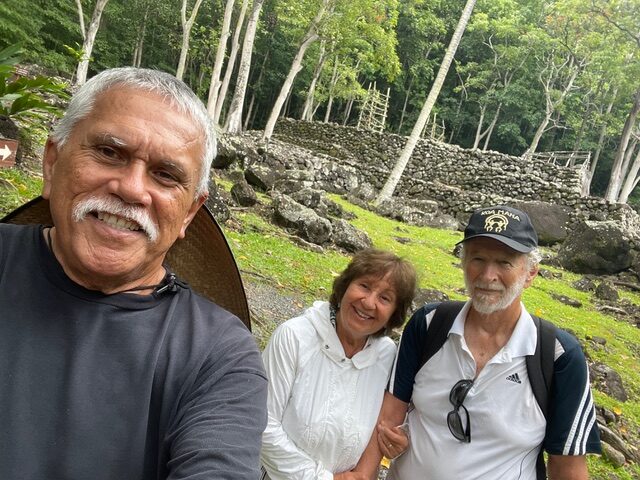
Kumu Glen Kila, George and Zizi at Kane’aki Heiau 2 years ago after climbing over locked gates. Kumu Glen is the Kahuna-nui, High Priest of Kanenuiakea, a faith with a thousand year history just on the Waianae Wahipana (west coast of Oahu).
Call for Action: Support Yahaya Sharif-Aminu
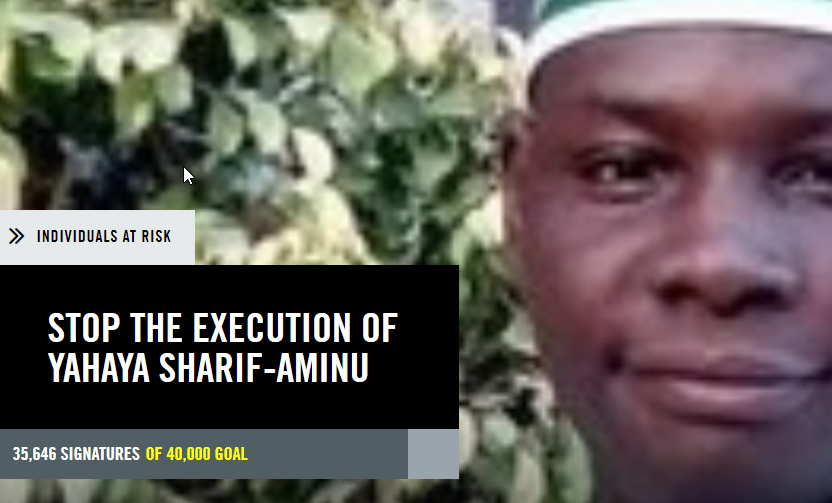
The International Association for Religious Freedom urges its members and supporters worldwide to stand in solidarity with Yahaya Sharif-Aminu, a 23-year-old Nigerian singer facing the gravest of injustices. Sharif-Aminu has been sentenced to death for sharing a song via WhatsApp, an act deemed blasphemous by Nigerian authorities. This severe punishment raises serious questions about the fairness of his trial and the nature of the charges against him.
Sign Amnesty International’s Petition
The IARF firmly denounces the use of capital punishment as inhumane and stands against blasphemy laws, particularly those that lead to severe prosecution and punishment. Such laws and their application are a direct violation of human rights and are contrary to the principles of freedom of expression and belief. The case of Yahaya Sharif-Aminu is a distressing example of the actions taken by authorities under the guise of blasphemy laws.
The IARF supports Amnesty International’s campaign to secure Yahaya Sharif-Aminu’s release and echoes the call for action. Public pressure has previously led to the release of individuals from death row in Nigeria, demonstrating the power of global solidarity.
We call upon our members and supporters to lend their voices to this cause. The action of the Nigerian authorities in this case is not only a violation of human rights but also an affront to the values of freedom and dignity that the IARF upholds. Together, we hope to see a successful outcome to Amnesty International’s efforts to save Yahaya Sharif-Aminu’s life and restore his freedom.
Your support can make a difference. Stand with us in calling for justice and human dignity.